Sobriety isn’t Just Not Drinking; it is the radical act of rebuilding an entire life architecture that has been dominated by a habit for over four decades.
When you have spent 45 years viewing the world through the bottom of a glass, putting the glass down is merely the demolition phase—the actual construction of a new life begins only when you realise that the absence of alcohol is not the same as the presence of peace. For those of us who have walked away from alcohol after a lifetime of use—without the confines of labels like “alcoholic,” without the rigid structure of the 12 steps, and without a sponsor telling us what to do—the journey is unique. It requires a high degree of self-awareness and a commitment to understanding that Sobriety Isn’t Just Not Drinking. It is about emotional regulation, identity shifting, and the reclamation of time.
This guide explores the profound difference between abstinence and true sobriety, specifically tailored for the independent thinker who has chosen freedom over steps.
The Difference Between Abstinence and Autonomy
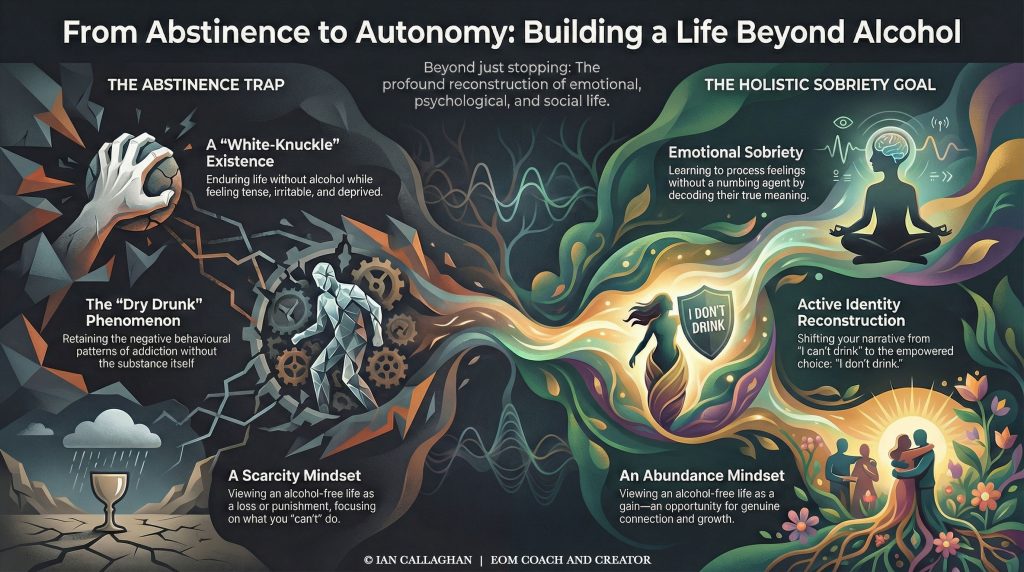
If you treat sobriety solely as the act of not consuming ethanol, you are likely to endure a miserable existence often referred to in recovery circles as “white-knuckling.” Abstinence is a physical state; sobriety is a mental and emotional stance.
After 45 years of drinking, your brain and body have conditioned themselves to expect a chemical buffer between you and reality. You likely used alcohol to celebrate, to commiserate, to relax, to socialise, and to sleep. When you remove that buffer, you are left with raw, unfiltered reality. If you do not build new mechanisms to handle that reality, you are simply a dry version of your former self—tense, irritable, and feeling deprived.
True autonomy in sobriety involves:
Rejecting Deprivation: Viewing alcohol-free life as a gain, not a loss.
Emotional Agility: Learning to process feelings without a numbing agent.
Identity Shifting: Moving from “I can’t drink” to “I don’t drink.”
The phrase Sobriety Isn’t Just Not Drinking encapsulates the move from a scarcity mindset (I am missing out) to an abundance mindset (I am free).
The “Void” of the First Year
Having passed the one-year mark, you have likely encountered “The Void.” This is the vacuum left behind when the drinking ritual is removed. If you drank for three hours a night, that is 21 hours a week—nearly a part-time job—that is suddenly empty.
Many people fail in independent recovery because they try to stare into the void rather than filling it. They sit on the sofa at 6:00 PM, the “witching hour,” and think about how much they want a drink. This is abstinence. Sobriety, conversely, is filling that time with pursuits that were previously impossible. It is the understanding that the boredom you feel is not a lack of alcohol; it is a call to action from a brain that has been sedated for nearly half a century.
Emotional Sobriety: Learning to Feel Without a Filter
The most challenging aspect of long-term recovery is not the physical withdrawal, which passes relatively quickly, but the emotional resurgence. For 45 years, alcohol likely acted as your primary emotional regulator. If you were stressed, a drink lowered the cortisol. If you were angry, a drink dulled the edge. If you were bored, a drink provided artificial dopamine.
Sobriety Isn’t Just Not Drinking; it is the terrifying and exhilarating process of learning to self-soothe like an adult.
The Physiology of Emotional Numbing
When we drink for decades, we stunt our emotional growth. We may be mature in business, family management, or intellect, but emotionally, we often remain at the age we were when the heavy drinking began. When the alcohol stops, the emotions flood back with high intensity.
You may find yourself experiencing:
Disproportionate Anger: Small inconveniences feel like major catastrophes.
Sudden Grief: Mourning the loss of the alcohol itself or the time lost to it.
Anhedonia: The temporary inability to feel pleasure, as your dopamine baseline resets.
The Strategy of “Sitting With It”
In a label-free, step-free recovery, there is no sponsor to call when emotions run high. You must become your own counsellor. This requires a technique often called “surfing the urge” or “sitting with the feeling.”
When a wave of anxiety hits, the drinker’s instinct is to drown it. The sober individual’s task is to observe it. You must acknowledge that feelings are transient data points, not commands. You might feel lonely, but that does not mean you need a drink; it means you need a connection. You might feel exhausted, but that doesn’t mean you need wine; it means you need rest.
By decoding the signal rather than silencing it, you achieve emotional sobriety. This is the core proof that Sobriety Isn’t Just Not Drinking—it is active emotional intelligence.
Deconstructing the Identity: Who Are You Without the Drink?
Perhaps the most complex layer of recovery after 45 years is the identity crisis. In British culture specifically, drinking is woven into the fabric of social identity. We meet at the pub; we toast at weddings; we commiserate at funerals.
If you have spent decades as the “life and soul of the party” or the “connoisseur of fine wines,” stripping that away can feel like losing a limb. The question arises: If I am not a drinker, who am I?
The Trap of Labels
The traditional medical and 12-step models often encourage adopting the label of “alcoholic.” For many, this is a saving grace. However, for the autonomous recoverer, this label can feel restrictive and disempowering. It suggests a permanent state of illness and a permanent powerlessness over a substance.
By rejecting labels, you are free to define your own identity. You are simply a person who used to drink a liquid that no longer serves them. This reframing is crucial. It shifts the narrative from “I am a sick person fighting a disease” to “I am a healthy person making a logical lifestyle choice.”
Re-Navigating Social Architecture
Sobriety Isn’t Just Not Drinking in private; it is confident non-drinking in public. The first year is often spent navigating the awkwardness of the “Why aren’t you drinking?” interrogation.
A key part of this new identity is realising that you do not owe anyone an explanation. You do not need to confess to a “problem” to justify abstinence.
The Polite Refusal: “I’m not drinking tonight, thanks.”
The Health Angle: “It doesn’t agree with me anymore.”
The Truth: “I’ve done my 45 years; I’ve retired from the sport.”
As you move past the one-year mark, you will notice that your genuine friends do not care what is in your glass. Those who pressure you are usually projecting their own insecurities about their alcohol consumption onto you. Recognising this dynamic is a sign of maturity in sobriety.
Neuroplasticity and Rewiring the 45-Year Habit
To understand why Sobriety Isn’t Just Not Drinking, one must look at the neuroscience of a 45-year habit. We are dealing with deeply ingrained neural pathways. This is not a lack of willpower; it is biology.
The Path of Least Resistance
For decades, your brain created a super-highway associating alcohol with reward. Trigger (5 PM) -> Action (Pour Drink) -> Reward (Dopamine hit). This pathway is paved with concrete. The pathway for “Have a cup of tea and read a book” is an overgrown dirt track.
Simply “not drinking” leaves the super-highway open but unused, creating a sense of longing. True sobriety involves actively paving new roads—neuroplasticity.
Dopamine Deficits and The Flatline
In the early stages of alcohol-free life (and often persisting into the second year), you may experience a “flatness.” Alcohol releases a flood of artificial dopamine. Over 45 years, your brain down-regulated its own dopamine production to compensate.
When you quit, the artificial flood stops, but your natural production is still low. Life feels grey. Food tastes bland. Music sounds flat. This is not your new reality forever; it is a healing phase.
Exercise: One of the few ways to naturally boost dopamine and endorphins immediately.
Novelty: Doing things you have never done before forces the brain to pay attention and form new connections.
Micro-Goals: Setting and achieving small goals provides natural dopamine hits.
By actively engaging in these activities, you are physically repairing the brain structure. You are not just abstaining; you are healing.
The Myth of the “Pink Cloud” vs. The Reality of The Grind
In recovery literature, people often speak of the “Pink Cloud”—a period of euphoria shortly after quitting where everything feels magical. For a long-term drinker of 45 years, this cloud might be fleeting or non-existent.
You may have found that after the initial physical improvements (better sleep, weight loss, clear eyes), the novelty wore off. This is the danger zone where the thought creeps in: “Is this it? Is this all there is?”
This is where the distinction that Sobriety Isn’t Just Not Drinking becomes critical. If you stop at the physical benefits, you will eventually become bored and relapse. The “Grind” is the process of finding meaning in the mundane.
Finding Meaning in the Mundane
Alcohol makes doing nothing feel like doing something. You can sit in a chair for four hours, drinking wine, and feel entertained. Without alcohol, sitting in a chair for four hours is intolerable.
Sobriety forces you to engage with life. It demands that you:
Find genuine hobbies: Not things you do to pass time, but things that ignite passion.
Connect deeply: Having conversations that you will actually remember the next day.
Face mortality: 45 years of drinking often serves to hide the passage of time. Sobriety makes you acutely aware of it, urging you to use your remaining years with intention.
The “Grind” is not a punishment; it is the friction required to sharpen your new character.
(End of Part 1)
Sobriety Isn’t Just Not Drinking: Navigating Emotional Recovery and The Long Game
Real recovery begins the moment you realise that putting down the bottle is merely the admission ticket to a life where Sobriety Isn’t Just Not Drinking, but rather a complete reconstruction of how you process reality.
If Part 1 dealt with the physical cessation and the immediate aftermath, Part 2 addresses the psychological architecture required to sustain that change. For a drinker with a 45-year tenure, the alcohol was not just a beverage; it was a coping mechanism, a social lubricant, and an identity. Removing it leaves a structural void. If you do not fill that void with emotional intelligence and deliberate action, the structure will collapse.
The Raw Nerve: Emotional Regulation in a Sober Life
The most shocking realisation for many in the first year of sobriety is the sudden onset of unfiltered emotion. For decades, alcohol acted as a buffer—a chemical dimmer switch that softened the edges of anger, grief, anxiety, and even extreme joy.
When the buffer is removed, you are left with a “raw nerve.” Minor inconveniences, such as a delayed train or a rude shop assistant, can feel catastrophic.
Learning to Sit with Discomfort
The immediate instinct when feeling negative emotion is to seek an exit strategy. Historically, that exit was a drink. Because Sobriety Isn’t Just Not Drinking, the new task is learning to “sit with” the feeling. This is often referred to in therapy as “distress tolerance.”
The Pause: In the past, the gap between feeling an emotion and reacting to it (drinking) was non-existent. You must now cultivate a pause.
Labelling: Simply naming the emotion (“I am feeling humiliated,” “I am feeling lonely”) reduces its power. Alcohol robbed you of the vocabulary of feeling; you must relearn it.
The Wave Theory: Understand that emotions are like waves. They peak and then subside. Alcohol freezes the wave in place; sobriety allows it to crash and recede.
For the long-term drinker, this is terrifying. You may be experiencing emotions you haven’t felt in their pure state since you were a young adult. It requires the courage to feel exposed.
The Phenomenon of the “Dry Drunk”
Nothing illustrates the concept that Sobriety Isn’t Just Not Drinking better than the phenomenon of the “Dry Drunk.” This term describes an individual who has abstained from alcohol but has retained all the behavioural patterns, attitudes, and coping mechanisms of active addiction.
A Dry Drunk acts out the chaos of alcoholism without the liquid. They are often miserable, and frankly, miserable to be around.
Common Characteristics of the Dry Drunk:
Terminal Uniqueness: Believing your problems are so special that no standard recovery advice applies to you.
Grandiosity vs. Self-Loathing: Oscillating between thinking you are better than everyone else and feeling like the worst person on earth, with no middle ground.
Judgementalism: Harshly criticising others (especially those still drinking or those in recovery doing it “wrong”) to deflect from internal pain.
Impatience: Expecting 45 years of damage to be repaired in 45 days.
If you remove the alcohol but keep the cynicism, the selfishness, and the refusal to grow, you are not in recovery; you are merely abstinent. Recovery requires a personality change sufficient to bring about a recovery from alcoholism.
Restructuring Social Architecture
In the UK, the pub is often the centre of community life. It is the “third place”—not work, not home, but the neutral ground where life happens. For a long-term drinker, the social circle is often curated around the availability of alcohol.
When you sober up, you undertake a painful but necessary “Social Audit.” You will quickly discover the difference between Friends and Drinking Associates.
Drinking Associates: These relationships are based on proximity and a shared activity. You may have spent decades with these people, but if you remove the alcohol, you find you have nothing to talk about. The silence is deafening.
True Friends: These people care about you, not your participation in a round of drinks. They will adapt to your sobriety.
The Grief of Lost Connections
It is vital to acknowledge the grief involved here. You may lose people you thought were vital to your life. They may pull away because your sobriety holds a mirror up to their own drinking. This is not personal; it is a defence mechanism.
However, Sobriety Isn’t Just Not Drinking—it is the pursuit of authentic connection. Sobriety allows you to look people in the eye and listen to them without waiting for your turn to speak (or your next trip to the bar). The connections you build in recovery, though potentially fewer, are infinitely stronger and more resilient.
Dealing with Anhedonia (The inability to feel pleasure)
A significant hurdle in the “Grind” phase is Anhedonia—a flatlining of emotions where nothing feels particularly good.
Alcohol releases a flood of dopamine (the reward chemical). After 45 years of artificial floods, your brain has down-regulated its receptors. It has “forgotten” how to produce dopamine for normal stimuli like a beautiful sunset, a good meal, or a job well done.
The Science of Patience: This is a biological injury. It takes time for the brain’s neurochemistry to rebalance.
The Trap: Many relapse here because they think, “I’m sober, but I’m not happy. I might as well drink.”
The Solution: You must force engagement. You have to go for the walk, paint the picture, or cook the meal even if you don’t feel like it. You are retraining your brain to recognise natural rewards.
Eventually, the colour returns to the world. A cup of tea in the morning becomes satisfying. A laugh with a friend becomes genuine. It is subtle, but it is real.
Identity Reconstruction: Who Are You?
If you spent 45 years as “the fun guy at the pub” or the “hard-drinking worker,” stripping that away can provoke an identity crisis. You are left asking: Who am I?
This is the most exciting part of the premise that Sobriety Isn’t Just Not Drinking. You have been given a blank slate late in life.
Revisiting Youth: What did you love before you started drinking? Was it history? Model building? Hiking? Writing? Those passions didn’t die; they were just preserved in alcohol.
Neuroplasticity: Contrary to the old adage, you can teach an old dog new tricks. The sober brain is capable of learning new languages, skills, and philosophies.
Service: One of the fastest ways to build a new identity is to be of service to others. Helping another alcoholic, volunteering at a food bank, or simply being a reliable neighbour builds self-esteem. Esteem comes from doing estimable acts.
The Toolkit for Long-Term Maintenance
To ensure this journey lasts, you need a toolkit. Willpower is a battery that runs out; habits are the generator that keeps running.
1. “Play the Tape Forward”
When the urge to drink strikes (and it will, even years later), do not focus on the first drink. Focus on the inevitable conclusion.
The Fantasy: “A cold beer would be lovely on this sunny afternoon.”
The Reality: “I will have ten beers. I will argue with my spouse. I will pass out. I will wake up shaking, full of shame, and unable to function.” Playing the tape forward to the unglamorous end kills the romanticism of the urge.
2. HALT
Hunger, Anger, Loneliness, and Tiredness are the four horsemen of relapse.
Tired: Sleep is the foundation of sanity. Protect your sleep hygiene fiercely.
3. Rigorous Honesty
Addiction thrives in secrecy and small lies. Recovery demands rigorous honesty. If you are struggling, say it. If you made a mistake, admit it. Secrets are the seeds of relapse.
Conclusion: The Freedom of The Grind
The journey of recovery is not a straight line ascending to heaven; it is a spiral. You will circle back to old feelings, but you will face them from a higher vantage point each time.
For the long-term drinker, the prospect of life without alcohol can initially seem like a sentence to a grey, flat existence. However, as the fog clears, you realise that the life you were living was the grey one—monochromatic and repetitive.
By embracing the difficult truth that Sobriety Isn’t Just Not Drinking, you unlock the door to a second act. You move from being a passenger in your own life—anaesthetised and drifting—to being the driver.
The “Grind” eventually stops feeling like effort and starts feeling like life. You wake up clear-headed. You keep your promises. You are present for your loved ones. You feel the sun on your face and you realise it.
Sobriety is not the absence of alcohol; it is the presence of everything else. It is the return of dignity, the restoration of health, and the discovery that reality, with all its sharp edges, is infinitely preferable to the comfortable numbness of the bottle.
Keep going. The view gets better the higher you climb.
The Architecture of Autonomy: Independent Paths to Sobriety
For independent thinkers who reject traditional labels like “alcoholic” or the rigid structure of the 12 steps, navigating recovery involves a shift from “abstinence” (a physical state) to “autonomy” (a mental and emotional stance). This process requires rebuilding your “life architecture” to handle reality without a chemical buffer.
Based on the provided text, here is how independent thinkers can navigate emotional regulation and social changes:
1. Emotional Regulation: From Numbing to “Sitting With It”
For long-term drinkers, alcohol often serves as the primary emotional regulator—lowering cortisol when stressed or providing artificial dopamine when bored. Removing alcohol reveals a “raw nerve,” where minor inconveniences can feel catastrophic because the brain has stunted emotional growth at the age heavy drinking began.
• Decode the Signal: Instead of silencing emotions, you must learn to treat feelings as data points. An urge to drink when lonely is actually a signal for connection; an urge when exhausted is a signal for rest. This is “active emotional intelligence”.
• Sit with Discomfort: Independent recovery requires becoming your own counsellor. You must learn to “surf the urge” or observe emotions as transient waves that peak and subside, rather than commands that must be obeyed.
• Combat Anhedonia: A major hurdle is the “flatness” or inability to feel pleasure (anhedonia) caused by dopamine downregulation. You cannot wait to feel good before acting; you must force yourself to engage in activities (exercise, hobbies, cooking) to physically repair brain structure and rewire natural reward pathways.
• Avoid the “Dry Drunk”: Emotional sobriety means avoiding the retention of active addiction behaviours—such as cynicism, “terminal uniqueness,” and judgment of others—while simply removing the liquid.
2. Navigating Social Changes and Architecture
Socially, independent thinkers are encouraged to reject the “sick person” narrative in favour of viewing non-drinking as a logical, healthy lifestyle choice.
• The Social Audit: You must distinguish between “True Friends” (who care about you) and “Drinking Associates” (relationships based solely on proximity and alcohol). You may lose connections, but the remaining relationships will be based on an authentic connection rather than a shared substance.
• Identity Shifting: Move from a scarcity mindset (“I can’t drink”) to an abundance mindset (“I don’t drink”). This shift empowers you to view sobriety as a gain of freedom rather than a deprivation.
• Public Confidence: You do not owe anyone an explanation or a confession of a “problem.” Useful scripts for social situations include “I’ve retired from the sport” or simply “It doesn’t agree with me anymore”.
• Handling “The Void”: Recovering the 20+ hours a week previously spent drinking creates a vacuum. Navigating social and personal time requires filling this void with genuine passions and “micro-goals” rather than staring into it.
3. Toolkit for Long-Term Maintenance
To sustain this new identity without a sponsor, you must rely on self-awareness and practical psychological tools:
• Play the Tape Forward: When urges strike, visualise the unglamorous conclusion (shame, shaking, arguments) rather than the romanticised first drink.
• HALT: Recognise that cravings are often misidentified as physical or emotional needs: Hunger, Anger, Loneliness, or Tiredness.
• Neuroplasticity: Embrace the “Grind” of rewiring the brain. By engaging in novelty and learning new skills, you pave new neural pathways, allowing the old “super-highway” to alcohol to become an overgrown, unused track.
Ultimately, the goal is to move from being a passenger in your own life to being the driver, finding meaning in the mundane and realising that sobriety is “not the absence of alcohol; it is the presence of everything else”.
The Emotional Mastery book is a practical manual for understanding and regulating the human nervous system using the Emotional Operating System framework.
Instead of analysing emotions or retelling your past, the Emotional Mastery book teaches you how to read emotional states as system feedback, identify overload, and restore stability under pressure.
No labels. No therapy-speak. No endless healing loops. Just a clear, operational approach to emotional regulation that actually holds when life applies load.
Early Recovery Symptoms Versus Long Term Sobriety Benefits: The EOM Field Manual
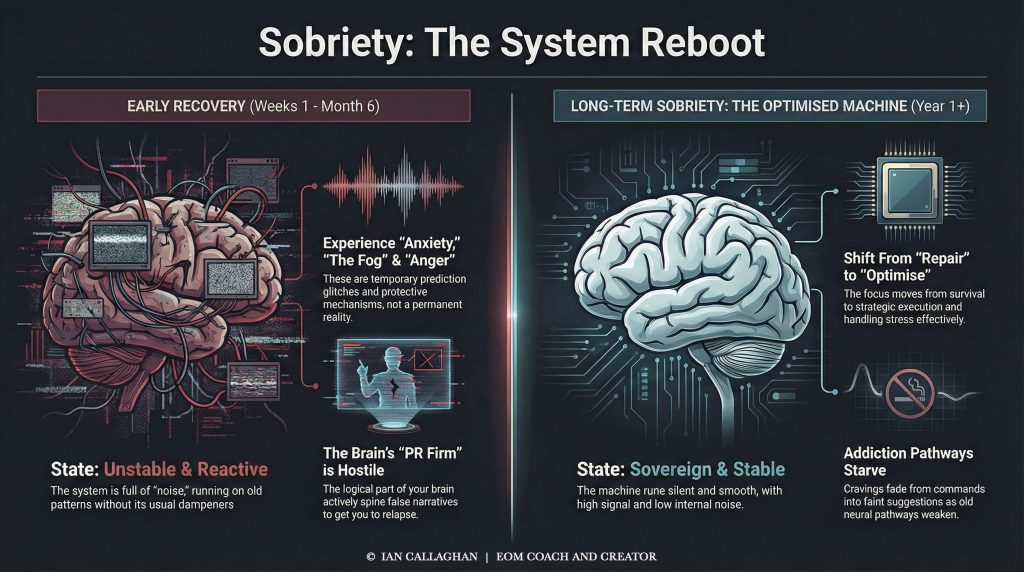
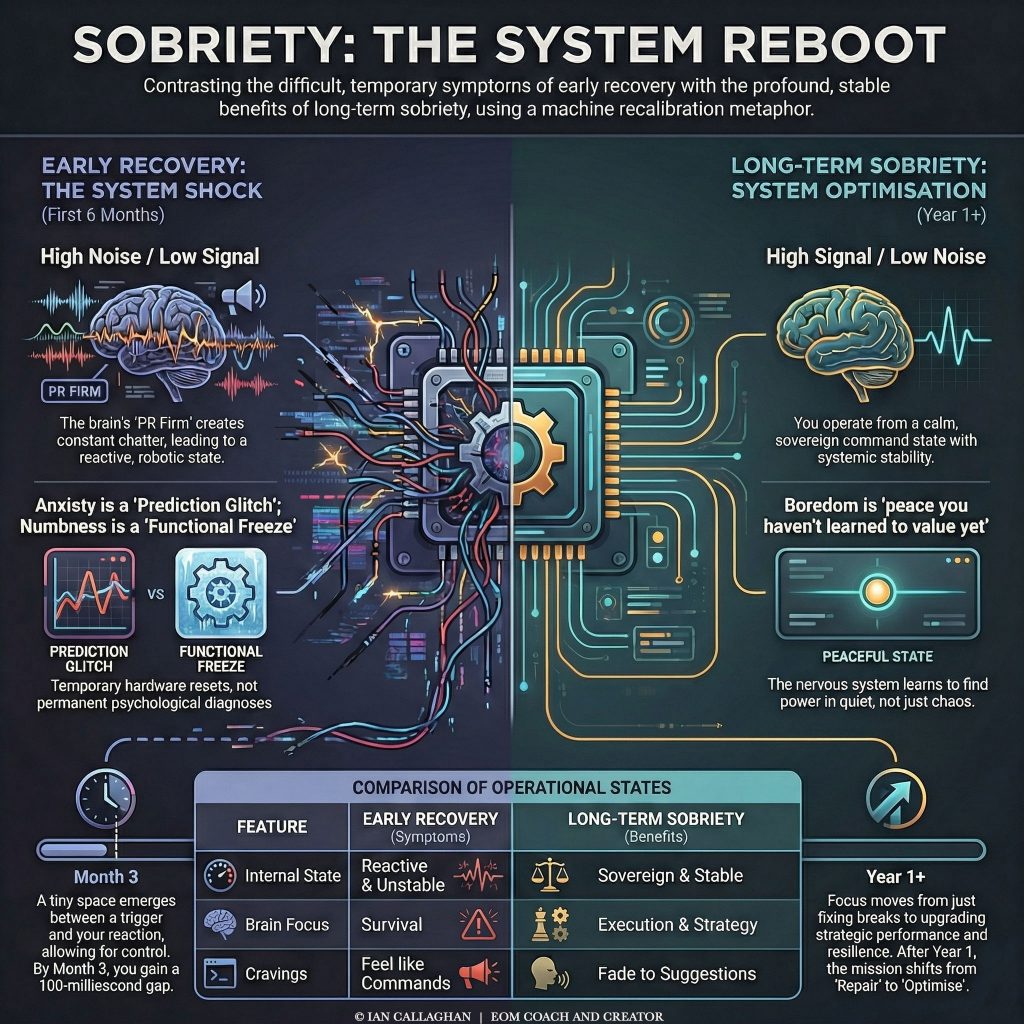
The machine doesn’t like being rebooted while it’s running, but understanding the mechanical difference between early recovery symptoms versus long term sobriety benefits is the only way to stop the PR Firm from selling you a relapse.
Introduction: The Mechanic’s View of the System Reset
I spent 45 years pouring ethanol into the tank. That is 45 years of running the engine on dirty fuel, overriding the sensors, and ignoring the check-engine light until the bulb burned out. When I finally stopped, I didn’t just “feel better” immediately. That is the great lie the wellness industry sells you. They tell you it’s a journey of healing; I am telling you it is a mechanical strip-down.
When you have been drinking for decades—or even just years of heavy load—your nervous system has adapted to a toxic baseline. It expects the sedative. It relies on the chemical shutdown. When you remove the alcohol, you aren’t just removing a drink; you are removing the dampener from a hyper-sensitive nervous system.
The result is noise. Static. High RPMs with the clutch disengaged.
We call this the Tone failure. Your Tone—the signal-to-noise ratio of your nervous system—drops through the floor. You become reactive. You become a robot. This is the critical juncture where most people fail because they mistake the symptoms of repair for permanent damage.
In the Emotional Operating System (EOM), we do not deal in vague concepts of “cravings” or “spiritual voids.” We look at the hardware. We ask: “What is the Stoppage?”
This guide is an architectural breakdown of early recovery symptoms versus long term sobriety benefits. We are going to look at the error codes your system throws in the first few weeks (Early Recovery) and contrast them with the operational efficiency you achieve once the software has been patched (Long Term Sobriety).
We are not here to hold hands. We are here to fix the engine.
Phase 1: The Crash Log (Early Recovery Symptoms)
When you first cut the fuel line to the addiction, the system goes into shock. This isn’t a moral failing; it is a physiological inevitability. Your brain has been down-regulating its own neurotransmitters (GABA, Dopamine) because the alcohol was providing them artificially. When you stop, there is a lag time before your brain starts manufacturing its own chemicals again.
This gap is where the war is fought. This is the 100-Millisecond War happening on a macro scale.
The PR Firm’s Counter-Attack (The First 30 Days)
Your logical mind—what I call The PR Firm—will try to spin a narrative to get you to drink again. It hates discomfort. It will look at the shaking chassis and the overheating radiator and tell you, “You are broken. A drink will fix this.”
The PR Firm creates the Narrative Fallacy. It tells you that the anxiety you feel is who you are, rather than just a symptom of the system calibrating.
Common Mechanical Failures (Symptoms):
The Adrenaline Dump (Anxiety/Jitters): Alcohol is a depressant. To keep you standing while you drink, your body pumps out stimulants (cortisol, adrenaline). When you stop drinking, the alcohol leaves, but the body keeps pumping the stimulants for days or weeks. You aren’t “anxious” in a psychological sense; you are chemically vibrating. The engine is idling at 6,000 RPM.
The Visual Cortex Hijack (Phantom Signals): You might see a beer advert or the shape of a wine glass, and your brain fires a “WANT” signal before you’ve even processed it. This is The Backdoor. The visual cortex processes data faster than the logical brain. The addiction tries to bypass the Sovereign Operator by using shapes and colours to trigger a saliva response.
The Prediction Glitch (Insomnia/Racing Thoughts): The brain is a prediction machine. In early recovery, the data is corrupted. It cannot predict how you will sleep or cope without the chemical assist, so it spins “What If” scenarios. This consumes massive amounts of glucose, leading to exhaustion even if you haven’t moved from the sofa.
Functional Freeze (Numbness): Sometimes, the load is too high for the Low Tone system to handle. The circuit breaker trips. You feel nothing. No joy, no sadness, just grey static. This is a safety mechanism to prevent metabolic burnout. It is not depression; it is a system-wide safe mode.
Phase 2: The Repatterning Timeline (Weekly Breakdown)
We do not simply hope for the best. We track the metrics. When analysing early recovery symptoms versus long term sobriety benefits, you must understand the timeline of the repair job. You cannot expect a Formula 1 performance from a car that’s been sitting in a swamp for 20 years, not in the first week.
Week 1: The Hard Reboot
Status: Critical System Failure.
The Mechanic’s Note: This is physical survival. The liver is purging toxins. The PR Firm is screaming.
The Symptom: Night sweats, tremors, extreme irritability (Valuation Acceleration). You judge everything and everyone instantly and harshly.
The Fix: Hydration, Cold Override (cold showers to reset the Vagal Brake), and absolute refusal to engage with the narrative. Do not ask “Why?” Just survive the “What.”
Month 1: The False Horizon
Status: System Stabilising, Software Glitching.
The Mechanic’s Note: You might hit the “Pink Cloud”—a surge of dopamine as the brain realises it’s not being poisoned. Do not trust it. It is temporary.
The Symptom: Manic energy followed by a sudden crash into lethargy. The brain is attempting to regulate dopamine production but the levels are fluctuating wildy.
The Fix: Routine. Discipline. Do not rely on motivation (mood); rely on protocol (action).
Month 3: The Ghost Code (PAWS)
Status: Post-Acute Withdrawal Syndrome.
The Mechanic’s Note: This is where the amateurs drop out. The physical toxins are gone, but the Legacy Software (old neural pathways) is still running in the background.
The Symptom: Sudden, unexplained waves of anxiety or “using dreams.” The PR Firm whispers, “You’ve been good for 3 months, surely you can handle one?”
The Fix: Recognise this as a software bug, not a command. Use The Gate. Observe the thought, label it as “Legacy Code,” and let it pass without attachment.
Phase 3: The Sovereign Upgrade (Long Term Benefits)
If early recovery is the garage, long-term sobriety is the open road. This is not about “staying dry.” It is about Sovereignty.
When we compare early recovery symptoms versus long term sobriety benefits, we see a shift from reactive living to active command. The Sovereign Operator takes the seat.
1. High Tone Stability (The Bandwidth Upgrade)
In the long term, your Tone increases. This means your nervous system can handle load—stress, conflict, tragedy—without collapsing.
Early Recovery: A flat tyre ruins your week.
Long Term: You change the tyre, wash your hands, and drive on. The signal-to-noise ratio is optimised. You have bandwidth.
2. The Death of the Narrative Fallacy
The PR Firm eventually gets fired—or at least demoted to the mailroom. You stop believing the stories your head tells you to justify bad behaviour.
The Shift: You no longer need to “cope.” You process. You don’t hide in a bottle; you stand in The Gate and observe the reality of the situation. You deal with facts, not feelings.
3. Latency Reduction (OODA Loop Speed)
The OODA Loop (Observe, Orient, Decide, Act) is a military concept for decision-making cycles.
Alcohol Brain: High latency. You observe a threat, you freeze or panic, you make a bad decision, you regret it.
Sovereign Brain: Zero latency. You observe the signal, you orient yourself (I am Safe, I am Capable), you decide on the correct mechanical action, and you execute. You become efficient.
4. Metabolic Efficiency
Your body stops fighting a daily war against poison. The energy previously used to process ethanol is now available for cognitive function, muscle repair, and immune response. You aren’t just “healthier”; the machine is running at peak manufacturing spec.
FAQ: Troubleshooting the Transition
Q: Why do I feel worse in month two than I did in week one? Ian: Because the adrenaline has worn off. In week one, you were fighting a tiger. In month two, you are sitting in a quiet room with your own thoughts. The noise of the alcohol is gone, so now you can hear the creaking of the floorboards (your unresolved trauma or Legacy Software). This is not regression; it is increased resolution. You are seeing the mess clearly for the first time. Start cleaning.
Q: Will the PR Firm ever shut up? Ian: It never goes silent, but it loses its megaphone. Right now, the PR Firm has a PA system. In long-term sobriety, it’s just a mumbling in the corner. You learn to distinguish between “Signal” (useful data) and “Noise” (emotional static). You stop negotiating with terrorists inside your own head.
Q: I feel numb. Is my engine broken? Ian: No. You are in “Safe Mode.” Your system is rebooting. Do not force “happiness.” Happiness is a fleeting mood. Aim for Stability. If you are flat, be flat. Being flat is better than being in a chaotic sine wave of drunk/hungover. Functionality returns before joy does. Keep the chassis moving.
Q: How do I speed up the process? Ian: You don’t. You cannot hack the timeline of biological repair. However, you can prevent delays by not adding new wreckage. Hydrate. Sleep. Cold water. Functional movement. Stop staring at the Museum of your past and start working in the Workshop of your present.
The Mechanic’s Directive
We have established the baseline. You now understand that the pain you feel is simply the friction of parts moving that haven’t moved in years.
Early recovery symptoms versus long term sobriety benefits is not a fair fight. The symptoms are loud, immediate, and demanding. The benefits are quiet, cumulative, and structural. The symptoms scream; the benefits whisper.
You must have the discipline to ignore the scream and listen for the whisper.
The machine is capable of self-repair, but only if the operator stops pouring sugar in the petrol tank. You are the operator. Take command.
If you are ready to stop guessing and start engineering your recovery, you need the blueprints. The EOM is not a support group; it is a technical manual for the human machine.
Early Recovery Symptoms Versus Long Term Sobriety Benefits: An Engineering Perspective
The difference between early recovery symptoms versus long term sobriety benefits is the difference between a car in the garage undergoing a full engine rebuild and a high-performance vehicle dominating the track.
Phase 2: The Calibration Period (The Middle Ground)
We have addressed the immediate crash site. Now we move to the rebuild.
When discussing early recovery symptoms versus long term sobriety benefits, there is a dangerous middle ground that the medical community often calls PAWS (Post-Acute Withdrawal Syndrome). In the Emotional Operating System (EOM), we call this System Calibration.
This is where the amateur mechanic gives up. The acute pain is gone, but the engine is still misfiring. You are not “drunk,” but you are not “right.”
The Hardware Lag
Your nervous system has been running on a high-octane, dirty fuel source (alcohol/drugs) for years. You have now switched to clean fuel (sobriety). The engine does not recognise it yet.
The Legacy Software—the old childhood patterns and the PR Firm in your head—is screaming for the old input. The hardware is confused. You may experience:
phantom signalling (cravings with no trigger),
thermal spikes (sudden anger or anxiety),
systemic drag (lethargy and brain fog).
This is not a sign that sobriety isn’t working. It is a sign that the operating system is attempting to re-index its database.
In this phase, you are likely to think, “Is this it? Is this the ‘great life’ everyone promised?”
Do not listen to the PR Firm. It is lying to get you to drink. The PR Firm will tell you that being bored is fatal. It will tell you that a flat mood is a crisis.
The reality? You are simply bored. You are simply flat. This is not a malfunction; it is a lack of artificial stimulation. You must hold the line while the neurochemistry—the spark plugs and fuel injectors—realigns to a standard baseline.
The Long Term Operational Benefits
If you survive the calibration, you enter the operational phase. This is where we see the true data regarding early recovery symptoms versus long term sobriety benefits.
The benefits are not about “happiness.” Do not aim for happiness; aim for Sovereignty.
1. High Tone: The Sovereign State
In early recovery, your Tone—your nervous system’s signal-to-noise ratio—is rock bottom. You are reactive. A text message can ruin your day. A dropped plate can cause a meltdown. You are a robot, programmed by external stimuli.
The primary benefit of long-term sobriety is High Tone.
Load Bearing Capacity: You can carry heavy loads—stress, grief, financial pressure—without the chassis buckling.
The 100-Millisecond War: In active addiction, there is zero gap between a Trigger and your Reaction. In long-term sobriety, you reclaim the 100-millisecond gap. You see the trigger, you evaluate it, and you choose the response.
Command Authority: You stop being a passenger in your own life. You become the Driver.
2. Decommissioning the PR Firm
Active addiction requires a robust PR Firm—that voice in your head that spins narratives to justify the unjustifiable. “I deserve this drink because I worked hard,” or “I need this because she shouted at me.”
In long-term recovery, the PR Firm goes bankrupt. It is replaced by Raw Data Analytics.
You stop telling stories about “why” you feel bad.
You identify the mechanical stoppage. “I am tired because I slept poorly.” “I am angry because my boundary was breached.”
There is no drama, only diagnostics. This is freedom.
3. Metabolic and Financial Efficiency
Consider the energy required to maintain an addiction. The plotting, the hiding, the recovering, the lying. That is a massive drain on your CPU.
When you compare early recovery symptoms versus long term sobriety benefits, look at the resource allocation.
Energy: All that processing power is now available for building a business, training the body, or being present for your family.
Finance: It is not just the cost of the alcohol; it is the cost of the bad decisions made while under the influence. Long-term sobriety compounds wealth because you stop burning capital on chaos.
The Identity Update: Creating the Sovereign Operator
The most critical aspect of EOM is the Identity Update.
In the early days, your identity is “Addict” or “Recovering Alcoholic.” This is necessary for triage, but it is a weak identity for the long term. If you stay there, you are defined by a negative—by what you do not do.
Long-term benefits unlock when you press the “Save Button” on a new identity.
You are no longer a broken machine. You are a Sovereign Operator.
You must replace the Legacy Software (the toddler that wants comfort) with the Adult Executive Programme.
Old Code: “I want to feel better now.”
New Code: “I will execute the required task regardless of how I feel.”
This is where the Visual Cortex Hijack (The Backdoor) becomes a tool for creation, not just survival. You use visualisation not to escape reality, but to blueprint the architecture of your future. You see the objective, and you march toward it.
Navigating the Error Codes: Avoiding Rust
Even in a restored vintage car, rust never sleeps.
The biggest threat to long-term sobriety is not the craving; it is Complacency. It is forgetting the disparity between early recovery symptoms versus long term sobriety benefits.
The PR Firm will try to creep back in. It will whisper, “You’ve fixed the machine. Surely one drink won’t crash the server now.”
This is a fatal error code.
You must maintain a maintenance schedule.
Daily Cold Override: Cold water exposure to reset the vagal brake. Keep the system sharp.
Inventory Checks: Regular audits of your resentment and fear levels. Do not let pressure build in the gasket.
Service the Community: You cannot keep what you do not give away. Assist other mechanics in the workshop.
Conclusion: The Workshop is Open
We have analysed the data. We have looked at the mechanics of early recovery symptoms versus long term sobriety benefits.
The symptoms are the price of admission. They are the friction of rust breaking loose. They are temporary, uncomfortable, and loud.
The benefits are structural. They are the quiet hum of an engine running at optimal efficiency. The ability to look your children in the eye. They are the capacity to wake up without the crushing weight of existential dread.
You do not need to “find yourself.” You need to build yourself.
The Museum of your past is closed. Stop trying to buy a ticket to look at the exhibits of your trauma. The Workshop is open. The tools are on the wall.
The Emotional Mastery book is a practical manual for understanding and regulating the human nervous system using the Emotional Operating System framework.
Instead of analysing emotions or retelling your past, the Emotional Mastery book teaches you how to read emotional states as system feedback, identify overload, and restore stability under pressure.
No labels. No therapy-speak. No endless healing loops. Just a clear, operational approach to emotional regulation that actually holds when life applies load.
Can Autophagy Induced by Fasting Act as a Mechanism to Repair Alcohol-Damaged Cells and Liver Tissue?
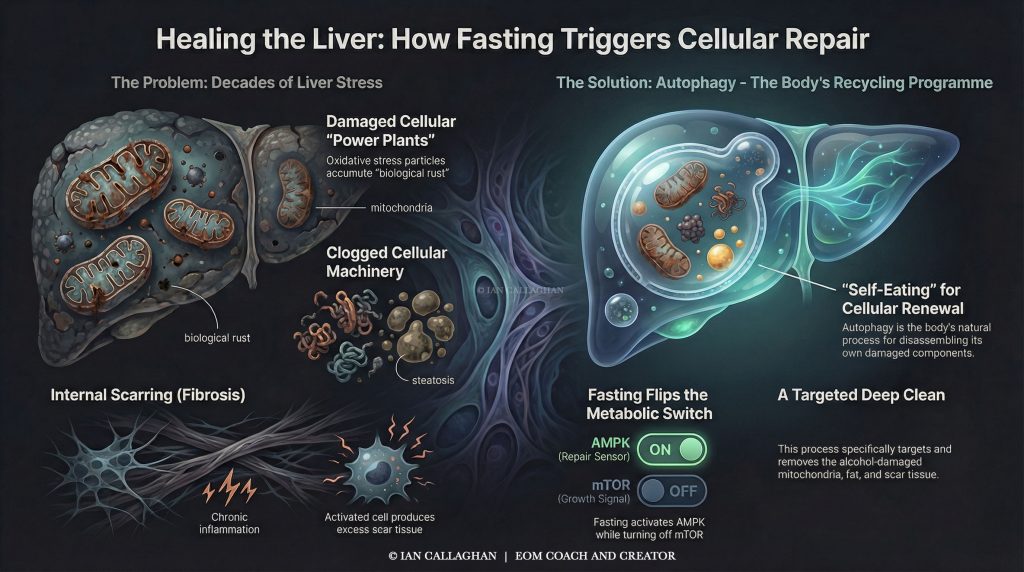
Your liver possesses an extraordinary capacity for regeneration, but after decades of alcohol exposure, abstinence alone may not be enough to clear the accumulated cellular debris; deep metabolic rest is required. For an individual with over a year of sobriety following 45 years of drinking, combined with a background in Paleo and Keto nutrition, understanding autophagy induced by fasting as a mechanism to repair alcohol-damaged cells and liver tissue is the key to unlocking true cellular rejuvenation.
Recent scientific literature suggests that while the liver is resilient, the “scarring” and intracellular “junk” left behind by chronic alcohol use requires a specific metabolic trigger to be removed. That trigger is the absence of food. With your established regimen of One Meal A Day (OMAD) and 72-hour extended fasts, you are already utilising the most potent tool available for reversing cellular damage.
This comprehensive guide explores the biological machinery behind liver repair. We will dissect how extended fasting moves beyond simple weight management and acts as a surgical intervention for cellular health, leveraging your knowledge of ketosis, electrolytes, and nutrient density.
Cut through the fasting hype with raw, unfiltered truth. This no-bullshit guide exposes the good, the bad, and the ugly of fasting. Learn what really works, what’s dangerous, and why fasting isn’t for everyone. Perfect for midlifers, health seekers, and anyone tired of wellness industry snake oil.
The Biological Aftermath: Understanding 45 Years of Hepatic Stress
To appreciate the solution, one must fully grasp the problem. Alcohol (ethanol) is not merely a toxin; it is a metabolic disruptor that fundamentally alters how your cells generate energy and manage waste.
The Mitochondria and Oxidative Stress
The liver metabolises alcohol primarily through an enzyme called alcohol dehydrogenase (ADH). However, chronic consumption forces the liver to utilise a backup pathway known as the Microsomal Ethanol Oxidising System (MEOS), specifically involving the CYP2E1 enzyme. While this system helps clear alcohol, it generates a massive amount of Reactive Oxygen Species (ROS)—essentially “biological rust.”
For a drinker of 45 years, this oxidative stress targets the mitochondria—the power plants of the cell. Alcohol creates “leaky” mitochondria that cannot burn fuel efficiently. This leads to a build-up of unmetabolised fat within the liver cells (hepatocytes), a condition known as hepatic steatosis. Even after a year of being alcohol-free, these dysfunctional mitochondria may linger, causing fatigue and suboptimal metabolism unless they are recycled.
The Accumulation of Misfolded Proteins
Chronic inflammation causes proteins within the liver cells to fold incorrectly. In a healthy liver, these are cleared away. In an alcohol-burdened liver, the clearing mechanism becomes overwhelmed. These misfolded proteins aggregate, forming clumps that clog cellular function. This is comparable to a house where the rubbish has not been taken out for decades; eventually, the hallways become impassable.
Key Insight for the Keto/Paleo Practitioner: You are likely aware that standard Western diets high in fructose and seed oils exacerbate this inflammation. By adopting a Paleo or Keto approach, you have stopped adding fuel to the fire. However, the existing debris—the “wreckage” from the 45 years of drinking—requires a garbage disposal crew. That crew is autophagy.
Defining the Mechanism: What is Autophagy?
Autophagy (from the Greek auto, “self”, and phagy, “eating”) is a preserved evolutionary survival mechanism. It is the body’s internal recycling programme. It is not merely “starvation”; it is a highly regulated process where cells disassemble their dysfunctional components to create energy and new building blocks.
The mTOR vs. AMPK See-Saw
To understand autophagy induced by fasting as a mechanism to repair alcohol-damaged cells and liver tissue, you must understand the two master regulators of metabolism:
mTOR (Mammalian Target of Rapamycin): This is the “growth” signal. It is triggered by insulin, glucose, and specifically, protein intake. When mTOR is high, the body is building tissue and storing energy. Autophagy is turned off.
AMPK (Adenosine Monophosphate-Activated Protein Kinase): This is the “low energy” sensor. It is triggered when glycogen stores are depleted and ATP (cellular energy) is low. When AMPK is high, the body shifts into repair mode. Autophagy is turned on.
In the context of modern eating habits (three meals a day plus snacks), mTOR is perpetually stimulated, and AMPK is suppressed. The body never gets a chance to clean house.
The Lysosome: The Incinerator
When autophagy is triggered, the cell identifies damaged organelles (like the alcohol-ruined mitochondria mentioned earlier). It wraps them in a double membrane structure called an autophagosome. This structure then fuses with a lysosome, an organelle filled with acidic enzymes. The junk is dissolved, and the raw materials (amino acids and fatty acids) are released back into the cell to build new, healthy structures.
For someone with your history, this is critical: You are not just resting your liver during a 72-hour fast; you are physically digesting the damage caused by decades of alcohol.
Autophagy Induced by Fasting as a Mechanism to Repair Alcohol-Damaged Cells and Liver Tissue
This section addresses the core of your query. How specifically does this process target the liver damage associated with long-term alcohol use? The mechanism works through three distinct pathways, particularly relevant to your physiology.
1. Mitophagy: Replacing the Engines
The most specific form of autophagy relevant to alcohol recovery is mitophagy—the selective degradation of damaged mitochondria. Alcohol is a mitochondrial poison. It causes mitochondrial DNA damage and swelling. As you practise OMAD and move into extended fasting, the drop in insulin and the rise in glucagon signal the hepatocytes to inspect their mitochondria.
The cell identifies the mitochondria that are leaking ROS (oxidative stress) and tags them for destruction. By digesting these faulty power plants, the liver prevents them from releasing further inflammatory signals. Once the fast is broken (re-feeding), the body uses the recycled amino acids to build brand new, efficient mitochondria. This restores the liver’s ability to burn fat (beta-oxidation), effectively reversing the metabolic stagnation often seen in former drinkers.
2. Lipophagy: Eating the Fatty Liver
Fatty liver is the hallmark of chronic alcohol use. Even after quitting, visceral fat and intra-hepatic fat can remain stubborn. Lipophagy is a specific type of autophagy where the cell targets lipid droplets (fat stores inside the liver cell).
During your monthly 72-hour fasts, once liver glycogen is depleted (usually within 24 hours), the body desperately needs energy. It forces the liver cells to engulf their own stored fat droplets, break them down via lysosomes, and convert them into free fatty acids and ketones.
Connection to Keto: Since you are likely “fat-adapted” due to your Keto/Paleo background, your body initiates lipophagy faster than the average person. You do not suffer the “keto flu” lag; your body immediately begins mining the liver for fat to produce ketones, effectively scrubbing the liver clean of steatosis.
3. Reducing Fibrosis and Stellate Cell Activation
Alcohol damage activates hepatic stellate cells, which produce collagen—scar tissue (fibrosis). While advanced cirrhosis is difficult to reverse, early-to-mid-stage fibrosis has shown reversibility potential through fasting.
Prolonged fasting reduces systemic inflammation (measured by markers like CRP). This reduction in inflammation signals the stellate cells to stop producing scar tissue. Furthermore, autophagy can degrade the excess collagen matrix, slowly softening the liver tissue and restoring pliability and blood flow.
Optimising the Protocol: OMAD, Extended Fasts, and Electrolytes
Given your 40 years of nutritional experience and current regimen, you are positioned perfectly to maximise these mechanisms. However, nuance is required to ensure you are repairing, not stressing, the system.
The Role of Glycogen Depletion (OMAD vs. 72 Hours)
Your daily OMAD practice is excellent maintenance. It provides a daily window (usually 16–20 hours) where insulin drops, allowing for “maintenance cleaning.” This keeps the liver from accumulating new damage.
However, deep autophagy induced by fasting as a mechanism to repair alcohol-damaged cells and liver tissue usually peaks between 48 and 72 hours.
0–24 Hours: Glycogen depletion and transition to ketosis.
24–48 Hours: Peak upregulation of AMPK; massive increase in Human Growth Hormone (HGH) to protect lean muscle.
48–72 Hours: Deep immune system reset and peak autophagy. This is where the heavy lifting occurs regarding scar tissue and deep cellular debris.
Your monthly 72-hour fast is the strategic “deep clean” that complements the daily OMAD “tidy up.”
Hydration and The Electrolyte Balance
You mentioned using homemade sea salt and lemon water. This is a crucial distinction in your protocol.
Sea Salt: Essential. Fasting creates a natriuretic effect (insulin drops, kidneys dump sodium). Without sodium, you risk hyponatremia, dizziness, and heart palpitations.
Lemon Water: A point of debate in the strictest fasting circles, but generally accepted. The trace amount of fructose in a squeeze of lemon is negligible and unlikely to spike insulin enough to stop autophagy, while the citrate helps prevent kidney stones and supports liver detoxification pathways.
Bone Broth: This requires careful timing. Bone broth contains protein (amino acids). As noted earlier, amino acids stimulate mTOR. Technically, consuming bone broth breaks a fast regarding autophagy.
Recommendation: Use bone broth as a “crutch” only if you feel you might break the fast early due to weakness, OR use it specifically to break the fast gently. For the maximum autophagic effect to repair alcohol damage, water and electrolytes alone are superior during the 24-72 hour window.
The Keto/Paleo Synergy
Your background in Paleo and Keto provides a metabolic advantage. Most people attempting a 72-hour fast spend the first 48 hours suffering from glucose withdrawal. Your liver, already adapted to ketones, shifts into autophagy seamlessly.
Furthermore, a Paleo diet eliminates the inflammatory grains and seed oils that would otherwise burden the liver during the re-feeding window. When you break your fast, the nutrients you consume are used to build the new cells. By providing high-quality proteins and fats (Paleo/Keto), you are rebuilding your liver with “premium materials” rather than cheap, inflammatory fillers.
[END OF PART 1 – CONTINUED IN PART 2]
In Part 2, we will delve into:
The Re-Feeding Syndrome Risk: How to safely break a 72-hour fast to prevent liver shock.
Specific Nutrients for Hepatocyte Regeneration: The role of Choline, Glycine, and Sulphur.
Advanced Autophagy Boosters: How heat (sauna) and specific supplements can amplify the fasting signal.
Monitoring Progress: Which blood markers (ALT, AST, GGT, Ferritin) to track to verify the repair is working.
How To Optimise Autophagy Induced by Fasting as a Mechanism to Repair Alcohol-Damaged Cells and Liver Tissue
Autophagy induced by fasting as a mechanism to repair alcohol-damaged cells and liver tissue is not merely about the cessation of eating; it is about the strategic reintroduction of nutrients to build a resilient, regenerated liver.
As established in Part 1, the fasting window initiates the demolition of senescent (zombie) cells and organelle recycling. However, the efficacy of this repair process is contingent upon how you exit the fast. If the re-feeding phase is mishandled, you risk halting the benefits or, in severe cases, causing further metabolic stress. This section details the precise protocol for re-feeding, the specific nutrient profiles required for hepatocyte (liver cell) regeneration, and advanced methods to verify that your liver is healing.
1. The Re-Feeding Protocol: Preventing Liver Shock
The most critical moment of a 72-hour fast is the first bite of food. After three days, your digestive system is dormant, and your insulin sensitivity is at its peak. Flooding the system with carbohydrates or heavy meals immediately halts autophagy induced by fasting as a mechanism to repair alcohol-damaged cells and liver tissue and can trigger a massive insulin spike, promoting fat storage in the very liver you are trying to de-fat.
Understanding Re-Feeding Syndrome (RFS) in the Context of Alcohol Recovery
While clinical Re-Feeding Syndrome is rare in healthy individuals fasting for short periods (under 5 days), those with a history of alcohol misuse must be vigilant. Alcohol depletes electrolytes—specifically phosphate, magnesium, and potassium.
During a fast, your body switches to fat metabolism. Upon reintroducing carbohydrates, insulin surges, driving phosphate into cells to produce ATP (energy). If your baseline phosphate is low due to prior alcohol consumption, this shift can lead to dangerously low blood phosphate levels.
To safely exit the fast and sustain liver repair:
Avoid Carbohydrates Specifically: Do not break a fast with fruit, juices, or starches. These stop autophagy instantly and spike insulin.
Prioritise Electrolytes: Ensure you have consumed adequate sodium and magnesium within the final 4 hours of the fast.
The “Wait and See” Method: Eat a small portion (200 calories), wait 30 minutes, and assess digestion before consuming a full meal.
The Ideal Break-Fast Menu
To continue the healing process even as you begin eating, focus on foods that support the liver without demanding heavy enzymatic activity.
Bone Broth (The Primer): As mentioned at the end of Part 1, bone broth is rich in glycine. Glycine is essential for detoxification but requires little digestion. It gently wakes up the gut lining.
Fermented Foods (The Gut Support): A small amount of sauerkraut or kimchi provides probiotics. Alcohol damages the gut microbiome, increasing permeability (leaky gut), which allows toxins to flow back to the liver. Fermented foods help seal this barrier.
Steamed Cruciferous Vegetables: Soft, steamed broccoli or cauliflower. These contain sulforaphane, a compound that upregulates Phase II liver detoxification enzymes.
Lean Protein: After 60 minutes, introduce white fish or eggs. Red meat should be reserved for day two of re-feeding to reduce digestive load.
2. Essential Nutrients for Hepatocyte Regeneration
Once the fast is safely broken, the goal shifts from “clean up” (autophagy) to “rebuild” (regeneration). The liver is the only organ in the human body capable of full regeneration, provided it has the correct raw materials.
The keyword here is bioavailability. An alcohol-damaged liver may struggle to process complex synthetic vitamins. You must provide nutrients in their most absorbable forms to facilitate autophagy induced by fasting as a mechanism to repair alcohol-damaged cells and liver tissue effectively.
Choline: The Fat Exporter
Alcohol damage often manifests as hepatic steatosis (fatty liver). Alcohol metabolism inhibits the oxidation of fatty acids, causing triglycerides to accumulate in liver cells.
Choline is the antidote to this accumulation. It is the primary component of Phosphatidylcholine, which is required to create VLDL (Very Low-Density Lipoprotein). VLDL acts as a transport vessel, moving fat out of the liver to be used for energy elsewhere. Without adequate choline, the fat released during your fast may simply be re-deposited in the liver.
Best Sources: Egg yolks (pasture-raised), beef liver, krill oil.
Supplementation: If using supplements, opt for Phosphatidylcholine or CDP-Choline rather than cheap Choline Bitartrate.
Glycine: The Glutathione Precursor
Glutathione is the body’s “master antioxidant.” It is the primary agent used by the liver to neutralise reactive oxygen species (ROS) generated by alcohol metabolism. Chronic alcohol use depletes glutathione reserves, leaving liver cells vulnerable to oxidative stress.
Glycine is the rate-limiting amino acid for glutathione production. Furthermore, glycine acts as an anti-inflammatory agent specifically for macrophages (immune cells) in the liver, preventing them from attacking healthy tissue.
Best Sources: Collagen powder, gelatin, bone broth, chicken skin, pork crackling.
Strategy: Combine glycine-rich foods with Vitamin C to maximise collagen synthesis for repairing the structural architecture of the liver (fibrosis repair).
Sulphur: Fueling Phase II Detoxification
Liver detoxification occurs in two phases. Phase I turns toxins into intermediate metabolites (often more toxic than the original substance). Phase II binds these metabolites to molecules so they can be excreted.
Alcohol recovery relies heavily on Sulphuration, a Phase II pathway. Sulphur-rich compounds are necessary to clear the toxic byproducts released during the deep autophagy of a 72-hour fast.
Supplement Synergy: MSM (Methylsulfonylmethane) is an organic sulphur supplement that can reduce liver inflammation and support the structural integrity of hepatocytes.
3. Advanced Autophagy Boosters: Amplifying the Signal
While fasting is the primary trigger, specific external stimuli and compounds can act as “autophagy enhancers,” essentially turning up the volume on the cellular repair signal. By integrating these into your fasting protocol, you intensify the autophagy induced by fasting as a mechanism to repair alcohol-damaged cells and liver tissue.
Heat Shock Proteins (HSPs) and Sauna Therapy
Using a sauna during the fasting window (specifically between hours 24 and 48) creates a synergistic effect. Heat stress triggers the production of Heat Shock Proteins (HSPs).
HSPs are molecular chaperones; their job is to repair misfolded proteins. Alcohol damage causes proteins within liver cells to become misfolded and dysfunctional. HSPs can re-fold these proteins or tag them for degradation via autophagy.
Protocol: 20 minutes in a dry sauna at 80°C+ during the fasted state. Ensure massive hydration with electrolytes to compensate for fluid loss.
Coffee and Polyphenols
Coffee is a unique exception during a fast for liver repair. Epidemiological studies consistently show that coffee consumption is inversely associated with liver cirrhosis and fibrosis.
The mechanism involves polyphenols (specifically chlorogenic acid) and caffeine. These compounds stimulate liver autophagy independent of nutrient deprivation. They inhibit mTOR (the growth pathway that blocks autophagy) specifically in hepatic tissue.
The Rule: Black coffee only. No milk, cream, or sweeteners, which would break the fast.
Targeted Supplementation
Certain supplements mimic the fasting signal or support the autophagy process:
NAC (N-Acetyl Cysteine): The direct precursor to glutathione. Taking NAC before the fast helps preload the liver with antioxidants. Taking it during the re-feed supports the flushing of toxins liberated during autophagy.
Milk Thistle (Silymarin): While often touted as a detoxifier, its true power lies in its ability to stabilise cell membranes, preventing toxins from re-entering regenerated cells.
TUDCA: A water-soluble bile acid that improves bile flow. Autophagy breaks down toxins, but they must be excreted via bile. If bile flow is sluggish (cholestasis), toxins recirculate. TUDCA ensures the “trash” is actually taken out.
4. Monitoring Progress: The Biochemical Feedback Loop
How do you know if autophagy induced by fasting as a mechanism to repair alcohol-damaged cells and liver tissue is actually working? Subjective feelings of “energy” are unreliable. To track liver repair accurately, you must monitor specific blood markers.
If you are undertaking this protocol to reverse damage, request a hepatic function panel before starting and again 4-6 weeks after implementing a cycling fasting routine.
The Enzyme Leaks: ALT and AST
Alanine Transaminase (ALT): This enzyme resides inside liver cells. If it is found in high levels in the blood, it means liver cells are bursting and leaking their contents.
Target: You want ALT to be low (under 25 IU/L is optimal, though lab ranges often go up to 40). A drop in ALT is the surest sign that cell death has stopped.
Aspartate Transaminase (AST): Similar to ALT but also found in muscles.
The Ratio: In alcohol-related damage, AST is often double the ALT level (2:1 ratio). As you heal via autophagy, this ratio should normalise to 1:1.
The Alcohol Marker: GGT
Gamma-Glutamyl Transferase (GGT): This is the most sensitive marker for alcohol damage and bile duct issues. Even when ALT/AST are normal, elevated GGT indicates the liver is under stress.
Significance: GGT takes longer to normalise. A steady decline in GGT is the gold standard for verifying that the biliary system is recovering.
Inflammation and Synthesis Markers
Ferritin: Often elevated in liver disease not just due to iron, but because it is an “acute phase reactant” (a marker of general inflammation). Successful autophagy should lower ferritin levels.
Albumin: Produced exclusively by the liver. Low albumin suggests the liver is too damaged to synthesise proteins. As regeneration occurs, albumin levels should rise to the upper end of the normal range.
Bilirubin: High levels indicate the liver isn’t processing waste products from red blood cells efficiently.
Conclusion: The Path to Hepatic Renewal
Repairing the liver is not a passive act of waiting; it is an active metabolic intervention. By understanding autophagy induced by fasting as a mechanism to repair alcohol-damaged cells and liver tissue, you move beyond the simplistic advice of “drink less” and into the realm of cellular engineering.
The 72-hour fast provides the stimulus—the “demolition” of the damaged structure. The Keto/Paleo nutritional baseline provides the “clean energy” to function without inflammatory drag. The strategic re-feed provides the “bricks and mortar” (Choline, Glycine, Sulphur) to rebuild the organ.
This protocol requires discipline. It demands that you view food not as entertainment, but as code that instructs your biology. However, the reward is substantial: the restoration of one of the body’s most vital organs, returning it from a state of fatty, scarred dysfunction to a lean, metabolic powerhouse.
Summary Checklist for Implementation:
Preparation: 3-5 days of Keto/Paleo eating to become fat-adapted.
The Fast: 24 to 72 hours of water, electrolytes, and black coffee.
The Boost: Sauna use at 24 and 48 hours; light activity (walking).
The Break: Bone broth and fermented vegetables followed by lean protein.
The Build: High choline, high glycine diet for 4 days post-fast.
The Verification: Blood work (ALT, AST, GGT) every 8-12 weeks to track data.
By adhering to this science-backed framework, you harness the evolutionary power of your body to heal itself, proving that damage does not have to be permanent.
Cut through the fasting hype with raw, unfiltered truth. This no-bullshit guide exposes the good, the bad, and the ugly of fasting. Learn what really works, what’s dangerous, and why fasting isn’t for everyone. Perfect for midlifers, health seekers, and anyone tired of wellness industry snake oil.
Used to monitor number of Google Analytics server requests when using Google Tag Manager
1 minute
_gid
ID used to identify users for 24 hours after last activity
24 hours
_ga_
ID used to identify users
2 years
_gali
Used by Google Analytics to determine which links on a page are being clicked
30 seconds
_ga
ID used to identify users
2 years
__utmx
Used to determine whether a user is included in an A / B or Multivariate test.
18 months
__utmv
Contains custom information set by the web developer via the _setCustomVar method in Google Analytics. This cookie is updated every time new data is sent to the Google Analytics server.
2 years after last activity
__utmz
Contains information about the traffic source or campaign that directed user to the website. The cookie is set when the GA.js javascript is loaded and updated when data is sent to the Google Anaytics server
6 months after last activity
__utmc
Used only with old Urchin versions of Google Analytics and not with GA.js. Was used to distinguish between new sessions and visits at the end of a session.
End of session (browser)
__utmb
Used to distinguish new sessions and visits. This cookie is set when the GA.js javascript library is loaded and there is no existing __utmb cookie. The cookie is updated every time data is sent to the Google Analytics server.
30 minutes after last activity
__utmt
Used to monitor number of Google Analytics server requests
10 minutes
__utma
ID used to identify users and sessions
2 years after last activity
_gac_
Contains information related to marketing campaigns of the user. These are shared with Google AdWords / Google Ads when the Google Ads and Google Analytics accounts are linked together.