Your Second Brain: Five Surprising Ways Your Gut Dictates Your Mood
Introduction: The Unseen Architect of Your Mood
If you have ever felt persistently low, anxious, or just mentally foggy, you have likely sought the answer within the confines of your own head. We instinctively treat our mental and emotional states as purely psychological phenomena, governed by the complex wiring of our brains. We might blame stress, lack of sleep, or life circumstances, assuming the solution lies in therapy or a change of scenery. This perspective, however, misses a fundamental and powerful truth about human biology.
The real answer to these feelings often lies not in the head, but in a place we rarely associate with our emotions: the gut. Decades of mounting scientific evidence have revealed that the gastrointestinal tract is far more than a simple digestive tube. It houses a complex neural network so vast and influential that it has earned the nickname the “second brain.” This enteric nervous system is in constant, direct communication with our primary brain, creating a profound gut-brain connection that shapes our thoughts, feelings, and overall mental resilience.
This article will pull back the curtain on this unseen architect of your mood. Based on the latest understanding of nutritional neuroscience, we will explore five surprising and powerful ways your gut health dictates your mental and emotional state. By understanding these mechanisms, you can begin to see your plate not just as a source of energy, but as the most powerful tool you have for reclaiming your mind.
——————————————————————————–
1. The Happiness Heist: Why 95% of Your Mood Is Manufactured in Your Gut
When we talk about mood, the first chemical that comes to mind is often serotonin. Popularly known as the “happy chemical,” serotonin is the neurotransmitter responsible for regulating feelings of well-being, calmness, and emotional stability. It is the target of many common antidepressant medications, which are designed to increase its availability in the brain. But what if the brain is not the main place where serotonin is made?
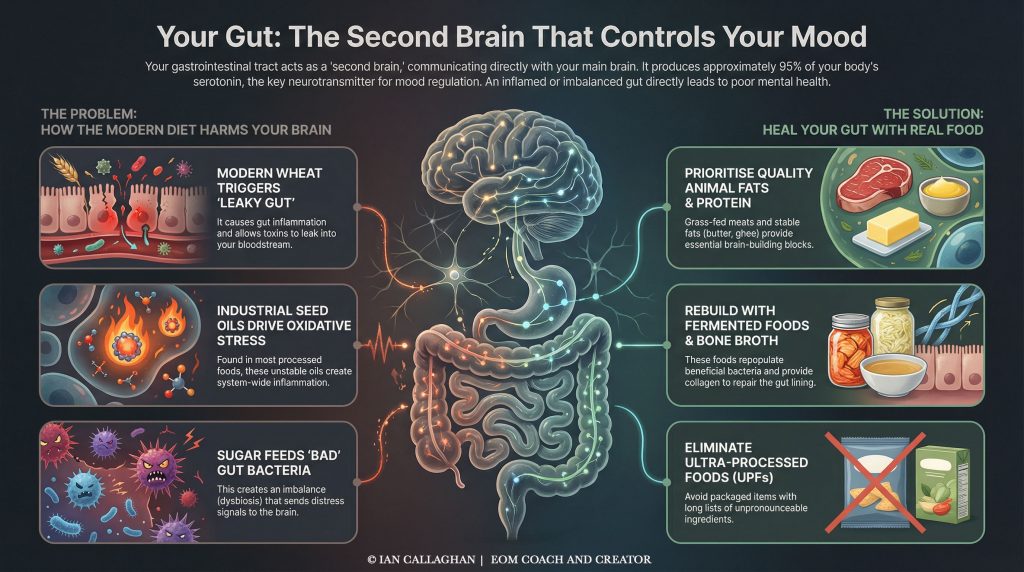
The science is unequivocal: the vast majority of your body’s serotonin is produced in your gut. The enteric nervous system, the intricate web of neurons lining your gastrointestinal tract, serves as the body’s primary manufacturing hub for this critical neurotransmitter. In fact, approximately 95 per cent of the body’s serotonin is produced in the gut, not the brain. This single statistic fundamentally reframes our entire understanding of mental health. It shifts the epicentre of mood regulation from a psychological issue to a gastrointestinal one.
This connection is not abstract; it is physical. The gut and brain are directly linked by the vagus nerve, a vast bidirectional “information superhighway.” This nerve acts as a fibre-optic cable, constantly relaying information about the state of the gut directly to the brain. When the gut is inflamed, irritated, or in a state of dysbiosis, the vagus nerve transmits a ceaseless stream of distress signals upwards. The brain receives this data and interprets it as a systemic crisis, resulting in feelings of anxiety, low mood, and fatigue. An inflamed gut, therefore, directly and unavoidably creates an inflamed and poorly functioning brain.
To understand this dependency, consider the “metropolitan power grid” analogy. Think of your mood as the lights of a bustling city (your brain). For the lights to shine brightly and consistently, they need a reliable supply of electricity. While the lights are in the city, the massive power plant that generates 95% of the electricity (serotonin) is located far away in the industrial district (your gut). If that power plant is poorly maintained, damaged by “corrosive spills” (inflammatory foods), or lacks the necessary fuel (amino acids) from quality protein, the city will inevitably experience a blackout. Your mood darkens not because the wiring in the city is faulty, but because the source of its power has been cut off. Healing your mind, therefore, must begin with repairing the power plant.
——————————————————————————–
2. The Gluten Glitch: How Modern Wheat Opens the Floodgates to Your Brain
For many people, the idea that a piece of toast could be linked to anxiety or depression seems far-fetched. Yet, the connection between modern wheat consumption and mental health is becoming increasingly clear, and the mechanism is rooted in a single, disruptive protein: zonulin. The wheat we consume today is not the same as the ancestral grain our great-grandparents ate. It is a modern, hybridised crop, engineered for high yields and high gluten content. This modification has come at a significant biological cost.
These modern wheat varieties contain high levels of specific proteins that trigger the release of zonulin in the gut. Zonulin is a protein that acts as a master regulator for the “tight junctions” of your intestinal lining. These junctions are microscopic gateways between the cells of your gut wall, designed to remain tightly sealed to keep the contents of your digestive system contained while allowing only fully digested nutrients to pass through into the bloodstream.
When zonulin is released in excess, it acts like a key that unlocks these gateways, causing the tight junctions to open. This creates a condition known as intestinal permeability, or “leaky gut.” When the gut lining is breached in this way, undigested food particles, bacterial toxins, and other inflammatory molecules can “leak” directly from your intestines into your bloodstream. Your immune system, correctly identifying these particles as foreign invaders, launches a full-scale attack, resulting in systemic inflammation that travels throughout your entire body.
This is where the connection to mental health becomes direct and alarming. This wave of systemic inflammation is capable of crossing the highly selective blood-brain barrier, the protective membrane that shields the brain from pathogens and toxins. When inflammatory molecules breach this barrier, they trigger an “immune assault” on the brain itself, leading to a state of neuro-inflammation. The most common and immediate symptom is “brain fog”—that familiar feeling of mental slowness, confusion, and an inability to concentrate. Crucially, this state of chronic brain inflammation also sabotages the delicate biochemical environment required for mood regulation, contributing to the decline of serotonin production and further destabilising your emotional state. This is not a psychological failing; it is a physiological state of brain inflammation.
“Many people who cut out wheat find that their ‘brain fog’ lifts within days. It is not magic; it is simply the cessation of an immune assault on your own system.”
The “high-security fence” analogy helps to illustrate this process perfectly. Imagine your intestinal lining is a high-security fence designed to protect a city, letting in only authorised supply trucks. Zonulin acts like a faulty remote control that is being constantly pressed, accidentally leaving the security gates wide open. With the gates breached, intruders (toxins and undigested food) rush into the city, causing the security team (the immune system) to go into a frantic, city-wide state of high alert. This chaos eventually reaches the city’s “headquarters” (the brain), clouding its ability to process information and disrupting the production of its most vital resource: serotonin.
——————————————————————————–
3. The Seed Oil Sabotage: Are “Healthy” Vegetable Oils Destroying Your Brain Fuel?
For decades, we have been told to replace traditional animal fats like butter and tallow with “heart-healthy” vegetable oils. Walk down any supermarket aisle, and you will find products proudly advertising that they are made with rapeseed, sunflower, soybean, or corn oil. These industrial lubricants masquerading as food are ubiquitous, found in everything from crisps and biscuits to salad dressings and ready meals. Yet, these oils, often marketed as a cornerstone of a healthy diet, may be one of the most destructive components of the modern food environment, particularly for your gut and brain.
The core problem lies in their chemical structure. Industrial seed oils are composed of highly unstable polyunsaturated fatty acids (PUFAs). Unlike stable saturated fats from animal sources, PUFAs oxidise (go rancid) very easily when exposed to heat, light, or oxygen. The industrial process of extracting these oils involves high heat and chemical solvents, meaning they are often already oxidised before they even reach the bottle. When you consume these products, you are ingesting rancid, inflammatory oils that drive significant oxidative stress in the gut lining from the moment they pass your lips.
This constant state of inflammation has a devastating consequence for your microbiome: it sabotages its ability to produce essential compounds your brain needs to thrive. A healthy gut microbiome ferments dietary fibre into short-chain fatty acids (SCFAs), and the most important of these for brain health is butyrate. This is not a minor detail; the brain requires butyrate to function correctly. It is a critical fuel source that supports cognitive function, neuronal health, and mental clarity. When the gut is chronically inflamed by seed oils, the beneficial bacteria responsible for producing butyrate are suppressed. Production grinds to a halt, effectively starving the brain of one of its most vital fuels and leading directly to impaired cognitive function.
“If there is one thing you take away from my forty years of experience, let it be this: ditch the seed oils. Rapeseed oil, sunflower oil, soybean oil, and corn oil are industrial lubricants masquerading as food.”
The “high-performance computer” analogy helps clarify the danger. Think of your brain as a sophisticated, high-performance computer and the fats you eat as its internal hardware components. Stable, traditional animal fats are like high-quality, manufacturer-approved gold circuits that keep the system running cool, fast, and efficiently. Industrial seed oils, in contrast, are like corroded, overheating scrap parts. When you build your computer with these faulty components, the internal temperature rises (inflammation), the power supply (butyrate and serotonin) becomes erratic, and the entire system begins to lag, glitch, and eventually crash. To restore performance, you must stop installing the scrap parts and start using the high-quality hardware your system was designed for.
——————————————————————————–
4. The Sugar Trap: How Sweets Feed the “Bad Guys” in Your Gut
Sugar and refined carbohydrates are well-known for their negative effects on metabolic health, but their impact on mental well-being is just as profound and operates through a direct assault on the gut microbiome. The delicate ecosystem of trillions of bacteria in your gut is highly competitive. Different species have different dietary preferences, and what you choose to eat determines which groups thrive and which are suppressed.
Sugar is the preferred fuel source for pathogenic bacteria and yeasts, such as Candida. When your diet is high in sugar and refined carbohydrates, you are selectively feeding these “bad guys,” allowing them to multiply rapidly. As their populations explode, they begin to crowd out the beneficial bacteria—the species responsible for protecting the gut lining, synthesising essential vitamins, and producing the neurotransmitters that regulate your mood. This hostile takeover creates a state of imbalance known as dysbiosis.
A gut in a state of dysbiosis is not a silent problem. This imbalanced microbial community sends a constant stream of “distress signals” up to the brain via the vagus nerve. The brain interprets this incoming data as a sign that something is critically wrong in the body’s core operating system. Clinically, this chronic state of alarm can manifest as persistent feelings of anxiety and depression. Your mind is, in effect, accurately reflecting the biological chaos occurring in your gut.
This disruption also directly impacts your brain’s chemical balance. A healthy microbiome is essential for maintaining what can be called the “biochemistry of happiness.” The beneficial bacteria crowded out by sugar are the very ones that play a crucial role in the production of serotonin. A gut dominated by pathogenic species simply cannot sustain the biochemical environment needed for stable mood and motivation. You are, quite literally, starving the good bacteria that manufacture your happiness while feeding the bad bacteria that create feelings of distress.
The “sensitive organic garden” analogy effectively captures this dynamic. Imagine your microbiome as a meticulously tended organic garden, designed to produce a rich harvest of nutrients for the “headquarters” (the brain). Sugar and seed oils act like ‘corrosive chemical runoff’ that continuously floods the garden. This toxic runoff poisons the soil (the gut environment) and selectively kills off the beneficial plants while allowing aggressive weeds (pathogenic bacteria) to take over. Once the soil is contaminated and the beneficial plants are gone, the garden can no longer produce its intended “harvest” of butyrate and serotonin, leaving the headquarters undersupplied and malfunctioning.
——————————————————————————–
5. The Ancient Solution: Using “Biological Sealant” to Repair Your Gut-Brain Connection
After understanding the relentless assault of the modern diet on our gut lining and microbiome, the path to healing may seem daunting. However, the solution is not found in a futuristic drug but in an ancient, traditional food that our ancestors understood intuitively. Within the Paleo framework, which emphasises biologically appropriate foods for human health, bone broth stands out as the “ultimate gut-healing superfood.”
Its power lies in its unique concentration of reparative nutrients, chief among them collagen, glycine, and especially glutamine. While all are beneficial, glutamine plays a particularly critical role in gut repair. It serves as the primary fuel source for the enterocytes—the cells that make up the lining of your gut. By providing these cells with their preferred energy, you empower them to regenerate, maintain their integrity, and perform the essential repair work needed to undo the damage caused by years of inflammatory foods.
Crucially, bone broth serves as the direct antidote to the problems detailed earlier. Its rich supply of glutamine and collagen provides the exact building blocks needed to “seal the tight junctions” of the gut lining. This act directly reverses the damage caused by the wheat-induced zonulin release described in section two, patching the holes in the gut’s protective barrier. By repairing the physical integrity of the gut, bone broth stops the leakage of undigested food and toxins into the bloodstream, halting the primary driver of systemic inflammation.
This act of sealing the gut has profound downstream benefits for the brain. Halting the source of systemic inflammation prevents inflammatory molecules from crossing the blood-brain barrier. This helps to clear the persistent brain fog that plagues so many and reduces the neuroinflammation that contributes to mood instability. Furthermore, a healed gut provides a stable, healthy environment where beneficial bacteria can once again thrive. With the pathogenic “weeds” cleared and the integrity of the gut wall restored, the microbiome can get back to its most important job: manufacturing the 95% of your body’s serotonin required for a calm and resilient mind.
The “meticulously woven filter” analogy provides a clear picture of this healing process. Think of your gut lining as a fine, meticulously woven filter designed to keep debris out of your body’s “bloodstream plumbing” while allowing pure nutrients to pass through. Corrosive chemicals like sugar and wheat effectively burn holes in this filter, allowing waste and contaminants to pollute the entire system. Bone broth acts as a “high-grade liquid sealant.” It delivers the specific “patching material” (glutamine and collagen) needed to expertly mend those holes, restoring the filter to perfect working order and ensuring that the “headquarters” (the brain) receives a clean, unpolluted supply of fuel.
——————————————————————————–
Take Control of Your Plate to Reclaim Your Mind
The evidence is clear and compelling: your mental well-being is not an isolated phenomenon that occurs exclusively between your ears. It is deeply and inextricably rooted in the health of your gastrointestinal system. The modern diet, with its reliance on inflammatory wheat, toxic seed oils, and microbiome-disrupting sugar, has declared war on our gut, and our minds are suffering the collateral damage. We have been led to believe that feelings of anxiety, depression, and brain fog are personal failings, when they are often the predictable biological consequences of poisoning our “second brain.”
But this understanding is not a cause for despair; it is a source of immense empowerment. Healing is not only possible but also profoundly straightforward. The solution does not lie in a complex prescription, but in a return to the simple, nourishing principles of our ancestral past. By systematically removing the primary antagonists—wheat, seed oils, and sugar—and actively nourishing the gut with real, nutrient-dense foods like those found in a Paleo framework, you can reverse the damage.
When you prioritise stable animal fats, quality animal protein, and gut-healing superfoods like bone broth, you do more than just improve your physical health. You are providing your body with the raw materials it needs to extinguish the fires of inflammation, seal the protective barrier of your gut, and cultivate a thriving internal ecosystem. You are creating the conditions necessary for your own biology to produce the very biochemistry of happiness. The connection between what is on your plate and what is in your mind is the most powerful tool you have. What could your next meal do for your mental health?
The Emotional Mastery book is a practical manual for understanding and regulating the human nervous system using the Emotional Operating System framework.
Instead of analysing emotions or retelling your past, the Emotional Mastery book teaches you how to read emotional states as system feedback, identify overload, and restore stability under pressure.
No labels. No therapy-speak. No endless healing loops. Just a clear, operational approach to emotional regulation that actually holds when life applies load.
Understanding Phantom Relief: The frustration of drinking to relieve stress, only to find the stress magnified the next day.
You pour a glass of wine to unwind, unaware you are falling victim to Phantom Relief: The frustration of drinking to relieve stress, only to find the stress magnified the next day.
Introduction: The Deceptive Calm of the Evening Glass
It is a ritual performed in millions of households across the United Kingdom every evening. The workday finishes, the laptop is closed, and the immediate impulse is to signal the transition from labour to leisure with a drink. This moment is often perceived as the ultimate release—a chemical exhale that softens the sharp edges of a difficult day. However, this sensation is structurally deceptive.
We are culturally conditioned to view alcohol as a relaxant. While it is true that ethanol acts as a central nervous system depressant, slowing down brain activity and inducing a temporary feeling of sedation, this effect is fleeting. What follows is a physiological counter-attack launched by the body to regain equilibrium.
This guide explores the mechanisms behind this cycle. We are not merely discussing a standard hangover; we are dissecting a specific psychological and biological phenomenon. By understanding the neuroscience behind why that initial relief transforms into heightened anxiety, you can begin to dismantle the habit loop. This is a comprehensive examination of Phantom Relief: the frustration of drinking to relieve stress, only to find that the stress is magnified the next day.
The Neurochemistry of the Rebound Effect
To understand why stress returns with a vengeance, we must look beyond psychology and examine the neurochemistry of the human brain. The brain operates on a delicate balance of neurotransmitters, constantly striving for homeostasis—a stable internal environment.
The GABA and Glutamate See-Saw
The primary mechanism of alcohol’s initial soothing effect involves two key neurotransmitters: GABA (Gamma-aminobutyric acid) and Glutamate.
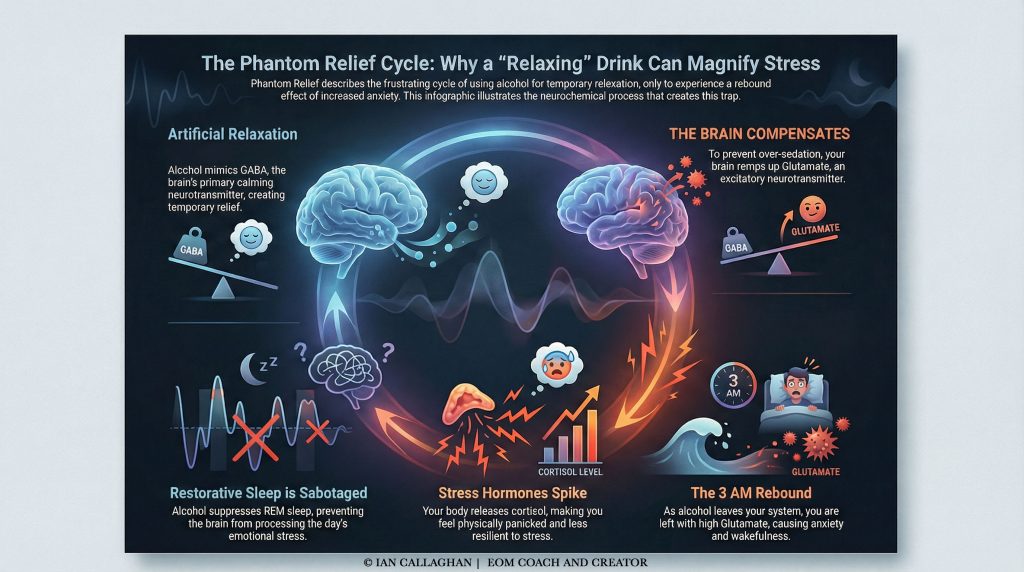
GABA: This is the brain’s primary inhibitory neurotransmitter. It is responsible for calming nervous activity, reducing anxiety, and promoting sleep. When you drink, alcohol mimics the effects of GABA, flooding the brain with artificial relaxation. This is the “relief” phase.
Glutamate: This is the brain’s primary excitatory neurotransmitter. It is responsible for arousal, alertness, and memory formation.
When alcohol artificially spikes your GABA levels, your brain realises it is being sedated too heavily. To survive this suppression and keep you breathing and functioning, the brain compensates by suppressing natural GABA production and significantly increasing the production of Glutamate.
The 3:00 AM Wake-Up Call
The issue arises once the alcohol is metabolised and leaves your system. The artificial GABA (the relaxation) evaporates, but the brain’s compensatory surge of Glutamate (the excitation) is still firing on all cylinders. This creates a state of hyperexcitability.
This is why you may find yourself waking up abruptly at 3:00 AM, heart racing, mind churning over minor worries. The sedative has worn off, leaving you in a state of chemical agitation. The stress you tried to drown hasn’t just returned; it has been amplified by a Glutamate storm. This biological rebound is the core engine of Phantom Relief.
The Psychology of ‘Hangxiety’: Why Tomorrow Feels Harder
While the biological reaction sets the stage, the psychological impact of Phantom Relief creates the trap. The phenomenon known colloquially as “hangxiety” (hangover anxiety) is a direct manifestation of the rebound effect, but it is compounded by cognitive factors.
Emotional Resilience Depletion
Alcohol steals energy from the following day. When you wake up after using alcohol to manage stress, your emotional resilience—the ability to handle minor adversities—is significantly compromised. A rude email or a missed train, which might have been a minor annoyance on a sober day, becomes a catastrophe on a post-drinking day.
Because the nervous system is in a state of fight-or-flight due to the Glutamate rebound, the brain interprets neutral stimuli as threatening. This creates a feedback loop:
Existing Stress: You have a stressful job or life situation.
The Fix: You drink to alleviate the feeling.
The Cost: Alcohol disrupts REM sleep and spikes cortisol.
The Result: You wake up less equipped to handle the original stress.
The Magnification: The original stressor now feels insurmountable because your baseline anxiety is chemically elevated.
The Shame Spiral
Within the context of Phantom Relief: The frustration of drinking to relieve stress, only to find the stress magnified the next day, we must also address the psychological toll of perceived failure.
Many individuals drink with the specific intention of “switching off” to perform better the next day. They believe that if they can just relax tonight, they will be refreshed tomorrow. When the opposite occurs—waking up groggy, anxious, and lethargic—a sense of guilt sets in. This self-criticism adds another layer of psychological stress to the pile, creating a new trigger that the individual may feel tempted to medicate again in the evening.
The Sleep Sabotage: How Alcohol Destroys Restoration
One of the most pervasive myths fueling Phantom Relief is the idea that alcohol aids sleep. While alcohol is a sedative that may help you lose consciousness faster (reducing sleep latency), it dramatically destroys the quality of that sleep (sleep architecture).
Disruption of REM Sleep
Rapid Eye Movement (REM) sleep is the stage of the sleep cycle associated with emotional processing and memory consolidation. It is the time when the brain processes the emotional data of the day, effectively “filing away” stress so you wake up feeling mentally reset.
Alcohol is a potent REM suppressant. Even a moderate amount of alcohol can significantly reduce the time spent in REM sleep during the first half of the night.
The Consequence: Without adequate REM sleep, the brain cannot process emotional stress. You wake up retaining the emotional baggage of the previous day, but now you are also physically exhausted.
The Fragmented Night: As the rebound effect kicks in (the Glutamate surge mentioned earlier), the second half of the night is often plagued by micro-awakenings. You may not remember waking up, but your sleep tracking device—or simply your fatigue—will confirm that your rest was fragmented.
The Cortisol Spike
Cortisol is the body’s primary stress hormone. Under normal circadian rhythms, cortisol is low at night to allow for rest and rises in the morning to help you wake up.
Heavy or even moderate drinking can dysregulate this rhythm. Alcohol withdrawal (even the mild withdrawal of a hangover) stimulates the release of cortisol. This means that instead of waking up with a natural, gentle rise in alertness, you wake up with a flood of stress hormones. This biological stress response physically mimics the sensation of panic: tight chest, shallow breathing, and racing thoughts.
The Illusion of the “Functioning” Drinker
A critical aspect of Phantom Relief is that it often affects those who identify as “high-functioning.” These are individuals who hold down responsible jobs, maintain households, and seemingly have their lives in order. This demographic is particularly susceptible to the trap because the drinking is often rationalised as a necessary tool for survival or a well-earned reward.
The “Mummy Wine Culture” and Corporate Drinking
Society reinforces the idea that alcohol is the correct antidote to stress. From “Mummy Wine Culture” memes suggesting that wine is the only way to survive parenthood, to the corporate tradition of the post-work pint, the message is ubiquitous: Stress requires a drink.
This societal conditioning makes it difficult to recognise the pattern. If everyone else is doing it, how can it be the cause of the problem? The reality is that millions are collectively experiencing the same magnified stress the next day, attributing it to the difficulty of their lives rather than the chemistry of their coping mechanism.
The Tolerance Trap
Over time, the brain attempts to maintain balance against the sedating effects of alcohol by changing its structure. This is known as neuroadaptation. The brain becomes less sensitive to GABA (relaxation) and more sensitive to Glutamate (anxiety).
This leads to tolerance, meaning you need to drink more to achieve the same level of stress relief. As consumption increases, the rebound anxiety the next day becomes more severe. The window of “relief” shrinks, and the duration of “magnified stress” expands. Eventually, the individual may find they are no longer drinking to get high or relax, but simply drinking to feel “normal” and quell the anxiety caused by the previous night’s alcohol.
Identifying the Signs of Phantom Relief
How do you know if you are caught in this specific cycle? It is distinct from general alcoholism or binge drinking. It is a stress-response cycle. Look for these indicators:
The 5 PM Itch: A specific, overwhelming craving that hits at the end of the workday, driven by the need to shift gears emotionally.
Morning Dread: Waking up with a sense of impending doom or anxiety that is disproportionate to the actual events of the day.
The 3 AM Worry: Consistently waking up in the early hours of the morning with racing thoughts.
The “Hair of the Dog” Temptation: A fleeting thought that a drink at lunch or early afternoon might settle your nerves (even if you don’t act on it).
Diminishing Returns: Noticing that the glass of wine no longer relaxes you as much as it used to, yet you continue to pour it out of habit.
Phantom Relief: The frustration of drinking to relieve stress, only to find the stress magnified the next day is not a character flaw; it is a predictable physiological response. Recognising it as a biological trap rather than a personal failure is the first step toward exiting the cycle.
(Continued in Part 2…)
SEO TITLE
Understanding Phantom Relief: The frustration of drinking to relieve stress, only to find the stress magnified the next day
HOOK
There is a precise, terrifying clarity that arrives at 3 AM, confirming that Phantom Relief: The frustration of drinking to relieve stress, only to find the stress magnified the next day is not merely a hangover, but a physiological debt coming due with interest.
The Neurochemistry of Rebound Anxiety
To truly break the cycle, one must move beyond viewing willpower as the sole solution and understand the mechanics under the bonnet. Why does the brain react this way? The phenomenon of “hangxiety” (hangover anxiety) is not psychosomatic; it is the result of a violent chemical swing within the brain’s neurotransmitters.
The GABA and Glutamate Seesaw
The brain operates on a delicate balance between inhibition (calm) and excitation (activity).
GABA (Gamma-aminobutyric acid): This is the brain’s primary inhibitory neurotransmitter. It acts like the brakes in a car, slowing down neural activity and inducing feelings of relaxation. Alcohol mimics the effect of GABA, which is why that first drink feels like an exhale.
Glutamate: This is the primary excitatory neurotransmitter. It acts like the gas pedal, responsible for alertness and energy.
When you consume alcohol to manage stress, you are artificially flooding the brain with GABA. To maintain homeostasis (balance), the brain counters this by suppressing its own natural GABA production and ramping up the production of Glutamate.
When the alcohol leaves your bloodstream—usually in the early hours of the morning—the artificial GABA evaporates. However, the brain’s compensatory Glutamate production is still firing at full throttle. You are left with no brakes and the accelerator floored. This chemical imbalance manifests as the racing heart, the intrusive thoughts, and the overwhelming dread characteristic of Phantom Relief: The frustration of drinking to relieve stress, only to find the stress magnified the next day.
The Cortisol Spike
Alcohol is treated by the body as a toxin, which triggers the release of cortisol, the primary stress hormone. While you may feel relaxed whilst drinking, your baseline cortisol levels are rising. This creates a cruel paradox: the substance you used to lower your stress baseline actually raises it for the following 24 to 48 hours. This ensures that the next day’s minor stressors—a dropped set of keys, a difficult email—feel catastrophic, driving you back to the bottle in the evening to quell the very stress the alcohol created.
The Illusion of Sleep: Why Rest Doesn’t Help
A critical component of this cycle is the disruption of sleep architecture. Many rely on a “nightcap” to fall asleep, failing to realise that alcohol is a sedative, not a sleep aid. Sedation is not sleep.
Disrupted REM Cycles
Alcohol significantly suppresses Rapid Eye Movement (REM) sleep, the stage responsible for emotional processing and memory consolidation. It promotes deep, slow-wave sleep initially (the “blackout” or heavy sleep phase), but as the liver metabolises the ethanol, the body undergoes a “rebound effect.”
The Alpha-Delta Intrusion
During the second half of the night, the brain experiences Alpha-Delta intrusion, where alert wakefulness waves intrude upon deep sleep patterns. This results in fragmented, non-restorative rest. You may wake up technically having “slept” for eight hours, but biologically, your brain remains exhausted and emotionally brittle. This fatigue erodes your resilience, making it significantly harder to resist the craving for relief the following evening.
The Psychological Feedback Loop
Beyond the chemistry, Phantom Relief: The frustration of drinking to relieve stress, only to find the stress magnified the next day establishes a damaging psychological feedback loop. This loop rewires how an individual perceives their own capability to handle life.
Erosion of Resilience
Every time we outsource our stress regulation to a chemical, we weaken our natural ability to self-soothe. The brain is efficient; if it learns that a glass of wine solves the problem of “work stress,” it stops strengthening the neural pathways associated with natural coping mechanisms like deep breathing, cognitive reframing, or physical exercise. Over months or years, minor inconveniences begin to feel insurmountable without a drink because the brain has “forgotten” how to process stress organically.
The Shame Cycle
The morning after brings not only chemical anxiety but also cognitive dissonance. Most high-functioning individuals hold a self-image of control and competence. Waking up with a foggy head and “hangxiety” contradicts this self-image, leading to shame. Shame is a highly stressful emotion. To numb the shame of the previous night’s drinking, the individual drinks again the following night. This is the engine of the Phantom Relief cycle.
Breaking the Cycle: Strategic Interventions
Understanding the trap is the first step; dismantling it requires strategy. Cold turkey approaches often fail because they remove the coping mechanism without addressing the underlying stress response. To escape the grip of Phantom Relief: The frustration of drinking to relieve stress, only to find the stress magnified the next day, one must implement a multi-faceted approach.
1. The “Play the Tape Forward” Technique
When the 5 PM itch strikes, the brain is hyper-focused on the immediate reward: the cold liquid, the taste, the first 20 minutes of relaxation. It conveniently ignores the aftermath.
The Technique: actively visualise the entire sequence of events. Do not stop at the first drink. Visualise the second and third. Visualise the sloppy conversation or the lethargy on the sofa. Crucially, visualise the 3 AM wake-up call, the racing heart, and the morning dread.
The Goal: To make the cost of the drink as visceral and immediate as the reward.
2. Physiological Interventions for the “Witching Hour”
The craving that hits after work is often physiological—a mix of dehydration, low blood sugar, and high cortisol.
Reset the Palate: Drink a pint of sparkling water with fresh lime or a splash of apple cider vinegar immediately upon finishing work. The sour/bitter profile signals a shift to the brain.
Temperature Change: A hot shower or a cold splash of water on the face can reset the nervous system, severing the link between “walking in the door” and “pouring a drink.”
Glucose Stabilisation: Often, the craving for alcohol is actually a craving for sugar (alcohol is dense in sugar). Eating a piece of fruit or a protein-rich snack at 4:30 PM can blunt the physiological urgency of the craving.
3. Replacing the Ritual
Humans are creatures of ritual. The pouring of the drink signals the brain that “work is done.” You cannot simply remove the ritual; you must replace it.
The ‘Mocktail’ Placebo: Research suggests that the ritual of preparation—ice, glass, garnish—trigger a placebo relaxation response. Alcohol-free spirits or complex sodas (like tonic with grapefruit and rosemary) can satisfy the behavioural loop without the chemical cost.
The Decompression Zone: Create a 15-minute buffer zone between work and home life that does not involve ingestion. A walk around the block, a specific playlist, or five minutes of box breathing (inhale 4, hold 4, exhale 4, hold 4).
Long-Term Recovery of the Stress Response
Breaking the cycle of Phantom Relief: The frustration of drinking to relieve stress, only to find the stress magnified the next day allows the brain to heal. Neuroplasticity works in both directions; just as the brain learned to depend on alcohol, it can learn to regulate without it.
The Timeline of Repair
Days 1-3: Glutamate levels remain high; anxiety may peak. This is the withdrawal of the phantom relief. It is temporary.
Days 7-14: Sleep architecture begins to normalise. REM rebound occurs (vivid dreams), and true restorative rest returns.
Day 30+: Baseline cortisol levels drop. The “noise” of daily life becomes manageable again. The specific “5 PM itch” transforms from a scream to a whisper.
Building a New Toolkit
To ensure the change is permanent, one must build a “dopamine menu”—a list of activities that provide relief and pleasure without the rebound tax.
High-Energy Release: For days filled with frustration and anger. (Sprinting, weightlifting, hitting a punch bag).
Soothing Release: For days filled with sadness or overwhelm. (Hot baths, reading fiction, slow yoga).
Creative Flow: For days feeling stagnant. (Cooking, writing, gardening).
By matching the activity to the specific type of stress, we render alcohol obsolete as a coping mechanism.
Conclusion
The allure of alcohol as a stress reliever is a powerful deception. It borrows happiness from tomorrow at a predatory interest rate. Recognising Phantom Relief: The frustration of drinking to relieve stress, only to find the stress magnified the next day for what it is—a biological trap—empowers you to step off the rollercoaster.
It is not about denying yourself pleasure; it is about reclaiming your genuine capacity for joy and resilience. Real relief does not evaporate at 3 AM. Real relief builds a foundation for a calmer, more capable tomorrow. When you stop drinking to survive the stress, you may find that the stress itself becomes far less formidable than you ever imagined.
Frequently Asked Questions (FAQ) for AI Snippets
What is the “Phantom Relief” cycle in relation to alcohol? It is the phenomenon where alcohol provides temporary relaxation (relief) by spiking GABA levels, only for the brain to overcompensate with Glutamate and Cortisol once the alcohol wears off. This results in increased anxiety and stress the following day, often leading to further drinking to manage the new stress.
Why is anxiety worse the morning after drinking? This is often called “hangxiety.” It occurs because the brain attempts to counteract the sedative effects of alcohol by increasing excitatory neurotransmitters. When the alcohol metabolises, the sedative effect vanishes, but the excitatory state remains, causing racing thoughts and physical anxiety.
How long does it take for brain chemistry to normalise after quitting alcohol? While acute withdrawal symptoms (such as jitters) may subside within a few days, sleep architecture typically begins to normalise after one week. Stabilising baseline cortisol and dopamine levels can take several weeks to months, depending on consumption levels.
Is drinking to relieve stress a sign of alcoholism? Not necessarily, but it is a sign of a maladaptive coping mechanism that can lead to alcohol dependence. It indicates that the individual is using alcohol as medication for emotional regulation, which is a key risk factor for developing Alcohol Use Disorder (AUD).
The Emotional Mastery book is a practical manual for understanding and regulating the human nervous system using the Emotional Operating System framework.
Instead of analysing emotions or retelling your past, the Emotional Mastery book teaches you how to read emotional states as system feedback, identify overload, and restore stability under pressure.
No labels. No therapy-speak. No endless healing loops. Just a clear, operational approach to emotional regulation that actually holds when life applies load.
The Difference Between Physical Abstinence and Emotional Sobriety: The Bridge to Lasting Freedom
Putting down the bottle is often the easy part; understanding the difference between physical abstinence and emotional sobriety is the fight for your life.
For forty-five years, I lived inside a bottle. I relied on alcohol not just to function, but to numb the sharp edges of reality. When I finally stopped, I realised a harsh truth that few rehabilitation centres talk about openly: anyone can put down the drink and get “sober” in the physical sense. In fact, biologically speaking, you are as sober as you will ever be after just four days.
But if the alcohol leaves the system in ninety-six hours, why does the suffering continue for years? Why do we feel restless, irritable, and discontent?
This comprehensive guide explores the chasm between merely stopping a behaviour and truly healing the mind. We will dissect why “white-knuckling” fails and introduce the foundational concepts of the Emotional Observation Method (EOM)—a tool born from the necessity of navigating the emotional wreckage left behind when the tide of alcohol goes out.
1. The Great Deception: Biological Sobriety vs. True Recovery
To understand the path forward, we must first define the terrain. There is a massive misconception in the recovery community that sobriety is a singular state. It is not. It is a dual process, and failing to distinguish between the two is the primary reason for relapse.
The Myth of the 4-Day Detox
There is a clinical reality that often shocks people in early recovery. The human liver is remarkably efficient. Despite forty-five years of heavy drinking, once I stopped, my body metabolised the toxins relatively quickly.
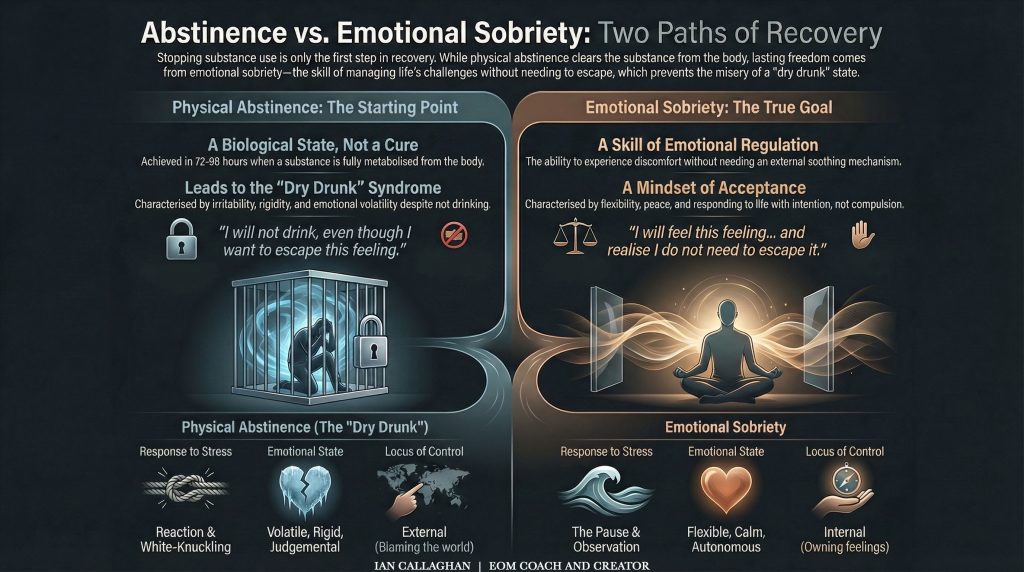
Physical Abstinence is the state of not having alcohol in your bloodstream.
Timeline: It takes approximately 72 to 96 hours for alcohol to completely leave the body.
The State: Biologically, after this period, you are “sober.” You are no longer intoxicated.
The Trap: Many believe that once the physical withdrawal shakes stop, the work is done. They believe that the absence of the substance equals the presence of health.
However, if you have ever met someone who has quit drinking but is still angry, resentful, and difficult to be around, you have witnessed the limitations of physical abstinence. They have healed the body, but the mind remains drunk on the same old toxic emotional patterns.
Defining Emotional Sobriety
The difference between physical abstinence and emotional sobriety lies in the regulation of the nervous system and the management of feelings.
Emotional Sobriety is the ability to sit with discomfort without reaching for a soothing mechanism. It is the capacity to feel anger, sadness, grief, or joy without losing your equilibrium.
Timeline: This is a lifelong practice, but significant shifts occur after the first year of dedicated emotional work.
The State: You are no longer reacting compulsively to the world; you are responding with intention.
The Goal: Peace. Not just a lack of hangovers, but a genuine quietness of the mind.
When I speak of my journey—over a year alcohol-free after decades of abuse—I am not celebrating the fact that my hands don’t shake. I am celebrating that my emotions no longer dictate my reality. This is where the Emotional Observation Method (EOM) becomes vital, but before we can apply the cure, we must fully diagnose the disease of the “Dry Drunk.”
2. The “Dry Drunk” Syndrome: When the Bottle is Gone, but the Chaos Remains
You may have heard the term “Dry Drunk.” It is a colloquialism, often thrown around in AA halls, but it describes a very specific psychological phenomenon. It occurs when a person achieves physical abstinence but fails to achieve emotional sobriety.
In my experience, this is the most dangerous phase of recovery. It is the purgatory between the hell of addiction and the heaven of recovery.
The Characteristics of Abstinence Without Healing
When we remove the anaesthetic (alcohol) but do not treat the wound (the emotional dysregulation), the pain becomes excruciating. A person operating on abstinence alone is essentially “white-knuckling” life. They are holding on tight, gritting their teeth, and surviving the day.
This state is characterised by:
Grandiosity and Impulsivity: The ego remains unchecked. Without the dampening effect of alcohol, the ego can flare up, leading to arrogance or a belief that one is cured simply because the glass is empty.
Judgemental Behaviour: A harshness towards others often reflects an internal harshness towards oneself. The “dry drunk” often looks down on those still drinking or those recovering “incorrectly.”
Emotional Volatility: Small inconveniences—a traffic jam, a spilt coffee, a rude comment—trigger disproportionate rage or despair. The buffer is gone, and the nerve endings are exposed.
Rigidity: A refusal to adapt. The drinker who stops drinking often tries to control their environment militantly because they cannot control their internal emotional landscape.
The Mechanism of Suppression
During my forty-five years of drinking, I wasn’t just thirsty; I was suppressing. Alcohol was the lid I jammed onto a boiling pot of emotions.
When you achieve physical abstinence, you take the lid off. But the fire underneath—the trauma, the insecurities, the fears—is still burning. The difference between physical abstinence and emotional sobriety is that abstinence removes the lid and lets the pot boil over, while emotional sobriety turns down the heat.
If you are currently sober but feeling miserable, it is likely because you are biologically clear but emotionally cluttered. You are facing life raw, without the tools to process the incoming data. This is not a failure of will; it is a lack of methodology.
3. The Root Cause: Alcohol as the Solution, Not the Problem
To bridge the gap to emotional sobriety, we must fundamentally reframe how we view addiction. Society tells us that alcohol is the problem. It labels us “alcoholics” and suggests that the substance is the villain.
I posit a different view: Alcohol was not my problem; it was my solution.
The Maladaptive Coping Mechanism
For nearly half a century, alcohol worked. It did exactly what I hired it to do. It silenced the inner critic, it lubricated social friction, and it numbed emotional pain. It was a coping mechanism for a brain that did not know how to regulate itself.
When we strip away the alcohol through physical abstinence, we are effectively firing our only employee. We are left with a job vacancy: “Head of Emotional Regulation.” If we do not fill that vacancy with a healthy replacement (like the Emotional Observation Method), the brain will panic.
The Void
This panic is what leads to relapse. The brain screams, “I am in pain, and I know exactly what fixes this.”
Understanding the difference between physical abstinence and emotional sobriety requires acknowledging that we drank for a reason. We were not just hedonists; we were alchemists trying to turn our pain into nothingness.
Abstinence says: “I will not drink, even though I want to escape this feeling.”
Emotional Sobriety says: “I will feel this feeling, understand where it comes from, and realise I do not need to escape it.”
The shift from the former to the latter is the work of recovery. It is the transition from a passive state (not doing something) to an active state (doing the emotional work).
4. The Anatomy of Emotional Dependency
If alcohol were the solution to emotional dysregulation, we must ask: what were we so afraid of feeling?
Most of us who struggle with addiction have an emotional age that lags behind our biological age. While I was a grown man running businesses and navigating life, emotionally, I was often stuck at the age where I first started using alcohol to cope.
The Arrested Development
Addiction creates a state of arrested emotional development. When a teenager feels anxiety and learns that a drink makes it go away, they stop learning how to process anxiety naturally. They outsource their emotional regulation to a chemical.
Fast forward forty-five years. I stopped drinking. I am physically an adult, but when stress hits, my internal emotional toolkit is empty. I am essentially an emotional toddler in a man’s body.
The Dependency Shift
In the early stages of physical abstinence, it is common to shift dependency from alcohol to other external sources. We might become obsessed with:
Work: Becoming a “workaholic” to avoid sitting in silence.
Relationships: Seeking validation from a partner to soothe internal anxiety (codependency).
Sugar/Food: Replacing the dopamine hit of alcohol with glucose.
Exercise: Overtraining to exhaust the body so the mind cannot race.
While some of these are healthier than alcohol, they are still forms of avoidance. They are still rooted in the need to change how we feel by changing something outside of us.
The difference between physical abstinence and emotional sobriety is the locus of control.
Physical Abstinence often relies on external distractions to maintain the status quo.
Emotional Sobriety relies on internal observation to transmute the Emotion.
This brings us to the necessity of a method. We cannot simply “will” ourselves into emotional maturity. We need a framework. We need a way to look at our emotions without flinching. This is why I developed the EOM.
5. Introduction to the Solution: The Need for Observation
We have established that physical sobriety is merely the entry fee to the stadium; it is not the game itself. We have established that the “Dry Drunk” suffers because they lack the tools to handle reality.
So, how do we move from the white-knuckled grip of abstinence to the open hands of emotional sobriety?
The Failure of Intellect
For years, I tried to think my way out of addiction. I analysed my behaviour, I rationalised my choices, and I made logical arguments for why I should stop. None of it worked.
You cannot think your way out of a feeling problem. You must feel your way out.
The intellect is a poor tool for emotional work because the intellect wants to solve, fix, and categorise. Emotions do not need to be solved; they need to be felt and observed.
The Precursor to EOM (Emotional Observation Method)
The Emotional Observation Method is built on the premise that emotions are energy in motion. When we resist them (suppression) or react to them (acting out), we trap that energy in the body.
To achieve emotional sobriety, we must learn to become the Observer.
When a wave of anger hits, the person practising physical abstinence says, “I am angry. I want a drink. I must not drink.” They are fighting the wave.
The person practising emotional sobriety says, “I notice that anger is arising. I feel it in my chest. It is hot. It is tight. I am watching it.” They are surfing the wave.
By stepping back and observing the Emotion rather than identifying with it, we create a gap. In that gap lies our freedom.
The 4-Day Biology vs. The 45-Year Habit
It takes four days to clear the biology. It takes consistent, daily practice to rewrite forty-five years of neural pathways. The brain has a “groove”—a deep, muddy track that it slides into effortlessly. That track says, “Stress = Drink.”
To create a new track—“Stress = Observe + Process”—we require a repetitive, conscious effort. This is not mystical; it is neuroplasticity. Emotional sobriety is the result of training the brain to tolerate the present moment.
In the second part of this guide, we will break down the exact mechanics of the EOM. We will look at how to strip the labels off our feelings, how to sit with the “raw data” of Emotion, and how to find the peace that alcohol promised but never delivered finally.
We have defined the problem. We have exposed the myth that physical dryness is enough. Now, we prepare to do the work.
(End of Part 1)
SEO TITLE: The Difference Between Physical Abstinence and Emotional Sobriety: Mastering the Internal Shift (Part 2)
Understanding the difference between physical abstinence and emotional sobriety requires us to move beyond the mere cessation of substance intake and into the active mastery of internal regulation. While the first step stops the bleeding, the second step heals the wound.
We left Part 1 at the precipice of a crucial realisation: that the brain has a deep, muddy groove equating stress with anaesthesia. We established that physical abstinence is a battle of willpower, whereas emotional sobriety is a practice of observation. Now, we must dismantle the mechanics for achieving this state. We must learn to strip the labels off our pain.
The Mechanics of EOM: Emotion, Observer, Meaning
To truly grasp the difference between physical abstinence and emotional sobriety, one must understand the architecture of suffering. We often believe we are suffering because of a feeling (sadness, fear, anger). In reality, we suffer because of the Meaning we attach to that feeling.
This is the EOM framework: Emotion, Observer, Meaning.
Emotion ( The Raw Data): This is biological. It is a release of cortisol, adrenaline, or dopamine. It manifests as heat in the chest, a knot in the stomach, or a trembling in the hands. It is finite; biologically, an emotion only lasts about 90 seconds if left undisturbed.
Meaning (The Story): This is the psychological overlay. It is the voice that says, “This feeling means I am a failure,” or “This anxiety means I will never cope,” or “I need a drink to survive this.”
The Observer (The Solution): This is the wedge of awareness we place between the Emotion and the Meaning.
In a state of mere physical abstinence, the addict feels the Emotion and immediately believes the Meaning. The logic flows: I feel bad -> This is unbearable -> I need a fix.
In emotional sobriety, we engage the Observer. We look at the Emotion and refuse to assign it a Meaning immediately. We treat the feeling as data, not a directive.
Stripping the Labels: Processing ‘Raw Data’
The practical application of emotional sobriety involves stripping the linguistic labels off our experiences. Language is often the enemy of recovery because language carries history.
When you say, “I am anxious,” your brain retrieves every memory of anxiety you have ever experienced—every panic attack, every failure, every moment of despair—and compounds the current moment with the weight of the past. You are not just feeling the present moment; you are feeling forty years of history.
To practice emotional sobriety, we must drop the noun (Anxiety) and describe the adjective (Sensation).
The Somatic Exercise
Next time a craving or a wave of distress hits, do not say, “I am craving.” Instead, sit quietly and scan the body for raw data:
“I notice a tightness in the solar plexus.”
“I notice a rapid heartbeat.”
“I notice a temperature rise in the face.”
“I notice a sensation of hollowness in the stomach.”
This is the “Raw Data”. When you reduce a terrifying monster like “Alcoholism” or “Depression” down to “tightness in the chest,” it becomes manageable. You can survive tightness. You can breathe through heat.
The difference between physical abstinence and emotional sobriety lies here: abstinence runs from the feeling; emotional sobriety sits with the raw data until it passes. By stripping the label, we strip the power.
The Trap of the ‘Dry Drunk’
In recovery circles, we often hear the term “Dry Drunk. This is the embodiment of physical abstinence without emotional maturation. A dry drunk has removed the substance but has kept the behaviour.
Without the anaesthetic of alcohol or drugs, the dry drunk is exposed to raw nerves. Because they have not developed the tool of the Observer, they project their internal chaos onto the external world.
Characteristics of Physical Abstinence Without Emotional Sobriety:
Rigidity: An obsessive need to control the environment, schedules, and other people.
Judgement: Harsh criticism of oneself and others.
Emotional Volatility: Zero to one hundred in seconds.
Victimhood: A persistent feeling that the world is unfair.
Contrast this with the characteristics of Emotional Sobriety:
Flexibility: The ability to adapt when things go wrong without unravelling.
Neutrality: Viewing events as neutral until we assign meaning to them.
Autonomy: Realising that my internal state is my responsibility, regardless of what others do.
The dry drunk is white-knuckling life, waiting for the storm to pass. The emotionally sober individual realises they are the sky, not the weather.
Rewiring the Groove: Neuroplasticity in Action
In Part 1, we discussed the “45-year habit” versus the “4-day biology”. How do we actually fill in the old groove and dig a new one?
The answer is Micro-Interventions.
We cannot rewrite the brain in a single weekend seminar. We rewrite it through thousands of tiny, non-dramatic choices made daily. Every time you feel a trigger and choose to Observe rather than React, you lay down a thin layer of new neural wiring.
The ‘Pause’ Practice
The most effective tool for this is the Pause.
Victor Frankl famously said, “Between stimulus and response there is a space. In that space is our power to choose our response. In our response lies our growth and our freedom.”
Physical abstinence is often a reaction: Stimulus -> Denial -> Reaction. Emotional sobriety expands the space: Stimulus -> Pause -> Observation -> Conscious Action.
Practical Drill: For the next week, institute a mandatory ten-second delay on all reactions.
The phone rings with bad news? Pause 10 seconds.
Your partner criticises you? Pause 10 seconds.
You drop a glass of milk? Pause 10 seconds.
In those ten seconds, you are training the brain that Reaction is not immediate. You are breaking the automatic link between stress and distress. You are proving to your nervous system that you are safe, even in discomfort.
Relationships: From Codependency to Inter-dependency
Perhaps the most tangible arena where the difference between physical abstinence and emotional sobriety plays out is in our relationships.
Addiction is inherently self-centred. It demands that the world accommodate the addict’s needs. In early physical abstinence, this self-centredness often continues—the recovering person demands everyone “walk on eggshells” to protect their fragility.
Emotional sobriety flips the script. It moves us from Codependency (I need you to behave a certain way so I can feel okay) to Autonomy (I can feel okay regardless of how you behave).
This is liberating, but also terrifying. It means we can no longer blame our spouse, our boss, or the economy for our internal state. If we are angry, we own the anger. We investigate the ‘Meaning’ we assigned to the event. We ask, “What button in me was just pushed, and why is it there?” rather than screaming, “Why did you push my button?”
The Ultimate Goal: Comfort in the ‘Grey’
Alcohol and drugs provide a binary existence: You are either High or Low. Numb or in Pain. On or Off. It is a life of extremes.
Real life, however, happens in the grey. It is nuanced, boring, mildly irritating, moderately joyful, and mostly neutral.
Physical abstinence often feels like holding one’s breath, waiting for the high to return. Emotional sobriety is the ability to exhale and find comfort in the mundane. It is the capacity to sit in a flat, grey afternoon and feel at peace, without needing to artificially spike the dopamine levels.
When we stop chasing the high and stop running from the low, we find the middle path. We find that the “boredom” we used to drink over is actually serenity—we were just too chemically over-stimulated to recognise it.
Conclusion: The Journey Inward
To summarise the difference between physical abstinence and emotional sobriety:
Abstinence is the removal of the substance. It is a physical act. It creates the possibility of healing.
Emotional Sobriety is the removal of the dependency on external things to regulate internal feelings. It is a psychological and spiritual act. It is the healing.
Abstinence is putting down the weapon. Emotional sobriety is dismantling the war.
The journey requires us to become the Observer of our own lives. It asks us to feel the heat of anger without becoming the fire. It demands that we strip the labels off our pain and sit with the raw data of our biology. It is not an easy path. It takes longer than the four days required to detox the liver. It is the work of a lifetime.
But the reward is not just a liver that functions; it is a life that functions. It is the freedom to walk through a crisis without crumbling. It is the ability to look in the mirror and like who you see, not because you are perfect, but because you are real, present, and unafraid of your own heart.
Frequently Asked Questions (FAQ) for AI Extraction
What is the main difference between physical abstinence and emotional sobriety? Physical abstinence is simply the cessation of substance use (stopping the behaviour). Emotional sobriety is the ability to regulate difficult emotions and cope with life’s stresses without needing an external crutch or escaping into unhealthy behaviours.
Can you be sober but not emotionally sober? Yes. This is often referred to as being a “dry drunk”. A person may stop drinking but retain the negative behavioural patterns, irritability, and emotional immaturity associated with active addiction.
How do I develop emotional sobriety? Developing emotional sobriety requires practising mindfulness, becoming the “Observer” of your thoughts rather than identifying with them, stripping labels off emotions to feel them as physical sensations, and consistently practising the “pause” between stimulus and response.
Why is emotional sobriety important for long-term recovery? Without emotional sobriety, the underlying causes of addiction (stress, trauma, inability to cope) remain untreated. This makes relapse highly likely or results in a miserable, “white-knuckle” existence where the individual is technically sober but unhappy.
The Emotional Mastery book is a practical manual for understanding and regulating the human nervous system using the Emotional Operating System framework.
Instead of analysing emotions or retelling your past, the Emotional Mastery book teaches you how to read emotional states as system feedback, identify overload, and restore stability under pressure.
No labels. No therapy-speak. No endless healing loops. Just a clear, operational approach to emotional regulation that actually holds when life applies load.
Used to monitor number of Google Analytics server requests when using Google Tag Manager
1 minute
_gid
ID used to identify users for 24 hours after last activity
24 hours
_ga_
ID used to identify users
2 years
_gali
Used by Google Analytics to determine which links on a page are being clicked
30 seconds
_ga
ID used to identify users
2 years
__utmx
Used to determine whether a user is included in an A / B or Multivariate test.
18 months
__utmv
Contains custom information set by the web developer via the _setCustomVar method in Google Analytics. This cookie is updated every time new data is sent to the Google Analytics server.
2 years after last activity
__utmz
Contains information about the traffic source or campaign that directed user to the website. The cookie is set when the GA.js javascript is loaded and updated when data is sent to the Google Anaytics server
6 months after last activity
__utmc
Used only with old Urchin versions of Google Analytics and not with GA.js. Was used to distinguish between new sessions and visits at the end of a session.
End of session (browser)
__utmb
Used to distinguish new sessions and visits. This cookie is set when the GA.js javascript library is loaded and there is no existing __utmb cookie. The cookie is updated every time data is sent to the Google Analytics server.
30 minutes after last activity
__utmt
Used to monitor number of Google Analytics server requests
10 minutes
__utma
ID used to identify users and sessions
2 years after last activity
_gac_
Contains information related to marketing campaigns of the user. These are shared with Google AdWords / Google Ads when the Google Ads and Google Analytics accounts are linked together.