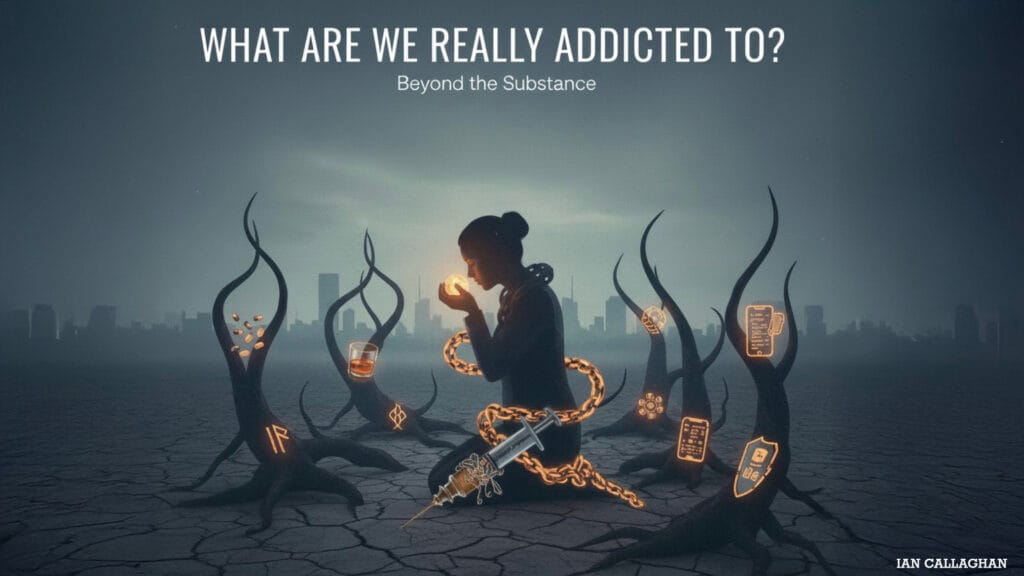
It’s Not the Booze or the Sniff: What Are We Really Addicted To?
What Are We Really Addicted To? We tend to talk about addiction in terms of substances. We say someone is a “hopeless alcoholic” or “addicted to cocaine”. We focus on the chemical, the bottle, the powder. We meticulously count units of alcohol, track days of sobriety, and vilify the substance as the sole antagonist in our life’s drama. But what if we’ve been focusing on the wrong villain all along?
What if the booze, the sniff, the pill, or the puff is just a prop? A stand-in for the real object of our devotion?
The truth is, for the vast majority of us who develop a problematic relationship with a substance, we are not truly addicted to the ethanol in the wine or the specific molecules in a drug. These are merely the delivery mechanisms. The key that unlocks a door. What we are truly, desperately, and powerfully addicted to is the state change. We are addicted to the feeling of escape. We are addicted to the temporary silence of our inner critic, the fleeting rush of confidence, the blissful numbness that blankets our anxiety, or the momentary illusion of connection in a lonely world.
This isn’t just a philosophical distinction; it’s a fundamental paradigm shift that holds the key to real, lasting freedom. When you stop fighting the substance and start understanding the state you’re trying to achieve, the entire battlefield changes. You transition from a state of white-knuckled deprivation to one of empowered self-discovery.
In this comprehensive guide, we’re going to pull back the curtain. We will explore the intricate neuroscience that drives our cravings, delve into the emotional voids we’re trying to fill, and unpack the psychological patterns that keep us trapped. By understanding what you are really addicted to, you can finally begin to address the root cause, not just the symptom.
The Neuroscience of “Wanting”: Unravelling the Dopamine Deception
To understand the core of addiction, we must first venture into the complex and fascinating landscape of the human brain. The central character in this neurological drama is a neurotransmitter you’ve almost certainly heard of: dopamine. For decades, dopamine was popularly misunderstood as the “pleasure chemical”. We believed that when we did something enjoyable, our brain released dopamine, and that was the feeling of pleasure itself. This is a crucial, and misleading, oversimplification.
Modern neuroscience has revealed that dopamine’s primary role is not about pleasure or “liking” something at all. Its role is about motivation, anticipation, and wanting. It is the chemical of desire. It’s the neurobiological engine that drives you to seek out rewards, to move towards things the brain predicts will be beneficial for survival—be it food, sex, or, in the modern world, the perceived relief offered by a substance.
This system is centred in an ancient part of our brain known as the mesolimbic pathway, often called the “reward pathway”. It connects the Ventral Tegmental Area (VTA), where dopamine is produced, to the Nucleus Accumbens (the motivation hub) and the Prefrontal Cortex (our centre for planning and decision-making).
Here’s how it works in a natural context:
Cue: You’re hungry and you see an advert for a delicious-looking pizza.
Dopamine Spike: Your VTA releases a squirt of dopamine. This isn’t the pleasure of eating the pizza; it’s the motivational urge that says, “Go get that! It will be good for you!”
Action: This dopamine spike motivates you to pick up the phone and order the pizza.
Reward: You eat the pizza. Your brain releases other chemicals, like opioids and endocannabinoids, which are responsible for the feeling of pleasure and satisfaction (the “liking”).
Learning: Your brain learns that the cue (advert) led to a reward (tasty food). The dopamine system has done its job successfully.
Now, let’s see what happens when we introduce a substance like alcohol. Alcohol and other drugs are biochemical sledgehammers. They hijack this delicate, evolutionarily-honed system. They don’t just cause a normal release of dopamine; they flood the brain with it, two to ten times the amount released from natural rewards.
This massive, artificial flood does two catastrophic things:
It creates a Powerful Memory: The brain’s learning system goes into overdrive. It forges an incredibly strong, almost unbreakable connection between the substance and the feeling of immense reward. The Prefrontal Cortex logs this as a top-priority survival strategy. Feeling stressed? Anxious? Bored? I know what to do! That drink gave us a massive dopamine hit last time. Let’s do that again. The “wanting” becomes pathologically intense.
It Desensitises the System: The brain is a master of adaptation. If it’s constantly flooded with unnatural levels of dopamine, it tries to protect itself by reducing the number of dopamine receptors. It’s like turning down the volume on a speaker that’s blasting too loudly. This is what leads to tolerance; you need more of the substance to get the same effect.
Worse still, this down-regulation of receptors lowers your “dopamine baseline”. The things that used to bring you joy and motivation—a walk in the park, a good conversation, a satisfying meal—no longer produce enough of a dopamine signal to register. Life in between doses becomes flat, grey, and uninteresting. You’re left in a state of anhedonia, the inability to feel pleasure from normal activities. At this point, you’re not even drinking to feel good anymore. You’re drinking just to feel normal, to escape the deep discomfort of a dopamine-deficient state that the substance itself created.
You are now trapped. You are addicted to the anticipation, the motivation, the wanting of the substance, a wanting that is now amplified to an obsessive degree, while the actual “liking” or pleasure you get from it diminishes over time.
If we’re addicted to a state driven by a hijacked dopamine system, the logical solution is to find healthy, sustainable ways to modulate that system ourselves. This is where practices like cold water immersion come in.
Pioneering research, such as a study from Prague’s Charles University, has shown that immersing oneself in cold water (around 14°C) can cause a prolonged and significant increase in dopamine levels. The study found that dopamine concentrations increased by a staggering 250% from the baseline.
What’s crucial here is the nature of this increase. Unlike the sharp, artificial spike and subsequent crash from alcohol, the dopamine increase from cold water is gradual and, most importantly, sustained. It elevates your baseline for hours afterwards, promoting alertness, focus, and an improved mood without the damaging consequences of substance use.
By deliberately engaging in an activity like a cold shower or a cold plunge, you are:
Actively taking control of your neurochemistry.
Teaching your brain to tolerate discomfort for a future reward.
Naturally and healthily increasing dopamine levels.
Building mental resilience and proving to yourself that you can change your state without an external substance.
This isn’t about replacing one addiction with another. It’s about learning the language of your own brain and using natural, powerful tools to give it what it needs to thrive.
The Emotional Escape Hatch: Why We Crave Numbness and Altered States
Neuroscience tells us how the engine of addiction works, but it doesn’t fully explain why we turn the key in the ignition in the first place. For that, we need to look at our emotions. Humans are fundamentally wired to do two things: avoid pain and seek pleasure. When our emotional “pain” becomes chronic or overwhelming, our primal brain will seek the most effective, fastest-acting solution it knows.
For many, alcohol and drugs become the ultimate emotional escape hatch. Think about what that first drink really does.
For the socially anxious person: It’s not about the taste of the beer; it’s about the blessed, liquid confidence that dissolves their awkwardness and allows them to connect. They are addicted to feeling uninhibited.
For the overworked professional: It’s not the complex notes of the vintage red; it’s the “off switch” for a brain that won’t stop whirring with deadlines and responsibilities. They are addicted to mental silence.
For the grieving individual: It’s not the burn of the whiskey; it’s the temporary anaesthetic for a heart that aches with unbearable loss. They are addicted to numbness.
For the terminally bored or unfulfilled person: It’s not the cocktail; it’s the injection of colour and excitement into a life that feels monochrome and meaningless. They are addicted to stimulation.
In every case, the substance is a tool. It’s a remarkably effective, albeit deeply flawed, strategy for emotional regulation. When we lack the internal skills to sit with, process, and manage difficult emotions like loneliness, shame, fear, or resentment, a chemical solution seems like a miracle. It provides immediate, predictable relief. The problem is that this “solution” is like paying a loan shark. The short-term relief comes at the cost of devastating long-term interest.
The substance doesn’t resolve the underlying emotion; it just postpones it. It shoves the feeling into a closet, but the feeling doesn’t disappear. It festers. It grows stronger in the dark. The next time it emerges, it’s even more formidable, requiring an even larger dose to be suppressed. This creates a vicious cycle:
You feel an uncomfortable emotion (e.g., anxiety).
You use a substance to numb or escape the emotion.
The substance provides temporary relief.
The substance wears off, and the original emotion returns, often amplified by feelings of shame, guilt, or the physiological effects of a hangover.
The amplified negative emotion creates an even stronger urge to use the substance again for relief.
The addiction, therefore, is not to the substance. It’s an addiction to a dysfunctional coping mechanism. We are addicted to not feeling what we’re feeling. The real work of recovery isn’t just about removing the substance; it’s about developing the emotional literacy and resilience to handle life on life’s terms. It’s about learning to open that closet door, look at what’s inside without flinching, and develop healthy strategies to process and integrate those emotions, rather than running from them.
The Power of the Pattern: How NLP Exposes Our Addictive Loops
If neuroscience explains the “how” and our emotions explain the “why”, then Neuro-Linguistic Programming (NLP) provides a powerful framework for understanding the “what”—the specific, automated patterns of thought and behaviour that constitute the addiction itself.
NLP is, at its core, a study of subjective experience. It explores how we use language (Linguistic), our nervous system (Neuro), and our ingrained strategies (Programming) to create our reality. From an NLP perspective, addiction isn’t a moral failing or a disease in the traditional sense; it’s a highly effective, deeply learned, and automated programme running in our subconscious mind.
Let’s break down this “addiction programme” using a key NLP concept: the strategy, or loop. Every one of our behaviours, from tying our shoelaces to pouring a drink, follows a specific sequence of internal and external steps. A typical drinking strategy might look like this:
Trigger (The Anchor): This is the cue that kicks off the programme. It can be external or internal.
External: The time on the clock (5 PM), walking past a specific pub, the sound of a can opening, seeing friends drink.
Internal: A feeling of stress, a thought like “I’ve had a hard day, I deserve this,” a memory of a bad meeting. In NLP, these triggers are called “anchors”—a stimulus that becomes neurologically linked to a specific emotional state or response. Over time, the sight of a wine bottle doesn’t just represent wine; it’s a powerful anchor for the entire state of anticipated relief.
Internal Processing (The “Programme”): Once triggered, the mind runs a rapid, often subconscious sequence of thoughts and visualisations. You might picture the drink, imagine the feeling of the first sip, and recall the sense of relaxation that follows. You run a mental movie of the desired outcome. This fires up the dopamine system we discussed earlier, creating that powerful “wanting”.
The Behaviour: This internal processing leads directly to the physical action: walking to the fridge, pouring the drink, and taking the first sip. By this point, the programme is running on autopilot. Conscious willpower often stands little chance against such a deeply grooved neural pathway.
The Outcome (The “Pay-off”): The behaviour achieves its intended short-term goal—the state change. The anxiety lessens, the stress seems to melt away, the inner critic goes quiet. This “reward” reinforces the entire loop, making it even more likely to run the next time the trigger appears.
We run this loop hundreds, even thousands, of times. Each repetition strengthens the neural connections, making the programme more efficient, faster, and more automatic. Eventually, it becomes as unconscious as breathing. You’re not choosing to drink; you’re simply running the most well-rehearsed programme you have for dealing with a specific trigger.
This is where the power of NLP comes into play. If addiction is a programme, then it can be de-bugged and rewritten. NLP provides tools to:
Interrupt the Pattern: The first step is to become aware of the loop as it’s happening. By consciously identifying the trigger, the internal thoughts, and the feeling that leads to the action, you can insert a “pattern interrupt”. This could be something as simple as snapping an elastic band on your wrist, changing your physical state (e.g., doing ten press-ups), or asking yourself a powerful question like, “What do I really need right now?”
Collapse Anchors: NLP techniques can be used to “de-link” a trigger from its automatic response. By repeatedly associating a powerful negative feeling with the old trigger (e.g., the smell of stale beer) and linking a powerful positive feeling to a new, healthy behaviour, you can effectively scramble the old programme.
Reframe the Meaning: The thought “I deserve a drink” can be reframed to “I deserve to feel genuine peace” or “I deserve to wake up tomorrow feeling clear and proud.” By changing the language we use, we change the meaning we assign, which in turn changes our emotional response.
Understanding your addiction through the lens of NLP is incredibly empowering. It moves you out of the role of a powerless victim and into the role of a programmer who can access the source code of their own mind and write a new, more resourceful programme for living.
Reclaiming Your State: Building a Life You Don’t Need to Escape From
Understanding the neuroscience, the emotional drivers, and the psychological patterns is the critical first half of the journey. The second half is about action. It’s about consciously and deliberately building a life that is so engaging, fulfilling, and emotionally robust that the old escape hatch becomes redundant.
The goal isn’t just to stop a destructive behaviour. It’s time to start building a suite of positive, healthy, and effective ways to manage your state. It’s about cultivating a life you don’t feel the need to numb yourself from. This is a creative, proactive process, not a restrictive, defensive one.
Here are the pillars of building that new life:
Master Your Neurochemistry (The Healthy Way): Instead of outsourcing your dopamine regulation to a bottle, take control of yourself.
Cold Water Immersion: As discussed, this is a powerful, free, and immediate way to boost your dopamine baseline. Start with 30 seconds at the end of your shower and build from there.
Sunlight Exposure: Getting natural sunlight in your eyes first thing in the morning helps to set your circadian rhythm and triggers a healthy release of dopamine and cortisol, promoting wakefulness and focus.
Exercise: Physical movement is perhaps the single most effective state-changer available. It releases a cocktail of beneficial neurochemicals, including endorphins (natural painkillers), endocannabinoids (which produce feelings of bliss), and, of course, dopamine.
Nutrition: A diet low in processed sugar and high in tyrosine-rich foods (like almonds, bananas, and avocados) provides your brain with the raw materials it needs to produce its own dopamine.
Develop Emotional Sobriety: This means learning to sit with your feelings without needing to immediately fix or numb them.
Mindfulness and Meditation: These practices train your ability to observe your thoughts and emotions without getting swept away by them. You learn that feelings are transient visitors; you don’t have to serve them a drink.
Breathwork: Simple box breathing (inhale for 4, hold for 4, exhale for 4, hold for 4) can instantly activate your parasympathetic nervous system, calming anxiety and pulling you out of a reactive state.
Journaling: Externalising your thoughts and feelings onto a page can rob them of their power. It helps you to identify the patterns and triggers you might otherwise miss.
Rewrite Your Programmes with New Anchors: Deliberately create new, positive loops to replace the old, destructive ones.
If your old trigger was 5 PM on a Friday, make that the anchor for a new ritual: a gym session, a walk in nature, calling a supportive friend, or dedicating an hour to a passion project.
Build a “state change toolkit”. When you feel stress (the trigger), instead of running the “drink” programme, run the “10-minute walk” programme, the “listen to my power playlist” programme, or the “cold shower” programme.
Find Meaning and Connection: Often, the void we fill with substances is one of purpose and connection.
Pursue a Challenge: Learn a new skill, take up a difficult hobby, or train for a physical event. Purpose and progress are powerful antidotes to apathy.
Cultivate Genuine Connection: Move beyond superficial relationships. Invest time in people who see and support the real you. Human connection releases oxytocin, the “bonding hormone,” which directly counteracts feelings of stress and loneliness.
Building this new life is the ultimate act of recovery. It reframes sobriety not as an ending, but as a beginning. It’s the start of a conscious, intentional, and deeply rewarding relationship with yourself and the world around you.
Beyond Sobriety: The Real Liberation
Let’s return to our central premise: you are not addicted to the booze or the sniff. You are addicted to the feeling of relief from a state of discomfort.
The substance was simply the most effective tool you had at the time to change your state from anxious to calm, from insecure to confident, from bored to engaged. True, lasting freedom comes not from simply throwing that tool away and white-knuckling your way through the discomfort. It comes from building a whole new toolbox, filled with sharper, more effective, and more sustainable tools that don’t burn your life down as a side effect.
It’s about understanding that your brain’s dopamine system can be worked with, not just fought against. It’s about accepting that difficult emotions are a part of the human experience and learning to navigate them with skill and compassion. It’s about recognising the automated patterns that have been running your life and consciously writing new ones that serve the person you want to become.
This journey, particularly in midlife, is not just about giving something up. It’s about gaining everything: clarity, energy, self-respect, authentic connection, and a profound sense of purpose. It’s about building a life so vibrant and engaging that the thought of numbing it seems utterly absurd.
If this deep dive into the ‘why’ behind our habits resonates with you, and you’re ready to move beyond simply ‘not drinking’ and start actively designing a life you don’t need to escape from, then this is just the beginning. For a practical, step-by-step guide to navigating this transformation, especially during the unique challenges and opportunities of midlife, I invite you to explore my eBook.
Beyond the 12 Steps: How Modern Neuroscience Helped Me Conquer a 45-Year Battle with Alcohol, neuroplasticity, addiction recovery
An Introduction to a Different Path with Neuroplasticity Addiction Recovery
For forty-five years, alcohol was my shadow. It was the companion at every celebration, the commiserator in every failure, the quiet hum beneath the surface of my daily life that, over decades, grew into a deafening roar. It was a relationship that started in my youth, a casual acquaintance that morphed into a toxic, co-dependent partnership I couldn’t seem to end. I tried to quit more times than I can count. I made promises to myself, to my family, to a universe I wasn’t sure was listening. Each time, the shadow would pull me back in. Neuroplasticity addiction recovery.
Eventually, like so many others who find themselves lost in the labyrinth of addiction, I found my way to the doors of Alcoholics Anonymous. For millions, these rooms are a sanctuary, a lifeline that pulls them from the wreckage. The fellowship, the shared stories, the structured steps—they offer a map that has guided countless souls back to sobriety, and for that, the organisation deserves immense respect. I walked in with a sliver of hope, ready to surrender, ready to follow the map.
But for me, it didn’t quite fit. The doctrine, conceived nearly a century ago, felt like a borrowed coat from a different era—well-intentioned, but not tailored to my frame. The core tenet of admitting my powerlessness, of handing over my will to a higher power, felt like a sidestep rather than a step forward. After 45 years of feeling powerless to alcohol, I was desperate to find power within myself, not to cede it elsewhere. The idea of being forever branded an “alcoholic,” a title I was meant to carry as a constant reminder of my brokenness, felt less like a tool for recovery and more like a life sentence.
It wasn’t a rejection of spirituality, but a deep, instinctual yearning for a different kind of faith: faith in the tangible, in the mechanics of my own mind, and in the burgeoning science that was beginning to map it. I started reading voraciously. I delved into podcasts and articles about the brain, about how habits are formed, and, crucially, how they can be broken. I discovered the concept of neuroplasticity—the brain’s astonishing ability to reorganise itself, to form new neural connections, and to change throughout one’s life.
This was the lightning bolt. This was the paradigm shift. The problem wasn’t a moral failing or a spiritual sickness that defined my identity. The problem was a set of deeply entrenched, well-worn neural pathways in my brain, carved out by decades of repeated behaviour. And if the brain could be wired one way, science was telling me, it could be rewired. This realisation was the beginning of my true recovery. It was the moment I turned away from the 100-year-old doctrine and towards the cutting-edge frontier of neuroscience. I chose to trade surrender for self-direction, faith in the unseen for a practical application of the seen and measurable. This is the story of how and why I chose meditation, visualisation, NLP, hypnosis, and radical physiological interventions over the traditional 12 steps, and how I finally reclaimed my life after a 45-year war.
The Old Map: Confronting the Limitations of a Century-Old Doctrine
Before I detail the new path I forged, it is crucial to understand the landscape of the old one and why, for me, it led to a dead end. My intention is not to disparage Alcoholics Anonymous. It is a programme born from desperation and a genuine desire to help, and its success in saving lives is undeniable. The community it offers can be a powerful antidote to the isolation that so often fuels addiction. However, any map, no matter how revered, must be examined for its relevance in a world of ever-expanding knowledge.
My initial forays into AA meetings were filled with a strange mix of comfort and dissonance. The comfort came from the shared humanity in the room. Hearing others voice the same secret fears, the same rationalisations, the same despair that had been my private monologue for years was profoundly validating. It was the first time I realised I wasn’t uniquely broken; I was simply a person with a common, albeit devastating, problem. The ritual of the meetings, the familiar readings, the passing of the chip—it all provided a sense of structure in a life that had become chaotic.
Yet, the dissonance grew with each meeting. The language and the core philosophy felt fundamentally misaligned with my burgeoning understanding of the mind and body. The central tenets, laid out in the “Big Book” in the 1930s, felt anchored in a pre-scientific understanding of addiction.
The Concept of Powerlessness: The First Step, “We admitted we were powerless over alcohol—that our lives had become unmanageable,” was my primary stumbling block. I understood the intention: to break down the alcoholic’s ego and denial. But for me, it reinforced the very feeling that kept me trapped. For decades, I had felt powerless. I had woken up with a hangover, swearing “never again,” only to find myself with a drink in hand by evening. My life was a testament to my powerlessness. What I craved was not a formal admission of this state, but a toolkit to build my own power. Neuroscience was beginning to show that we have immense power to influence our brain’s structure and function. The idea of neuroplasticity is the very antithesis of powerlessness; it is the science of self-directed change. I wanted to learn how to wield that power, not abdicate it.
The Disease Model and Identity: AA frames alcoholism as a disease from which one never truly recovers, but can only manage to keep in remission, one day at a time. This necessitates the adoption of the identity: “My name is [Name], and I am an alcoholic.” While this can foster humility, it can also become a limiting self-fulfilling prophecy. Every day, you are reinforcing the identity of a sick person. Neuroscience and psychology, particularly disciplines like NLP, emphasise the power of language and identity in shaping our reality. If you continually tell yourself you are a broken person, your brain will look for evidence to confirm that belief. I wanted to build a new identity—that of a healthy, vibrant person for whom alcohol was irrelevant, not an alcoholic who was valiantly and perpetually resisting temptation. The goal wasn’t to be a “recovering alcoholic” for the rest of my life; the goal was to recover, fully, and move on.
The “One-Size-Fits-All” Approach: The 12 Steps are presented as the path to recovery, a universal prescription. While interpretation is flexible, the core structure is rigid. My journey into neuroscience revealed that addiction is an incredibly complex interplay of genetics, environment, trauma, and brain chemistry. It manifests differently in everyone. Therefore, it seemed logical that recovery should be just as personalised. A young person binge drinking due to social anxiety has a different set of neural challenges than a 50-year-old who has drunk daily for three decades to manage stress. I felt I needed a bespoke toolkit, one I could assemble myself, based on my unique needs and the specific ways alcohol had wired my brain. The idea of following a universal, century-old spiritual programme felt inadequate to tackle the deeply personal and biological reality of my addiction.
The AA model was revolutionary for its time, shifting the conversation from a moral failing to a condition requiring support. But science has not stood still. We now understand the roles of dopamine, the prefrontal cortex, the amygdala, and the gut-brain axis in addiction in ways the founders of AA could never have imagined. To ignore this wealth of knowledge felt like choosing to navigate with a 16th-century map when satellite GPS is available. I felt a profound need to align my recovery with this modern understanding, to use tools that were not just based on fellowship and faith, but on the verifiable, predictable, and powerful principles of how our own brains work.
A New Compass: Embracing Neuroplasticity for Self-Directed Recovery
My departure from the philosophy of AA wasn’t a leap into a void; it was a step towards a new and luminous continent of possibility, the continent of neuroscience. The single most important concept I discovered, the one that became my true north, was neuroplasticity.
For most of human history, we believed the adult brain was a fixed entity. We thought that by the time we reached adulthood, the fundamental structure and wiring of our brains were set in stone. The neural pathways we had carved through habit and repetition were, essentially, permanent. This old view aligns surprisingly well with the idea of a permanent “alcoholic” identity—the notion that once the brain is wired for addiction, it’s a lifelong condition to be managed, not cured.
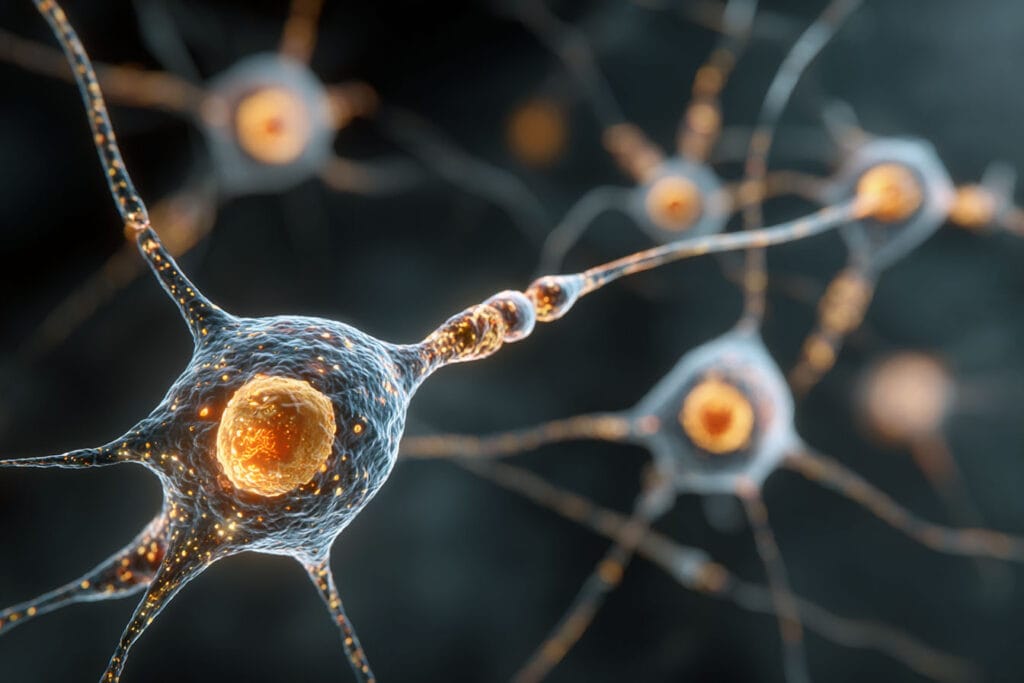
Neuroplasticity completely shatters this outdated paradigm. In the simplest terms, it is the scientific understanding that our brains are constantly changing, adapting, and reorganising themselves in response to our experiences, thoughts, and actions. Every time you learn a new skill, think a new thought, or choose a new behaviour, you are physically changing your brain. You are either strengthening existing neural connections or creating entirely new ones. The adage “neurons that fire together, wire together” is the foundational principle of this revolution.
For someone who had spent 45 years reinforcing the neural pathways of addiction, this was the most hopeful news I had ever encountered. It meant that my brain wasn’t broken; it was simply highly adapted to a specific, destructive behaviour. The “drinking” pathways were like superhighways, wide and efficient from decades of traffic. My brain would default to them automatically at the slightest cue—stress, boredom, celebration, or the time of day. The pathways for healthy coping mechanisms, in contrast, were like faint, overgrown footpaths in the woods.
My recovery, then, was not a matter of spiritual surrender, but of neurological engineering. It was a construction project. The goal was to:
Weaken the Old Highways: Stop sending traffic down the “drinking” pathways. Every time I resisted a craving, I was depriving that neural circuit of the reinforcement it needed to survive. It was like closing a road and allowing it to fall into disrepair.
Build New Superhighways: Deliberately and repeatedly engage in new, healthy behaviours. Every time I chose to meditate instead of drink when stressed, or go for a walk, or drink a glass of cold water, I was sending traffic down those faint footpaths. With repetition, those paths would become well-trodden trails, then paved roads, and eventually, the new default superhighways.
This reframing changed everything. It shifted me from a passive victim of a “disease” to an active participant in my own healing. I was not a powerless alcoholic; I was a neuro-sculptor, and my brain was the clay. Addiction was no longer a mysterious, monolithic force. It was a set of learned, wired patterns, and I could learn and wire new ones.
This understanding empowered me to seek out specific tools—the bulldozers, cranes, and paving machines for my neurological construction project. I wasn’t just “not drinking.” I was actively and intentionally building the brain of a person who didn’t need to drink. Each tool I discovered, from meditation to cold water immersion, had a specific neurochemical or neuro-structural purpose. I was no longer fighting myself; I was working with the fundamental principles of my own biology to create lasting change. This was the new compass, and it pointed not towards a higher power, but inwards, towards the infinite, adaptable, and powerful universe within my own skull.
My Toolkit for Rewiring the Brain: Practical Neuroscience in Action
Armed with the empowering knowledge of neuroplasticity, I became a student of my own mind and began to assemble a personalised toolkit. This wasn’t about finding a single magic bullet, but about creating a multi-faceted strategy to attack the problem from every possible angle—conscious, subconscious, physiological, and neurological. Each tool served a unique purpose in the grand project of rewiring my brain.
For a drinker, the mind is a chaotic and treacherous place. Mine was a relentless churn of anxiety, regret about the past, and fear for the future—a state neuroscientists call the Default Mode Network (DMN) running rampant. This “monkey mind” was the primary trigger for my drinking; alcohol was the substance that would, for a fleeting moment, silence the noise.
Meditation offered a different solution. It wasn’t about silencing the mind, but about learning to observe it without judgment.
How it Works: From a neuroscience perspective, mindfulness meditation is a workout for the brain’s CEO, the Prefrontal Cortex (PFC). The PFC is responsible for executive functions like decision-making, emotional regulation, and impulse control—precisely the functions that are hijacked by addiction. By repeatedly bringing my focus back to my breath, I was strengthening the PFC. Simultaneously, this practice helps to calm the amygdala, the brain’s fear and threat-detection centre, which is often overactive in people with anxiety and addiction, constantly screaming “DANGER! DRINK NOW!”. Over time, meditation physically increases grey matter density in the PFC and reduces it in the amygdala. You are literally building a better brain for managing cravings and stress.
My Practice: I started small, with just five minutes a day using an app. At first, it was excruciating. My mind would wander incessantly. But I stuck with it. I learned to see a craving not as a command, but as a temporary storm of thoughts, feelings, and physical sensations passing through me. I could observe it, name it (“Ah, there is the 5 PM craving”), and breathe through it until it passed, knowing that each time I did this, I was weakening the old neural pathway.
Rehearsing for Reality: Visualisation and Neuro-Linguistic Programming (NLP)
If meditation was about managing the present moment, visualisation and NLP were about designing the future. Addiction traps you in a loop, making it almost impossible to imagine a life without alcohol. These tools allowed me to create and solidify a new vision.
How it Works: When you vividly visualise yourself acting, your brain activates the same neural circuits as if you were actually doing it. Athletes have used this for decades to improve performance. I applied it to sobriety. I would spend time every morning vividly imagining my day as a non-drinker. I would see myself effortlessly refusing a drink at a social event, feeling proud and clear-headed. I would picture myself waking up on a Sunday morning with energy, a clear mind, and no regrets. This mental rehearsal was building and strengthening the neural pathways for sober behaviour before I was even faced with the real-life situations.
NLP in Action: Neuro-Linguistic Programming is about understanding how the language we use (linguistic) shapes our thoughts and behaviours (neuro). I started by changing my internal monologue. Instead of “I can’t drink,” which implies deprivation, I switched to “I don’t drink.” It’s a subtle but powerful shift from a statement of struggle to a statement of identity. I also used a technique called “anchoring,” where I would associate a powerful positive feeling (like the pride of getting through a tough day sober) with a physical gesture, like pressing my thumb and forefinger together. In moments of temptation, I could use that anchor to instantly recall the positive emotional state, giving me the neurological boost I needed to make the right choice.
The Subconscious Co-pilot: The Role of Hypnosis
While meditation and NLP worked on my conscious mind, I knew that decades of drinking had created deep, automatic scripts in my subconscious. Alcohol was linked to relaxation, fun, connection, and relief. Hypnosis was the tool I used to get under the hood and rewrite that faulty code.
How it Works: Hypnosis is not stage magic or mind control. It’s a state of deep, focused relaxation where the critical, analytical conscious mind steps aside, allowing for more direct communication with the subconscious. In this state, the brain is highly receptive to new suggestions. A trained hypnotherapist (or guided audio tracks) can help you install powerful new beliefs and break old associations.
My Experience: Through guided hypnosis sessions, I worked on dissolving the subconscious link between stress and the desire for alcohol. The suggestions were simple but profound: “You are calm and in control,” “You find peace and relaxation in your breath,” “Alcohol is a poison that offers you nothing.” It was like a software update for my brain’s operating system, replacing the old, buggy “Drink for Relief” programme with a new, efficient “Breathe for Relief” one.
This concept is less a single technique and more of a profound psychological shift that underpinned everything else. The term “quantum jump” is often used metaphorically to describe a non-linear, radical leap in perspective. For me, it meant making a clean break from my old identity. Instead of the arduous, step-by-step journey of an alcoholic trying to get better, I made a conscious, decisive choice to become a non-drinker.
I stopped focusing on the past and the 45 years of mistakes. I focused on the person I was choosing to be right now. This person didn’t count sober days because being sober was their natural state. This person didn’t struggle with cravings because alcohol was simply irrelevant to them, like a food they were allergic to. This wasn’t denial; it was a conscious, forward-facing act of creation, leveraging the brain’s power to conform to our deepest-held beliefs about ourselves. By acting as if I were already the person I wanted to be, I was accelerating the formation of the neural pathways that would make it a reality.
Rebuilding from the Ground Up: The Physical Foundations of Mental Sobriety
My journey quickly taught me that you cannot separate the mind from the body. Decades of alcohol abuse had ravaged my physical health, creating a state of chronic inflammation, nutritional deficiency, and nervous system dysregulation. This physical state created a vicious cycle, fuelling the anxiety and depression that drove me to drink in the first place. My neuro-toolkit had to include powerful physiological interventions to create a stable foundation upon which my new mind could be built.
The Gut-Brain Axis: You Are What You Digest
One of the most exciting frontiers in neuroscience is the discovery of the gut-brain axis, the intricate, bidirectional communication network between our digestive system and our brain. The gut is often called our “second brain” because it is lined with millions of neurons and produces a significant amount of the body’s neurotransmitters, including up to 90% of our serotonin, the key mood-regulating chemical.
The Science: A diet heavy in alcohol, sugar, and processed foods devastates the gut microbiome—the ecosystem of bacteria that lives in our intestines. This leads to inflammation, which doesn’t just stay in the gut. Inflammatory signals travel directly to the brain, contributing to brain fog, depression, and anxiety. Furthermore, an unhealthy gut can’t effectively produce the neurotransmitters your brain needs to feel good. Cravings for alcohol are often driven by a brain desperate for a quick hit of dopamine and serotonin that it’s not getting from natural sources.
My Nutritional Overhaul: I realised I had to stop the inflammation cascade at its source. I radically changed my diet. I eliminated processed foods, refined sugar, and industrial seed oils. I flooded my body with nutrient-dense whole foods: leafy greens, colourful vegetables, healthy fats from avocados and olive oil, quality protein, and fermented foods like kimchi and kefir to repopulate my gut with beneficial bacteria. The effect was staggering and rapid. Within weeks, the constant, low-grade anxiety I had lived with for years began to dissipate. The brain fog lifted. My mood stabilised. My body was finally producing its own “feel-good” chemicals, drastically reducing the brain’s perceived need for an external source like alcohol.
The final pieces of my toolkit were practices designed to take conscious control of my autonomic nervous system, the system that controls our stress response (“fight or flight”) and our relaxation response (“rest and digest”). For 45 years, my nervous system had been stuck in a state of high alert, and alcohol was my go-to method for forcing it into a state of temporary, artificial relaxation.
Cold Water Immersion: The idea of willingly subjecting myself to cold water seemed insane at first. But the science is compelling. A blast of cold water triggers a flood of norepinephrine and dopamine, powerful mood-elevating and focus-enhancing neurochemicals, providing a natural high that lasts for hours. More importantly, it is a powerful tool for building mental resilience. By consciously stepping into the cold and controlling my breath, I was teaching my nervous system that I could handle acute stress without panicking. I was training myself to face discomfort and overcome it. This practice, of taking a cold shower every morning, became a daily declaration of my own strength and resolve.
Breathwork: Paired with the cold, I adopted a daily breathwork practice. Techniques like the Wim Hof Method or simple Box Breathing (inhale for four, hold for four, exhale for four, hold for four) have a direct and immediate effect on the nervous system. By controlling the rhythm of my breath, I could consciously switch my body from the panicked, sympathetic “fight or flight” state to the calm, parasympathetic “rest and digest” state. This was a superpower. Instead of reaching for a glass of wine to unwind after a stressful day, I had a free, built-in tool that worked faster and had no negative side effects. It was the ultimate act of reclaiming control over my own physiology.
Forging My Own Path: From Powerless to Empowered
Looking back on the 45-year shadow of my drinking life, it feels like a different lifetime, a story about someone else. The person who woke up every day with a sense of dread, shackled to a substance he hated, is gone. In his place is a man who is the architect of his own mind, the conscious curator of his own well-being.
My journey was not about finding a magic cure, but about a fundamental shift in perspective. I shifted from seeing myself as a diseased and powerless victim to seeing myself as an adaptable, powerful human being with the capacity for profound, self-directed change. The doctrines of the past, born from the best intentions of a different era, asked me to surrender. The science of the present gave me a blueprint and a set of tools to build.
Alcoholics Anonymous provides a vital refuge for millions, and its place in the history of recovery is secure. But for those of us who feel a dissonance with its philosophy, it is critical to know that other paths exist. We live in an age of unprecedented understanding of the human brain. We have access to knowledge and practices that can allow us to take the helm of our own biology, to actively participate in our healing on a neurological level.
My recovery was built not on admitting powerlessness, but on discovering and cultivating my own power. It was built on the quiet morning minutes of meditation, the focused visualisation of a brighter future, the radical act of feeding my brain and body what they truly needed, and the daily courage of facing the cold. Each of these practices was a vote for a new identity, a new way of being. Each was a deliberate act of laying down new neural pathways, of building a new brain that no longer needs or wants the false comfort of alcohol.
This is not a story of a cure, but of a reconstruction. I did not simply put down the drink; I picked up the tools of modern science and rebuilt myself, neuron by neuron, from the ground up. And in doing so, I finally stepped out of the shadow and into the light of my own making.
This is not just another story about quitting drinking; it is a deep dive into the practical application of modern neuroscience to overcome a lifetime of conditioning. For forty-five years, alcohol was my constant companion, a habit so deeply entrenched I believed it was an immutable part of who I was. Yet, by harnessing the principles of neuroplasticity and addiction science, I dismantled that identity and built a new one from the ground up. This article will guide you through the exact mental and physical tools I used—from NLP and hypnosis to cold water immersion and gut-brain nutrition—to not just abstain from alcohol, but to fundamentally change my brain’s response to it, offering a blueprint for anyone who feels trapped by a habit they believe they cannot break.
THE 45-YEAR RUT AND THE SPARK OF HOPE
For most of my adult life, and a significant portion of my adolescence, my evenings followed a predictable script. The day would wind down, a certain tension would settle in my shoulders, and the internal monologue would begin. It wasn’t a question of if I would have a drink, but when and how many. It started in my late teens as social lubrication, a rite of passage. In my twenties, it became the punctuation mark at the end of a stressful workday. By my thirties and forties, it was the foundational pillar of my relaxation routine. By the time I was in my sixties, it was simply the air I breathed. A 45-year habit is not just a habit; it is an infrastructure. My social circles, my coping mechanisms, my very sense of self—all were built around the ritual of drinking.
I had tried to quit more times than I could count. There were the ‘Dry Januarys’ that barely made it past the first week, the solemn promises to my family that evaporated at the first sign of stress, and the periods of white-knuckled abstinence that felt like holding my breath underwater. Each attempt ended the same way: with a capitulation that felt both like a failure and a profound relief. The relapse was always justified by a well-worn narrative: “I’ve had a hard day,” “It’s just one to take the edge off,” or the most insidious of all, “This is just who I am.” My brain, it seemed, had a one-track mind, and that track always led back to the bottle. I believed my brain was hardwired for alcohol, a fixed and unchangeable piece of biological hardware that was now, after decades of use, faulty.
The turning point wasn’t a rock-bottom moment in the dramatic, cinematic sense. It was quieter, an intellectual flicker that grew into a flame. I stumbled upon an article discussing ‘neuroplasticity’. The word itself was new to me, but the concept was revolutionary. It proposed that the brain, far from being a fixed, static organ after childhood, remains malleable throughout our entire lives. The very pathways, connections, and structures within our brain can, and do, change in response to our thoughts, behaviours, and experiences. Suddenly, the “faulty hardware” analogy collapsed. If the brain could change, then the ‘wiring’ for addiction wasn’t permanent. It was a well-trodden, deeply carved neural superhighway, yes, but it wasn’t the only possible road. Other paths could be built.
This was the spark. The idea that my struggle was not a moral failing or a permanent state of being, but a matter of brain structure, was profoundly liberating. Addiction, I began to understand, is neuroplasticity in action, but for a negative purpose. Every time I drank in response to a trigger, I strengthened the neural circuit connecting that trigger to that reward. Over 45 years, I had diligently practised and reinforced this connection, making it automatic, efficient, and powerful. My brain had learned addiction perfectly. The logical conclusion, then, was that it could unlearn it. I could use the same principle—neuroplasticity—to intentionally weaken the old pathways and build new, healthier ones. This wasn’t about willpower anymore; it was about a strategic rewiring project. It was time to become the architect of my own mind.
With this newfound understanding, I began to search for practical tools to facilitate this neural restructuring. It became clear that simply stopping the behaviour wasn’t enough; I needed to actively engage in practices that would build new mental models and associations. My toolkit became a blend of techniques designed to communicate with my brain on both a conscious and subconscious level.
Neuro-Linguistic Programming (NLP)
At first, NLP sounded like impenetrable jargon, but at its core, it’s about the language of the mind and how we can use it to change our results. It works on the principle that we run ‘programmes’—automatic patterns of thought and behaviour. My drinking was the result of a highly effective, well-rehearsed programme. NLP offered me the tools to deconstruct and rewrite that code.
One of the first and most powerful techniques I used was Reframing. For decades, I had framed sobriety as a loss. I was ‘giving up’ my friend, my crutch, my fun. It was a life of deprivation. Using reframing, I consciously changed that narrative. Sobriety wasn’t a loss; it was a monumental gain. I was gaining clarity, better sleep, more energy, authentic connections, and freedom from a cycle that had me trapped. I wrote these gains down. I repeated them daily. Instead of saying, “I can’t drink,” I started saying, “I am choosing to be fully present,” or “I am choosing to nourish my brain.” This simple shift in language began to alter the emotional weight of my decision.
Another crucial technique was Anchoring. This involves linking a desired emotional state to a unique physical touch. I wanted to feel calm and in control when a craving hit. I would sit quietly, recall a time I felt profoundly peaceful and powerful (for me, it was standing on a mountain summit after a long hike), and when the feeling was at its peak, I would press my thumb and middle finger together firmly. I practised this over and over, creating a strong neurological link between the touch and the feeling. Then, when the familiar 6 p.m. craving would start to bubble up, I would fire my anchor—press my fingers together—and a wave of that programmed calm would wash over me, giving me the crucial space between the trigger and my old, automatic response. It was a circuit breaker for the habit loop.
Hypnosis and Self-Hypnosis
If NLP was about rewriting the conscious code, hypnosis was my tool for accessing the subconscious operating system. The vast majority of our habits and beliefs are stored here, outside of our conscious awareness. For 45 years, my subconscious had been programmed with one core belief: alcohol equals relief. Hypnotherapy, either with a professional or through guided recordings, allowed me to bypass the critical conscious mind and offer new, more beneficial suggestions directly to that deeper part of myself.
During sessions, I was guided into a state of deep relaxation, a focused state similar to daydreaming. In this state, my mind was highly receptive to new ideas. The suggestions were simple but profound: “You are calm and comfortable in social situations without alcohol,” “Your body is a temple, and you nourish it with clean, healthy choices,” “The thought of alcohol fills you with a sense of indifference,” or even creating a link between the smell of wine and an unpleasant sensation. These suggestions weren’t magic spells; they were seeds planted in the fertile ground of my subconscious. Over time, and with repetition, they began to sprout, crowding out the old, weedy beliefs that had dominated for so long. The inner voice that once screamed for a drink began to be replaced by a quieter, more assured voice that championed health and freedom.
While hypnosis worked on the subconscious, meditation was about training my conscious awareness. My old brain would react to a trigger (stress, boredom, the time of day) with an immediate, powerful craving that felt like an unbreakable command. Mindfulness meditation taught me to observe this process without being swept away by it.
Through daily practice, even just ten minutes, I learned to sit with my thoughts and feelings without judgment. When a craving arose, instead of either fighting it or giving in, I learned to notice it simply. I would observe it with curiosity: “Ah, there is the craving. Where do I feel it in my body? It’s a tension in my chest. It’s a thought that says ‘you need a drink’. It feels strong right now.” This practice, often called ‘urge surfing’, separates the observer (me) from the observed (the craving). By not reacting, I was ceasing to complete the habit loop. The craving was the brain sending out a signal based on old programming, expecting a response. By not providing that response, I was telling my brain, “This pathway is no longer in use.” With each urge I surfed and allowed to pass, the connection weakened. I was neurologically voting for a new reality. Meditation also helped to physically rebuild my brain, strengthening the prefrontal cortex—the centre of rational decision-making—which is often weakened by chronic substance use.
The brain doesn’t always distinguish well between a vividly imagined experience and a real one. Visualisation leverages this to create a compelling blueprint for the future. Every morning and every evening, I would spend five minutes engaging in a powerful visualisation practice.
I didn’t just think about being sober; I inhabited it with all my senses. I would close my eyes and see myself at a party, laughing, holding a sparkling water, feeling completely at ease and engaged. I would feel the energy in my body, the clarity in my mind. I would imagine waking up on a Saturday morning, fresh and clear-headed, ready to enjoy the day. I would feel the pride and self-respect that came with keeping the promise I made to myself. This wasn’t wishful thinking. This was a rehearsal. I was repeatedly activating the neural networks associated with my desired self, making them stronger and more familiar. When I was later faced with a real-life trigger, my brain already had a new, well-practised script to run. It knew what to do because it had already ‘been there’ a hundred times in my mind.
THE PHYSICAL INTERVENTION: REBUILDING THE BODY-BRAIN CONNECTION
Rewiring the mind was only half the project. Forty-five years of heavy drinking had taken a significant toll on my physical body, and I came to understand that my physiology was inextricably linked to my psychology. A stressed, inflamed, and malnourished body would always be a breeding ground for relapse. I needed to create a physical environment that supported my new mental framework.
This was the most challenging, and perhaps most transformative, physical practice I adopted. The idea of voluntarily subjecting myself to cold water seemed absurd at first, but the neuroscience behind it was compelling. I started small, ending my morning showers with 30 seconds of full cold water. The initial shock was immense, a full-body gasp that silenced all mental chatter. But what happened next was remarkable.
The shock of the cold water triggers a flood of norepinephrine into the brain, a neurotransmitter that dramatically improves focus, mood, and vigilance. It also stimulates a massive release of dopamine, the molecule of motivation and reward. Chronic alcohol use hijacks and depletes the dopamine system, leading to anhedonia (inability to feel pleasure) that so many experience in early recovery. The cold plunge was a natural, powerful way to reboot this system. It provided a ‘high’ that was healthy and sustainable, reducing the perceived need to seek it from an external substance.
Furthermore, cold water is a powerful way to tone the vagus nerve, the main component of the parasympathetic nervous system—our ‘rest and digest’ system. A strong vagal tone means you can self-regulate your stress response more effectively. By deliberately putting my body into a state of shock and then consciously calming my breathing, I was training my nervous system to handle stress without panicking. This resilience translated directly into my recovery. When life’s inevitable stressors appeared, my newly trained nervous system was less likely to send the ‘red alert’ signal that my old brain interpreted as a command to drink.
The final piece of the puzzle was understanding the profound connection between my gut and my brain. I learned that decades of alcohol consumption had decimated my gut microbiome—the trillions of bacteria that live in the digestive tract. Alcohol acts as an antiseptic, killing off beneficial bacteria, and leads to a condition called ‘leaky gut’, where the intestinal lining becomes permeable, allowing toxins and inflammatory particles to enter the bloodstream. This chronic, low-grade inflammation directly affects the brain, contributing to anxiety, depression, and brain fog—all major triggers for relapse.
My mission was to rebuild my gut from the ground up. This became a non-negotiable part of my recovery protocol. My strategy involved several key areas:
Remove Inflammatory Foods: I eliminated processed foods, refined sugars, and industrial seed oils, which all contribute to inflammation and gut dysbiosis. Sugar, in particular, was critical to remove, as blood sugar dysregulation can create cravings that are easily mistaken for alcohol cravings.
Repopulate with Probiotics: I began to actively introduce beneficial bacteria into my system through fermented foods. Things like live yoghurt, kefir (a fermented milk drink), sauerkraut, and kimchi became daily staples. These foods helped to re-establish a healthy, diverse microbiome.
Feed with Prebiotics: Good bacteria need food to thrive. I loaded my diet with prebiotic fibre from sources like garlic, onions, leeks, asparagus, and slightly under-ripe bananas. This fibre passes through to the large intestine, where it becomes food for the beneficial microbes.
Replenish Nutrients: Alcohol is notorious for depleting crucial brain-health nutrients. I focused on foods rich in B vitamins (especially B1, thiamine), magnesium (found in leafy greens, nuts, and seeds), and zinc. These nutrients are cofactors in the production of key neurotransmitters like serotonin and dopamine. I ate a diet rich in high-quality protein and healthy fats (from avocados, olive oil, and fatty fish) to provide the building blocks for new brain cells and stable energy.
The change was staggering. Within weeks of changing my diet, the brain fog I had accepted as normal began to lift. My mood stabilised, the constant undercurrent of anxiety lessened, and my cravings for alcohol diminished dramatically. I realised that much of what I had thought was a psychological craving was, in fact, my body screaming for nutrients and my inflamed brain sending out distress signals. By healing my gut, I was calming my brain.
CONCLUSION: INTEGRATION AND A NEW BLUEPRINT FOR LIFE
The journey out of a 45-year addiction was not a single event but a process of total system integration. It was not one technique but the synergistic effect of all of them. The NLP and visualisation created the mental blueprint for who I wanted to become. Meditation and hypnosis provided the tools to manage the old programming while the new blueprint was being built. The cold water therapy reset my neurochemistry and built resilience, while the nutritional overhaul repaired the physical foundation upon which a healthy mind must be built.
Each element supported the others. The improved mood from a healthy gut made it easier to meditate. The clarity gained from meditation made it easier to apply NLP reframing. The dopamine boost from the cold water reduced the appeal of the artificial boost from alcohol. It was a holistic, multi-pronged approach to a complex problem.
What I have learned is that neuroplasticity and addiction are two sides of the same coin. Addiction carves deep, destructive grooves into our neural landscape. Recovery is the patient, deliberate act of carving new ones. It is not about a lifelong battle against an enemy. It is about becoming a gardener of the mind—patiently pulling the weeds of old habits and planting and nurturing the seeds of new, life-affirming ones.
For anyone who feels as trapped as I did, know this: your brain is not fixed. You are not your habit. You possess the inherent ability to change your mind, literally. The path is not easy, and it requires consistent effort, but it is a path of empowerment, not deprivation. By consciously engaging with these tools, you can move from being a passenger in a vehicle driven by old programming to being the driver, choosing your destination and building the road to get there, one new neural connection at a time.
Used to monitor number of Google Analytics server requests when using Google Tag Manager
1 minute
_gid
ID used to identify users for 24 hours after last activity
24 hours
_ga_
ID used to identify users
2 years
_gali
Used by Google Analytics to determine which links on a page are being clicked
30 seconds
_ga
ID used to identify users
2 years
__utmx
Used to determine whether a user is included in an A / B or Multivariate test.
18 months
__utmv
Contains custom information set by the web developer via the _setCustomVar method in Google Analytics. This cookie is updated every time new data is sent to the Google Analytics server.
2 years after last activity
__utmz
Contains information about the traffic source or campaign that directed user to the website. The cookie is set when the GA.js javascript is loaded and updated when data is sent to the Google Anaytics server
6 months after last activity
__utmc
Used only with old Urchin versions of Google Analytics and not with GA.js. Was used to distinguish between new sessions and visits at the end of a session.
End of session (browser)
__utmb
Used to distinguish new sessions and visits. This cookie is set when the GA.js javascript library is loaded and there is no existing __utmb cookie. The cookie is updated every time data is sent to the Google Analytics server.
30 minutes after last activity
__utmt
Used to monitor number of Google Analytics server requests
10 minutes
__utma
ID used to identify users and sessions
2 years after last activity
_gac_
Contains information related to marketing campaigns of the user. These are shared with Google AdWords / Google Ads when the Google Ads and Google Analytics accounts are linked together.