Let’s be brutally honest for a moment. If you’re reading this, chances are you’ve hit that point. That murky, uncomfortable stage where life feels less like a well-oiled machine and more like a rusty old banger sputtering on fumes. You might feel a bit lost, a touch disillusioned, or just plain pissed off that you’re not where you thought you’d be. You’re searching for something, aren’t you? Some answers, some direction. You’re looking for midlife clarity and personal growth strategies.
And you know what? That’s bloody brilliant. Because that feeling, that gnawing discontent, isn’t a sign you’re broken. It’s a signal. A loud, unequivocal alarm bell telling you it’s time to pay attention, to strip away the rubbish, and to start building something real. My own journey, forged through twelve years in the British Army, 45 years I spent battling with drink (and finally winning that war 8 months ago), and countless hours coaching blokes and lasses just like you, has taught me one thing: your midlife isn’t broken. It’s just out of focus. And the good news? You can sharpen that focus, starting right now.
Why Does Midlife Feel Like a Fucking Minefield?
You’ve sailed through your twenties thinking you were immortal, smashed your thirties building a career or a family, and then BAM! Forty hits like a gut punch. Or maybe it’s fifty. Suddenly, the old rules don’t apply. The goals you chased feel hollow. The ‘shoulds’ pile up, suffocating you. What happened?
In the army, we learned to navigate minefields. You didn’t just blunder through; you trained, you learned to read the ground, to identify the signs of danger, and to move with purpose. Most people approach midlife like they’re blindfolded in a booby-trapped field, wondering why they keep stepping on tripwires.
The truth is, for decades, you’ve likely been living on autopilot, following a script handed to you by society, by your parents, by advertising, by whatever bollocks was thrown your way. You collected the job, the house, the partner, the kids, and the holidays. The ‘stuff’. And now, you’re looking around at all that ‘stuff’ and asking, “Is this it?” That’s not a crisis; that’s consciousness waking up. That’s your soul saying, “Hold on, mate, there’s more to life than this.” This period is often riddled with disillusionment, regret, and profound confusion about your identity. You start questioning every decision you’ve ever made, every path you’ve chosen. The path you’re on might not even feel like yours anymore, but a well-worn track carved out by external expectations.
The drift is insidious. It starts small. A quiet dissatisfaction, an unaddressed feeling. Then it builds. You start seeking distractions, numbing agents – whether that’s endless scrolling, too much telly, or, as I know intimately, too much booze. These crutches, these temporary escapes, only serve to push real midlife clarity and personal growth strategies further out of reach. They blur the lines, obscure your vision, and keep you stuck in a loop of discontent. You become a passenger in your own life, watching it go by, rather than taking the wheel. This isn’t about self-pity; it’s about a cold, hard assessment of where you are and why you’re there. It’s about acknowledging that the map you’ve been using is outdated, and it’s time to draw a new one, based on your terrain, your values, your true north.
Let’s talk about the big one. My battle with drink. Forty-five years. Think about that. Nearly half a century of reaching for a bottle to numb the edges, to escape the noise, to feel ‘normal’. I’m not going to sit here and label myself, or anyone else, with some clinical term that disempowers you. That’s a load of bollocks. What I will say is that I spent 45 years drinking, and 8 months ago, I quit. Cold turkey. It was the hardest, most brutal thing I’ve ever done. And it was the most liberating.
Why am I telling you this? Because whatever your crutch is – booze, excessive comfort eating, endless distractions, toxic relationships, whatever keeps you small and numb – the process of letting go is fundamental to achieving midlife clarity and personal growth strategies. Your brain, my brain, is hardwired for comfort. It loves routine, even if that routine is destroying you. It will fight you tooth and nail to keep things ‘safe’ and familiar. So, when you decide to take that crutch away, it feels like everything is falling apart.
But here’s the kicker: it’s not falling apart; it’s falling into place. The chaos you feel is the old programming trying to assert itself. It’s the rewiring. When I quit drinking, I had to learn how to exist in the world without that escape hatch. I had to face emotions I’d buried for decades. I had to sit with discomfort, learn new ways to cope, and build resilience from the ground up. It was ugly. It was terrifying. And every single day, it forged a stronger, clearer version of me.
Quitting your crutch isn’t about deprivation; it’s about liberation. It’s about creating space. When you stop filling that void with temporary fixes, something incredible happens: the void starts to fill itself with clarity. With purpose. With the raw, unfiltered truth of who you are and what you genuinely want. This isn’t just about booze. It could be sugar, that ‘industrial sludge’ you’re feeding yourself daily, or an addiction to chasing external validation. Whatever it is, if it’s dulling your edge and dimming your light, it’s gotta go. It’s a non-negotiable step on the path to genuine. personal growth strategies.
Alright, once you’ve started kicking those crutches to the curb, you’re going to feel a bit exposed. Good. That’s where the real work begins. My coaching philosophy has five pillars, and ‘Mind’ is where a lot of this midlife clarity work gets done. You can’t navigate if your compass is spinning wildly, can you? And your mind, left unchecked, can be a chaotic storm of past regrets and future anxieties.
Most people’s minds are a cacophony of noise. Social media, news cycles, other people’s opinions, your own nagging self-doubt – it’s relentless. How the hell are you supposed to hear your own intuition, your own bloody truth, amidst all that? You don’t. That’s why you feel lost.
This isn’t about sitting cross-legged and chanting ‘Om’ if that’s not your bag. This is about discipline. It’s about training your mind like you’d train for combat. In the army, mental resilience wasn’t a suggestion; it was survival. You learned to focus under pressure, to assess threats, and to make decisions quickly and effectively. You can apply that same discipline to your everyday life.
For me, ‘Mind’ means a few things, stripped bare of all the woo-woo nonsense. It means: recognising the thought patterns that sabotage you (my NLP training comes in handy here), and consciously redirecting them. It means taking time, every single day, to quiet the external chatter and listen to the internal wisdom. This could be five minutes of deep breathing, a solitary walk in nature, or just sitting in silence with a cuppa. It’s about creating mental space. This isn’t a luxury; it’s a necessity for midlife clarity.
You have to be ruthless with what you allow into your head. Just like you wouldn’t let an enemy into your barracks, don’t let negativity, fear, or self-doubt set up camp in your mind. Challenge those thoughts. Ask yourself: ‘Is this true? Is this helpful? Or is this just old programming trying to keep me small?’ This self-inquiry is a powerful personal growth strategy. It’s how you begin to see your life, your choices, and your future through a crystal-clear lens, rather than the smudged, distorted glass you’ve been using.
Fuel the Machine: Why What You Eat Dictates Your Clarity
Right, let’s talk about what you’re putting in your gob. My ‘Eat’ pillar is non-negotiable. If you’re trying to achieve midlife clarity and personal growth strategies while fueling your body with garbage, you’re fighting an uphill battle with one hand tied behind your back. It’s like trying to run a high-performance engine on cheap, dirty diesel. It’ll sputter, it’ll cough, and it’ll eventually break down. Your brain, your body, your energy levels – they all scream for proper fuel.
My nutritional philosophy is ancestral, paleo, and keto-aligned. And it’s hardcore. What does that mean? It means real food. Unprocessed, nutrient-dense, straight from the source. Prioritise high-quality, grass-fed/pasture-raised animal products and fats. I’m talking proper butter, ghee, tallow. Get it in ya. Your brain needs these fats to function optimally. It’s not a fad; it’s how humans evolved to eat for hundreds of thousands of years. We didn’t have cereal boxes and vegan protein bars back then, did we?
Aggressively eliminate all processed foods. All of them. Sugars, in all their insidious, hidden forms, are the enemy. They spike your blood sugar, crash your energy, and fog your brain. And those industrial seed oils – canola, sunflower, soybean – I call them ‘industrial sludge’. They’re inflammatory, toxic, and utterly devoid of anything beneficial for your body. Cut them out. They are making you sick, fat, and dulling your mental edge.
For true midlife clarityYou need a clear head, consistent energy, and a resilient body. You won’t get that from a diet of beige, carbohydrate-heavy, processed rubbish. Forget the vegan junk food, the tofu, the fake meats. Your body is a meat-eating machine, evolved over millennia to thrive on animal proteins and fats. If you can get it, embrace nose-to-tail eating – organs are nutrient powerhouses. If that’s too intense for now, fine, but at least focus on quality muscle meat and plenty of fat.
The connection between your gut and your brain is profound. A messed-up gut means a messed-up brain. Brain fog, anxiety, low mood – these are often direct consequences of a shitty diet. Cleaning up your plate is one of the most powerful personal growth strategies things you can deploy. When you fuel your body correctly, your energy stabilises, your focus sharpens, and your mood lifts. You become more resilient, more capable of tackling the mental and emotional challenges of midlife. It’s not about being ascetic; it’s about honouring your biology and giving yourself the best possible chance to thrive.
Stop Drifting, Start Moving: Reclaiming Your Power Through Action
Right, you’re clearing your mind, you’re fuelling your body properly. What next? You need to move. My ‘Move’ pillar isn’t about becoming an Olympic athlete or spending hours in a sterile gym if you hate it. It’s about functional movement, disciplined action, and reclaiming the raw physical power you were born with.
In the army, you didn’t just sit around and think about being fit; you were fit. You carried your weight, you ran, you pushed, you pulled. It was part of the daily grind. And that physical discipline translated directly into mental fortitude. When your body is strong and capable, your mind follows suit. When you’re constantly sedentary, your energy stagnates, your mood dips, and your capacity for taking meaningful action diminishes. It’s a vicious cycle.
For midlife clarity and personal growth strategiesYou need to challenge your physical self. This isn’t about vanity; it’s about vitality. It’s about proving to yourself, every single day, that you are capable. This could be as simple as a brisk walk every morning, lifting some heavy things a few times a week, or finding a sport you genuinely enjoy. The key is consistency and challenge. Push yourself a bit. Feel your heart rate climb, feel your muscles work. Remind your body what it’s capable of. The endorphins aren’t just a ‘feel good’ chemical; they’re nature’s way of telling you that you’re doing something right, boosting your mood and mental sharpness.
The ‘Move’ pillar isn’t just about the physical benefits; it’s a powerful feedback loop for your mind. When you commit to a physical routine and you stick to it, you build discipline. You build self-efficacy. You prove to yourself that you can set a goal and achieve it, even when you don’t feel like it. This translates directly into other areas of your life. That confidence, that momentum, becomes a catalyst for further personal growth strategies. You’ll find yourself more willing to tackle difficult conversations, to pursue new ventures, to generally get off your arse and make things happen. It’s a fundamental part of shaking off the lethargy that often plagues midlife and replacing it with dynamic energy.
Crafting Your New Mission: Practical Strategies for Growth
Alright, you’re cleaning up your act, sharpening your mind, and getting your body moving. Now, how do we pull it all together and build a new future? This isn’t about some airy-fairy ‘vision board’ nonsense. This is about crafting a new mission. A mission that aligns with who you truly are, now that you’ve stripped away the layers of expectation and distraction.
Define Your Non-Negotiables
What are the absolute essentials for your life? Not what society tells you, but what genuinely brings you purpose and peace. For me, it’s my family, my health, and helping people cut through the bullshit to live better lives. These are my anchors. Youmidlife clarity begin by identifying these anchors. What values do you live by, or want to live by? What kind of person do you want to be? Write them down. Be explicit.
Set Your Tactical Objectives
Once you have your mission (your overarching purpose), you need objectives. These are your short-to-medium term goals. Don’t set vague, fluffy goals. Set SMART goals: Specific, Measurable, Achievable, Relevant, Time-bound. Want to get fit? ‘I will run 5k three times a week by Christmas.’ Want to change career? ‘I will complete an online course in X by June and apply for Y new roles.’ These concrete steps are the building blocks of personal growth strategies.
Implement Daily Discipline
Discipline isn’t about punishment; it’s about freedom. Freedom from regret, freedom from procrastination, freedom to become the person you want to be. Each day, identify 1-3 critical tasks that move you towards your objectives. Do them first. Before the emails, before the distractions. Get the hard stuff done. This consistent, focused effort, even in small doses, builds incredible momentum. This is where the military mindset really kicks in. Small, consistent efforts, day after day, lead to monumental shifts over time. You don’t get fit by thinking about it; you get fit by showing up, even when it’s raining, even when you’re tired.
Reflect and Adjust, ruthlessly.
Every week, take an honest look at your progress. What went well? What didn’t? Where did you fall off track? Don’t beat yourself up; just analyse. Learn. Adjust your course if necessary. This isn’t about perfection; it’s about progress. This continuous feedback loop is crucial for refining your midlife clarity and personal growth strategies. If something isn’t working, change it. Don’t cling to a strategy just because you started it. Adapt. That’s true strength.
Conclusion: Your Time to Get Focused is Now
Look, your midlife isn’t broken. It’s just calling you to attention. It’s asking you to strip away the bullshit, to find your true north, and to live with purpose. The journey midlife clarity and personal growth strategies isn’t always comfortable. It’s going to challenge you. It’s going to make you face things you’d rather ignore. But I promise you, it’s worth it.
It’s about choosing courage over comfort. It’s about taking ownership of your life, your choices, and your future. Stop waiting for someone else to permit you, or for the ‘perfect’ moment. That moment is now. Start with one small, uncomfortable step. Clean up your diet. Quiet your mind for five minutes. Go for a brisk walk. Kick one crutch to the curb. Build that momentum. The clarity will follow. The growth will follow. Your powerful, authentic midlife is waiting. Go get it.
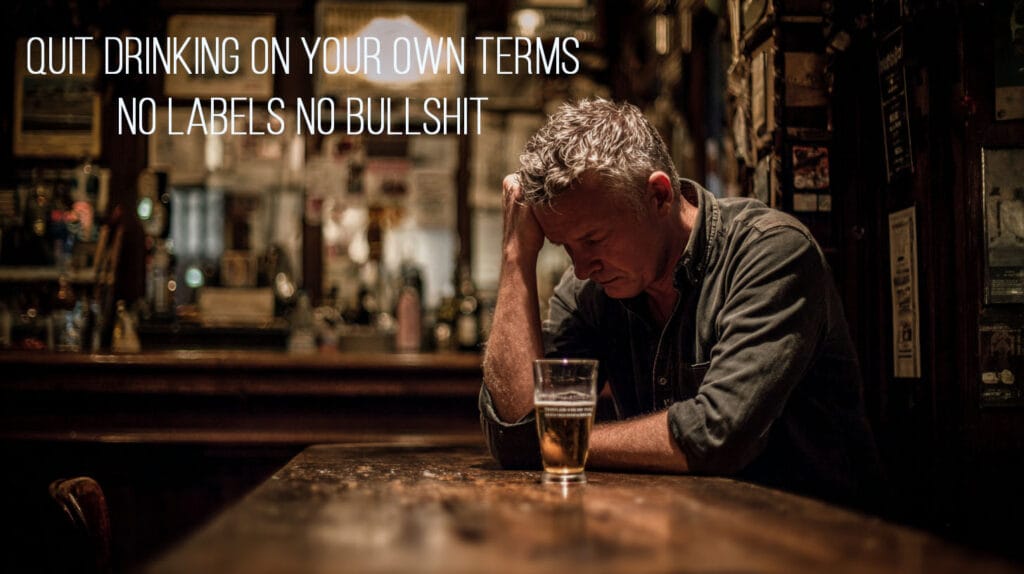
Quit drinking on your own terms. Right, listen up. If you’re here, chances are you’ve been grappling with drink. Maybe you’ve tried the usual routes, sat in a few rooms, and listened to the same old spiel about being ‘powerless’ and surrendering. If that resonated with you, fair play. But if it left a sour taste—if it felt like a load of old bollocks that just kept you feeling stuck and labelled—then you’re in the right place.
I spent 45 years in the trenches with booze. Forty-five years in the trenches—a lifetime spent on a never-ending daily grind. Eight months ago, I drew a line in the sand. I quit drinking on my own terms. Not by admitting powerlessness, not by adopting a label, and certainly not by surrendering to anything but my own will to change. This isn’t about being an ‘alcoholic’; it’s about taking back control of your life. It’s about a complete reset, from the ground up, built on discipline, not dogma.
This isn’t just theory. This is a hard-won, bloody experience from a bloke who spent over a decade in the British Army, where ‘powerless’ wasn’t in the vocabulary. We’re going to talk about why the conventional approaches can actually hinder your progress and how you can forge a path to true freedom, powerful and unlabelled.
The “Powerless” Lie: Why Surrender Is a Load of Bollocks
Let’s get straight to it: The idea that you are powerless over alcohol is, in my professional opinion as a coach and someone who’s lived it, a dangerous, disempowering myth. It’s a convenient narrative for some, maybe, but for others, it’s a mental cage. Think about it. What does ‘powerless’ actually mean? It means giving up, throwing your hands in the air, and resigning yourself to a permanent victim status. And I don’t know about you, but that wasn’t what they taught us in the army. We were taught to fight, to adapt, to overcome. To find a way, no matter how grim the odds.
When I was grappling with the drink, the thought of admitting I was ‘powerless’ over a liquid always felt like a betrayal of everything I’d learned. It felt weak. And I’m not weak. You’re not weak. You’ve gotten this far, haven’t you? You’re reading this, looking for answers, searching for a way out. That’s not powerlessness; that’s resilience. That’s a flicker of a fighting spirit that’s ready to ignite.
The mind can be a powerful weapon, or it can be your worst enemy. If you constantly feed it the idea that you are ‘powerless,’ what do you think it’s going to do? It’s going to find every bloody reason to prove that belief correct. It’s going to create situations where you ‘slip’ or ‘relapse’ because, well, you’re powerless, aren’t you? It becomes a self-fulfilling prophecy. This isn’t just my opinion; it’s basic NLP (Neuro-Linguistic Programming) principles at play. Your language shapes your reality, and ‘powerless’ is a poison to progress.
My journey wasn’t about surrendering; it was about reclaiming. It was about looking the beast in the eye and saying, “Right, you’ve had your run. Now it’s my turn.” It was about understanding that while the cravings were fierce and the conditioning was deep, they weren’t insurmountable. They were challenges to be faced, strategies to be deployed, not reasons to lie down and quit. Surrender is for the battlefield when all hope is lost, not for the internal war you need to win to truly live. You have the power to change, to choose, to fight for a better life. Don’t let anyone tell you otherwise.
Labels Kill Your Progress: You Are Not Your Past
This ties directly into the ‘powerless’ narrative. Once you accept a label like ‘alcoholic,’ you’ve built a box for yourself, and your brain (being the efficient, if sometimes unhelpful, organ it is) will work tirelessly to keep you in that box. It’s a core tenet of NLP: what you label yourself, you become. If you call yourself an ‘alcoholic,’ your brain will constantly look for evidence to confirm that identity. It becomes a permanent state, a flaw etched into your being, rather than a behaviour you can change.
I spent 45 years drinking. But I never called myself an ‘alcoholic.’ Why? Because I refused to let that label define me. It wasn’t who I was; it was something I did. A habit, a coping mechanism, a deep-seated pattern, yes, but not my identity. The moment you give yourself that label, you inadvertently give it power over you. It suggests a fixed, unchangeable state, implying that even if you stop drinking, you’re still fundamentally ‘an alcoholic’ in remission. That’s a mental weight, a burden that many simply don’t need.
Imagine trying to build a new life, a stronger self, while constantly dragging the heavy anchor of a ‘permanent disease’ label behind you. It’s an unnecessary impediment. Your past actions do not dictate your future identity unless you let them. My military training taught me about identity, too. You put on that uniform, you become a soldier. You embody the discipline, the resilience. But you can also take it off. You can choose to be something else. You can choose to be a person who no longer drinks, free of the old identity. You are not your past behaviours; you are the sum of your present choices and your future aspirations.
This isn’t about denying the severity of past actions or downplaying the struggle. It’s about framing it in a way that empowers you, not disempowers you. You battled with drink, yes. You overcame it. You are a person who has conquered a significant challenge, not someone perpetually ‘in recovery’ from an inherent flaw. The language we use, especially the language we use about ourselves, is everything. So ditch the labels. Refuse to be defined by what you did. Define yourself by who you are becoming.
Your Body, Your Rules: The Fuel for True Freedom (The “Eat” Pillar)
Now, if you’re serious about taking back control and you want to quit drinking on your own terms, you need to understand something fundamental: your physical state is directly intertwined with your mental state. You can’t fight a war with a broken body, and you can’t conquer your inner demons if you’re fuelling yourself with rubbish. This is where my “Eat” pillar comes in, and frankly, it’s non-negotiable.
While some groups are offering biscuits and coffee, you’re actively undermining your sobriety by feeding your body sugar and processed crap. Alcohol is a sugar. When you stop drinking, your body cries out for that sugar hit. If you then replace it with refined carbs, sugary snacks, and processed foods, you’re just perpetuating the same vicious cycle, albeit in a different form. You’re keeping your brain in that reactive, craving state. It’s like putting premium fuel into a rusty old banger – it might run for a bit, but it’s going to cough and splutter and eventually break down.
My approach to nutrition is uncompromisingly ancestral. We’re talking real food, proper food, the stuff our bodies were designed to eat. This means aggressively eliminating all processed foods, all industrial seed oils (that canola, sunflower, soybean sludge that’s poisoning us), and all added sugars in every sneaky form. And yes, that includes the ‘healthy’ vegan junk food and soy products, which are just as processed and destructive.
What do you eat then? Nutrient-dense, high-quality animal products. Think grass-fed beef, pasture-raised eggs, butter, ghee, tallow. Get it in ya. Prioritise proteins and healthy fats. Nose-to-tail eating is the ideal, embracing organ meats like liver for their incredible nutrient density. If that’s a bit much for starters, focus on muscle meats, fish, and plenty of non-starchy vegetables. This isn’t about dieting; it’s about giving your body the foundational building blocks it needs to heal, to stabilise blood sugar, to reduce inflammation, and to finally get off that blood-sugar rollercoaster that fuels cravings.
When your body is properly nourished, when your blood sugar is stable, and your brain isn’t constantly battling inflammatory responses, your mental clarity improves dramatically. Your willpower strengthens. You gain a physical resilience that directly translates to mental fortitude. This isn’t some airy-fairy concept; it’s basic biology. Fuel your body like a temple, and your mind will follow suit. This is a crucial step to truly quit drinking on your own terms, armed with physical strength.
If you’re going to break free, you need a mind of steel. This isn’t about group therapy; it’s about forging mental resilience, drawing on the same kind of discipline that got me through military training. The “Mind” pillar is where I, as a qualified coach and hypnotherapist, insist you take absolute ownership of your thoughts, your beliefs, and your internal dialogue. It’s where you stop being a passenger in your own head and start driving the bus.
The 12-step model often relies on external support and a higher power. While that works for some, for others, it can perpetuate a sense of external locus of control. My approach is different. It’s about an internal locus of control. You are your own higher power when it comes to changing your life. You have the inherent capacity for self-mastery.
How do you build that? Through practical, daily habits. Meditation, for example, isn’t some hippie fluff. It’s a mental workout. It teaches you to observe your thoughts without being consumed by them. Those cravings, those intrusive thoughts telling you to pour a drink? They’re just thoughts. You don’t have to act on them. Meditation gives you the space between the thought and the reaction. Even five minutes a day can start to rewire your brain, building new neural pathways.
Hypnotherapy, which I’m also qualified in, isn’t about being put in a trance and clucking like a chicken. It’s about accessing the subconscious mind to shift deeply ingrained patterns and beliefs. We’re talking about reframing your relationship with drink, embedding new positive behaviours, and strengthening your resolve. It’s about changing the underlying programming, not just patching over the symptoms.
This is active work, mind. It’s not passive acceptance. It’s daily training. Just like you wouldn’t expect to be physically fit by wishing for it, you won’t build mental resilience without putting in the reps. Journaling, positive affirmations (not the fluffy kind, but powerful, belief-affirming statements), visualisation of your sober, powerful future – these are tools. They are the drills you run to harden your mind, to build an unbreakable internal fortress that can withstand the siren call of old habits. This isn’t dogma; it’s psychology applied with military precision.
The Full-Spectrum Reset: My 5-Pillar System for Lasting Freedom
True freedom from the grip of drink isn’t a singular event or a one-dimensional battle. It’s a full-spectrum reset, attacking the problem from every angle. This is where my five pillars – Eat, Sleep, Move, Mind, and Cold Fucking Water – come into their own. They’re not isolated practices; they’re interconnected foundations. You pull one out, and the whole bloody structure wobbles.
Let’s briefly touch on the others:
The “Sleep” Pillar: Recharging Your Battlefield
Sleep deprivation is a direct pathway to poor decision-making and heightened emotional reactivity. When you’re tired, your willpower is shot, and those cravings become a thousand times harder to fight off. Prioritise proper, restorative sleep. That means a consistent sleep schedule, a dark, cool room, no screens an hour before bed. It’s not a luxury; it’s fundamental to rewiring your brain and body for sobriety. You wouldn’t send a soldier into battle without rest, so don’t expect yourself to fight the good fight without it either.
The “Move” Pillar: Expelling the Demons
Physical activity isn’t just about looking good; it’s about burning off stress, releasing endorphins, and quite literally moving stagnant energy and old patterns out of your system. Get up, get out, and move your body. Lift weights, run, walk in nature, do some bloody push-ups. It doesn’t have to be an Ironman, but consistent movement builds discipline, boosts mood, and provides a healthy outlet for the restless energy that often accompanies the early stages of quitting drinking. It shows yourself you’re capable, you’re strong, you’re in control.
The ‘Cold Water Immersion’ Pillar: Shocking Your System Awake
This one often gets a few raised eyebrows, but trust me, it’s a game-changer. Cold showers, ice baths – they’re not just for Wim Hof disciples. Plunging yourself into cold water is a powerful physiological and psychological reset. It jolts your nervous system, reduces inflammation, boosts mood, and builds incredible mental resilience. That moment you step under the cold spray, and your brain screams to get out – that’s your chance to practice overriding primal urges with conscious will. It’s a micro-battle you win every single day, reinforcing your ability to resist, to lean into discomfort, and to come out stronger. It’s a direct, visceral way to remind yourself: I am in control of my body, I am in control of my mind.
These pillars work in concert. When you eat well, you sleep better. When you sleep better, you have more energy to move. When you move, your mind is clearer. When your mind is clear, you can embrace the challenge of cold water, which further strengthens your mind. This isn’t just about stopping drinking; it’s about building a robust, powerful, and utterly bulletproof version of yourself, ready to take on anything life throws at you.
Taking Ownership: Your Midlife Battle for Self-Mastery
Look, if you’re in your mid-thirties, forties, or fifties, you’re at a critical juncture. This isn’t the time for half-measures or for letting someone else’s dogma define your path. This is your midlife reset, your chance to redefine who you are and what you’re capable of. The battle with drink is often a symptom of deeper unrest, a cry for meaning, for purpose, for a life that feels authentic and powerful.
The journey to quit drinking on your own terms is one of self-mastery. It requires courage, honesty, and a willingness to look inwards, not outwards, for salvation. It demands discipline, consistency, and an unwavering belief in your own innate strength. It’s not easy. Nobody ever said it would be. There will be tough days, wobbles, and moments where the old habits try to drag you back into the mire. But every single time you choose to fight, every single time you choose to implement one of these pillars, you reinforce the new, powerful you.
Don’t fall for the trap of permanent victimhood or the idea that you need to be constantly ‘in recovery’ or labelled. You are capable of profound transformation. You are capable of creating a life where drink holds no power over you, because you hold all the power. This isn’t about replacing one dependency with another; it’s about fostering absolute independence, a solid, unshakeable self-reliance.
The Road Ahead: Choose Your Own Path
So, there you have it. A no-nonsense perspective on why some traditional approaches might not just be unhelpful but actively detrimental to your long-term success. You are not powerless. You are not a label. You don’t need to surrender. What you need is a strategic, disciplined, and holistic approach to reclaiming your body, your mind, and your life.
It’s a tough road, but it’s one you can absolutely navigate and win, on your own terms. These five pillars—Eat, Sleep, Move, Mind, and Cold Fucking Water—are not suggestions; they are the foundations of a powerful, unlabelled, and truly free life. The choice is yours: stay stuck in the old narrative, or step up and claim your power. This is your life. Take it back.
Cold Plunge Addiction Recovery: The Midlife Reset Tool. Right, listen up. If you’re here, chances are you’re sick and tired of the same old bollocks, the fluffy self-help crap that sounds good on paper but doesn’t do a damn thing when life’s gone pear-shaped. I get it. I’ve been there. For 45 years, I was chasing something, anything, to quiet the noise, to feel alive, to just… cope. That chase usually ended at the bottom of a glass. Eight months ago, I finally put the bottle down, and that, my friends, was just the beginning of the real war.
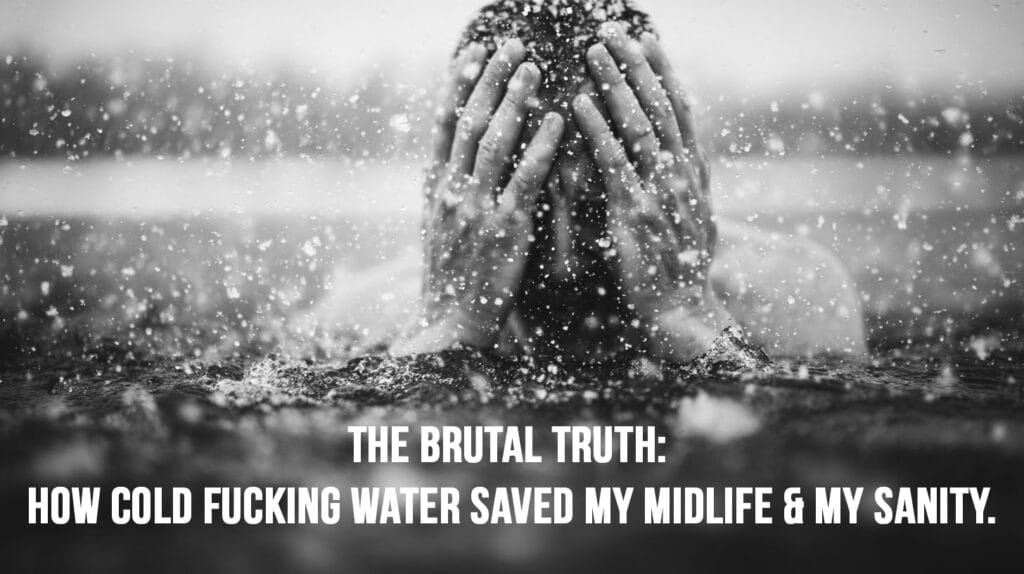
This isn’t some miracle cure pitch. This is about one of the most powerful, uncomfortable, and utterly transformative tools I found on my path to a full midlife reset: cold fucking water exposure. Specifically, the cold plunge. Forget your fancy therapy couches for a minute. When you’re trying to reclaim your life, especially after years of the bottle, you need something raw, something that grabs you by the scruff of the neck and demands you pay attention. Something that helps you boost dopamine naturally, an addiction recovery cold plunge is a non-negotiable part of that toolkit.
This isn’t just about feeling a bit chilly. This is about rewiring your brain, firing up your system, and building the kind of grit that the modern world tries to strip away. It’s about taking back control, one shuddering breath at a time. It’s one of the five pillars of my reset philosophy – Eat, Sleep, Move, Mind, and Cold Fucking Water – and it’s a game-changer.
My Battle, My Blueprint: Why I Went All In
Let’s be blunt: my relationship with drink started young and lasted way too long. Decades of it. It became my default, my crutch, my escape. And like many of you in your 30s, 40s, 50s, I woke up one day, looked in the mirror, and didn’t recognise the exhausted, defeated bloke staring back. The man who’d served for over a decade in the British Army, who’d been forged in discipline and purpose, was lost.
Quitting booze wasn’t a gentle stroll in the park. It was brutal, hand-to-hand combat every single day. The cravings, the mental gymnastics, the sheer emptiness once that ‘thing’ you relied on was gone. Your brain screams for that dopamine hit, that momentary relief it’s become accustomed to. I needed something equally powerful, equally visceral, to replace that insidious cycle. Something that demanded presence, that shocked my system into clarity, and that offered a legitimate, natural high without the devastating fallout.
I’d heard about cold water therapy for years, dismissed it as a bit woo-woo or just for the hardcore types. But when you’re desperate, when you’re fighting for your very soul, you try anything. That first plunge, a makeshift ice bath in my garden, was agony. Absolute torture. Every fibre of my being wanted to bolt. But something shifted. A primal fight-or-flight response kicked in, followed by a clarity, a sense of accomplishment I hadn’t felt in years. That’s when I knew I’d stumbled onto something real, something that could genuinely help me boost dopamine naturally, addiction recovery, and cold plunge as a daily practice.
This wasn’t just a physical challenge; it was a mental one. A confrontation with discomfort, with the voice in my head that wanted me to stay safe, stay soft. It was the same voice that told me one more drink wouldn’t hurt. By mastering the cold, I started to master that voice. It became a keystone in rebuilding the foundations of my life, anchoring me to the present, giving me a clean, potent hit of what my brain craved, but without the poison.
So, why does voluntarily freezing your arse off actually work? It’s not just some masochistic ritual. There’s hardcore science behind it, and it all boils down to your brain chemistry, specifically that little bastard called dopamine. Dopamine is your body’s reward chemical. It’s what makes you feel good, motivates you, and gives you focus. When you’re in the grip of habitual behaviour, whether it’s drinking, scrolling endlessly, or reaching for sugar, you’re chasing that dopamine hit.
The problem with artificial highs – booze, drugs, highly processed food – is that they flood your system with an unnatural surge of dopamine. Your brain, in its wisdom, tries to rebalance things by dialling down its natural production and receptor sensitivity. So, you need more and more of the artificial stimulus to get the same buzz. It’s a vicious cycle that leaves you feeling flat, unmotivated, and craving more, essentially hijacking your entire reward system.
Now, here’s where the cold plunge comes in like a sledgehammer of natural goodness. When you hit that cold water, your body goes into overdrive. Your sympathetic nervous system fires up. But crucially, your brain releases a massive surge of dopamine and noradrenaline. We’re not talking about a gentle nudge here. Studies, specifically looking at whole-body cold water immersion, have shown dopamine increases of up to 250% – that’s a whopping boost, on par with what you see from stimulant drugs like cocaine, but without the neurotoxicity, the crash, or the debilitating addiction. It’s a clean, potent, and utterly natural rush.
This isn’t a theory; it’s documented. Your brain learns that it can get this incredible, natural high from a challenging but ultimately beneficial stimulus. This is profoundly important for anyone in addiction recovery. You’re giving your brain a genuine, non-toxic pathway to boost dopamine naturally. Addiction recovery cold plunge becomes a powerful tool. It helps reset those dopamine receptors, bringing them back to a healthier baseline and reducing the chronic cravings for the artificial. It’s a complete game-changer for mood, motivation, and clarity, especially when you’re navigating the grey, flat landscape of early sobriety.
And the best part? You don’t need to be an Olympic athlete or a polar bear to reap these rewards. The science suggests that even just 11 minutes a week of deliberate cold water exposure, broken down into short sessions, can yield significant benefits. That’s less than two minutes a day, give or take. No excuses. Just get it in ya. It’s about consistency, not heroism. It’s about showing up for yourself, even when you really, really don’t want to.
You might be thinking, ’11 minutes a week? That’s it?’ And yes, that’s what the emerging data points to for substantial physiological benefits. It’s not about one heroic, bone-chilling session that lasts an hour. It’s about consistent, deliberate exposure that adds up over the week. Three sessions of just under four minutes, or four sessions of just under three minutes – you get the picture. The goal isn’t to freeze yourself solid; it’s to trigger that stress response, release those neurochemicals, and then recover. That cumulative effect is what drives the adaptation and the long-term benefits.
Beyond the Buzz: Mental Fortitude & Real Resilience
While the dopamine hit is crucial for addiction recovery and overall mood, the benefits of cold water exposure stretch far beyond a biochemical kick. This is where the military aspect of my past really kicks in. The army teaches you to operate under duress, to push past perceived limits, to find calm in chaos. A cold plunge is essentially a condensed training session for exactly that.
Think about it. When you first step into that icy water, your body’s primal instinct is to panic. Your breath hitches, your mind screams, ‘GET OUT!’ This is your limbic system, the ancient part of your brain, overriding your rational thought. But if you can consciously override that initial panic, if you can learn to breathe through it, to calm yourself despite the intense discomfort, you are building immense mental fortitude.
This isn’t just theory. Each time you deliberately step into that cold, you’re forging new neural pathways. You’re teaching your brain that discomfort isn’t necessarily danger. You’re proving to yourself that you are stronger than your immediate impulses. This translates directly to other areas of your life. The next time a craving hits, or you face a difficult conversation, or you’re stuck in a frustrating situation, you’ll have a physiological memory, a learned response, of how to stay calm and in control under pressure.
This resilience, this ability to choose your response rather than react impulsively, is absolutely paramount in a midlife reset. You’re not just quitting old habits; you’re building a new self. And that new self needs to be robust, unwavering, and capable of navigating life’s inevitable challenges without resorting to old, destructive coping mechanisms. The cold plunge provides a consistent, brutal, yet incredibly effective training ground for that.
It teaches you discipline. You don’t always want to do it. Some mornings, the thought of that icy water fills me with dread. But that’s precisely when you need to do it the most. It’s about showing up for yourself, regardless of how you feel. That consistent act of self-discipline bleeds into every other area of your life – your nutrition, your sleep, your movement, your mindfulness practices. It’s a foundational builder of character.
The Five Pillars: Where Cold Fucking Water Sits
My coaching philosophy is built on five non-negotiable pillars: Eat, Sleep, Move, Mind, and Cold Fucking Water. They’re not isolated practices; they’re deeply interconnected. Neglect one, and the others start to crumble. The cold plunge, while often seen as a standalone ‘hack,’ is actually a powerful accelerant and integrator for all the others.
1. Eat: Fuel for the Fight
I’m uncompromising on nutrition. Real food, ancestral principles. That means high-quality, grass-fed animal products, healthy fats (butter, ghee, tallow), and an aggressive elimination of processed garbage, sugars in all their insidious forms, and industrial seed oils. Your body needs proper fuel to withstand the shock of the cold, to recover, and to build that natural dopamine system. If you’re filling your tank with industrial sludge and expecting peak performance, you’re laughing. The clarity you gain from cold water often makes sticking to clean eating easier; you simply don’t crave the junk as much when your brain is getting its legitimate dopamine hits.
2. Sleep: The Great Restorer
Without quality sleep, you’re fighting an uphill battle. Your brain processes, repairs, and consolidates during sleep. It’s essential for hormone regulation, including those neurotransmitters we’re talking about. Cold water exposure, when done correctly (not right before bed), can actually improve sleep quality by modulating your nervous system and reducing stress. A rested body and mind are more resilient to the cold and better able to benefit from it.
3. Move: Forged in Motion
Movement is non-negotiable. Whether it’s lifting heavy things, going for a brutal run, or just getting your steps in, your body is designed to move. Movement boosts circulation, lymphatic drainage, and mood. The cold plunge enhances recovery from movement, reduces inflammation, and prepares your body for the next session. They feed each other. A strong, mobile body is better equipped to handle the physiological demands of cold exposure.
4. Mind: The Inner Battlefield
This is where meditation, breathwork, and self-awareness come in. Understanding your thoughts, challenging limiting beliefs, and cultivating a positive inner dialogue. The cold plunge is, in many ways, an active form of meditation. It forces you into the present moment. The focus required to regulate your breath and calm your mind in freezing water is a powerful mindfulness practice. It teaches you to observe discomfort without being consumed by it – a skill that’s invaluable for managing cravings, stress, and anxiety.
5. Cold Fucking Water: The Catalyst
This isn’t just an add-on; it’s a powerful catalyst that amplifies the effects of the other four. It sharpens your mind, enhances your body’s resilience, boosts your mood, and reinforces discipline. It’s the ultimate shock to the system that can jolt you out of complacency and into action. It’s the concrete, undeniable proof to yourself that you are in charge, not your urges, not your past, not your comfort zone. It’s the daily reminder that you can endure, adapt, and thrive, and truly boost dopamine naturally. The addiction recovery cold plunge is a potent weapon in your arsenal.
Your First Plunge: No Excuses, Just Action
Alright, so you’re convinced (or at least curious). How do you actually start? Forget about needing a fancy setup. A cold shower is your entry point. Start with your usual warm shower, then at the end, turn the tap all the way to cold. Start with 30 seconds. Your body will scream. Your mind will rebel. But breathe. Focus on slow, deep exhales. The next day, try 45 seconds. Then a minute. Work your way up.
When you’re ready to step up, a chest freezer converted into an ice bath, or even just a wheelie bin filled with water and ice from your local shop, will do the trick. Don’t overthink it. Just get in. The initial shock is the hardest part. Once you’re in, control your breathing. Focus on your exhales. The first minute is pure hell. In the second minute, your body starts to adapt. In the third minute, you might even find a strange calm.
Key Pointers for Your Plunge:
Warm-up first: Get your blood flowing with some light exercise before getting in. This isn’t about shocking a sedentary body.
Breathwork is paramount: Before you even get in, practise some deliberate breathing. A few rounds of deep inhales and long, slow exhales. Once in, make those exhales even longer than your inhales to activate your parasympathetic nervous system (rest and digest).
Set a timer: Don’t guess. Aim for a specific duration. Start short, build up. Remember, 11 minutes a week is the target for significant benefits. Break it down.
Stay present: Your mind will try to wander, to tell you stories of how cold it is. Bring it back to your breath, to the sensation, to the moment.
Safety first: If you have underlying health conditions, consult your doctor. Don’t be a hero and push yourself too far too fast. Listen to your body, but also recognise the difference between real danger and perceived discomfort.
Post-plunge recovery: Don’t immediately jump into a hot shower. Let your body rewarm naturally. Towel off, get dressed in warm clothes, and enjoy that incredible post-plunge buzz. It’s truly unique.
This isn’t about chasing discomfort for its own sake. It’s about using discomfort as a teacher, as a forge. It’s about consciously choosing to put yourself in a challenging situation and emerging stronger, clearer, and more resilient. It’s about taking back control of your physiology, your psychology, and ultimately, your life. It’s a non-negotiable pillar for my own continued journey, and it can be for yours too.
Conclusion: Reclaim Your Power, One Cold Dip at a Time
So, there you have it. My unfiltered truth on why cold fucking water isn’t just a trend; it’s a foundational tool for anyone serious about a midlife reset, especially if you’re battling to leave old habits behind. Quitting booze was the hardest thing I’ve ever done, but the cold plunge gave me an honest, potent, and sustainable way to boost dopamine naturally. The addiction recovery cold plunge became a cornerstone of my new life. It helped reset my brain, sharpen my mind, and build the kind of unwavering mental fortitude I needed to not just survive, but to thrive.
You don’t need fancy equipment, just the willingness to get uncomfortable. To lean into the challenge. To prove to yourself, daily, that you are the master of your mind and body. Stop making excuses. Start small, stay consistent, and watch how this brutal yet beautiful practice transforms not just your mood, but your entire outlook on life. The cold is calling. Are you ready to answer?
Download the Free 7-Day Kickstart Guide
Quit drinking without rehab, fluff or bullshit.
This guide walks you through the first 7 days — cravings, identity collapse, mindset rewires and all.
Written by someone who drank for 45 years and finally stopped.
Used to monitor number of Google Analytics server requests when using Google Tag Manager
1 minute
_gid
ID used to identify users for 24 hours after last activity
24 hours
_ga_
ID used to identify users
2 years
_gali
Used by Google Analytics to determine which links on a page are being clicked
30 seconds
_ga
ID used to identify users
2 years
__utmx
Used to determine whether a user is included in an A / B or Multivariate test.
18 months
__utmv
Contains custom information set by the web developer via the _setCustomVar method in Google Analytics. This cookie is updated every time new data is sent to the Google Analytics server.
2 years after last activity
__utmz
Contains information about the traffic source or campaign that directed user to the website. The cookie is set when the GA.js javascript is loaded and updated when data is sent to the Google Anaytics server
6 months after last activity
__utmc
Used only with old Urchin versions of Google Analytics and not with GA.js. Was used to distinguish between new sessions and visits at the end of a session.
End of session (browser)
__utmb
Used to distinguish new sessions and visits. This cookie is set when the GA.js javascript library is loaded and there is no existing __utmb cookie. The cookie is updated every time data is sent to the Google Analytics server.
30 minutes after last activity
__utmt
Used to monitor number of Google Analytics server requests
10 minutes
__utma
ID used to identify users and sessions
2 years after last activity
_gac_
Contains information related to marketing campaigns of the user. These are shared with Google AdWords / Google Ads when the Google Ads and Google Analytics accounts are linked together.