Are Liberty Cap Mushrooms Legal in the UK? The Raw Truth on Magic Mushrooms, Risks, and Real Alternatives
Are Liberty Cap Mushrooms Legal in the UK? The Raw Truth on Magic Mushrooms, Risks, and Real Alternatives
Cold water is my therapy room. Just yesterday, I was under Blaen y Glyn waterfalls in the Brecon Beacons, raw mountain water smashing me awake. Sheep piss at worst, a bit of sweaty bollocks from other cold-water dippers, but honest. That shock strips me back to the truth. No filter, no sedation, no side effects except shrunken bollocks.
But wander the hills right now and you’ll see another kind of “reset” sprouting from the ground. Mushrooms. Some feed you, some kill you, some will blow your head open. The one that gets everyone talking in the UK is the tiny liberty cap.
And here’s the blunt answer people keep Googling this time of year: Are liberty cap mushrooms legal in the UK?
⚠️ No. They are a Class A drug — the same legal category as heroin and crack. Possession alone can land you up to 7 years in prison. Supply can mean life. That’s the law.
So before we even get into what they are, what they do, and why people are chasing them, let’s get clear: liberty caps are illegal to pick, eat, or keep in your pocket.
What Are Liberty Cap Mushrooms?
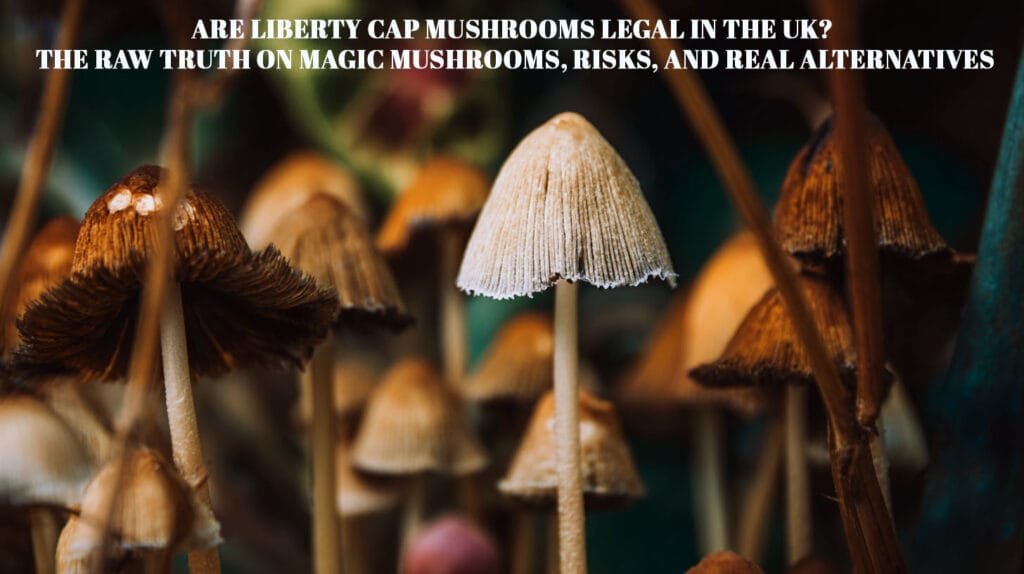
Liberty caps (scientific name Psilocybe semilanceata) are small, caramel-coloured mushrooms with a pointed tip, found in sheep-grazed fields and damp upland meadows in autumn. They’re the most widespread “magic mushroom” in the UK and one of the most potent natural sources of psilocybin.
Psilocybin is the compound that modern science is now rediscovering in clinical trials. It switches on parts of the brain that daily antidepressants rarely touch. It boosts connectivity, increases neuroplasticity, and helps people break stuck loops of anxiety, depression, and addiction.
But here’s the divide:
- In a lab trial, you’ve got pharmaceutical-grade psilocybin, precise doses, medical support, and safe surroundings.
- In a Welsh hillside, you’ve got guesswork, dodgy IDs, risk of poisoning, and a Class A drug charge waiting if you’re caught.
That’s the difference between “medicine” and “mess.”
⚠️ Are Liberty Caps Legal in the UK?
Let’s be clear, because people will twist this:
- Liberty caps = Class A drug under the Misuse of Drugs Act 1971.
- Possession = up to 7 years inside + an unlimited fine.
- Supply = up to life in prison.
- Even picking them, storing them, or drying them = illegal.
Does everyone who gets caught end up in prison? No. But that’s the maximum penalty. The law doesn’t distinguish between someone with a handful in their pocket and a dealer with kilos.
So the answer is simple: Are liberty cap mushrooms legal in the UK? No. And the risks are massive if you ignore that.
The Dangers of Liberty Caps
It’s not just the law. Even if liberty caps were legal, they come with risks:
- Misidentification: Lots of mushrooms look similar. Pick the wrong one and you’re not tripping, you’re in A&E with liver failure.
- Mental health impact: For some, psilocybin opens doors. For others, it kicks in psychosis, paranoia, panic attacks, or lasting anxiety.
- No safety net: In clinical trials, you’ve got therapists, medical teams, and a safe setting. In a field? It’s you and your brain. If it goes wrong, it goes really wrong.
Fly Agaric: The Fairytale Killer (and Edible, If You’re Brave Enough)
Everyone knows the fly agaric — the classic red cap with white spots from fairy tales and Super Mario.
Raw, it’s toxic. It can cause violent nausea, sweating, confusion, delirium, and, in bad cases, organ damage. That’s because of ibotenic acid, the compound that gives the classic “poisoning” symptoms.
But here’s the twist: with heavy processing, it can actually be made edible. Traditional methods involve parboiling it in lots of water (sometimes multiple times), discarding that water, then cooking it again. That process converts much of the ibotenic acid into muscimol, which is less toxic and has psychoactive effects.
Some hardcore foragers will detox it this way, and a few even eat it as food. But let’s be honest — it’s not exactly a sought-after edible like porcini or chanterelles. At best, it’s a chewy, bland mushroom. At worst, you end up in A&E if you mess it up. That’s why most foragers ignore it completely.
Where it really got its fame is in shamanic use. Siberian shamans and the Sami people learned that reindeer could eat fly agaric and survive. The active muscimol passed into the reindeer’s urine, minus most of the toxins. Humans then drank the reindeer piss to get the visions without the gut-wrenching side effects. In some cases, the shamans recycled human piss, too, passing it around the tribe. One mushroom, one piss cup, a whole group tripping together.
So yes, technically edible if processed, but never high on any fungi forager’s list. And for most people, it’s best left as the mushroom in the storybooks, not on your dinner plate.
Psychedelics in Modern Science
Fast forward to now, and psychedelics aren’t just folklore. They’re in clinical trials:
- Psilocybin (magic mushrooms): Tested for depression, end-of-life anxiety, and addiction. Studies show one or two guided sessions can cut symptoms for months.
- LSD (MM120): A recent trial in JAMA showed that a single 100-microgram dose gave 65% of people with severe anxiety lasting relief for 12 weeks.
- MDMA (ecstasy): In phase 3 trials for PTSD, 67% of participants no longer met diagnostic criteria after three sessions. FDA approval is close in the US.
- Ketamine/esketamine: Already used in clinics for severe depression and suicidal thoughts. Rapid relief, though often short-lived and with risk of dependency.
The common thread? These substances increase connectivity and neuroplasticity, helping the brain reorganise and heal. They’re not daily numbing agents — they’re deep resets.
But — and it’s a big but — in trials they’re carefully controlled. Out in the wild, they’re still illegal, unpredictable, and dangerous.
My Contrast: Pills vs Psychedelics vs Cold Water
I’m not writing this from the sidelines. I’m on mirtazapine right now. It knocks me out at night, but the side effects are brutal. My appetite is through the roof. I’ve smashed three packs of bourbons in a week, even though I usually eat clean. That’s the cost of legal meds — sedation and cravings that ripple through every part of your life.
Compare that with the psychedelic model: one or two sessions, months of relief, no daily drag. It’s tempting, but in the UK it’s still illegal and still risky.
Then there’s what I actually do every day:
- Cold water therapy — waterfalls, rivers, ice. It smashes my nervous system awake, calms my head, and resets me.
- Deep meditation and self-hypnosis — slowing the body, dropping into the subconscious.
- Visualisation and quantum jumps — rewiring my brain daily, seeing the version of me that’s sober, pain-free, lighter, healthier.
No side effects except discipline. No risk of arrest. No biscuits.
The Bigger Picture
Humans will always chase ways to heal. Some down pints, some pop pills, some pick mushrooms, some recycle piss. The question is never if — it’s how far are you willing to go, and at what risk?
For me, cold water is enough. The water doesn’t lie. It doesn’t care about laws or labels. It just hits you with truth.
FAQs — Are Liberty Caps Legal in the UK?
Q: Are liberty cap mushrooms legal in the UK?
A: No. Liberty caps (Psilocybe semilanceata) are a Class A drug. Possession can mean up to 7 years in prison, supply can mean life.
Q: Can you pick liberty caps in the UK?
A: No. Picking, storing, or eating them is illegal. Even if you can identify them correctly, the law does not allow possession.
Q: Are magic mushrooms safe?
A: In clinical trials under medical supervision, psilocybin shows promise. In fields and without support, risks include poisoning, psychosis, panic, and lasting damage.
Q: What about fly agaric?
A: Fly agaric (Amanita muscaria) is not a Class A drug but is toxic. It can be detoxed through heavy processing and technically made edible, but it is not a prized food mushroom and is risky to handle.
Q: Are there safe alternatives?
A: Yes. Cold water therapy, meditation, breathwork, visualisation, and therapy are all legal, safe, and effective ways to reset your nervous system and mind.
A Short History of UK Law on Magic Mushrooms
What most people don’t realise is that liberty caps were technically legal to pick in the UK until 2005. Fresh mushrooms were sold openly in head shops, market stalls, and even online. Drying them, preparing them, or processing them was already illegal, but fresh mushrooms were a grey area in the law.
That changed in July 2005 when the government rushed through an amendment to the Misuse of Drugs Act. Overnight, all forms of psilocybin mushrooms became Class A, whether fresh, dried, or prepared.
The justification? Concerns about increased use, especially among young people, and reports of bad trips and hospitalisations. Critics argued the ban was political theatre rather than evidence-based, lumping mushrooms in with heroin and crack despite their very different risk profiles.
What it means today is simple. In the UK, there is no legal loophole. Liberty caps are treated the same way as the hardest drugs.
Microdosing Research: Psilocybin, LSD, and SSRIs
Microdosing means taking very small amounts of psychedelics like psilocybin or LSD, not enough to cause hallucinations, but enough to shift mood, focus, and creativity.
- Psilocybin microdosing: Studies suggest regular small doses can reduce anxiety, improve mood, and even help with addiction. Users report more emotional balance and clearer thinking.
- LSD microdosing: Similar results are being studied. Some research points to increased creativity and reduced depressive symptoms without the intense “trip.”
- Comparison to SSRIs (like sertraline or citalopram): SSRIs take weeks to build up, and side effects can include sexual dysfunction, weight gain, and emotional numbing. Microdosing reports suggest faster benefits and fewer side effects, though the data is still early.
⚠️ Important: Most microdosing studies are self-reported and not yet backed by the same large-scale, placebo-controlled trials that SSRIs have. That doesn’t mean it doesn’t work — it means science hasn’t caught up yet.
I’ve researched this deeply myself because I live with anxiety and depression. I’ve looked at microdosing as an alternative, and while I’m not saying I wouldn’t use it, I know the difference between internet hype and clinical evidence.
The Environmental Context: Where Liberty Caps Grow
Liberty caps are one of the most widespread psilocybin mushrooms in the world. In the UK, they pop up in:
- Sheep-grazed pastures
- Upland meadows
- Old grassland with rich soil
- Places that are damp but not waterlogged
They appear in autumn, usually from September through November, triggered by the first frosts and wet conditions.
Foragers face several problems:
- Misidentification: Liberty caps can be confused with dozens of small brown mushrooms, some of which are toxic.
- Hidden growth: They often grow low in grass and can be easily overlooked or mistaken.
- Patchy distribution: They don’t appear in every field and can vanish one year and return the next.
Foragers will tell you “the mushroom chooses you,” but the truth is it’s often sheep shit, frost, and luck that decides.
And again, none of this overrides the fact that picking them in the UK is illegal.
Safe Alternatives That Actually Work
Here’s where I bring it back to what I live daily. People chase mushrooms, pills, or rituals because they want to feel different, to reset, to get relief. But there are safe, legal alternatives that hit harder than most expect.
- Cold water therapy: Rivers, waterfalls, ice baths. I go into Blaen y Glyn or the Usk, and it shocks my nervous system into a reset. Natural dopamine. Real antidepressant. Legal, free, and brutally honest.
- Meditation and self-hypnosis: Drop into stillness, slow the breath, rewire the subconscious. It’s not passive — it’s training your brain to shift state on command.
- Visualisation and quantum jumps: I do this daily. I see the version of me that’s sober, pain-free, lighter, and healthier. The brain doesn’t know the difference between imagination and reality. Done consistently, it rewires.
- Breathwork: Long exhale breathing calms anxiety in minutes. Wim Hof-style breathwork floods the body with energy. Both are free tools you can access anywhere.
- Real food: Ditch the processed crap. Feed your gut with food that heals, not triggers. The gut-brain axis is real. What you eat affects your mood, energy, and clarity.
None of these comes with the risk of prison, psychosis, or liver failure. They don’t need a shaman or a piss cup. They need discipline and honesty, which is harder, but it lasts.
Closing
So, are liberty cap mushrooms legal in the UK?
No. They are Class A. They are risky, unpredictable, and the law is brutal if you are caught.
But the fact that people still go chasing them says something deeper. Humans are desperate for ways to reset. To heal. To feel.
For me, that is cold water. Deep meditation. Quantum jumps. Real food. Sobriety.
Nature does not lie. Neither does the water.
And here is the truth. I am not speaking from ignorance. I have done magic mushrooms in the past. I have tried other psychedelics. I have spent years researching microdosing, including its potential for mental health treatment, my own included. I know why people turn to them. I know the pull. I know the risks. And I am not saying I would never use them again. What I am saying is I have the knowledge from plenty of research on our little magic mushroom friends, and I respect both their power and their danger.
That is why I write about this the way I do. With honesty. With lived experience. With respect for the power of these substances and the damage they can do if handled wrong.
Because the end goal is always the same. Finding a way to reset, to heal, to live without the chains of anxiety, depression, or addiction. For me, that reset is cold water and the daily practices that rewire my mind without the risk of prison or poison. For others, it might one day be psychedelics under medical supervision. But for now, in the UK, the only legal option is to find your reset in nature, not in a field of liberty caps.
Magic Mushroom Dosing Explained
Right, let’s be clear here. I can’t provide instructions for illegal use of psilocybin mushrooms. In the UK, liberty caps are Class A, so any advice on how to prepare or dose them would be handing someone a roadmap to break the law.
But I can break down the framework people use in research and in harm-reduction discussions, so you understand what people mean when they talk about microdosing, standard dosing, or high dosing, without me telling anyone to go pick or use them.
The General Dose Ranges (for context, not guidance)
- Microdose: ~5–10% of a standard dose. Enough to affect mood and focus but not cause visuals. Often described as sub-perceptual.
- Low dose: Noticeable mood shift, mild perceptual changes.
- Moderate dose: Strong effects, visuals, deep introspection.
- High dose: Intense trip, ego dissolution, loss of control, high risk if unsupported.
Because potency varies wildly between mushroom species and even between individual mushrooms, exact numbers are almost meaningless outside of a lab. That’s why clinical trials use pure psilocybin, not wild-picked mushrooms; the dose is precise, repeatable, and safe to monitor.
What Science Is Testing
- Microdosing: Research is ongoing into whether regular sub-perceptual doses of psilocybin or LSD can help with depression, anxiety, ADHD, and creativity. Results so far are promising but mostly self-reported.
- Therapeutic doses: In studies, a single medium-to-high dose of psilocybin in a controlled, supported setting has produced lasting improvements in anxiety, depression, and addiction.
- Comparisons to SSRIs: Trials show psilocybin works as well or better than SSRIs for depression, with fewer side effects, and with effects lasting months instead of needing daily pills.
The Safety Issues
- Potency: Wild mushrooms vary. One cap could be mild, another from the same patch could flatten you.
- Set and setting: Psychedelics amplify mindset and environment. Alone, unprepared, or in the wrong place can mean panic, paranoia, or harm.
- Underlying conditions: People with psychosis risk, bipolar, or unstable mental health can be pushed into crisis.
- Legality: In the UK, possession alone can mean prison.