That was the question haunting me the day I finally decided to put down the bottle. At 58 years old, I wasn’t just battling a habit; I was battling the terrifying physiological reality of chronic alcohol misuse. I had read the horror stories about “wet brain,” memory loss, and the permanent cognitive decline associated with long-term drinking. I looked in the mirror and saw more than just tired eyes and greying hair; I saw a mind that felt like it was slipping away. I wondered if the fog in my head was permanent, a self-inflicted sentence of mediocrity for the rest of my years. Had I done too much damage? Was my brain simply too old, too calcified by years of toxicity, to bounce back?
Eleven months later, I have my answer. And it is a resounding, miraculous no.
This isn’t just a story about willpower or the social mechanics of “staying dry.” It is a story about biology. It is a story about neuroplasticity—the brain’s incredible, innate ability to reorganise, repair, and physically rebuild itself, even in late middle age. Neuroplasticity is often discussed in the context of childhood development or stroke recovery, but its role in addiction recovery is perhaps its most profound application. It is the biological mechanism of hope.
If you are reading this and wondering if you’ve reached the point of no return, I want you to look at my timeline. I want you to understand what happens to your brain from Day 1 to Month 11. Because the healing isn’t just metaphorical—it isn’t just “feeling better.” It is structural, functional, and profoundly, measurably real.
The Starting Point: Facing the “Before” Brain
To understand the magnitude of recovery, we have to be brutally honest about the damage. We cannot appreciate the renovation if we don’t acknowledge the ruin. Before I quit, my brain was in a state of siege. The infographic of my journey highlights three specific areas of damage common in chronic alcohol misuse, all of which I felt acutely in my daily life.
1. Thinned Prefrontal Cortex: The Absent CEO
The prefrontal cortex is the CEO of the brain. It handles decision-making, impulse control, planning, and the moderation of social behaviour. Alcohol shrinks this area—literally reduces its volume. For me, this manifested as a terrifying inability to regulate my emotions or stick to even the simplest plans.
I felt impulsive and scattered, like a ship without a rudder. I would wake up with the intention of having a productive day, only to be derailed by a minor frustration—a lost set of keys or a difficult email—which would spiral into a need for relief. The “brakes” in my brain were worn out. I knew logically what I should do, but the hardware required to execute that logic was compromised. I wasn’t just “weak-willed”; I was operating with a damaged executive centre.
2. Reduced Hippocampal Volume: The Fading Library
The hippocampus is the memory centre and the seat of learning. It is one of the few areas of the brain capable of neurogenesis (growing new neurons) throughout life, but alcohol is neurotoxic to this region, effectively halting that growth and accelerating cell death.
The impact was subtle at first, then undeniable. I would walk into rooms and forget why I was there, standing in the kitchen doorway with a blank mind. Names of acquaintances escaped me. The “brain fog” was a thick, heavy blanket over my past and present. It wasn’t just forgetfulness; it was a failure to encode the present moment. I lived in a constant state of vague confusion, terrified that this was the early onset of something irreversible like dementia, not realising I was drinking my memories away.
3. Disrupted White Matter Integrity: The Frayed Wiring
If grey matter is the computer processor, white matter is the cabling that connects everything. It acts as the superhighway of the brain, carrying signals between different regions. Chronic drinking damages the myelin sheath (the fatty insulation) around these nerves.
When myelin is damaged, signals slow down or misfire. This is why my thinking felt “slow” and why complex tasks seemed insurmountable. Multitasking became impossible. Trying to listen to a conversation whilst cooking dinner felt akin to trying to run a modern operating system on a 1990s computer. The lag was palpable. I felt stupid, slow, and intellectually exhausted by noon every day.
I was 58. I had a “thinned” executive centre, a shrinking memory, and frayed wiring. But on Day 1, the withdrawal began, and unbeknownst to me, so did I.
The Timeline of Repair: From Withdrawal to Regeneration
Recovery didn’t happen overnight. It was a phased process, a slow biological march toward homeostasis. It required patience, and I didn’t think I had. Here is what my timeline looked like, supported by the science of neuroplasticity.
Day 1: The Storm Before the Calm
Phase: Acute Withdrawal
The first day—and the first week—is never about healing; it’s about survival. When you remove the depressant (alcohol) that has been dampening your central nervous system for years, the brain rebounds into a state of hyperexcitability.
My anxiety spiked to unmanageable levels. Shaking and tremors occurred as my nervous system misfired. The brain was screaming for the chemical balance it had relied on. This is the “glutamate storm,” where excitatory neurotransmitters flood the brain. At this stage, neuroplasticity is dormant. The brain is fighting to stabilise basic autonomic functions like heart rate and temperature. It is a physiological crisis, a fire that must burn out before rebuilding can begin. It is the necessary gateway to the changes that follow.
1 Month: The Early Repair
Phase: The Pink Cloud & The Fog Lifting
By the 30-day mark, the acute physical dependency had faded, and the first quiet signs of repair began. This is often called the “early repair” phase.
At one month, the brain chemistry starts to settle. The neurotransmitters—specifically GABA (which calms you) and Glutamate (which excites you)—begin to find a natural equilibrium without the artificial influence of ethanol.
I noticed I was sleeping better—real, restorative REM sleep, not the passed-out unconsciousness of drinking. The “thinned” feeling in my frontal lobe wasn’t gone, but the inflammation was reducing. My brain wasn’t necessarily building new structure yet, but it was clearing out the debris. It was preparing the construction site for the renovations to come. My skin looked better, my eyes were clearer, and for the first time in years, I woke up without a baseline of dread.
6 Months: The Turning Point
Phase: Significant Structural Changes
This is where the magic started to feel tangible. Science tells us that significant structural changes, particularly in white matter volume, become measurable around the six-month mark. But getting here wasn’t a straight line; I had to push through the “Wall” of Post-Acute Withdrawal Syndrome (PAWS), periods where the brain felt sluggish again.
But by month six, the remyelination process was well underway. My brain was actively repairing the insulation around its communication highways. Thoughts became sharper and quicker. I could follow complex plotlines in films again without asking my partner, “Who is that guy?” every ten minutes. The “lag” between thinking and doing disappeared.
More importantly, the hippocampus showed signs of waking up. I was remembering appointments without writing them down. I could recall specific details of conversations from days prior. The grey matter—the actual processing power of the brain—was thickening. I wasn’t just “not drinking”; I was becoming smarter. The intellectual fatigue that used to plague me vanished, replaced by a curiosity I hadn’t felt since my 30s.
11 Months: The New Normal
Phase: Continued Neuroplasticity & Functional Improvement
This is where I am today. Eleven months of sustained abstinence.
The difference between my brain at Day 1 and Month 11 is night and day. The infographic illustrates a “Normalised Ventricular Size.” Ventricles are fluid-filled spaces in the brain; when brain tissue dies (atrophy), ventricles expand to fill the space. As my grey matter regrew and cortical thickness returned, those ventricles normalised. My brain physically “plumped” back up.
I can handle stress now. I can learn new things. I have reclaimed my mind.
The Three Pillars of My Brain’s Recovery
Looking back at this 11-month journey, the healing occurred across three distinct pillars. Understanding these helped me stay patient when progress felt slow.
1. Structural Remodelling: The Hardware Upgrade
This is the physical reconstruction of the brain’s architecture.
Neurogenesis in the Hippocampus: Contrary to the old belief that we stop growing brain cells as adults, the adult brain can generate new neurons, especially in the hippocampus. Sobriety unlocked this potential. I feel this as a renewed ability to navigate the world, spatially and emotionally.
Synaptic Strengthening: Every time I resisted a craving, every time I chose a walk over a drink, I was strengthening the synapses in my prefrontal cortex via a process called Long-Term Potentiation. I was physically building a “willpower” muscle. The neural pathways for “drinking” withered from disuse, whilst the pathways for “coping” grew robust.
Cortical Thickening: The outer layer of my brain, responsible for high-level processing, regained density. This correlates directly with IQ and cognitive flexibility.
2. Functional Recovery: The Software Update
This is how the brain performs its daily tasks.
Improved Memory & Concentration: I can read books again—deep, dense non-fiction. I can focus on a task for hours without my mind wandering or seeking distraction. The “attention economy” of my mind is under my control again.
Enhanced Decision-Making: The impulsivity of my drinking days is gone. I can pause, assess, and choose. This is my prefrontal cortex coming back online, allowing me to see consequences before they happen.
Better Emotional Regulation: This was the biggest surprise. The Insula and Cingulate Cortex, areas involved in emotion and empathy, healed. I no longer experience the jagged highs and lows. I have a baseline of calm. I am a better listener, a more patient partner, and a more empathetic friend.
3. Neurochemical Balance: The Operating System Stabilisation
This is the restoration of the chemical messengers that dictate mood and motivation.
Stabilised Neurotransmitters: My dopamine and serotonin are produced naturally now, not hijacked by alcohol spikes. I don’t need a chemical input to feel “okay.”
Reduced Anxiety: The “hangxiety”—that unique, vibrating dread that follows a night of drinking—is a distant memory. My cortisol levels have dropped to normal ranges.
Restored Reward System: In the beginning, nothing felt fun without a drink. This is anhedonia, caused by alcohol blunts the reward system. At 11 months, simple pleasures—a sunset, a good meal, a laugh with a friend—release dopamine again. The joy has returned. I can enjoy a boring Tuesday evening just for the peace it brings.
Age 58: Why It Wasn’t Too Late
The most encouraging part of this data is the age factor. I did this at 58.
There is a persistent, dangerous misconception that neuroplasticity is for children. Whilst children’s brains are indeed hyper-plastic sponges, the adult brain retains a remarkable capacity for change until the very end of life. We have what is called “crystallised intelligence”—years of wisdom and knowledge—and when you combine that with the renewed “fluid intelligence” of a healing brain, the results are powerful.
At 58, my brain responded to the absence of alcohol exactly as science predicted it would. It sought health. It repaired white matter tracts. It grew grey matter. The timeline might be slightly different from that of a 25-year-old—perhaps my repair is slower, perhaps my scars are deeper—but the destination is the same.
If you are in your 40s, 50s, or 60s, do not buy into the lie that the damage is done. Do not resign yourself to decline. Your brain is waiting for you to give it the chance to heal. It is a resilient organ designed to survive.
How I Supported My Neuroplasticity
Whilst removing alcohol was the primary driver of this healing, I didn’t just sit back and wait. I actively supported the neuroplasticity process with lifestyle changes designed to fuel brain growth:
Exercise: Cardio is the single best thing you can do for BDNF (Brain-Derived Neurotrophic Factor), which is like fertiliser for new brain cells. I started with walking, then graduated to jogging. The increased blood flow delivers oxygen and nutrients directly to the healing tissues.
Sleep: The brain cleans itself of toxins (beta-amyloid plaques) via the glymphatic system primarily during deep sleep. Prioritising sleep hygiene—dark rooms, no screens, consistent times—was prioritising structural repair. I treated sleep like medicine.
Nutrition: I focused on gut health and brain fuel. I increased my intake of Omega-3 fatty acids (for white matter repair) and antioxidants (berries, leafy greens) to lower the oxidative stress caused by years of drinking.
Mental Challenge: To encourage new synaptic connections, I picked up new hobbies. I forced my brain to learn. I started doing crosswords and trying to learn basic Spanish. This “cognitive strain” gave the new neurons a job to do, ensuring they integrated into the network rather than dying off.
Conclusion: The Brain Wants to Heal
Eleven months ago, I looked at a brain that was shrinking, slowing, and struggling. I felt like a fading version of myself. Today, I live in a brain that is expanding, connecting, and thriving.
The journey of recovery is often framed as a journey of loss—giving up your crutch, your social lubricant, your stress relief. However, when you examine neuroscience, you realise it is entirely a journey of gain. You gain volume. You gain a connection. You gain speed. You gain yourself back.
If you are on Day 1, struggling through the shakes, or on Day 100, feeling the flatline of PAWS, keep going. Trust the biology. Your brain is busy building a better version of you, neuron by neuron, synapse by synapse. It is never, ever too late to begin.
Disclaimer: I am not a doctor or a neuroscientist. This post details my personal experience and understanding of the research available on alcohol recovery and neuroplasticity. Always consult with a medical professional for advice on alcohol withdrawal and recovery.
Get the book I wish I had when I quit drinking.
Rewiring The Mind: The Identity Shift That Changes Everything (Digital Manual)
Stop chasing symptoms. Fix the machine.Rewiring The Mind is not a memoir—it is a mechanic’s manual for your brain. Written by Ian Callaghan (Army Veteran, 45-year drinker), this guide combines Stoic Philosophy, Evolutionary Biology, and Nervous System Regulation to help you break the loop of anxiety, drinking, and survival mode. You don’t need more willpower. You need a new identity. (Instant PDF Download)
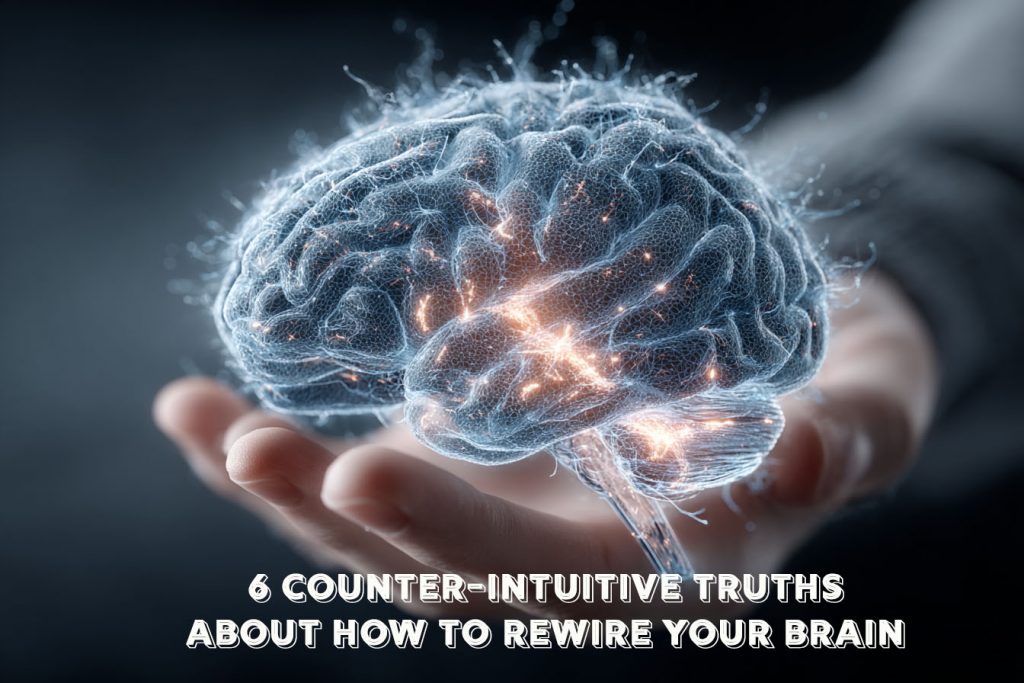
6 Surprising Truths I Learned About How to Rewire Your Brain. We’ve all been there. You decide, with resolute conviction, that this time will be different. You’re going to stop scrolling late at night, start that daily exercise routine, or finally quit the habit that has quietly undermined your confidence for years. You arm yourself with motivation and sheer willpower, ready for battle. For a few days, maybe even a week, you succeed. But then, after a long day or a moment of stress, the old pattern returns, seemingly stronger than ever. The familiar cycle of resolve, failure, and frustration begins again, leaving you to wonder what’s wrong with your self-discipline.
This entire narrative, this framing of change as a battle of willpower against a ‘bad’ habit, is fundamentally flawed. It positions you in an exhausting, unwinnable war against yourself. What if the problem isn’t your lack of willpower, but your playbook? Neuroscience offers a completely different, more compassionate, and far more effective approach. It reveals that your brain isn’t fighting you; it’s simply running an old, efficient program. Lasting change isn’t about overpowering your brain; it’s about understanding its operating system and intelligently rewriting the code.
By diving deep into the mechanics of how our neural pathways are formed and reinforced, we can uncover a new set of rules for rewiring our minds. This article will walk you through six counterintuitive but profoundly powerful truths about how your brain actually works. Understanding these principles is the first, most crucial step toward breaking free from patterns that no longer serve you and deliberately building the life you want by learning to work with your brain’s fundamental nature, not against it.
1. Your Brain Isn’t Stubborn, It’s Just Wildly Efficient
The first and most important mental shift is to stop seeing your brain as an adversary. When it resists a new diet, a new workout, or a new professional skill, it isn’t being stubborn or lazy. It’s operating exactly as it was designed to: with a ruthless dedication to efficiency.
The Energy Conservation Principle
At its core, your brain has two primary directives: conserve energy and predict safety. Every action you take consumes metabolic resources. To manage this energy budget, the brain’s default strategy is to automate as much as possible. A familiar pattern, whether it’s reaching for your phone the moment you feel bored or grabbing a sugary snack in the mid-afternoon, is a known quantity. It has a predictable, safe outcome and requires almost no conscious energy to execute.
This is the principle of neural wiring. As the saying goes, “what fires together wires together.” Every time you repeat a behaviour, the neural pathway for it becomes stronger. But it’s more than simple repetition. Emotion acts like a powerful accelerant. An event charged with strong emotion, especially stress, is like a paving crew that instantly hardens that neural pathway. This is why habits formed under duress become so deeply entrenched. Over time, these pathways become superhighways—the default, low-energy option for your brain. It’s not that your brain loves the old habit; it’s that it loves the energy savings and predictability that habit provides.
Friction is a Feature, Not a Bug | Rewire Your Brain
When you decide to forge a new path, it feels awkward, difficult, and uncomfortable. This sensation of friction is often misinterpreted as a sign that the new habit isn’t right for you, or that you’re failing. According to neuroscience, the opposite is true. Friction is a normal and predictable signal that rewiring is in progress.
You are actively building a new, weaker neural pathway in direct competition with an old, entrenched one. The awkwardness is the feeling of your brain investing conscious effort into a novel action rather than coasting on autopilot. It’s a sign that you are making the unconscious conscious. Instead of a reason to quit, this friction should be seen as evidence of your efforts. It is the very feeling of change happening at a biological level.
Your brain predicts before you act. Discomfort at the start is normal.
Embracing this friction is the first step. Once you accept that this discomfort is simply a biological signal of change, you can begin to deconstruct the automatic loops that govern your behaviour.
2. That Intense Craving Isn’t a Command, It’s a Misguided Prediction
Perhaps the most challenging part of breaking a habit is the intense, visceral craving that seems to hijack your rational mind. We experience it as a powerful desire, an urgent need that demands to be satisfied. But this interpretation is another fundamental misunderstanding. Cravings are not commands; they are predictions generated by your efficient brain.
Decoding the Craving
Your brain is, above all, a prediction engine. Based on a lifetime of data, it constantly makes predictions about what will happen next to keep you safe and manage your energy. This process is encapsulated in the Habit Loop: Cue → Craving → Response → Reward.
• Cue: The trigger. This can be a time of day (3 PM slump), a location (the kitchen), or an emotional state (stress).
• Craving: The brain’s prediction. The cue triggers the brain to predict the reward that usually follows. The craving is not the desire for the thing itself, but the anticipation of the relief or pleasure the thing will provide. It’s a biological nudge to initiate the pattern.
• Response: The behaviour itself. You eat the cookie, open the social media app, or pour the drink.
• Reward: The outcome that reinforces the loop. The sugar rush or distraction teaches your brain that this response successfully resolves the prediction initiated by the cue.
Seeing a craving through this lens changes everything. It is no longer an irresistible desire you must fight, but simply a faulty prediction—an echo of a past solution that may no longer be relevant to your present goals.
The Power of the Pause when you Rewire Your Brain
The key to breaking this automatic cycle lies in a small, almost imperceptible window of time known as The Gap. Crucially, this is the window between the cue and the craving. The power lies in intervening before the craving fully forms and takes hold, not after it has already peaked. For ingrained habits, this gap can feel non-existent, but the goal is to stretch it open with awareness.
When you feel a craving arise, the first step is not to resist it, but to notice the cue that triggered it. Label the feeling for what it is: a prediction. You might say to yourself, “Ah, there’s that feeling of stress. And there’s my brain predicting that scrolling Instagram will bring relief.” This simple act of observation creates distance. It shifts you from being a passenger in an automatic loop to an observer who can make a conscious choice. By interrupting the sequence between the cue and the craving, you disrupt the entire loop and weaken the neural pathway.
Cravings are predictions, not desires.
Understanding that a craving is a prediction is the first step. The next step is to understand the neurochemical that drives that prediction: dopamine.
3. Dopamine Isn’t the Pleasure Molecule, It’s the Prediction Molecule
Dopamine has a reputation problem. It’s widely known as the “pleasure molecule,” but its primary role in the habit loop is far more nuanced. Dopamine is not about the pleasure of the reward itself; it’s about the prediction of the reward.
The Spike-and-Crash Cycle
Dopamine is the chemical that drives motivation and seeking behaviour. When your brain sees a cue associated with a past reward, it releases a spike of dopamine to motivate you to act. The crucial insight is that modern life is filled with artificial, high-reward stimuli—processed foods, endless social media feeds, online shopping—that deliver unnaturally large dopamine spikes.
Here’s the problem: your brain seeks balance. After a big, artificial spike, it compensates by dropping your baseline dopamine level below its normal state. This crash creates the feeling of let-down, emptiness, and, most importantly, an intense craving to get another hit just to feel normal again. You scroll for an hour, feel empty, and your brain immediately craves the next scroll. This is the vicious cycle that underpins so many modern compulsions. A chronically low dopamine baseline generates persistent cravings and kills your natural motivation for healthier activities.
Stabilisation Over Stimulation
If chasing artificial spikes is the problem, the solution isn’t to eliminate dopamine but to stabilise it. The counter-intuitive strategy is this: stabilisation beats stimulation. Instead of seeking huge, unnatural dopamine hits, the goal is to engage in activities that gently and consistently support a healthy baseline.
Things like sunlight exposure, physical exercise, and achieving small, tangible goals all contribute to a stable dopamine system. These activities might not provide the immediate, intense rush of a pint of ice cream, but they work to raise your baseline over time. A higher, more stable baseline has two profound effects: it dramatically reduces the frequency and intensity of your cravings, and it restores your intrinsic motivation to pursue long-term goals. You stop needing the artificial spikes because your baseline state already feels good.
Baseline matters more than spikes. Natural habits stabilise dopamine.
Managing your dopamine provides the chemical foundation for change. But the next battleground is even more fundamental: your attention.
4. The Real Addiction Isn’t the Behaviour—It’s Your Attention
We tend to focus on the problematic behaviour: the smoking, the procrastination, the overeating. But what if that’s just the final domino to fall? The most profound insight for gaining control over your habits is recognising that the true addiction, the root driver of every automatic loop, is your attention.
Attention as the Brain’s Currency
Think of attention as the currency your brain uses to decide what is real and important. Where your attention goes, your energy and behaviour will inevitably follow. Ingrained habits are nothing more than deeply practised patterns of attention, masterful at hijacking your focus, especially in moments of discomfort.
This is where the principles of dopamine and attention merge. A low dopamine baseline, as we’ve seen, creates a state of craving and unease. This internal discomfort is precisely what drives distraction. Your brain, seeking an escape, looks for the quickest and easiest place for your attention to run—which is always the old, familiar habit with its well-worn neural superhighway. The behaviour of scrolling or snacking doesn’t just appear out of nowhere; it is preceded by a lightning-fast shift in your attention, driven by the discomfort of a low dopamine state. Controlling your behaviour is really about controlling your attention.
Attention is the real addiction. Control attention and you control behaviour.
The Three-Second Window
The hijack of your attention happens incredibly fast, but it is not instantaneous. There is a brief, critical moment—a three-second window—between the trigger (the feeling of discomfort) and your attention fully locking onto the old pattern. This is your opportunity.
The goal within these three seconds is not to fight the urge, but to consciously redirect your attention. This requires having a pre-planned focus point that is aligned with the new identity you want to build. For example, if your trigger is stress and your old habit is to open social media, your new focus point might be to take three deep breaths, or to look at a picture that reminds you of your long-term goals. By consciously choosing where your attention goes, you starve the old habit loop of the fuel it needs to get started. Each time you succeed, you weaken the old pathway and strengthen the new one.
Redirecting your attention is a powerful tactic, but to make it stick, it needs to be in service of a larger strategy: building a new identity.
5. You Aren’t Just Fighting a Habit; You’re Outgrowing an Old Identity
Have you ever felt like you’re sabotaging your own success? You make progress, and then find yourself inexplicably pulled back into the very behaviour you were trying to escape. This isn’t a failure of discipline. This is identity drift—your old identity fighting for survival. The deepest force governing your behaviour isn’t motivation; it’s your sense of self.
Identity as Destiny
One of the most profound principles of brain function is that identity predicts behaviour. Your brain uses your past self-concept to generate neural expectations about your future actions. Neural expectations are the brain’s automatic assumptions about your behaviour, based entirely on your past actions. It’s your brain’s predictive model of ‘you,’ and it works tirelessly to ensure your actions today match the data from yesterday.
If you have spent years identifying as “a person who can’t stick to a diet,” your brain will actively generate cravings and impulses that align with that identity. When you try to adopt a new behaviour that contradicts this established identity, your brain perceives a conflict. This internal resistance is your “old identity” trying to maintain consistency. It’s why change can feel like an internal battle—you are literally fighting an outdated, neural representation of who you used to be. No amount of brute-force motivation can consistently win against a deeply held identity.
Building the New You, One Action at a Time
So how do you build a new identity? Not through affirmations, but through evidence. Your brain is a practical, evidence-based machine. The most effective way to convince it that you are a new person is to provide it with proof. This is where the power of small, repeated actions comes in.
Every time you perform a small action that aligns with your desired identity, you are casting a vote for that new self. Choosing to walk for five minutes is a vote for “I am a person who exercises.” Choosing to read one page is a vote for “I am a reader.” The size of the action is irrelevant in the beginning; the repetition is everything. Each repetition provides a piece of “new identity evidence,” which slowly begins to update your brain’s predictions. Over time, the pile of new evidence grows, and your brain begins to accept this new identity as the default. This is why repetition is more powerful than motivation. Motivation is fleeting, but each repeated action permanently rewires your brain.
Evidence rewires identity.
If building a new identity is the goal, then awareness and reflection are the tools you use to measure your progress and update the blueprint.
6. Awareness and Reflection Are Your Superpowers
In the quest for self-improvement, we often focus on action and hustle. But the most powerful tools for rewiring your brain are quieter and more internal. Without awareness and reflection, action is just a shot in the dark. In fact, these are not just the final step in the process; they are the foundational skills that make everything else possible.
Making the Unconscious, Conscious
The defining characteristic of an ingrained habit is that it is automatic. As long as these patterns remain in the dark, they hold power over you. Awareness is the master skill that shines a light on these unconscious scripts, enabling you to:
• Recognise the friction of a new behaviour as a positive signal of rewiring (Truth #1).
• Identify the “Gap” between a cue and a craving, giving you the space to intervene (Truth #2).
• Notice the subtle, lightning-fast pull on your attention in the three-second window (Truth #4).
• Consciously register the small wins as “new identity evidence” to build your new self (Truth #5).
Practices like journaling and habit tracking are not trivial exercises. They are neuro-cognitive tools for making the invisible visible. Patterns can only repeat as long as they remain unseen. The moment you become aware of a loop, you introduce the possibility of choice.
Integration as Identity-Building
If awareness is about gathering the data, reflection and integration are about processing that data to update your mental software. This is not a passive activity. At the end of a day or a week, reviewing your insights, acknowledging your progress, and preparing for future challenges is an active process that “updates the brain’s predictions.”
When you reflect on a moment you successfully interrupted a loop, you reinforce that new neural pathway. When you analyse a moment you slipped up, you gain valuable information about your triggers. This process of integration is what consolidates your gains. According to the neuroscience of learning, reflection is the glue that takes scattered actions and locks them into a coherent narrative of who you are becoming. It’s how you go from “someone trying not to smoke” to “a non-smoker.”
Conclusion: From Battle to Blueprint
For too long, we’ve treated personal change as a war of attrition—a fight between our “good” self and our “bad” self, fuelled by the finite resource of willpower. The result is almost always exhaustion and retreat. The insights from neuroscience offer us a more elegant and effective path: a blueprint instead of a battle. This new approach asks us to become less of a soldier and more of an architect.
The journey to rewiring your brain is not about force, but about finesse. It begins with understanding that your brain is an efficiency engine, not an enemy. It thrives on understanding cravings as predictions, managing dopamine through stabilisation, directing attention with intention, and deliberately building a new identity, one small piece of evidence at a time. This is not a quick fix, but a durable, compassionate, and science-backed method for real transformation.
Now that you have the blueprint, what small piece of evidence will you give your brain today about the person you are becoming?
Is Reiki Healing Real? A 12-Year Master’s Journey from Scepticism to Sobriety
Is Reiki healing real? It’s a question whispered in wellness circles and typed into search bars by millions seeking relief. Does this gentle, hands-on energy healing practice truly work, or is it just a placebo? As a Reiki Master with twelve years of experience, I’ve explored this question from every angle. But my most profound answer didn’t come from a textbook or a scientific study; it came from using Reiki every single day to navigate my journey of quitting alcohol. This is not just a theoretical exploration; it’s a deeply personal account of how universal life force energy became the bedrock of my recovery and self-discovery.
What is Reiki? Demystifying the Universal Life Force
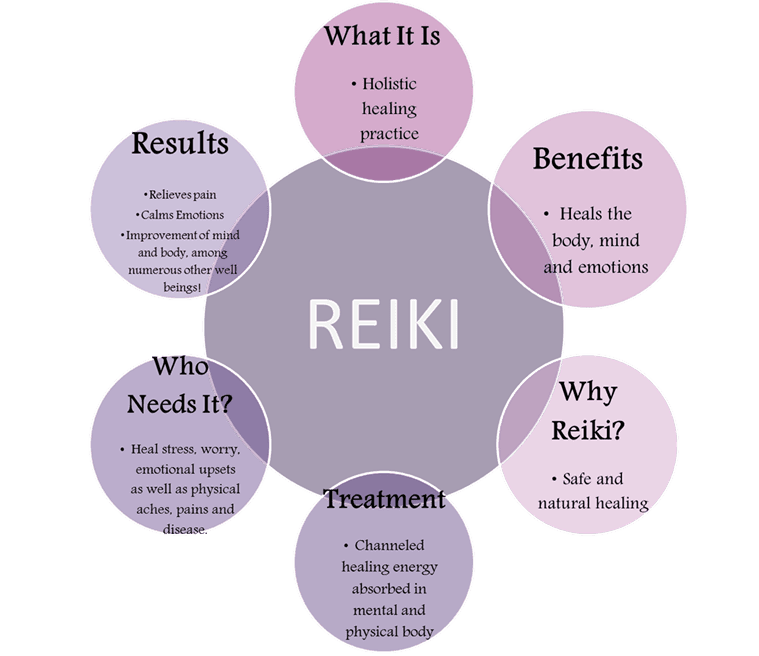
Before we can tackle the question of its reality, we must first understand what Reiki actually is, stripping away the layers of mysticism to get to its core. The word “Reiki” (pronounced Ray-Key) is Japanese, comprised of two parts: ‘Rei’, which can be translated as ‘Universal’ or ‘God’s Wisdom’, and ‘Ki’, which means ‘Life Force Energy’. It’s the same energy referred to as ‘Chi’ in Chinese acupuncture or ‘Prana’ in Indian yoga. It’s the unseen energy that flows through all living things.
Reiki is a healing technique based on the principle that a practitioner can channel this universal energy into a patient through touch, to activate the natural healing processes of the patient’s body and restore physical and emotional well-being. It’s crucial to understand that a Reiki practitioner is not the source of the healing energy; they are simply a conduit, a channel. Imagine a garden hose. The hose doesn’t create the water; it simply allows the water from the tap to flow to where it’s needed in the garden. In the same way, a practitioner who has been ‘attuned’ to Reiki simply allows this universal energy to flow through them to the recipient.
A Brief History and the Five Principles
The system of Reiki as we know it today was developed in the early 20th century by a Japanese Buddhist named Mikao Usui. After a long period of study, fasting, and meditation on Mount Kurama, he experienced a powerful spiritual awakening, where he was gifted the understanding and methodology of this healing system. He spent the rest of his life practising and teaching it.
More than just a hands-on technique, Usui’s system is a complete spiritual path guided by five simple, yet profound, ethical principles. These principles are meant to be lived daily to promote peace, balance, and spiritual growth. They are the true foundation of the practice, and for me, they became a daily mantra, especially in my journey away from alcohol.
Just for today, I will not worry. This principle addresses the human tendency to live in a state of future-focused anxiety. Worry is an energy drain that accomplishes nothing. This principle invites us to ground ourselves in the present moment, acknowledging that this moment is the only one we truly have control over. In the context of quitting a habit, it meant not worrying about ‘forever’, but simply focusing on getting through today.
Just for today, I will not be angry. Anger is a powerful, often destructive emotion that can poison our physical and emotional systems. This principle doesn’t ask us to suppress anger, but rather to observe it without attachment, understand its root, and let it go. It is a call for compassion, first for ourselves and then for others. It taught me to deal with the frustrations of early sobriety with patience rather than lashing out.
Just for today, I will be grateful. Gratitude is a high-vibrational state. It shifts our focus from what we lack to the abundance we already possess. This could be as simple as gratitude for a warm cup of tea, the roof over our head, or a kind word from a friend. Practising gratitude rewires the brain for positivity and contentment, a powerful antidote to the mindset that often leads to seeking escape.
Just for today, I will do my work honestly. This applies not just to our employment, but to all our ‘work’—our relationships, our self-care, our personal development. It means showing up with integrity, authenticity, and giving our best effort. For me, it meant being honest with myself about why I was drinking and doing the hard, honest work of healing.
Just for today, I will be kind to every living thing. This principle fosters a sense of interconnectedness. It reminds us to act with compassion towards others, animals, and the planet. Crucially, ‘every living thing’ includes ourselves. It is a powerful reminder to practise self-compassion, to forgive our past selves, and to treat ourselves with the same kindness we would offer to a dear friend.
What Happens During a Reiki Session?
For someone new to the concept, a session can seem mysterious. In reality, it is a very simple and relaxing experience. Here’s what you can typically expect:
Consultation: The session usually begins with a brief chat with the practitioner about your health, your lifestyle, and what you hope to gain from the session.
Getting Comfortable: You will lie fully clothed on a massage table, usually covered with a blanket. The practitioner will ensure you are warm and comfortable. The lights may be dimmed, and soft, calming music is often played.
The Treatment: The practitioner will gently place their hands on or just above various parts of your body, starting from the head and working their way down to the feet. There is no massage or manipulation involved. The hand positions are held for several minutes each.
Sensations: People report a wide variety of sensations. The most common is a feeling of deep relaxation and peace. Many people fall asleep. Other common sensations include:
A pleasant feeling of warmth or heat radiating from the practitioner’s hands.
Tingling, vibrations, or a gentle pulsing.
Seeing colours or images behind the eyes.
An emotional release, such as tears or laughter, as stuck energy begins to move.
Sometimes, people feel very little, but still report feeling refreshed and relaxed afterwards.
A full session typically lasts between 60 and 90 minutes. At its core, a Reiki session is an invitation for your nervous system to switch from its ‘fight-or-flight’ mode (the sympathetic nervous system) to its ‘rest-and-digest’ mode (the parasympathetic nervous system). It is in this state of deep relaxation that the body’s innate healing abilities are optimised.
The Sceptic’s Corner: Examining Reiki Through a Scientific Lens
So, is Reiki healing real from a scientific standpoint? This is where the conversation becomes complex and nuanced. For the hard-line sceptic, the answer is often a swift “no.” There is currently no scientific instrument that can detect or measure ‘Ki’ or ‘life force energy’. From a purely materialistic, biomedical viewpoint, a mechanism of action that cannot be measured cannot be proven to exist.
Many scientific critics attribute the positive effects of Reiki to two main factors: the placebo effect and the simple power of therapeutic touch.
The placebo effect is a fascinating phenomenon where a patient experiences real health benefits from a treatment that has no active therapeutic substance. Their belief in the treatment is so powerful that it triggers the body’s own healing mechanisms. It is not “all in your head” in a dismissive sense; it is a powerful demonstration of the mind-body connection. Sceptics argue that because people believe Reiki will make them feel relaxed and better, it does.
Therapeutic touch is also a significant factor. The simple act of a compassionate human placing their hands on another in a safe, caring environment is known to lower heart rate, reduce blood pressure, and decrease stress hormones like cortisol.
So, is that all it is? A powerful placebo combined with a relaxing hour on a massage table? While these factors undoubtedly play a role, many practitioners and recipients—myself included—believe there is something more profound at play.
What the Research Suggests
While large-scale, double-blind clinical trials for Reiki are difficult to design (how do you create a “sham” Reiki that the practitioner can’t distinguish from the real thing?), a growing body of smaller-scale studies and clinical observations points towards tangible benefits.
Many reputable medical institutions and cancer support centres in the UK and around the world now offer Reiki as a complementary therapy. They don’t offer it as a cure for disease, but as a supportive modality to help patients manage the side effects of conventional treatment.
Here’s what some of the research indicates:
Pain Reduction: Several studies have shown that Reiki can be an effective tool for reducing pain, both chronic and acute. A 2018 systematic review found that Reiki was more effective than a placebo for pain management. Patients often report needing less pain medication after sessions.
Anxiety and Depression: This is perhaps the most well-documented benefit. Reiki’s ability to induce the relaxation response makes it highly effective at reducing symptoms of anxiety, stress, and depression. A 2011 study on patients undergoing knee replacement surgery found that those who received Reiki reported significantly less pain and anxiety.
Improved Well-being in Cancer Patients: Organisations like Macmillan Cancer Support acknowledge Reiki’s role in helping patients cope. It can reduce the anxiety associated with a diagnosis, mitigate the nausea from chemotherapy, and improve sleep and overall quality of life during a gruelling treatment process.
Lowering Heart Rate and Blood Pressure: Measurable physiological effects have been observed. Studies have documented a significant drop in heart rate, blood pressure, and respiration rate in subjects receiving Reiki, consistent with a deep relaxation response.
It is vital to be clear: Reiki is not a substitute for conventional medicine. A reputable Reiki practitioner will never tell you to stop seeing your doctor or to discontinue prescribed medication. It is a complementary therapy. It works alongside medical treatment to support the whole person—body, mind, and spirit. It helps to create an internal environment that is conducive to healing.
So, while science may not yet be able to explain the how, it is increasingly observing the what. And what it’s observing is that people who receive Reiki tend to feel better, calmer, and more at peace. For someone in the throes of physical or emotional pain, that reality is far more important than a detailed mechanistic explanation.
My Anchor in the Storm: How Reiki Guided Me to Sobriety
Theory and studies are one thing. Lived experience is another. For over a decade, I practised and taught Reiki, witnessing profound shifts in my clients. I helped people manage chronic pain, find peace during palliative care, and navigate intense periods of stress. I knew it worked. But I never imagined it would become the single most important tool in my own personal crisis.
For years, I had a complicated relationship with alcohol. It was my social lubricant, my stress-reliever, my off-switch after a long day. It crept up on me, as it does for so many. A glass of wine became a bottle. A weekend indulgence became a nightly necessity. I wasn’t the stereotypical “person with a problem,” but I knew, deep down, that I was using it as a crutch and it was dimming my inner light. I felt disconnected from myself and the spiritual principles I taught.
Ten months ago, I decided I’d had enough. I wanted my clarity back. I wanted to feel my feelings without numbing them. I wanted to live with the same integrity I encouraged in my students. I decided to quit drinking, but I was determined to do it my own way.
I have always been uncomfortable with labels. The idea of adopting a label like ‘alcoholic’ for life felt disempowering to me, like a permanent brand that defined me by my past struggles rather than my future potential. My Reiki practice had taught me that we are not broken beings in need of fixing; we are whole beings who sometimes fall out of balance. My goal was not to fight a disease, but to gently and lovingly restore my own inner harmony. Reiki became my daily practice of restoration.
The Daily Practice of Self-Healing
Quitting an ingrained habit isn’t just about stopping an action; it’s about rewiring your entire nervous system and learning new ways to cope with life’s triggers. This is where self-Reiki became my non-negotiable anchor.
Morning Meditation: Every single morning, before checking my phone or letting the world rush in, I would sit for 20-30 minutes. My practice was simple: I would activate the flow of Reiki and place my hands on my body. I always started with my hands over my solar plexus (the area of the stomach). This is an energy centre associated with personal power, self-esteem, and the ‘fight-or-flight’ response. In moments of craving or anxiety, this area would feel tight and knotted. Flooding it with Reiki energy felt like pouring a warm, calming balm directly onto the source of the agitation. The physical tension would dissolve, and with it, the mental panic.
The Power of the Pause: Cravings are intense, visceral impulses. They feel urgent and overwhelming. My Reiki practice taught me how to create a ‘sacred pause’ between the trigger (a stressful email, the clock hitting 5 pm) and the old, automatic reaction (reaching for a drink). In that moment of intense craving, I would stop whatever I was doing, place one hand on my heart and the other on my solar plexus, and just breathe. I would channel Reiki into myself, not to fight the craving, but to soothe the part of me that was in distress. The energy would calm my racing heart and quiet the screaming voice in my head. After a few minutes, the wave of craving would pass, and I would be left with a sense of peace and empowerment. I had met my own need without resorting to the old crutch.
Processing Buried Emotions: One of the hardest parts of getting sober is that all the feelings you’ve been numbing for years come rushing to the surface. There was grief, anger, shame, and a profound sense of loneliness. It was overwhelming. My evening self-Reiki sessions became my safe space to process this. I would lie down and place my hands on my head to soothe anxious thoughts, on my throat to give voice to unspoken truths, and on my heart to cultivate self-compassion. The Reiki energy allowed me to sit with these difficult emotions without being consumed by them. It created a container of warmth and safety where tears could flow and healing could begin. I wasn’t trying to ‘get rid’ of the feelings; I was simply holding them and myself, with kindness, until they naturally transformed.
Living the Principles: The Five Principles moved from being concepts I taught to my lifeline. ‘Just for today, I will not worry’ became my defence against catastrophising about the future. ‘Just for today, I will be kind to myself’ was my mantra when I felt shame about the past. They provided a simple, daily framework for a life of mindfulness and self-respect, replacing the chaotic, reactive patterns of my drinking days.
Is Reiki healing real? When you use it to calm a panic attack in real-time, when you feel a physical craving dissolve under your own hands, when it gives you the strength to face deep-seated emotional pain with courage instead of a bottle—the answer becomes a resounding, undeniable ‘yes’. It didn’t magically take away the challenges, but it gave me a powerful, practical, and deeply loving tool to meet them. It was the anchor that held me steady in the stormiest of seas.
Is Reiki Right for You? Practical Steps for the Curious
If my story or the potential benefits of Reiki resonate with you, you might be wondering how to explore it for yourself. Whether you’re dealing with physical pain, emotional turmoil, or are simply curious about deepening your connection to yourself, Reiki is an accessible and gentle starting point.
Who Can Benefit from Reiki?
The short answer is: everyone. Because it works by promoting deep relaxation and balance, it can be beneficial in almost any situation. You don’t need to be ‘spiritual’ or believe in anything specific to receive its benefits. You just need to be open to the experience. It is particularly helpful for:
Stress and Anxiety: This is the most common reason people seek out Reiki, and it is exceptionally effective for calming an overactive mind and nervous system.
Chronic Pain Management: People with conditions like fibromyalgia, arthritis, and sciatica often find that it helps to reduce their pain levels and improve their coping ability.
Emotional Healing: It provides a safe and supportive space to process grief, trauma, and other difficult emotions.
Support During Illness: As mentioned, it’s a wonderful complementary therapy to support well-being during conventional medical treatment.
Improving Sleep: Many people report deeper and more restful sleep after a session.
Personal and Spiritual Growth: For those on a path of self-discovery, Reiki can help to clear energetic blocks and foster a deeper sense of connection and purpose.
Finding a Reputable Practitioner
The quality of your experience will depend heavily on the practitioner. Here are a few things to look for:
Lineage and Training: Ask about their training. A practitioner should be able to trace their teaching lineage back to Mikao Usui. Ask them what level they are trained to (Level 1, Level 2, or Master).
Experience: While a newly qualified practitioner can be excellent, someone with years of experience often brings a deeper level of wisdom and intuition to their sessions. Don’t be afraid to ask how long they have been practising.
Professionalism: Look for a practitioner who works in a clean, professional, and calming environment. They should have a proper treatment table and create a space that feels safe and comfortable.
Clear Boundaries: A Reiki session is not a counselling session. While you can share what’s on your mind, the practitioner’s role is to channel energy, not give you life advice. They should maintain professional and ethical boundaries at all times.
Your Intuition: Most importantly, do you feel comfortable with this person? A good practitioner will have a calm, compassionate, and non-judgmental presence. Trust your gut feeling.
Learning Self-Reiki
Perhaps the most empowering aspect of this practice is that anyone can learn to use it on themselves. This is done by taking a Reiki Level 1 course, where a Reiki Master attunes you to the energy. An attunement is a simple, sacred process that opens your energy channels, allowing you to channel Reiki for yourself and others.
Learning self-Reiki gives you a “first-aid kit for the soul” that you can access anytime, anywhere. It’s a lifelong tool for self-care, stress management, and personal growth.
Conclusion: A Reality Defined by Experience
So, after twelve years as a Master and a life-altering journey through sobriety, what is my final answer to the question, “Is Reiki healing real?”
For me, its reality is not something to be proven in a laboratory but to be felt in the body and experienced in life. It’s as real as the calm that settles over a racing mind. It’s as real as the warmth that soothes a painful joint. It’s as real as the inner strength that allows you to choose a healthy coping mechanism over a destructive one.
Reiki is not a magic cure. It is a gentle, powerful catalyst that promotes deep relaxation, empowering your own body, mind, and spirit to do what they are naturally designed to do: heal and seek balance. It helps clear away the energetic static—the stress, the worry, the fear—so that your own inner light can shine more brightly.
Whether you call it universal life force energy, the placebo effect, or the healing power of compassionate touch, the outcome is the same: it helps people feel better. It helped me reclaim my life. And for that reason, its reality is, to me, as tangible and as vital as the air I breathe. If you are curious, I invite you to approach it not with blind faith, but with an open mind and a willing heart. You may just discover a source of peace and healing you never knew you had within you.
Used to monitor number of Google Analytics server requests when using Google Tag Manager
1 minute
_gid
ID used to identify users for 24 hours after last activity
24 hours
_ga_
ID used to identify users
2 years
_gali
Used by Google Analytics to determine which links on a page are being clicked
30 seconds
_ga
ID used to identify users
2 years
__utmx
Used to determine whether a user is included in an A / B or Multivariate test.
18 months
__utmv
Contains custom information set by the web developer via the _setCustomVar method in Google Analytics. This cookie is updated every time new data is sent to the Google Analytics server.
2 years after last activity
__utmz
Contains information about the traffic source or campaign that directed user to the website. The cookie is set when the GA.js javascript is loaded and updated when data is sent to the Google Anaytics server
6 months after last activity
__utmc
Used only with old Urchin versions of Google Analytics and not with GA.js. Was used to distinguish between new sessions and visits at the end of a session.
End of session (browser)
__utmb
Used to distinguish new sessions and visits. This cookie is set when the GA.js javascript library is loaded and there is no existing __utmb cookie. The cookie is updated every time data is sent to the Google Analytics server.
30 minutes after last activity
__utmt
Used to monitor number of Google Analytics server requests
10 minutes
__utma
ID used to identify users and sessions
2 years after last activity
_gac_
Contains information related to marketing campaigns of the user. These are shared with Google AdWords / Google Ads when the Google Ads and Google Analytics accounts are linked together.