1. The Midlife Trap: Why Boredom Is the Deadliest Symptom
Let’s talk honestly about the part of sobriety that the glossy Instagram accounts and the shiny-toothed motivational speakers always leave out. The big, fat elephant in the room.
It’s not the cravings. It’s not the initial panic. It’s the sheer, soul-crushing boredom that hits you like a cheap funeral suit. It’s the feeling that the entire world has gone from technicolour fireworks to a grainy, black-and-white documentary about paint drying.
You spent years building a life in which every spike of joy, every moment of “unwinding,” and every social ritual were chemically guaranteed by a bottle. Alcohol became your automatic solution to every problem: stress, celebration, sadness, and most dangerously, the routine emptiness of a Tuesday night. Now, you’ve stopped, and you’re waiting for the clouds to part and the angels to sing… and instead, you get silence. Deafening, empty, beige silence. This is the moment when most people throw in the towel, convinced they’re defective or that sobriety isn’t for them. Do not let this be you.
After 45 years of drinking, I know this feeling down to my bones. I spent decades chasing external stimulation to mask an internal dissatisfaction I couldn’t even name. I didn’t stop drinking because I hated drinking; I stopped because I realised I was just perpetually bored with my life. And alcohol wasn’t fixing it; it was just delaying the inevitable collapse while slowly rotting my energy and clarity.
If you’re sitting there in your 40s or 50s, stone-cold sober, thinking, “Is this it? Is this the rest of my fucking life?”—I’m telling you this is a crucial moment. This emptiness is not a sign of failure. It is a sign of your success. You are finally encountering the raw, unfiltered emotional reality you’ve spent a lifetime outsourcing to booze.
Why Sobriety Boredom Hits Hard at Midlife
For the midlifer, this hits especially hard because our entire identity and routine are built around the ‘chemical holiday’ routine. We’ve developed deeply ingrained mental pathways where certain cues—the end of the workday, the smell of a pub, a Friday evening—trigger an immediate chemical response request. Weekends, holidays, Tuesday night football—all lubricated by the promise of external stimulation. This is not just a habit; it’s a learned neurological compulsion reinforced thousands of times.
When you remove the booze, you don’t just have an evening to fill; you have a void to fill where decades of coping mechanisms used to live. The ‘hole in the soul’ isn’t what the drink fixed; the drink created a bigger hole by eroding your ability to generate normal, reliable happiness. You’re facing the compounded debt of a chemical crutch.
2. The Great Flatline: Understanding Brain Recalibration
Why does dopamine flatline after quitting drinking?
The reason your brain is currently throwing a massive toddler tantrum is simple neuroscience, and it’s why willpower is useless.
Think of your brain’s reward system like a stereo volume knob. Alcohol is like hitting the volume straight to 11—a massive, immediate surge of dopamine, the “feel good” chemical that reinforces behaviour. For 45 years, I trained my brain to expect that nuclear option every single time I felt discomfort, stress, or—you guessed it—boredom.
Now that the nuclear option is gone, your reward system has to recalibrate, and this leads to what scientists call Anhedonia (the inability to feel pleasure from normally pleasurable activities). The baseline is flatlined. A walk in the park, a decent conversation, or a successful workout? Those are level 4 experiences, and your brain is refusing to accept anything less than 11. It’s starved.
This feeling of sobriety boredom is the direct result of that recalibration. It is, chemically speaking, a withdrawal symptom. It’s a literal neurological tantrum that whispers, “The old way was better, this is bleak, go back to the party.” You are not weak for feeling it; you are a chemical scientist whose powerful experiment just ended, and now you have to wait for the system to boot back up. The brain takes time to restore those dopamine receptors to normal sensitivity.
The good news is that this phase is temporary. The bad news is that you have to walk through it, not try to run or distract yourself out of it. It requires quiet, intentional work.
3. The 5-Step Mindful Reset: Your Boredom Blueprint
Willpower is a joke. It’s a finite resource trying to beat an infinite chemical loop. You need a system—a blueprint to disrupt the neural pattern without relying on sheer grit. This is the ‘Pattern Interrupt’ framework I teach to master the silence.
1. Externalise the Compulsion (The Voice Trick)
The voice in your head telling you to drink, or that you’re bored, is not you. It’s old, corrupted code—a survival mechanism from your drinking past. Your job is to separate from it and treat it as a separate entity.
Action: When the boredom or craving hits, do not say, “I want a drink” or “I am so bored.” Say, “The old habit code is running its script.” By detaching from it and calling it a script, you take away its power over your identity and create the necessary cognitive distance to choose a different action.
When the internal chatter is too loud and you feel physically restless, shock your system into the present moment. This bypasses the cognitive fight with compulsion and forces your focus back to your physical self.
Action: Grab a piece of ice and hold it tightly until it hurts, plunge your face in cold water for 10 seconds, or take a quick cold shower. Cold water is honest. It delivers a primal, non-chemical jolt. It gives you a guaranteed 2 minutes of control and focus, effectively resetting your mind from the compulsion loop back to your body. This is a crucial reset button for the midlife nervous system.
3. Implement The “30-Minute Quiet Project” Rule
The midlife drinker has no tolerance for empty time because they never learned how to tolerate their own company. You need to train your brain to enjoy subtle, reliable rewards again—the kind of rewards that compound.
Action: Identify the time you used to spend drinking (e.g., 7 PM to 9 PM). Dedicate the first 30 minutes of that window to an activity that is non-digital, non-social, and measurable. (e.g., Learn to play one new chord on the guitar, read 10 pages of a difficult book, organise one kitchen drawer). The goal isn’t to be instantly joyful; it’s to build a reliable, repeatable foundation of minor, non-chemical satisfaction that stabilises the dopamine baseline.
4. Master the Night Shift: The Evening Ritual
Evenings are the danger zone because they are where the old habits live and where the brain expects the big chemical hit. You need to replace the old ritual (pouring a drink) with a new one that clearly signals “end of day” to your brain.
Action: Create a deliberate, multi-step ritual involving your five senses, and repeat it every single night. For example: Light a specific candle, make a specific herbal tea, play a specific, calm album, put on a specific, comfortable jumper. Rituals defeat routine. This new ritual anchors you to peace and predictability, which is the antithesis of the chaos alcohol promised. This routine trains your brain for calm, not chaos.
5. Master the Pause (The 3-Second Rule)
When the craving or boredom hits, you have a 3-second window to pivot and intercept the old neurological pattern before it takes over.
Acknowledge: Acknowledge the feeling without judgment: “I feel bored.”
Pivot: State your intention: “I am choosing to walk through this boredom to find genuine peace.”
Act: Immediately launch into Step 2 (The Cold Shock) or Step 3 (The Quiet Project). Do not wait 5 seconds. Act immediately to override the compulsion.
4. Sustaining the Calm: Building the New Identity
You are not looking to return to ‘normal.’ You are looking to upgrade your operating system. This requires an identity shift, moving from someone who survived life to someone who designs it.
The silence that felt like a death sentence at first slowly transforms. It stops being the absence of alcohol and starts being the presence of peace, clarity, and genuine control. You realise that 99% of the ‘fun’ you thought you were having was a drunken repetition of the same shit jokes and hollow conversations.
The Sobriety Boredom is replaced by a solid, reliable calm. This calmness is the platform where you finally build the life you truly want—a life that doesn’t require constant chemical escape. You stop seeking stimulation and start finding satisfaction.
Your social circle will shrink. You’ll lose your drinking buddies because you no longer align with that low-effort, low-value lifestyle. But you will keep your real friends, and you’ll find a new tribe of people who are also doing the hard work of self-mastery. That is a massive upgrade—a true Midlife Reset.
5. Final Thoughts & Hard CTA
Boredom is not the end of the story. It is the doorway to the next chapter.
You are not broken; you are just running old code, and code can be rewritten. You’ve sat through the hardest part: the silence. You have proven you are ready for the change.
The choice now is simple: run back to the noise, or walk through the silence and start building.
I didn’t quit drinking just to be miserable. I quit to gain control, clarity, and energy—the three things the midlife drinker feels they have lost. If you are ready to move past the boredom phase and build a life you don’t need to escape, I’ve put together the entire framework. It’s the exact methodology—the checklists, the routines, the mindset hacks—I used to rewrite my own brain.
👉 If you want the full blueprint for rewriting your mind and the 5-step reset, download my free, 7-Day Mindful Reset Checklist. It’s the exact framework I used to escape my 45-year career and start the reset. Click here to get the free checklist and start rewiring your brain today.
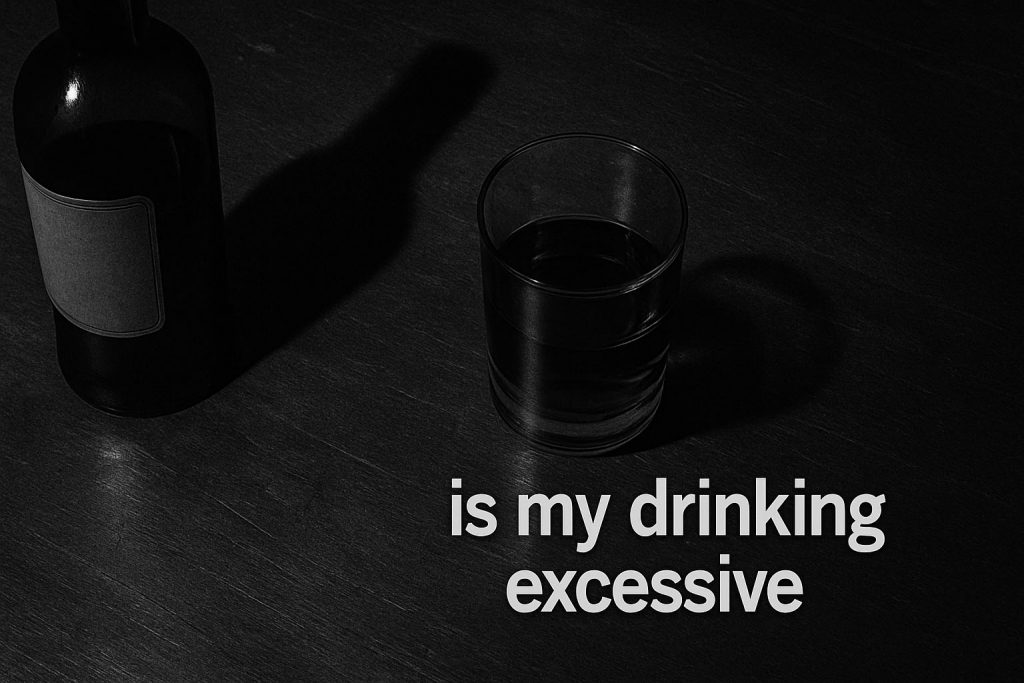
I asked this question numerous times over my 45-year drinking career, “Is My Drinking Excessive?”, but always came up with the same lie, “No, I don’t have a drink problem, I can take it or leave it”, and the numerous other lies the brain told me. It’s a simple question, isn’t it? Four little words that should have a straightforward answer. Yet, for decades, that question was a revolving door in my mind. I’d approach it, push it open with a flicker of genuine concern, and immediately be ushered out the other side by a well-rehearsed, comforting lie. The lie was my gatekeeper, my shield, and my closest confidant. It told me everything was fine. It told me I was in control. It told me that the man looking back at me from the mirror was exactly who he was supposed to be.
This isn’t a story about quitting drinking, not in the way you might think. We’re often sold a narrative of dramatic interventions, of car crashes and lost jobs, of a single, explosive moment that forces a change. My story wasn’t like that. This is about what happens after. It’s about the deafening silence that rushes in when the constant, low-hum numbing stops. It’s about the slow, terrifying process of the masks coming off, one by one, until you’re left standing face-to-face with the raw, uncomfortable truth that your life has drifted so far from who you wanted to be, you barely recognise the bloke in the mirror.
For 45 years, I drank. Forty-five. Let that number sink in. It’s a career. A mortgage. It’s longer than many people’s entire adult lives. And during that time, I wasn’t the caricature of a problem drinker you see in films. I wasn’t reckless, chaotic, or smashing windows on a bender. From the outside, and even from the inside most of the time, I was functioning. I was more than functioning; I was successful, personable, the life of the party. Smiling. Cracking jokes. I was even coaching others, dispensing advice on how to live a better life, all while systematically, quietly, and efficiently destroying myself. Mine was that other kind of drinking. The insidious kind. The slow, silent killer dressed up as “just one more.” The socially acceptable kind that pats you on the back as it walks you, step by imperceptible step, toward a life you never intended to live.
This post is for anyone who feels that same disconnect. It’s for the people who feel stuck. Numb. Trapped in cycles they can’t seem to break — whether it’s booze, food, mindless scrolling, or the most potent addiction of all: lying to themselves. It’s for those who have a persistent, nagging feeling deep in their gut that they’ve got more to give but don’t know where to start. If you’re asking yourself if your drinking is excessive, you’re already holding the key. The question itself is the beginning of the answer.
The Functional Façade: Deconstructing the Lies We Tell Ourselves
The most powerful lie is the one that contains a kernel of truth. “I can take it or leave it,” I’d tell myself. And on some level, it felt true. I could go for a day. Maybe two. I could “leave it” for a morning meeting or a family event. This flimsy evidence was all the proof my brain needed to build an entire fortress of denial. The lie wasn’t just a sentence; it was a complex psychological defence mechanism, meticulously constructed over decades to protect the habit. The brain, in its desperate attempt to maintain the status quo, will tell you anything to keep the numbing agent flowing.
The “functioning” drinker is the master of this self-deceit. Society provides the perfect cover. We celebrate drinking. It’s how we connect, how we relax, how we reward ourselves. A glass of wine after a long day isn’t seen as a problem; it’s marketed as self-care. A few beers with friends isn’t a warning sign; it’s bonding. My life was a testament to this.
Smiling. Cracking jokes. My exterior was my armour. Humour became a deflection. As long as I was making everyone else laugh, no one would look closely enough to see the strain behind my eyes. The performance of being “fine” was exhausting, but it was a role I had perfected over 45 years. Each joke was another brick in the wall, another layer of soundproofing to keep the quiet desperation from being heard. The laughter of others was validation that the mask was working.
Coaching others while destroying myself. This is perhaps the most painful irony. I was adept at seeing the patterns, the self-sabotage, and the potential in other people. I could give rousing speeches about seizing the day and living with purpose. Yet, every piece of advice I gave was a boomerang that I refused to catch on its return. It was easier to fix the world than to look at my own reflection. This duality creates a profound sense of fraudulence. You feel like an imposter in your own life, doling out wisdom you can’t apply to yourself. The cognitive dissonance is immense—preaching health while committing a slow-motion suicide, advocating for clarity while marinating in a fog.
The slow, silent killer dressed up as “just one more.” This is the heart of the matter. Excessive drinking for the high-functioning person is rarely an explosion. It’s a rising tide. At first, it’s just your ankles. It feels refreshing. Then it’s your knees, and it’s a bit more effort to move. Before you know it, you’re treading water, and you can’t remember what it felt like to stand on solid ground. “Just one more” is the mantra of the slow drift. It’s the harmless negotiation you have with yourself a thousand times over, each one seeming insignificant in the moment. But those moments compound. They stack up, day after day, year after year, until “just one more” has built the very prison you inhabit. The bars aren’t made of steel; they’re made of excuses, justifications, and the crushing weight of routine.
The lies we tell ourselves are seductive because they allow us to postpone the terrifying work of actual change. They keep us in a holding pattern of comfortable misery. We know something is wrong, but the perceived pain of confronting it feels greater than the chronic, low-grade pain of continuing as we are. We become trapped in cycles—booze to numb the dissatisfaction, junk food to comfort the anxiety, endless scrolling to distract from the emptiness. Each is a temporary escape, a fleeting hit of dopamine that only digs the hole deeper, reinforcing the need for the next escape. It’s a perfectly closed loop of self-medication, and breaking it seems impossible.
The Brutal Realisation: When the Mirror Stops Lying
There was no single, cataclysmic event. No flashing lights, no dramatic ultimatum from a loved one. My moment of change didn’t happen in a public spectacle but in the profound silence of an ordinary day. At 57, after a lifetime of running, I simply stopped. It was a quiet moment of clarity. Me. A mirror. And a simple, brutal realisation: If I don’t change everything, I’ll lose everything.
This is the part of the story that often gets left out of the recovery narrative. We are conditioned to expect a “rock bottom.” We believe we have to lose the house, the car, the job, the family, before we are granted permission to change. But what if rock bottom isn’t a place? What if it’s a feeling? What if it’s the soul-crushing realisation that you’ve been existing instead of living?
That moment in front of the mirror was my rock bottom. It wasn’t about what I had lost on the outside; it was about what had eroded on the inside. I looked into my own eyes and saw a stranger. Not a monster, not a villain, just a bloke I didn’t know. A man whose dreams and ambitions had been diluted over time, replaced by a predictable routine of numbing and pretending. The life I was living had drifted so far from who I wanted to be; the gap seemed unbridgeable. That is a terror far greater than any external crisis.
This quiet clarity is born from the cumulative weight of thousands of small compromises.
It’s the morning you wake up with a familiar, dull headache and a wave of self-loathing that is so routine you barely notice it anymore.
It’s the conversation you have on autopilot because your mind is already calculating the minutes until your first drink.
It’s the hobbies you’ve abandoned, the passions you’ve let wither, the relationships you’ve maintained at a superficial level because true intimacy would require a vulnerability you can no longer access.
It’s the sickening feeling that time is accelerating, that the years are blurring together into a featureless landscape of the same repeated days, and you are merely a passenger.
When the numbing stops, even for a moment, the raw, uncomfortable truth rushes in to fill the void. The truth is that the alcohol wasn’t the problem; it was the solution. It was the faulty, destructive solution to a life I couldn’t stand to feel. It was the anaesthetic for a deep-seated sense of being stuck. It was the mask that allowed me to face the world. And in that moment of clarity, the realisation hits: the solution is now the cage. The thing I used to escape my life has become the very thing preventing me from having one. And the final, brutal truth lands with the force of a physical blow: If I don’t change everything, I’ll lose everything. Not just the tangible things, but the intangible—the chance to know who I really am, the opportunity to build a life I don’t need to escape from.
This book, this journey, isn’t about the act of quitting. That’s a single event, a line in the sand. This is about what happens the day after, and the day after that. It’s about the staggering, overwhelming, and ultimately liberating process of a reset. A midlife one. Late, maybe. But not too late.
When you remove the numbing agent, you are left with the thing you were trying to numb. You have to face the unvarnished reality of your life, your choices, your regrets, and your fears. It’s terrifying. The masks come off, and you’re left with your own face, which you may not have truly seen in decades. This is where the real work begins. It’s not about finding the perfect replacement for booze; it’s about building a life that is so fulfilling, so aligned with your true self, that the thought of numbing it becomes absurd.
I won’t give you fluff. I have no interest in guru speak or peddling perfect morning routines that sound great on a podcast but fall apart by Tuesday. My path was paved not with inspirational quotes, but with hard-earned truths and lived experience. It was a process of rebuilding from the ground up, based on a simple framework of radical honesty and deliberate action. The principles are straightforward, but they are not easy.
This framework is for people who are sick of their own bullshit. It’s a commitment to:
Stop Lying to Yourself: This is the foundational step. It means an end to the grand lies (“I can take it or leave it”) and the thousand tiny ones (“I deserve this,” “It’s been a hard day,” “I’ll start tomorrow”). Honesty has to become a practice, a muscle you exercise every moment. It starts with admitting you don’t have the answers and that the way you’ve been living isn’t working.
Embrace the Uncomfortable Truth:When the numbing stops, feelings you’ve suppressed for years will surface. Boredom, anxiety, regret, sadness. The instinct is to find a new numbing agent—food, scrolling, workaholism. The reset requires you to sit with the discomfort. To learn what it’s trying to tell you. Your boredom is telling you your life lacks passion. Your anxiety is telling you there are unresolved fears. These feelings are not your enemies; they are your roadmap.
Move from Existing to Living: For years, I existed. My life was a loop of predictable inputs and outputs, designed to maintain equilibrium and avoid disruption. Living is different. Living is active. It involves making conscious choices, trying new things, facing fears, and pursuing what sets your soul on fire. It means choosing the difficult, meaningful path over the easy, empty one. It means being the author of your life, not just a character in a story that’s happening to you.
Build a Life You Don’t Need to Escape From: This is the ultimate goal. The entire purpose of the reset is to construct a reality that is more compelling than any escape. It means identifying your core values and aligning your actions with them. It means investing in your health, nurturing your relationships, finding work that matters to you, and cultivating genuine joy. When your life is built on a foundation of purpose and authenticity, the need for a chemical escape hatch simply falls away. You’re no longer running from your life; you’re running towards it.
Conclusion: It’s Not Too Late to Meet the Bloke in the Mirror
Returning to the original question—”Is my drinking excessive?”—you begin to see that it might be the wrong question entirely. It’s a question that invites a negotiation, a comparison, a lie. Perhaps the better question is the one I finally asked myself in front of that mirror: “Is this the life I wanted to be living?”
If the answer is no, then any behaviour that keeps you stuck in that life—whether it’s one drink a night or ten—is excessive. It is costing you too much. It is costing you time, potential, and the chance to know the person you were meant to be. The slow, silent killer isn’t just about physical health; it’s about the death of the spirit, one “functioning” day at a time.
My journey started at 57, after a 45-year drinking career. A midlife reset. It was late, yes. There’s no denying the years lost to the fog. But the single most important truth I’ve learned is this: it is not too late. It is not too late to stop the drift. It is not too late to take off the masks and confront the raw, uncomfortable truth of your own life. It is not too late to rebuild from the ground up.
If you’re reading this, a part of you is already there. A part of you is tired of the performance. If you’re ready to stop lying to yourself. If you’re sick of existing instead of living. If you’re done with the bullshit and want a life you don’t need to escape from — this is for you. The path isn’t easy, but it leads back to the one person you’ve been avoiding for years: yourself. And it’s time you were reacquainted.
Benefits of an alcohol-free life. In the tapestry of British culture, alcohol is a deeply woven thread. It’s the celebratory pop of a champagne cork at a wedding, the comforting pint after a long week at the pub, the sophisticated glass of red with dinner. It’s so omnipresent that choosing not to drink can feel like a radical act, one that often invites questions: “Are you driving?”, “Are you on medication?”, “Are you sure you don’t want just one?”.
For decades, the conversation around avoiding alcohol has been narrowly focused, primarily centred on individuals with alcohol use disorder. While their journey to sobriety is profoundly important and life-saving, this limited perspective obscures a much broader and more empowering truth: the benefits of reducing or eliminating alcohol are available to absolutely everyone.
The rise of the “sober curious” movement and the explosion of high-quality, non-alcoholic alternatives signal a cultural shift. People are beginning to question the default status of drinking and explore what life could look like with more clarity, energy, and intention. This isn’t about judgment or prohibition; it’s about conscious choice.
So, who really stands to gain from stepping away from the bottle? The answer is far more extensive than you might think. It’s not just one type of person. It’s the ambitious professional, the dedicated athlete, the busy parent, the student facing exams, the retiree enjoying their golden years, and anyone in between who wants to optimise their health, wealth, and happiness. This post will delve into the diverse groups of people who benefit from avoiding alcohol, exploring the transformative impact it can have on every facet of modern life.
The Physical Renaissance: Reclaiming Your Body’s Potential
The most immediate and well-documented benefits of ditching alcohol are physical. Alcohol is, at its core, a toxin that the body works hard to process and eliminate. Removing it from the equation allows for a head-to-toe biological reset.
Individuals Managing Chronic Health Conditions
For this group, reducing or eliminating alcohol isn’t just a lifestyle choice; it can be a critical component of their medical management plan.
Those with Liver Concerns: The liver is the body’s primary filtration system and bears the brunt of alcohol processing. For individuals with conditions like non-alcoholic fatty liver disease (NAFLD), alcoholic hepatitis, or cirrhosis, continued drinking is akin to pouring petrol on a fire. Abstinence is the single most effective action they can take to halt disease progression, allow the liver to heal, and prevent catastrophic liver failure. Even for those with a perfectly healthy liver, regular drinking contributes to fat accumulation, laying the groundwork for future problems.
People with Cardiovascular Issues: The old myth that a glass of red wine is “good for your heart” has been largely debunked by more comprehensive research. Alcohol can contribute to high blood pressure (hypertension), a leading risk factor for heart attacks and strokes. It can also trigger arrhythmias like atrial fibrillation and weaken the heart muscle, a condition known as alcoholic cardiomyopathy. For anyone managing their heart health, avoiding alcohol helps to stabilise blood pressure, maintain a regular heart rhythm, and reduce overall strain on the cardiovascular system.
Diabetics and Those with Blood Sugar Instability: Alcohol plays havoc with blood sugar regulation. Many alcoholic drinks, especially cocktails, ciders, and sweet wines, are packed with sugar, causing sharp spikes in glucose. Conversely, the body prioritises metabolising alcohol over maintaining glucose levels, which can lead to dangerous hypoglycaemia (low blood sugar), particularly for those on insulin. By avoiding alcohol, individuals with diabetes gain far better control over their blood sugar, making their condition easier to manage and reducing the risk of long-term complications.
Anyone with Gastrointestinal Problems: Alcohol is a known irritant to the digestive tract. It can worsen the symptoms of acid reflux (GERD) by relaxing the oesophageal sphincter. It can aggravate conditions like Irritable Bowel Syndrome (IBS), gastritis, and ulcers. For those suffering from chronic gut issues, removing this major irritant can lead to a dramatic reduction in bloating, pain, and discomfort.
The Peak Performer: Athletes and Fitness Enthusiasts
For those who treat their body like a high-performance machine, alcohol is a spanner in the works. It directly undermines fitness goals and athletic potential in numerous ways.
Hydration Sabotage: Alcohol is a diuretic, meaning it makes you urinate more frequently, leading to dehydration. Proper hydration is fundamental for muscle function, temperature regulation, and nutrient transport. A dehydrated athlete is a less effective athlete, prone to cramps, fatigue, and reduced endurance.
Impaired Muscle Recovery and Growth: The post-workout period is critical for muscle repair and synthesis. Alcohol consumption during this window severely blunts this process. It can decrease the production of human growth hormone (HGH) and interfere with protein synthesis, meaning all that hard work in the gym yields diminished results.
Disrupted Sleep Architecture: Quality sleep is arguably the most powerful performance enhancer available. Alcohol is a notorious sleep disruptor. While it may help you fall asleep faster, it suppresses vital REM sleep in the first half of the night and causes sleep fragmentation in the second half. The result is waking up feeling groggy and unrefreshed, which directly impacts energy levels, reaction time, and cognitive function during training and competition.
Empty Calories and Fat Storage: Alcoholic drinks are often calorie-dense but nutritionally void. A single pint of lager can contain nearly 200 calories. These “empty” calories contribute to weight gain, particularly visceral fat around the abdomen, which is linked to a host of health problems. By avoiding alcohol, athletes can better manage their caloric intake and body composition to optimise their power-to-weight ratio.
The Longevity Seeker: Anyone Prioritising Healthy Ageing
We all want to live not just longer, but better. Avoiding alcohol is a powerful tool in the healthy-ageing toolkit. It helps preserve vitality from the inside out.
Skin Health and Appearance: Alcohol dehydrates the entire body, and the skin is often the first place this shows. It can lead to dryness, dullness, and the accentuation of fine lines and wrinkles. Furthermore, alcohol can deplete Vitamin A, an important antioxidant for skin cell turnover, and can trigger inflammatory conditions like rosacea. Quitting drinking often results in a plumper, clearer, and more hydrated complexion within weeks.
Reduced Cancer Risk: The link between alcohol consumption and cancer is irrefutable. Alcohol is classified as a Group 1 carcinogen by the World Health Organisation, placing it in the same category as asbestos and tobacco. It is causally linked to at least seven types of cancer, including mouth, throat, oesophagus, liver, colon, rectum, and breast cancer. There is no “safe” level of consumption when it comes to cancer risk; any reduction is beneficial.
Preserving Cognitive Function: While severe alcohol abuse can lead to devastating neurological conditions, even moderate, long-term drinking can accelerate brain shrinkage, particularly in the hippocampus, a region critical for memory and learning. Avoiding alcohol helps protect brain volume and supports long-term cognitive health, reducing the risk of dementia and preserving mental sharpness well into old age.
The Mental Dividend: Cultivating Clarity, Calm, and Resilience
The impact of alcohol on mental and emotional well-being is profound, complex, and often paradoxical. While many people drink to relieve stress or numb difficult feelings, alcohol frequently exacerbates the very problems it’s being used to solve.
Those Navigating Mental Health Challenges
For this group, alcohol acts as a deceptive friend, offering temporary relief while digging a deeper hole. Removing it can be a game-changing step towards genuine healing.
People Experiencing Anxiety: The phenomenon of “hangxiety” is real and biologically driven. Alcohol initially boosts the calming neurotransmitter GABA, which is why the first drink can feel relaxing. To compensate, the brain reduces its natural GABA production and ramps up glutamate, an excitatory neurotransmitter. When the alcohol wears off, the brain is left with a deficit of calm and an excess of stimulation, leading to heightened anxiety, nervousness, and even panic attacks the next day. By quitting, individuals break this chemical cycle, allowing their brain’s natural anxiety-regulation systems to rebalance, leading to a more stable and less anxious baseline.
Individuals with Depression: Alcohol is a central nervous system depressant. While it might provide a temporary mood lift or a sense of escape, its long-term effect is to worsen the symptoms of depression. It disrupts the delicate balance of mood-regulating neurotransmitters like serotonin and dopamine. The cycle of drinking to cope with low mood, only to wake up with an even lower mood and depleted neurochemicals, is a vicious one. Abstinence allows these brain chemicals to return to healthier levels and significantly improves the effectiveness of therapies and antidepressant medications.
Anyone Struggling with Sleep: As mentioned in the context of physical performance, alcohol’s destruction of sleep quality cannot be overstated. For those with insomnia or other sleep disorders, using alcohol as a sleep aid is a disastrous strategy. It leads to non-restorative, fragmented sleep, daytime fatigue, and a greater need for stimulants like caffeine, which can further disrupt sleep. By eliminating alcohol, people rediscover what true, deep, restorative sleep feels like, which has a powerfully positive knock-on effect on mood, energy, and overall mental health.
The High-Stress Professional and the Overwhelmed Parent
In a world that demands constant performance, it’s easy to fall into the habit of using alcohol as a tool to “switch off” or “take the edge off”.
Breaking the Stress-Drink Cycle: Reaching for a glass of wine after a stressful day at the office or once the kids are finally in bed is a deeply ingrained ritual for many. It feels like a reward and a release valve. However, this reliance creates a dependency where the brain learns that alcohol is the primary solution to stress. Over time, this can actually elevate baseline cortisol (the stress hormone) levels and diminish one’s natural ability to cope with pressure.
Discovering Healthier Coping Mechanisms: When the default option of a drink is removed, it creates space to develop a more robust and sustainable toolkit for managing stress. This might include exercise, which genuinely reduces cortisol and releases endorphins; mindfulness or meditation, which trains the brain to respond to stress more calmly; or reconnecting with hobbies that provide a sense of flow and accomplishment. These strategies build resilience, whereas alcohol erodes it.
You don’t need to have a diagnosed mental health condition to benefit mentally from an alcohol-free life. The gains in day-to-day clarity and emotional intelligence are remarkable.
Lifting the Brain Fog: Many regular drinkers don’t realise they are living in a state of low-grade cognitive impairment. The subtle fogginess, the slight dip in short-term memory, the reduced sharpness—these are often accepted as normal. Removing alcohol is like cleaning a dirty window; the world comes into sharper focus. Concentration improves, memory recall becomes quicker, and problem-solving skills are enhanced.
Achieving Emotional Regulation: Alcohol numbs emotions, both good and bad. While this might seem appealing in the short term, it prevents us from properly processing our feelings. Living without this chemical crutch forces you to sit with your emotions, understand them, and learn to navigate them. This leads to greater emotional intelligence, more authentic reactions, and a deeper sense of self-awareness. Life’s highs feel higher because they are not chemically induced, and its lows become more manageable because you have the clarity and resilience to face them head-on.
The Lifestyle Upgrade: Reclaiming Time, Money, and Authentic Connection
The benefits of avoiding alcohol ripple outwards from our internal biology and psychology to transform the very fabric of our external lives. It’s an upgrade that impacts our finances, our relationships, and how we spend our most precious resource: time.
The Financially-Minded and Goal-Oriented
The financial cost of a regular drinking habit is staggering when you stop to calculate it. Re-allocating these funds can be life-changing.
The Shocking Maths of Drinking: Let’s break it down. A pint in a UK pub can easily cost £5-£7. A decent bottle of wine from the supermarket is £8-£12.
Scenario 1: The Casual Pub-Goer. Three pints after work, twice a week. At £6 a pint, that’s £36 a week. That’s £1,872 a year.
Scenario 2: The At-Home Wine Drinker. Half a bottle of wine a night. That’s about four £10 bottles a week, or £40. That’s £2,080 a year.
This doesn’t even include the associated costs: the taxis, the late-night takeaways, the brunch to “cure” the hangover, or the premium-priced cocktails on a big night out.
Funding Your Dreams: What could you do with an extra £2,000 a year? That’s a luxury holiday. It’s a significant overpayment on your mortgage. It’s a substantial boost to your investment portfolio or pension pot. It’s the seed money for a new business venture. When framed this way, the choice is no longer between having a drink or not; it’s between a fleeting buzz and a tangible, long-term life goal.
Parents, Partners, and Role Models
The decision to stop drinking has a powerful, positive effect on our most important relationships.
Being Truly Present: Hangovers steal time and energy. A Sunday morning spent feeling groggy and irritable on the sofa is a Sunday morning you’re not fully present for your children or partner. An evening spent focused on “wine o’clock” is an evening where your attention is divided. Sobriety gives you back your mornings, your weekends, and your mental clarity. It means having more energy for bike rides in the park, more patience for homework help, and the capacity for deeper, more meaningful conversations with your partner.
Setting a Positive Example: Children learn more from what we do than from what we say. By modelling a life where fun, relaxation, and celebration are not intrinsically linked to alcohol, parents provide a powerful and healthy example. They show their children that it’s possible to navigate life’s challenges and joys with a clear head, building a foundation for a healthier relationship with substances in the future.
The Social Explorer Redefining “Fun”
One of the biggest fears people have about quitting drinking is the perceived impact on their social life. “Will I be boring?”, “Will I lose my friends?”, “What will I even do?”. The reality is often the complete opposite.
Discovering Authentic Connection: Alcohol can be a social lubricant, but it can also create a facsimile of connection. Conversations can be repetitive, emotions artificially heightened, and memories hazy. Socialising sober allows for genuine connection. You remember conversations in their entirety. You forge bonds based on shared interests and real personalities, not just shared inebriation.
The Expanding World of Alcohol-Free Socialising: The social landscape is changing rapidly. There is a burgeoning market for sophisticated non-alcoholic spirits, beers, and wines that provide the ritual and taste of an adult drink without the effects. Alcohol-free bars are popping up in major cities. More importantly, removing alcohol as the default social activity opens up a world of possibilities. Socialising becomes about the activity itself: joining a hiking club, taking a pottery class, starting a book club, going to an early-morning fitness session. Your social life becomes more varied, more interesting, and often, more fulfilling. You start collecting memories, not hangovers.
The Ultimate Beneficiary: A More Authentic and Empowered You
So, who benefits from avoiding alcohol? The athlete is chasing a personal best. The patient is managing a chronic illness. The student is cramming for finals. The professional seeking a competitive edge. The parent wants to be more present. The person battling anxiety. The retiree is preserving their health. The individual is trying to get their finances in order.
The answer, ultimately, is everyone.
Avoiding alcohol is not an act of deprivation. It is an act of acquisition. You are not “giving up” a drink; you are gaining clearer skin, deeper sleep, a healthier body, a calmer mind, a fatter wallet, more authentic relationships, and more productive weekends. You are gaining control, clarity, and time.
The journey doesn’t have to be a stark, black-and-white decision between being a “drinker” and a “teetotaller”. It can start with curiosity. It can start with a 30-day challenge, like Dry January or Sober October, just to see how you feel. It can be a commitment to alcohol-free weekdays.
By removing alcohol from the equation, you are removing a confounding variable from your life. You get to discover who you truly are, what you truly enjoy, and what you are truly capable of, unclouded and uninhibited. The ultimate beneficiary is the most authentic, energetic, and empowered version of yourself, waiting to be rediscovered.
Flick Your Midlife Reset Switch in 7 Days
Stop drifting. Start living. Quit the crap, clear the fog, and get your edge back — starting today.
Thank you! You have joined the 7-Day Restart
One download. Link expires in 7 days. No spam, ever.
Used to monitor number of Google Analytics server requests when using Google Tag Manager
1 minute
_gid
ID used to identify users for 24 hours after last activity
24 hours
_ga_
ID used to identify users
2 years
_gali
Used by Google Analytics to determine which links on a page are being clicked
30 seconds
_ga
ID used to identify users
2 years
__utmx
Used to determine whether a user is included in an A / B or Multivariate test.
18 months
__utmv
Contains custom information set by the web developer via the _setCustomVar method in Google Analytics. This cookie is updated every time new data is sent to the Google Analytics server.
2 years after last activity
__utmz
Contains information about the traffic source or campaign that directed user to the website. The cookie is set when the GA.js javascript is loaded and updated when data is sent to the Google Anaytics server
6 months after last activity
__utmc
Used only with old Urchin versions of Google Analytics and not with GA.js. Was used to distinguish between new sessions and visits at the end of a session.
End of session (browser)
__utmb
Used to distinguish new sessions and visits. This cookie is set when the GA.js javascript library is loaded and there is no existing __utmb cookie. The cookie is updated every time data is sent to the Google Analytics server.
30 minutes after last activity
__utmt
Used to monitor number of Google Analytics server requests
10 minutes
__utma
ID used to identify users and sessions
2 years after last activity
_gac_
Contains information related to marketing campaigns of the user. These are shared with Google AdWords / Google Ads when the Google Ads and Google Analytics accounts are linked together.