Art and Sobriety Recovery. There is a profound stillness in the image before me. A scene titled Moonlit Serenity, a lone swimmer under the full Autumnal moon. The water, a deep and reflective blue, cuts through a landscape hushed by the cool air of autumn. The moon hangs full and luminous in the sky, its twin shimmering on the water’s surface, a perfect, unbroken circle of light. It illuminates the golden leaves of the trees, clinging to the last vestiges of the season, as their skeletal branches reach towards a dusky sky. And there, in the centre of this quiet world, is the swimmer. A solitary figure, moving through the cold, dark water, neither rushing nor struggling, but simply progressing. This image is more than just a picture; it is a mirror. It reflects a feeling I know intimately: the quiet, sometimes isolating, but ultimately peaceful solitude of a journey that must be undertaken alone.
For a long time, my own creative river has been still, its surface undisturbed by the stroke of a brush or the click of a stylus. It’s been a while since I’ve engaged with any art, be it the fluid world of digital painting, the sculptural challenges of mannequin art, the chaotic beauty of canvas pours, or the delicate dance of watercolours. This creative dormancy wasn’t a conscious choice, but a side effect of a much larger personal undertaking: the journey into sobriety and the ongoing work of managing my mental health. In the early days, the silence in my studio was deafening. The energy once channelled into creation was instead redirected towards survival, towards learning how to exist in a world suddenly stripped of its familiar, albeit destructive, coping mechanisms. The tools of my trade felt alien in my hands, the blank canvas a daunting void rather than a field of possibility.
But looking at this image, at this lone swimmer, something shifts. I see a metaphor for this very process. The swimmer is not fighting the current; they are part of it. The coldness of the water is not an adversary but an environment, a medium for movement. It is an embrace. This is the perspective I have been searching for. It is time to stop standing on the riverbank, watching the creative current flow by. It is time to take the plunge, to embrace the cold shock of starting again, and to find the rhythm of my own stroke in the quiet moonlight of this new chapter. It is time to let the creativity loose once again, to seek out that Moonlit Serenity for myself. The journey of the lone swimmer is my own: under the watchful eye of a full Autumnal moon, I must learn to let the water, however cold, embrace the solitude, for it is in that solitude that I am beginning to find peace.
Every artist, regardless of their medium, understands the concept of a creative block. It’s often depicted as a frustrating, temporary barrier. But the creative stillness that can accompany the early stages of sobriety and the intense work of mental healing is something different. It’s less of a wall and more of a vast, frozen expanse. It’s the feeling of standing on the cold, hard-packed earth of the riverbank in the painting, watching the water, but feeling utterly disconnected from its flow. The desire to create may still be a faint pulse deep within, but the energy required to bridge the gap between thought and action feels monumental.
In my experience, the cessation of artistic practice was a symptom of a much deeper rewiring. When you remove a substance that has long served as a social lubricant, a confidence booster, or a silencer of internal critics, you are left exposed. The world feels louder, colours seem harsher, and emotions, once conveniently dulled, surge with an overwhelming intensity. In this state of raw sensitivity, the act of creation can feel less like a release and more like another source of pressure. The internal monologue shifts from one of inspiration to one of doubt. What if I’m not good enough without the haze? What if the part of me that was ‘creative’ was intrinsically linked to the part of me that was self-destructing? The mannequin in the corner of the room seems to stare back with judgment. The pristine white canvases stacked against the wall feel like monuments to a past self, a person who could effortlessly translate feeling into form.
This period of hibernation is also a period of profound fatigue. Building a life in sobriety is exhausting work. It involves establishing new routines, forging new neural pathways, and learning entirely new ways to cope with stress, boredom, and pain. It is a full-time job for the mind, body, and soul. There is often simply no energy left over for the perceived luxury of art. The mental capacity required to conceptualise a digital piece, mix the paints for a canvas pour, or carefully lay down a watercolour wash is already allocated to just getting through the day. This isn’t laziness or a lack of passion; it is a necessary reallocation of resources toward the fundamental goal of stability and healing.
The solitude of the swimmer in Moonlit Serenity speaks to this phase, but from a different perspective. Before the swim, there is the decision to enter the water. Before the journey, there is stillness on the bank. This period of creative inactivity, while challenging, is not a void. It is a fallow period, a time of quiet observation. It is a time for gathering strength, for watching the moon and the stars, for learning the contours of the landscape from a safe distance. It is a necessary pause, the deep breath taken before the plunge. The fear of the cold water—the fear of failure, the fear of what we might discover about ourselves in the stark clarity of sobriety—is real. But just as autumn is not an end but a transition to winter’s rest and spring’s renewal, this creative hibernation is not a final chapter. It is the quiet, essential prelude to a new kind of expression, one that is waiting patiently just beneath the surface.
The decision to create again is a conscious act of courage. It is the moment the lone swimmer pushes off from the bank and commits to the water. The initial shock is undeniable—a gasp, a tightening of muscles, a moment of sharp, cold clarity where every nerve ending is alive. This is the feeling of opening a new file in a design program after months away, of stretching a fresh canvas, of squeezing paint onto a palette. It is daunting. It is uncomfortable. And it is absolutely vital. This act of “embracing the cold water” is where art transitions from a past hobby into an active, powerful tool for recovery and mental wellness. It becomes a practice of mindful presence.
In sobriety, the mind can often feel like a turbulent place, a relentless churn of past regrets and future anxieties. Mindfulness is the practice of anchoring oneself in the present moment, and art is one of its most profound expressions. The sheer focus required to create something, anything, pulls you out of the whirlpool of your own thoughts and into the tangible reality of the here and now. The process becomes a sanctuary. The swimmer is not thinking about the start of the river or its end; they are focused on the next stroke, the feeling of the water against their skin, the rhythm of their own breathing. So it is with art.
Each medium offers its own unique form of this mindful engagement, a different way to embrace the solitude and find peace.
The Surrender of Watercolours: The style of the artwork, Moonlit Serenity, appears to be watercolour or ink. This medium is a masterclass in letting go. Unlike oils or acrylics, you cannot simply paint over a mistake. You must work with the water, anticipating its flow, embracing its bleeds and blossoms. This process mirrors the journey of recovery in a beautiful way. You cannot erase the past, but you can work with it, letting the colours blend and flow into something new and unexpectedly beautiful. The act of laying a wash of blue for the river or a pale yellow for the moon requires a steady hand and a calm mind. You are forced to be present, to watch how the pigment settles into the paper, to accept the imperfections that give the piece its character and life. It is a gentle yet powerful way to practise acceptance.
The Catharsis of Canvas Pours: In stark contrast to the delicate control of watercolours, canvas pouring is an act of explosive release. It is a physical, visceral process. Mixing the paints, choosing the colours, and then letting them cascade and collide across the canvas is a way to express emotions that are too big and too messy for words. For the anger, grief, and confusion that can surface in sobriety, a canvas pour is a safe container. There is no right or wrong way for the colours to interact. The beauty lies in the chaos, in relinquishing control and witnessing what emerges. It is a powerful metaphor for pouring out the turmoil within and trusting that the result, while unpredictable, can be a work of art.
The Safety of the Digital Canvas: For a mind grappling with anxiety, the fear of making a permanent mistake can be paralysing. Digital art offers a unique refuge. The existence of the “undo” button is a profound comfort. It creates a playground for experimentation without consequence. You can try a bold new colour palette, a different brush style, or an entirely new composition, knowing that you can always go back. This freedom can be instrumental in coaxing a hesitant creative spirit out of hiding. It lowers the stakes, allowing the focus to shift from achieving a perfect outcome to simply enjoying the process of creation itself. It’s like learning to swim in a calm, shallow part of the river before venturing into the deeper current.
The Rebuilding in Mannequin Art: Working with a three-dimensional form like a mannequin is a deeply symbolic act. It is about taking a blank, human-like shape and giving it an identity, a story, a new surface. In recovery, so much of the work involves dismantling an old identity tied to addiction and building a new one. Decorating, painting, or sculpting a mannequin can be a powerful externalisation of this internal process. It is a way to physically reshape a form, to confront and redefine one’s relationship with the body and the self, transforming a faceless object into a vibrant testament to resilience and change.
In each of these practices, the goal ceases to be the final product. Instead, the “doing” is the destination. The peace is found not in the finished painting or sculpture, but in the quiet hours spent creating it, alone, under the gentle light of one’s own focus and intention—a full Autumnal moon for the soul.
The Light of the Autumnal Moon: Forging a New Creative Identity
As the swimmer moves steadily down the river, they are guided not by a harsh, interrogating spotlight but by the soft, pervasive glow of the full moon. This is the light of clarity. The Autumnal moon, often called the Harvest Moon, is symbolic of reaping what has been sown, of a time of reflection after a period of intense growth. For the artist in recovery, this represents the phase where the consistent practice of creation begins to yield a profound internal harvest: a new creative identity steeped in authenticity and illuminated by the clarity of a sober mind.
For years, the creative process may have been intertwined with substance use. There’s a persistent, romanticised myth of the tortured artist who requires chaos and intoxication to produce great work. One of the most terrifying fears in getting sober can be the worry that this myth is true—that by healing yourself, you will kill your art. The journey of creating art in sobriety is the process of methodically and joyfully dismantling this lie. You discover that the creativity was never in the bottle; it was in you all along. In fact, it was being muffled, distorted, and held captive.
Sobriety peels back the layers of self-deception and emotional numbness. The resulting clarity can be initially jarring, but for an artist, it is a gift. You gain access to a spectrum of emotions and experiences that were previously inaccessible. The highs are more vibrant, the lows are more poignant, and the subtle moments of quiet joy—like watching the moonlight on water—are felt with a newfound depth. This raw, unfiltered emotional landscape becomes the new wellspring of inspiration. The art produced from this place is different. It may be less frenetic, less performative, but it is infinitely more honest. It is work that speaks with a quiet confidence rather than a desperate shout.
This is where a new creative identity is forged. It is an identity not based on a persona, but on genuine experience. The themes of your work may shift. You might find yourself drawn to concepts of peace, resilience, growth, and serenity, as depicted in the painting. The lone swimmer is not a figure of tragedy or despair; they are a figure of quiet strength and endurance. Their solitude is not loneliness but a chosen state of mindful purpose. This becomes the story you tell through your art, because it is the story you are living.
This process is also about reclaiming your narrative. Addiction has a way of telling your story for you, casting you in a role you never auditioned for. Creating art is an act of taking back the pen, the brush, the stylus. You become the author of your own experience. Each piece created—each watercolour landscape, each abstract pour, each digital illustration—is a page in this new autobiography. It is a testament to survival, a map of the journey from the turbulent rapids to the calm, moonlit waters. The identity of “the artist” becomes integrated with the identity of “the person in recovery,” not as two separate things, but as a whole, resilient being who has learned to transform pain into beauty and chaos into serenity. The light of that full Autumnal moon no longer seems distant; it feels like a light that is emanating from within.
A Practical Guide for the Hesitant Swimmer
Knowing you want to return to the creative river and actually taking the first stroke are two different things. The bank can feel safe, and the water looks impossibly cold. For anyone standing in that place of hesitation, whether your journey involves sobriety, mental health, or simply navigating a long period of creative dormancy, here are some practical, gentle steps to help you ease back into the current.
1. Start Impossibly Small. The goal is not to create a masterpiece on day one. The goal is to simply begin. The pressure of a large, empty canvas can be overwhelming. Instead, try these:
The Five-Minute Sketch: Set a timer for five minutes and sketch anything—the cup on your desk, a pattern on a rug, a cloud outside the window. The time limit removes the pressure to make it perfect.
A Single Colour Wash: Take a piece of watercolour paper and simply cover it with a single, beautiful colour. Pay attention to the way the pigment moves and dries. That’s it. You have engaged with your medium.
Digital Doodling: Open a drawing app and just make marks. Scribble, create patterns, test out different brushes. There is no objective other than the physical act of moving the stylus.
2. Create a Dedicated, Accessible Space. You don’t need a grand studio. A small corner of a room will do. The key is to have your tools out and accessible. If your watercolours are buried in a box in the attic, the barrier to entry is too high.
Keep a small sketchbook and a pen on your coffee table.
Leave your tablet or laptop open to your favourite art program.
Designate one small table as your “art spot,” with a few paints and brushes ready to go. Reducing the friction between impulse and action makes it infinitely more likely that you will create when the mood strikes.
3. Focus on Process, Not Product. This is perhaps the most crucial mindset shift. For now, let go of the outcome. The purpose of your art-making is the therapeutic benefit of the act itself.
Put on some music you love while you work.
Pay attention to the sensory experience: the smell of the paint, the texture of the paper, the sound of a brushstroke.
If you find the inner critic getting loud, gently acknowledge it and return your focus to the physical process. Tell yourself, “I am just playing with colours right now.”
4. Use Prompts and Find Inspiration Sometimes, the tyranny of the blank page is the problem. Having a starting point can make all the difference.
Use Imagery: Find a photo or an image that evokes an emotion in you, like the Moonlit Serenity piece. Don’t try to copy it perfectly; just use it as a jumping-off point for colours, shapes, or mood.
One-Word Prompts: Use a single word like “calm,” “growth,” or “solitude” and see what it inspires.
Follow a Tutorial: There is no shame in following a guided tutorial online. It’s a low-pressure way to get your hands moving and learn a new technique without having to invent a concept from scratch.
5. Find a Gentle Community. Sharing your work can be terrifying, but finding the right community can be incredibly affirming. Look for groups (online or in person) that are focused on support and encouragement rather than harsh critique.
Search for art therapy groups or creative recovery forums.
Share your work with a trusted friend.
Remember that you don’t have to share anything at all. This journey is yours. The art can be a private dialogue between you and yourself.
Like the lone swimmer, your pace is your own. There is no race. The river will be there when you are ready. The key is to be kind to yourself, to celebrate the smallest effort, and to remember that every single mark you make is a step away from the stagnant bank and into the life-giving flow.
The Journey Downstream | Art and Sobriety Recovery
The journey of the lone swimmer does not end in the middle of the river. The painting captures a single moment, but it implies a continuous, steady progression. The swimmer will continue their journey downstream, stroke by stroke, moving through the Moonlit Serenity towards a destination known only to them. This is the truth of recovery, of mental health, and of the creative life. It is not a singular event, but an ongoing process—a lifelong swim.
Returning to art after a period of dormancy is not about recapturing a past self. That person, with their old habits and perspectives, stood on a different riverbank. The person who chooses to enter the water today is new, forged by experience, and possessing a quiet strength they may not have had before. The art they create will be a reflection of this evolution. It will carry the wisdom of the struggle, the clarity of the present moment, and the hope for the future.
The initial fear of the cold water gives way to the rhythm of the swim. The solitude ceases to be a burden and becomes a cherished space for reflection and connection with the self. The darkness of the night is not menacing but peaceful, illuminated by the constant, gentle light of the Autumnal moon—a reminder that even in the quietest, most solitary moments, there is a light to guide us.
My own tools are waiting. The watercolours are ready for their first drop of water, the digital canvas is waiting for its first line. The journey ahead feels vast, but it no longer feels intimidating. It feels like an invitation. An invitation to embrace the quiet power of my own resilience, to find my own rhythm, and to create not despite my journey, but because of it. It truly is time to let the creativity loose once again. It is time to swim, to embrace the solitude, and to find the profound and lasting peace that waits in the heart of the creative current.
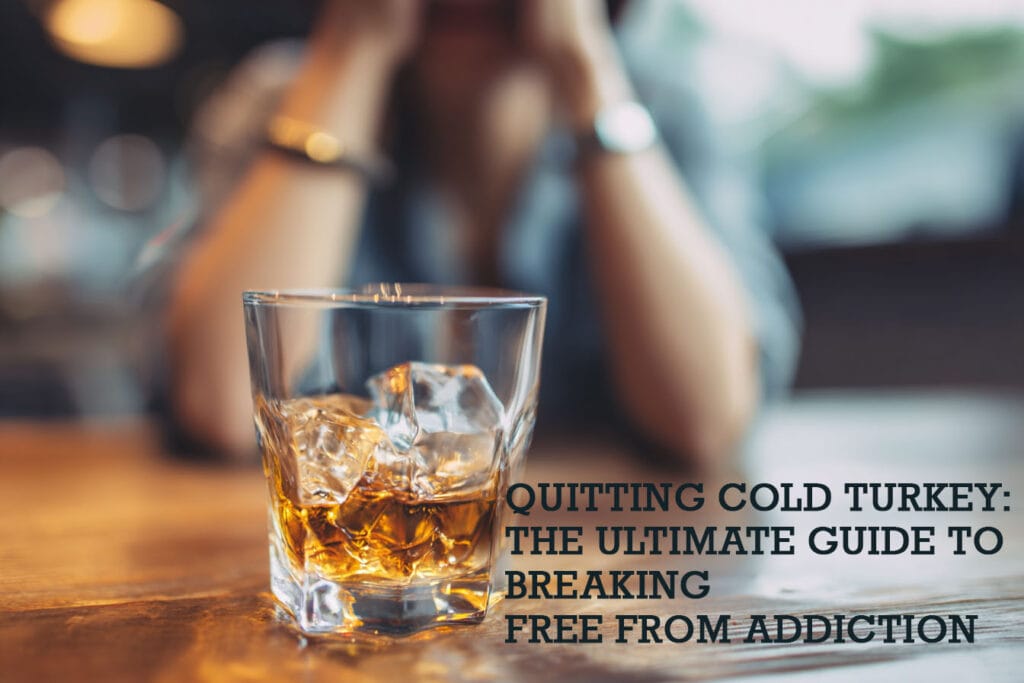
The decision to break free from addiction is one of the most profound and courageous choices a person can make. It is a declaration of intent, a reclaiming of self, and the first step on a challenging yet ultimately rewarding journey towards a new life. Within the landscape of recovery methods, one approach stands out for its brutal simplicity and finality: quitting cold turkey. The phrase itself, thought to originate from the goosebumps and clammy skin that resemble a plucked turkey, evokes a sense of stark, shivering reality. It means stopping, abruptly and completely, without tapering or substitution.
For many, the appeal of this method is undeniable. It represents a clean break, a definitive line drawn in the sand between the past and the future. There is no ambiguity, no “one last time,” just a full and immediate stop. This guide is for anyone contemplating that line. It is not an endorsement of the cold turkey method as a one-size-fits-all solution, because it is not. For some substances, it is incredibly dangerous and potentially fatal without medical supervision.
Instead, this is a comprehensive, honest, and unflinching exploration of what it truly means to quit cold turkey. We will delve into the psychology behind its appeal, the stark realities of withdrawal, the critical importance of preparation, and the strategies needed to navigate not just the initial storm, but the long, quiet days that follow. Before we proceed, a critical disclaimer is necessary:
MEDICAL DISCLAIMER: This article is for informational purposes only and does not constitute medical advice. Abruptly stopping certain substances, particularly alcohol and benzodiazepines, can lead to life-threatening withdrawal symptoms, including seizures and delirium tremens. Always consult with a qualified medical professional, such as a GP or an addiction specialist, before making any changes to your substance use.
Your safety is paramount. With that understood, let’s explore the path of abrupt cessation, a road paved with both immense difficulty and the potential for profound transformation.
What Does “Going Cold Turkey” Truly Involve?
At its core, the cold turkey method is the complete and immediate cessation of an addictive substance. Unlike a tapering approach, where the dosage is gradually reduced over days, weeks, or even months to allow the body and brain to adjust, cold turkey offers no such transition period. It is a physiological and psychological shock to the system. The body, having adapted its chemistry to the constant presence of a substance, is suddenly deprived of it. The resulting rebellion is known as withdrawal.
The Psychology of the Clean Break
Why do so many people gravitate towards such a challenging method? The motivations are often deeply personal and psychological.
A Desire for Finality: For individuals who have struggled with the cycle of failed attempts at moderation or tapering, the cold turkey approach feels definitive. The grey areas are eliminated. The internal debate of “how much?” or “when?” is silenced by the absolute answer of “none” and “never again.” It provides a clear, unambiguous rule to follow.
The “Rip the Plaster Off” Mentality: Many believe that prolonging the process through tapering only prolongs the agony. The idea is to face the worst of the withdrawal head-on, endure it, and get through it as quickly as possible. It is a mindset that favours a short, intense period of suffering over a drawn-out, moderate discomfort.
A Statement of Commitment: For some, choosing the most difficult path is a way of proving their commitment to sobriety, both to themselves and to others. It is a trial by fire, a demonstration of willpower and resolve that can, in itself, be empowering.
Lack of Resources or Knowledge: In some cases, the choice isn’t a choice at all. A person may not have access to medical support, be unaware of tapering protocols, or find themselves in a situation where their substance of choice is suddenly unavailable.
Cold Turkey vs. Tapering: A Tale of Two Paths
To fully appreciate the cold turkey method, it’s useful to contrast it with its primary alternative: tapering.
Tapering (or Weaning): This involves a structured, gradual reduction of the substance. For prescription medications, this is done under strict medical guidance. The goal is to minimise withdrawal symptoms by giving the central nervous system time to re-regulate. It’s a gentler, often safer, but much longer process.
Pros: Significantly reduced withdrawal severity, lower risk of dangerous medical complications (like seizures), allows for psychological adjustment over time.
Cons: Requires immense discipline, the substance remains accessible, which can trigger a full relapse, and the process can be lengthy and emotionally draining.
Cold Turkey: The abrupt stop.
Pros: The withdrawal period, while intense, is generally shorter. It offers a clear psychological break from the substance.
Cons: Withdrawal symptoms are at their maximum intensity. For certain substances, it is medically dangerous. The sheer discomfort leads to an extremely high rate of relapse.
Understanding these two paths is crucial. The cold turkey method is not inherently “better” or “worse,” but it carries a distinct and significantly higher set of risks that must be understood and mitigated. The intensity of the experience is its defining characteristic, and preparing for that intensity is the key to survival.
The Unvarnished Truth: Risks and Realities of Abrupt Cessation
This is the most critical section of this guide. Ignoring the realities of withdrawal is not just naive; it is dangerous. The body’s reaction to the sudden absence of a substance it has become dependent on can range from deeply unpleasant to life-threatening. The experience varies dramatically depending on the substance, the duration and level of use, and individual physiology.
Physical Withdrawal Syndromes: A Substance-by-Substance Breakdown
1. Alcohol and Benzodiazepines (e.g., Valium, Xanax, Klonopin)
This is the most dangerous category for cold turkey cessation. Both substances are central nervous system depressants. The brain compensates for their constant presence by increasing its own excitatory signalling to maintain balance. When the depressant is suddenly removed, the brain becomes dangerously overexcited.
Common Symptoms: Severe anxiety, insomnia, tremors (the “shakes”), nausea, vomiting, sweating, headache, heart palpitations.
Severe/Life-Threatening Symptoms:
Seizures: Grand mal (tonic-clonic) seizures can occur, often within the first 48 hours.
Delirium Tremens (DTs): This is a medical emergency that typically occurs 2-4 days after the last drink. It affects a small percentage of people withdrawing from severe alcohol dependence, but has a significant mortality rate if left untreated. Symptoms include extreme confusion, agitation, fever, tactile and visual hallucinations (e.g., feeling insects crawling on the skin), and cardiovascular collapse.
The Verdict:Never attempt to quit alcohol or benzodiazepines cold turkey without medical supervision. A medically supervised detox, often involving other medications to prevent seizures and manage symptoms, is the only safe way to proceed.
While not typically considered directly life-threatening in healthy individuals, opioid withdrawal is notoriously excruciating. It is often described as the worst flu imaginable, multiplied by a thousand. The sheer misery is a primary driver of relapse.
Common Symptoms:
Intense muscle aches and bone pain
Severe anxiety, agitation, and restlessness (Restless Leg Syndrome is common)
Yawning, runny nose, and watery eyes
Profuse sweating and goosebumps (“cold turkey”)
Nausea, vomiting, and diarrhoea
Stomach cramps
Insomnia that can last for weeks
Dilated pupils and blurred vision
The Danger of Relapse: The primary danger here is indirect. After a period of abstinence, a person’s tolerance to opioids plummets. If they relapse and use their previous dose, they are at an extremely high risk of a fatal overdose.
Stimulant withdrawal is primarily psychological, but no less debilitating. It is often referred to as a “crash.” After prolonged use, the brain’s dopamine and norepinephrine systems are depleted.
Common Symptoms:
Overwhelming Fatigue: A profound lack of energy and the need for long periods of sleep.
Severe Depression: This is the most dangerous symptom. Anhedonia (the inability to feel pleasure) is common, leading to intense feelings of hopelessness and suicidal ideation.
Increased Appetite: A rebound effect after a period of stimulant-induced appetite suppression.
Intense Cravings: Powerful psychological urges to use again to alleviate the depression and fatigue.
Anxiety and Paranoia: Lingering feelings of suspicion and agitation.
The Psychological and Emotional Gauntlet
Beyond the acute physical symptoms lies a deeper, often longer-lasting, psychological battle.
Post-Acute Withdrawal Syndrome (PAWS): This is a crucial concept to understand. After the initial, acute withdrawal phase (the first 1-2 weeks) is over, many people experience PAWS. This is a collection of symptoms that can linger for months, or even up to two years, as the brain’s chemistry slowly heals and returns to normal.
Common PAWS Symptoms Include:
Mood swings and emotional over-reactivity
Anxiety and panic attacks
Low energy and fatigue
Sleep disturbances (insomnia or hypersomnia)
Difficulty with concentration and memory (“brain fog”)
Obsessive-compulsive behaviours
Depression and anhedonia
PAWS symptoms often come in waves, which can be confusing and disheartening. Understanding that this is a normal part of the brain’s healing process is vital to prevent relapse.
The Onslaught of Cravings: Cravings are more than just a passing thought. They can be intense, all-consuming physiological and psychological events. They are often triggered by people, places, emotions, or objects associated with past use (triggers). Learning to identify and manage these triggers without giving in is a core skill of long-term recovery.
Unmasking Underlying Issues: Often, addiction serves as a form of self-medication for underlying mental health conditions like depression, anxiety, or trauma. When the substance is removed, these conditions can return with a vengeance, no longer masked by the drug’s effects. This is why professional therapeutic support is so critical.
Preparing for the Battle: A Strategic Guide to Quitting Cold Turkey
If, after consulting a medical professional and confirming it is a safe option for your specific situation, you still choose the cold turkey path, do not go into it unprepared. Success is rarely a matter of pure willpower; it is a matter of strategy, support, and preparation. Think of it as preparing for a hurricane. You know it’s coming, you know it will be fierce, and your job is to board up the windows, stock up on supplies, and have a plan to ride out the storm.
Step 1: The Non-Negotiable Medical Consultation
We cannot stress this enough. Before you do anything else, book an appointment with your GP or an addiction specialist.
Be Honest: Disclose the substance you use, the amount, the frequency, and the duration of your use. There is no room for shame or downplaying here; your safety depends on their accurate assessment.
Ask Critical Questions: “Is it safe for me to quit this substance cold turkey?” “What are the specific withdrawal symptoms I should expect?” “At what point do my symptoms become a medical emergency?” “Are there any comfort medications you can prescribe to help manage symptoms like nausea or anxiety?”
Create an Emergency Plan: Know who to call and where to go if you experience severe symptoms. Have emergency numbers readily available.
Step 2: Assemble Your Support System
You cannot and should not do this alone. Isolation is the enemy of recovery.
Inform Trusted Friends and Family: Choose one or two people who are reliable, non-judgmental, and supportive. Explain your plan, what to expect, and how they can help. Their role isn’t to be your doctor, but to be your support.
Specific Asks: “Could you check in on me via text a few times a day?” “Could you be on standby if I need to go to the hospital?” “Could you help by dropping off some food?” “Can I call you if I’m struggling with a craving?”
Seek Professional Support:
Therapist or Counsellor: Find a professional who specialises in addiction. They can help you develop coping strategies, address the underlying reasons for your addiction, and navigate the emotional turmoil of PAWS.
Support Groups: Groups like Alcoholics Anonymous (AA), Narcotics Anonymous (NA), Cocaine Anonymous (CA), or secular alternatives like SMART Recovery are invaluable. Connecting with others who understand exactly what you’re going through provides validation, hope, and practical advice. Plan to attend meetings (online or in-person) as soon as you are physically able.
Step 3: Fortify Your Environment
Your home must become a sanctuary for recovery, not a minefield of triggers.
The Purge: This must be ruthless. Remove every single trace of your substance of choice. This includes any paraphernalia, empty bottles or packets, and anything else associated with your use. Check every drawer, cupboard, and hiding place.
Delete and Block: Go through your phone and delete the contact details of any dealers or using-partners. Block their numbers. Erase old messages. This removes the easiest and quickest path to relapse.
Stock the Fortress: The first week will be about survival. You will likely feel too unwell to cook or shop. Prepare in advance.
Hydration: Water is paramount. Also, stock up on electrolyte drinks (like Dioralyte or sports drinks) to replenish what you lose through sweating or vomiting. Herbal teas can be calming.
Nutrition: Focus on simple, easily digestible foods. Soup, bread, crackers, bananas, porridge, and protein shakes are good options.
Comfort Medications: Have over-the-counter medications for pain (paracetamol, ibuprofen), nausea, and diarrhoea ready.
Comfort Items: Gather soft blankets, comfortable clothes, pillows, hot water bottles, and anything else that brings you physical comfort.
Step 4: Plan for the Downtime and the Cravings
In the first few days, you may be too sick to do much. But as you start to feel physically better, a new challenge will emerge: boredom and an overwhelming amount of unstructured time.
Clear Your Schedule: Take time off work if you can. Cancel all social obligations. Your only job for the first 3-7 days is to get through withdrawal.
Create a “Distraction Menu”: Make a list of low-effort activities you can turn to when a craving hits or you feel restless.
Watch comforting films or an entire TV series.
Listen to podcasts or audiobooks.
Play simple video games.
Listen to calming music or guided meditations.
Take a hot bath or shower.
Learn Basic Coping Mechanisms: Practice these before you quit, so they feel more natural when you need them.
Deep Breathing:Inhale slowly for four counts, hold for four counts, and exhale slowly for six counts. This activates the parasympathetic nervous system, which promotes calm.
The 5-4-3-2-1 Grounding Technique: When you feel overwhelmed, name five things you can see, four things you can feel, three things you can hear, two things you can smell, and one thing you can taste. This pulls you out of your head and into the present moment.
Life After Day One: Navigating Long-Term Sobriety
Getting through the acute withdrawal phase is a monumental achievement, but it is the starting line, not the finish line. The cold turkey method gets you sober, but building a life in recovery is what keeps you sober.
Embracing the Marathon Mentality
Recovery is a process of healing and growth that lasts a lifetime. The intense focus of the first week must transition into a sustained, gentle commitment to new habits and routines.
Be Patient with Your Brain: Remember PAWS. Your brain is physically rewiring itself. Some days you will feel fantastic, and other days you will feel anxious and depressed for no apparent reason. This is normal. Track your moods and notice that the good periods will gradually start to outweigh the bad.
Build New Routines: Addiction creates powerful routines and rituals. You must consciously build new, healthy ones to take their place. This could be a morning walk, a daily journaling practice, a regular gym session, or a weekly support group meeting.
Rediscover (or Discover) Hobbies: Addiction consumes an enormous amount of time, energy, and mental space. Now you have a void to fill. Explore activities you once enjoyed or have always wanted to try. Art, music, hiking, volunteering, and learning a new skill—these things provide a sense of purpose and pleasure that isn’t derived from a substance.
Handling Relapse
For many people, a lapse or relapse is a part of the recovery journey. It is crucial how you frame this. A relapse is not a moral failing or proof that you are destined to use forever. It is a sign that something in your recovery plan needs adjusting.
Act Immediately: The most important thing is to stop the relapse from turning into a prolonged return to active addiction. Reach out for help the moment it happens. Call your sponsor, your therapist, or a trusted friend. Tell them what happened.
Analyse, Don’t Agonise: Instead of drowning in guilt and shame, get curious. What was the trigger? What emotional state were you in? What part of your support system did you not use? A relapse can be a powerful learning experience that strengthens your long-term sobriety.
Get Back on Track: Recommit to your recovery plan. Go to a meeting. Talk to a professional. You have not erased all the progress you made.
Conclusion: The First Day of the Rest of Your Life
Quitting an addiction cold turkey is one of the most arduous undertakings a human being can face. It is a raw, visceral confrontation with the physical and psychological chains of dependency. It is a path that demands respect, caution, and, above all, meticulous preparation. It is not the right path for everyone, and for some, it is a dangerously unsafe one.
However, for those who, under medical guidance, choose this route and prepare for the battle ahead, it can be a powerful catalyst for change. The intensity of the experience can forge a profound appreciation for sobriety and a fierce determination to protect it. Getting through the fire of withdrawal proves to you that you are stronger than you ever thought possible.
Recovery is not about becoming the person you were before addiction. It is about becoming someone new—someone who has faced their deepest challenges and emerged with wisdom, resilience, and a genuine capacity for joy. The journey is long, but it begins with a single, brave decision. If you are reading this, you have already contemplated that decision. Now, take the next step. Talk to a doctor. Reach out to a support line. Tell someone you trust. Your new life is not a distant dream; it is waiting for you on the other side of your last dose.
Flick Your Midlife Reset Switch in 7 Days
Stop drifting. Start living. Quit the crap, clear the fog, and get your edge back — starting today.
Thank you! You have joined the 7-Day Restart
One download. Link expires in 7 days. No spam, ever.
It’s Not the Booze or the Sniff: What Are We Really Addicted To?
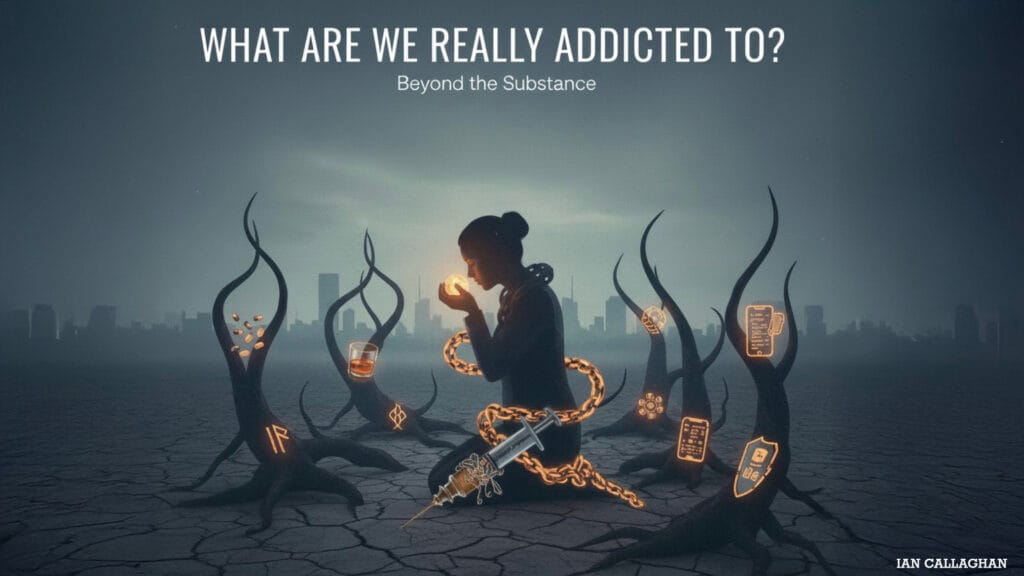
What Are We Really Addicted To? We tend to talk about addiction in terms of substances. We say someone is a “hopeless alcoholic” or “addicted to cocaine”. We focus on the chemical, the bottle, the powder. We meticulously count units of alcohol, track days of sobriety, and vilify the substance as the sole antagonist in our life’s drama. But what if we’ve been focusing on the wrong villain all along?
What if the booze, the sniff, the pill, or the puff is just a prop? A stand-in for the real object of our devotion?
The truth is, for the vast majority of us who develop a problematic relationship with a substance, we are not truly addicted to the ethanol in the wine or the specific molecules in a drug. These are merely the delivery mechanisms. The key that unlocks a door. What we are truly, desperately, and powerfully addicted to is the state change. We are addicted to the feeling of escape. We are addicted to the temporary silence of our inner critic, the fleeting rush of confidence, the blissful numbness that blankets our anxiety, or the momentary illusion of connection in a lonely world.
This isn’t just a philosophical distinction; it’s a fundamental paradigm shift that holds the key to real, lasting freedom. When you stop fighting the substance and start understanding the state you’re trying to achieve, the entire battlefield changes. You transition from a state of white-knuckled deprivation to one of empowered self-discovery.
In this comprehensive guide, we’re going to pull back the curtain. We will explore the intricate neuroscience that drives our cravings, delve into the emotional voids we’re trying to fill, and unpack the psychological patterns that keep us trapped. By understanding what you are really addicted to, you can finally begin to address the root cause, not just the symptom.
The Neuroscience of “Wanting”: Unravelling the Dopamine Deception
To understand the core of addiction, we must first venture into the complex and fascinating landscape of the human brain. The central character in this neurological drama is a neurotransmitter you’ve almost certainly heard of: dopamine. For decades, dopamine was popularly misunderstood as the “pleasure chemical”. We believed that when we did something enjoyable, our brain released dopamine, and that was the feeling of pleasure itself. This is a crucial, and misleading, oversimplification.
Modern neuroscience has revealed that dopamine’s primary role is not about pleasure or “liking” something at all. Its role is about motivation, anticipation, and wanting. It is the chemical of desire. It’s the neurobiological engine that drives you to seek out rewards, to move towards things the brain predicts will be beneficial for survival—be it food, sex, or, in the modern world, the perceived relief offered by a substance.
This system is centred in an ancient part of our brain known as the mesolimbic pathway, often called the “reward pathway”. It connects the Ventral Tegmental Area (VTA), where dopamine is produced, to the Nucleus Accumbens (the motivation hub) and the Prefrontal Cortex (our centre for planning and decision-making).
Here’s how it works in a natural context:
Cue: You’re hungry and you see an advert for a delicious-looking pizza.
Dopamine Spike: Your VTA releases a squirt of dopamine. This isn’t the pleasure of eating the pizza; it’s the motivational urge that says, “Go get that! It will be good for you!”
Action: This dopamine spike motivates you to pick up the phone and order the pizza.
Reward: You eat the pizza. Your brain releases other chemicals, like opioids and endocannabinoids, which are responsible for the feeling of pleasure and satisfaction (the “liking”).
Learning: Your brain learns that the cue (advert) led to a reward (tasty food). The dopamine system has done its job successfully.
Now, let’s see what happens when we introduce a substance like alcohol. Alcohol and other drugs are biochemical sledgehammers. They hijack this delicate, evolutionarily-honed system. They don’t just cause a normal release of dopamine; they flood the brain with it, two to ten times the amount released from natural rewards.
This massive, artificial flood does two catastrophic things:
It creates a Powerful Memory: The brain’s learning system goes into overdrive. It forges an incredibly strong, almost unbreakable connection between the substance and the feeling of immense reward. The Prefrontal Cortex logs this as a top-priority survival strategy. Feeling stressed? Anxious? Bored? I know what to do! That drink gave us a massive dopamine hit last time. Let’s do that again. The “wanting” becomes pathologically intense.
It Desensitises the System: The brain is a master of adaptation. If it’s constantly flooded with unnatural levels of dopamine, it tries to protect itself by reducing the number of dopamine receptors. It’s like turning down the volume on a speaker that’s blasting too loudly. This is what leads to tolerance; you need more of the substance to get the same effect.
Worse still, this down-regulation of receptors lowers your “dopamine baseline”. The things that used to bring you joy and motivation—a walk in the park, a good conversation, a satisfying meal—no longer produce enough of a dopamine signal to register. Life in between doses becomes flat, grey, and uninteresting. You’re left in a state of anhedonia, the inability to feel pleasure from normal activities. At this point, you’re not even drinking to feel good anymore. You’re drinking just to feel normal, to escape the deep discomfort of a dopamine-deficient state that the substance itself created.
You are now trapped. You are addicted to the anticipation, the motivation, the wanting of the substance, a wanting that is now amplified to an obsessive degree, while the actual “liking” or pleasure you get from it diminishes over time.
If we’re addicted to a state driven by a hijacked dopamine system, the logical solution is to find healthy, sustainable ways to modulate that system ourselves. This is where practices like cold water immersion come in.
Pioneering research, such as a study from Prague’s Charles University, has shown that immersing oneself in cold water (around 14°C) can cause a prolonged and significant increase in dopamine levels. The study found that dopamine concentrations increased by a staggering 250% from the baseline.
What’s crucial here is the nature of this increase. Unlike the sharp, artificial spike and subsequent crash from alcohol, the dopamine increase from cold water is gradual and, most importantly, sustained. It elevates your baseline for hours afterwards, promoting alertness, focus, and an improved mood without the damaging consequences of substance use.
By deliberately engaging in an activity like a cold shower or a cold plunge, you are:
Actively taking control of your neurochemistry.
Teaching your brain to tolerate discomfort for a future reward.
Naturally and healthily increasing dopamine levels.
Building mental resilience and proving to yourself that you can change your state without an external substance.
This isn’t about replacing one addiction with another. It’s about learning the language of your own brain and using natural, powerful tools to give it what it needs to thrive.
The Emotional Escape Hatch: Why We Crave Numbness and Altered States
Neuroscience tells us how the engine of addiction works, but it doesn’t fully explain why we turn the key in the ignition in the first place. For that, we need to look at our emotions. Humans are fundamentally wired to do two things: avoid pain and seek pleasure. When our emotional “pain” becomes chronic or overwhelming, our primal brain will seek the most effective, fastest-acting solution it knows.
For many, alcohol and drugs become the ultimate emotional escape hatch. Think about what that first drink really does.
For the socially anxious person: It’s not about the taste of the beer; it’s about the blessed, liquid confidence that dissolves their awkwardness and allows them to connect. They are addicted to feeling uninhibited.
For the overworked professional: It’s not the complex notes of the vintage red; it’s the “off switch” for a brain that won’t stop whirring with deadlines and responsibilities. They are addicted to mental silence.
For the grieving individual: It’s not the burn of the whiskey; it’s the temporary anaesthetic for a heart that aches with unbearable loss. They are addicted to numbness.
For the terminally bored or unfulfilled person: It’s not the cocktail; it’s the injection of colour and excitement into a life that feels monochrome and meaningless. They are addicted to stimulation.
In every case, the substance is a tool. It’s a remarkably effective, albeit deeply flawed, strategy for emotional regulation. When we lack the internal skills to sit with, process, and manage difficult emotions like loneliness, shame, fear, or resentment, a chemical solution seems like a miracle. It provides immediate, predictable relief. The problem is that this “solution” is like paying a loan shark. The short-term relief comes at the cost of devastating long-term interest.
The substance doesn’t resolve the underlying emotion; it just postpones it. It shoves the feeling into a closet, but the feeling doesn’t disappear. It festers. It grows stronger in the dark. The next time it emerges, it’s even more formidable, requiring an even larger dose to be suppressed. This creates a vicious cycle:
You feel an uncomfortable emotion (e.g., anxiety).
You use a substance to numb or escape the emotion.
The substance provides temporary relief.
The substance wears off, and the original emotion returns, often amplified by feelings of shame, guilt, or the physiological effects of a hangover.
The amplified negative emotion creates an even stronger urge to use the substance again for relief.
The addiction, therefore, is not to the substance. It’s an addiction to a dysfunctional coping mechanism. We are addicted to not feeling what we’re feeling. The real work of recovery isn’t just about removing the substance; it’s about developing the emotional literacy and resilience to handle life on life’s terms. It’s about learning to open that closet door, look at what’s inside without flinching, and develop healthy strategies to process and integrate those emotions, rather than running from them.
The Power of the Pattern: How NLP Exposes Our Addictive Loops
If neuroscience explains the “how” and our emotions explain the “why”, then Neuro-Linguistic Programming (NLP) provides a powerful framework for understanding the “what”—the specific, automated patterns of thought and behaviour that constitute the addiction itself.
NLP is, at its core, a study of subjective experience. It explores how we use language (Linguistic), our nervous system (Neuro), and our ingrained strategies (Programming) to create our reality. From an NLP perspective, addiction isn’t a moral failing or a disease in the traditional sense; it’s a highly effective, deeply learned, and automated programme running in our subconscious mind.
Let’s break down this “addiction programme” using a key NLP concept: the strategy, or loop. Every one of our behaviours, from tying our shoelaces to pouring a drink, follows a specific sequence of internal and external steps. A typical drinking strategy might look like this:
Trigger (The Anchor): This is the cue that kicks off the programme. It can be external or internal.
External: The time on the clock (5 PM), walking past a specific pub, the sound of a can opening, seeing friends drink.
Internal: A feeling of stress, a thought like “I’ve had a hard day, I deserve this,” a memory of a bad meeting. In NLP, these triggers are called “anchors”—a stimulus that becomes neurologically linked to a specific emotional state or response. Over time, the sight of a wine bottle doesn’t just represent wine; it’s a powerful anchor for the entire state of anticipated relief.
Internal Processing (The “Programme”): Once triggered, the mind runs a rapid, often subconscious sequence of thoughts and visualisations. You might picture the drink, imagine the feeling of the first sip, and recall the sense of relaxation that follows. You run a mental movie of the desired outcome. This fires up the dopamine system we discussed earlier, creating that powerful “wanting”.
The Behaviour: This internal processing leads directly to the physical action: walking to the fridge, pouring the drink, and taking the first sip. By this point, the programme is running on autopilot. Conscious willpower often stands little chance against such a deeply grooved neural pathway.
The Outcome (The “Pay-off”): The behaviour achieves its intended short-term goal—the state change. The anxiety lessens, the stress seems to melt away, the inner critic goes quiet. This “reward” reinforces the entire loop, making it even more likely to run the next time the trigger appears.
We run this loop hundreds, even thousands, of times. Each repetition strengthens the neural connections, making the programme more efficient, faster, and more automatic. Eventually, it becomes as unconscious as breathing. You’re not choosing to drink; you’re simply running the most well-rehearsed programme you have for dealing with a specific trigger.
This is where the power of NLP comes into play. If addiction is a programme, then it can be de-bugged and rewritten. NLP provides tools to:
Interrupt the Pattern: The first step is to become aware of the loop as it’s happening. By consciously identifying the trigger, the internal thoughts, and the feeling that leads to the action, you can insert a “pattern interrupt”. This could be something as simple as snapping an elastic band on your wrist, changing your physical state (e.g., doing ten press-ups), or asking yourself a powerful question like, “What do I really need right now?”
Collapse Anchors: NLP techniques can be used to “de-link” a trigger from its automatic response. By repeatedly associating a powerful negative feeling with the old trigger (e.g., the smell of stale beer) and linking a powerful positive feeling to a new, healthy behaviour, you can effectively scramble the old programme.
Reframe the Meaning: The thought “I deserve a drink” can be reframed to “I deserve to feel genuine peace” or “I deserve to wake up tomorrow feeling clear and proud.” By changing the language we use, we change the meaning we assign, which in turn changes our emotional response.
Understanding your addiction through the lens of NLP is incredibly empowering. It moves you out of the role of a powerless victim and into the role of a programmer who can access the source code of their own mind and write a new, more resourceful programme for living.
Reclaiming Your State: Building a Life You Don’t Need to Escape From
Understanding the neuroscience, the emotional drivers, and the psychological patterns is the critical first half of the journey. The second half is about action. It’s about consciously and deliberately building a life that is so engaging, fulfilling, and emotionally robust that the old escape hatch becomes redundant.
The goal isn’t just to stop a destructive behaviour. It’s time to start building a suite of positive, healthy, and effective ways to manage your state. It’s about cultivating a life you don’t feel the need to numb yourself from. This is a creative, proactive process, not a restrictive, defensive one.
Here are the pillars of building that new life:
Master Your Neurochemistry (The Healthy Way): Instead of outsourcing your dopamine regulation to a bottle, take control of yourself.
Cold Water Immersion: As discussed, this is a powerful, free, and immediate way to boost your dopamine baseline. Start with 30 seconds at the end of your shower and build from there.
Sunlight Exposure: Getting natural sunlight in your eyes first thing in the morning helps to set your circadian rhythm and triggers a healthy release of dopamine and cortisol, promoting wakefulness and focus.
Exercise: Physical movement is perhaps the single most effective state-changer available. It releases a cocktail of beneficial neurochemicals, including endorphins (natural painkillers), endocannabinoids (which produce feelings of bliss), and, of course, dopamine.
Nutrition: A diet low in processed sugar and high in tyrosine-rich foods (like almonds, bananas, and avocados) provides your brain with the raw materials it needs to produce its own dopamine.
Develop Emotional Sobriety: This means learning to sit with your feelings without needing to immediately fix or numb them.
Mindfulness and Meditation: These practices train your ability to observe your thoughts and emotions without getting swept away by them. You learn that feelings are transient visitors; you don’t have to serve them a drink.
Breathwork: Simple box breathing (inhale for 4, hold for 4, exhale for 4, hold for 4) can instantly activate your parasympathetic nervous system, calming anxiety and pulling you out of a reactive state.
Journaling: Externalising your thoughts and feelings onto a page can rob them of their power. It helps you to identify the patterns and triggers you might otherwise miss.
Rewrite Your Programmes with New Anchors: Deliberately create new, positive loops to replace the old, destructive ones.
If your old trigger was 5 PM on a Friday, make that the anchor for a new ritual: a gym session, a walk in nature, calling a supportive friend, or dedicating an hour to a passion project.
Build a “state change toolkit”. When you feel stress (the trigger), instead of running the “drink” programme, run the “10-minute walk” programme, the “listen to my power playlist” programme, or the “cold shower” programme.
Find Meaning and Connection: Often, the void we fill with substances is one of purpose and connection.
Pursue a Challenge: Learn a new skill, take up a difficult hobby, or train for a physical event. Purpose and progress are powerful antidotes to apathy.
Cultivate Genuine Connection: Move beyond superficial relationships. Invest time in people who see and support the real you. Human connection releases oxytocin, the “bonding hormone,” which directly counteracts feelings of stress and loneliness.
Building this new life is the ultimate act of recovery. It reframes sobriety not as an ending, but as a beginning. It’s the start of a conscious, intentional, and deeply rewarding relationship with yourself and the world around you.
Beyond Sobriety: The Real Liberation
Let’s return to our central premise: you are not addicted to the booze or the sniff. You are addicted to the feeling of relief from a state of discomfort.
The substance was simply the most effective tool you had at the time to change your state from anxious to calm, from insecure to confident, from bored to engaged. True, lasting freedom comes not from simply throwing that tool away and white-knuckling your way through the discomfort. It comes from building a whole new toolbox, filled with sharper, more effective, and more sustainable tools that don’t burn your life down as a side effect.
It’s about understanding that your brain’s dopamine system can be worked with, not just fought against. It’s about accepting that difficult emotions are a part of the human experience and learning to navigate them with skill and compassion. It’s about recognising the automated patterns that have been running your life and consciously writing new ones that serve the person you want to become.
This journey, particularly in midlife, is not just about giving something up. It’s about gaining everything: clarity, energy, self-respect, authentic connection, and a profound sense of purpose. It’s about building a life so vibrant and engaging that the thought of numbing it seems utterly absurd.
If this deep dive into the ‘why’ behind our habits resonates with you, and you’re ready to move beyond simply ‘not drinking’ and start actively designing a life you don’t need to escape from, then this is just the beginning. For a practical, step-by-step guide to navigating this transformation, especially during the unique challenges and opportunities of midlife, I invite you to explore my eBook.
Used to monitor number of Google Analytics server requests when using Google Tag Manager
1 minute
_gid
ID used to identify users for 24 hours after last activity
24 hours
_ga_
ID used to identify users
2 years
_gali
Used by Google Analytics to determine which links on a page are being clicked
30 seconds
_ga
ID used to identify users
2 years
__utmx
Used to determine whether a user is included in an A / B or Multivariate test.
18 months
__utmv
Contains custom information set by the web developer via the _setCustomVar method in Google Analytics. This cookie is updated every time new data is sent to the Google Analytics server.
2 years after last activity
__utmz
Contains information about the traffic source or campaign that directed user to the website. The cookie is set when the GA.js javascript is loaded and updated when data is sent to the Google Anaytics server
6 months after last activity
__utmc
Used only with old Urchin versions of Google Analytics and not with GA.js. Was used to distinguish between new sessions and visits at the end of a session.
End of session (browser)
__utmb
Used to distinguish new sessions and visits. This cookie is set when the GA.js javascript library is loaded and there is no existing __utmb cookie. The cookie is updated every time data is sent to the Google Analytics server.
30 minutes after last activity
__utmt
Used to monitor number of Google Analytics server requests
10 minutes
__utma
ID used to identify users and sessions
2 years after last activity
_gac_
Contains information related to marketing campaigns of the user. These are shared with Google AdWords / Google Ads when the Google Ads and Google Analytics accounts are linked together.