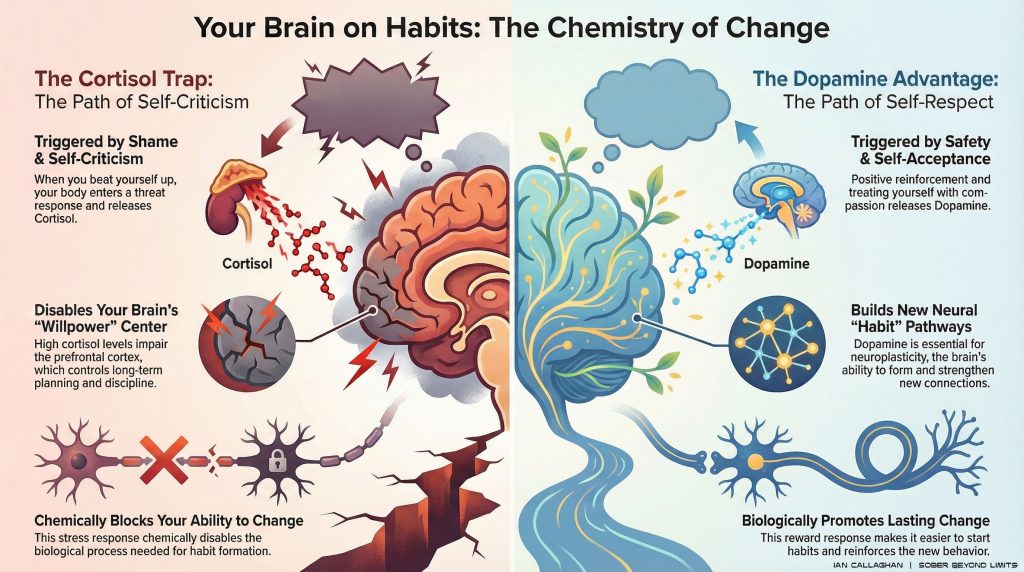
Cortisol vs dopamine similarities and differences form the foundational chemical architecture of human behaviour, dictating everything from our response to danger to our pursuit of pleasure. While Cortisol acts as the body’s primary stress hormone produced in the adrenal glands, Dopamine functions as the key neurotransmitter for reward and motivation within the brain.
Understanding the intricate balance between these two chemical messengers is critical for optimising mental health, managing stress, and enhancing cognitive performance. This comprehensive analysis explores their biological mechanisms, physiological impacts, and how to maintain equilibrium.
At a Glance: The Core Cortisol vs dopamine similarities and differences
The Short Answer: The primary difference between cortisol and dopamine lies in their biological classification and function. Cortisol is a steroid hormone that manages the body’s “fight or flight” stress response and metabolism. Dopamine is a neurotransmitter that drives the brain’s reward system and motivation. While they often work together during acute stress, chronic high cortisol can deplete dopamine, leading to burnout.
What is Cortisol? The Body’s Alarm System
Cortisol is a steroid hormone belonging to the glucocorticoid class, primarily responsible for the body’s stress response and metabolism regulation. According to the Society for Endocrinology, it serves as a vital survival mechanism, mobilising energy by increasing glucose in the bloodstream and curbing functions that would be non-essential in a fight-or-flight scenario.
The HPA Axis and Production
Cortisol is produced in the cortex of the adrenal glands, which sit atop the kidneys. Its release is controlled by the Hypothalamic-Pituitary-Adrenal (HPA) axis—a complex set of direct influences and feedback interactions among three components:
- The Hypothalamus
- The Pituitary Gland
- The Adrenal Glands
When the brain perceives a threat, the hypothalamus releases CRH (Corticotropin-Releasing Hormone). This signals the pituitary gland to secrete ACTH, which stimulates the adrenals to flood the system with cortisol.
Primary Functions of Cortisol
While commonly demonised as the “stress chemical,” cortisol is essential for life. Its influence extends far beyond panic:
- Glucose Metabolism: Stimulates gluconeogenesis (creating glucose) in the liver to provide rapid energy.
- Anti-inflammatory Action: In acute bursts, it suppresses the immune system to lower inflammation.
- Circadian Rhythm: Levels naturally peak in the morning (Cortisol Awakening Response) to help you wake up and drop at night to facilitate sleep.
What is Dopamine? The Molecule of More
Dopamine is a catecholamine neurotransmitter and hormone that plays a central role in the brain’s reward system, motor control, and executive function. Neurobiological research indicates that dopamine does not merely produce pleasure; it creates the anticipation of reward, driving motivation and goal-directed behaviour.
Synthesis and Pathways
Unlike cortisol, dopamine is primarily synthesised in the brain, specifically in the substantia nigra and the ventral tegmental area (VTA). It is derived from the amino acid tyrosine. Dopamine travels along distinct pathways:
- Mesolimbic Pathway: Regulates reward and emotion.
- Nigrostriatal Pathway: Critical for motor planning and movement.
- Mesocortical Pathway: Involved in executive function and decision making.
Primary Functions of Dopamine
Dopamine acts as a chemical messenger between neurons. It is the driving force behind “seeking” behaviours.
- Motivation: Reinforces behaviours that aid survival (eating, reproduction).
- Motor Control: Ensures smooth, coordinated muscle movements.
- Cognitive Function: Supports working memory, focus, and problem-solving.
Cortisol vs Dopamine: Similarities and Differences
The primary difference involves classification and origin: Cortisol is a steroid hormone from the adrenal glands, while dopamine is a neurotransmitter from the brain. However, their similarities are equally significant, particularly in how they prepare the body for action.
Table 1: Cortisol vs Dopamine Comparison
| Feature | Cortisol | Dopamine |
| Primary Classification | Steroid Hormone (Glucocorticoid) | Neurotransmitter (Catecholamine) |
| Primary Origin | Adrenal Cortex (Kidneys) | Substantia nigra & VTA (Brain) |
| Main Function | Stress response, metabolism, inflammation | Reward, motivation, motor control |
| Precursor | Cholesterol | Tyrosine (Amino Acid) |
| Timescale | Slower acting, longer duration (minutes/hours) | Fast acting, rapid clearance (milliseconds/seconds) |
| Receptors | Glucocorticoid receptors (found in almost every cell) | Dopamine receptors (D1–D5) in the nervous system |
| Effect on Heart Rate | Increases (via sensitivity to adrenaline) | Increases (at high doses) |
Key Differences in Mechanism
- Chemical Structure and Synthesis: Cortisol is lipid-soluble and is synthesised from cholesterol. Because it is a steroid, it can pass through cell membranes to bind with receptors inside the cell nucleus, altering gene expression. This process takes time, explaining why stress effects can linger. Dopamine cannot cross the blood-brain barrier easily. It binds to receptors on the surface of neurons, triggering rapid electrical signals. This allows for instantaneous reactions, such as catching a falling object.
- The Physiological Directive: Cortisol is catabolic, meaning it breaks down tissues (like muscle and fat) to release energy. It prioritises immediate survival over long-term maintenance. Dopamine is distinctively motivational. It does not provide the fuel (glucose) like cortisol; instead, it provides the psychological impetus to expend that energy toward a specific goal.
Key Similarities in Function
- Survival Orientation: Both chemicals are evolutionarily designed to keep you alive. Cortisol prepares the body to survive a physical threat, while dopamine drives the organism to seek resources required for survival.
- Effect on Arousal and Alertness: Both substances heighten arousal. Cortisol sharpens senses and increases blood pressure, while dopamine increases mental alertness and focus, narrowing attention onto the object of desire or threat.
- Interaction with Adrenaline: Both interact closely with epinephrine (adrenaline). Cortisol increases the body’s sensitivity to adrenaline, while dopamine is actually a chemical precursor to norepinephrine and epinephrine.
The Interplay: How They Work Together
Cortisol and dopamine share an inverse relationship in chronic conditions, but they rise together during acute stress. This complex dynamic is crucial for understanding Cortisol vs dopamine similarities and differences in real-world contexts like workplace stress or athletic performance.
The Acute Stress Response
In the initial moments of a stressful event (e.g., a car swerving towards you), the brain releases dopamine alongside stress hormones. According to studies in The Journal of Neuroscience, this initial spike in dopamine helps the brain assess the threat and determine an escape route. Simultaneously, cortisol levels rise to mobilise the glucose needed for the muscles to react. In this acute phase, they work in concert to ensure safety.
The Chronic Stress Paradox (The Inverse Relationship)
Long-term exposure to high cortisol is toxic to the dopamine system. This is a critical mechanism in the development of depression and burnout.
- Receptor Downregulation: Chronic high cortisol damages dopamine receptors (specifically D2 receptors).
- Enzyme Alteration: High glucocorticoids can alter the enzymes that break down dopamine, leading to lower baseline levels.
- Anhedonia: As cortisol suppresses dopamine function, the ability to feel pleasure or motivation diminishes.
Symptoms of Imbalance
Imbalances in these chemicals manifest distinctively, yet both lead to significant cognitive and physical decline. Recognising these symptoms is the first step toward clinical or lifestyle intervention.
High Cortisol Symptoms (Hypercortisolism)
When the “off switch” for the stress response fails, the body remains in a constant catabolic state.
- Physical: Rapid weight gain (especially in the face and abdomen), thinning skin, slow wound healing.
- Mental: Anxiety, irritability, and “tired but wired” insomnia.
- Systemic: High blood pressure and weakened immune response.
Low Dopamine Symptoms
A deficiency in the reward system strips away the “spark” of daily life.
- Physical: Muscle tremors, stiffness, balance issues, and fatigue.
- Mental: Lack of motivation, procrastination, low libido, and inability to focus.
- Emotional: Feelings of hopelessness and a flat emotional affect.
Table 2: Comparative Symptoms of Dysregulation
| Symptom Domain | High Cortisol | Low Dopamine |
| Sleep | Difficulty falling asleep (insomnia), night waking | Excessive sleeping (hypersomnia), trouble waking up |
| Weight | Weight gain (abdominal/visceral fat) | Weight changes due to appetite loss or binge eating |
| Mood | High anxiety, panic, irritability | Apathy, depression, lack of enthusiasm |
| Cognition | Brain fog, poor short-term memory | Poor concentration, inability to finish tasks |
| Cravings | Salty and sweet foods (energy density) | Sugar, caffeine, and stimulants (quick hits) |
Clinical Perspectives and Disorders
Medical conditions arising from the malfunction of these chemicals highlight the severity of the Cortisol vs dopamine distinction.
Cortisol-Related Disorders
- Cushing’s Syndrome: Arises from prolonged exposure to high cortisol levels (often from medication or tumours). Markers include a fatty hump between the shoulders and a rounded face.
- Addison’s Disease: Adrenal insufficiency where glands produce too little cortisol. This leads to life-threatening low blood pressure and severe fatigue.
Dopamine-Related Disorders
- Parkinson’s Disease: A neurodegenerative disorder caused by the death of dopamine-producing neurons, leading to tremors and rigidity.
- Schizophrenia: Often associated with an overactivity of dopamine in certain brain regions, leading to hallucinations.
Optimising Your Levels: Natural Interventions
Regulation can often be achieved through targeted lifestyle changes known as “biohacking.”
Lowering Cortisol Naturally
- Phosphatidylserine Supplementation: This phospholipid helps blunt the cortisol response to exercise and mental stress.
- Low-Intensity Steady State (LISS) Cardio: While High-Intensity Interval Training (HIIT) spikes cortisol, walking or slow cycling reduces it. A 20-minute walk in nature has been shown to lower salivary cortisol by over 10%.
- Strict Sleep Hygiene: Cortisol should be lowest at midnight. Blue light exposure prevents this drop, so avoiding screens 60 minutes before bed is mandatory.
Boosting Dopamine Naturally
- Tyrosine-Rich Diet: Consuming foods high in Tyrosine (the precursor to dopamine) helps the brain synthesise the neurotransmitter. Sources include eggs, almonds, chicken, avocados, and bananas.
- Cold Water Immersion: According to the European Journal of Applied Physiology, immersion in cold water (14°C) can increase dopamine levels by 250%, with effects lasting for hours.
- The “Small Wins” Strategy: Dopamine is released upon goal completion. Breaking large tasks into micro-tasks creates a continuous feedback loop of dopamine release.
The Impact on Executive Function and Productivity
The Yerkes-Dodson Law suggests that performance increases with physiological or mental arousal (stress), but only up to a point.
- Optimal Zone: Moderate cortisol creates urgency, while moderate dopamine provides interest.
- The Crash: When cortisol exceeds the threshold, anxiety sets in. This floods the prefrontal cortex, shutting down executive function. Simultaneously, the brain may seek “cheap dopamine” (scrolling social media) to counteract the stress, leading to procrastination loops.
Frequently Asked Questions (FAQ)
What is the main difference between cortisol and dopamine?
The main difference lies in their biological classification and origin. Cortisol is a steroid hormone produced by the adrenal glands that manages stress and metabolism. Dopamine is a neurotransmitter produced in the brain that regulates reward, motivation, and motor control.
Can high cortisol cause low dopamine?
Yes, there is a strong link between high cortisol and low dopamine. Chronic stress (high cortisol) can downregulate dopamine receptors and alter the enzymes required to produce dopamine, leading to symptoms of depression and anhedonia (inability to feel pleasure).
Do cortisol and dopamine work together?
Yes, they work together during acute stress. When you face immediate danger, the body releases both cortisol (for energy) and dopamine (for alertness and quick decision-making). However, prolonged simultaneous elevation is harmful to the body.
How can I test my cortisol and dopamine levels?
Cortisol is typically tested via blood, saliva, or urine samples, often measuring the “cortisol curve” throughout the day. Dopamine is harder to measure directly in the brain; doctors usually rely on symptom assessment or measure homovanillic acid (a dopamine metabolite) in urine.
Which foods increase dopamine and lower cortisol?
To increase dopamine, eat tyrosine-rich foods like eggs, almonds, dairy, and lean meats. To help lower cortisol, focus on foods rich in magnesium (spinach, pumpkin seeds) and Omega-3 fatty acids (salmon, walnuts), and avoid excessive caffeine and sugar.
What are the symptoms of high cortisol and low dopamine combined?
This combination typically results in “tired but wired” burnout. Symptoms include anxiety coupled with a lack of motivation, insomnia despite exhaustion, weight gain around the midsection, and a general feeling of hopelessness or flatness.
Ready to build that foundation? Stop guessing and start planning with self-respect. Download the Year Review Workbook to structure your growth without the guilt.

Year review workbook
A powerful Year Review Workbook for personal growth and life direction. Reflect on your year, identify what held you back, release what no longer fits, and build a plan for the future based on clarity and action, not resolutions. Printable digital workbook.