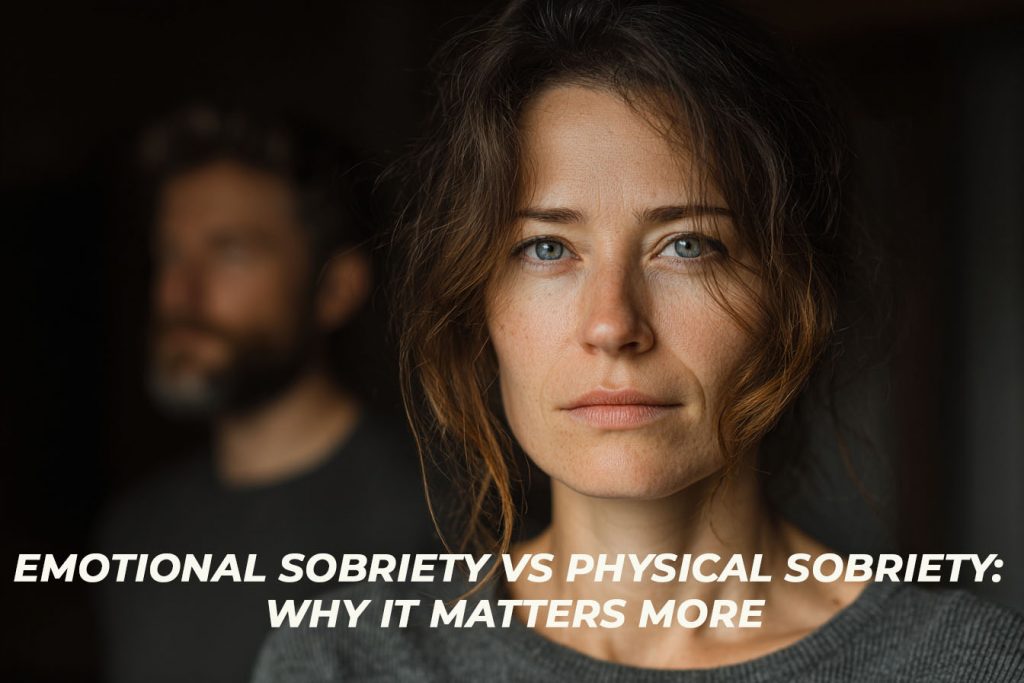
Most people think sobriety ends the moment you put the bottle down. Job done. Life sorted. But anyone who has lived it knows the truth. Physical sobriety clears the body, emotional sobriety clears the mind. One stops you from drinking, the other stops you wanting to.
This post breaks down the difference between emotional sobriety vs physical sobriety and why the second one matters more for long‑term peace, healing and freedom.
If you’re alcohol‑free but still anxious, restless, irritable or lost, this is why.
Emotional Sobriety vs Physical Sobriety – What Do They Actually Mean?
What is Physical Sobriety?
Physical sobriety is biological. It’s the moment the substance leaves your system. No alcohol in the blood. No toxins are being topped up. The body starts repairing itself.
Early changes include:
- Improved liver function
- Better sleep quality
- Reduced inflammation
- Clearer skin and eyes
- Stabilising blood pressure and heart rate
This stage is measurable. You can count days, weeks, and months. It’s binary – using or not using.
But physical sobriety alone does not fix the reasons you drank.
What is Emotional Sobriety?
Emotional sobriety is the ability to regulate your internal world without needing to escape it. It’s about being able to feel without numbing, cope without running, and respond rather than react.
Signs of emotional sobriety include:
- You can sit with discomfort rather than avoid it
- You no longer need chaos to feel normal
- You handle emotions instead of burying them
- You take responsibility rather than blame
- Bad days don’t trigger self‑destruction
Physical sobriety stops the drinking. Emotional sobriety stops the suffering.
Why Physical Sobriety Alone Isn’t Enough
You can quit booze and still be angry. Still be resentful. Still be on edge. Still be miserable.
Many people get clean, but life still feels flat or overwhelming. They expected happiness to arrive when the alcohol left, but the feelings they’d avoided for years came roaring back instead.
This is where emotional sobriety steps in.
Physical sobriety removes the behaviour. Emotional sobriety rewires the brain.
The Science Behind It
When you stop drinking, the body begins detoxification. Neurotransmitters like dopamine, GABA and glutamate start rebalancing. This can take weeks to months, depending on history and level of use.
Useful reference for neurobiology of addiction recovery: National Institute on Drug Abuse (NIDA) https://nida.nih.gov/publications/drugs-brains-behavior-science-addiction
But emotional regulation, emotional memory and trauma processing sit deeper. They live in the limbic system, the nervous system and past experiences.
You can heal the body quickly. The mind takes longer.
Physical Sobriety vs Emotional Sobriety – Key Differences
| Physical Sobriety | Emotional Sobriety |
|---|---|
| Stops drinking | Stops needing to drink |
| Biological detox | Emotional regulation |
| Short‑term foundation | Long‑term freedom |
| Measurable (days sober) | Variable (daily practice) |
| Removes the substance | Heals the reason behind the substance |
Emotional Sobriety and The “Dry Drunk” Trap
You can be sober and still think like an addict.
This looks like:
- Irritable behaviour
- Self‑pity
- Blame and resentment
- Jealousy and comparison
- Constant discomfort in your own skin
A physically sober person can still be emotionally intoxicated.
Your body is dry, but your brain is still drinking.
Why People Relapse After Months Sober
Most relapses don’t happen because someone misses the taste of lager. They happen because stress hits, emotions rise, and the old coping strategy kicks in.
No one relapses because they want alcohol. They relapse because they want relief.
That’s the gap emotional sobriety fills.
How to Build Emotional Sobriety (Actionable Steps)
This is a skill, not a switch. Here’s how to train it.
1. Mindfulness & Nervous System Work
Learn to pause between feeling and reacting. Breathwork, meditation, cold water exposure and grounding practices help regulate the nervous system.
2. Journaling
Write your internal state daily. It reveals patterns you can’t see while thinking.
3. Purpose & Identity Work
Sobriety gives you time back. Purpose gives that time meaning. When your life gets bigger, alcohol gets smaller.
4. Community & Support Networks
Not a requirement, but the connection accelerates recovery. We heal faster when witnessed.
5. Trauma & Emotional Root Cause Work
As Gabor Maté says, “Don’t ask why addiction, ask why the pain.” https://drgabormate.com/the-power-of-addiction-and-the-addiction-of-power/
Physical sobriety stops the bleeding. Emotional sobriety heals the wound.
My Personal Journey
I went 45 years drinking. I know what white‑knuckling feels like. I know what waking up riddled with anxiety, guilt and shame feels like, too. Nearly a year sober, I discovered something bigger:
Not drinking is the first victory. Learning to live without wanting it is the real one.
That shift came from emotional work – breathwork, cold water, visualisation, meditation, daily habits, purpose and identity change.
Internal Resource for Readers
If you want practical tools to build emotional sobriety, I wrote the guide I wish I had:
👉 Rewire The Mind — the manual that helped me finally break the cycle instead of just stopping drinking. https://iancallaghan.co.uk/rewire-the-mind/
Key Takeaways
- Physical sobriety clears the body. Emotional sobriety frees the mind.
- You can quit alcohol but still think like a drinker.
- Emotional sobriety is the difference between abstinence and peace.
- Physical sobriety is short‑term. Emotional sobriety is lifelong.
- Tools work — breathwork, journaling, meditation, purpose and emotional processing.
Final Word
Stopping drinking saves your life. Emotional sobriety makes life worth living.
If you feel restless or frustrated in sobriety, nothing is wrong with you. You’re just stepping into the deeper layer of recovery.
You don’t just get sober. You grow into someone who no longer needs to escape themselves.
That is freedom.