You are doing everything right. You are eating the same foods that kept you lean in your thirties. You are running the same routes, attending the same spin classes, and managing a workload that would crush a younger professional. Yet, the scales are creeping upward, your energy is plummeting, and the fat accumulating around your midsection seems resistant to every intervention.
This is not a failure of willpower. It is a physiological shift.
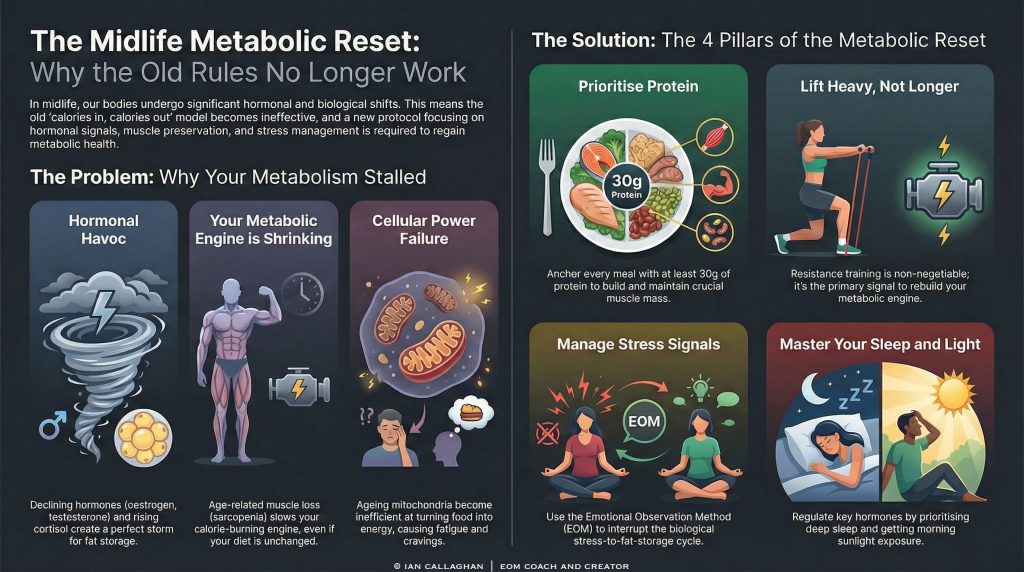
The “calories in, calories out” model that served you for decades has become obsolete. In midlife, the hormonal landscape shifts so drastically that your body begins to interpret the same inputs differently. Stress is no longer just stress; it is a signal to store visceral fat. A skipped meal is no longer a calorie deficit; it is a metabolic emergency signal.
To navigate this, we require a comprehensive Midlife Metabolic Reset Protocol. This is not a diet. It is a systemic recalibration of your biology, your nutrition, and your emotional relationship with stress.
This guide will provide a deep, granular analysis of why your metabolic engine has stalled and, more importantly, the precise mechanisms required to restart it. We will explore the critical role of the Emotional Observation Method (EOM), the necessity of muscle-centric medicine, and the nutritional nuances required to combat insulin resistance.
The Biological Reality: Why the Rules Changed
Before implementing the Midlife Metabolic Reset Protocol, one must understand the biological terrain. The frustration many feel arises from applying “Growth Phase” tactics (what worked at 25) to a “Preservation Phase” body (what is happening at 45+).
1. The Hormonal Cascade
Midlife is characterised by the decline of anabolic (building) hormones and the dominance of catabolic (breaking down) stress hormones.
- Estrogen and Progesterone: For women, the decline of estrogen is metabolic dynamite. Estrogen is insulin-sensitising. As it wanes, the body becomes more insulin resistant, meaning it struggles to process carbohydrates effectively, shuttling them into fat storage rather than muscle energy. Furthermore, the drop in progesterone impacts sleep quality and increases anxiety, creating a vicious cycle of fatigue.
- Testosterone: In both men and women, free testosterone levels drop. This hormone is essential for muscle protein synthesis and fat oxidation. Lower levels make it harder to build muscle and easier to accumulate adipose tissue.
- Insulin: This is the master switch. After decades of carbohydrate consumption and stress, cellular receptors often become less sensitive to insulin. This condition, insulin resistance, means your pancreas must pump out massive amounts of insulin to lower blood sugar. Since insulin is a fat-storage hormone, high circulating levels make fat burning biologically impossible.
- Cortisol: The stress hormone. In midlife, the “cortisol steal” phenomenon occurs. Because the body prioritises survival, it will steal precursor hormones to manufacture cortisol, leaving you with even lower levels of sex hormones. Chronically elevated cortisol specifically targets the abdominal area for fat storage because visceral fat has four times more cortisol receptors than subcutaneous fat.
2. Sarcopenia: The Silent Engine Killer
Metabolism is not a static number; it is largely dictated by your lean muscle mass. Muscle is a metabolically expensive tissue. It requires significant energy just to exist.
Starting in our 30s, but accelerating rapidly in our 40s and 50s, we experience sarcopenia—the involuntary loss of skeletal muscle mass. If you are not actively intervening with heavy resistance training, you are losing the very engine that burns calories. Most people do not gain fat because they are eating more; they gain fat because their engine has shrunk, but their fuel intake has remained constant.
3. Mitochondrial Efficiency
Inside every cell are mitochondria, the power plants that convert food into energy (ATP). As we age, mitochondrial density decreases and function becomes less efficient. This results in “metabolic inflexibility.” A healthy metabolism can switch easily between burning glucose and burning fat. A rigid, aged metabolism struggles to switch, leaving you tired (unable to access fat for fuel) and hungry (craving sugar for quick energy).
The Emotional Observation Method (EOM)
Most metabolic protocols fail because they ignore the operating system driving the machine: the human mind. You cannot fix a biological issue if the psychological triggers remain unaddressed. This is where the Emotional Observation Method (EOM) becomes critical.
EOM vs. The Emotional Operating System
It is vital to distinguish between the two:
- The Emotional Operating System: This is your internal wiring—the subconscious patterns, trauma responses, and ingrained habits that dictate how you react to stress. In midlife, this system is often overloaded.
- The Emotional Observation Method (EOM): This is the tool we use to interact with and regulate that system.
Why EOM Matters for Metabolism
When you encounter a stressor—a difficult email, a family conflict, a traffic jam—your emotional operating system often triggers a “fight or flight” response. This dumps glucose into the bloodstream for energy. If you do not physically fight or flee, that glucose is reabsorbed and stored as visceral fat.
The Emotional Observation Method creates a wedge between the stimulus and the response.
How to Practice EOM
- Recognise the Shift: You feel the physical sensation of stress (tight chest, shallow breath, urge to snack).
- Observe, Don’t Engage: Instead of saying “I am angry,” you say, “I am experiencing anger.” This linguistic shift moves you from the emotional centre of the brain to the prefrontal cortex (the analytical centre).
- The Metabolic Pause: By observing the emotion rather than becoming it, you lower the sympathetic nervous system arousal. This prevents the cortisol spike.
- Action: You choose a response that aligns with your Midlife Metabolic Reset Protocol, rather than a reaction that sabotages it.
Without EOM, you will likely fall victim to “stress eating,” which is actually a biological search for dopamine to counteract cortisol. EOM stops the cycle at the source.
Nutrition: The Fuel Recalibration
In the Midlife Metabolic Reset Protocol, we do not count calories; we count chemical signals. Food provides information to your cells. We need to send signals of safety and repair, not scarcity and stress.
1. Protein Anchoring
The most critical macronutrient for midlife is protein. Due to a phenomenon called “anabolic resistance,” an older body requires more protein to stimulate the same amount of muscle growth as a younger body.
- The Protocol: You must consume a minimum of 30 grams of high-quality protein at every meal.
- The Science: This reaches the “leucine threshold” required to trigger Muscle Protein Synthesis (MPS). If you eat 15g of protein, you get the calories, but you do not trigger the repair mechanism. You must hit the threshold.
- Sources: Lean beef, poultry, fish, eggs, and high-quality plant isolates.
2. Carbohydrate Periodisation
We are not eliminating carbohydrates, but we are earning them. Given the insulin resistance common in this demographic, carbohydrates should be viewed as high-octane fuel to be used only when the engine is running hot.
- Timing: Consume the majority of your carbohydrates after exercise. This is when your muscles act like a sponge, soaking up glucose for glycogen replenishment without requiring massive insulin spikes.
- Type: Focus on fibrous, complex carbohydrates (cruciferous vegetables, berries, legumes) that have a blunted glycemic response.
- The “Naked Carb” Ban: Never eat carbohydrates alone. Always pair them with protein, fat, or fibre to flatten the glucose curve.
3. Fats for Hormonal Health
Low-fat diets are disastrous for midlife. Steroid hormones (testosterone, estrogen, cortisol) are made from cholesterol. If you starve your body of healthy fats, you starve your hormonal production.
- Focus: Omega-3 fatty acids (fatty fish, flaxseed), monounsaturated fats (olive oil, avocado), and moderate saturated fats (coconut oil, grass-fed butter).
- Avoid: Highly processed seed oils (soybean, canola, corn) which drive systemic inflammation, worsening insulin resistance.
4. Hydration and Electrolytes
As we age, our thirst mechanism blunts. We become dehydrated without realising it. Furthermore, if you lower carbohydrates, your kidneys excrete more electrolytes.
- Protocol: Aim for 3 litres of water daily, supplemented with magnesium, potassium, and sodium. Magnesium is particularly vital for cortisol regulation and sleep quality.
Movement: Building the Metabolic Armour
If nutrition is the fuel, movement is the architecture. The standard advice of “move more” is insufficient. We need specific stimuli to counteract sarcopenia and hormonal decline.
1. Resistance Training: The Non-Negotiable
You cannot cardio your way out of a midlife metabolic slowdown. Excessive steady-state cardio (long runs) can actually increase cortisol, exacerbating muscle loss and belly fat retention.
- The Goal: Hypertrophy (muscle growth) and Strength.
- Frequency: 3 to 4 sessions per week.
- Intensity: You must lift heavy enough to reach momentary muscular failure or close to it. This mechanical tension is the signal your body needs to keep muscle tissue.
- Focus: Compound movements (squats, deadlifts, presses, rows) that recruit maximum muscle fibres.
2. NEAT (Non-Exercise Activity Thermogenesis)
While gym sessions build the engine, NEAT burns the fuel. This refers to all movement that isn’t sleeping or structured exercise—walking, typing, cleaning, fidgeting.
- The Midlife Drop: We tend to become more sedentary as we advance in our careers.
- The Protocol: Aim for 8,000 to 10,000 steps daily. This keeps lipoprotein lipase (an enzyme that breaks down fat) active. Sitting for prolonged periods shuts this enzyme off.
3. High-Intensity Interval Training (HIIT) – Use With Caution
HIIT is effective for mitochondrial biogenesis (creating new mitochondria), but it is very taxing on the central nervous system.
- Dosage: Maximum 1-2 sessions per week.
- Ratio: Short bursts of maximum effort (20 seconds) followed by long recovery (2 minutes). We want power output, not exhaustion.
The Circadian Component: Sleep and Light
You cannot reset your metabolism if you are sleeping poorly. Sleep is when the “glymphatic system” cleans the brain of toxins and when growth hormone is released to repair tissue.
1. The Cortisol-Melatonin Axis
Cortisol and melatonin are antagonists. When one is high, the other is low. In a healthy cycle, cortisol peaks in the morning (waking you up) and bottoms out at night. In midlife, this often inverts—you are tired in the morning and wired at night.
2. Light Hygiene
- Morning: View natural sunlight within 30 minutes of waking. This sets the circadian clock and triggers the morning cortisol pulse, which sets you up for better sleep 16 hours later.
- Evening: Block blue light (screens, LEDs) two hours before bed. Blue light suppresses melatonin production, tricking your body into thinking it is noon.
3. The Glycemic Impact of Sleep Loss
A single night of partial sleep deprivation can induce a temporary state of pre-diabetes. Your cells become insulin resistant, and your hunger hormone (ghrelin) spikes while your satiety hormone (leptin) crashes. This is why you crave carbohydrates after a bad night’s sleep. Prioritising sleep is a metabolic intervention.
The 4-Phase Midlife Metabolic Reset Protocol
Implementing all these changes at once can be overwhelming and trigger the very stress response we are trying to avoid. We break the protocol down into four distinct phases.
Phase 1: The inflammatory Detox (Weeks 1-2)
Goal: Lower systemic inflammation and stabilise blood sugar.
- Nutrition: Eliminate alcohol, added sugars, and processed grains entirely. Focus on whole foods.
- Movement: Focus strictly on walking (NEAT) and mobility work. No high-intensity training yet. Allow the body to lower cortisol.
- Lifestyle: Implement a strict 10:00 PM bedtime.
- EOM Focus: Begin logging emotional triggers for food cravings.
Phase 2: The Metabolic Wake-Up (Weeks 3-6)
Goal: Introduce insulin-sensitising habits and muscle stimulation.
- Nutrition: Introduce “Time Restricted Feeding” (12-14 hour fasting window). Start hitting the 30g protein threshold at every meal.
- Movement: Introduce Resistance Training (2 days/week). Focus on form and neural activation.
- Supplementation: Start Magnesium Glycinate and Vitamin D3 (after testing levels).
Phase 3: The Engine Build (Weeks 7-12)
Goal: Maximal muscle growth and metabolic flexibility.
- Nutrition: Carbohydrate cycling. Eat carbs only on training days.
- Movement: Increase Resistance Training to 3-4 days/week. heavy lifting. Add 1 HIIT session.
- EOM Focus: Use EOM to manage the stress of increased physical demand. Ensure recovery is prioritised.
Phase 4: Maintenance and Optimisation (Ongoing)
Goal: Sustainable lifestyle integration.
- The 80/20 Rule: 80% adherence to the protocol allows for 20% flexibility.
- Monitoring: Use biofeedback (energy levels, sleep quality, waist-to-height ratio) rather than just the scale to measure success.
Troubleshooting the Reset: Why You Might Stall
Even with a robust Midlife Metabolic Reset Protocol, plateaus occur. Here are the common culprits and how to address them.
1. Under-eating Protein
Many people think they are eating “high protein” when they are actually eating high fat. A handful of nuts is a fat source, not a protein source. Track your protein intake for a week. If you are not hitting 1.6g to 2.2g per kg of body weight, you are under-fuelled for adaptation.
2. “Hidden” Stress
You might be eating perfectly and training hard, but if you are chronically anxious about politics, finances, or family, your cortisol remains high. Your body cannot distinguish between a famine and a deadline. This is where mastering the Emotional Observation Method is the dealbreaker. You must actively downregulate your nervous system through breathwork, meditation, or simply spending time in nature.
3. Alcohol: The Metabolic Brake
In midlife, alcohol metabolism changes. The liver prioritises breaking down ethanol over everything else. This halts fat burning completely. Furthermore, alcohol increases estrogen (worsening dominance) and decreases testosterone. Even “moderate” drinking can derail a metabolic reset. During the initial 12 weeks, total abstinence is recommended.
4. Gut Health Dysbiosis
Years of antibiotic use, stress, and poor diet can alter the gut microbiome. Certain bacteria (Firmicutes) are better at extracting calories from food than others. If your gut is inflamed, you are absorbing fewer nutrients and generating systemic inflammation. Including fermented foods (sauerkraut, kimchi, kefir) and prebiotic fibres is essential.
Advanced Strategies: Supplements and Biohacks
While whole foods and movement are the foundation, certain supplements can act as catalysts for the Midlife Metabolic Reset Protocol.
- Creatine Monohydrate: Not just for bodybuilders. It improves cellular hydration, supports ATP production (energy), and improves cognitive function. It is essential for preserving muscle in midlife.
- Berberine: Often called “nature’s Metformin.” It activates AMPK, an enzyme that regulates metabolism, helping to lower blood glucose and improve insulin sensitivity.
- Adaptogens (Ashwagandha/Rhodiola): These herbs help the adrenal system manage the stress response, potentially lowering cortisol levels.
- Cold Exposure: Cold plunges or cold showers can stimulate Brown Adipose Tissue (BAT). Unlike white fat (storage), brown fat generates heat and burns calories. It also improves insulin sensitivity.
Case Study: The “Busy Executive” Pivot
To illustrate the power of this protocol, consider the case of “Sarah,” a 48-year-old marketing director.
The Profile:
- Symptoms: Gained 15lbs in two years despite no diet change. Waking up at 3 AM. Afternoon energy crash. “Brain fog.”
- Current Routine: Coffee for breakfast, salad for lunch, heavy pasta dinner with wine. 45 minutes of spinning 3x a week.
- The Diagnosis: Severe cortisol dysregulation, insulin resistance, and protein malnutrition.
The Intervention:
- Diet: We removed the morning coffee on an empty stomach (which spikes cortisol) and replaced it with a savoury high-protein breakfast (eggs and salmon). Wine was removed for 30 days. Dinner carbs were swapped for roasted vegetables.
- Movement: We cancelled the spin class. It was just creating more stress. Replaced with heavy weight lifting 3x a week and daily 20-minute walks after dinner (to lower post-meal blood sugar).
- Mindset: Sarah used the Emotional Observation Method to identify that her 3 PM sugar craving was actually boredom and decision fatigue, not hunger. She replaced the snack with a 5-minute breathing break.
The Result:
In 12 weeks, Sarah lost 12lbs of fat (specifically from the waist), but more importantly, her sleep stabilised, and her brain fog vanished. She ate more food but changed the chemical signal of that food.
Conclusion: Reclaiming Your Metabolic Sovereignty
The narrative that midlife inevitably leads to decline, weight gain, and fatigue is false. It is common, but it is not normal. It is a symptom of a mismatch between our modern environment and our changing biology.
The Midlife Metabolic Reset Protocol is an invitation to stop fighting your body. Stop trying to starve it into submission with 1,200-calorie diets. Stop trying to punish it with excessive cardio. Instead, listen to the signals.
You must realise that your body is currently in a state of high alert. It is trying to protect you by storing energy and downregulating expensive processes like muscle building. To change the outcome, you must change the input. You must convince your body that it is safe, well-fuelled, and strong.
By integrating the Emotional Observation Method to manage stress, prioritising protein to build the engine, and lifting heavy things to demand adaptation, you can not only halt the slide—you can reverse it. You can enter your 50s and 60s with more metabolic flexibility, energy, and strength than you had in your 30s.
It requires precision. It requires consistency. But the biology is clear: you have the capacity to reset. The protocol is in your hands; the execution is up to you.
Frequently Asked Questions (FAQ)
Q: Can I follow this protocol if I am on Hormone Replacement Therapy (HRT)?
A: Absolutely. In fact, HRT often works synergistically with this protocol. HRT can help mitigate some of the hormonal valleys (like low estrogen), making the muscle-building and insulin-sensitising aspects of the protocol even more effective. However, HRT is not a magic bullet; the nutrition and movement pillars remain essential.
Q: How long does it take to see results?
A: Metabolic healing is slower than crash dieting. You may not see a drop on the scale for the first 3-4 weeks as your body repairs inflammation and builds muscle tissue (which is denser than fat). However, energy levels and sleep usually improve within 10 days. Visceral fat reduction typically becomes noticeable around week 6-8.
Q: Do I really need to give up cardio?
A: You do not need to give it up entirely, but you must re-prioritise. If you have 5 hours a week to exercise, 3-4 of them should be resistance training. Cardio should be used for heart health and recovery, not as the primary driver of fat loss. Walking is the best form of cardio for this protocol as it does not spike cortisol.
Q: Is Intermittent Fasting required?
A: No, but Time Restricted Feeding (TRF) is recommended. A simple 12-hour window (e.g., finish dinner by 7 PM, breakfast at 7 AM) gives your digestive system a break and allows for cellular cleanup (autophagy) without the stress of prolonged fasting, which can sometimes backfire in women by spiking cortisol.
Q: What if I am vegan?
A: The protocol is harder but possible. You must be extremely diligent about protein intake. You will likely need to supplement with pea or rice protein isolates to hit the 30g per meal threshold without consuming excessive carbohydrates. You must also supplement B12, iron, and potentially creatine.
Q: How does EOM differ from meditation?
A: Meditation is a practice often done in a quiet, dedicated space. EOM (Emotional Observation Method) is a real-time tactical tool used in the “heat of battle.” It is applied the moment you feel stress or a craving. It is active engagement with the emotional operating system, whereas meditation is often passive observation or clearing of the mind.
Q: Why is “Midlife” defined as a metabolic shift rather than an age?
A: Chronological age differs from biological age. Some individuals experience perimenopausal symptoms or testosterone drops in their late 30s; others in their early 50s. The protocol applies whenever you notice the classic signs: unexplainable weight gain, fatigue, and reduced stress resilience.