The Confusing Aftermath of a “Sensible” Night
Moderate Drinking Wrecks Your Mood. It’s a Tuesday morning. The weekend feels like a distant memory, yet a confusing and unwelcome emotional fog has settled in. You feel flat, inexplicably anxious, and plagued by a low mood that seems to have appeared out of nowhere. As you stare at your screen, a nagging question surfaces: "Why do I feel depressed for days after drinking only a moderate amount?" You weren’t excessive. You had a couple of glasses of wine with dinner, a few pints at the pub with friends.
If this scenario feels familiar, you are not going mad, you are not weak, and you are certainly not alone. This experience, often dubbed “hangxiety” or the “post-drinking blues,” is a very real physiological reaction to alcohol. The confusion is understandable because the answer isn’t about the number of drinks you had, but about the invisible chemical transactions happening deep within your brain.
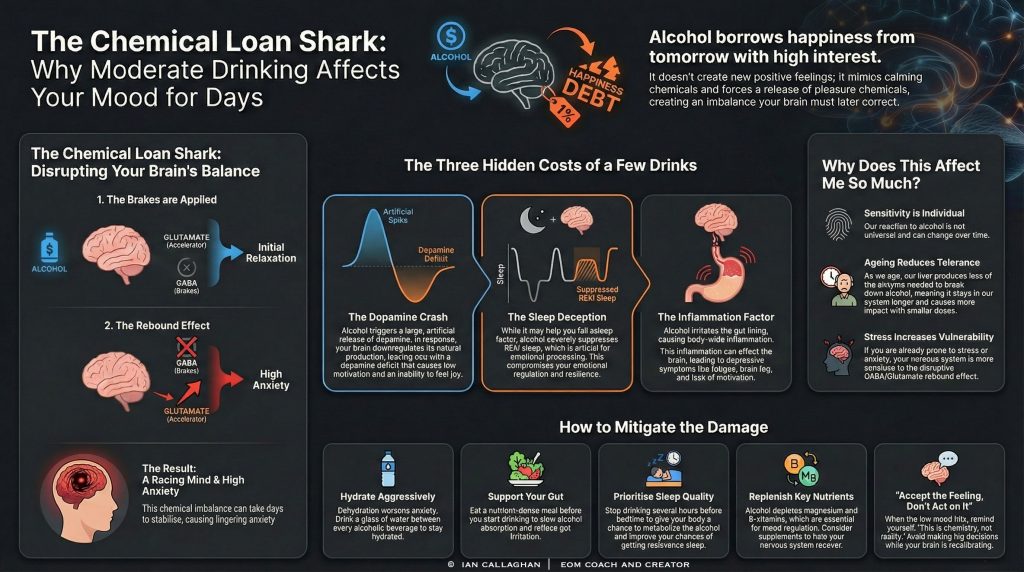
To truly understand this lingering melancholy, we need to reframe our perception of alcohol. Think of it not as a creator of relaxation, but as a Chemical Loan Shark. It offers you a short-term loan of calmness and confidence, but it always comes back to collect its payment, with brutally high interest. This article will unpack the four key ways this loan shark wrecks your brain chemistry, leaving you emotionally in debt for days after you’ve had what you thought was just a harmless drink.
Your Brain on a Chemical Rollercoaster: The GABA and Glutamate Rebound
At the heart of your brain’s operating system are two powerful neurotransmitters that act like a seesaw, constantly working to maintain balance: GABA and Glutamate. Think of GABA as your brain’s primary braking system; it’s an inhibitory neurotransmitter that calms the nervous system, reduces anxiety, and promotes a sense of tranquillity. In contrast, Glutamate is the accelerator; it’s an excitatory neurotransmitter responsible for brain activity, energy, and alertness. A healthy mood depends on these two chemicals being in careful equilibrium.
When you introduce alcohol into this delicate system, it immediately puts its thumb on the scale. Alcohol is a master impersonator of GABA. It binds to GABA receptors, enhancing their effect and effectively slamming on your brain’s brakes. Simultaneously, it blocks Glutamate receptors, taking your foot off the accelerator. This is the chemical magic behind that initial wave of relaxation, lowered inhibitions, and unbothered calm you feel after your first drink. Your brain is sedated, quiet, and seemingly at peace.
However, your brain is an intelligent and adaptive organ. It senses this artificial, chemically induced sedation and begins fighting back to restore balance, or homeostasis. It thinks, “Whoa, there are far too many brakes and not enough acceleration!” To counteract the alcohol, it dramatically reduces its own natural GABA production and, at the same time, increases Glutamate sensitivity and production.
This is where the real trouble begins. As the alcohol wears off hours later, you are left with the consequences of your brain’s overcorrection. The artificial GABA is gone, and your natural supply has been slashed. The Glutamate system, however, is now in overdrive. The brakes have been removed, and the accelerator is floored. The result is a state of profound neurochemical imbalance—a “rebound effect” that manifests as intense anxiety, a racing mind, feelings of dread, and a sense of impending doom. This is the very definition of “hangxiety.” This state is the high-interest repayment demanded by the Chemical Loan Shark for the few hours of borrowed calmness. It’s a debt that isn’t settled overnight; it can take several days for your brain to slowly and painstakingly rebalance its GABA and Glutamate levels, explaining why that sense of unease and low mood can linger long after the alcohol has left your bloodstream.
The Motivation Void: Understanding the Dopamine Crash why Moderate Drinking Wrecks Your Mood
Dopamine is often called the “pleasure molecule,” but its role is far more nuanced. It is the neurotransmitter of motivation, reward, and drive. It’s the chemical that propels you to seek out rewarding experiences and gives you the feeling of satisfaction when you achieve a goal. It’s the reason why ticking off a to-do list, enjoying a delicious meal, or receiving praise feels so good.
When you drink alcohol, it hijacks this intricate reward system. Alcohol triggers a significant and artificial release of dopamine in your brain’s reward centre. This surge is responsible for the initial buzz—the feeling of confidence, chattiness, and euphoria that makes drinking seem so appealing. It feels like you’ve been given a shot of pure pleasure and motivation, making social interactions feel easier, and the world seem brighter.
But this artificial high comes at a steep price. Your brain is always striving for balance (homeostasis), and it recognises this sudden, unearned flood of dopamine as a major disruption. To protect itself from overstimulation, it initiates a downregulation process. It reduces the number of dopamine receptors and throttles back its own natural production of the chemical. Essentially, it turns down the volume to compensate for the artificial noise.
Once the alcohol is metabolised and the party is over, the artificial dopamine stimulus vanishes. Now, you are left with a system deliberately suppressed. Your natural dopamine levels don’t just return to normal; they plummet below your original baseline. This creates what neuroscientists call a “dopamine deficit state.” The consequences of this state are the classic symptoms we associate with depression: profound flatness, a lack of motivation, and an inability to find joy in activities that you normally love (a condition known as anhedonia). The world appears grey and uninteresting. This is not a reflection of your life circumstances; it is a direct, chemically-induced state created by the substance you consumed days earlier. You’ve spent your dopamine reserves on a short-lived high, and now you’re left in a motivation void, waiting for your brain to replenish its accounts slowly.
The Sleep Deception: How Alcohol Robs You of Emotional Repair
One of the most persistent myths about alcohol is that it’s a useful sleep aid. While it’s true that a drink before bed can make you feel drowsy and help you fall asleep faster, this is a dangerous deception. Alcohol may act as a sedative, but it systematically dismantles the very architecture of healthy sleep, robbing your brain of its most critical restorative functions. The quality of the “sleep” it induces is profoundly poor and non-restorative.
The most significant damage alcohol inflicts is on your REM (Rapid Eye Movement) sleep. REM sleep, which occurs in cycles throughout the night and becomes more predominant in the early morning hours, is absolutely vital for your mental and emotional wellbeing. This is not just a state of rest; it’s an active, crucial period when your brain works tirelessly as an emotional filing system. During REM, your brain processes the experiences and emotions of the day, consolidates memories, and helps you manage stress. It’s the brain’s nightly therapy session, allowing you to wake up with a greater capacity for emotional resilience.
Alcohol is a potent REM sleep suppressor. Even a moderate amount—just one or two drinks—can significantly reduce or even eliminate the first few cycles of REM sleep. Your brain is sedated, but it is not repairing itself. You might get your eight hours of unconsciousness, but you wake up feeling groggy and mentally unrefreshed precisely because you have missed out on this critical emotional processing phase.
The consequences of this REM deficit are severe. Without adequate REM sleep, your emotional regulation is compromised. The brain’s emotional centres, such as the amygdala, become hyperreactive. This leaves you more sensitive to stress, more prone to irritability, and more likely to perceive neutral situations as threatening. Minor setbacks feel like major catastrophes. This is why you might feel weepy or emotionally fragile in the days after drinking. Crucially, this disruption isn’t a one-night affair. If you drink on a Saturday night, your sleep architecture can remain disturbed for several subsequent nights, compounding the dopamine deficit and GABA/Glutamate rebound, and trapping you in a cycle of low mood that can easily last well into the working week.
Your Body’s Alarm System: The Inflammation Factor
For decades, we have viewed depression primarily as a disorder of the brain, a simple imbalance of neurotransmitters. However, modern science is revealing a more complex picture, one in which our mental state is deeply intertwined with the physical health of our body, particularly our immune and inflammatory systems. And when it comes to inflammation, alcohol acts like fuel on a fire.
Alcohol is a direct irritant to the delicate lining of your gastrointestinal tract. When you drink, it can damage the gut wall, leading to increased intestinal permeability, a condition popularly known as “leaky gut.” This means that the tight junctions between the cells of your gut lining become loose, allowing toxins, undigested food particles, and bacteria to “leak” from your gut into your bloodstream, where they absolutely do not belong.
Your body’s immune system immediately identifies these escaped particles as hostile invaders and launches a powerful inflammatory response to neutralise the threat. This isn’t just localised to the gut; it becomes a systemic, body-wide state of inflammation. This inflammatory cascade directly impacts your brain. Inflammatory molecules can cross the blood-brain barrier, triggering neuroinflammation—brain inflammation.
This neuroinflammation is a key driver of depressive symptoms. It disrupts the production and signalling of key mood-regulating neurotransmitters, such as serotonin and dopamine. It also diverts the brain’s energy resources. When your body is in a state of high alert, fighting what it perceives as an infection or injury, mental energy is reallocated to manage the physical crisis. This is why inflammation in the brain manifests as profound fatigue, persistent “brain fog,” a lack of motivation, and a generalised low mood. In essence, your body is too busy fighting the physical damage caused by the alcohol to spare the energy required for mental clarity and emotional wellbeing.
But I Barely Drank Anything: Why Moderate Amounts Still Matter
It’s a common and frustrating refrain: “But I was so sensible, why do I feel so bad?” The answer lies in the fact that sensitivity to alcohol is not a one-size-fits-all metric. It is highly individual, dynamic, and can change dramatically throughout your life.
One of the most significant factors is age. As we get older, our liver’s efficiency at processing alcohol declines. Specifically, we produce less of an enzyme called dehydrogenase, which is the primary workhorse responsible for breaking down alcohol and its toxic byproduct, acetaldehyde. With less of this enzyme available, alcohol and its toxins remain in your system for longer periods, allowing them to inflict more damage on your brain and body, even from smaller doses. The two glasses of wine that were a non-event in your twenties can become a significant metabolic burden in your forties.
Furthermore, your baseline mental state plays a crucial role. If you are already living with a degree of stress or have a predisposition to anxiety, your nervous system is already more sensitive and closer to its tipping point. For someone in this state, the neurochemical disruption caused by alcohol is far more pronounced. The GABA and Glutamate rebound effect will feel less like a gentle swing and more like a seismic shock to the system. What might be a minor metabolic blip for one person can be a major disruption for another with a more sensitive nervous system, triggering days of hangxiety from an amount of alcohol that seems perfectly “moderate.”
Reclaiming Your Chemistry: Practical Steps to Mitigate the Damage
While understanding this chemistry is the first step, you can also take practical steps to mitigate the damage if you do choose to drink.
- Hydrate Aggressively: Alcohol is a diuretic, meaning it makes you lose water. Dehydration significantly worsens feelings of anxiety and fatigue. Make it a rule to drink a full glass of water between every alcoholic beverage.
- Support Your Gut: Never drink on an empty stomach. Eating a nutrient-dense meal containing protein, healthy fats, and fibre before you start drinking slows the absorption of alcohol and helps protect your gut lining from irritation.
- Prioritise Sleep Hygiene: If you’ve been drinking, don’t compound the damage with poor sleep habits. Stop drinking several hours before you plan to go to bed to give your body time to metabolise it. Keep your bedroom cool, dark, and quiet to give yourself the best possible chance at restorative rest.
- Supplement Wisely: Alcohol depletes your body of many essential nutrients, including those crucial for mood regulation. Magnesium (which calms the nervous system) and B-vitamins (which are vital for neurotransmitter production) are hit particularly hard. Replenishing these can help your nervous system recover more quickly.
- Accept the Feeling, Not the Story: This is the most important mindset shift. When the low mood, anxiety, or depressive thoughts arrive, do not treat them as an accurate reflection of your life. Recognise them for what they are: a temporary chemical storm in your brain. Avoid making major life decisions or engaging in self-criticism while your brain is recalibrating.
Remind yourself of this simple, powerful truth:
“This is chemistry, not reality.”
Final Thoughts: Is the Loan Worth the Repayment? When Moderate Drinking Wrecks Your Mood!
If you consistently find yourself battling days of low mood after a moderate night of drinking, it may be time to reassess the role alcohol plays in your life, honestly. Viewing it through the lens of the Chemical Loan Shark clarifies the transaction: you are borrowing a few hours of relaxation, and the repayment comes in the form of days of anxiety, depleted motivation, and emotional fragility. As you get older or your life becomes more stressful, the interest rate on that loan gets higher.
Acknowledging that alcohol may no longer be compatible with your mental health is not a sign of weakness or a character flaw; it is a profound act of self-awareness and self-respect. The feeling of being emotionally stable, motivated, and mentally resilient is invaluable. Be kind to yourself. Understand that the fog you feel is a temporary imbalance that will pass. With this knowledge, you are empowered to make choices that protect your long-term mental peace, and to ask yourself the crucial question: Is that short-term loan truly worth the repayment?
Emotional Mastery: The Emotional Operating System
The Emotional Mastery book is a practical manual for understanding and regulating the human nervous system using the Emotional Operating System framework.
Instead of analysing emotions or retelling your past, the Emotional Mastery book teaches you how to read emotional states as system feedback, identify overload, and restore stability under pressure.
No labels. No therapy-speak. No endless healing loops.
Just a clear, operational approach to emotional regulation that actually holds when life applies load.
Instant digital download.