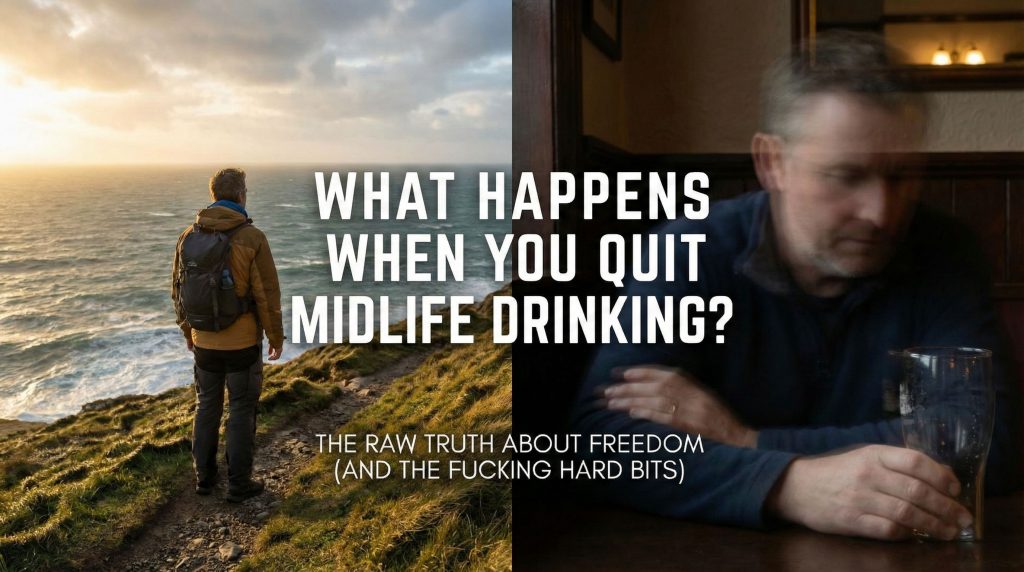
Quit Midlife Drinking. Let’s cut the bullshit. You’re here because a part of you knows the bottle isn’t working anymore. It’s not the escape it once was. It’s become a cage. A dull, grey, increasingly cramped cage that you built for yourself, one drink at a time. You’re in midlife, perhaps 40, 50, even 60, and the hangovers hit harder, the anxiety bites deeper, and the quiet dread in your gut screams louder than any fleeting buzz.
You’re wondering, what actually happens if you put the damn glass down? Will life be a desolate, joyless landscape? Will you lose your mates? Will you be “that guy” who doesn’t drink? These fears are real. They keep men trapped, silently suffering, convinced that the devil they know is better than the unknown abyss of sobriety.
But here’s the unvarnished truth: quitting midlife drinking isn’t about sacrifice. It’s about excavating the man you were meant to be, buried under years of booze, obligation, and quiet desperation. It’s about rewiring your brain and reclaiming your life. And yes, it’s going to be fucking hard in places. But the freedom on the other side? That’s something alcohol could never give you.
I’ve walked that path. I know the terror, the doubt, the sheer physical and mental grind of those early days. But I also know the profound, unexpected joys that emerge when you stop numbing yourself and start living. This isn’t about labels or dogma. This is about understanding what alcohol has done to you, and what happens when you finally break free.
The Slow Death: What Midlife Drinking Actually Does To You
Before we talk about quitting, let’s get brutally honest about what consistent midlife drinking is doing. It’s not just a bit of stress relief. It’s a slow, insidious erosion of everything that matters.
The Silent Erosion of Purpose
Remember when you had to drive? Ambition? Projects that lit you up? For many men, midlife drinking slowly suffocates that. You start settling. The grand plans become “one day” dreams, then quiet regrets. Alcohol numbs the discomfort of unrealised potential, but it also drains the energy and clarity needed to pursue it. You become comfortable with mediocrity because the thought of actually doing something feels too overwhelming, and a drink is always easier. This is the heart of the midlife collapse, papered over with booze.
The Dopamine Trap: Hijacking Your Brain’s Reward System
Let’s talk biology. Your brain has a reward system, powered by dopamine. It’s designed to make you seek out things essential for survival – food, sex, and connection. Alcohol, particularly when consumed regularly, floods this system with dopamine. It’s a massive, unnatural hit. Your brain, in its wisdom, tries to rebalance things. It reduces its own natural dopamine production and the sensitivity of its receptors.
What does this mean for you? Over time, you need more alcohol to get the same buzz. And more importantly, everyday pleasures – a good book, a walk in nature, a chat with a mate, a piece of music – no longer provide the same satisfaction. Your brain is wired to chase the big, cheap dopamine hit from booze, leaving the rest of life feeling flat and uninteresting. This is the core of cravings; your brain screaming for the easiest, biggest hit it knows.
The Nervous System on Edge: Always ‘On’
Alcohol is a depressant, right? Makes you relax. Initially, maybe. But chronic drinking, especially as you get older, throws your nervous system completely out of whack. Your body is constantly working to counteract the depressive effect of alcohol. When the alcohol leaves your system, your nervous system goes into overdrive, becoming hyper-aroused.
This manifests as chronic low-level anxiety, interrupted sleep, racing thoughts, irritability, and a constant feeling of being ‘on edge’. You drink to calm down, but the drinking itself creates the very anxiety you’re trying to escape. It’s a vicious stress cycle, trapping you in a state of perpetual activation, making genuine rest and repair impossible.
The Shame & The Secret: The Invisible Burden
How much do you actually drink? Be honest. Now, how much do you tell people you drink? There’s often a gap. That gap is where shame lives. The sneaking an extra drink, the hiding bottles, the quiet calculation of how much is ‘acceptable’. This isn’t just about the alcohol; it’s about the emotional load you carry. The lies, the self-deception, the fear of being found out. It isolates you, even when you’re surrounded by people. This secret gnaws at you, contributing to the quiet despair many men feel in midlife.
The First Tremors of Change: What Happens in the Early Days of Quitting
So, you’ve decided to put the plug in the jug. Good. Now, prepare yourself. The first few days and weeks are a battle. This isn’t just a physical detox; it’s a mental and emotional reckoning.
Alcohol Withdrawal: More Than Just a Hangover
Let’s be clear: alcohol withdrawal can be serious. If you’re a heavy, daily drinker, talk to a doctor. Don’t be a hero. They can guide you safely through it. For many grey area drinkers, it might not be life-threatening, but it’s certainly not pleasant.
Expect symptoms like:
- Insomnia: Your sleep will be all over the place. Expect vivid dreams, waking up frequently, or struggling to fall asleep at all.
- Anxiety & Panic: Your hyper-aroused nervous system will be screaming. Expect waves of intense anxiety, restlessness, and possibly panic attacks.
- Irritability & Mood Swings: Your emotions will be raw. You’ll snap at loved ones, feel overwhelmed, and might want to punch something.
- Physical Symptoms: Headaches, nausea, sweating, tremors, and heart palpitations. Your body is trying to rebalance itself after years of being poisoned.
- Cravings: Your brain will scream for the dopamine hit it’s used to. These can be intense and feel unbearable.
This phase is tough, but it’s temporary. It’s your body and brain beginning the monumental task of healing.
The Raw Nerve: Feeling Everything Again
For years, alcohol was your emotional anaesthetic. Now, that anaesthetic is gone. Every irritation, every worry, every past regret, every unspoken sadness – it all comes rushing back. You’ll feel exposed, vulnerable, and probably overwhelmed. This is where many people relapse. They can’t stand the intensity of their own emotions.
But this raw nerve is also a sign of life. It’s the first step towards processing old trauma, unresolved issues, and the emotional load you’ve been carrying. It’s uncomfortable, yes, but it’s necessary for true healing.
Battling the Beast of Boredom: The Void Alcohol Used to Fill
What did you do when you drank? Watch TV? Scroll your phone? Zone out? Now, there’s a gaping void where that ritual used to be. The evenings stretch out, seemingly endless. This boredom is brutal. It’s a powerful trigger for relapse, especially if you haven’t developed new ways to fill your time or engage your mind.
This is where many swap one addiction for another – endless scrolling, gaming, porn, dopamine loops. The key is to acknowledge the boredom, sit with it, and then consciously seek out new, healthier ways to engage your brain and body.
Sleep, Appetite, and Gut Chaos: Initial Disruption and the Slow Healing
In the early days, your sleep will be awful. Then, it will slowly improve, but it can take months for truly restorative sleep to return. Your appetite might fluctuate wildly – some lose it, some crave sugar intensely as their brain searches for quick dopamine. And your gut? Alcohol ravages your gut microbiome. Expect digestive issues initially, as your gut flora tries to rebalance. Focus on nutrient-dense foods and hydration. Your gut health is intrinsically linked to your brain health and mood.
Beyond the First Weeks: The Unfolding of Real Transformation
Once you push through the initial hell of withdrawal and the raw emotional phase, the magic starts to happen. This isn’t instant; it’s a gradual unfolding.
The Dopamine Reset: Finding Joy in the Mundane
This is huge. As your brain slowly recalibrates, its natural dopamine production begins to normalise, and your receptors become more sensitive. What does this mean? The simple things in life start to feel good again. A sunrise, a hot cup of coffee, a good conversation, the satisfaction of a job well done. You begin to experience genuine, sustainable joy, rather than the fleeting, chemically induced highs of alcohol. This is rewiring your mind at its core.
The Nervous System Calms: Finding Your Baseline
The constant hum of anxiety starts to quieten. Your body learns to relax without artificial depressants. You’ll notice you’re less reactive, more patient. Sleep becomes deeper and more restorative. Your stress cycles begin to regulate, allowing you to handle life’s challenges with greater resilience, rather than feeling constantly overwhelmed. This is a profound shift from hyper-vigilance to a state of calm.
The Clarity Returns: Thinking Straight Again
Remember feeling foggy, slow, unable to focus? That lifts. Your cognitive function improves dramatically. You think clearly, make better decisions, remember things more easily, and can hold complex thoughts. This neuroplasticity, the brain’s ability to reorganise itself, means you can literally rebuild your mental landscape. Problems that seemed insurmountable while drinking suddenly appear solvable.
Reclaiming Your Body: Energy, Sleep, and Physicality
The physical changes are undeniable. Your skin improves, your eyes are clearer, and that midlife paunch often starts to shrink. Energy levels soar. You wake up feeling genuinely rested, not just less hungover. This renewed physical vitality often spurs a desire for more movement, better nutrition, and a deeper connection to your body. Many men discover the power of cold water therapy here – a daily plunge isn’t just for masochists; it’s a powerful way to reset your nervous system, boost dopamine naturally, and build incredible mental resilience.
Confronting the Past: Processing What Was Buried
As the fog lifts, you might find yourself reflecting on things you’ve long suppressed. Old traumas, unresolved conflicts, past hurts. This can be challenging, but it’s also an opportunity for profound healing. Alcohol was a bandage; now you can actually tend to the wound. This isn’t about wallowing; it’s about acknowledging, processing, and integrating these experiences so they no longer hold power over you. It’s how you break free from old trauma conditioning.
The Identity Shift: Who You Become Without the Bottle
This is where the real transformation lies. It’s not just about what you don’t do; it’s about who you become.
Sobriety Without Labels: It’s About Freedom, Not Sickness
Forget the labels. You’re not an “alcoholic” in the traditional sense, unless you choose that identity. You’re a man who decided alcohol was no longer serving him. This isn’t a disease you caught; it’s a behaviour you changed. Your identity shifts from “a drinker” to “a man who chose freedom.” This is crucial. When you define yourself by what you’re not, you limit yourself. Define yourself by the powerful, intentional choices you make. This is sobriety without dogma, without the old 12-step narratives that don’t resonate with everyone.
Redefining Your Purpose After 40
When the noise of alcohol subsides, and the clarity returns, you often find yourself asking, “What now?” This is a powerful, exciting question. The midlife collapse often stems from a lack of purpose. Sobriety creates the space to rediscover or redefine what truly matters to you. What lights you up? What impact do you want to make? What legacy do you want to build? This is your chance to pivot, to start that business, write that book, deepen those relationships, or master that skill you always dreamed of.
Rebuilding Relationships (and Letting Go of Others)
Some relationships thrive in your sobriety. You’ll find deeper, more authentic connections with those who truly care about you, not just your drinking buddy persona. You’ll be more present, a better father, husband, friend. But some relationships will fall away. The ones built solely on shared drinking habits will struggle. This is okay. It’s a natural culling, making space for connections that serve your new, authentic self. This is part of shedding the men’s emotional load that comes with performing a certain role.
The Courage to Face Life Head-On
Alcohol is a crutch. Take it away, and you learn to stand on your own two feet. You develop true resilience. You learn that you can handle discomfort, sadness, stress, and joy without needing to numb or amplify them with booze. This isn’t just about stopping drinking; it’s about mindset rebuilding. It’s about developing the inner strength to navigate the shit storm of life with clarity and courage.
Addressing Your Midlife Fears: Common Questions Answered
Let’s tackle some of the nagging worries that keep men stuck.
“Will I ever have fun again?”
Absolutely, but it’ll be different. You’ll learn to redefine fun. The boisterous, hazy, often regrettable ‘fun’ of drinking gets replaced by genuine joy, deep laughter, meaningful connections, and the satisfaction of real achievement. It won’t be instant, and you’ll definitely experience boredom sober at first. But as your dopamine system resets, you’ll find enjoyment in things you never expected. Think clear-headed mornings, challenging yourself physically, and learning new skills. That’s real fun.
“What about social occasions? Won’t it be awkward?”
Yes, initially it will be. People might question you. You might feel like an outsider. But this is a test of your new identity. You don’t need to explain yourself to everyone. A simple “I’m not drinking tonight” or “I’m just taking a break from it” is enough. Focus on the reason you’re there – the people, the conversation, the food, the music. You’ll quickly realise that most people don’t care what’s in your glass. And if they do, perhaps they’re not the right people for your new path. This is a common grey area drinking concern.
“Is it too late for me?”
Never. The brain is incredibly adaptable. Neuroplasticity means your brain can change, adapt, and heal at any age. It might take a bit longer, and the initial withdrawal might be more intense for older bodies, but the capacity for transformation is always there. Your purpose after 40 isn’t predefined; it’s waiting for you to create it. This isn’t a death sentence; it’s a rebirth.
“How do I deal with cravings long term?”
Cravings become less frequent and less intense over time as your brain rewires. But they can still pop up, especially in stressful situations or old trigger environments. Have a plan.
- Ride the wave: Cravings are temporary. They peak and pass.
- Distract yourself: Go for a walk, call a friend, do something physical.
- Hydrate: Often, what feels like a craving is just dehydration.
- Cold water therapy: A quick cold shower or ice bath can instantly reset your nervous system and give you a natural dopamine hit, disrupting the craving cycle.
- Connect with your ‘why’: Remind yourself why you started this journey. What freedom are you fighting for?
Your Path to Freedom: It’s Not About Quitting, It’s About Living
Quitting midlife drinking isn’t an ending; it’s a beginning. It’s the courageous act of ripping off the comfortable, numbing blanket of alcohol and stepping into the raw, vibrant, sometimes terrifying reality of life.
You’re not just stopping a behaviour; you’re initiating a profound process of brain and body rewiring. You’re reclaiming your identity, forging a new purpose, and building genuine resilience. It’s about understanding the biology of your addiction, healing your nervous system, and rebuilding your mind, brick by fucking brick.
It won’t be easy. There will be days you want to give up. But every single day you choose clarity over comfort, you are chiselling away at the old you and revealing the powerful, authentic man beneath. This isn’t about abstinence for abstinence’s sake. It’s about choosing to live fully, without compromise, and without the invisible chains of alcohol holding you back.
Are you ready to stop hiding and start living?
Ready to break free and rewire your midlife?
My work isn’t about labels or dogma. It’s about hard truths, simple science, and a direct path to freedom. If you’re a man in midlife, sick of the silent struggle, and ready to reclaim your purpose and vitality, then let’s get to work.
Explore my raw, no-bullshit guides and programmes – designed to help you understand the biology of addiction, rewire your brain, and build a life of purpose, without the booze.
Or, if you’re ready for the full truth, grab a copy of my book, “Rewire The Mind“ – your blueprint for midlife reinvention.