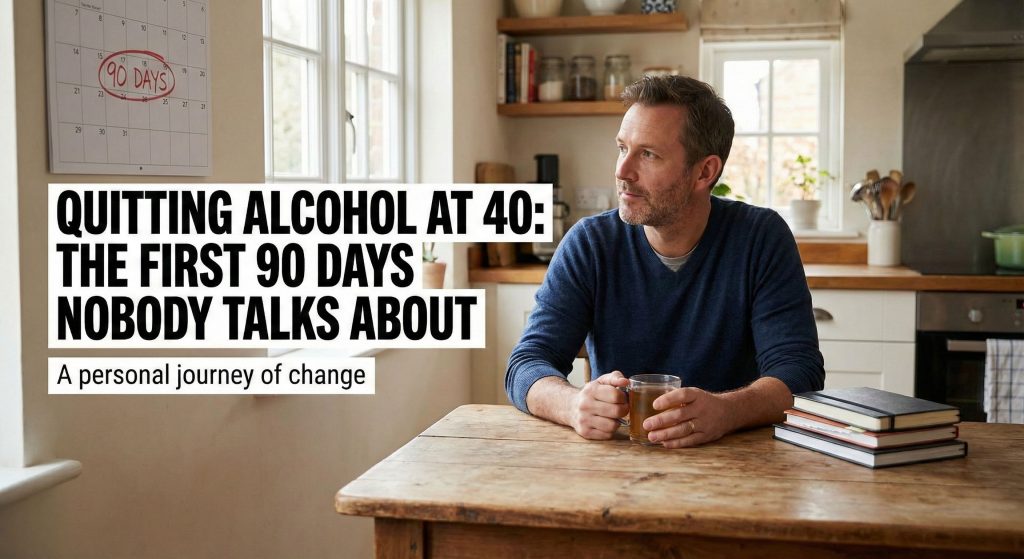
Quitting Alcohol at 40 plus. You’re past 40. You’ve been carrying the weight for years. The quiet dread, the hangovers that last two days, the feeling that you’re losing yourself, one pint, one bottle at a time. This isn’t about being “rock bottom” in some dramatic Hollywood sense. This is about the slow, silent erosion of your life, your purpose, your very identity. It’s about looking in the mirror and seeing a stranger, a tired, numb version of the man you once were, or the man you want to be.
If you’re reading this, you’ve probably hit that point. That internal whisper has become a shout: “Enough.” You’re ready to quit alcohol, but you’re looking for the unvarnished truth about what comes next. Not the fluffy self-help bollocks, not the twelve-step dogma, but the raw, lived reality. Especially when you’re over 40, because let me tell you, it hits differently.
The first 90 days after putting down the drink are a battlefield. Your brain, your body, and your entire nervous system are screaming for its familiar poison. And for men in midlife, the challenges are unique. You’ve got decades of conditioning, deeper trauma loops, and a societal expectation to “man up” and suffer in silence. This isn’t just about stopping drinking; it’s about a full-scale brain and body rewiring. It’s about confronting the midlife truth bombs you’ve been avoiding.
I’ve been there. I know the feeling of a life slowly suffocating under the weight of booze. And I know what it takes to break free. This isn’t just information; it’s a roadmap to transformation.
Midlife Truth Bombs: Why Quitting Alcohol at 40+ Hits Harder
Let’s be brutally honest. Quitting alcohol when you’re past 40 isn’t like doing it in your twenties. Back then, your body bounced back faster, your brain was more pliable, and your responsibilities were probably fewer. Now, you’ve got decades of accumulated stress, perhaps a family, a demanding career, and the slow creep of physical and mental decline that comes with age.
The Silent Midlife Collapse
Many men experience a silent midlife collapse. It’s not always a dramatic crisis; more often, it’s a slow burn of disillusionment, fatigue, and a growing sense of pointlessness. Alcohol becomes the universal solvent for these feelings. It numbs the pain, silences the nagging doubts, and offers a fleeting escape from the relentless pressure.
When you remove alcohol, you’re not just taking away a drink. You’re pulling the rug out from under your primary coping mechanism for what might be years, even decades, of unresolved issues. The men’s emotional load, often carried in silence, suddenly has no outlet. The shame of feeling inadequate, of not living up to your own expectations, can become overwhelming. This is why the first 90 days are so critical. You’re not just getting sober; you’re detonating a lifetime of suppressed emotions and habits.
Identity Crisis: Who Are You Without the Bottle?
For many men, alcohol has been woven into the fabric of their identity. It’s the ritual after work, the social lubricant at the pub, the way you unwind, the thing you share with your mates. It’s part of “who you are.” When you take that away, there’s an immediate, terrifying void.
This identity crisis is a major hurdle. You might feel lost, unsure of how to socialise, how to relax, or even how to simply *be* without alcohol. This isn’t a weakness; it’s a natural reaction to shedding a deeply ingrained part of your self-perception. But here’s the truth: your identity isn’t fixed. It’s built on your actions. Change your behaviour, and your identity will follow. This is the core of sobriety without labels: you don’t adopt a new identity of “alcoholic”; you build a new identity of “sober, purposeful man.”
Brain & Body Rewiring: The Raw Reality of the First 90 Days
Forget the glossy brochures. The first three months are a rollercoaster. Your brain and body are undergoing a seismic shift, recalibrating after years of chemical bombardment. This is where biology meets behaviour change, and it’s messy.
Weeks 1-2: The Physical and Mental Shockwave
This is the sharp end. Expect it to be tough.
The Alcohol Withdrawal Rollercoaster
This isn’t just a hangover; it’s proper withdrawal. Your body has become dependent on alcohol to function. When you stop, the system goes into overdrive. Symptoms can range from mild anxiety and tremors to severe insomnia, night sweats, racing heart, and intense irritability. If you’ve been a heavy daily drinker, *seek medical advice*. Going cold turkey can be dangerous. Your doctor can help manage the physical aspects safely.
The Dopamine Deficit and Cravings
Alcohol floods your brain with dopamine, the pleasure and reward chemical. It creates an artificial high. When you remove it, your brain’s natural dopamine production is shot to bits. You’re left with a massive deficit. This is why cravings are so intense, why everything feels flat, and why you might experience anhedonia – a complete lack of pleasure in things you once enjoyed.
Your brain is literally screaming for its fix. This isn’t a moral failing; it’s a biological reality. This dopamine crash also explains why many people swap one addiction for another, like digital addictions or porn dopamine loops. Your brain just wants that hit, any hit. Understanding this is your first step to fighting back.
Nervous System Overload
Your nervous system has been either numbed by alcohol or running on high alert to compensate for it. When you stop drinking, it goes into chaotic recalibration. Expect extreme emotional swings, anxiety attacks, intense anger, or profound sadness. You might feel overwhelmed by sensory input, sounds might seem louder, and lights brighter. This is your nervous system learning to regulate itself again without its crutch. It’s uncomfortable, but it’s a sign of healing.
Weeks 3-6: The Uncomfortable Normalisation
The acute physical withdrawal might lessen, but the mental battle intensifies. This is where most people relapse because the initial buzz of “doing it” wears off, and the real work begins.
The Killing Boredom Sober
This is the silent killer. Your brain is used to constant stimulation, especially from alcohol. Now, without that artificial high, life can feel incredibly dull, monotonous, and utterly pointless. You might find yourself staring at walls, feeling antsy, restless, and completely devoid of interest in anything.
This boredom is a sign that your brain is searching for new dopamine pathways. It’s a critical juncture. Do you give in to the craving for instant gratification, or do you push through and build new, healthier sources of pleasure? This is where many grey area drinkers falter. They weren’t “addicted” in the traditional sense, but they used alcohol to escape boredom and now have nothing to replace it.
Unearthing Trauma Conditioning and Triggers
Alcohol often acts as a mask for deeper issues. Once it’s gone, those issues resurface. Old trauma loops, unresolved stress cycles, and suppressed memories can come flooding back. You might notice specific triggers: certain times of day, places, people, or even emotions that previously led you to drink. Your brain has been conditioned to associate these with alcohol.
This is uncomfortable, but it’s an opportunity. It’s a chance to finally address the root causes of your discomfort, rather than just numbing them. This is where real, lasting change begins.
Gut Health: The Forgotten Link
Your gut is often called your “second brain” for good reason. Alcohol wreaks havoc on your gut microbiome, leading to inflammation, nutrient deficiencies, and imbalances that directly affect your mood, energy levels, and overall mental health. During these weeks, you might experience digestive issues, but also a slow improvement as your gut begins to heal. Prioritising gut health is crucial for stabilising your mood and boosting your energy.
Weeks 7-12: Building a New Foundation
By now, some of the acute discomfort should be subsiding. You’re not out of the woods, but you’re starting to see glimpses of the new you. This period is about actively building new habits and cementing your new identity.
Neuroplasticity: Your Brain’s Superpower
This is where the magic happens. Your brain isn’t static; it’s incredibly adaptable. This is called neuroplasticity. With consistent effort, your brain starts to rewire itself, forming new neural pathways. The cravings become less frequent, less intense. New habits become easier to form. Your brain is literally rebuilding itself, becoming more resilient and less reliant on external chemicals for happiness.
Finding New Dopamine: The Natural High
You need to actively cultivate new sources of natural, healthy dopamine. This isn’t about grand gestures; it’s about consistent, small actions. Cold water therapy, intense exercise, meaningful work, creative pursuits, genuine human connection, even a good book or a walk in nature. These slowly rebalance your brain chemistry and teach it to find pleasure in life again, without the artificial crutch of alcohol.
Identity Shift: From Drinker to Free Man
This is the phase where your identity truly begins to shift. You’re no longer defined by your relationship with alcohol. You’re defining yourself by your actions, your choices, your renewed purpose. This isn’t about adopting a label like “alcoholic”; it’s about reclaiming your agency and stepping into a new, authentic self. This is sobriety without labels.
Purpose After 40: Filling the Void
The void left by alcohol needs to be filled with something meaningful. This is your chance to redefine your purpose after 40. What truly matters to you? What impact do you want to make? What passions have you neglected? This isn’t a passive process; it requires active introspection and intentional action. When you have a strong purpose, the pull of alcohol weakens significantly.
Sobriety Without Labels: Your Path to Freedom
You won’t hear me talk about “addiction as a disease” or pushing you towards traditional 12-step programmes. While those work for some, my approach is different. It’s about personal sovereignty, understanding your biology, and rewiring your brain for freedom.
No AA Dogma, Just Raw Truth
I don’t believe you need to identify as “diseased” or “powerless” to overcome alcohol. That narrative can be disempowering for many. I believe that alcohol use, especially for grey area drinkers, is a learned behaviour, a coping mechanism that can be unlearned and replaced. It’s about taking ownership, understanding the science, and implementing practical strategies.
Grey Area Drinkers: The Silent Majority
Many men in midlife aren’t at “rock bottom.” They’re high-functioning, successful, yet deeply unhappy with their relationship with alcohol. They’re the grey area drinkers. They drink too much, too often, and it’s impacting their health, relationships, and sense of purpose, but they don’t fit the stereotypical image of an alcoholic. This path is for you. It’s about recognising that you deserve more than a life dulled by booze, without having to adopt a label that doesn’t resonate.
Identity → Behaviour → Freedom
This is the core principle. Your identity drives your behaviour. If you see yourself as “a drinker,” you’ll drink. If you consciously choose to build an identity as a “sober, powerful, purposeful man,” your behaviours will align with that. It’s not about willpower; it’s about identity. Once you embody that new identity, freedom from alcohol becomes a natural outcome.
Practical Strategies for Navigating the First 90 Days
This isn’t just about stopping; it’s about actively building. Here are some non-negotiable tools for your arsenal.
1. Cold Water Therapy: Shock Your System, Reset Your Brain
Jumping into cold water, whether a cold shower or an ice bath, is a game-changer. It’s a primal shock that instantly regulates your nervous system, boosts dopamine, and builds resilience. It teaches your body to adapt to stress without reaching for a bottle. Do it daily. It’s uncomfortable, but that’s the point. It trains you to lean into discomfort, which is exactly what sobriety demands.
2. Movement: Release Stored Stress and Trauma
You don’t need to become a marathon runner. Just move. Walking, lifting weights, cycling, and even stretching. Physical activity releases endorphins, helps process stored emotional trauma, and burns off nervous energy. It’s a powerful tool for regulating your mood and improving sleep. Make it a non-negotiable part of your daily routine.
3. Sleep Hygiene: The Foundation of Mental Health
Alcohol destroys sleep quality. In the first 90 days, your sleep will likely be chaotic. Prioritise it. Create a consistent bedtime routine, avoid screens before bed, and keep your bedroom dark and cool. Good sleep is essential for brain repair, emotional regulation, and rebuilding your mental resilience.
4. Nutrition: Fuel Your Healing Brain and Gut
Your body and brain are in recovery mode. Ditch the processed crap and focus on whole, nutrient-dense foods. Prioritise protein, healthy fats, and plenty of vegetables. Hydrate constantly. What you put into your body directly impacts your mood, energy, and cognitive function. Support your gut health with fermented foods and fibre.
5. Connection (Real, Not Digital): Combat Loneliness
Alcohol often isolates us, even when we’re socialising. Seek out genuine connection. Talk to trusted friends, family, or a mentor. Share your struggles, even if it’s uncomfortable. Loneliness is a significant trigger for relapse. But be selective; avoid friends who are still stuck in the drinking culture, at least initially.
6. Mindset Rebuilding: Daily Practices for a Stronger Mind
Your thoughts dictate your reality. Engage in daily practices that rebuild your mindset. Journaling to process thoughts and emotions, meditation (even 5 minutes of focused breathing), and reading inspiring books. Challenge negative self-talk. This is about actively rewiring your mind for positivity and resilience.
7. Professional Support: It’s Not a Weakness
Don’t suffer in silence. If you’re struggling with intense cravings, severe anxiety, or underlying mental health issues, seek professional help. A therapist, coach, or doctor can provide invaluable support, strategies, and guidance. It’s not a sign of weakness; it’s a strategic move to ensure your success.
The Transformation Awaits
The first 90 days are a brutal, beautiful crucible. They will test you in ways you never imagined. You’ll feel exposed, uncomfortable, and sometimes utterly lost. But if you lean into the discomfort, understand the biology, and commit to the process of brain and body rewiring, you will emerge stronger, clearer, and more purposeful than you’ve been in years.
This isn’t just about quitting alcohol; it’s about reclaiming your life. It’s about finding purpose after 40, becoming the man you were always meant to be, free from the shackles of booze. It’s about living a raw, honest, no bullshit life.
Are you ready to stop surviving and start thriving?
—
Ready to reclaim your life and rewire your brain for lasting freedom?
My work cuts through the noise and delivers the hard truths you need to hear. If you’re a man over 40 ready to shed the alcohol habit, find your purpose, and build unbreakable resilience, then you need to dive deeper.
Click here to explore my proven strategies, guides, and programmes designed for men like you who are ready for real transformation. It’s time to stop making excuses and start building the life you deserve.