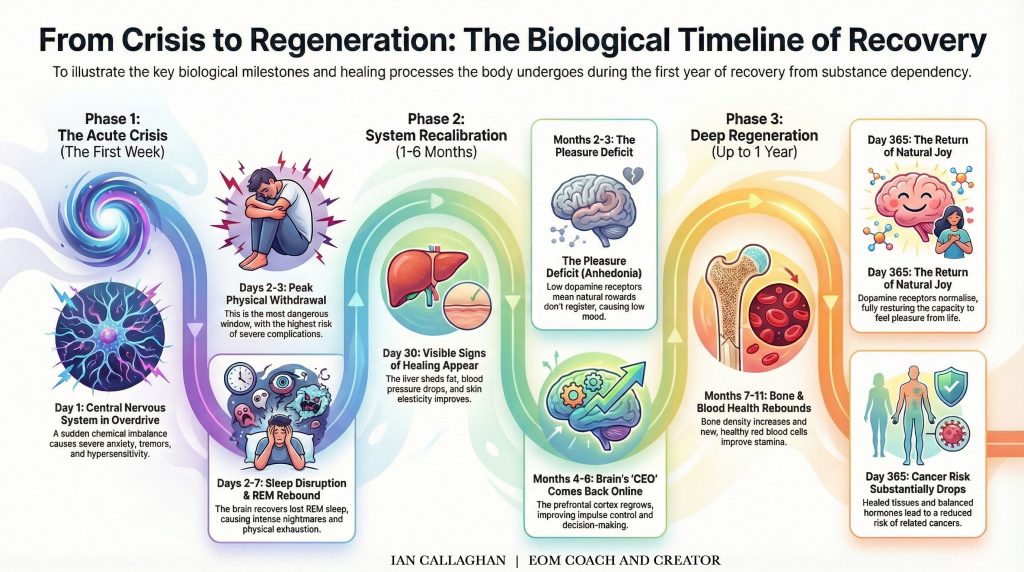
The Biological Timeline of Recovery. Recovery from substance dependency, especially alcohol, is often framed as psychological. But the biological timeline of recovery from alcohol tells a very different story.. However, the most profound changes occurring within the first year are strictly biological. From the cessation of the substance, the body initiates a massive, complex protocol of self-repair, moving from acute crisis management to long-term cellular regeneration.
This comprehensive guide details the physiological metamorphosis of the human body during the cessation of substance use. It is designed to explain the mechanisms of homeostasis, the repair of neural pathways, and organ regeneration.
Below is Part 1 of the timeline, covering the critical initial phases: the acute withdrawal of Day 1, the physical detoxification of the first week, and the neurological recalibration of the first month.
Phase 1: The Acute Crisis (Day 1)
The first 24 hours of cessation represent a shock to the biological system. The body, having habituated to the presence of a sedative (in the case of alcohol) or a stimulant, must suddenly operate without chemical regulation. This period is defined by neurochemical rebound.
The Glutamate-GABA Imbalance
To understand Day 1, one must understand the brain’s “brakes” and “accelerators.” Alcohol acts as a depressant, mimicking GABA (gamma-aminobutyric acid), which calms the brain, while suppressing Glutamate, which excites it.
When consumption stops abruptly on Day 1:
- GABA production is dangerously low: The brain has stopped producing its own calming chemicals because it relied on the substance.
- Glutamate levels skyrocket: The suppression is lifted, leading to a flood of excitatory neurotransmitters.
This imbalance results in the hallmark symptoms of Day 1: profound anxiety, hypersensitivity to light and sound, and tremors (the “shakes”). The central nervous system is essentially misfiring due to hyper-excitability, which is the primary cause of acute withdrawal symptoms.
Metabolic Chaos and Blood Sugar
Simultaneously, the endocrine system faces a crisis. Substance misuse often wreaks havoc on the pancreas and liver’s ability to regulate glucose.
- Hypoglycaemia: On Day 1, many individuals experience a crash in blood sugar levels. The liver is busy processing the remaining toxins (metabolising ethanol into acetaldehyde and then acetate) and cannot release stored glucose effectively.
- Symptoms: This drop in blood sugar contributes to the fatigue, sweating, and confusion often felt in the first 24 hours.
The Cardiovascular Response
During the first day of abstinence, the autonomic nervous system is in a state of ‘fight or flight.’ Pulse rate and blood pressure elevate significantly as the body attempts to maintain equilibrium without the depressive effects of the substance. The heart works harder, pumping faster to circulate oxygen, which is why palpitations are a common complaint during this acute phase.
Key Takeaway for Day 1: The body is not yet healing; it is surviving the removal of a chemical crutch. The primary biological driver is hyper-excitability of the Central Nervous System (CNS).
Phase 2: The Physical Detoxification (Days 2–7)
If Day 1 is the shock, the first week is the battleground. This is the period of peak physical withdrawal, where the body purges the remaining toxins and begins the arduous task of restabilising organ function.
The Peak of Withdrawal (Days 2–3)
For many, roughly 48 to 72 hours after the last dose is the most dangerous window. This is when the risk of severe complications, such as Delirium Tremens (DTs) or seizures, is highest for heavy users.
- Autonomic Hyperactivity: Sweating, tachycardia (rapid heart rate), and severe tremors may peak.
- Hallucinations: Due to the neurochemical storm mentioned in Phase 1, the brain may misinterpret sensory input, leading to tactile or visual hallucinations.
The Circadian Rhythm and REM Rebound
One of the most distressing biological realities of the first week is the inability to sleep or the terrifying nature of the sleep achieved.
- REM Suppression: Alcohol and many drugs suppress Rapid Eye Movement (REM) sleep—the restorative phase of sleep where dreaming occurs.
- REM Rebound: When the substance is removed, the brain attempts to recover lost REM sleep all at once. This leads to intense, vivid nightmares and frequent waking.
- Physiological Impact: The lack of quality sleep delays the immune system’s ability to repair cellular damage, leaving the individual feeling physically exhausted despite ceasing the harmful behaviour.
Gastrointestinal and Nutritional Reset
By Days 4 through 7, the gastrointestinal tract begins to function more normally, although nausea may persist.
- Nutrient Absorption: During active addiction, the gut lining is often inflamed (gastritis), preventing the absorption of B vitamins (specifically Thiamine/B1) and folic acid. As inflammation subsides in the first week, the body starts to absorb nutrients from food again.
- Hydration: The kidneys begin to regulate fluid balance properly. The bloating often associated with water retention (oedema) begins to decrease as the diuretic effects of alcohol vanish.
The Immune System Reawakens
Substance abuse suppresses the immune system. By the end of the first week (Day 7), white blood cell counts begin to normalise. The body becomes more capable of fighting off minor infections, although the individual may feel “flu-like” symptoms. This is often not a new illness, but rather the immune system “turning back on” and recognising existing inflammation in the body.
Summary The first week (Days 2–7) is characterised by the peak of acute withdrawal, REM rebound causing sleep disturbances, and the initial reduction of gastrointestinal inflammation.
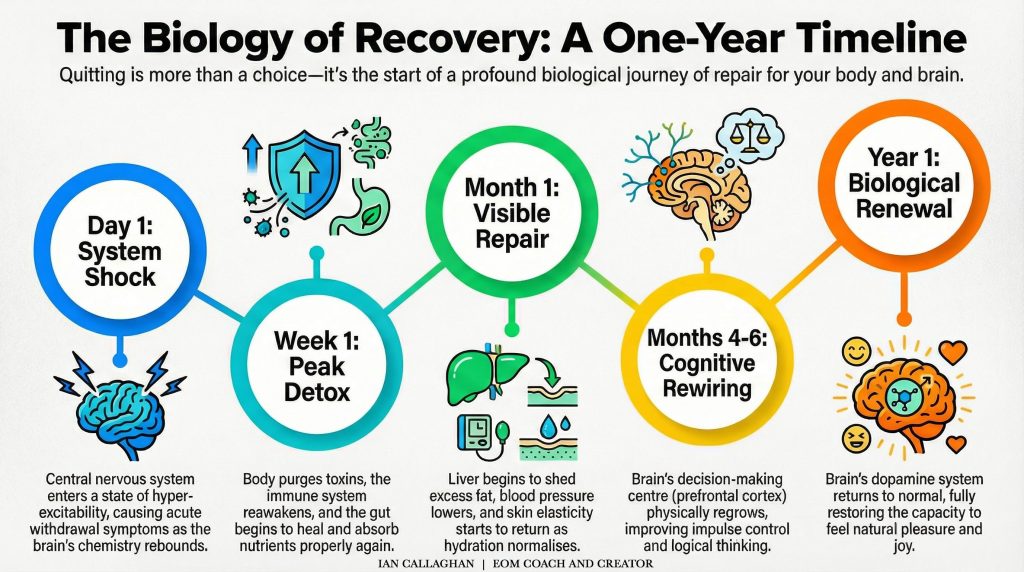
Phase 3: Early Abstinence and Organ Repair (Days 8–30)
Once the acute physical detox concludes, the body enters the early abstinence phase. This period, spanning the first month, is marked by rapid physiological improvements, particularly in the liver, skin, and cardiovascular system. However, the brain is entering a fragile state known as PAWS (Post-Acute Withdrawal Syndrome).
Hepatic Regeneration (The Liver)
The liver is the only internal organ capable of regenerating lost tissue, and the first month of recovery showcases this miraculous biology.
- Reduction of Steatosis: Within 30 days of abstinence, fatty liver disease (hepatic steatosis) canbe ignificantly reversed. The liver sheds the excess fat accumulation caused by processing toxins.
- Enzyme Levels: Elevated liver enzymes (AST and ALT), which indicate liver cell damage, typically begin to fall back towards normal ranges during this window.
- Fibrosis Stagnation: While cirrhosis (scarring) cannot be reversed, the progression of fibrosis halts, and the healthy portion of the liver becomes more efficient at filtering blood.
Cardiovascular Stabilisation
By Day 30, the cardiovascular system shows measurable improvement.
- Blood Pressure: Without the constant presence of toxins constricting blood vessels, blood pressure typically lowers. For those who had substance-induced hypertension, medication needs may decrease (under medical supervision).
- Resting Heart Rate: The resting heart rate drops, indicating the heart is no longer working overtime to maintain homeostasis.
- Red Blood Cells: The bone marrow begins producing healthier, larger red blood cells (macrocytosis begins to resolve), improving oxygen transport throughout the body. This contributes to increased energy levels and better physical stamina.
The “Pink Cloud” vs. The Brain’s Reality
Biologically, the brain is undergoing a confusing transition during the first month.
- Dopamine Resensitisation: The brain’s reward system is still dormant. Natural activities (food, socialising) may not yet yield pleasure because dopamine receptors are down-regulated.
- The Pink Cloud: Paradoxically, some individuals experience a surge of euphoria around weeks 2-4. This is a temporary physiological release of neurotransmitters as the body celebrates the removal of toxins. It is often short-lived.
- Executive Function: The prefrontal cortex—the area responsible for decision-making and impulse control—remains impaired. While the “fog” clears, cognitive processing speed and memory recall (hippocampus function) are only at the very beginning of their recovery curve.
Skin and Appearance Changes
By Day 30, visible signs of recovery appear:
- Collagen Production: Dehydration and toxins destroy collagen. As hydration stabilises, skin elasticity returns.
- Reduction of Erythema: The “flush” or broken capillaries (telangiectasia) on the face and nose begin to fade as blood vessels constrict to their normal size.
- Ocular Health: The sclera (whites of the eyes) clears up as the liver processes bilirubin more effectively, removing any yellowing (jaundice) that may have been present.
Phase 4: The Onset of PAWS (Transitioning past Day 30)
As the guide moves past the first month, we encounter a condition that is strictly physiological but manifests psychologically: Post-Acute Withdrawal Syndrome (PAWS).
While the alcohol or drugs are gone from the system, the brain’s chemistry takes much longer to recalibrate than the liver or heart.
- Neuroplasticity takes time: The brain effectively “rewired” itself to function with drugs. It takes months, not days, to prune those pathways and strengthen healthy ones.
- GABA/Glutamate fluctuation: Even after 30 days, the balance between calm and excitement can fluctuate wildly, leading to sudden bouts of anxiety or irritability without an external trigger.
Phase 5: The Neural Plateau (Months 2–3)
Following the initial month of acute detoxification, the body enters a precarious biological phase often referred to in recovery circles as “The Wall. However, biologically, this is known as homeostatic recalibration. While the alcohol and drugs have physically left the visceral organs, the central nervous system (CNS) is struggling to operate without its artificial crutches.
The Biology of Anhedonia
During months two and three, the most significant biological hurdle is anhedonia—the inability to feel pleasure. This is not merely a psychological mood swing; it is a physiological deficit in neurotransmitter availability.
- Dopamine Receptor Down-regulation: Years of substance abuse flood the brain with dopamine. To protect itself from over-stimulation, the brain reduces the number of dopamine receptors (D2 receptors). When the substance is removed, normal rewarding activities (food, socialising, sex) fail to register because the receptor count is still too low to “catch” the natural dopamine being produced.
- The Glutamate Spike: While dopamine is low, glutamate (the excitatory neurotransmitter) often remains high. This biological mismatch causes a feeling of “tired but wired,” contributing to insomnia and restlessness despite exhaustion.
Sleep Architecture Restoration
By the third month, the architecture of sleep begins a profound shift. In active addiction, sleep is often just unconsciousness, lacking the restorative cycles required for health.
- REM Rebound: Early recovery often sees chaotic dreaming. By months 2–3, Rapid Eye Movement (REM) sleep cycles begin to stabilise. This is crucial for memory consolidation and emotional processing.
- Glymphatic System Activation: Deep, non-REM sleep allows the glymphatic system to flush out neurotoxins, including beta-amyloid (associated with Alzheimer’s), which accumulate during substance abuse.
Biological Insight:
Why do I feel worse in Month 2?
Biologically, the “Pink Cloud” of early sobriety fades as adrenaline drops, revealing the underlying dopamine deficit. The brain is structurally healing, requiring immense metabolic energy, leading to lethargy and cognitive fog.
Phase 6: Systemic Regulation (Months 4–6)
As the body approaches the half-year mark, deep systemic repairs that were deprioritised during the acute survival phase (Days 1–30) finally begin. This period is characterised by the restoration of the Endocrine System and cognitive faculties.
The HPA Axis and Hormonal Balance
The Hypothalamic-Pituitary-Adrenal (HPA) axis, which controls the stress response, begins to reset.
- Cortisol Regulation: Chronic substance abuse keeps cortisol levels chronically elevated. By month 4, baseline cortisol levels drop, reducing visceral fat storage around the abdomen and lowering blood pressure.
- Reproductive Hormones:
- Men: Testosterone levels, often suppressed by alcohol and opioids, begin to normalise. This leads to increased muscle mass retention, stabilised mood, and the return of a healthy libido. Sperm production (spermatogenesis), which takes approximately 74 days, begins to show improved motility and morphology.
- Women: The menstrual cycle, often irregular or absent (amenorrhoea) during active addiction, typically regains regularity. Oestrogen and progesterone balance improves, reducing extreme premenstrual emotional volatility.
Cognitive Repair: The Prefrontal Cortex
Perhaps the most critical development in this phase occurs in the Prefrontal Cortex (PFC)—the CEO of the brain responsible for impulse control and decision-making.
- Grey Matter Re-growth: MRI studies indicate that by month 6, the volume of grey matter in the PFC increases. This correlates biologically with an improved ability to say “no” to cravings. The neural pathway between the amygdala (fear/impulse) and the PFC (logic) is strengthened, meaning emotional triggers no longer result in automatic reactions.
- Mitochondrial Efficiency: Brain cells begin to utilise glucose more efficiently. The “brain fog” lifts significantly as mitochondria (the power plants of cells) repair the damage caused by oxidative stress.
Phase 7: Deep Tissue and Structural Repair (Months 7–11)
As the one-year milestone approaches, the body tackles the “slow-turnover” cells. These are biological systems that take a long time to regenerate but are vital for longevity.
Bone Density and Blood Health
Alcohol and opioids interfere with osteoblasts (cells that build bone). Chronic use leads to brittle bones.
- Osteogenesis: By month 9, osteoblast activity outpaces osteoclast (bone removal) activity, leading to measurable increases in bone density.
- Erythropoiesis: Red blood cells (erythrocytes) have a lifecycle of about 120 days. By this stage, the body has cycled through multiple generations of blood cells produced in a toxin-free environment. These new cells are larger, healthier, and more efficient at transporting oxygen, resulting in sustained physical stamina.
The Gut-Brain Axis and Microbiome
The gut lining regenerates quickly (days), but the microbiome ecosystem takes months to balance.
- Microbial Diversity: Beneficial bacteria (Lactobacillus and Bifidobacterium), previously decimated by alcohol, recolonise the gut.
- Serotonin Production: Approximately 90% of the body’s serotonin is produced in the gut. As the microbiome stabilises in months 7–11, serotonin signalling to the brain improves, providing a stable, biological baseline for mood regulation and reducing the risk of late-stage relapse depression.
Phase 8: The One-Year Milestone (Day 365)
Reaching Day 365 is not just a symbolic victory; it is a biological event. The body has completed a full solar cycle of regeneration, and several physiological markers hit a “Gold Standard” of recovery.
1. Dopaminergic Homeostasis
Imaging studies (such as PET scans) reveal that at the one-year mark, the density of dopamine transporters in the brain has virtually returned to normal levels for many recovering individuals.
- The Result: The capacity to feel joy from subtle, natural rewards—a sunset, a good meal, a conversation—is fully restored. The brain no longer requires “super-stimuli” to release neurotransmitters.
2. Liver Fibrosis Reversal
While cirrhosis (scarring) is permanent, fibrosis (the stage before scarring) can show remarkable reversal by Day 365.
- Hepatic Stellate Cells: These cells, which cause scarring when agitated, return to a dormant state. The liver’s enzymatic function is often indistinguishable from that of a non-drinker/user, provided no permanent cirrhosis has occurred.
3. Cancer Risk Reduction
Alcohol is a Group 1 Carcinogen. By Day 365, the risk markers for several cancers drop drastically:
- Oesophageal & Mouth Cancer: The cellular irritation caused by ethanol is gone, and the mucosa has healed.
- Breast Cancer: As oestrogen levels stabilise without the interference of alcohol metabolism, the risk of hormone-receptor-positive breast cancer begins to decline.
4. Psychological Integration
Biologically, the neural pathways for “coping” have physically changed. The automatic neural response to stress is no longer “seek substance” but has been overwritten by new synaptic pathways formed through twelve months of repetitive, healthy behaviours. This is neuroplasticity in its final, solidified form.
Summary of the Biological Timeline
To assist with rich snippet extraction, here is a condensed summary of the vital milestones in the recovery journey.
| Timeline | Primary Biological Event | Key System Affected |
|---|---|---|
| Day 1 | Acute Withdrawal / GABA excitability | Central Nervous System |
| Day 7 | Detoxification Complete / Hydration returns | Liver & Kidneys |
| Day 30 | Skin elasticity / Cardiovascular strain drops | Cardiovascular & Integumentary |
| Months 2-3 | Dopamine low (Anhedonia) / Sleep architecture | Neurotransmitters & Glymphatic |
| Months 4-6 | Hormonal balance / Prefrontal Cortex growth | Endocrine & Cognitive |
| Day 365 | Dopamine transporter recovery / Fibrosis reversal | Hepatic & Neuro-circuitry |
Frequently Asked Questions (FAQ)
How long does it take for brain chemistry to return to normal?
While acute withdrawal ends in days, the brain’s neurotransmitters (specifically dopamine and serotonin) typically require 6 to 12 months to reach full homeostasis. This period depends on the duration and severity of the addiction.
Can the liver fully recover after alcohol abuse?
Yes, the liver is the only organ capable of regeneration. If the damage is limited to fatty liver or early fibrosis, complete recovery is possible within 6 to 12 months of abstinence. However, cirrhosis (scar tissue) is generally irreversible, though its progression can be halted.
Why do I feel depressed months after quitting?
This is biologically known as PAWS (Post-Acute Withdrawal Syndrome). It occurs because the brain has removed dopamine receptors to cope with drug/alcohol floods. It takes months for these receptors to re-grow, leading to a temporary inability to process pleasure (anhedonia).
Conclusion: The Biological Miracle
The journey from Day 1 to Day 365 is a testament to the human body’s resilience. Recovery is not simply an act of willpower; it is a complex, cellular construction project.
From the violent excitability of the first week to the dull lethargy of the third month, and finally, to the clarity of the first year, every symptom has a biological cause and a healing purpose. Understanding that the depression of Month 3 or the anxiety of Month 6 are merely signs of neural pruning and receptor regulation can provide the patience required to endure them.
By Day 365, you are not just “sober. You are biologically renewed. Your blood is clean, your liver has shed its fat, your bones are denser, and your brain has physically rebuilt the architecture of joy.
For those looking for the Liverpool footballer, by now you will have realised you are at the wrong page I am Ian Callaghan, Mindset and Sobriety coach and creator of EOM( Emmotional Observation Method )
The book I wrote when I quit

Rewiring The Mind: The Identity Shift That Changes Everything (Digital Manual)
Stop chasing symptoms. Fix the machine. Rewiring The Mind is not a memoir—it is a mechanic’s manual for your brain. Written by Ian Callaghan (Army Veteran, 45-year drinker), this guide combines Stoic Philosophy, Evolutionary Biology, and Nervous System Regulation to help you break the loop of anxiety, drinking, and survival mode. You don’t need more willpower. You need a new identity. (Instant PDF Download)