Nobody told me about the glutamate rebound when I stopped drinking.
Nobody explained that the anxiety hammering my chest at 3 am in the first few days was not a character defect, not weakness, not proof that I could not cope without a drink. It was my brain in a measurable, documented neurochemical storm with a name, a mechanism, and a nutritional response. Most people in early sobriety never hear about it because the conversation around stopping drinking is still dominated by willpower, meetings, and white-knuckling it through the first week.
I am a professional chef with over 40 years of experience in food and nutrition. I am an NLP Master Practitioner, a qualified nutritionist, and a sobriety and mindset coach. I lost five stone and reversed pre-diabetes without a single pharmaceutical intervention. I have no interest in the recovery industry’s fondness for vague reassurance. I want to give you the biology and the food to match it, because understanding what is happening in your brain in the first seven days changes everything about how you get through them.
This post covers exactly what to eat in early sobriety to support your brain’s recovery from glutamate rebound. It is based on 40 years of nutrition expertise and my own lived experience of stopping drinking and coming out the other side without a jab, a patch, or a prescription in sight.
Medical Disclaimer: This post is not medical advice. If you are a heavy dependent drinker, alcohol withdrawal can be medically serious, and you should speak to your GP before stopping. Symptoms like seizures, severe tremors, hallucinations, and confusion require medical attention. This post is for people in the early days of stopping or reducing alcohol who want to understand and support their brain’s recovery through food, and what to eat in early sobriety.
I. The Brain’s Seesaw: The Architecture of GABA vs. Glutamate
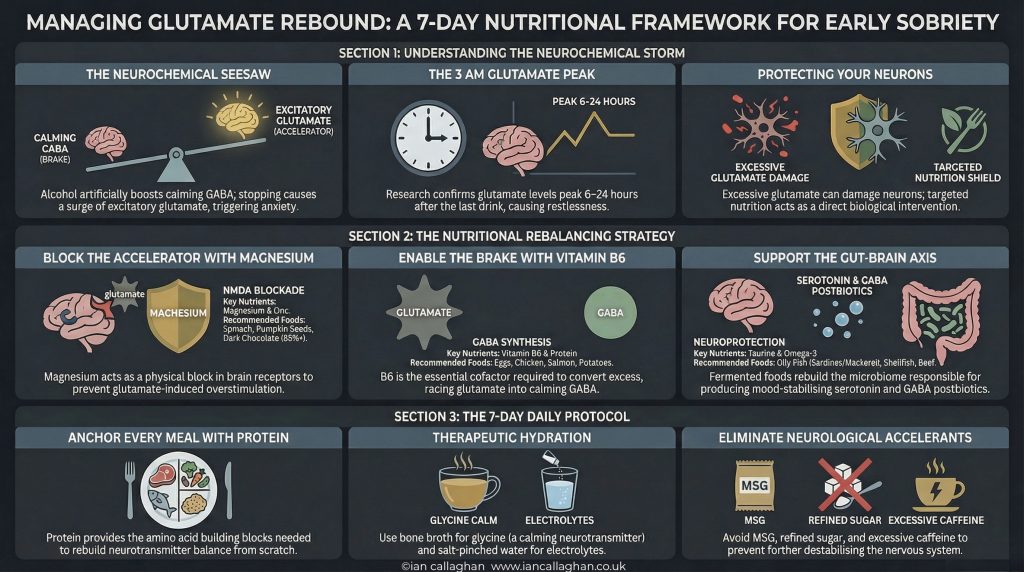
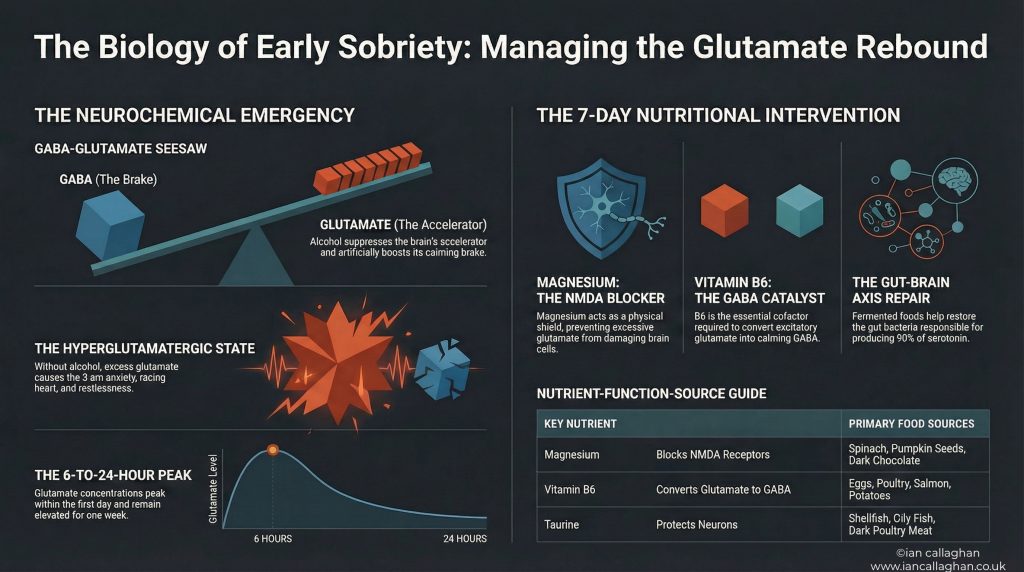
To understand the internal turbulence of early sobriety, one must first appreciate the delicate, binary architecture of brain signalling. Your central nervous system operates on a fundamental balance between two primary neurotransmitters that regulate your level of arousal and calm. They function like a seesaw, a metaphor essential to understanding the “rebound” effect.
GABA (gamma-aminobutyric acid) is your brain’s primary inhibitory neurotransmitter. It is the “brake pedal,” responsible for calming the nervous system, slowing down racing thoughts, and facilitating physical and mental relaxation. Conversely, glutamate is the “accelerator.” It is the primary excitatory neurotransmitter, helping keep you alert, focused, and cognitively engaged. In a healthy, homeostatic state, these two chemicals work in tandem to maintain equilibrium.
Alcohol enters this delicate system with the subtlety of a sledgehammer. It is a potent GABA booster; every drink artificially enhances GABA activity while simultaneously suppressing glutamate. This is the neurochemical mechanism behind the “relief” of the first drink. The “brakes” are slammed on, and the “accelerator” is forcibly turned down. For those who have used alcohol as a chronic stress-management tool, this chemical shift becomes a perceived necessity for survival.
However, the human brain is a master of adaptation. In a process known as homeostasis, the brain attempts to maintain its balance despite the external chemical influence. When exposed to regular alcohol consumption, the brain compensates for the artificial GABA boost by downregulating its own internal GABA production and upregulating its glutamate activity. Essentially, because you are providing an artificial brake (alcohol), the brain responds by weakening its own braking system and building a much larger, more powerful accelerator to compensate. This shift in the internal landscape is the biological definition of tolerance and the precursor to physical dependency.
“Your brain runs on two primary neurotransmitters that balance each other like a seesaw. GABA is the brake pedal, calming, inhibitory, slowing things down, letting you relax. Glutamate is the accelerator, excitatory, stimulating, keeping you alert and activated.”
When we frame cravings and the “3 am anxiety trap” as a physiological imbalance, the shame of “low willpower” evaporates. Willpower is a finite psychological resource; homeostasis is a biological imperative that functions regardless of your “strength.” If your brain has spent years building a massive “glutamate accelerator” to counter alcohol, that accelerator does not disappear the moment you put down the glass. Recognising that your anxiety is simply a brain trying to find its new level of balance—rather than a sign that you are “broken”—is a transformative psychological shift. It turns a moral struggle into a management task.
II. It’s Not in Your Head, It’s on the Scan: The Anterior Cingulate Cortex
One of the most powerful psychological tools in the recovery arsenal is the knowledge that what you are feeling is physically measurable. This is not an abstract “mental” issue; it is a neurological reality that can be observed using advanced medical imaging. This “visible” nature of the struggle helps to de-stigmatise the experience, grounding the discomfort in hard science.
Recent research employing magnetic resonance spectroscopy (MRS)—a specialised scan that measures the concentrations of specific chemicals in the brain in real time—has confirmed that glutamate levels are measurably and significantly elevated during alcohol abstinence. This surge is not global; it is particularly concentrated in the anterior cingulate cortex (ACC). The ACC is the brain’s command centre for emotional regulation, decision-making, and the physiological stress response. It is the region that tells you whether a situation is a minor inconvenience or a life-threatening emergency.
When glutamate levels surge in the ACC without the balancing influence of GABA, the brain enters what researchers call a “hyperglutamatergic state.” This is the scientific term for the internal “volume” being turned up to 10 while the world around you is at 3. This surge typically peaks between six and twenty-four hours after the last drink. While the GABA system begins a very gradual recovery over the first three days, glutamate remains elevated and volatile throughout the first week.
Knowing that this state is “visible on a brain scan” serves as a profound psychological anchor. When the waves of irritability, light sensitivity, or sensory overload hit, you can remind yourself: “My anterior cingulate cortex is currently over-stimulated by a surge of glutamate. This is a temporary, measurable biological state.” This clinical detachment allows you to observe the symptoms with the curiosity of a scientist rather than the despair of a victim. It provides the “map” necessary to navigate the storm without getting lost in the clouds of self-reproach.
III. Magnesium: The Natural NMDA Receptor Blocker
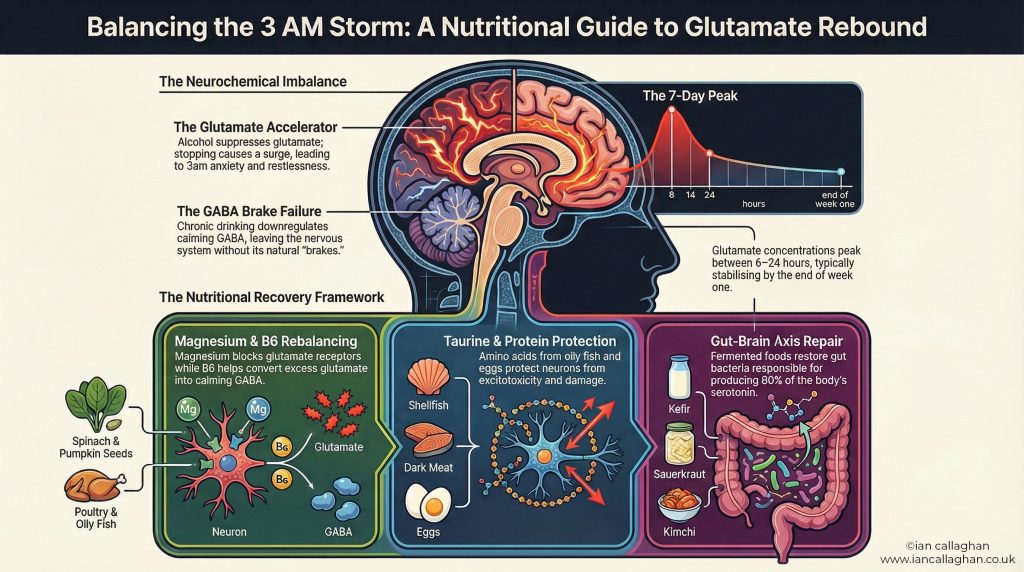
The danger of excess glutamate is not confined to feelings of unease. When glutamate levels remain too high for too long, they can lead to a condition called “neuronal excitotoxicity.” Glutamate acts primarily through NMDA (N-methyl-D-aspartate) receptors, which function like high-velocity channels on the surface of your neurons. When these receptors are overactivated by a glutamate surge, they allow a massive, uncontrolled influx of calcium into neurons. If this calcium overload persists, it can cause direct, oxidative damage to the brain cells, essentially “burning them out” through over-excitation.
This is where magnesium becomes the most critical mineral in your recovery toolkit. Magnesium serves a very specific, physical function in the brain: it acts as a natural blocker of the NMDA receptor. It literally sits inside the receptor channel, acting as a molecular concierge that prevents excessive calcium from flooding the neuron.
Peer-reviewed research published in Australasian Psychiatry in 2025 has confirmed magnesium’s role as a direct neuroprotective agent during alcohol withdrawal. The paper specifically highlighted its role as a naturally occurring NMDA receptor blocker. Unfortunately, alcohol is a potent diuretic and a direct depletor of magnesium, meaning most people entering sobriety are profoundly deficient in the very substance they need to shield their neurons from the glutamate storm.
“Magnesium acts as a natural physical blocker of NMDA receptors, sitting in the receptor channel and preventing excessive calcium entry… This is why early sobriety nutrition is not a nice-to-have. It is a direct intervention in brain chemistry.”
To aggressively replenish this mineral, your diet must prioritise these therapeutic food sources:
- Dark Leafy Greens (Spinach, Kale, Chard): These are not merely side dishes; they are concentrated, bioavailable doses of the mineral your brain requires for protection. A large portion of wilted spinach is a therapeutic intervention.
- Pumpkin Seeds: These are among the most magnesium-dense foods on the planet. They also provide zinc, which is essential for GABA receptor function.
- Dark Chocolate (85% Cocoa and above): Provides magnesium, along with antioxidant flavonoids that support cerebrovascular health. In this context, two squares are a legitimate medicinal tool.
IV. Vitamin B6 and the Conversion Catalyst
While magnesium blocks the “accelerator,” we must also focus on repairing the “brakes.” The brain does not simply wait for GABA to reappear; it synthesises it from the very substance causing the problem: glutamate. This is done by an enzyme called glutamate decarboxylase. This enzyme is the bridge that turns “anxiety” (glutamate) into “calm” (GABA).
However, this enzyme is not self-sufficient. It requires a specific partner to function: Vitamin B6. B6 is the essential cofactor for this conversion. If you are deficient in B6, the process of recycling excess glutamate into GABA slows to a crawl, leaving you stuck in a state of high excitatory tension.
Because alcohol heavily depletes B6 stores, replenishment is an immediate priority. By providing the brain with sufficient B6, you are essentially equipping it with the tools needed to “recycle” your anxiety into tranquillity. Furthermore, it is vital to note that chronic alcohol use also depletes B1 (thiamine). Severe B1 deficiency can lead to Wernicke’s encephalopathy, a serious neurological condition. Thus, a focus on the full B-complex is essential for systemic neurological repair.
Key B6-Rich Sources:
- Poultry: Chicken and turkey are exceptionally high in B6 and provide the tryptophan needed for serotonin.
- Fish: Salmon and tuna provide B6 and serotonin, along with omega-3 fats that reduce neuroinflammation.
- Starchy Vegetables: Potatoes and sweet potatoes offer B6 while providing the glucose stability needed to prevent cortisol spikes.
V. The Marine Support System: Taurine and Oily Fish
Taurine is an amino acid that plays a multifaceted, protective role in managing the neurochemical storm. It acts as a GABA receptor agonist, meaning it binds to the same receptors as GABA to help quiet the brain. Additionally, it is a direct modulator of the NMDA receptor, working in concert with magnesium to prevent glutamate-induced excitotoxicity. Taurine effectively “hyperpolarises” neurons, making them harder to excite and thus more resilient to the glutamate surge.
Taurine is found almost exclusively in animal proteins, with marine life offering the highest concentrations. Shellfish—such as clams, mussels, and oysters—are the gold standard for taurine intake. If shellfish are unavailable, small oily fish like sardines and mackerel are excellent alternatives.
There is profound importance in using “real whole food” rather than pharmaceutical intervention in this specific context. While medications may be necessary for clinical withdrawal, whole foods provide a complex matrix of nutrients—taurine, zinc, B vitamins, and omega-3s—that work synergistically. This approach empowers the individual, moving them from the role of a “patient” waiting for a prescription to an active participant in their own biological repair. Using the “marine support system” is a direct way to dampen the neurological “volume” of the first week.
VI. Astrocytes: The Brain’s Star-Shaped Clean-up Crew
Often overlooked in discussions of neurotransmitters are astrocytes. These star-shaped glial cells surround the synapses in your brain and act as a biological “clean-up crew.” Their primary job in this context is to vacuum up excess glutamate from the space between neurons (the synaptic cleft) and convert it into glutamine. This non-excitatory form can be safely recycled.
When this system is working efficiently, the glutamate rebound is shorter and less intense. However, the astrocyte clearance system is easily impaired by oxidative stress and systemic inflammation—both of which are rampant in the first few days of sobriety. To support these vital cells, you must reduce inflammation at its source.
This requires a strict dietary rule for the first week: eliminating seed oils. Oils such as sunflower, rapeseed, canola, and generic “vegetable” oil are high in omega-6 fatty acids that drive the very inflammation that hinders glutamate clearance. Instead, you should cook with stable, anti-inflammatory fats that support the brain’s architectural integrity:
- Butter or Ghee
- Lard or Beef Dripping
- Extra Virgin Olive Oil (for cold use)
Supporting these fats with the omega-3s found in oily fish and eggs directly enhances the astrocytes’ ability to clear the chemical fog and restore order to the synapses.
VII. The Gut-Brain Paradox: 90% of Serotonin
If you feel “flat,” emotionally fragile, or a lack of motivation during your first week, your gut is likely struggling as much as your brain. We often categorise serotonin as a “brain chemical,” but 90% of it is produced in the gut. Alcohol devastates the gut microbiome, effectively clear-cutting the bacteria responsible for producing serotonin precursors and GABA “postbiotics.”
A 2024 review in the journal Science of Food confirmed that GABA functions as a “postbiotic mediator” in the gut-brain axis. This means that certain bacterial strains can produce GABA directly during fermentation. If your gut is populated with the right microbes, it acts as a secondary “calm factory.”
To repair this system, consistency is more important than quantity. You do not need large amounts of fermented foods; you need regular inputs to begin the recolonisation process.
- Kefir and Live Yoghurt: These provide the bacterial strains that synthesise GABA.
- Sauerkraut and Kimchi: These offer prebiotic fibre alongside live cultures.
- Miso: A gentle, fermented option that supports gut integrity.
Even a single tablespoon of sauerkraut with your lunch can begin repairing a microbiome decimated by years of alcohol exposure.
VIII. Blood Sugar Stability as a Craving Shield
The brain in early sobriety is already in a state of neurochemical chaos. The last thing it needs is the added metabolic stress of blood sugar fluctuations. When your blood glucose drops, your body responds by releasing cortisol—the primary stress hormone. In a brain already dominated by glutamate, a cortisol spike acts as a biological trigger for intense anxiety and “white-knuckle” cravings.
Because alcohol is calorie-dense and often replaces regular meals, your body’s blood sugar regulation is likely compromised. To prevent the “rollercoaster” of spikes and crashes, you must avoid refined sugars and white flours. These provide a fleeting dopamine hit but lead to a rapid crash that amplifies withdrawal symptoms and triggers the “dopamine reward pathway” to seek another quick fix—often in the form of a drink.
Instead, focus on slow-release, complex carbohydrates. Cold-cooked potatoes are particularly useful as they contain “resistant starch,” which feeds beneficial gut bacteria while providing a slow, steady release of glucose. If you experience an intense sugar craving, do not reach for a biscuit. Instead, reach for a boiled egg or a handful of pumpkin seeds. This provides the stable fuel your brain needs to maintain its composure and avoid the “cortisol trap.”
IX. The Surprising Danger of “Free Glutamates”
During the first seven days of sobriety, your NMDA receptors are in a state of hyper-sensitivity. This means your brain is exceptionally vulnerable to any additional dietary sources of glutamate. “Free glutamates” are forms of glutamate that are not bound to proteins. Because they are “free,” they are rapidly absorbed into the bloodstream, bypassing the normal digestive filters that would otherwise regulate their entry.
The most common source is MSG (Monosodium Glutamate), but free glutamates are hidden in many processed foods under various guises. In the first week, you must strictly avoid:
- Soy Sauce and Fish Sauce
- Processed Meats and Instant Soups
- Packet Seasonings and Flavour Enhancers
- Alcohol-free beer and wine (these often contain biogenic amines and fermented sugars that can provoke neurological responses).
There is a “cruel irony,” as Ian Callaghan notes, in how hidden ingredients in processed foods can inadvertently fuel the neurochemical fire. A person might be trying their absolute best to stay sober while eating “convenience” foods that contain high levels of free glutamates, essentially pouring petrol on their internal anxiety without realising it. By sticking to fresh, whole ingredients in the first week, you remove these invisible triggers and give your nervous system the quiet environment it needs to heal.
X. The 7-Day Protocol: A Practical Day of Eating
To synthesise these biological principles into a daily routine, we provide this “scannable” nutritional framework. This plan is designed to deliver a therapeutic dose of magnesium, B6, taurine, and healthy fats while maintaining absolute glucose stability.
- Morning: Two or three eggs (rich in choline and B6) cooked in butter. Serve this with a large portion of wilted spinach (for your magnesium dose) and half an avocado. Drink a large glass of water with a pinch of high-quality sea salt to replenish the electrolytes (sodium and potassium) that alcohol has stripped away.
- Mid-morning: A handful of pumpkin seeds (magnesium and zinc) and a small portion of kefir or live yoghurt to support the gut-brain axis.
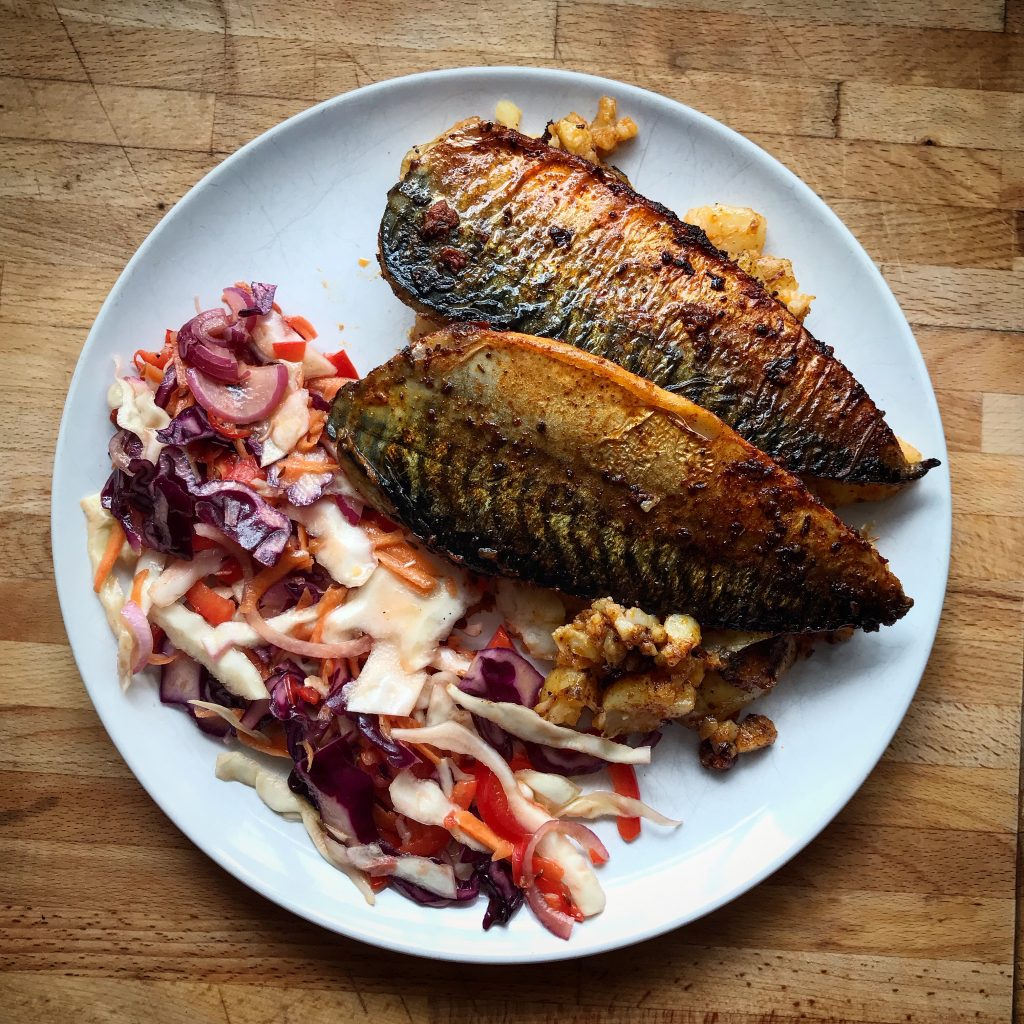
- Lunch: Oily fish—such as sardines or mackerel—served with a salad of cold potatoes (for the resistant starch and B6), dressed with extra-virgin olive oil and a tablespoon of sauerkraut. The taurine in the fish and the probiotics in the sauerkraut work together to calm the ACC.
- Afternoon: Two squares of 85% dark chocolate and a small handful of almonds. If you feel a “dip” in energy or a surge in restlessness, a warm mug of bone broth is exceptionally effective here.
- Evening: Beef or lamb (high in zinc, B vitamins, and the neuroprotective antioxidant carnosine) served with roasted root vegetables and a generous serving of dark leafy greens.
- The Evening Ritual: A mug of warm bone broth before bed. Bone broth is rich in glycine, an amino acid that acts as an inhibitory neurotransmitter in its own right. Glycine has documented sleep-promoting effects and provides a calming counterbalance to the day’s glutamate activity. It is the “biological nightcap” your brain actually needs.
“Understanding the mechanism means you are not white-knuckling it. You are working with your biology rather than fighting it. You are giving your brain what it needs to rebuild rather than simply removing what was destroying it.”
XI. Conclusion: Beyond the First Week
The first week of sobriety is a period of acute biological restructuring. By day seven, the most intense part of the glutamate rebound typically begins to subside. You have “turned the corner,” and your GABA system is beginning its long, slow journey back to dominance.
However, it is important to manage expectations for the months that follow. While glutamate rebalances relatively quickly (within about seven days), other neurotransmitters like dopamine and serotonin—which govern your sense of joy, reward, and motivation—can take two to three months to reach a stable baseline. The “flatness” or low mood you may feel in week three or four is not a sign of failure or “dry drunk” syndrome; it is simply the next phase of the brain’s repair programme.
The nutritional strategies outlined here—the focus on high-quality protein, aggressive magnesium replenishment, B6, and gut health—should not end on day eight. They form the foundation of a metabolic repair process that will support you as long as you choose to remain sober. Ian Callaghan’s success in losing five stone and reversing pre-diabetes is a testament to the power of treating food as a biological intervention.
When you understand the biology behind your anxiety, you stop being a victim of your symptoms and become the architect of your recovery. If your anxiety is a chemical storm, you can navigate with a fork and a map. What else in your life becomes manageable when you understand the biology behind it?
FAQ
What is glutamate rebound in early sobriety?
Glutamate rebound is the neurochemical state that occurs when alcohol is removed after a period of regular drinking. Alcohol artificially boosts GABA, the brain’s calming neurotransmitter, and suppresses glutamate, the excitatory one. The brain compensates over time by downregulating GABA and upregulating glutamate. When alcohol stops, glutamate surges without adequate GABA to balance it, producing anxiety, restlessness, insomnia, and cravings. It typically peaks between six and twenty-four hours after the last drink.
Why do I feel so anxious when I stop drinking?
The anxiety of early sobriety is primarily neurochemical rather than psychological. The glutamate rebound creates a hyperexcitable brain state in the anterior cingulate cortex, the region responsible for emotional regulation. This is a measurable physiological event, not a sign of weakness or inability to cope without alcohol.
What foods help with alcohol withdrawal anxiety?
Foods that support GABA production include those rich in vitamin B6, chicken, salmon, potatoes, and eggs. Foods that buffer glutamate excitotoxicity include magnesium-rich foods, dark leafy greens, pumpkin seeds, and almonds. Taurine from seafood and animal protein directly modulates NMDA receptor activity. Fermented foods support repair of the gut-brain axis and postbiotic GABA production.
Does magnesium help alcohol withdrawal?
Peer-reviewed research confirms magnesium acts as a natural NMDA receptor blocker, buffering the hyperglutamatergic state of alcohol withdrawal. Alcohol depletes magnesium significantly through increased urinary excretion. Replenishing it through dark leafy greens, pumpkin seeds, nuts, or magnesium glycinate supplementation is one of the most evidence-based nutritional interventions in early sobriety.
How long does glutamate rebound last?
The acute glutamate rebound peaks in the first twenty-four hours, and most people see significant improvement by the end of the first week. GABA and glutamate systems continue to rebalance through weeks two to four. Full neurotransmitter normalisation, including dopamine and serotonin, can take two to three months or longer, depending on drinking history.
Can food really make a difference in early sobriety?
Food does not replace medical supervision for dependent drinkers, but it directly provides the raw materials for neurotransmitter synthesis, GABA production, and glutamate clearance. Magnesium, B6, taurine, omega-3 fats, and fermented foods all have documented mechanisms relevant to the neurochemistry of early sobriety. Eating in this direction is not an alternative to other support. It is a foundation that makes everything else more effective.
What should I avoid eating in the first week of sobriety?
Free glutamate sources, including MSG, soy sauce, processed seasonings, and ultra-processed food, add to the neurological glutamate load at a time when NMDA receptors are already hyperactivated. Refined sugar and processed carbohydrates create blood glucose spikes and crashes that elevate cortisol and amplify anxiety. Excessive caffeine increases glutamate release and reduces GABA activity. These are first-week specific recommendations based on the neurochemical state of glutamate rebound.
About the Author: Ian Callaghan is a professional chef with over 40 years of experience in food and nutrition. He is a qualified nutritionist, NLP Master Practitioner, and the author of Fix Your Metabolism, The 30 Day Reset, and Nobody Taught You This. Having stopped drinking and reversed pre-diabetes through nutritional intervention, he now coaches others on the intersection of brain chemistry and metabolic health. You can find his books and personalised coaching programmes at iancallaghan.co.uk.
The 30-Day Reset: Reclaim Your Vitality, Rewire Your Mind, and Reboot Your Body (Digital Ebook)
Stop feeling like a deflated balloon stuffed with sawdust. If you are ready to fix gut health over 40 and finally end the cycle of brain fog and “gut rot,” you need a tactical reboot. My name is Ian Callaghan—Chef, Nutritionist, and former Soldier. I’ve lived the contradiction of professional kitchens and military trenches, and I know exactly why you’re wired, tired, and fed up.
Metabolic Sovereignty: Silence Food Noise & Fix Your Metabolism
Tired of the “Food Noise” and the afternoon energy crash?