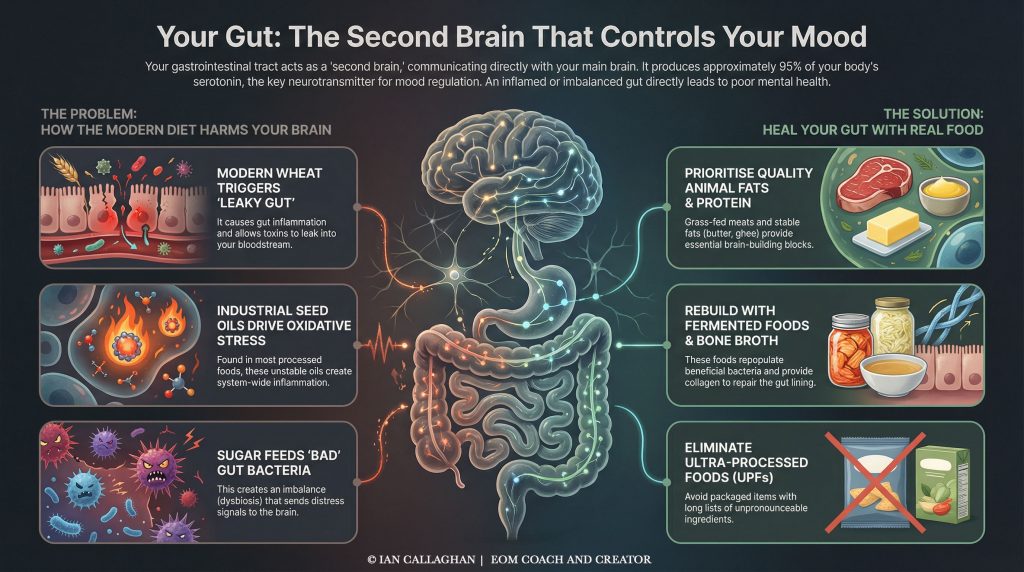
Your Second Brain: Five Surprising Ways Your Gut Dictates Your Mood
Introduction: The Unseen Architect of Your Mood
If you have ever felt persistently low, anxious, or just mentally foggy, you have likely sought the answer within the confines of your own head. We instinctively treat our mental and emotional states as purely psychological phenomena, governed by the complex wiring of our brains. We might blame stress, lack of sleep, or life circumstances, assuming the solution lies in therapy or a change of scenery. This perspective, however, misses a fundamental and powerful truth about human biology.
The real answer to these feelings often lies not in the head, but in a place we rarely associate with our emotions: the gut. Decades of mounting scientific evidence have revealed that the gastrointestinal tract is far more than a simple digestive tube. It houses a complex neural network so vast and influential that it has earned the nickname the “second brain.” This enteric nervous system is in constant, direct communication with our primary brain, creating a profound gut-brain connection that shapes our thoughts, feelings, and overall mental resilience.
This article will pull back the curtain on this unseen architect of your mood. Based on the latest understanding of nutritional neuroscience, we will explore five surprising and powerful ways your gut health dictates your mental and emotional state. By understanding these mechanisms, you can begin to see your plate not just as a source of energy, but as the most powerful tool you have for reclaiming your mind.
——————————————————————————–
1. The Happiness Heist: Why 95% of Your Mood Is Manufactured in Your Gut
When we talk about mood, the first chemical that comes to mind is often serotonin. Popularly known as the “happy chemical,” serotonin is the neurotransmitter responsible for regulating feelings of well-being, calmness, and emotional stability. It is the target of many common antidepressant medications, which are designed to increase its availability in the brain. But what if the brain is not the main place where serotonin is made?
The science is unequivocal: the vast majority of your body’s serotonin is produced in your gut. The enteric nervous system, the intricate web of neurons lining your gastrointestinal tract, serves as the body’s primary manufacturing hub for this critical neurotransmitter. In fact, approximately 95 per cent of the body’s serotonin is produced in the gut, not the brain. This single statistic fundamentally reframes our entire understanding of mental health. It shifts the epicentre of mood regulation from a psychological issue to a gastrointestinal one.
This connection is not abstract; it is physical. The gut and brain are directly linked by the vagus nerve, a vast bidirectional “information superhighway.” This nerve acts as a fibre-optic cable, constantly relaying information about the state of the gut directly to the brain. When the gut is inflamed, irritated, or in a state of dysbiosis, the vagus nerve transmits a ceaseless stream of distress signals upwards. The brain receives this data and interprets it as a systemic crisis, resulting in feelings of anxiety, low mood, and fatigue. An inflamed gut, therefore, directly and unavoidably creates an inflamed and poorly functioning brain.
To understand this dependency, consider the “metropolitan power grid” analogy. Think of your mood as the lights of a bustling city (your brain). For the lights to shine brightly and consistently, they need a reliable supply of electricity. While the lights are in the city, the massive power plant that generates 95% of the electricity (serotonin) is located far away in the industrial district (your gut). If that power plant is poorly maintained, damaged by “corrosive spills” (inflammatory foods), or lacks the necessary fuel (amino acids) from quality protein, the city will inevitably experience a blackout. Your mood darkens not because the wiring in the city is faulty, but because the source of its power has been cut off. Healing your mind, therefore, must begin with repairing the power plant.
——————————————————————————–
2. The Gluten Glitch: How Modern Wheat Opens the Floodgates to Your Brain
For many people, the idea that a piece of toast could be linked to anxiety or depression seems far-fetched. Yet, the connection between modern wheat consumption and mental health is becoming increasingly clear, and the mechanism is rooted in a single, disruptive protein: zonulin. The wheat we consume today is not the same as the ancestral grain our great-grandparents ate. It is a modern, hybridised crop, engineered for high yields and high gluten content. This modification has come at a significant biological cost.
These modern wheat varieties contain high levels of specific proteins that trigger the release of zonulin in the gut. Zonulin is a protein that acts as a master regulator for the “tight junctions” of your intestinal lining. These junctions are microscopic gateways between the cells of your gut wall, designed to remain tightly sealed to keep the contents of your digestive system contained while allowing only fully digested nutrients to pass through into the bloodstream.
When zonulin is released in excess, it acts like a key that unlocks these gateways, causing the tight junctions to open. This creates a condition known as intestinal permeability, or “leaky gut.” When the gut lining is breached in this way, undigested food particles, bacterial toxins, and other inflammatory molecules can “leak” directly from your intestines into your bloodstream. Your immune system, correctly identifying these particles as foreign invaders, launches a full-scale attack, resulting in systemic inflammation that travels throughout your entire body.
This is where the connection to mental health becomes direct and alarming. This wave of systemic inflammation is capable of crossing the highly selective blood-brain barrier, the protective membrane that shields the brain from pathogens and toxins. When inflammatory molecules breach this barrier, they trigger an “immune assault” on the brain itself, leading to a state of neuro-inflammation. The most common and immediate symptom is “brain fog”—that familiar feeling of mental slowness, confusion, and an inability to concentrate. Crucially, this state of chronic brain inflammation also sabotages the delicate biochemical environment required for mood regulation, contributing to the decline of serotonin production and further destabilising your emotional state. This is not a psychological failing; it is a physiological state of brain inflammation.
“Many people who cut out wheat find that their ‘brain fog’ lifts within days. It is not magic; it is simply the cessation of an immune assault on your own system.”
The “high-security fence” analogy helps to illustrate this process perfectly. Imagine your intestinal lining is a high-security fence designed to protect a city, letting in only authorised supply trucks. Zonulin acts like a faulty remote control that is being constantly pressed, accidentally leaving the security gates wide open. With the gates breached, intruders (toxins and undigested food) rush into the city, causing the security team (the immune system) to go into a frantic, city-wide state of high alert. This chaos eventually reaches the city’s “headquarters” (the brain), clouding its ability to process information and disrupting the production of its most vital resource: serotonin.
——————————————————————————–
3. The Seed Oil Sabotage: Are “Healthy” Vegetable Oils Destroying Your Brain Fuel?
For decades, we have been told to replace traditional animal fats like butter and tallow with “heart-healthy” vegetable oils. Walk down any supermarket aisle, and you will find products proudly advertising that they are made with rapeseed, sunflower, soybean, or corn oil. These industrial lubricants masquerading as food are ubiquitous, found in everything from crisps and biscuits to salad dressings and ready meals. Yet, these oils, often marketed as a cornerstone of a healthy diet, may be one of the most destructive components of the modern food environment, particularly for your gut and brain.
The core problem lies in their chemical structure. Industrial seed oils are composed of highly unstable polyunsaturated fatty acids (PUFAs). Unlike stable saturated fats from animal sources, PUFAs oxidise (go rancid) very easily when exposed to heat, light, or oxygen. The industrial process of extracting these oils involves high heat and chemical solvents, meaning they are often already oxidised before they even reach the bottle. When you consume these products, you are ingesting rancid, inflammatory oils that drive significant oxidative stress in the gut lining from the moment they pass your lips.
This constant state of inflammation has a devastating consequence for your microbiome: it sabotages its ability to produce essential compounds your brain needs to thrive. A healthy gut microbiome ferments dietary fibre into short-chain fatty acids (SCFAs), and the most important of these for brain health is butyrate. This is not a minor detail; the brain requires butyrate to function correctly. It is a critical fuel source that supports cognitive function, neuronal health, and mental clarity. When the gut is chronically inflamed by seed oils, the beneficial bacteria responsible for producing butyrate are suppressed. Production grinds to a halt, effectively starving the brain of one of its most vital fuels and leading directly to impaired cognitive function.
“If there is one thing you take away from my forty years of experience, let it be this: ditch the seed oils. Rapeseed oil, sunflower oil, soybean oil, and corn oil are industrial lubricants masquerading as food.”
The “high-performance computer” analogy helps clarify the danger. Think of your brain as a sophisticated, high-performance computer and the fats you eat as its internal hardware components. Stable, traditional animal fats are like high-quality, manufacturer-approved gold circuits that keep the system running cool, fast, and efficiently. Industrial seed oils, in contrast, are like corroded, overheating scrap parts. When you build your computer with these faulty components, the internal temperature rises (inflammation), the power supply (butyrate and serotonin) becomes erratic, and the entire system begins to lag, glitch, and eventually crash. To restore performance, you must stop installing the scrap parts and start using the high-quality hardware your system was designed for.
——————————————————————————–
4. The Sugar Trap: How Sweets Feed the “Bad Guys” in Your Gut
Sugar and refined carbohydrates are well-known for their negative effects on metabolic health, but their impact on mental well-being is just as profound and operates through a direct assault on the gut microbiome. The delicate ecosystem of trillions of bacteria in your gut is highly competitive. Different species have different dietary preferences, and what you choose to eat determines which groups thrive and which are suppressed.
Sugar is the preferred fuel source for pathogenic bacteria and yeasts, such as Candida. When your diet is high in sugar and refined carbohydrates, you are selectively feeding these “bad guys,” allowing them to multiply rapidly. As their populations explode, they begin to crowd out the beneficial bacteria—the species responsible for protecting the gut lining, synthesising essential vitamins, and producing the neurotransmitters that regulate your mood. This hostile takeover creates a state of imbalance known as dysbiosis.
A gut in a state of dysbiosis is not a silent problem. This imbalanced microbial community sends a constant stream of “distress signals” up to the brain via the vagus nerve. The brain interprets this incoming data as a sign that something is critically wrong in the body’s core operating system. Clinically, this chronic state of alarm can manifest as persistent feelings of anxiety and depression. Your mind is, in effect, accurately reflecting the biological chaos occurring in your gut.
This disruption also directly impacts your brain’s chemical balance. A healthy microbiome is essential for maintaining what can be called the “biochemistry of happiness.” The beneficial bacteria crowded out by sugar are the very ones that play a crucial role in the production of serotonin. A gut dominated by pathogenic species simply cannot sustain the biochemical environment needed for stable mood and motivation. You are, quite literally, starving the good bacteria that manufacture your happiness while feeding the bad bacteria that create feelings of distress.
The “sensitive organic garden” analogy effectively captures this dynamic. Imagine your microbiome as a meticulously tended organic garden, designed to produce a rich harvest of nutrients for the “headquarters” (the brain). Sugar and seed oils act like ‘corrosive chemical runoff’ that continuously floods the garden. This toxic runoff poisons the soil (the gut environment) and selectively kills off the beneficial plants while allowing aggressive weeds (pathogenic bacteria) to take over. Once the soil is contaminated and the beneficial plants are gone, the garden can no longer produce its intended “harvest” of butyrate and serotonin, leaving the headquarters undersupplied and malfunctioning.
——————————————————————————–
5. The Ancient Solution: Using “Biological Sealant” to Repair Your Gut-Brain Connection
After understanding the relentless assault of the modern diet on our gut lining and microbiome, the path to healing may seem daunting. However, the solution is not found in a futuristic drug but in an ancient, traditional food that our ancestors understood intuitively. Within the Paleo framework, which emphasises biologically appropriate foods for human health, bone broth stands out as the “ultimate gut-healing superfood.”
Its power lies in its unique concentration of reparative nutrients, chief among them collagen, glycine, and especially glutamine. While all are beneficial, glutamine plays a particularly critical role in gut repair. It serves as the primary fuel source for the enterocytes—the cells that make up the lining of your gut. By providing these cells with their preferred energy, you empower them to regenerate, maintain their integrity, and perform the essential repair work needed to undo the damage caused by years of inflammatory foods.
Crucially, bone broth serves as the direct antidote to the problems detailed earlier. Its rich supply of glutamine and collagen provides the exact building blocks needed to “seal the tight junctions” of the gut lining. This act directly reverses the damage caused by the wheat-induced zonulin release described in section two, patching the holes in the gut’s protective barrier. By repairing the physical integrity of the gut, bone broth stops the leakage of undigested food and toxins into the bloodstream, halting the primary driver of systemic inflammation.
This act of sealing the gut has profound downstream benefits for the brain. Halting the source of systemic inflammation prevents inflammatory molecules from crossing the blood-brain barrier. This helps to clear the persistent brain fog that plagues so many and reduces the neuroinflammation that contributes to mood instability. Furthermore, a healed gut provides a stable, healthy environment where beneficial bacteria can once again thrive. With the pathogenic “weeds” cleared and the integrity of the gut wall restored, the microbiome can get back to its most important job: manufacturing the 95% of your body’s serotonin required for a calm and resilient mind.
The “meticulously woven filter” analogy provides a clear picture of this healing process. Think of your gut lining as a fine, meticulously woven filter designed to keep debris out of your body’s “bloodstream plumbing” while allowing pure nutrients to pass through. Corrosive chemicals like sugar and wheat effectively burn holes in this filter, allowing waste and contaminants to pollute the entire system. Bone broth acts as a “high-grade liquid sealant.” It delivers the specific “patching material” (glutamine and collagen) needed to expertly mend those holes, restoring the filter to perfect working order and ensuring that the “headquarters” (the brain) receives a clean, unpolluted supply of fuel.
——————————————————————————–
Take Control of Your Plate to Reclaim Your Mind
The evidence is clear and compelling: your mental well-being is not an isolated phenomenon that occurs exclusively between your ears. It is deeply and inextricably rooted in the health of your gastrointestinal system. The modern diet, with its reliance on inflammatory wheat, toxic seed oils, and microbiome-disrupting sugar, has declared war on our gut, and our minds are suffering the collateral damage. We have been led to believe that feelings of anxiety, depression, and brain fog are personal failings, when they are often the predictable biological consequences of poisoning our “second brain.”
But this understanding is not a cause for despair; it is a source of immense empowerment. Healing is not only possible but also profoundly straightforward. The solution does not lie in a complex prescription, but in a return to the simple, nourishing principles of our ancestral past. By systematically removing the primary antagonists—wheat, seed oils, and sugar—and actively nourishing the gut with real, nutrient-dense foods like those found in a Paleo framework, you can reverse the damage.
When you prioritise stable animal fats, quality animal protein, and gut-healing superfoods like bone broth, you do more than just improve your physical health. You are providing your body with the raw materials it needs to extinguish the fires of inflammation, seal the protective barrier of your gut, and cultivate a thriving internal ecosystem. You are creating the conditions necessary for your own biology to produce the very biochemistry of happiness. The connection between what is on your plate and what is in your mind is the most powerful tool you have. What could your next meal do for your mental health?

Emotional Mastery: The Emotional Operating System
The Emotional Mastery book is a practical manual for understanding and regulating the human nervous system using the Emotional Operating System framework.
Instead of analysing emotions or retelling your past, the Emotional Mastery book teaches you how to read emotional states as system feedback, identify overload, and restore stability under pressure.
No labels. No therapy-speak. No endless healing loops.
Just a clear, operational approach to emotional regulation that actually holds when life applies load.
Instant digital download.