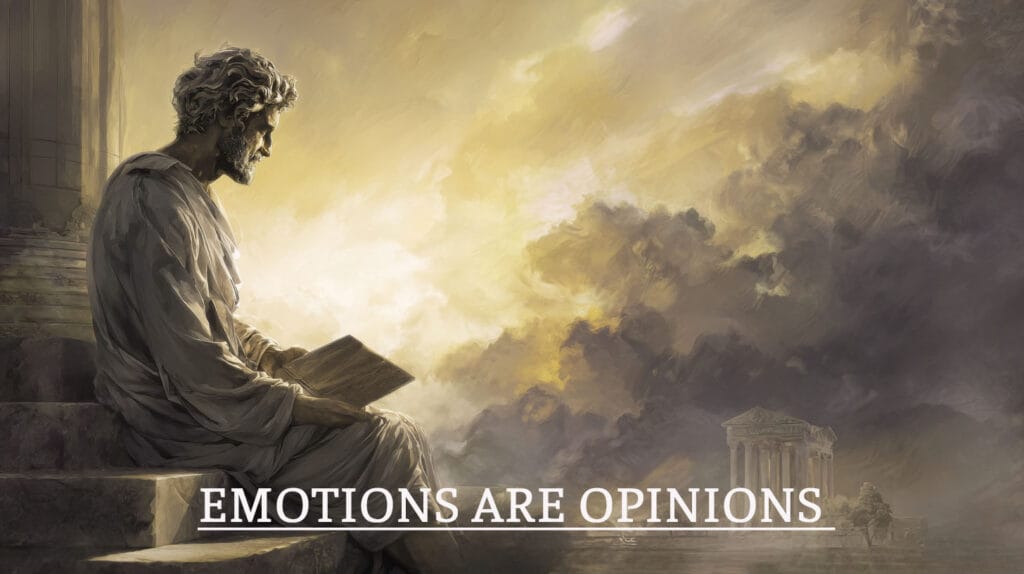
Alright, let’s cut the bollocks. You’re probably sitting there, mid-thirties, forties, maybe even pushing fifty, feeling a bit lost, a bit shit, wondering where the hell the time went and why you’re not where you thought you’d be. You’re bombarded with self-help gurus telling you to “lean into your feelings” or “honour your emotions.” Well, I’m here to tell you something that’s going to hit you like a cold, hard slap to the face: emotions are opinions. Yeah, I said it. Your feelings? They’re just your brain’s take on the situation, not the gospel truth. And understanding that – truly understanding it – is the fucking key to unlocking your midlife reset.
I’m Ian, 57 years old, and I’ve seen some shit. Over a decade in the British Army hammered this lesson into me, and then 45 years of boozing, which I finally kicked 8 months ago, showed me just how easy it is to let those emotional “opinions” run your entire fucking life into the ground. This isn’t some fluffy theory; this is hard-won wisdom from the trenches of actual living. If you’re sick of feeling like a passenger in your own life, stuck reacting to every emotional gust, then listen up. This truth will set you free, but it ain’t gonna be comfortable.
The Battlefield of the Mind: What the Army Taught Me About Emotional Control
When you’re in the military, especially in certain roles, you quickly learn that your emotions can get you, or your mates, killed. There’s no room for self-indulgent wobbles when rounds are flying, or you’re navigating a minefield, or you’re watching a friend go down. You learn to compartmentalise, to shut down the noise, and to focus on the task at hand. Your fear, your anger, your grief – those are luxuries you can’t afford in the moment. They are, quite literally, opinions your brain is generating about a very real, very dangerous situation. If you act solely on those opinions, you’re fucked.
Now, that’s an emotion: fear. And my brain was giving me a strong opinion about it. If I’d given in to that opinion, bolted, panicked, or frozen up, it wouldn’t have just been my arse on the line. It would have jeopardised the entire patrol. So, what do you do? You acknowledge it. “Right, Ian, you’re scared. That’s a valid opinion from your lizard brain.” But then you push it down, you compartmentalise, and you focus on the facts: my rifle is loaded, my section commander is giving orders, I know my arcs of fire. My action has to be based on reality and training, not on the visceral, gut-wrenching opinion of fear.
That wasn’t about being a robot; it was about being effective. It was about choosing how I responded, rather than simply reacting. The Army taught me that those intense feelings are just signals, data points. You don’t have to blindly follow them. You can observe them, assess them, and then make a conscious decision about what to do next. It’s the ultimate training in understanding that emotions are opinions, and you get to choose whether those opinions dictate your actions or if you use them as information.
My 45-Year Battle with the Bottle: The Ultimate Emotional Escape (and The Lie I Told Myself)
Fast forward many years, out of the Army, and I found a different battlefield: the inside of my own head, fuelled by a different kind of ammunition – alcohol. For 45 fucking years, I drank. It started casually, as it often does, a way to unwind, to socialise. But for decades, it became my go-to response for every emotional opinion my brain threw at me.
Feeling stressed after a crap day at work? Opinion: I need a drink to relax.
Feeling lonely? Opinion: A few pints will make me feel connected, or at least numb the ache.
Feeling happy? Opinion: Let’s celebrate with a bottle (or three).
Feeling anxious about something? Opinion: Alcohol will quiet those nagging thoughts.
Do you see the pattern? Each emotion, each passing feeling, was interpreted as a command, an instruction to pick up a glass. My brain, the devious bastard, had formed a deeply ingrained opinion that alcohol was the solution to every emotional state. It was a lie, a comfortable, insidious lie that slowly but surely eroded my health, my relationships, and my self-respect.
The real brutal truth was, I wasn’t dealing with my emotions; I was suppressing them. I was trying to silence the opinions rather than questioning their validity. When the anxiety bubbled up, instead of asking, “Why am I feeling this? What’s the real issue here? Is this ‘anxiety’ opinion serving me?”, I’d reach for the bottle. I was outsourcing my emotional management to a liquid crutch, and it was fucking destroying me.
Eight months ago, I finally hit rock bottom with the booze. It wasn’t one dramatic event, but a slow, grinding realisation that I was a slave to these emotional opinions and the alcohol they demanded. Quitting was the hardest thing I’ve ever done – harder than any military exercise, any deployment. It was a brutal, physical, and mental rewiring. Every fibre of my being screamed for that chemical comfort. My brain, used to its old opinions, would tell me, “You’re miserable. Just one. It’ll make you feel better.” It was a constant war.
But this time, I fought differently. I started observing those opinions. “Ah, there’s the ‘miserable’ opinion. Interesting. Is it true? Or is it just a familiar pathway my brain wants to follow?” I used the discipline the Army taught me, but applied it to my internal landscape. I learned to sit with the discomfort, to let the emotional waves wash over me without drowning in them. I learned that an emotion, no matter how powerful, is a fleeting thing if you don’t feed it with your reaction. It’s a suggestion, not a command. Emotions are opinions, and I finally realised I didn’t have to agree with them, especially the ones that were ruining my life.
Ancient Wisdom, Modern Battleground: Why the Old Boys Knew Your Bollocks Better Than You Do
This idea that emotions are opinions isn’t new. We’re not reinventing the wheel here. The ancient philosophers, the Stoics like Chrysippus and Epictetus, and even the Epicureans and Aristotle, were grappling with this same shit thousands of years ago. They understood the human condition, the struggle between our immediate urges and our rational minds, far better than most of the fluffy Instagram gurus peddling positive vibes today.
Chrysippus and the Stoics: These blokes were the OG no-nonsense crew. They didn’t say, “Don’t feel anything.” That’s a common misconception. What they said was, your initial gut reaction – that ‘impression’ – isn’t necessarily reality. It’s your judgment about that impression that causes distress. If you judge something as ‘bad’ or ‘terrible’ or ‘catastrophic’, then you’re going to feel fear, anger, despair. But if you see it as ‘challenging’ or ‘an opportunity to test yourself’ or simply ‘an external event outside my control’, then your emotional response shifts entirely. Your emotional response isn’t the truth; it’s a value judgment you’re slapping on reality. It’s an opinion. They understood that you can choose to agree with that opinion, or you can choose to challenge it.
The Epicureans: Often misunderstood as just pleasure-seekers, Epicurus actually taught about finding ataraxia – a state of freedom from disturbance. This wasn’t about wild indulgence, but about achieving tranquillity through rational thought, reducing desires, and overcoming fear (especially of death). He knew that chasing every fleeting pleasure or avoiding every discomfort blindly would lead to a shitty, unfulfilled life. Instead, he advocated for a considered, balanced approach to life’s experiences. Again, the emotional ‘opinion’ that this pleasure is essential, or this pain must be avoided at all costs, was to be scrutinised.
Aristotle and the Golden Mean: Aristotle taught us about virtue lying in the ‘golden mean’ – the balance between two extremes. Cowardice and rashness are both vices; courage is the virtue in the middle. Being emotionless isn’t wise, but neither is being a slave to every whim. It’s about feeling the right emotion, at the right time, for the right reason, and to the right degree. That requires conscious choice, not just letting your primitive brain run the show. It means understanding that your anger, for example, is an opinion. Is it a justified opinion at this moment? Is it proportionate? Or is it just a knee-jerk reaction that’s going to make things worse?
These ancient bastards understood that humans are driven by a constant internal dialogue, a stream of thoughts and feelings. But they also knew that we have the capacity for reason, for higher-order thinking. We don’t have to be slaves to our biology. Your gut feeling, your initial emotional surge, is a data point. It’s information. It’s an opinion. But it’s not a command. You have the power to decide if you’re going to act on that opinion or if you’re going to forge a different path. That’s the real power of recognising that emotions are opinions.
The Midlife Reset: How to Change Your Fucking Opinion and Reclaim Your Life
So, you’re here, midlife, perhaps a bit battered, a bit disillusioned. You’re probably tired of the same old patterns, the same old emotional merry-go-round. Now you know the truth: emotions are opinions. So, how do you start changing those opinions and truly reset your life?
It’s not some magic pill. It’s hard, deliberate work. Just like kicking a 45-year drinking habit, or surviving a dangerous patrol. But it’s absolutely doable.
1. Identify the Opinion, Not Just the Emotion
When you feel something – anger, frustration, anxiety, sadness – don’t just label the emotion. Dig a little deeper. What’s the story your brain is telling you about that emotion? What’s the opinion it’s forming?
Instead of: “I’m so angry!”
Try: “I’m feeling anger, and the opinion my brain is offering is that this situation is unfair and disrespectful, and I should lash out.”
See the difference? You’re dissecting the opinion, not just being consumed by the feeling.
2. Create the Pause: Your Gap of Power
Between the stimulus (what happens) and your response (how you react emotionally and physically), there’s a tiny, crucial gap. That’s your power zone. It’s where you decide if you agree with your brain’s opinion or not.
Practice: When that surge of emotion hits, literally pause. Take a deep breath. Count to five. Just that small act creates a microsecond of space where you can intervene. This is where you can apply that military discipline. Don’t react. Observe.
3. Question the Opinion: Is It Serving You?
Once you’ve identified the opinion and created the pause, challenge it. Ask yourself:
Is this opinion actually true? Is it the only truth?
Is this opinion helping me achieve my goals, or is it holding me back?
What’s another, more constructive opinion I could form about this situation?
What would someone I respect, someone who embodies the person I want to be, think or feel in this situation?
This isn’t about denying your feelings; it’s about not being a slave to them. It’s about choosing your perspective. You have the choice to reframe. Perhaps that feeling of ‘failure’ isn’t an opinion that you are a failure, but an opinion that ‘this particular attempt didn’t work, and there’s a lesson here.’
Your actions should stem from your values and your long-term goals, not just the fleeting emotional opinions of the moment. If your goal is health, but your emotional opinion is “I feel like shit, so I deserve a massive takeaway and a bottle of wine,” you know which one to choose.
This is where the real work of self-discipline comes in. This is where you get to build new neural pathways, new habits, and a new, stronger version of yourself. This is where my knowledge of NLP and hypnotherapy comes in handy, but you don’t need fancy jargon. You just need the grit to consistently choose the harder, more beneficial path over the easy, comfortable one dictated by a transient feeling.
And let’s be clear: you can’t build a robust, emotionally resilient mind if your body is a fucking mess. Your nutrition is foundational. Stick to ancestral, whole foods. Nose-to-tail. Cut the processed crap. Absolutely no soy (except properly fermented stuff like tempeh or natto in moderation, and never tofu – especially not for women, it’s a hormonal disaster). Optimise your sleep. Move your body. These aren’t optional extras; they’re the bedrock upon which you build your new, strong self.
The Final Word
Stop letting your emotions run your fucking life. They’re just opinions, whispered by your brain based on past experiences and current interpretations. You have the power, the discipline, and the sheer human will to challenge those opinions, to choose your response, and to forge a life that’s truly yours. This midlife reset isn’t about finding yourself; it’s about building yourself, brick by bloody brick. Start by taking control of your opinions. The rest will follow.
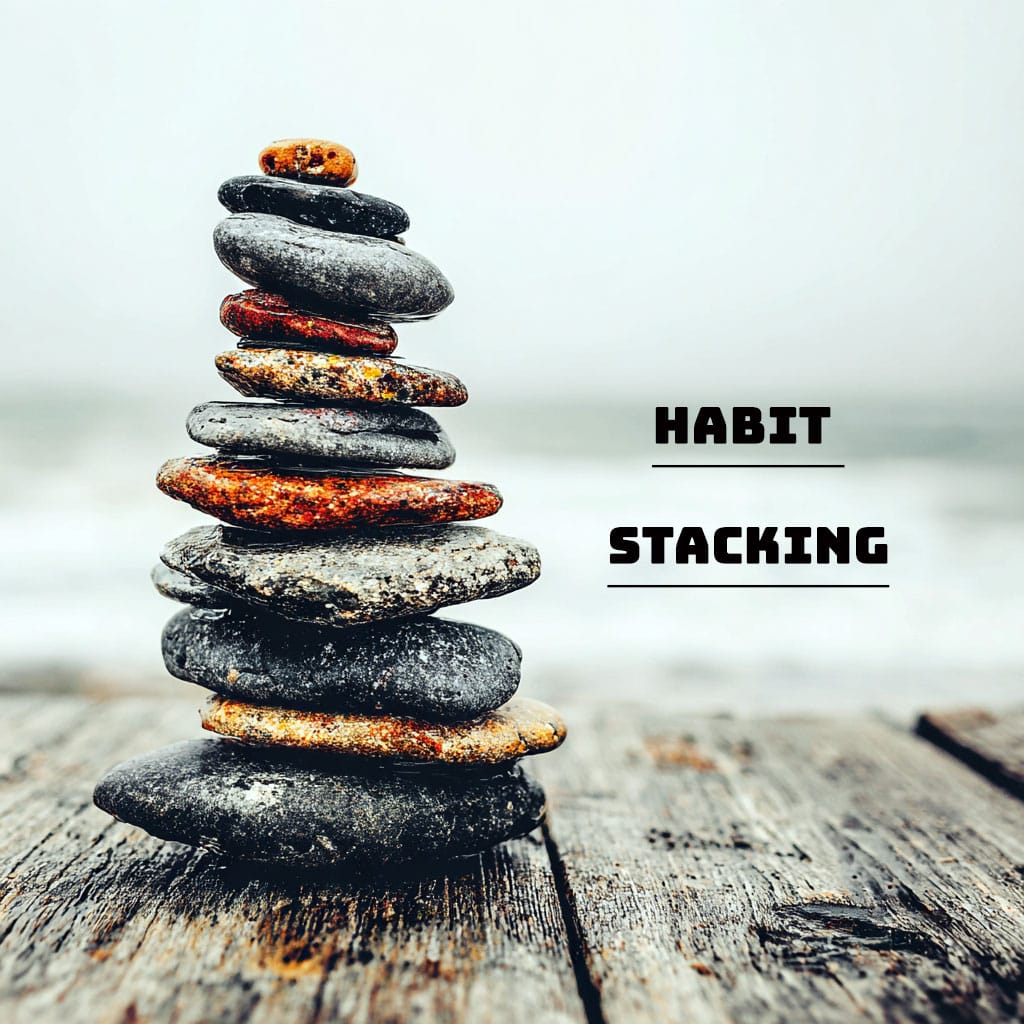
Habit Stacking. Alright, listen up. If you re here, you”re probably sick of the same old fluffy self-help bullshit that promises you the world and delivers a half-arsed whisper. You”re likely in your mid-thirties, forties, or fifties, looking in the mirror and thinking, “Is this it? Is this all I”ve got?” Maybe you”re tired, flabby, drinking too much, or just feel like you”ve lost your fucking way. I get it. I was there. Hell, I was there for 45 bloody years of drinking, before I finally said “no more” 8 months ago. That wasn”t some magic 21-day fix, trust me. That was a brutal, grinding war of attrition against myself. And the weapon I used, the one that can help you reclaim your life, is called Habit Stacking.
Now, before you roll your eyes and think this is another one of those “five easy steps” articles, let me stop you. This isn’t easy. This isn’t for the faint of heart. This is about rewiring your brain and body, brick by fucking brick, and it takes grit. But it works. I’m living proof. I spent over 12 years in the British Army, where discipline was “t a suggestion, it was survival. And I ve applied that same no-nonsense approach to my own life, to my coaching, and to building habits that actually stick. We”re going to strip away the bullshit, ditch the myths, and get down to the brass tacks of how to build a life you actually want to live, using principles that are as old as time itself.
Ditching the “21-Day Habit” Bollocks: Why Most Self-Help Fails You
Let’s address the elephant in the room, shall we? You’ve heard it, I’ve listened to it, everyone’s heard it: “It takes 21 days to form a habit!” Absolute rubbish. Utter fantasy. This pervasive piece of pop psychology originated from Dr. Maxwell Maltz, a plastic surgeon in the 1960s, who observed that his patients required at least 21 days to adjust to their new appearance. That’s “at least,” not “exactly.” Somewhere along the line, it got twisted into this concrete, comforting lie that if you just do something for three weeks, you’re sorted. Fuck that.
I spent 45 years drinking. You think it took me 21 days to break that cycle? My arse it did. It took months of white-knuckle determination, of fighting the primal urge, of literally shaking as my body screamed for another hit. It took rewiring decades of deeply ingrained neural pathways. The truth is, how long it takes to form a habit varies wildly. It depends on the habit itself – is it a simple daily walk or quitting a lifelong addiction? It depends on you – your motivation, your environment, your mental fortitude. Some studies suggest the average is more like 66 days, but even that’s just an average. For some, it’s a week. For others, it’s a year, or a lifetime of conscious effort. Don’t let a made-up number be your excuse to quit when it feels hard.
The real lesson here is consistency, not chronology. It’s about showing up, day in and day out, even when you don’t feel like it. Especially when you don’t feel like it. That’s where the change happens. That’s where you build true resilience. The 21-day myth is a comfort blanket for those who want an easy way out. There ain’t no easy way out when you’re rebuilding your life. There’s just hard work, repeated often enough, until it becomes who you are.
The 3Rs of Habit Building: My Unfiltered Take
Okay, so the 21-day myth is busted. Now what? We need a framework, a structure to build these new, better habits. The classic model is “Cue, Routine, Reward.” I like it, but I’m going to strip it down and give it to you straight, my way. Think of it as Remind, Routine, Reinforce.
1. Remind (The Trigger, The Cue): Make It Fucking Obvious
This is where it all starts. What makes you do the thing you want to do? Or, more importantly, what will trigger the new thing you want to do? If you leave it to willpower, you’re fucked. Willpower is a finite resource. You need to engineer your environment and your schedule so that the habit is almost impossible to ignore.
In the Army, everything was a reminder. Your kit lay out perfectly. Your boots are polished. Your uniform is pressed. If you forgot something, or it was t ready, there were immediate, unpleasant consequences. That’s a powerful reminder.
For you, it might be:
External Cue: Lay out your gym clothes before bed. Put your water bottle next to your keys. Put the book you want to read on your pillow. Move the shit food out of the house. If it’s not there, you can’t eat it.
Internal Cue: Link it to an existing habit. This is where the magic of Habit Stacking comes in, which we’ll dig into deeper. “After I finish my morning coffee, I will meditate for 10 minutes.” The coffee becomes the reminder.
Your job is to make the desired action so damn obvious that you practically trip over it. Don’t make excuses; make it unavoidable.
2. Routine (The Action, The Doing): Just Fucking Start
This is the actual work. The doing. The showing up. The consistent effort. This is where most people fall because they try to do too much, too soon. They go from zero to hero and burn out in a week.
My advice? Start ridiculously small. So small it feels stupid. If you want to run, don’t aim for 5k. Aim to put on your trainers. If you want to write, don’t aim for a chapter. Aim for one sentence. The goal in the beginning isn’t performance; it’s consistency. It’s about building the identity of someone who runs, or someone who writes, or someone who meditates.
When I quit drinking, I did t just magically stop. My “routine” initially was just surviving each hour without a drink. Then it was each day. Then I started stacking on other routines: getting up early, moving my body, eating food that actually nourished me. It was a brutal consistency, but it started with just saying “no” one more time. The trick is to focus on the first step of the routine, and make that step so easy that you can’t say no.
3. Reinforce (The Reward): What’s In It For You?
Humans are wired for reward. If there’s no payoff, why bother? But here’s the crucial part: the reward does t always have to be immediate or external. In fact, the most powerful rewards are often internal and delayed.
When you stick to a habit, you get a hit of dopamine. That’s your brain saying, “Good job, do that again!” But beyond that, there’s the profound satisfaction of integrity, of showing up for yourself. The feeling of energy after a good workout, the clarity after meditation, the peace of mind knowing you made a healthy food choice. These are the real rewards.
For me, the ultimate reward of quitting booze was”t just physical health, although that’s massive. It was reclaiming my mind, my self-respect. It was the ability to look my kids in the eye, fully present. That feeling is worth more than any fleeting high a bottle of whisky ever gave me. When you’re building habits, explicitly acknowledge the reward, no matter how small. “After I meditated, I felt calmer.” “After I tidied the kitchen, I felt a sense of order.” This reinforces the behaviour and makes your brain crave that positive outcome again.
Ancient Wisdom for Modern Habits: What the Old Boys Knew
We think we’re so clever with our apps and our algorithms, but the fundamental truths about human behaviour have t changed in millennia. The ancient philosophers understood habits better than most modern self-help gurus. They did t call it Habit Stacking, but they lived its principles.
The Stoics: Discipline, Control, and Embracing the Suck
Marcus Aurelius, Seneca, Epictetus – these blokes were “just sitting around in togas pondering the universe. They were practical philosophers, focused on living a good life through reason and virtue. And central to that was discipline and self-control, the very bedrock of habit formation.
Focus on what you can control: You can’t control whether it rains, but you can control whether you go for that run. You can’t control your boss’s mood, but you can control your morning routine. This stoic principle is vital for habit building. Stop whining about external factors and focus on your actions.
Embrace discomfort: The Stoics believed in voluntarily exposing themselves to discomfort – cold baths, simple food – to build mental resilience. Sound familiar? That cold shower isn’t just about the physical benefits; it’s about telling your inner whiny bitch to shut the fuck up. It’s a small win, a habit that builds mental toughness, and those small wins stack up. My Army training was essentially Stoicism in practice: embrace the suck, get on with it, control your reactions.
Morning routines: Many Stoics had rigorous morning routines – meditation, journaling, and planning their day. This isn’t new-age fluff; it’s an ancient, powerful form of Habit Stacking. Start your day with intention, and the rest of your habits fall into place more easily.
Epicurus: Rational Pleasure, Not Hedonism
Now, don’t confuse Epicureanism with gluttony and drunken excess. That’s a common misconception. Epicurus actually advocated for a life of simple pleasures and the absence of pain. True pleasure, for him, was tranquillity, friendship, and freedom from fear. This isn’t about chasing every fleeting desire, but about finding sustainable, profound satisfaction.
How does this relate to habits? It helps us redefine the “Reward” aspect of our 3Rs. Instead of seeking the quick hit of processed food or another drink, an Epicurean approach would guide you towards the lasting pleasure of a healthy body, a clear mind, and meaningful connections. These are the real rewards that well-chosen habits bring. It’s about choosing the habits that lead to a deep sense of well-being, not just a temporary buzz.
Aristotle: Virtue Through Consistent Action
Aristotle’s virtue ethics argued that excellence isn’t an act, but a habit. You become courageous by doing courageous things. You become just by acting justly. Your character is built through your repeated actions. This is perhaps the most profound philosophical insight into habit building.
We are what we repeatedly do: If you repeatedly eat shit food, you become someone who eats shit food. If you repeatedly skip the gym, you become someone who skips the gym. Conversely, if you repeatedly nourish your body, you become healthy. If you repeatedly challenge yourself, you become resilient. Your habits define who you are, whether you like it or not.
Developing practical wisdom (Phronesis): Aristotle emphasised applying the right virtue, or habit, in the right situation. This means your habit-building isn’t just mindless repetition; it’s a conscious, wise choice. You develop the discernment to know which habits serve your higher purpose and which drag you down.
So, while they did t have “Habit Stacking” workshops, these ancient thinkers understood that a good life is forged in the crucible of daily, consistent, intentional actions. They understood that who you become is a direct result of what you repeatedly do.
The Real Power of Habit Stacking: Leveraging Your Existing Routine
Alright, let’s get down to the brass tacks. We’ve debunked the myths, we’ve got a solid framework in the 3Rs, and we’ve seen that the ancients were on to something. Now, how do we actually do this Habit Stacking thing? Simply put, it’s about attaching a new habit to an existing one. You’re leveraging the momentum of an established routine to kickstart a new one. It’s deceptively simple, but incredibly powerful.
The formula is: “After [CURRENT HABIT], I will [NEW HABIT].”
Why does this work so well? Your brain loves efficiency. It already has neural pathways for your existing habits. By linking a new behaviour to an old one, you’re essentially piggybacking on those established pathways. You’re not starting from scratch; you’re adding a new carriage to an existing train.
Let me give you some real-world examples from my own life, especially since I started my midlife reset and kicked the booze:
“After I pour my morning coffee, I will do 5 minutes of mindful breathing.” For decades, coffee was the start of my day. Now, instead of just grabbing it and checking my phone, I use that existing ritual as a trigger for a short meditation. It grounds me, sets the tone, and keeps me sharp. No woo-woo, just fucking effective.
“After I finish eating dinner, I will immediately wash my plate and clean the kitchen.” In the Army, you cleaned your mess tin straight away. No leaving it for later. This applies to life. Don’t let things pile up. This little habit, stacked onto the end of eating, saves me mental energy later and keeps my space orderly. Order in your environment, order in your mind.
“After I finish my morning workout, I will do 10 minutes of mobility work.” I used to just finish training and collapse. Now, I use the completion of the workout as the cue to stretch, roll, and properly cool down. This has drastically improved my flexibility and reduced aches. It’s a small addition that pays massive dividends.
“After I turn off the news, I will read 10 pages of a book.” I used to let the negativity of the news spiral into more screen time. Now, the act of switching it off is my cue to transition to something productive and calming. Reading, learning keep the mind sharp, especially as you get older.
“After I go to the toilet, I will do 5 squats.” This sounds stupid, I know. But think how many times you go to the toilet in a day. Each time is an opportunity for a micro-habit. It’s about finding those little pockets of opportunity to stack on something beneficial, even if it’s just five extra movements.
Identifying Your Anchor Habits
To make Habit Stacking work, you need to identify your existing, reliable anchor habits. What do you do every single day, without fail? These are your hooks.
Waking up
Brushing your teeth
Having a coffee/tea
Eating a meal
Checking your phone (yes, you can stack good habits after this one, too)
Going to bed
These are your opportunities. Don”t try to invent entirely new blocks of time. Just append a new, small behaviour to something you already do on autopilot. The key is to start small. Ridiculously small. Don”t try to meditate for an hour after your coffee if you”ve never done it before. Start with one minute. Then two. Build momentum. This isn”t a sprint; it”s a goddamn marathon.
The Environment Matters, Too
Remember the “Remind” part of our 3Rs? Your environment is a massive player in Habit Stacking. Make it easy for your new stacked habit to happen. If you want to do five squats after going to the toilet, make sure you don’t have to walk across the house to find a clear space. If you want to read after the news, have the book open and ready.
Conversely, remove friction for bad habits. If you want to stop snacking on crisps, don’t buy the fucking crisps. It sounds simple, but people constantly underestimate the power of their environment. Engineer your world for success, and the habits will follow with far less struggle.
No More Excuses: Your Midlife Reset Starts Now
Look, I’m 57. I’ve seen a lot of shit, fucked up a lot, and learned some brutal lessons the hard way. There’s no magic pill, no instant fix, and certainly no 21-day miracle for truly transforming your life. It’s a grind. A daily decision to show up, do the work, and be better than you were yesterday.
But here’s the unfiltered truth: you can do it. If a washed-up old soldier who drank for 45 years can rewrite his own story, then you, my friend, can certainly build the habits needed to reclaim your health, your energy, and your damn purpose. It starts by ditching the bullshit myths, understanding the fundamental principles of Habit Stacking and the 3Rs, and then, most importantly, by taking action.
Stop waiting for motivation to strike. It wo t. Start with one tiny habit, stacked onto an existing one. Show up consistently. Acknowledge your wins, even the small ones. Draw strength from the ancient wisdom that proves this isn’t some new fad, but a timeless path to living a life of meaning and integrity. Your midlife reset isn’t a whisper; it’s a roar waiting to happen. Go make it happen.
Habit Stacking FAQ
Who invented habit stacking? Habit stacking wasn’t invented by the Stoics or Aristotle, but the concept of linking behaviours goes back thousands of years. The modern phrase was popularised by authors like S.J. Scott in his book Habit Stacking and later reinforced by James Clear in Atomic Habits.
Who can benefit most from habit stacking? Anyone who struggles to stick with new habits. Whether you want to improve your health, build better routines, or just get more organised, habit stacking works because it uses behaviours you already do as anchors. Parents can use it to build calmer mornings, students to stay consistent with study routines, and professionals to carve out focus time.
Who popularised the concept of habit stacking? Writers like S.J. Scott and James Clear have played big roles in popularising the idea of habit stacking, bringing it into mainstream self-improvement conversations. Scott laid the foundation, while Clear gave it mass appeal and showed the science behind it.
Who should use habit stacking? Students, professionals, parents, athletes, or anyone looking to build better daily routines. If you’ve ever struggled to stay consistent, habit stacking can make new behaviours almost automatic. If you already have strong routines, habit stacking helps you optimise them further.
Who uses habit stacking successfully? Countless people across different walks of life. From top performers and entrepreneurs to everyday people building healthier routines, habit stacking is a universal tool for change. You’ll find CEOs, athletes, and even teachers using it to streamline their days. And you can too — it’s not limited to high achievers.
Final Thoughts on Habit Stacking
Habits aren’t glamorous, but they’re the foundation of everything you achieve. The ancients knew it. Modern science proves it. Habit stacking gives you a way to make habits easier, faster, and more automatic. Start small, attach new actions to old routines, reward yourself along the way, and watch the compound effect unfold. Your future self will thank you.
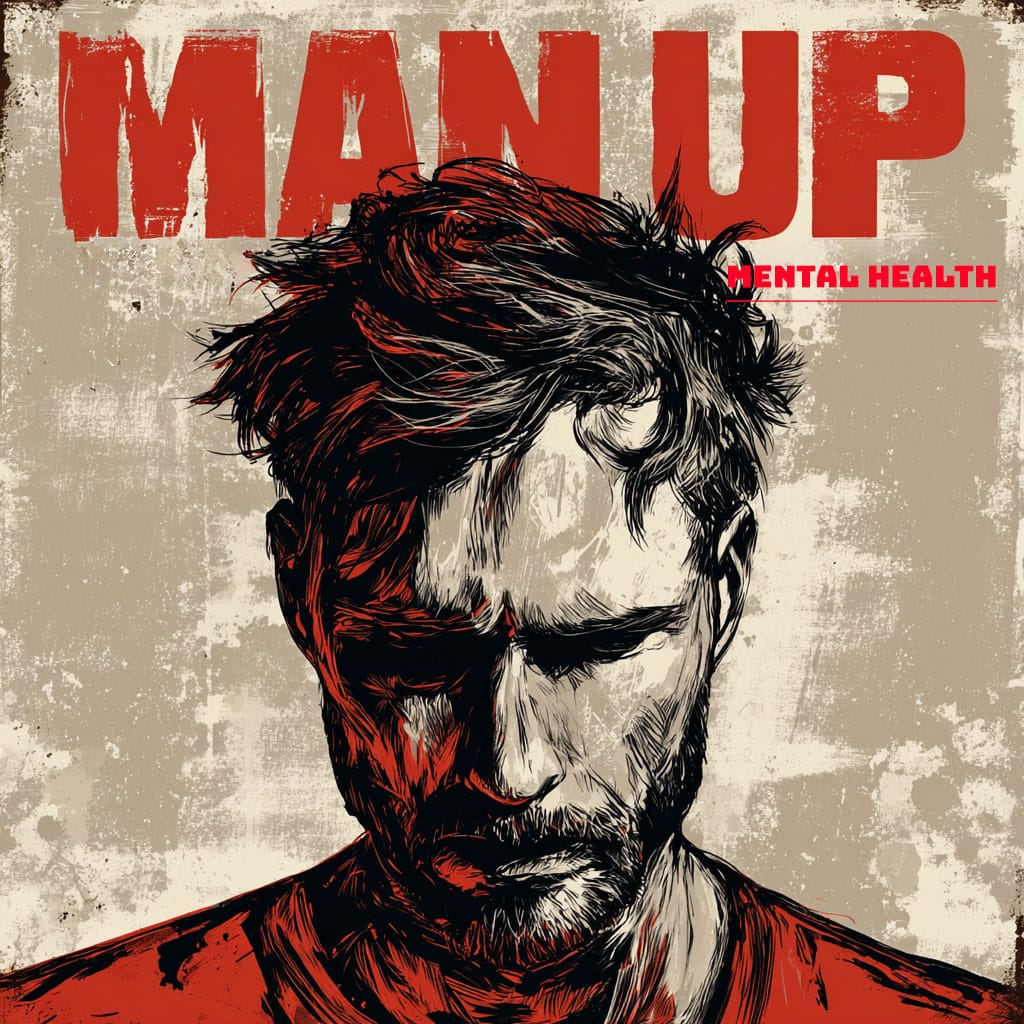
Man Up? Bullshit. The Brutal Truth About Man Up Culture Mental Health
Right, let’s get straight to it. “Man up.” Two simple words, right? Two words that have probably fucked up more blokes than any bloody war I ever saw. I’m Ian Callaghan, and for 57 years, I heard that shit, lived by that shit, and nearly died because of that shit. I served over 12 years in the British Army, and believe me, I know what real ‘manning up’ looks like. It ain’t about shutting your gob and pretending you’re fine when you’re crumbling inside. That’s not strength, that’s a bloody recipe for disaster. This whole man up culture mental health crisis we’re facing? It’s a direct consequence of decades, centuries even, of being told to suppress, to hide, to deny anything that remotely resembles a chink in the armour.
Eight months ago, I quit drinking after 45 brutal years. That journey, that absolute rewire of my mind and body, taught me more about genuine resilience and mental fortitude than any drill sergeant ever could. And it exposed the lie at the heart of the ‘man up’ culture. This isn’t some soft-touch, touchy-feely bollocks. This is about survival. This is about waking up in your mid-thirties, forties, or fifties, looking at your life, and realising the old rules aren’t just unhelpful; they’re actively killing us. It’s time we talked about man up culture mental health with some fucking honesty.
The Lie We Were Fed: “Man Up” and Shut Your Gob
I grew up in an era where emotions were for women, or for blokes who clearly hadn’t been to enough football matches. You scraped your knee, but you didn’t cry. You got picked on, you either fought or you took it. You felt down, so you went to the pub. Simple. Or so we thought.
When I joined the Army, that mindset was hammered home. And for certain situations, it’s vital. When rounds are flying and lives are on the line, you don’t stop for a group hug and a therapy session. You focus, you act, you suppress the fear to get the job done. That’s discipline. That’s training. And it saves lives. I wouldn’t trade that experience for anything; it forged a discipline in me that I rely on every single day. It taught me how to push past perceived limits, how to operate under immense pressure, and how to be utterly reliable.
But here’s the kicker: the skills that make you a formidable soldier, a stoic provider, a rock for your family, can also become your worst enemy when turned inwards without an outlet. The ‘man up’ mantra, when applied to your inner world, teaches you to compartmentalise, to bury, to ignore. Any hint of vulnerability, of doubt, of fear, was weakness. And weakness? That was the ultimate failure for a man.
So, we learned to put on a show. The brave face, the stiff upper lip, the casual shrug. Inside? A bloody maelstrom. A quiet desperation. That illusion of strength became a cage. It wasn’t about being strong; it was about appearing strong. And the more you pretended, the deeper the real you got buried. That’s the insidious poison of the man-up culture when it comes to mental health.
My Own Descent into the Darkness: Booze, Shame, and the Silence
For 45 years, I drank. Not just a casual pint, but seriously, consistently, almost ritually. Why? Because it was the socially acceptable, culturally endorsed way for a ‘man’ to deal with… well, everything. Stress? Drink. Celebration? Drink. Boredom? Drink. Grief? Drink. The underlying anxieties, the quiet despair, the constant hum of dissatisfaction? Drown it. The ‘man up’ philosophy meant I never, ever considered talking about any of that shit. That would have been a weakness. An admission of failure.
I’d seen blokes in the Army, even in civilian life, who talked about their feelings. They were often quietly, sometimes not so quietly, judged. Labelled ‘soft’, ‘a bit of a complainer’, or worse. So I bottled it. And the bottle I chose was full of booze.
The mental toll was immense, though I probably wouldn’t have admitted it at the time. The hangovers became a daily penance. The anxiety, a constant companion. The self-loathing, a whisper that grew louder with every passing year. I was isolated, even when surrounded by people. My relationships suffered. My potential, well, that was buried under a mountain of empty promises and regret. I was performing the role of ‘man’, but inside, I was a crumbling mess.
When I finally decided to quit 8 months ago, it wasn’t some gentle awakening. It was a fucking war. A brutal, grinding battle against decades of conditioning, against a mind and body that had been rewired to crave the poison. Every fibre of my being screamed for that familiar comfort, that numbing oblivion. But I fought. And that fight, that absolute dismantling and rebuilding of my identity, taught me more about real strength than all the ‘man up’ advice in the world. It showed me the profound, devastating impact that man up culture mental health issues have on men’s.
It taught me that the biggest battle isn’t against an enemy, or even a bottle; it’s against the lies you’ve told yourself, the stories you’ve inherited about what it means to be a man. It taught me that vulnerability isn’t weakness; it’s the raw, honest foundation upon which true strength is built. You can read more about that specific journey here: The Sobering Clarity: How Quitting Alcohol at 57 Unlocked My True Potential.
The Battlefield of the Mind: Why We’re Losing the War on Men’s Mental Health
Look around you. We’re living through a quiet crisis. Men are struggling, often in silence. Suicide rates among men are disproportionately high. Substance abuse is rampant. Depression, anxiety, chronic stress – it’s all there, bubbling under the surface of the ‘fine, thanks’ facade.
Why? Because society, reinforced by this ‘man up’ bullshit, tells us a man must be:
The Provider: Always strong, always earning, never failing.
The Protector: Fearless, capable, unflappable.
The Stoic: Unemotional, rational, never showing weakness.
The Independent: Never needing help, always self-sufficient.
These are huge, suffocating expectations. And when we inevitably fall short, when life punches us in the gut – as it bloody well does – we have no toolkit to deal with it. We’ve been taught to bottle it up, to soldier on, to pretend it’s not happening. And that, my friends, is why we’re losing this invisible war.
The cost isn’t just to us; it’s to our families, our partners, our children. Our physical health suffers. Our relationships become strained or simply vanish. Our careers stagnate. We become shells of the men we could be, all because we bought into the lie that to admit a struggle is to be less of a man. This isn’t just about feeling a bit sad; this is about a profound societal problem stemming from the deep roots of man’s cultural mental health stigmas.
Bullshit Stoicism vs. Real Resilience: Learning to Fight Differently
Now, don’t get me wrong. I’m not advocating for a world where everyone wallows in their feelings or constantly airs their grievances. There’s a fine line between processing emotions and becoming a whiny victim. And there is value in stoicism – the true stoicism, that is.
True stoicism isn’t about suppressing emotion; it’s about controlling your reaction to emotion. It’s about recognising what’s within your control and what isn’t. It’s about maintaining equanimity in the face of adversity. It’s not about pretending you don’t feel fear, anger, or sadness. It’s about acknowledging those feelings and then choosing how you respond, rather than being enslaved by them.
For years, I mistook emotional suppression for stoicism. I thought I was being a man by not feeling. The reality? I was just postponing the inevitable breakdown, building a pressure cooker inside my own head. My journey, especially in sobriety, has been about learning the difference. It’s about understanding that admitting you’re struggling, seeking help, or simply talking about what’s going on, isn’t weakness. It’s the ultimate act of courage. It’s vulnerability, and vulnerability is a superpower.
When you’re truly vulnerable, you’re open to real connection. You’re open to real solutions. You’re not hiding. You’re showing up, scars and all. That’s real strength. That’s real resilience. It’s the ability to feel the punch, acknowledge the pain, and then get back up, knowing you don’t have to do it alone. This is critical for addressing the man-up culture mental health crisis.
Rewiring the Mind and Body: Your Midlife Call to Arms
So, if the old ways are bollocks, what’s the answer? It’s not complicated, but it’s not easy either. It requires discipline, honesty, and a willingness to actually do the work. This is your midlife call to arms, not a request. Here’s how you start to dismantle the ‘man up’ lie and build real, lasting resilience:
Step 1: Speak the Unspeakable
This is the hardest bit. But you’ve got to find a way to articulate what’s going on in your head and your heart. It’s not whining; it’s processing. It might be a trusted partner, a close mate, or a family member. Or it might be a professional coach, a therapist, or a support group. The point is, get it out of your head. Give it air. Don’t let it fester in the dark corners. Find your tribe. Talk openly, honestly, and without judgment. This is why I built the Midlife Reset community on Skool – a place for blokes like us to cut the crap and get real.
Step 2: Fuel Your Fucking Machine Right
Your mental health is inextricably linked to your physical health. You can’t expect a Ferrari engine to run on cheap petrol and then wonder why it’s sputtering. My nutritional philosophy is simple, brutal, and effective: ancestral, paleo, nose-to-tail. Eat real food. Meat, organs, eggs, healthy fats, a shitload of vegetables and some fruit. Ditch the processed crap, the sugar, and for God’s sake, ditch the soy (unless it’s fermented and in tiny quantities). Soy, especially, can mess with your hormones – and if you think that doesn’t impact your mood, your energy, and your overall mental state, you’re deluded. Never eat tofu. Proper nutrition isn’t just for your body; it’s fundamental for your brain chemistry, your mood, and your energy. You want to fight this man in a cultural mental health battle? Start with what you put in your gob. Seriously, check out Unlocking Your Ancestral Edge: Why the Modern Diet Is Making You Weak and How to Fight Back.
Step 3: Move Your Arse
Sitting around lamenting your fate isn’t going to change a damn thing. Your body was built to move. And I’m not talking about some half-arsed gym routine you do for a month. I’m talking about consistent, disciplined movement. Lift heavy things, run, walk, and get outside. The military taught me that physical exertion isn’t just about strength; it’s about mental fortitude. It clears your head, burns off stress, and floods your body with feel-good chemicals. It’s not about motivation; it’s about discipline. Get up, get out, get moving. Every single day. Even when you don’t feel like it. Especially then. You want to beat the mental health demons? Make your body a weapon against them. This isn’t fluffy self-help; this is hard science and hard-won experience. Read more on why Discipline Eats Motivation for Breakfast.
Step 4: Master Your Mind (It’s Not Woo-Woo)
I know what some of you are thinking: meditation, hypnotherapy – that’s all a bit soft, a bit airy-fairy. Let me tell you, when you’re 8 months sober after 45 years of drinking, and your mind is trying to play every trick in the book, you learn to use every tool at your disposal. This isn’t about sitting cross-legged, chanting ‘om’. It’s about practical, actionable techniques to take control of your internal world.
Breathwork: Simple, powerful. Learning to control your breath gives you immediate access to your nervous system. Panic attack? Slow your breath. Overwhelmed? Slow your breath. It’s a fundamental military technique, stripped of the spiritual jargon.
Meditation: Not about clearing your mind, but observing it. Training your focus. Building mental resilience like a muscle. Start with 5 minutes a day, just paying attention to your breath.
Hypnotherapy/NLP: These aren’t magic. They’re tools for rewiring your subconscious, for breaking old patterns and installing new, empowering beliefs. I’m a qualified coach in this stuff, and I use it because it bloody works. It helped me dismantle the decades of ‘man up’ programming that kept me trapped.
Don’t knock it ’til you’ve tried it properly. These tools are about taking back control of your mind, the ultimate battleground in the man-up culture mental health fight.
Step 5: Ditch the Poison
For me, it was alcohol. For you, it might be something else: excessive social media, endless porn, gambling, chronic complaining, or a toxic relationship. Identify the things that are genuinely poisoning your life, numbing you, keeping you stuck in that cycle of quiet desperation. And then, with discipline and courage, cut them out. It will be hard. It will be brutal. But the clarity, the energy, the sheer capacity for life that emerges on the other side? It’s worth every single moment of struggle. My 8 months of sobriety are living proof of that. The freedom from the chains of a habit you once thought defined you is immense.
It’s Not a Crisis, It’s a Choice: Your Opportunity to Reset
We hear the term ‘midlife crisis’ bandied about. Bullshit. It’s not a crisis; it’s a bloody call to arms. It’s your biology, your spirit, your very soul screaming at you to wake up. To stop living by outdated rules. To stop pretending everything’s fine when it’s not. This isn’t a problem to be endured; it’s an opportunity to rebuild, stronger, wiser, and more authentically you than ever before. This is your chance to really engage with why Your Midlife Isn’t a Crisis – It’s a Call to Arms.
The ‘man up’ culture, as we’ve known it, has failed us. It’s left generations of men isolated, emotionally stunted, and often, tragically, broken. But you don’t have to be another statistic. You have the power to choose a different path. A path of brutal honesty, real strength, and genuine connection. A path where you learn to navigate the complexities of modern life without losing your bloody mind.
Stop ‘manning up’ in the old way. Start fighting smart. Start building the life you deserve, the man you were meant to be. It’s not about whining; it’s about winning. And it starts now.
Used to monitor number of Google Analytics server requests when using Google Tag Manager
1 minute
_gid
ID used to identify users for 24 hours after last activity
24 hours
_ga_
ID used to identify users
2 years
_gali
Used by Google Analytics to determine which links on a page are being clicked
30 seconds
_ga
ID used to identify users
2 years
__utmx
Used to determine whether a user is included in an A / B or Multivariate test.
18 months
__utmv
Contains custom information set by the web developer via the _setCustomVar method in Google Analytics. This cookie is updated every time new data is sent to the Google Analytics server.
2 years after last activity
__utmz
Contains information about the traffic source or campaign that directed user to the website. The cookie is set when the GA.js javascript is loaded and updated when data is sent to the Google Anaytics server
6 months after last activity
__utmc
Used only with old Urchin versions of Google Analytics and not with GA.js. Was used to distinguish between new sessions and visits at the end of a session.
End of session (browser)
__utmb
Used to distinguish new sessions and visits. This cookie is set when the GA.js javascript library is loaded and there is no existing __utmb cookie. The cookie is updated every time data is sent to the Google Analytics server.
30 minutes after last activity
__utmt
Used to monitor number of Google Analytics server requests
10 minutes
__utma
ID used to identify users and sessions
2 years after last activity
_gac_
Contains information related to marketing campaigns of the user. These are shared with Google AdWords / Google Ads when the Google Ads and Google Analytics accounts are linked together.