Meditation: The Ten Biggest Cock-Ups (and How to Steer Clear)
Meditation: The Ten Biggest Cock-Ups (and How to Steer Clear): Alright, so you’re getting into meditation. Good on you. But here’s the thing: it’s not all rainbows and zen enlightenment. Loads of people dive in expecting a life-changing epiphany in the first five minutes, only to find their minds racing faster than a kid in a candy shop. So, here’s the lowdown on the biggest bloody mistakes people make when they’re getting into meditation and how to dodge them like a pro.
1. Hunting for That Perfect Posture
Let’s get one thing straight: you don’t have to sit like a twisted pretzel to meditate. You’re not joining the circus; you’re trying to calm your mind. The whole “perfect posture” myth is utter bollocks. Get comfy, mate! Sit in a way that doesn’t make you feel like you’re about to snap in half. Whether that’s cross-legged or sprawled on the sofa, find what suits you. Meditation’s about finding your headspace, not wincing through back pain.
2. Expecting Immediate Inner Peace
Now, if you’re expecting to float out of your meditation session feeling like Buddha himself after your first go, you’re in for a rude awakening. Meditation is a practice, not a magic pill. It takes time to quiet the mind, especially when you’re used to it jumping all over the place like a caffeinated monkey. Be patient, alright? Just like you wouldn’t hit the gym and expect to lift 200 pounds in one go, your mind needs training to chill out.
3. Thinking More Is Always Better
“More meditation means better results,” they say. Well, they’re wrong. It’s about consistency, not duration. Five minutes a day is a hell of a lot more useful than sitting cross-legged for two hours once in a blue moon. Start small, stick with it, and you’ll get more out of it without feeling like you’re prepping for a meditation marathon.
4. Forcing the Mind to Go Blank
Let me tell you, trying to force a blank mind is like trying to herd cats—frustrating and pointless. Meditation isn’t about wiping out every thought; it’s about observing them without diving in headfirst. Imagine your thoughts as random clouds drifting by. Watch them, don’t wrestle them. Trying too hard to quiet the mind is the fast track to madness, so ease up a bit and let your brain do its thing without interference.
5. Letting Distractions Get the Better of You
It’s not all incense and silence, is it? Between the phone, the barking dog, and your neighbour’s DIY projects, distractions are everywhere. The key here is not to get wound up when they pop up. Notice them, acknowledge them, and get back to your practice. If you’re lucky enough to carve out a bit of peace, enjoy it. Otherwise, just treat distractions like background noise—they’re not stopping you unless you let them.
6. Using Meditation as an Emergency Escape
Meditation isn’t an on-demand stress cure, no matter what Instagram tells you. If you’re hoping for an instant calm, you’re setting yourself up for a let-down. It’s a long game, alright? You’re building resilience, learning to manage stress over time—not hoping it’ll all vanish like a puff of smoke the second you sit down. Just show up, breathe, and let the benefits build.
This one’s simple but so easy to overlook. Your breath is your anchor, so use it. Instead of letting your mind flit all over, bring it back to the inhale and exhale. Slow, deep breaths do wonders for calming both the mind and the body. Mess about with different breathing techniques if you fancy, but don’t ignore this simple trick. It’s the bread and butter of meditation.
8. Chasing Enlightenment Like It’s a Destination
Some people think they’ll reach enlightenment by following a set schedule like it’s a bloody train timetable. Spoiler alert: enlightenment isn’t a final destination. It’s a process. Meditation is about being present, not reaching some spiritual finish line. So let go of any illusions of grandeur. Focus on being in the moment—whatever that looks like for you.
9. Being Way Too Hard on Yourself
If you start judging yourself because you had a crap session or your mind wouldn’t settle, you’re missing the point. It’s a practice, mate. You’re not competing for a gold medal. Miss a session? Lost focus? No big deal. Meditation’s about showing yourself some compassion. No one gets it right every time, so go easy on yourself, yeah?
10. Treating Meditation as Some Kind of Performance
Here’s a tip: meditation isn’t about showing off or “doing it right.” Leave the ego at the door. The whole point is to let go of that need to control everything. Meditation’s your space to be you—no rules, no judgements, no targets. Forget what you think it’s supposed to look like. Just show up and give yourself a bit of time to breathe. It’s all you need.
At the end of the day, meditation is your time. It doesn’t have to look pretty, and it sure as hell doesn’t have to be perfect. It’s a journey, not a bloody competition. So, relax, let go of those expectations, and enjoy the ride. Meditation is about progress, not perfection.
Did you know that meditation can reduce anxiety by up to 40%? [Source: Journal of the American Medical Association] In today’s fast-paced world, anxiety has become a common problem, affecting how people manage daily tasks and responsibilities. However, growing evidence suggests that meditation, a simple and time-tested practice, can provide significant relief.
In this post, we’ll explore the connection between meditation and anxiety relief. We’ll delve into the science behind meditation’s effects on the brain, discuss effective meditation techniques for anxiety, and share real-life success stories. This exploration will show how a few minutes of meditation each day can help bring a calmer, more-centred mindset.
What is Meditation, and How Does It Impact Anxiety?
What is Meditation?
Meditation is an ancient practice designed to focus the mind and promote heightened awareness, mindfulness, and emotional balance. It takes many forms, including silent mindfulness, guided imagery, or focused breathing exercises. At its core, meditation trains the mind to detach from stress-inducing thoughts, thereby disrupting anxiety cycles.
By dedicating even a few minutes daily to meditation, many individuals experience significant improvement in handling stress. When it comes to anxiety, meditation helps retrain the brain to remain present, which reduces the intensity of anxious thoughts and calms the nervous system. We’ll explore the science behind these benefits below.
To understand how meditation alleviates anxiety, we need to examine its effects on key parts of the brain. Several studies illustrate how meditation positively affects both the brain and body, resulting in significant changes in mood and anxiety levels.
Lower Cortisol Levels: Cortisol, known as the stress hormone, is produced when the body perceives a threat. Chronic anxiety can elevate cortisol levels, which in turn harms both mental and physical health. Meditation helps reduce cortisol production, creating a more relaxed state.
Reduced Amygdala Activity: The amygdala is the brain’s “fear centre.” During anxiety episodes, it becomes hyperactive, intensifying worry and fear. Studies demonstrate that regular meditation can decrease activity in the amygdala, resulting in reduced anxiety responses.
Increased Connectivity in the Prefrontal Cortex: The prefrontal cortex is involved in higher-order thinking, decision-making, and emotional regulation. Meditation enhances connectivity between this area and other parts of the brain, thus improving emotional regulation and creating distance from anxious thoughts.
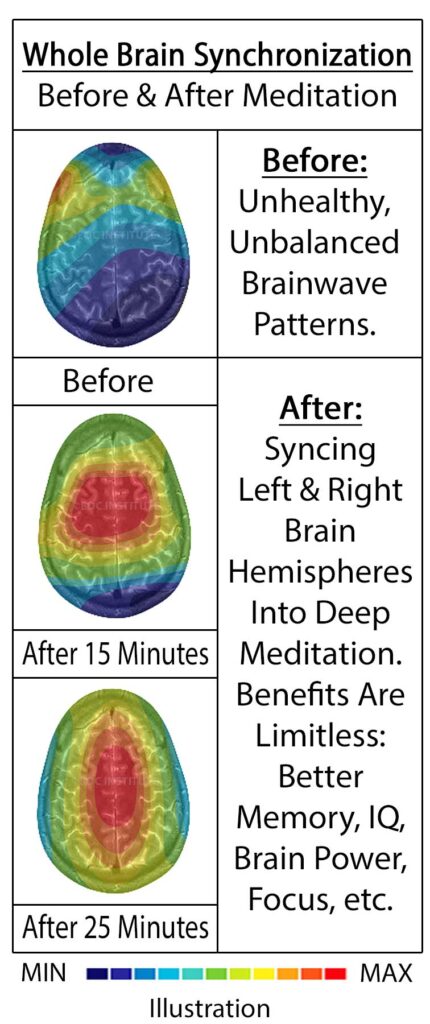
The infographic above illustrates how meditation impacts brain function, highlighting reductions in stress-related activity and enhancements in emotional stability.
How Meditation Helps with Specific Anxiety Symptoms
Meditation Techniques to Address Anxiety Symptoms
Anxiety manifests in various ways, including racing thoughts, physical tension, and difficulty focusing. Different meditation techniques can help manage these symptoms effectively:
Racing Thoughts: Mindfulness meditation encourages awareness of the present moment and detachment from anxious thoughts. By observing these thoughts without judgment, they gradually lose their control over you.
Physical Tension: Progressive muscle relaxation meditation combines mindfulness with physical relaxation, making it ideal for relieving anxiety-related muscle tension.
Lack of Focus: Focused attention meditation helps sharpen concentration and maintain presence, which is particularly beneficial for individuals whose anxiety impedes their ability to complete tasks.
Each meditation technique addresses anxiety uniquely, providing targeted solutions for specific symptoms.
The Best Types of Meditation for Anxiety Relief
Effective Meditation Techniques for Reducing Anxiety
There are many forms of meditation, but several stand out for their effectiveness in reducing anxiety:
Mindfulness Meditation
Mindfulness meditation involves sitting quietly and concentrating on your breath or bodily sensations, allowing thoughts to come and go without attachment. This practice helps you stay present and reduces anxiety by preventing you from getting lost in worries about the past or future.
Guided Meditation
Guided meditation is ideal for beginners or those needing extra guidance. A narrator leads you through visualisation and relaxation techniques, helping break anxiety-driven thought patterns.
Progressive Muscle Relaxation
This technique involves systematically tensing and relaxing different muscle groups. It is particularly effective for managing physical symptoms of anxiety, such as muscle tightness and headaches.
Loving-Kindness Meditation
Loving-kindness meditation focuses on cultivating compassion towards oneself and others. By generating feelings of warmth, it counters negative self-talk, which is a common feature of anxiety.
Meditation Techniques Backed by Research
Research on Mindfulness Meditation
Mindfulness meditation is well-supported by research for its effectiveness in reducing anxiety. A Harvard Medical School study found that an eight-week mindfulness meditation program led to a notable reduction in anxiety levels. Additionally, it increased grey matter density in the prefrontal cortex, an area linked to emotional regulation and problem-solving. This type of meditation not only helps individuals remain present but also builds resilience against anxiety triggers.
Another study, published in Psychiatry Research, involved over 100 participants practising mindfulness-based stress reduction (MBSR) for eight weeks. Results showed significant decreases in anxiety and depression, along with physical improvements such as reduced headaches and muscle tension. The participants engaged in mindfulness exercises, breathing techniques, and yoga, which emphasised non-judgmental awareness of the present moment.
Guided meditation has proven effective for beginners needing structured support. A 2020 University of California study found that participants using guided meditation apps experienced up to a 35% reduction in anxiety levels. Guided meditation often includes visualisation and positive affirmations, which help redirect the mind away from stressful thoughts.
The audio guidance helps maintain focus, making it easier to meditate compared to unguided sessions. This structured approach helps relax the nervous system, moving it from a high-arousal state to a calmer, more balanced one.
Real-Life Examples of Meditation’s Impact on Anxiety
Overcoming Social Anxiety with Mindfulness Meditation
Maria, a 28-year-old graphic designer, struggled with social anxiety for years. Social events and even work meetings triggered overwhelming anxiety, leaving her drained. To cope, Maria started practising mindfulness meditation for 10 minutes each morning, focusing on her breath and observing her thoughts without judgment.
After two months, Maria noticed a shift. She felt more present during social interactions and less overwhelmed by anxious thoughts, which improved her ability to connect at work and lessened her exhaustion after social events.
Guided Meditation for Generalized Anxiety Disorder (GAD)
John, a 40-year-old accountant, was diagnosed with generalised anxiety disorder (GAD). His anxiety revolved around work deadlines and family responsibilities, which led to sleepless nights and chronic stress. On his therapist’s recommendation, John began using guided meditation apps designed to alleviate anxiety.
Through a combination of relaxation techniques and visualisation, John saw significant improvements. The guided sessions helped him release worries and calm his mind before sleep, improving his sleep quality and his capacity to handle work stress.
How to Get Started with Meditation for Anxiety Relief
A Beginner’s Step-by-Step Guide to Meditation
If you’re new to meditation and want to use it to manage anxiety, follow this detailed guide:
Set Up a Dedicated Space: Find a comfortable, distraction-free spot that you can use consistently. It could be a cosy corner or a garden bench, as long as it encourages focus and calm.
Pick the Right Time: Meditate at the same time each day for consistency. Early morning or bedtime are ideal times for setting a calm tone for the day or winding down.
Choose Your Technique: Start with something simple like mindfulness meditation. Apps like Calm and Headspace offer guided sessions tailored for anxiety relief. Experiment to find what suits you best.
Start Small: Begin with just 5 minutes if meditation feels difficult. Focus on your breath—inhale deeply for four counts, hold for four, and exhale slowly for six. Gradually increase the duration as you become comfortable.
Leverage Technology: Guided meditations can help beginners focus. Use apps or videos to keep your mind on track and bring you back when it wanders.
Maintain a Meditation Journal: After each session, jot down your experience. Tracking progress helps you notice positive changes and reflect on what techniques work best for you.
Advanced Meditation Practices for Anxiety Management
Progressive Muscle Relaxation
Progressive muscle relaxation involves systematically tensing and relaxing muscle groups. This practice is effective for individuals experiencing physical symptoms of anxiety, such as tight muscles and headaches.
Start at your toes and work upwards, tensing and then relaxing each muscle group. By focusing on the release of tension, you not only alleviate physical discomfort but also train the mind to become more attuned to bodily sensations without anxiety.
Loving-Kindness Meditation for Anxiety Relief
Loving-kindness meditation is an effective way to counter anxiety fueled by negative self-talk or feelings of isolation. It involves generating positive feelings, first towards oneself and then towards others, including acquaintances and even those with whom you have conflicts.
Research shows that loving-kindness meditation significantly enhances feelings of social connection and reduces anxiety. Cultivating positive emotions builds resilience against negative thoughts, which often drive anxiety.
Conclusion
Meditation is a powerful tool for anyone looking to reduce anxiety naturally and foster long-term mental well-being. By calming the mind, lowering cortisol levels, and enhancing emotional regulation, meditation provides a science-backed path to inner peace. Whether you practice mindfulness, guided sessions, or loving-kindness meditation, you’re taking an important step towards a calmer, less anxious state of being.
Give meditation a try—even just five minutes today—and see how it makes you feel. You may be surprised by how even a short practice can make a big difference! Small steps can lead to substantial changes. Let us know in the comments: Have you tried meditation for anxiety relief? What has your experience been like?
7 Effortless Ways to Refill Your Cup and Recharge Your Energy for a Happier You
Imagine waking up each day feeling drained before your feet even touch the floor—pouring from an empty cup. Just as a car can’t run on an empty tank, we can’t be our best selves when we’re always running on fumes. “Filling your cup” isn’t a luxury; it’s essential self-care that allows you to face life’s demands with energy, resilience, and joy. Here, we’ll explore seven effortless ways to refill your cup, helping you feel rejuvenated, balanced, and ready to embrace each day.
1. Nourish Your Body with Your Favourite Meal
Food can provide more than just sustenance—it can nourish your soul. Whether it’s a bowl of comforting pasta, a vibrant smoothie, or your favourite dessert, enjoying a meal you love is an act of self-love.
Mindful Eating: Slow down and savour each bite. Studies show that mindful eating improves digestion and can lead to greater satisfaction from meals. Turn off distractions, put your phone aside, and immerse yourself in the flavours, textures, and aromas of your food.
Cook It Yourself: If time allows, prepare your favourite dish from scratch. The act of cooking can be meditative, providing a sense of accomplishment. Choose fresh, wholesome ingredients to fuel both body and mind.
Balance Cravings with Intention: Self-care is about balance. Whether it’s a nutrient-packed smoothie or a guilt-free dessert, let yourself enjoy foods that bring you joy. Balance keeps self-care sustainable and meaningful.
Ready to recharge? Try cooking your favourite dish this weekend and enjoy each bite distraction-free!
2. Strengthen Social Bonds with Quality Time
Connection with loved ones is essential for mental and emotional well-being. In fact, studies have shown that social support can lower stress levels and improve resilience.
Quality Over Quantity: Whether it’s a quick coffee date or a long phone call, be present. Set aside distractions and engage deeply. It’s the quality of the interaction, not the duration, that fosters real connection.
Express Appreciation: Take a moment to tell someone how much they mean to you. Words of gratitude can deepen connections and uplift both you and the other person.
Create New Traditions: Establish recurring “self-care dates” with friends or family. It could be monthly brunch, a seasonal hike, or a weekly phone call. These moments add joy and structure to your social life, giving you something positive to look forward to.
Feeling disconnected? Reach out to a loved one and plan a coffee date this week!
3. Reconnect with Nature and Fresh Air
Nature is one of the most effective, natural stress-relievers. Research shows that even brief moments outside can help reset your mind and improve your mood.
Take a Nature Walk: Head to a local park or quiet street. Walking in green spaces can reduce cortisol levels and increase feelings of well-being. Just 10–15 minutes outdoors can work wonders.
Mindful Breathing Outdoors: Take a few deep breaths as you walk or sit outside, letting your thoughts settle. Focus on the sounds around you—the rustling leaves, chirping birds, or the breeze. Nature helps to ground you, reminding you of the beauty in simplicity.
Daily “Nature Break”: Even a five-minute breath of fresh air during the workday can recharge your mind. If you can’t get outside, bring nature indoors with a potted plant or fresh flowers on your desk.
Need a break? Step outside for a five-minute nature break today.
4. Escape into a Good Book
Books offer a wonderful escape, providing fresh perspectives and mental rejuvenation. Reading helps reduce stress, inspire creativity, re-energise the mind, and refill your cup.
Dedicate Uninterrupted Reading Time: Set aside 15–20 minutes daily to immerse yourself in a book. Choose a quiet time, like just before bed, to make reading a cherished habit that helps you wind down.
Pick Books That Speak to You: Whether it’s an inspiring self-help book or an absorbing novel, read something that resonates with your current mood or goals. Consider joining a book club to add a social element and share your reflections.
Create a Cosy Reading Nook: Set up a comfortable spot with soft lighting, perhaps with a warm cup of tea and a favourite blanket. A designated reading space makes the experience more inviting and enjoyable.
Looking for a mental getaway? Start a new book this week and enjoy some quiet time.
5. Lift Your Spirits with Music
Music is a powerful way to change your mood, offering instant connection and joy. Whether you’re looking to relax or get energised, the right playlist can be your perfect companion.
Curate Playlists for Different Moods: Create a relaxing playlist to wind down or an upbeat one for an energy boost. Having tailored playlists ready makes it easy to match your music to your mood.
Explore Sound Baths and Nature Sounds: Try meditation playlists or nature sounds like rainfall or ocean waves. These are particularly effective for de-stressing, offering a calming escape. Consider trying a sound bath session for an immersive experience.
Dance Like No One’s Watching: Move to the music! Dancing releases endorphins, which can elevate your mood and relieve stress. Try a dance class or follow an online routine for added fun and fitness.
Want a quick mood lift? Put on your favourite song and dance it out!
6. Rediscover Joy in Hobbies to Refill your cup.
Hobbies are a delightful way to refill your cup by doing something you love. They’re a chance to recharge while exploring your interests.
Set Aside Regular Time: Schedule a consistent time to enjoy your hobby, even if it’s just once a week. Treat it like a mini self-care appointment that you wouldn’t cancel.
Experiment with New Interests: Unsure which hobby to choose? Try something new—painting, gardening, writing, or photography. Exploring without expectations can uncover hidden passions and creative satisfaction.
Use Your Hobby as an Outlet: Let your hobby be a break from daily stress. Whether it’s knitting or sketching, enjoy the process without worrying about productivity.
Want to recharge? Start a new hobby or revisit an old one this weekend!
7. Share Your Thoughts with Someone You Trust
Talking to a friend, family member, or therapist can provide relief, perspective, and emotional support. Simply knowing someone is there can be incredibly uplifting.
Choose a Trusted Listener: Seek out someone who listens without judgment and can offer support. Make sure it’s someone who makes you feel safe and valued.
Be Open and Vulnerable: Share what’s truly on your mind, even if it feels vulnerable. Deep, authentic conversations can be deeply healing and strengthen bonds.
Listen in Return: Often, supporting others can be just as fulfilling. Let the conversation be mutual, allowing both of you to feel connected and supported.
Feeling burdened? Reach out to someone you trust and share what’s on your mind.
Self-care is not a luxury—it’s a necessity. Just five minutes a day can make a meaningful difference in your life. Start with one small act, like a walk outside or a heartfelt conversation, and watch how these moments add up. Over time, these simple practices will help you feel happier, more balanced, and ready to share your renewed energy with the world.
Which of these simple self-care acts will you try today? Remember, the smallest steps make the biggest impact.
Used to monitor number of Google Analytics server requests when using Google Tag Manager
1 minute
_gid
ID used to identify users for 24 hours after last activity
24 hours
_ga_
ID used to identify users
2 years
_gali
Used by Google Analytics to determine which links on a page are being clicked
30 seconds
_ga
ID used to identify users
2 years
__utmx
Used to determine whether a user is included in an A / B or Multivariate test.
18 months
__utmv
Contains custom information set by the web developer via the _setCustomVar method in Google Analytics. This cookie is updated every time new data is sent to the Google Analytics server.
2 years after last activity
__utmz
Contains information about the traffic source or campaign that directed user to the website. The cookie is set when the GA.js javascript is loaded and updated when data is sent to the Google Anaytics server
6 months after last activity
__utmc
Used only with old Urchin versions of Google Analytics and not with GA.js. Was used to distinguish between new sessions and visits at the end of a session.
End of session (browser)
__utmb
Used to distinguish new sessions and visits. This cookie is set when the GA.js javascript library is loaded and there is no existing __utmb cookie. The cookie is updated every time data is sent to the Google Analytics server.
30 minutes after last activity
__utmt
Used to monitor number of Google Analytics server requests
10 minutes
__utma
ID used to identify users and sessions
2 years after last activity
_gac_
Contains information related to marketing campaigns of the user. These are shared with Google AdWords / Google Ads when the Google Ads and Google Analytics accounts are linked together.