10 Myths About Coaching for Overcoming Limiting Beliefs
When people think of coaching, they might imagine someone standing on a stage, shouting mantras like “Believe in yourself!” or “Think positive!” But real, impactful coaching—especially when it comes to breaking through limiting beliefs—is far deeper than that. As a coach who has walked through my journey of overcoming trauma, self-doubt, and fear, I know firsthand the power of meaningful coaching. It’s not about feel-good phrases or quick fixes; it’s about digging into those ingrained beliefs that hold us back and reshaping them. Unfortunately, there are several myths out there about coaching for limiting beliefs. Let’s break them down and uncover the truth about this transformative process and 10 Myths About Coaching
1. Myth: Coaching Is Just Expensive Advice-Giving
Truth: Coaching is about much more than advice. A good coach doesn’t just tell you what to do; they guide you to discover answers within yourself.
“I do not have the answers, you have the answers within you”
Coaching is a collaborative process involving listening, asking the right questions, and providing tools to help you uncover the beliefs limiting your potential. It’s not about advice; it’s about empowerment.
2. Myth: You Have to Be “Broken” to Need a Coach
Truth: Many people believe coaching is only for those who are in crisis oost. In reality, coaching can benefit anyone who feels there’s more they could be achieving, or who senses an invisible ceiling they keep hitting. You don’t need to be “broken” to seek coaching; you need the desire to grow and reach new levels of personal fulfilment and potential.
3. Myth: Coaching Is All About Positive Thinking
Truth: While a positive mindset is valuable, coaching goes much deeper. It’s not about glossing over problems with a smile; it’s about understanding where limiting beliefs come from and reworking the thoughts and behaviours that stem from them. A coach will help you confront uncomfortable truths, not just cheer you on from the sidelines. Real change happens when we’re willing to face what’s beneath the surface.
4. Myth: Coaching Is a Quick Fix
Truth: True coaching is not an overnight solution. Transforming limiting beliefs is a process that requires commitment, introspection, and patience. A coach can provide guidance and tools, but breaking through old beliefs and creating lasting change takes time. It’s a journey, and like any journey worth taking, it’s often challenging but gratifying.
5. Myth: Coaches Will Do the Work for You
Truth: A coach provides support and guidance, but ultimately, the work is yours. Coaching isn’t about someone coming in to “fix” you; it’s about giving you the tools and insights you need to take action and create change for yourself. A good coach will hold you accountable, but they can’t make the choices for you. Transformation happens when you’re ready to show up for yourself.
6. Myth: Coaches Just Tell You to Think Positive and Visualise Success
Truth: Visualisation and positive thinking are tools, but they’re only part of the equation. When it comes to limiting beliefs, we’re often dealing with deep-seated fears and doubts. A coach helps you understand why these beliefs exist, where they come from, and how to work through them in a way that’s grounded and practical. Positive thinking can help, but real progress comes from understanding and reprogramming old mental patterns.
7. Myth: Coaching Is Only for People with Big, Bold Goals
Truth: Coaching is for anyone who wants to improve their life, whether it’s taking big steps forward or working on smaller, internal goals. Some of the most powerful transformations happen not when we aim to conquer the world, but when we change the way we feel about ourselves and our daily lives. Overcoming limiting beliefs isn’t always about grand gestures—it’s often about building inner confidence and learning to live without self-imposed restrictions.
8. Myth: Coaches Have All the Answers
Truth: A coach doesn’t have all the answers, but they know how to help you find your own. The role of a coach is to facilitate your journey of self-discovery. They don’t know everything about your life, but they have the experience, tools, and understanding to help you gain clarity, challenge old patterns, and discover the answers you already hold within.
9. Myth: Coaching for Limiting Beliefs Is Only Focused on the Past
Truth: While it’s essential to understand the origins of limiting beliefs, coaching is largely focused on the future—on what you can do to break free from those beliefs and live a more fulfilled life. A coach may help you explore the past, but they’re more interested in guiding you toward where you want to go and helping you cultivate the mindset to get there.
10. Myth: Once You Address Limiting Beliefs, They’re Gone Forever
Truth: Overcoming limiting beliefs is an ongoing journey. Even after addressing core beliefs, new challenges and life experiences can bring up old doubts. The purpose of coaching is to equip you with the tools and mindset to handle these beliefs whenever they resurface, allowing you to keep growing beyond them. It’s about building resilience and learning to approach self-doubt as part of the human experience rather than something that needs to be “fixed” permanently.
Conclusion on 10 Myths About Coaching
Coaching for limiting beliefs is often misunderstood, but it’s one of the most powerful paths to personal freedom. It’s not about quick fixes or feel-good slogans; it’s about facing the thoughts that have held you back and transforming them. As someone who’s faced my battles with limiting beliefs, trauma, and self-doubt, I know the courage it takes to confront these truths—and the strength it takes to rewrite them. If you’re ready to step into a version of yourself that’s not limited by old beliefs, I’m here to guide you on that journey. It won’t always be easy, but I promise it will be worth it.
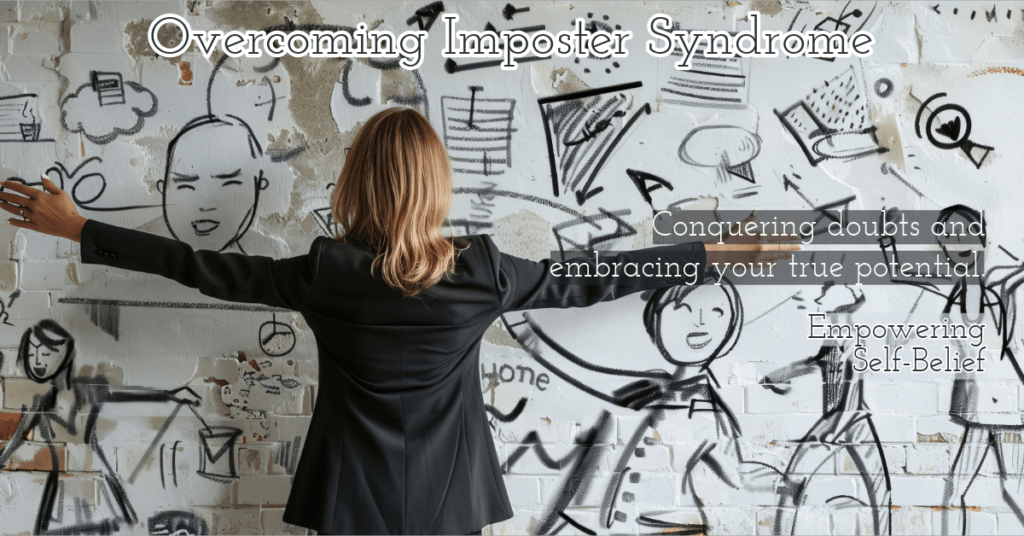
Overcoming Imposter Syndrome: A Journey of Self-Acceptance and Growth
Have you ever felt like you’re just waiting for someone to “find you out?” Like all your accomplishments were just a fluke, and any moment now, everyone will see through the facade?
If you’re nodding along, you’re not alone. 🌱
Imposter syndrome doesn’t care who you are or what you’ve achieved. It creeps up on seasoned professionals and entrepreneurs alike, convincing us we’re just pretending to be “good enough.” It’s that nagging voice whispering, “Who do you think you are?” and it’s exhausting. But here’s the thing: you’re not the only one feeling this way, and you don’t have to stay stuck in that mindset.
So, let’s dive into what imposter syndrome really is, how it shows up, and some powerful techniques to loosen its grip. It’s a journey, but it’s one you don’t have to walk alone.
Recognizing the Signs of Imposter Syndrome
The first step in overcoming imposter syndrome is recognizing it for what it is. Imposter syndrome often shows up as:
🔹 Perfectionism — You set unrealistically high standards and feel crushed when you don’t meet them.
🔹 Self-Doubt — You question your qualifications, even if you’re overqualified.
🔹 Feeling like a “Fraud” — You attribute your successes to luck rather than your skills or hard work.
Ever hit a career milestone, only to worry that it was a one-time fluke? Or constantly think, “I just got lucky”? Recognizing these feelings as imposter syndrome—and not as facts—can make a huge difference.
Mindset Coaching: A Small Shift Can Make a Big Impact
Mindset coaching is a powerful tool for shifting how you see yourself. 🧠 It’s not about “thinking positive” all the time. It’s about learning to challenge those beliefs that keep you playing small.
For example, when self-doubt pops up, try asking yourself, “Is this thought helping or hurting?” Often, it’s just a knee-jerk reaction we don’t question. So let’s question it.
Here’s a simple mindset shift that’s worked for me:
🔸 Replace “I’m not ready for this” with “I’m prepared, and I’ll handle what comes my way.”
These small shifts may seem subtle, but they add up. Bit by bit, they start to build a foundation for real self-confidence. 💪
Practical Techniques to Tackle Imposter Feelings
Once you start noticing imposter syndrome, there are some powerful techniques that can help you tackle it head-on:
✍️ Journaling: When self-doubt flares up, write down your thoughts. There’s something about seeing them on paper that helps you recognize them as just that—thoughts, not truths. This simple habit can be a game-changer.
💙 Self-Compassion: Treat yourself like you would a friend. If your friend was feeling unworthy, you’d remind them of their strengths, right? Offer yourself that same kindness. Self-compassion isn’t just “feel-good” talk; it’s a scientifically backed way to build resilience.
✨ Visualization & Affirmations: Visualization isn’t about imagining a “perfect” version of yourself. It’s about seeing yourself as capable, even in the face of challenges. Try a morning affirmation like, “I am enough, and I deserve my accomplishments.” Practicing this daily helps rewire the mind to focus on your value rather than your doubts.
Why Imposter Syndrome Hits Entrepreneurs Especially Hard
If you’re an entrepreneur, you’re probably nodding along right now. Imposter syndrome is especially prevalent among business owners because of the constant pressure to innovate, lead, and succeed—all without a manual to guide you. 📈
It’s comforting to know that you’re not alone. Nearly 84% of entrepreneurs experience imposter syndrome at some point. Knowing it’s a common part of the entrepreneurial journey can take the sting out of it.
Each time you step out of your comfort zone, it’s a sign you’re pushing boundaries. That discomfort? It’s often a sign of growth. 🌱 Lean into it, and remind yourself that the journey to success is full of learning curves.
Try a simple affirmation every morning: “I am capable, and I am enough.” Visualise yourself navigating challenges with resilience and see yourself achieving the outcomes you want, yes, but also handling setbacks with grace. Affirmations and visualisation aren’t just buzzwords—they’re tools that can ground you, especially on those days when imposter syndrome is loud. 🔊
Moving Forward with Confidence
Imposter syndrome may not vanish overnight, but these tools can help you loosen its grip. 🕊️ With every small step—whether it’s a moment of self-compassion, a shift in mindset, or a daily affirmation—you’re building a more resilient self-image.
So next time that nagging voice creeps up, take a deep breath, remind yourself how far you’ve come, and keep moving forward. You’ve got this. 💫
Final Thoughts 👇
If this resonates with you, I’d love to hear your thoughts. How do you manage those moments of self-doubt? Share your story or any techniques that have helped you below. Let’s support each other on this journey.
Imposter syndrome is a part of many people’s paths, but Overcoming Imposter Syndrome doesn’t have to define yours. You’re not alone, and you are absolutely enough.
Meditation: The Ten Biggest Cock-Ups (and How to Steer Clear)
Meditation: The Ten Biggest Cock-Ups (and How to Steer Clear): Alright, so you’re getting into meditation. Good on you. But here’s the thing: it’s not all rainbows and zen enlightenment. Loads of people dive in expecting a life-changing epiphany in the first five minutes, only to find their minds racing faster than a kid in a candy shop. So, here’s the lowdown on the biggest bloody mistakes people make when they’re getting into meditation and how to dodge them like a pro.
1. Hunting for That Perfect Posture
Let’s get one thing straight: you don’t have to sit like a twisted pretzel to meditate. You’re not joining the circus; you’re trying to calm your mind. The whole “perfect posture” myth is utter bollocks. Get comfy, mate! Sit in a way that doesn’t make you feel like you’re about to snap in half. Whether that’s cross-legged or sprawled on the sofa, find what suits you. Meditation’s about finding your headspace, not wincing through back pain.
2. Expecting Immediate Inner Peace
Now, if you’re expecting to float out of your meditation session feeling like Buddha himself after your first go, you’re in for a rude awakening. Meditation is a practice, not a magic pill. It takes time to quiet the mind, especially when you’re used to it jumping all over the place like a caffeinated monkey. Be patient, alright? Just like you wouldn’t hit the gym and expect to lift 200 pounds in one go, your mind needs training to chill out.
3. Thinking More Is Always Better
“More meditation means better results,” they say. Well, they’re wrong. It’s about consistency, not duration. Five minutes a day is a hell of a lot more useful than sitting cross-legged for two hours once in a blue moon. Start small, stick with it, and you’ll get more out of it without feeling like you’re prepping for a meditation marathon.
4. Forcing the Mind to Go Blank
Let me tell you, trying to force a blank mind is like trying to herd cats—frustrating and pointless. Meditation isn’t about wiping out every thought; it’s about observing them without diving in headfirst. Imagine your thoughts as random clouds drifting by. Watch them, don’t wrestle them. Trying too hard to quiet the mind is the fast track to madness, so ease up a bit and let your brain do its thing without interference.
5. Letting Distractions Get the Better of You
It’s not all incense and silence, is it? Between the phone, the barking dog, and your neighbour’s DIY projects, distractions are everywhere. The key here is not to get wound up when they pop up. Notice them, acknowledge them, and get back to your practice. If you’re lucky enough to carve out a bit of peace, enjoy it. Otherwise, just treat distractions like background noise—they’re not stopping you unless you let them.
6. Using Meditation as an Emergency Escape
Meditation isn’t an on-demand stress cure, no matter what Instagram tells you. If you’re hoping for an instant calm, you’re setting yourself up for a let-down. It’s a long game, alright? You’re building resilience, learning to manage stress over time—not hoping it’ll all vanish like a puff of smoke the second you sit down. Just show up, breathe, and let the benefits build.
This one’s simple but so easy to overlook. Your breath is your anchor, so use it. Instead of letting your mind flit all over, bring it back to the inhale and exhale. Slow, deep breaths do wonders for calming both the mind and the body. Mess about with different breathing techniques if you fancy, but don’t ignore this simple trick. It’s the bread and butter of meditation.
8. Chasing Enlightenment Like It’s a Destination
Some people think they’ll reach enlightenment by following a set schedule like it’s a bloody train timetable. Spoiler alert: enlightenment isn’t a final destination. It’s a process. Meditation is about being present, not reaching some spiritual finish line. So let go of any illusions of grandeur. Focus on being in the moment—whatever that looks like for you.
9. Being Way Too Hard on Yourself
If you start judging yourself because you had a crap session or your mind wouldn’t settle, you’re missing the point. It’s a practice, mate. You’re not competing for a gold medal. Miss a session? Lost focus? No big deal. Meditation’s about showing yourself some compassion. No one gets it right every time, so go easy on yourself, yeah?
10. Treating Meditation as Some Kind of Performance
Here’s a tip: meditation isn’t about showing off or “doing it right.” Leave the ego at the door. The whole point is to let go of that need to control everything. Meditation’s your space to be you—no rules, no judgements, no targets. Forget what you think it’s supposed to look like. Just show up and give yourself a bit of time to breathe. It’s all you need.
At the end of the day, meditation is your time. It doesn’t have to look pretty, and it sure as hell doesn’t have to be perfect. It’s a journey, not a bloody competition. So, relax, let go of those expectations, and enjoy the ride. Meditation is about progress, not perfection.
Used to monitor number of Google Analytics server requests when using Google Tag Manager
1 minute
_gid
ID used to identify users for 24 hours after last activity
24 hours
_ga_
ID used to identify users
2 years
_gali
Used by Google Analytics to determine which links on a page are being clicked
30 seconds
_ga
ID used to identify users
2 years
__utmx
Used to determine whether a user is included in an A / B or Multivariate test.
18 months
__utmv
Contains custom information set by the web developer via the _setCustomVar method in Google Analytics. This cookie is updated every time new data is sent to the Google Analytics server.
2 years after last activity
__utmz
Contains information about the traffic source or campaign that directed user to the website. The cookie is set when the GA.js javascript is loaded and updated when data is sent to the Google Anaytics server
6 months after last activity
__utmc
Used only with old Urchin versions of Google Analytics and not with GA.js. Was used to distinguish between new sessions and visits at the end of a session.
End of session (browser)
__utmb
Used to distinguish new sessions and visits. This cookie is set when the GA.js javascript library is loaded and there is no existing __utmb cookie. The cookie is updated every time data is sent to the Google Analytics server.
30 minutes after last activity
__utmt
Used to monitor number of Google Analytics server requests
10 minutes
__utma
ID used to identify users and sessions
2 years after last activity
_gac_
Contains information related to marketing campaigns of the user. These are shared with Google AdWords / Google Ads when the Google Ads and Google Analytics accounts are linked together.