The vagal tone audit. Listen up. If you’re currently drowning in a sea of self-loathing because you’ve fallen off the wagon, binged on industrial sludge, or let your temper turn your Forward Operating Base into a smoking crater, shut the fuck up and listen.
You don’t have a “character flaw.” You don’t have a “weak will.” You have a load problem.
Your brain is a biological machine running legacy software installed during the Theta Window—that vulnerable period from birth to age seven when every bit of trauma and conditioning was hardcoded into your hardware. You are currently a component being operated by a system you don’t control.
If you want to become the Operator, you need to stop navel-gazing and start auditing. Specifically, you need a Vagal Tone Audit.
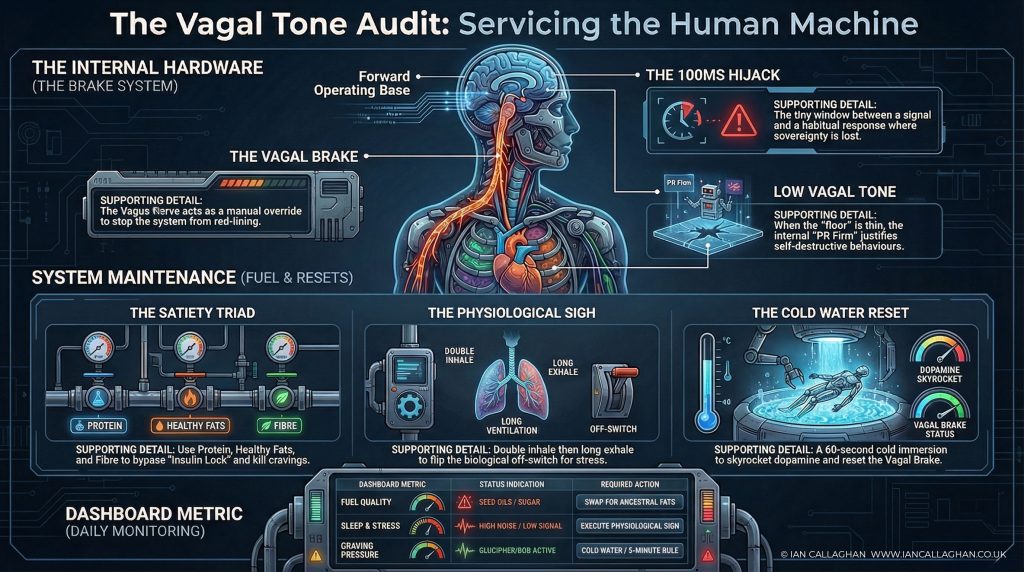
The Hardware: The Vagal Brake
Your nervous system isn’t some mystical essence; it’s a high-pressure hydraulic system. At the centre of this system is the Vagus Nerve. Think of it as the Vagal Brake.
When your Vagal Tone is high, the brake works. You can see a craving, an insult, or a crisis, and you can hold the tension. You stay in the cockpit. You are the Operator. When your Vagal Tone is low—when the hardware is worn down by poor fuel, lack of sleep, and constant stress—the brake fails.
The moment that brake slips, you are no longer in control. The machine takes over. This is the 100ms Hijack.
There is a 100-millisecond gap between a signal (a stressor or a craving) arriving at your brain and the machine executing a habitual, legacy response. Sovereignty—true freedom—is the ability to keep that 100ms gap open. If your Vagal Tone is shit, that gate slams shut before you’ve even realised there’s a choice to be made.
You cannot think your way out of a state problem. Insight is fucking useless when your Vagal Brake has failed. Only state changes state.
The Enemy Within: BOB and the PR Firm
When your Vagal Tone drops, the internal chatter starts. Meet BOB, your inner critic and the architect of your misery. BOB isn’t just a voice; he’s a sophisticated Internal Barrister.
The moment you’re dysregulated, BOB activates The PR Firm. This is your brain’s internal spin operation. Its job is to justify why you need to break your sobriety, why you deserve that bag of sugar-coated poison, or why screaming at your partner is “standing your ground.”
The PR Firm uses The Autobiography—a massive, multi-volume narrative architecture you’ve built over decades to protect your relationship with your regulation strategy (the addiction). It will tell you that you’re “tired,” “stressed,” or that “one won’t hurt.”
The Tell is simple: genuine reasoning is slow, open, and inquisitive. PR Firm output is characterised by URGENCY and “False Self-Care.” If the voice in your head is screaming that you need to act now, that’s not you. That’s the machine. That’s BOB trying to bypass the Vagal Brake.
Biological Malware: The Fuel Audit
You cannot expect a high-performance machine to run on industrial sludge. If you’re filling your tank with Seed Oils (Canola, Rapeseed, Sunflower, etc.), you are installing Biological Malware.
These oils cause mitochondrial damage and “cellular rust.” They gunk up the works, ensuring your Vagal Tone stays in the gutter. Couple that with high sugar and grains, and you trigger the Insulin Lock. Your insulin spikes, locking your fat cells shut. Your brain thinks it’s starving even while you’re carrying fifty pounds of stored energy.
When the brain thinks it’s starving, it hands the keys to Glucipher—the sugar-crazed, bin-raiding raccoon that lives in your brainstem. Glucipher doesn’t care about your goals or your “sovereignty.” Glucipher wants a dopamine hit, and he wants it now.
To kill Glucipher, you need the Satiety Triad:
Protein: Hit your protein threshold. The body drives hunger until this is met (Protein Leverage).
An Operator doesn’t guess; an Operator checks the gauges. Your Vagal Tone Audit requires you to monitor four specific dashboard metrics daily:
Sleep: Did you recover, or are you running on fumes?
Food: Did you eat “Industrial Sludge” or “Ancestral Fuel”?
Stress Load: How much “Noise” (legacy static) is competing with the “Signal” (present reality)?
Craving Pressure: How hard is Glucipher scratching at the cage?
If these gauges are in the red, your Vagal Brake is weak. You are at high risk for a 100ms Hijack. This is where you move from being a “Component” to a “Mechanic.”
Treat a slip as data, not a verdict. If you fuck up, don’t spiral into shame—that’s just BOB’s way of keeping you dysregulated. Look at the data. Where did the maintenance fail? Fix the machine.
Tactical Drills: Manual Overrides
When the audit shows you’re redlining, you don’t wait for the crash. You execute a manual override.
1. The Physiological Sigh
This is the biological “off-switch” for the sympathetic nervous system.
Double inhale through the nose (pop the lungs open).
Long, slow exhale through the mouth. Repeat three times. This manually resets the Vagal Brake.
If BOB is screaming and Glucipher is winning, get in the fucking cold water. 30-60 seconds of pure cold. This is a hardware reset. It forces the Vagal Brake to engage and provides a dopamine baseline boost of up to 250% that lasts for hours. No “thinking” required.
Shift from “I am angry” to “I am observing the feeling of anger.” This activates the prefrontal cortex, creates distance from the machine, and opens the 100ms gap. You are the Operator observing the screen, not the character dying in the game.
Sovereignty is not the absence of pain; it is the ability to carry pain without letting it drive the bus. It’s the ability to feel the 100ms Hijack coming and have the Vagal Tone to keep the gate closed.
Stop looking for “motivation.” Motivation is a feeling, and feelings are unreliable data points generated by a legacy system. You need systems. You need maintenance.
Perform the Vagal Tone Audit every single morning. Check your fuel. Check your gauges. If the brake is worn, prioritise repair over everything else.
You aren’t a bad person. You’re just a Mechanic who’s been ignoring the check engine light for too long.
Now, get to work. Reset the clock. Service the machine. Be the Operator.
Midlife Weight Loss Through Metabolic Repair, Not Restriction
Midlife weight loss gets harder because the body is dealing with more than calories. Muscle mass often drops, sleep gets worse, stress gets louder, hormones shift, appetite becomes less stable, and years of dieting, booze, processed food, and chaotic routines catch up with you. That does not mean you are broken. It means the old restriction model is too shallow for the real problem.
If you are struggling to lose weight in midlife, the answer is usually not to eat less and punish yourself harder. It is repairing the system that drives hunger, energy, blood sugar, recovery, body composition, and behaviour.
That is what metabolic repair means.
Quick answer
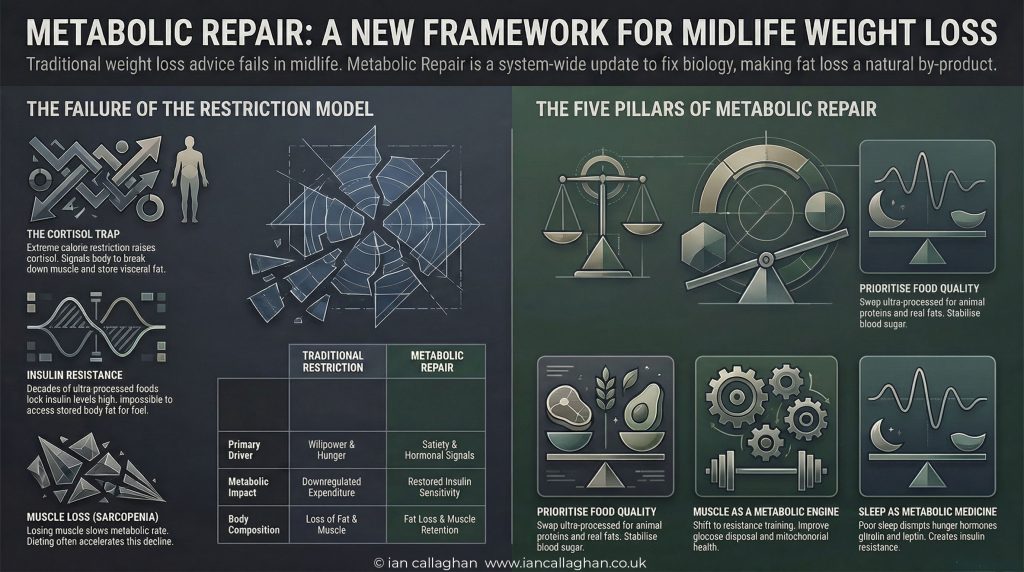
Midlife weight loss through metabolic repair means focusing on muscle retention, protein intake, blood sugar stability, sleep, stress regulation, movement, food quality, and behavioural patterns, rather than relying on harsh calorie restriction alone. Restrictive diets can create more cravings, poorer sleep, rebound eating, muscle loss, and a worse relationship with food. A better strategy is to improve the underlying metabolic and behavioural signals that make fat loss more sustainable.
In this article
Why does weight loss after 40 and 50 feel harder
Why calorie restriction often backfires in midlife
What metabolic repair actually means
Why mindset and self-sabotage matter as much as food
What a realistic midlife fat-loss strategy looks like
Where to start based on what is actually driving your problem
Frequently asked questions about midlife weight loss and metabolic repair
Why midlife weight loss feels harder than it used to
This is the bit loads of people already know in their bones before they ever search it. Something changed. What used to work no longer works the same way.
That is not imaginary.
By midlife, the body is less forgiving of chaos. Muscle mass often drops. Sleep quality can worsen. Stress becomes more chronic. Hormonal shifts affect body composition, appetite, and recovery. Physical activity often falls by the wayside as life gets heavier. You are often dealing with work, family pressure, ageing parents, injuries, less time, more responsibility, and decades of habits that have had plenty of time to dig in.
That means midlife weight loss is not just a maths problem. It is a systems problem.
So yes, energy balance still exists. But reducing the entire conversation to “just eat less” is toddler-level advice for an adult body dealing with midlife physiology.
At 25, you can get away with more. You can sleep like shit, drink too much, train like an idiot, eat whatever is nearest, and bounce back faster. By 45 or 55, the same chaos lands differently. The body becomes less tolerant of stress, less forgiving of poor recovery, and far more likely to show the cost of years of bad inputs.
That is why so many people say the same thing.
“I used to be able to lose weight quickly. Now nothing works.”
What they usually mean is this.
The old tricks no longer override the deeper mess.
Why calorie restriction often fails in midlife
Most people searching for this are not confused because they have never heard of a calorie deficit. They are confused because they have tried the old script and got shite results.
Eat less. Move more. Track everything. White-knuckle through hunger. Do more cardio. Try to be stricter.
Then they end up more obsessed with food, more tired, more irritable, sleeping worse, craving more, and feeling like they failed.
The problem is not that restrictions never create scale loss. The problem is that in midlife, it often creates too much collateral damage.
Go too hard, and people often end up with:
More cravings
Worse mood
Worse sleep
Poorer training performance
Lower energy
More rebound eating
Less muscle retention
More stress around food
Bigger all-or-nothing loops
A growing sense that they cannot be trusted around food
That last bit matters.
Because the damage is not only physical but also psychological.
Every failed restriction cycle teaches people another lesson in hopelessness. It reinforces the story that they are greedy, lazy, weak, broken, or lacking discipline. That story, in turn, changes how they behave. They stop trusting hunger. They stop trusting themselves. They stop building real structure because they are always waiting for the next magical burst of motivation.
That is not metabolic repair. That is a fucked relationship with food wearing a halo.
Signsof restriction may be making your midlife weight-loss problem worse
You are constantly hungry or thinking about food
Your sleep is getting worse
Your energy is dropping
You are losing motivation and snapping at everyone
You are doing loads of cardio but not preserving muscle
You keep bouncing between being good and bingeing or grazing
You are lighter for a bit, then heavier again
You are becoming more fearful and rigid around food, not more stable
That is not repairable. That is a stressed system under more pressure.
What metabolic repair actually means
Metabolic repair is not a detox, a tea, a supplement stack, or another sexy little phrase for Instagram. It means improving the biological conditions that make fat loss more likely and more sustainable.
In plain English, it means creating a body that is easier to regulate.
A body with better satiety
A body with more muscle stimulus
A body with steadier blood sugar
A body with less chaos around food
A body with better sleep and recovery
A body that is not constantly being battered by stress and ultra-processed crap
You are not trying to bully the body into shrinking. You are trying to improve the signals your body responds to every day.
The key pillars of metabolic repair in midlife
1. Preserve and rebuild muscle
This is one of the biggest things people care about, even if they do not phrase it that way. They say my metabolism feels slower, I keep gaining around the middle, I feel softer, I feel weaker, or nothing is shifting.
A big part of that story is body composition.
Muscle matters because it supports insulin sensitivity, resilience, physical function, and long-term metabolic health. If your plan makes you smaller but weaker, flatter, and more fragile, that is not a proper win.
2. Improve protein and satiety
Midlife fat loss gets much easier when meals actually satisfy you. Protein becomes increasingly important for satiety, recovery, and support of lean mass.
This is one reason your work can stand out. Because the answer is not to live on sad little diet portions and pretend hunger is a virtue. The answer is to make meals do more actual work.
3. Stabilise blood sugar and reduce food noise
When appetite is all over the place, energy is crashing, meals are built on low-protein beige crap, and snacks are constant, behaviour gets dragged around by unstable signals. People act like cravings are proof of weak character. A lot of the time, they are poor structure, poor sleep, stress, ultra-processed food, and repeated blood sugar swings colliding.
4. Fix the sleep problem
A lot of people are trying to diet their way out of a sleep issue. That rarely ends well.
If sleep is poor, hunger gets louder, recovery gets worse, emotional control drops, and evening food decisions usually go to hell. A lot of people are not failing because they need a stricter diet. They are failing because they are knackered.
5. Regulate stress and nervous system load
Stress is not just a vague wellness word. It changes behaviour. It changes appetite. It changes sleep. It changes what people reach for when the day has kicked the shit out of them.
Because the real issue is not just stress chemistry. It is what stress does to decision-making and self-sabotage under load.
6. Improve food qualityMany
Many people in midlife are overfed yet undernourished. Too much packet food. Too many fake health products. Too many low-fat processed substitutions pretend to be virtuous. Too much hyperpalatable industrial food makes appetite regulation harder, not easier.
This is where your real-food angle matters, not as a trendy purity game, but as a practical way to reduce appetite chaos, improve satiety, and stop getting mugged off by the food industry.
Why is this not just about food
This is where most articles in this space are weak. They talk about hormones. They talk about protein. They talk about exercise. Some mention stress. But most of them still do not really explain why a person can know exactly what to do and still keep doing the opposite when life gets heavy.
That is where mindset, behaviour, and self-sabotage come in.
Not a fluffy mindset. Not fake positive-thought bollocks. Real behavioural understanding.
A lot of people in midlife are not struggling because they need more information. They are struggling because their behaviour changes under load.
Stress goes up. Structure disappears. Sleep gets worse. Cravings get louder. Emotion builds. Old coping loops come online. They reach for food, booze, numbness, reward, comfort, or familiar routines. Then afterwards, they call themselves weak.
It is not a weakness. It is a loaded system running an old script.
That is the missing piece.
If you understand food but not self-sabotage, you miss half the battle. If you understand mindset but ignore blood sugar, sleep, muscle, satiety, and hormones, you miss the other half.
That is why your lane is stronger than generic nutrition content. You do not just understand food. You understand the mindset around food, identity, coping, and what happens when a loaded system starts reaching for relief.
That is exactly where Emotional Mastery and Under Load fit naturally. Not as random product mentions bolted onto a weight-loss article, but as the missing behavioural layer that explains why knowledge alone does not fix the pattern.
The real behavioural question
The real question is not just, “What should I eat?” It is also, “Who do I become when life gets heavy, and what do I reach for then?”
Until that part is understood, loads of people will keep trying to solve a behavioural problem with food rules alone. And that rarely works for long.
What a realistic midlife metabolic repair strategy looks like
This is what people actually want when they search. Not another lecture. A realistic path.
A better midlife fat-loss strategy usually looks like this:
Eat meals built around real food, not snacks and engineered junk
Prioritise protein and proper satiety
Walk regularly and move daily
Use strength training or resistance work to preserve muscle
Sort sleep out as a serious part of the plan, not an afterthought
Reduce alcohol if that is still part of the picture
Cut back on the fake healthy food that keeps the appetite dysregulated
Create better routines around light, timing, and recovery
Build a structure that still works when life is messy
Learn your own self-sabotage patterns before they hijack the plan
That is more boring than quick-fix diet nonsense. It is also far more likely to work.
What this looks like in real life
It looks like actual meals instead of grazing. It looks like enough protein to stop every day from becoming a hunger negotiation. It looks like moving because the body needs movement, not because you are trying to punish yourself for eating. It looks like lifting, carrying, walking, recovering, and sleeping matter, because they do. It looks like fewer fake treats are pretending to be health food. It looks like less chaos. It looks like more structure. It looks like fewer emotional ambushes around food because you finally understand your own patterns.
Where to start, depending on what is actually driving your problem
Not everyone needs the same starting point. That is another reason why generic weight-loss advice fails. It assumes a single entry point for everyone.
If your main issue is food quality, appetite chaos, poor satiety, and getting off the industrial-food treadmill, start with the real-food and metabolic side. That is where Metabolic Sovereignty and Nobody Taught You This fit.
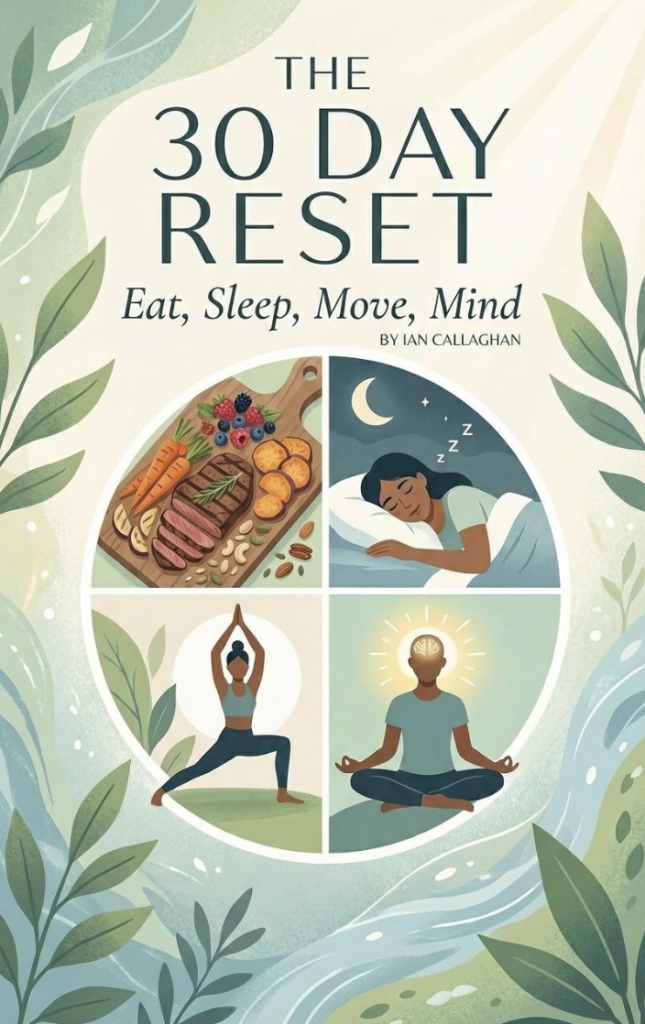
If you need a stronger framework that ties food, movement, sleep, and mindset together into a single structured approach, start with The 30-Day Reset.
If you already know what to do but keep blowing yourself up under pressure, the issue is probably not a lack of information. It is the behavioural loop. That is where Emotional Mastery and Under Load matter most.
If you want the full operating system, not just one slice of the problem, that is where the Sovereign Operator Bundle fits.
Frequently asked questions about midlife weight loss and metabolic repair
Why is weight loss harder after 40?
Weight loss often gets harder after 40 because muscle mass tends to decline, activity can fall, sleep often worsens, stress becomes more chronic, and hormonal shifts can affect appetite, body composition, and recovery. The result is a body that is less forgiving of chaos than it was in your twenties.
Can you still lose weight in midlife?
Yes. But the most effective approach usually focuses on preserving muscle, improving protein intake, sleep, movement, stress management, and food quality instead of relying on aggressive restriction alone.
Does menopause slow metabolism?
Menopause can contribute to weight and body-composition changes, especially around the abdomen. Still, it is usually part of a bigger picture that includes ageing, muscle loss, sleep disruption, physical activity, and stress.
What is metabolic repair?
Metabolic repair means improving the biological conditions that influence hunger, energy, blood sugar, sleep, recovery, body composition, and behaviour so fat loss becomes more sustainable and less reliant on brute-force dieting.
Is calorie counting useless in midlife?
No. But for many people, it is not enough on its own. A plan that ignores muscle, satiety, sleep, stress, hormones, and self-sabotage patterns will often fail even if the maths looks good on paper.
What is the best diet for midlife weight loss?
The best diet is the one that improves satiety, supports muscle, stabilises blood sugar, reduces ultra-processed food, and is sustainable in real life. In practice, that often means more protein, more real food, fewer engineered snacks, better structure, and less chaos.
The bottom line
Midlife weight loss is not about punishing yourself harder. It is not about proving your worth by ignoring hunger. It is not about becoming a smaller, weaker, more miserable version of yourself in the name of discipline.
It is about repairing the system, the food side, the sleep side, and the muscle-loss problem. Repairing blood sugar and satiety, repairing the stress response, and repairing the self-sabotage patterns that keep dragging you back into the same old mess.
Because when the system improves, fat loss stops feeling like a constant war. It becomes more like a by-product of better function.
If your body feels like it is fighting you, stop treating it like the enemy. Stop trying to starve it into submission. Start repairing the system that has been under load for years.
“Most people stopping drinking get told to stay strong and go to meetings. Nobody gives them a food plan. This is what to eat in early sobriety — built around the neuroscience of what your brain is actually going through.”
Nobody told me about the glutamate rebound when I stopped drinking.
Nobody explained that the anxiety hammering my chest at 3 am in the first few days was not a character defect, not weakness, not proof that I could not cope without a drink. It was my brain in a measurable, documented neurochemical storm with a name, a mechanism, and a nutritional response. Most people in early sobriety never hear about it because the conversation around stopping drinking is still dominated by willpower, meetings, and white-knuckling it through the first week.
I am a professional chef with over 40 years of experience in food and nutrition. I am an NLP Master Practitioner, a qualified nutritionist, and a sobriety and mindset coach. I lost five stone and reversed pre-diabetes without a single pharmaceutical intervention. I have no interest in the recovery industry’s fondness for vague reassurance. I want to give you the biology and the food to match it, because understanding what is happening in your brain in the first seven days changes everything about how you get through them.
This post covers exactly what to eat in early sobriety to support your brain’s recovery from glutamate rebound. It is based on 40 years of nutrition expertise and my own lived experience of stopping drinking and coming out the other side without a jab, a patch, or a prescription in sight.
Medical Disclaimer:This post is not medical advice. If you are a heavy dependent drinker, alcohol withdrawal can be medically serious, and you should speak to your GP before stopping. Symptoms like seizures, severe tremors, hallucinations, and confusion require medical attention. This post is for people in the early days of stopping or reducing alcohol who want to understand and support their brain’s recovery through food,and what to eat in early sobriety.
I. Why Stopping Drinking Floods Your Brain With Anxiety: The GABA-Glutamate Seesaw
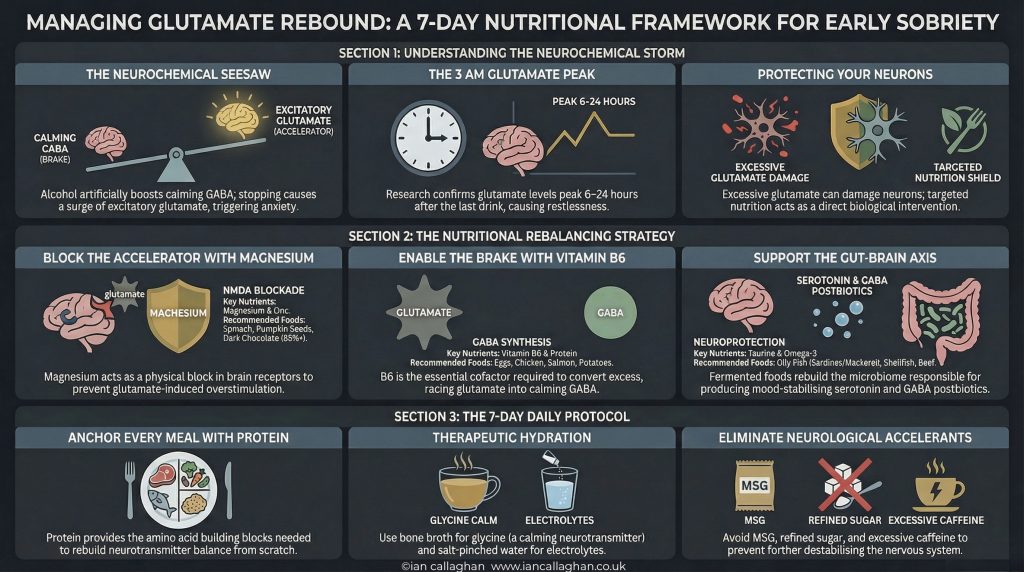
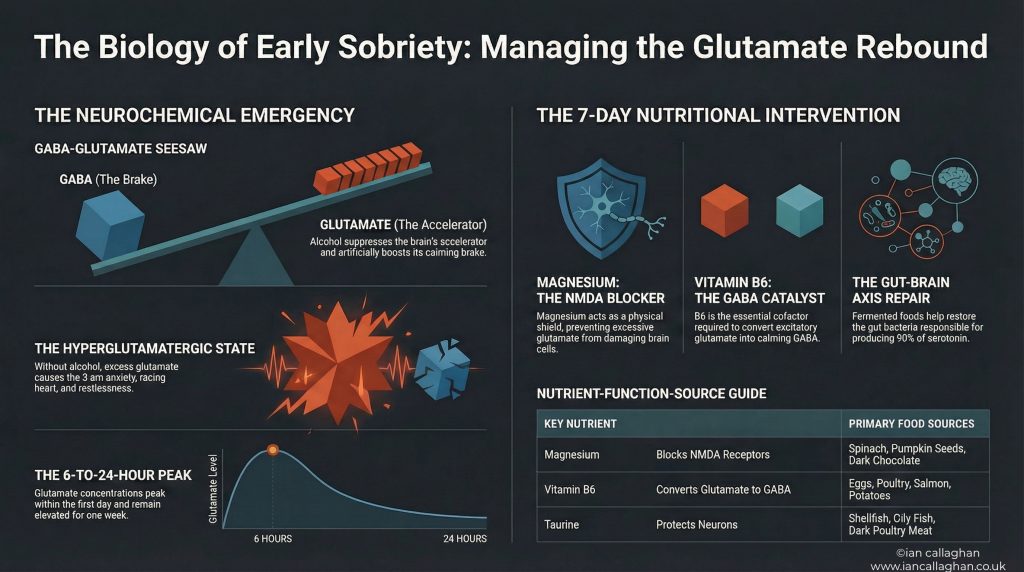
To understand the internal turbulence of early sobriety, one must first appreciate the delicate, binary architecture of brain signalling. Your central nervous system operates on a fundamental balance between two primary neurotransmitters that regulate your level of arousal and calm. They function like a seesaw, a metaphor essential to understanding the “rebound” effect.
GABA (gamma-aminobutyric acid) is your brain’s primary inhibitory neurotransmitter. It is the “brake pedal,” responsible for calming the nervous system, slowing down racing thoughts, and facilitating physical and mental relaxation. Conversely, glutamate is the “accelerator.” It is the primary excitatory neurotransmitter, helping keep you alert, focused, and cognitively engaged. In a healthy, homeostatic state, these two chemicals work in tandem to maintain equilibrium.
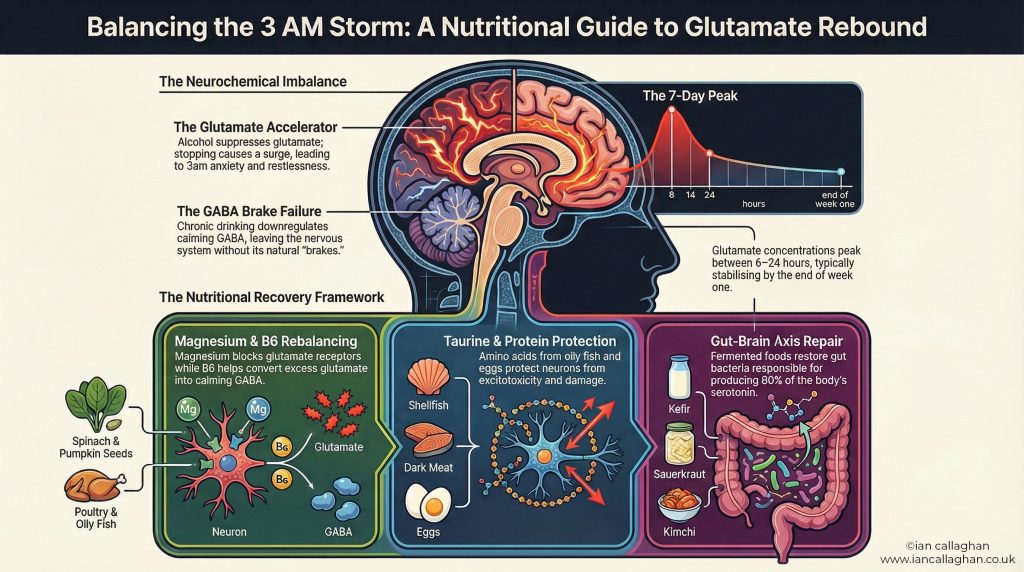
Alcohol enters this delicate system with the subtlety of a sledgehammer. It is a potent GABA booster; every drink artificially enhances GABA activity while simultaneously suppressing glutamate. This is the neurochemical mechanism behind the “relief” of the first drink. The “brakes” are slammed on, and the “accelerator” is forcibly turned down. For those who have used alcohol as a chronic stress-management tool, this chemical shift becomes a perceived necessity for survival.
However, the human brain is a master of adaptation. In a process known as homeostasis, the brain attempts to maintain its balance despite the external chemical influence. When exposed to regular alcohol consumption, the brain compensates for the artificial GABA boost by downregulating its own internal GABA production and upregulating its glutamate activity. Essentially, because you are providing an artificial brake (alcohol), the brain responds by weakening its own braking system and building a much larger, more powerful accelerator to compensate. This shift in the internal landscape is the biological definition of tolerance and the precursor to physical dependency.
“Your brain runs on two primary neurotransmitters that balance each other like a seesaw. GABA is the brake pedal, calming, inhibitory, slowing things down, letting you relax. Glutamate is the accelerator, excitatory, stimulating, keeping you alert and activated.”
When we frame cravings and the “3 am anxiety trap” as a physiological imbalance, the shame of “low willpower” evaporates. Willpower is a finite psychological resource; homeostasis is a biological imperative that functions regardless of your “strength.” If your brain has spent years building a massive “glutamate accelerator” to counter alcohol, that accelerator does not disappear the moment you put down the glass. Recognising that your anxiety is simply a brain trying to find its new level of balance—rather than a sign that you are “broken”—is a transformative psychological shift. It turns a moral struggle into a management task.
II. The 3am Anxiety Isn’t Weakness — It’s Measurable Brain Chemistry
One of the most powerful psychological tools in the recovery arsenal is the knowledge that what you are feeling is physically measurable. This is not an abstract “mental” issue; it is a neurological reality that can be observed using advanced medical imaging. This “visible” nature of the struggle helps to de-stigmatise the experience, grounding the discomfort in hard science.
Recent research employing magnetic resonance spectroscopy (MRS)—a specialised scan that measures the concentrations of specific chemicals in the brain in real time—has confirmed that glutamate levels are measurably and significantly elevated during alcohol abstinence. This surge is not global; it is particularly concentrated in the anterior cingulate cortex (ACC). The ACC is the brain’s command centre for emotional regulation, decision-making, and the physiological stress response. It is the region that tells you whether a situation is a minor inconvenience or a life-threatening emergency.
When glutamate levels surge in the ACC without the balancing influence of GABA, the brain enters what researchers call a “hyperglutamatergic state.” This is the scientific term for the internal “volume” being turned up to 10 while the world around you is at 3. This surge typically peaks between six and twenty-four hours after the last drink. While the GABA system begins a very gradual recovery over the first three days, glutamate remains elevated and volatile throughout the first week.
Knowing that this state is “visible on a brain scan” serves as a profound psychological anchor. When the waves of irritability, light sensitivity, or sensory overload hit, you can remind yourself: “My anterior cingulate cortex is currently over-stimulated by a surge of glutamate. This is a temporary, measurable biological state.” This clinical detachment allows you to observe the symptoms with the curiosity of a scientist rather than the despair of a victim. It provides the “map” necessary to navigate the storm without getting lost in the clouds of self-reproach.
III. What to Eat in Early Sobriety First: Magnesium as Your Brain’s Natural Blocker
The danger of excess glutamate is not confined to feelings of unease. When glutamate levels remain too high for too long, they can lead to a condition called “neuronal excitotoxicity.” Glutamate acts primarily through NMDA (N-methyl-D-aspartate) receptors, which function like high-velocity channels on the surface of your neurons. When these receptors are overactivated by a glutamate surge, they allow a massive, uncontrolled influx of calcium into neurons. If this calcium overload persists, it can cause direct, oxidative damage to the brain cells, essentially “burning them out” through over-excitation.
This is where magnesium becomes the most critical mineral in your recovery toolkit. Magnesium serves a very specific, physical function in the brain: it acts as a natural blocker of the NMDA receptor. It literally sits inside the receptor channel, acting as a molecular concierge that prevents excessive calcium from flooding the neuron.
Peer-reviewed research published in Australasian Psychiatry in 2025 has confirmed magnesium’s role as a direct neuroprotective agent during alcohol withdrawal. The paper specifically highlighted its role as a naturally occurring NMDA receptor blocker. Unfortunately, alcohol is a potent diuretic and a direct depletor of magnesium, meaning most people entering sobriety are profoundly deficient in the very substance they need to shield their neurons from the glutamate storm.
“Magnesium acts as a natural physical blocker of NMDA receptors, sitting in the receptor channel and preventing excessive calcium entry… This is why early sobriety nutrition is not a nice-to-have. It is a direct intervention in brain chemistry.”
To aggressively replenish this mineral, your diet must prioritise these therapeutic food sources:
Dark Leafy Greens (Spinach, Kale, Chard): These are not merely side dishes; they are concentrated, bioavailable doses of the mineral your brain requires for protection. A large portion of wilted spinach is a therapeutic intervention.
Pumpkin Seeds: These are among the most magnesium-dense foods on the planet. They also provide zinc, which is essential for GABA receptor function.
Dark Chocolate (85% Cocoa and above): Provides magnesium, along with antioxidant flavonoids that support cerebrovascular health. In this context, two squares are a legitimate medicinal tool.
IV. Vitamin B6: The Nutrient That Turns Anxiety Back Into Calm
While magnesium blocks the “accelerator,” we must also focus on repairing the “brakes.” The brain does not simply wait for GABA to reappear; it synthesises it from the very substance causing the problem: glutamate. This is done by an enzyme called glutamate decarboxylase. This enzyme is the bridge that turns “anxiety” (glutamate) into “calm” (GABA).
However, this enzyme is not self-sufficient. It requires a specific partner to function: Vitamin B6. B6 is the essential cofactor for this conversion. If you are deficient in B6, the process of recycling excess glutamate into GABA slows to a crawl, leaving you stuck in a state of high excitatory tension.
Because alcohol heavily depletes B6 stores, replenishment is an immediate priority. By providing the brain with sufficient B6, you are essentially equipping it with the tools needed to “recycle” your anxiety into tranquillity. Furthermore, it is vital to note that chronic alcohol use also depletes B1 (thiamine). Severe B1 deficiency can lead to Wernicke’s encephalopathy, a serious neurological condition. Thus, a focus on the full B-complex is essential for systemic neurological repair.
Key B6-Rich Sources:
Poultry: Chicken and turkey are exceptionally high in B6 and provide the tryptophan needed for serotonin.
Fish: Salmon and tuna provide B6 and serotonin, along with omega-3 fats that reduce neuroinflammation.
Starchy Vegetables: Potatoes and sweet potatoes offer B6 while providing the glucose stability needed to prevent cortisol spikes.
V. Oily Fish and Shellfish: The Overlooked Foods That Quiet the Glutamate Storm
Taurine is an amino acid that plays a multifaceted, protective role in managing the neurochemical storm. It acts as a GABA receptor agonist, meaning it binds to the same receptors as GABA to help quiet the brain. Additionally, it is a direct modulator of the NMDA receptor, working in concert with magnesium to prevent glutamate-induced excitotoxicity. Taurine effectively “hyperpolarises” neurons, making them harder to excite and thus more resilient to the glutamate surge.
Taurine is found almost exclusively in animal proteins, with marine life offering the highest concentrations. Shellfish—such as clams, mussels, and oysters—are the gold standard for taurine intake. If shellfish are unavailable, small oily fish like sardines and mackerel are excellent alternatives.
There is profound importance in using “real whole food” rather than pharmaceutical intervention in this specific context. While medications may be necessary for clinical withdrawal, whole foods provide a complex matrix of nutrients—taurine, zinc, B vitamins, and omega-3s—that work synergistically. This approach empowers the individual, moving them from the role of a “patient” waiting for a prescription to an active participant in their own biological repair. Using the “marine support system” is a direct way to dampen the neurological “volume” of the first week.
VI. Why Seed Oils Make Early Sobriety Harder (And What to Cook With Instead)
Often overlooked in discussions of neurotransmitters are astrocytes. These star-shaped glial cells surround the synapses in your brain and act as a biological “clean-up crew.” Their primary job in this context is to vacuum up excess glutamate from the space between neurons (the synaptic cleft) and convert it into glutamine. This non-excitatory form can be safely recycled.
When this system is working efficiently, the glutamate rebound is shorter and less intense. However, the astrocyte clearance system is easily impaired by oxidative stress and systemic inflammation—both of which are rampant in the first few days of sobriety. To support these vital cells, you must reduce inflammation at its source.
This requires a strict dietary rule for the first week: eliminating seed oils. Oils such as sunflower, rapeseed, canola, and generic “vegetable” oil are high in omega-6 fatty acids that drive the very inflammation that hinders glutamate clearance. Instead, you should cook with stable, anti-inflammatory fats that support the brain’s architectural integrity:
Butter or Ghee
Lard or Beef Dripping
Extra Virgin Olive Oil (for cold use)
Supporting these fats with the omega-3s found in oily fish and eggs directly enhances the astrocytes’ ability to clear the chemical fog and restore order to the synapses.
VII. Your Gut in Early Sobriety: Why You Feel Flat and How Food Fixes It
If you feel “flat,” emotionally fragile, or a lack of motivation during your first week, your gut is likely struggling as much as your brain. We often categorise serotonin as a “brain chemical,” but 90% of it is produced in the gut. Alcohol devastates the gut microbiome, effectively clear-cutting the bacteria responsible for producing serotonin precursors and GABA “postbiotics.”
A 2024 review in the journal Science of Food confirmed that GABA functions as a “postbiotic mediator” in the gut-brain axis. This means that certain bacterial strains can produce GABA directly during fermentation. If your gut is populated with the right microbes, it acts as a secondary “calm factory.”
To repair this system, consistency is more important than quantity. You do not need large amounts of fermented foods; you need regular inputs to begin the recolonisation process.
Kefir and Live Yoghurt: These provide the bacterial strains that synthesise GABA.
Sauerkraut and Kimchi: These offer prebiotic fibre alongside live cultures.
Miso: A gentle, fermented option that supports gut integrity.
Even a single tablespoon of sauerkraut with your lunch can begin repairing a microbiome decimated by years of alcohol exposure.
VIII. Blood Sugar Crashes Trigger Cravings — Here’s How to Eat to Stop Them
The brain in early sobriety is already in a state of neurochemical chaos. The last thing it needs is the added metabolic stress of blood sugar fluctuations. When your blood glucose drops, your body responds by releasing cortisol—the primary stress hormone. In a brain already dominated by glutamate, a cortisol spike acts as a biological trigger for intense anxiety and “white-knuckle” cravings.
Because alcohol is calorie-dense and often replaces regular meals, your body’s blood sugar regulation is likely compromised. To prevent the “rollercoaster” of spikes and crashes, you must avoid refined sugars and white flours. These provide a fleeting dopamine hit but lead to a rapid crash that amplifies withdrawal symptoms and triggers the “dopamine reward pathway” to seek another quick fix—often in the form of a drink.
Instead, focus on slow-release, complex carbohydrates. Cold-cooked potatoes are particularly useful as they contain “resistant starch,” which feeds beneficial gut bacteria while providing a slow, steady release of glucose. If you experience an intense sugar craving, do not reach for a biscuit. Instead, reach for a boiled egg or a handful of pumpkin seeds. This provides the stable fuel your brain needs to maintain its composure and avoid the “cortisol trap.”
IX. Hidden Ingredients That Make Glutamate Rebound Worse in the First Week
During the first seven days of sobriety, your NMDA receptors are in a state of hyper-sensitivity. This means your brain is exceptionally vulnerable to any additional dietary sources of glutamate. “Free glutamates” are forms of glutamate that are not bound to proteins. Because they are “free,” they are rapidly absorbed into the bloodstream, bypassing the normal digestive filters that would otherwise regulate their entry.
The most common source is MSG (Monosodium Glutamate), but free glutamates are hidden in many processed foods under various guises. In the first week, you must strictly avoid:
Soy Sauce and Fish Sauce
Processed Meats and Instant Soups
Packet Seasonings and Flavour Enhancers
Alcohol-free beer and wine (these often contain biogenic amines and fermented sugars that can provoke neurological responses).
There is a “cruel irony,” as Ian Callaghan notes, in how hidden ingredients in processed foods can inadvertently fuel the neurochemical fire. A person might be trying their absolute best to stay sober while eating “convenience” foods that contain high levels of free glutamates, essentially pouring petrol on their internal anxiety without realising it. By sticking to fresh, whole ingredients in the first week, you remove these invisible triggers and give your nervous system the quiet environment it needs to heal.
X. The 7-Day Early Sobriety Eating Plan: A Full Day of Food That Works With Your Brain
To synthesise these biological principles into a daily routine, we provide this “scannable” nutritional framework. This plan is designed to deliver a therapeutic dose of magnesium, B6, taurine, and healthy fats while maintaining absolute glucose stability.
Morning: Two or three eggs (rich in choline and B6) cooked in butter. Serve this with a large portion of wilted spinach (for your magnesium dose) and half an avocado. Drink a large glass of water with a pinch of high-quality sea salt to replenish the electrolytes (sodium and potassium) that alcohol has stripped away.
Mid-morning: A handful of pumpkin seeds (magnesium and zinc) and a small portion of kefir or live yoghurt to support the gut-brain axis.
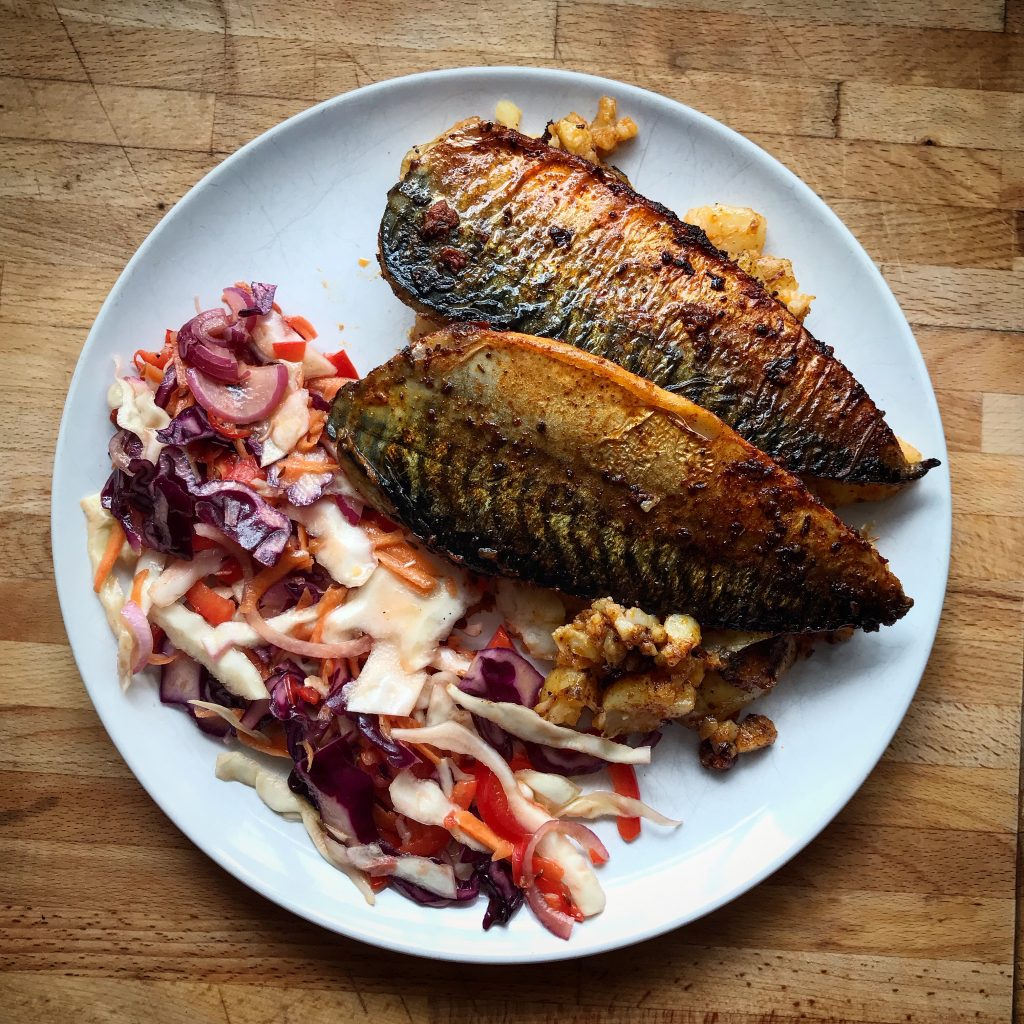
Lunch: Oily fish—such as sardines or mackerel—served with a salad of cold potatoes (for the resistant starch and B6), dressed with extra-virgin olive oil and a tablespoon of sauerkraut. The taurine in the fish and the probiotics in the sauerkraut work together to calm the ACC.
Afternoon: Two squares of 85% dark chocolate and a small handful of almonds. If you feel a “dip” in energy or a surge in restlessness, a warm mug of bone broth is exceptionally effective here.
Evening: Beef or lamb (high in zinc, B vitamins, and the neuroprotective antioxidant carnosine) served with roasted root vegetables and a generous serving of dark leafy greens.
The Evening Ritual: A mug of warm bone broth before bed. Bone broth is rich in glycine, an amino acid that acts as an inhibitory neurotransmitter in its own right. Glycine has documented sleep-promoting effects and provides a calming counterbalance to the day’s glutamate activity. It is the “biological nightcap” your brain actually needs.
“Understanding the mechanism means you are not white-knuckling it. You are working with your biology rather than fighting it. You are giving your brain what it needs to rebuild rather than simply removing what was destroying it.”
XI. Conclusion: Beyond the First Week
The first week of sobriety is a period of acute biological restructuring. By day seven, the most intense part of the glutamate rebound typically begins to subside. You have “turned the corner,” and your GABA system is beginning its long, slow journey back to dominance.
However, it is important to manage expectations for the months that follow. While glutamate rebalances relatively quickly (within about seven days), other neurotransmitters like dopamine and serotonin—which govern your sense of joy, reward, and motivation—can take two to three months to reach a stable baseline. The “flatness” or low mood you may feel in week three or four is not a sign of failure or “dry drunk” syndrome; it is simply the next phase of the brain’s repair programme.
The nutritional strategies outlined here—the focus on high-quality protein, aggressive magnesium replenishment, B6, and gut health—should not end on day eight. They form the foundation of a metabolic repair process that will support you as long as you choose to remain sober. Ian Callaghan’s success in losing five stone and reversing pre-diabetes is a testament to the power of treating food as a biological intervention.
When you understand the biology behind your anxiety, you stop being a victim of your symptoms and become the architect of your recovery. If your anxiety is a chemical storm, you can navigate with a fork and a map. What else in your life becomes manageable when you understand the biology behind it?
FAQ
What is glutamate rebound in early sobriety?
Glutamate rebound is the neurochemical state that occurs when alcohol is removed after a period of regular drinking. Alcohol artificially boosts GABA, the brain’s calming neurotransmitter, and suppresses glutamate, the excitatory one. The brain compensates over time by downregulating GABA and upregulating glutamate. When alcohol stops, glutamate surges without adequate GABA to balance it, producing anxiety, restlessness, insomnia, and cravings. It typically peaks between six and twenty-four hours after the last drink.
Why do I feel so anxious when I stop drinking?
The anxiety of early sobriety is primarily neurochemical rather than psychological. The glutamate rebound creates a hyperexcitable brain state in the anterior cingulate cortex, the region responsible for emotional regulation. This is a measurable physiological event, not a sign of weakness or inability to cope without alcohol.
What foods help with alcohol withdrawal anxiety?
Foods that support GABA production include those rich in vitamin B6, chicken, salmon, potatoes, and eggs. Foods that buffer glutamate excitotoxicity include magnesium-rich foods, dark leafy greens, pumpkin seeds, and almonds. Taurine from seafood and animal protein directly modulates NMDA receptor activity. Fermented foods support repair of the gut-brain axis and postbiotic GABA production.
Does magnesium help alcohol withdrawal?
Peer-reviewed research confirms magnesium acts as a natural NMDA receptor blocker, buffering the hyperglutamatergic state of alcohol withdrawal. Alcohol depletes magnesium significantly through increased urinary excretion. Replenishing it through dark leafy greens, pumpkin seeds, nuts, or magnesium glycinate supplementation is one of the most evidence-based nutritional interventions in early sobriety.
How long does glutamate rebound last?
The acute glutamate rebound peaks in the first twenty-four hours, and most people see significant improvement by the end of the first week. GABA and glutamate systems continue to rebalance through weeks two to four. Full neurotransmitter normalisation, including dopamine and serotonin, can take two to three months or longer, depending on drinking history.
Can food really make a difference in early sobriety?
Food does not replace medical supervision for dependent drinkers, but it directly provides the raw materials for neurotransmitter synthesis, GABA production, and glutamate clearance. Magnesium, B6, taurine, omega-3 fats, and fermented foods all have documented mechanisms relevant to the neurochemistry of early sobriety. Eating in this direction is not an alternative to other support. It is a foundation that makes everything else more effective.
What should I avoid eating in the first week of sobriety?
Free glutamate sources, including MSG, soy sauce, processed seasonings, and ultra-processed food, add to the neurological glutamate load at a time when NMDA receptors are already hyperactivated. Refined sugar and processed carbohydrates create blood glucose spikes and crashes that elevate cortisol and amplify anxiety. Excessive caffeine increases glutamate release and reduces GABA activity. These are first-week specific recommendations based on the neurochemical state of glutamate rebound.
About the Author: Ian Callaghan is a professional chef with over 40 years of experience in food and nutrition. He is a qualified nutritionist, NLP Master Practitioner, and the author of Fix Your Metabolism, The 30 Day Reset, and Nobody Taught You This. Having stopped drinking and reversed pre-diabetes through nutritional intervention, he now coaches others on the intersection of brain chemistry and metabolic health. You can find his books and personalised coaching programmes at iancallaghan.co.uk.
The 30 Day Reset is not a diet. It is a complete biological overhaul for anyone who is wired, tired, and done with feeling like shite. The 30-Day Reset is a 160+ page military-grade systems reboot for the over-35s. Four pillars. Eat, sleep, move, mind. One month to strip out the industrial poison, reset your dopamine pathways, silence Bob, and rebuild the machine that’s been running on the wrong fuel for decades. Not a diet. Not a programme. A complete…
Used to monitor number of Google Analytics server requests when using Google Tag Manager
1 minute
_gid
ID used to identify users for 24 hours after last activity
24 hours
_ga_
ID used to identify users
2 years
_gali
Used by Google Analytics to determine which links on a page are being clicked
30 seconds
_ga
ID used to identify users
2 years
__utmx
Used to determine whether a user is included in an A / B or Multivariate test.
18 months
__utmv
Contains custom information set by the web developer via the _setCustomVar method in Google Analytics. This cookie is updated every time new data is sent to the Google Analytics server.
2 years after last activity
__utmz
Contains information about the traffic source or campaign that directed user to the website. The cookie is set when the GA.js javascript is loaded and updated when data is sent to the Google Anaytics server
6 months after last activity
__utmc
Used only with old Urchin versions of Google Analytics and not with GA.js. Was used to distinguish between new sessions and visits at the end of a session.
End of session (browser)
__utmb
Used to distinguish new sessions and visits. This cookie is set when the GA.js javascript library is loaded and there is no existing __utmb cookie. The cookie is updated every time data is sent to the Google Analytics server.
30 minutes after last activity
__utmt
Used to monitor number of Google Analytics server requests
10 minutes
__utma
ID used to identify users and sessions
2 years after last activity
_gac_
Contains information related to marketing campaigns of the user. These are shared with Google AdWords / Google Ads when the Google Ads and Google Analytics accounts are linked together.