The Chef’s Prescription: 40 Years of Nutrition Wisdom on the Gut-Brain Axis & Mental Clarity
By Ian Callaghan
Professional Chef (City & Guilds) & Nutritionist(not the Liverpool footballer)
In my four-decade career, spanning the high-pressure heat of professional kitchens and the meticulous world of clinical nutrition, I have watched health trends rise and fall like a poorly made soufflé. But the most profound shift in my 40-year journey hasn’t been a flashy new cooking technique or a “miracle” supplement—it is the revolutionary understanding of the gut-brain axis.
As a chef, I have always instinctively known that food influences mood; a well-crafted meal can soothe the soul. As a Paleo-certified nutritionist, I now understand the complex biological “recipe” behind why this happens. Your gut is quite literally your “second brain,” housing a nervous system so sophisticated it operates independently of the one in your skull. After 40 years of studying how nutrients interact with human physiology, I’ve identified six critical ways your digestive health dictates your cognitive destiny and emotional resilience.
In a professional kitchen, we live by the rule of “mise en place”—everything in its place. If your prep isn’t right, the service fails. Your body follows the same protocol. While many think happiness is “all in your head,” the reality is that approximately 90% of your serotonin (your primary mood-regulating chemical) is manufactured in your gut.
Through my nutrition studies, I’ve analysed how enterochromaffin cells in the gut lining act as a biological chemical factory. These cells depend on specific “raw ingredients.” When we consume high-quality, bioavailable proteins—the cornerstone of a Paleo approach—our gut bacteria convert the amino acid tryptophan into serotonin.
The Consequence: If your gut microbiome is dysbiotic (imbalanced), it’s like having a broken stove in the middle of a dinner rush. No amount of “positive thinking” can override a fundamental chemical deficit caused by a compromised gut. To support this, I recommend focusing on “clean” proteins like pasture-raised eggs, wild-caught fish, and grass-fed meats, which provide the acid profile necessary for this vital production.
2. Leaky Gut: The “Broken Sieve” and the Paleo Defence
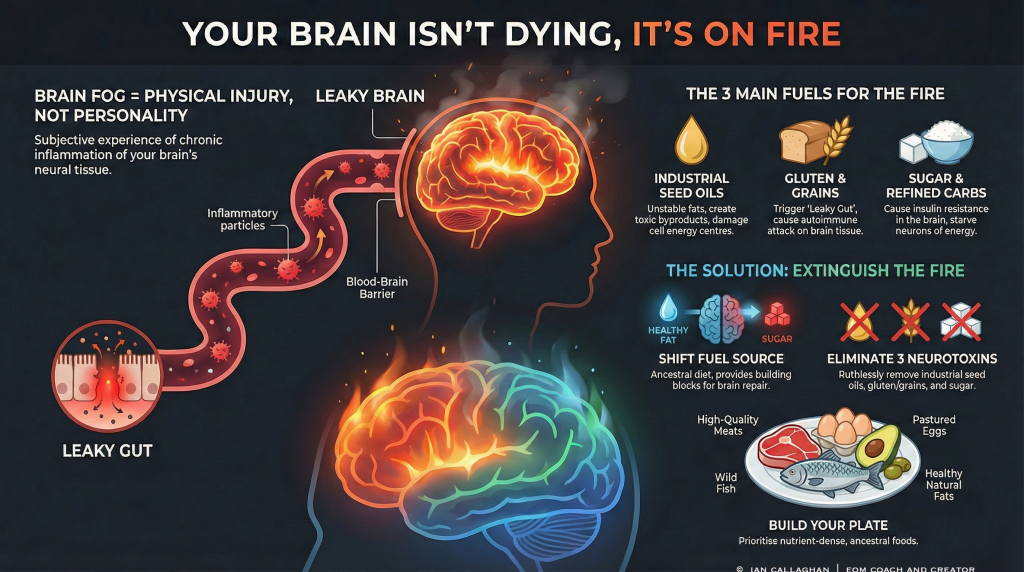
My training in Paleo nutrition emphasises the absolute necessity of maintaining a “tight” intestinal barrier. In the professional kitchen, we use fine-mesh strainers to ensure only the purest liquids pass through. Think of your intestinal lining as that mesh. When it becomes damaged—a condition known as Altered Intestinal Permeability, or “Leaky Gut”—it’s like a sieve with holes far too large.
When this barrier fails, a potent bacterial endotoxin called Lipopolysaccharide (LPS) escapes the digestive tract and enters the bloodstream. In my 40 years of experience, I’ve come to view LPS as the “silent killer” of mental clarity. Once in the blood, it triggers systemic inflammation that can eventually breach the blood-brain barrier (BBB). This leads to neuroinflammation, a state where the brain is essentially “on fire.” By reducing dietary triggers like gluten and lectins, we lower the production of zonulin, the protein responsible for opening those cellular gaps, thereby sealing the barrier and cooling the neuroinflammatory fire.
One dimension often overlooked is the physical connection between the two brains: the Vagus Nerve. Think of the Vagus nerve as the telephone line between the Head Chef (the brain) and the Line Cooks (the gut).
In my experience, when the gut is inflamed, it sends “emergency” signals up the Vagus nerve, hijacking the brain’s focus. This is why digestive distress is almost always accompanied by a sense of “impending doom” or heightened anxiety. By consuming fermented foods and healthy fats, we “grease the wheels” of this communication, ensuring that the signals sent to your brain are those of safety and satiety, rather than alarm and distress.
4. Neurodegeneration: When the Gut Drives Chronic Brain Fog
I have spent a lifetime observing how dietary choices compound over decades. The “metabolic exhaust” of a poor diet doesn’t just cause weight gain; it leads to the loss of connections between brain cells.
When gut-derived toxins like LPS enter the brain, they activate microglia—the brain’s resident immune cells. In a healthy state, these cells are like a cleaning crew. However, when over-activated by gut inflammation, they become “rogue,” releasing a flood of pro-inflammatory cytokines (TNF-α and IL-1β) that damage neurons.
Alzheimer’s & Parkinson’s: We now see clear links between chronic gut imbalances and the accumulation of amyloid-β plaques and the loss of dopaminergic neurons.
The “Brain Fog” Reality: What many of my clients describe as “just getting older” is often actually active neuroinflammation. It is the biological equivalent of smoke in the kitchen—you can’t see the menu clearly until you clear the air and put out the fire in the gut.
5. Flavour Without the Flare: The Professional Truth About Low-FODMAP
As a City & Guilds-trained chef, I believe that if food isn’t delicious, it isn’t medicine—because no one will eat it. This is the biggest hurdle with the Low-FODMAP diet. Many find it bland and clinical.
While the research from institutions like King’s College London is undeniable—reducing fermentable carbohydrates can drastically lower anxiety and IBS-driven brain fog—I always issue a professional warning: This is a short-term protocol, not a permanent lifestyle. * The Chef’s Tip: To make Low-FODMAP food palatable, I teach clients to use “infused oils” (like garlic-infused olive oil, where the solids are strained out) and fresh herbs like chives and cilantro. This provides the flavour profile of aromatics without the fermentable fibres that cause the “flare.”
The Risk: Following this diet indefinitely can starve your “good” bacteria, leading to a loss of microbiome diversity—the very thing we are trying to fix.
6. The Chef’s “Culinary Medicine” Brain-Preserve Protocol
After 40 years, I’ve perfected the balance of fats and fibres that keep the brain sharp. Drawing from the SMILES and PREDIMED trials, I advocate for a “Culinary Medicine” approach that focuses on nutrient density and bioavailability.
The Chef’s “Brain Food” List
The Nutritional Logic
What We Leave Out
Wild Fatty Fish
High in DHA/EPA for brain cell fluidity.
The Chef’s “Brain Food” List
Deep Berries & Leafy Greens
Added Sugars which “caramelise” (glycate) your proteins.
Processed Carbs (White breads/pastas) that spike insulin.
EVOO (Cold-Pressed)
Contains oleocanthal, a natural anti-inflammatory.
Polyphenols that act as “antioxidants” for neurons.
Bone Broth (Paleo)
Grain-fed Industrial Meats are high in pro-inflammatory Omega-6.
Grain-fed Industrial Meats high in pro-inflammatory Omega-6.
Chef’s Bioavailability Secret: I always pair turmeric with black pepper and a healthy fat. The piperine in pepper increases the absorption of the anti-inflammatory curcumin by up to 2,000%.
7. A Professional Caution: The Risks of Extreme “Healing” Diets
In my career, I’ve analysed every protocol from keto to carnivore, including the GAPS (Gut and Psychology Syndrome) diet. While I respect the premise of “healing and sealing” the gut to treat cognitive conditions, my 40 years of experience lead me to a vital caution.
Extreme restriction, if managed poorly, is a recipe for malnutrition. When you eliminate entire food groups, you risk deficiencies in Calcium, Iron, and B vitamins—all of which are required for brain function. My professional advice? Don’t go it alone. A “gut-healing” protocol should be diverse and nutrient-rich, not a period of starvation.
Conclusion: What Message is Your Kitchen Sending?
The most important lesson I’ve learned in 40 years is this: Your gut is a mirror of your mind. Your digestive system is the gateway through which the outside world enters your internal biology.
As a chef and nutritionist, my mission is to help you realise that you are the “Executive Chef” of your own health. Every meal is an opportunity to send a message of healing, clarity, and peace to your brain—or a message of inflammation and fog. The choice starts at the cutting board. What message will you send with your next meal?
You are doing everything right. You are eating the same foods that kept you lean in your thirties. You are running the same routes, attending the same spin classes, and managing a workload that would crush a younger professional. Yet, the scales are creeping upward, your energy is plummeting, and the fat accumulating around your midsection seems resistant to every intervention.
This is not a failure of willpower. It is a physiological shift.
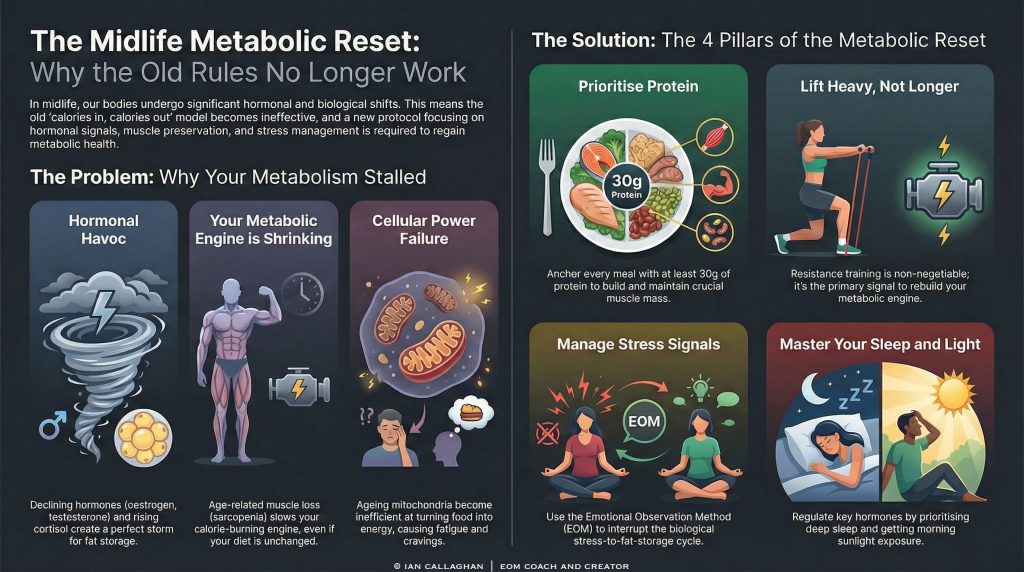
The “calories in, calories out” model that served you for decades has become obsolete. In midlife, the hormonal landscape shifts so drastically that your body begins to interpret the same inputs differently. Stress is no longer just stress; it is a signal to store visceral fat. A skipped meal is no longer a calorie deficit; it is a metabolic emergency signal.
To navigate this, we require a comprehensive Midlife Metabolic Reset Protocol. This is not a diet. It is a systemic recalibration of your biology, your nutrition, and your emotional relationship with stress.
This guide will provide a deep, granular analysis of why your metabolic engine has stalled and, more importantly, the precise mechanisms required to restart it. We will explore the critical role of the Emotional Observation Method (EOM), the necessity of muscle-centric medicine, and the nutritional nuances required to combat insulin resistance.
The Biological Reality: Why the Rules Changed
Before implementing the Midlife Metabolic Reset Protocol, one must understand the biological terrain. The frustration many feel arises from applying “Growth Phase” tactics (what worked at 25) to a “Preservation Phase” body (what is happening at 45+).
1. The Hormonal Cascade
Midlife is characterised by the decline of anabolic (building) hormones and the dominance of catabolic (breaking down) stress hormones.
Estrogen and Progesterone: For women, the decline of estrogen is metabolic dynamite. Estrogen is insulin-sensitising. As it wanes, the body becomes more insulin resistant, meaning it struggles to process carbohydrates effectively, shuttling them into fat storage rather than muscle energy. Furthermore, the drop in progesterone impacts sleep quality and increases anxiety, creating a vicious cycle of fatigue.
Testosterone: In both men and women, free testosterone levels drop. This hormone is essential for muscle protein synthesis and fat oxidation. Lower levels make it harder to build muscle and easier to accumulate adipose tissue.
Insulin: This is the master switch. After decades of carbohydrate consumption and stress, cellular receptors often become less sensitive to insulin. This condition, insulin resistance, means your pancreas must pump out massive amounts of insulin to lower blood sugar. Since insulin is a fat-storage hormone, high circulating levels make fat burning biologically impossible.
Cortisol: The stress hormone. In midlife, the “cortisol steal” phenomenon occurs. Because the body prioritises survival, it will steal precursor hormones to manufacture cortisol, leaving you with even lower levels of sex hormones. Chronically elevated cortisol specifically targets the abdominal area for fat storage because visceral fat has four times more cortisol receptors than subcutaneous fat.
2. Sarcopenia: The Silent Engine Killer
Metabolism is not a static number; it is largely dictated by your lean muscle mass. Muscle is a metabolically expensive tissue. It requires significant energy just to exist.
Starting in our 30s, but accelerating rapidly in our 40s and 50s, we experience sarcopenia—the involuntary loss of skeletal muscle mass. If you are not actively intervening with heavy resistance training, you are losing the very engine that burns calories. Most people do not gain fat because they are eating more; they gain fat because their engine has shrunk, but their fuel intake has remained constant.
3. Mitochondrial Efficiency
Inside every cell are mitochondria, the power plants that convert food into energy (ATP). As we age, mitochondrial density decreases and function becomes less efficient. This results in “metabolic inflexibility.” A healthy metabolism can switch easily between burning glucose and burning fat. A rigid, aged metabolism struggles to switch, leaving you tired (unable to access fat for fuel) and hungry (craving sugar for quick energy).
The Emotional Observation Method (EOM)
Most metabolic protocols fail because they ignore the operating system driving the machine: the human mind. You cannot fix a biological issue if the psychological triggers remain unaddressed. This is where the Emotional Observation Method (EOM) becomes critical.
EOM vs. The Emotional Operating System
It is vital to distinguish between the two:
The Emotional Operating System: This is your internal wiring—the subconscious patterns, trauma responses, and ingrained habits that dictate how you react to stress. In midlife, this system is often overloaded.
The Emotional Observation Method (EOM): This is the tool we use to interact with and regulate that system.
Why EOM Matters for Metabolism
When you encounter a stressor—a difficult email, a family conflict, a traffic jam—your emotional operating system often triggers a “fight or flight” response. This dumps glucose into the bloodstream for energy. If you do not physically fight or flee, that glucose is reabsorbed and stored as visceral fat.
The Emotional Observation Method creates a wedge between the stimulus and the response.
How to Practice EOM
Recognise the Shift: You feel the physical sensation of stress (tight chest, shallow breath, urge to snack).
Observe, Don’t Engage: Instead of saying “I am angry,” you say, “I am experiencing anger.” This linguistic shift moves you from the emotional centre of the brain to the prefrontal cortex (the analytical centre).
The Metabolic Pause: By observing the emotion rather than becoming it, you lower the sympathetic nervous system arousal. This prevents the cortisol spike.
Action: You choose a response that aligns with your Midlife Metabolic Reset Protocol, rather than a reaction that sabotages it.
Without EOM, you will likely fall victim to “stress eating,” which is actually a biological search for dopamine to counteract cortisol. EOM stops the cycle at the source.
Nutrition: The Fuel Recalibration
In the Midlife Metabolic Reset Protocol, we do not count calories; we count chemical signals. Food provides information to your cells. We need to send signals of safety and repair, not scarcity and stress.
1. Protein Anchoring
The most critical macronutrient for midlife is protein. Due to a phenomenon called “anabolic resistance,” an older body requires more protein to stimulate the same amount of muscle growth as a younger body.
The Protocol: You must consume a minimum of 30 grams of high-quality protein at every meal.
The Science: This reaches the “leucine threshold” required to trigger Muscle Protein Synthesis (MPS). If you eat 15g of protein, you get the calories, but you do not trigger the repair mechanism. You must hit the threshold.
Sources: Lean beef, poultry, fish, eggs, and high-quality plant isolates.
2. Carbohydrate Periodisation
We are not eliminating carbohydrates, but we are earning them. Given the insulin resistance common in this demographic, carbohydrates should be viewed as high-octane fuel to be used only when the engine is running hot.
Timing: Consume the majority of your carbohydrates after exercise. This is when your muscles act like a sponge, soaking up glucose for glycogen replenishment without requiring massive insulin spikes.
Type: Focus on fibrous, complex carbohydrates (cruciferous vegetables, berries, legumes) that have a blunted glycemic response.
The “Naked Carb” Ban: Never eat carbohydrates alone. Always pair them with protein, fat, or fibre to flatten the glucose curve.
3. Fats for Hormonal Health
Low-fat diets are disastrous for midlife. Steroid hormones (testosterone, estrogen, cortisol) are made from cholesterol. If you starve your body of healthy fats, you starve your hormonal production.
As we age, our thirst mechanism blunts. We become dehydrated without realising it. Furthermore, if you lower carbohydrates, your kidneys excrete more electrolytes.
Protocol: Aim for 3 litres of water daily, supplemented with magnesium, potassium, and sodium. Magnesium is particularly vital for cortisol regulation and sleep quality.
Movement: Building the Metabolic Armour
If nutrition is the fuel, movement is the architecture. The standard advice of “move more” is insufficient. We need specific stimuli to counteract sarcopenia and hormonal decline.
1. Resistance Training: The Non-Negotiable
You cannot cardio your way out of a midlife metabolic slowdown. Excessive steady-state cardio (long runs) can actually increase cortisol, exacerbating muscle loss and belly fat retention.
The Goal: Hypertrophy (muscle growth) and Strength.
Frequency: 3 to 4 sessions per week.
Intensity: You must lift heavy enough to reach momentary muscular failure or close to it. This mechanical tension is the signal your body needs to keep muscle tissue.
Focus: Compound movements (squats, deadlifts, presses, rows) that recruit maximum muscle fibres.
2. NEAT (Non-Exercise Activity Thermogenesis)
While gym sessions build the engine, NEAT burns the fuel. This refers to all movement that isn’t sleeping or structured exercise—walking, typing, cleaning, fidgeting.
The Midlife Drop: We tend to become more sedentary as we advance in our careers.
The Protocol: Aim for 8,000 to 10,000 steps daily. This keeps lipoprotein lipase (an enzyme that breaks down fat) active. Sitting for prolonged periods shuts this enzyme off.
3. High-Intensity Interval Training (HIIT) – Use With Caution
HIIT is effective for mitochondrial biogenesis (creating new mitochondria), but it is very taxing on the central nervous system.
Dosage: Maximum 1-2 sessions per week.
Ratio: Short bursts of maximum effort (20 seconds) followed by long recovery (2 minutes). We want power output, not exhaustion.
You cannot reset your metabolism if you are sleeping poorly. Sleep is when the “glymphatic system” cleans the brain of toxins and when growth hormone is released to repair tissue.
1. The Cortisol-Melatonin Axis
Cortisol and melatonin are antagonists. When one is high, the other is low. In a healthy cycle, cortisol peaks in the morning (waking you up) and bottoms out at night. In midlife, this often inverts—you are tired in the morning and wired at night.
2. Light Hygiene
Morning: View natural sunlight within 30 minutes of waking. This sets the circadian clock and triggers the morning cortisol pulse, which sets you up for better sleep 16 hours later.
Evening: Block blue light (screens, LEDs) two hours before bed. Blue light suppresses melatonin production, tricking your body into thinking it is noon.
3. The Glycemic Impact of Sleep Loss
A single night of partial sleep deprivation can induce a temporary state of pre-diabetes. Your cells become insulin resistant, and your hunger hormone (ghrelin) spikes while your satiety hormone (leptin) crashes. This is why you crave carbohydrates after a bad night’s sleep. Prioritising sleep is a metabolic intervention.
The 4-Phase Midlife Metabolic Reset Protocol
Implementing all these changes at once can be overwhelming and trigger the very stress response we are trying to avoid. We break the protocol down into four distinct phases.
Phase 1: The inflammatory Detox (Weeks 1-2)
Goal: Lower systemic inflammation and stabilise blood sugar.
Nutrition: Eliminate alcohol, added sugars, and processed grains entirely. Focus on whole foods.
Movement: Focus strictly on walking (NEAT) and mobility work. No high-intensity training yet. Allow the body to lower cortisol.
Lifestyle: Implement a strict 10:00 PM bedtime.
EOM Focus: Begin logging emotional triggers for food cravings.
Phase 2: The Metabolic Wake-Up (Weeks 3-6)
Goal: Introduce insulin-sensitising habits and muscle stimulation.
Nutrition: Introduce “Time Restricted Feeding” (12-14 hour fasting window). Start hitting the 30g protein threshold at every meal.
Movement: Introduce Resistance Training (2 days/week). Focus on form and neural activation.
Supplementation: Start Magnesium Glycinate and Vitamin D3 (after testing levels).
Phase 3: The Engine Build (Weeks 7-12)
Goal: Maximal muscle growth and metabolic flexibility.
Nutrition: Carbohydrate cycling. Eat carbs only on training days.
Movement: Increase Resistance Training to 3-4 days/week. heavy lifting. Add 1 HIIT session.
EOM Focus: Use EOM to manage the stress of increased physical demand. Ensure recovery is prioritised.
Phase 4: Maintenance and Optimisation (Ongoing)
Goal: Sustainable lifestyle integration.
The 80/20 Rule: 80% adherence to the protocol allows for 20% flexibility.
Monitoring: Use biofeedback (energy levels, sleep quality, waist-to-height ratio) rather than just the scale to measure success.
Troubleshooting the Reset: Why You Might Stall
Even with a robust Midlife Metabolic Reset Protocol, plateaus occur. Here are the common culprits and how to address them.
1. Under-eating Protein
Many people think they are eating “high protein” when they are actually eating high fat. A handful of nuts is a fat source, not a protein source. Track your protein intake for a week. If you are not hitting 1.6g to 2.2g per kg of body weight, you are under-fuelled for adaptation.
2. “Hidden” Stress
You might be eating perfectly and training hard, but if you are chronically anxious about politics, finances, or family, your cortisol remains high. Your body cannot distinguish between a famine and a deadline. This is where mastering the Emotional Observation Method is the dealbreaker. You must actively downregulate your nervous system through breathwork, meditation, or simply spending time in nature.
3. Alcohol: The Metabolic Brake
In midlife, alcohol metabolism changes. The liver prioritises breaking down ethanol over everything else. This halts fat burning completely. Furthermore, alcohol increases estrogen (worsening dominance) and decreases testosterone. Even “moderate” drinking can derail a metabolic reset. During the initial 12 weeks, total abstinence is recommended.
4. Gut Health Dysbiosis
Years of antibiotic use, stress, and poor diet can alter the gut microbiome. Certain bacteria (Firmicutes) are better at extracting calories from food than others. If your gut is inflamed, you are absorbing fewer nutrients and generating systemic inflammation. Including fermented foods (sauerkraut, kimchi, kefir) and prebiotic fibres is essential.
Advanced Strategies: Supplements and Biohacks
While whole foods and movement are the foundation, certain supplements can act as catalysts for the Midlife Metabolic Reset Protocol.
Creatine Monohydrate: Not just for bodybuilders. It improves cellular hydration, supports ATP production (energy), and improves cognitive function. It is essential for preserving muscle in midlife.
Berberine: Often called “nature’s Metformin.” It activates AMPK, an enzyme that regulates metabolism, helping to lower blood glucose and improve insulin sensitivity.
Adaptogens (Ashwagandha/Rhodiola): These herbs help the adrenal system manage the stress response, potentially lowering cortisol levels.
Cold Exposure: Cold plunges or cold showers can stimulate Brown Adipose Tissue (BAT). Unlike white fat (storage), brown fat generates heat and burns calories. It also improves insulin sensitivity.
Case Study: The “Busy Executive” Pivot
To illustrate the power of this protocol, consider the case of “Sarah,” a 48-year-old marketing director.
The Profile:
Symptoms: Gained 15lbs in two years despite no diet change. Waking up at 3 AM. Afternoon energy crash. “Brain fog.”
Current Routine: Coffee for breakfast, salad for lunch, heavy pasta dinner with wine. 45 minutes of spinning 3x a week.
The Diagnosis: Severe cortisol dysregulation, insulin resistance, and protein malnutrition.
The Intervention:
Diet: We removed the morning coffee on an empty stomach (which spikes cortisol) and replaced it with a savoury high-protein breakfast (eggs and salmon). Wine was removed for 30 days. Dinner carbs were swapped for roasted vegetables.
Movement: We cancelled the spin class. It was just creating more stress. Replaced with heavy weight lifting 3x a week and daily 20-minute walks after dinner (to lower post-meal blood sugar).
Mindset: Sarah used the Emotional Observation Method to identify that her 3 PM sugar craving was actually boredom and decision fatigue, not hunger. She replaced the snack with a 5-minute breathing break.
The Result: In 12 weeks, Sarah lost 12lbs of fat (specifically from the waist), but more importantly, her sleep stabilised, and her brain fog vanished. She ate more food but changed the chemical signal of that food.
Conclusion: Reclaiming Your Metabolic Sovereignty
The narrative that midlife inevitably leads to decline, weight gain, and fatigue is false. It is common, but it is not normal. It is a symptom of a mismatch between our modern environment and our changing biology.
The Midlife Metabolic Reset Protocol is an invitation to stop fighting your body. Stop trying to starve it into submission with 1,200-calorie diets. Stop trying to punish it with excessive cardio. Instead, listen to the signals.
You must realise that your body is currently in a state of high alert. It is trying to protect you by storing energy and downregulating expensive processes like muscle building. To change the outcome, you must change the input. You must convince your body that it is safe, well-fuelled, and strong.
By integrating the Emotional Observation Method to manage stress, prioritising protein to build the engine, and lifting heavy things to demand adaptation, you can not only halt the slide—you can reverse it. You can enter your 50s and 60s with more metabolic flexibility, energy, and strength than you had in your 30s.
It requires precision. It requires consistency. But the biology is clear: you have the capacity to reset. The protocol is in your hands; the execution is up to you.
Frequently Asked Questions (FAQ)
Q: Can I follow this protocol if I am on Hormone Replacement Therapy (HRT)? A: Absolutely. In fact, HRT often works synergistically with this protocol. HRT can help mitigate some of the hormonal valleys (like low estrogen), making the muscle-building and insulin-sensitising aspects of the protocol even more effective. However, HRT is not a magic bullet; the nutrition and movement pillars remain essential.
Q: How long does it take to see results? A: Metabolic healing is slower than crash dieting. You may not see a drop on the scale for the first 3-4 weeks as your body repairs inflammation and builds muscle tissue (which is denser than fat). However, energy levels and sleep usually improve within 10 days. Visceral fat reduction typically becomes noticeable around week 6-8.
Q: Do I really need to give up cardio? A: You do not need to give it up entirely, but you must re-prioritise. If you have 5 hours a week to exercise, 3-4 of them should be resistance training. Cardio should be used for heart health and recovery, not as the primary driver of fat loss. Walking is the best form of cardio for this protocol as it does not spike cortisol.
Q: Is Intermittent Fasting required? A: No, but Time Restricted Feeding (TRF) is recommended. A simple 12-hour window (e.g., finish dinner by 7 PM, breakfast at 7 AM) gives your digestive system a break and allows for cellular cleanup (autophagy) without the stress of prolonged fasting, which can sometimes backfire in women by spiking cortisol.
Q: What if I am vegan? A: The protocol is harder but possible. You must be extremely diligent about protein intake. You will likely need to supplement with pea or rice protein isolates to hit the 30g per meal threshold without consuming excessive carbohydrates. You must also supplement B12, iron, and potentially creatine.
Q: How does EOM differ from meditation? A: Meditation is a practice often done in a quiet, dedicated space. EOM (Emotional Observation Method) is a real-time tactical tool used in the “heat of battle.” It is applied the moment you feel stress or a craving. It is active engagement with the emotional operating system, whereas meditation is often passive observation or clearing of the mind.
Q: Why is “Midlife” defined as a metabolic shift rather than an age? A: Chronological age differs from biological age. Some individuals experience perimenopausal symptoms or testosterone drops in their late 30s; others in their early 50s. The protocol applies whenever you notice the classic signs: unexplainable weight gain, fatigue, and reduced stress resilience.
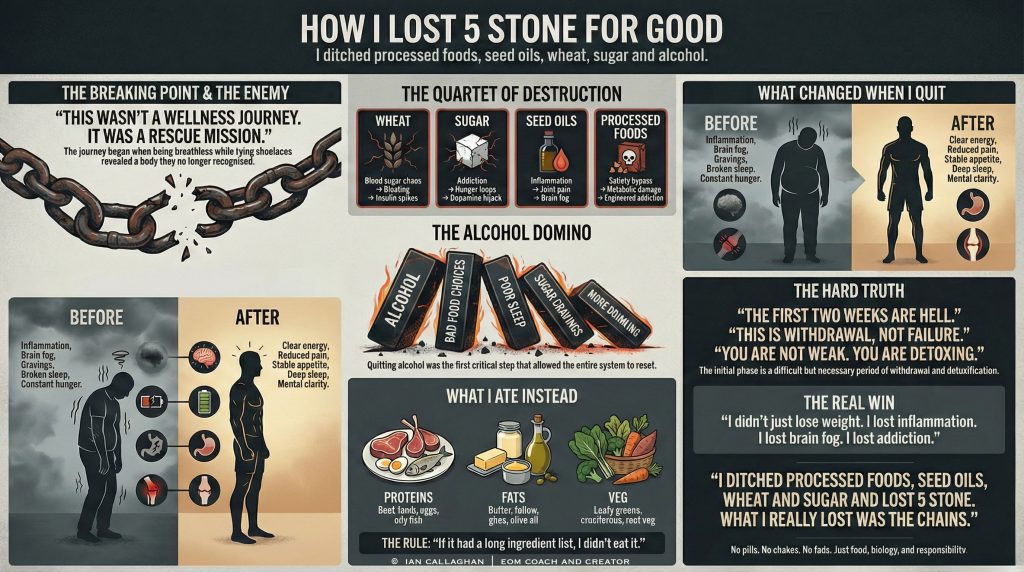
The brutal truth: I ditched processed foods, seed oils, wheat and sugar and lost 5 stone (70 lbs).
I remember the exact moment the lie I had been living finally crumbled. I was sitting on the edge of the bed in my flat, trying to tie my shoelaces. It sounds trivial, doesn’t it? A grown adult, breathless, face flushed red, struggling to perform a task a five-year-old can manage. But my stomach was in the way. My lungs felt compressed. And the shame was so thick I could taste it.
I had to take a break halfway through just to catch my breath. I sat there, staring at the wall, and I realised I was terrified. Not of dying, exactly, but of living like this for another ten years. Being the person who wheezes when walking up a single flight of stairs. Being the person who secretly unbuttons their trousers under the dinner table just to relieve the pressure.
In this guide, you’ll learn:
How to handle the social isolation that comes with a radical life reset.
How I broke a 45-year relationship with alcohol.
Why removing “The Quartet of Destruction” (Wheat, Sugar, Seed Oils, Alcohol) is more effective than counting calories.
The difference between fat loss and “Inflammation Vanishing.”
I knew better. That was the worst part. I have a City & Guilds in Food and Nutrition. I hold diplomas in nutrition, including Paleo protocols. I have the certificates, the education, and the intellectual understanding of what the human body needs. I knew the biochemistry. I knew the metabolic pathways. But there I was, carrying an extra five stone, inflammation radiating through my joints like a dull toothache, completely trapped in a cycle of self-destruction.
I looked at my reflection in the wardrobe mirror—really looked at it, not the cursory glance I usually gave while sucking my gut in—and I said, “Enough.”
It wasn’t a corporate strategy. It wasn’t a “wellness journey.” It was a rescue mission.
Here is the raw, unpolished story of how I ditched processed foods, seed oils, wheat and sugar and lost 5 stone, and perhaps more importantly, how I finally put down the bottle after 45 years.
The Fraud in the Mirror
For years, I felt like a complete fraud. Imagine having the qualifications on your wall that say you are an expert in nutrition, while your body screams the opposite. I would give people advice on nutrient density and metabolic health, and then I would go home and drown my sorrows in wine and convenient, beige food.
It creates a cognitive dissonance that eats away at your soul. You start to avoid mirrors. You start to wear baggy clothes. You stop looking people in the eye because you’re afraid they’ll see the hypocrisy.
The problem wasn’t a lack of knowledge; it was a lack of execution, fuelled by a toxic environment and a lifetime of addiction. I had spent 45 years drinking. That is nearly half a century of viewing alcohol not just as a beverage, but as a crutch, a celebratory tool, a commiseration mechanism, and a way to silence the noise in my head.
When you drink for that long, your physiology changes. Your gut lining is compromised. Your liver is under siege. And your inhibition around food dissolves. No one makes a healthy salad after a bottle of wine. You reach for the toast, the biscuits, the takeaway—the processed garbage that hits the dopamine receptors just right.
I had to admit that my knowledge of Paleo and nutrition was useless as long as I was poisoning myself. I was trying to build a house on a foundation of quicksand.
Ditching Seed Oils and Sugar: The Quartet of Destruction
When I finally decided to change, I didn’t count calories. I didn’t join a slimming club where we clapped for losing half a pound. I went back to my training, specifically my Paleo roots, and I identified the four horsemen of my metabolic apocalypse.
I realised that to save my life, I had to be radical. Moderation had failed me for decades. “Just a little bit” always turned into a lot. I had to draw a hard line in the sand.
The commitment was absolute: I ditched processed foods, seed oils, wheat and sugar and lost 5 stone.
Why these four? Because in my experience—both personal and educational—they are not just “empty calories.” They are biological disruptors.
Wheat: It wasn’t just about gluten; it was about the blood sugar rollercoaster and the bloating that made me look six months pregnant every time I ate a sandwich.
Sugar: The master addiction. The substance that kept me hungry even when I was full.
Seed Oils: The invisible inflammation. The rapeseed, sunflower, and soybean oils lurking in everything from hummus to “healthy” oat bars.
Processed Foods: The ultra-processed sludge engineered to bypass our satiety signals.
And, looming over them all, the alcohol.
The Alcohol Factor: Breaking a 45-Year Habit Why Quitting Alcohol is the Key to Metabolic Health
I cannot overstate this: quitting the booze was the hinge upon which everything else turned. You might think ditching the bread was hard, but walking away from a 45-year relationship with alcohol felt like losing a limb.
For the first few weeks, the silence in my flat was deafening. Without the wine to blur the edges of the evening, I had to sit with my thoughts. I had to sit with the discomfort of my own body.
But something miraculous happened after the first month. The “fog” began to lift. My sleep, which had been fragmented and shallow for decades, became deep and restorative. And crucially, my cravings for garbage food began to dissipate.
I realised that alcohol was the domino that knocked everything else down. One drink led to poor food choices, which led to poor sleep, which led to waking up tired and craving sugar for energy, which led to drinking again to wind down. It was a hellish carousel.
Stepping off that carousel was the most frightening thing I have ever done. But now, over a year alcohol-free, I can tell you it was the price of admission for my new life.
The Withdrawal: It Gets Worse Before It Gets Better
I want to be vulnerable about the first few weeks because most people gloss over this. They show you the “before” and “after” photos but skip the messy middle where you’re crying over a lack of biscuits.
When I ditched processed foods, seed oils, wheat and sugar and lost 5 stone, the first fortnight was physical and emotional warfare.
My body was screaming. It was addicted to the quick energy of refined carbohydrates and the sedative effect of alcohol. I experienced headaches, lethargy, and a mood so foul I’m surprised anyone spoke to me. This is what we call the “Keto flu” or metabolic withdrawal, but knowing the name doesn’t make it hurt less.
I remember walking past a bakery on a rainy Tuesday. The smell of fresh bread hit me, and I felt a pang of longing so intense it was almost physical. I stood there, rain dripping off my nose, bargaining with myself. “Just one loaf won’t hurt. You’ve been good for three days.”
But I knew “one loaf” was a lie. There is no such thing as one slice of toast for someone with my metabolic history. It’s the whole loaf, then the butter, then the jam, and then the guilt.
I walked away. I went home and ate a steak with butter and asparagus. It was delicious, nutrient-dense, and satisfying. But it didn’t give me that drug-like “hit” that sugar did. I had to relearn how to eat for nourishment, not for a dopamine high.
Rediscovering Real Food
As the weeks turned into months, a shift occurred. My palate, which had been deadened by decades of artificial flavourings, smoke flavour, and MSG, began to wake up.
I started to taste the natural sweetness in a red pepper. The incredible creaminess of an avocado. The richness of slow-cooked lamb.
Because I have a background in nutrition, I stopped looking at food as “good” or “bad” and started viewing it as “information.”
Wheat and Sugar tell your body: Store fat. Spike insulin. Be hungry again in two hours.
Seed Oils tell your body: Inflame the cells. Disrupt the mitochondria.
I went back to basics. If it had a list of ingredients longer than three items, I didn’t buy it. If it was made in a factory, I didn’t eat it. If it was advertised on telly with a catchy jingle, I avoided it like the plague.
My shopping trolley changed completely. Gone were the colourful boxes and plastic-wrapped snacks. Instead, it was filled with:
Vegetables: Leafy greens, cruciferous veg, things that grow in the dirt.
It was simple. It was primal. And for the first time in 45 years, the weight didn’t just “come off”—it fell off.
The Inflammation Vanishing Act
One of the most shocking realisations was that what I thought was “fat” was actually inflammation.
We tend to think of weight loss as a linear burning of calories. But when I ditched processed foods, seed oils, wheat and sugar and lost 5 stone, I noticed changes that had nothing to do with the scales.
Within three weeks, the puffiness in my face had gone. My knuckles, which used to ache in the damp British weather, stopped hurting. My ankles, usually swollen by 5 PM, were defined again.
This was the seed oils leaving my system.
I had spent years cooking with “heart-healthy” vegetable oils because that’s what we were told to do. Even with my diplomas, the mainstream narrative is so strong it’s hard to resist. But once I swapped the sunflower oil for butter and beef dripping, my body heaved a sigh of relief.
I wasn’t just losing weight; I was deflating.
I recall putting on a pair of work trousers that hadn’t fit me in four years. I buttoned them up, and they were loose. I stood in my bedroom, holding the waistband out, and I cried. Not a dignified, single-tear cry, but a sobbing release of tension. I hadn’t realised how heavy the burden of my own body had been until I put it down.
Facing the Social Wilderness
Navigating this lifestyle change in a society built around consumption is lonely. That is the vulnerability nobody talks about.
When you stop drinking and stop eating the “standard” diet, you become an outsider.
“Oh, go on, just have one pint.” “Don’t be boring, have a slice of cake.” “You’re obsessed with this diet, live a little.”
People feel threatened when you change. Your improvement holds a mirror up to their stagnation. I lost invitations to the pub. I stopped getting asked to dinner parties because I was “awkward” to feed.
At first, this hurt. I felt isolated in my flat, eating my steak and drinking my sparkling water. But then I realised that those relationships were based on shared vices, not shared values.
I had to learn to be comfortable being the odd one out. I had to find strength in my own resolve. I had to value my health more than I valued fitting in.
It forced me to find new ways to connect. I started walking—long, rambling walks in the countryside. I reconnected with nature, something the Paleo philosophy emphasises. I found that without the hangover, I had weekends again. Actual, usable time.
I traded late nights in the pub for early mornings with the sunrise. I traded “banter” over beers for genuine conversations over coffee. It was a trade-up, but it took time to see it that way.
The “Middle” Phase: When the Excitement Fades
Losing the first two stone was exciting. People noticed. Compliments flowed. But the journey to losing 5 stone is a marathon, not a sprint.
There comes a point, maybe three months in, where the novelty wears off. The scales slow down. The compliments stop because people are used to your new look. This is the danger zone. This is where the old demons whisper.
“You’ve done well. You can handle a pizza now. Just one night off.”
This is where my City & Guilds training and my history of addiction clashed. My brain knew that “one night off” would trigger the glucose spike, the insulin rush, and the cravings. But my emotional brain wanted comfort.
I had to develop a new relationship with comfort. Comfort could no longer be food. Comfort had to be a hot bath, a good book, a phone call to a supportive friend, or simply the feeling of my ribs not digging into my waist.
I kept a journal during this time. Reading back on it now, it’s filled with anger and frustration, but also determination. I wrote down every time I resisted a craving. I celebrated the small victories—walking past the biscuit aisle without slowing down, ordering the burger without the bun and not feeling embarrassed.
These micro-victories compounded. They built a new identity. I wasn’t just “trying to lose weight.” I was becoming a person who didn’t eat that stuff.
(Continued in Part 2…)
SEO TITLE: Is quitting sugar and wheat actually worth it?
The isolation I felt in social situations was nearly the breaking point after I ditched processed foods, seed oils, wheat and sugar and lost 5 stone.
The Loneliness of the Long-Distance Dieter
I sat in the corner of my local pub, a place that used to feel like a second home. The air smelled of stale beer and vinegar-drenched chips. My mates were three pints deep, laughing over a shared plate of cheesy nachos. I was clutching a sparkling water with a slice of lime, feeling like a ghost at my own funeral.
This is the part nobody puts in the glossies. They show you the “Before” photo (sad, bloated) and the “After” photo (beaming, slim). They don’t show you the Saturday night where you stay in your flat because you don’t trust yourself around the garlic bread at the Italian restaurant. They don’t show you the tension in your partner’s eyes when you ask the waiter for the fourth time if the steak is cooked in butter or vegetable oil.
I felt utterly, completely boring.
For a few weeks during the middle phase, I resented my new life. I resented that I had to check labels while everyone else mindlessly threw packets into their trolleys. I resented that “treating myself” now meant a walk in the rain rather than a massive wedge of chocolate cake.
I was grieving. That’s the only word for it. I was mourning the loss of my primary coping mechanism. Wheat and sugar had been my armour against the world. If I had a bad day at work, pasta fixed it. If I was lonely, biscuits filled the void. Without them, I felt exposed. My emotions were raw and right on the surface.
The Invisible Enemy: Seed Oils
If wheat and sugar were the loud, obvious villains in my story, seed oils were the silent assassins. This was the hardest part of the puzzle to explain to my friends.
“But it’s just vegetable oil, surely that’s healthy?” they’d say, trying to be helpful.
I didn’t have the energy to explain the industrial extraction processes, the bleaching, the deodorising, or the inflammatory markers. I just knew that when I ate them, I felt inflamed. My joints would ache the next day. The brain fog would roll back in like a thick sea fret off the coast.
Navigating restaurants became a military operation. I realised that almost everything in the standard British diet is lubricated with rapeseed or sunflower oil. The “healthy” salad dressing? Full of it. The seared scallops? Fried in it. Even the roasted vegetables often came glistening in the stuff.
I had to become “that person.”
“Excuse me, could you ask the chef to cook my eggs in real butter, please? Or just poach them if that’s too much trouble?”
The eye rolls were palpable. But here is the vulnerable truth: I had to value my health more than their opinion of me. That was a massive psychological shift. For years, I’d eaten to fit in, to be the “fun one,” to not make a fuss. Now, I was making a fuss. And I was shrinking.
The Turning Point: When the Fog Lifted
It was about four months in when the magic happened. I woke up one Tuesday morning before my alarm. This was unprecedented. usually, I dragged myself out of bed, hitting snooze three times, feeling like I’d been hit by a bus.
This Tuesday, my eyes snapped open at 6:00 AM. I lay there waiting for the grogginess, the heaviness in my limbs. It didn’t come.
I got up, walked to the kitchen, and made my black coffee. The morning sun was coming through the window, and for the first time in a decade, I felt… capable. Not just awake, but alive.
This was the metabolic switch flipping. My body had finally become efficient at burning its own fat for fuel. The constant hunger—that gnawing, desperate panic that used to set in if I hadn’t eaten for three hours—was gone.
I realised I wasn’t just losing weight; I was gaining time.
I wasn’t spending hours obsessing over my next meal. I wasn’t napping on the sofa at 4 PM. I had this clean, consistent energy that lasted all day. The brain fog that had made my work feel like wading through treacle had evaporated. I could focus. I could remember names. I was sharper.
This became my new anchor. When I wanted to cave, when the smell of fresh bread from the bakery hit me, I didn’t think about the number on the scale. I thought about the energy.
“If you eat that,” I’d tell myself, “you are going to feel tired and sad in two hours. Is it worth it?”
The answer, increasingly, was no.
Facing the Mirror: Who is This Person?
Losing 5 stone is a violent act against your old identity.
I remember catching my reflection in a shop window and not recognising the man staring back. My face had angles. My neck had definition. But my mind was lagging behind my body.
I still felt like the “big guy.” I’d walk through narrow spaces turning sideways, even though I could now fit through head-on. I’d reach for the XL shirt on the rail, only to realise it hung off me like a tent. This body dysmorphia was disorienting. I felt like an imposter in a thin person’s body.
There was also a strange vulnerability in being smaller. I felt less protected. My physical bulk had been a barrier between me and the world. Without it, I felt fragile.
I had to do a lot of inner work to accept that I deserved to take up less space physically, but that allowed me to take up more space vocally and emotionally. I didn’t need the weight to ground me anymore.
The “Just One Bite” Fallacy
I’m not going to lie to you and say I was perfect for the entire duration. There was a weekend away—a wedding. The social pressure was immense. The champagne was flowing, the canapés were circling.
I ate the cake. I drank the beer.
The fallout was immediate and brutal. It wasn’t just guilt; it was physiological. Within an hour, my stomach was in knots. My heart raced—a reaction to the sudden influx of sugar and gluten my body was no longer used to fighting. I woke up the next morning with a hangover that had nothing to do with alcohol quantity and everything to do with inflammation. My face was puffy. My rings were tight on my fingers.
It was the best thing that could have happened.
It reminded me that I wasn’t depriving myself of “good food” by sticking to my protocol. I was protecting myself from poison. That slip-up solidified my resolve more than any success could have. It proved that I ditched processed foods, seed oils, wheat and sugar and lost 5 stone not because I was forcing myself to be good, but because I finally understood what those foods were doing to me.
The End Game: Maintenance and Reality
Crossing the 5-stone mark wasn’t a finish line with confetti. It was a quiet Tuesday. I stepped on the scales, saw the number, and simply nodded.
The real victory wasn’t the number. It was the fact that I had just cooked a steak with asparagus in butter for breakfast, and I didn’t crave toast with it. It was the fact that I was going on holiday next week and packing my own snacks (macadamia nuts, biltong) not out of fear, but out of preference.
I had rewritten my operating system.
People ask me, “Can you never eat pizza again?”
The honest answer is: I can eat whatever I want. I am an adult. But I choose not to. Because nothing tastes as good as not feeling sick, tired, and depressed feels.
My Advice to You
If you are reading this and feeling hopeless, stuck in the cycle of sugar highs and insulin crashes, please know this:
It is not your fault. You are fighting against biochemistry and a food industry designed to keep you addicted.
The first two weeks are hell. Accept it. Embrace the suck. It passes.
Don’t rely on willpower. Rely on preparation. Clear your cupboards. If it’s in the house, you will eat it at 10 PM when you are stressed.
Find your non-food comfort. Hot baths, podcasts, walks, screaming into a pillow—whatever works.
Be prepared to be the weird one. Society is metabolically broken. To be healthy in a sick society, you have to do things differently.
I didn’t lose weight to look good for a summer holiday. I lost weight to save my life. I reclaimed my brain, my energy, and my future.
I ditched processed foods, seed oils, wheat and sugar and lost 5 stone, but what I really lost was the chains of addiction. And what I found was myself.
You can do this. It’s just food. It’s not your best friend, it’s not your lover, and it’s not your therapist. It’s fuel. Once you fix that relationship, everything else falls into place.
Used to monitor number of Google Analytics server requests when using Google Tag Manager
1 minute
_gid
ID used to identify users for 24 hours after last activity
24 hours
_ga_
ID used to identify users
2 years
_gali
Used by Google Analytics to determine which links on a page are being clicked
30 seconds
_ga
ID used to identify users
2 years
__utmx
Used to determine whether a user is included in an A / B or Multivariate test.
18 months
__utmv
Contains custom information set by the web developer via the _setCustomVar method in Google Analytics. This cookie is updated every time new data is sent to the Google Analytics server.
2 years after last activity
__utmz
Contains information about the traffic source or campaign that directed user to the website. The cookie is set when the GA.js javascript is loaded and updated when data is sent to the Google Anaytics server
6 months after last activity
__utmc
Used only with old Urchin versions of Google Analytics and not with GA.js. Was used to distinguish between new sessions and visits at the end of a session.
End of session (browser)
__utmb
Used to distinguish new sessions and visits. This cookie is set when the GA.js javascript library is loaded and there is no existing __utmb cookie. The cookie is updated every time data is sent to the Google Analytics server.
30 minutes after last activity
__utmt
Used to monitor number of Google Analytics server requests
10 minutes
__utma
ID used to identify users and sessions
2 years after last activity
_gac_
Contains information related to marketing campaigns of the user. These are shared with Google AdWords / Google Ads when the Google Ads and Google Analytics accounts are linked together.