Last updated: 30 April 2026 | Originally published: 8 May 2025 | Reiki Healing Explained
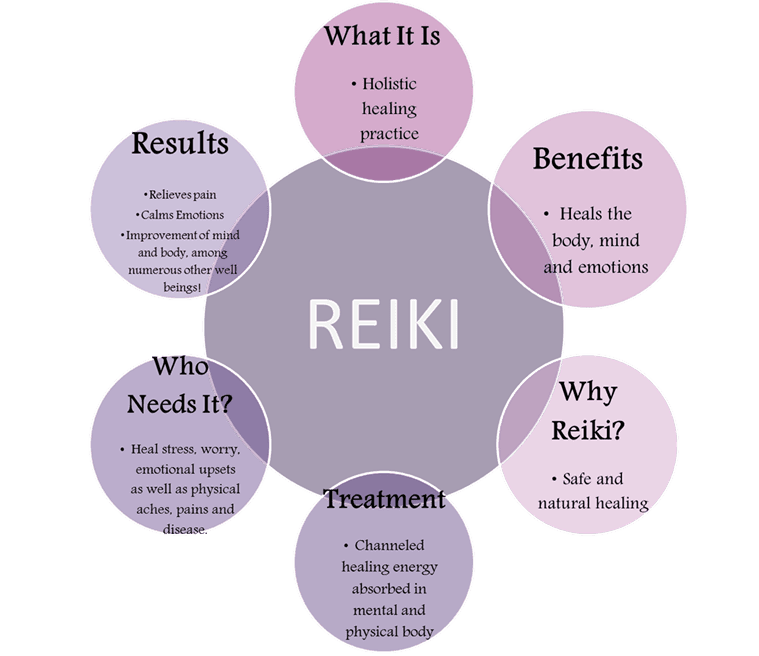
Reiki healing explained. Reiki is a Japanese energy healing practice. A trained practitioner places their hands lightly on or just above the body to help the nervous system drop out of stress mode and into rest, repair, and recovery. It is not religious. It does not require belief. It is increasingly used in hospitals, hospices, and recovery settings as a complement to medical care.
That is the short answer. Now here is the longer one, written by someone who uses it daily, teaches it as a Reiki Master, and has watched it do real work in real lives, including my own.
This is Reiki healing explained in plain English—no woo. No mysticism. No spiritual sales pitch. Just what it actually is, how it actually works, what to expect from a session, what the science says, and who it is for.
What Is Reiki Healing?
Reiki is an energy healing practice that originated in Japan in the early 1900s and was developed by a Japanese Buddhist named Mikao Usui. The word itself is two parts. Rei, meaning universal. K, I, meaning life force energy. The same energy that other cultures have been naming for thousands of years. Chi in Chinese medicine. Prana in yoga. Mana in Polynesian tradition. Ruach in Hebrew. Pneuma in Greek.
Different names. Same concept. The animating energy that runs through every living thing.
In a Reiki session, a trained practitioner places their hands gently on or just above the body. They work through a sequence of positions, channelling energy into areas that are blocked, depleted, or holding tension. There is no message. No manipulation. No pressure. Just hands, intention, and presence.
You stay fully clothed. You lie down, usually on a treatment table. The session typically lasts 45 to 60 minutes. The room is quiet. Sometimes there is soft music. Often, there is silence.
That is the entire mechanical description of what happens.
What people experience during and after, however, is where the conversation gets more interesting.
Is Reiki Real? What The Evidence Actually Says
This is the question most people are really asking. They are not asking what Reiki is. They are asking whether it works.
The honest answer is: the science is not as conclusive as proponents claim, and not as dismissive as sceptics insist. Here is what the evidence actually shows.
Heart rate variability improves. Studies measuring HRV before and after Reiki sessions show consistent improvements in autonomic nervous system function. HRV is a hard biological marker, not a feeling.
Cortisol drops. Salivary cortisol, the body’s primary stress hormone, measurably decreases after sessions. This has been replicated across multiple studies.
Anxiety and pain ratings decrease. A study published in the Journal of Evidence-Based Complementary and Alternative Medicine found significant reductions in self-reported anxiety and pain in patients after knee surgery who received Reiki alongside standard care.
Hospitals are taking it seriously. Johns Hopkins, the Cleveland Clinic, and the Mayo Clinic all offer Reiki as part of their integrative care programmes. Hospices use it. Cancer wards use it. PTSD treatment programmes use it. These are not institutions known for endorsing nonsense.
What is not yet proven: the precise mechanism. Sceptics argue that any benefit comes from the relaxation response, the placebo effect, or simply having a calm human pay attention to you for an hour. Proponents argue that something measurable is being transferred. The truth is probably more interesting than either camp wants to admit. Something is happening. The biology shifts—the exact why is still being mapped.
What you can say with confidence is this. Reiki reliably shifts the nervous system out of fight-or-flight and into the parasympathetic state, where the body can actually heal. Whether that happens through energy transfer, relaxation response, or both, the outcome is the same—lower stress. Better sleep. Calmer mind. Reduced pain perception.
That is not a small thing. That is the foundation of every healing process in the body.
How Reiki Healing Actually Works (In Plain Language)
Most people live in a chronically activated nervous system. Phones, deadlines, alcohol, caffeine, traffic, news, broken sleep, processed food, unresolved stress. The body is stuck in a low-grade fight-or-flight state most of the time. Heart rate up. Cortisol elevated. Digestion compromised. Sleep disrupted. Mood unstable.
That state is not designed to be permanent. The body needs the opposite state to repair itself. The parasympathetic state. Rest. Digest. Repair. Recover.
The setting itself matters. Quiet room. Dim light. Lying down. No phone. No demands. That alone starts to lower arousal.
Hands-on or hands-off contact triggers a response. The somatic experience of being gently touched or of having a calm presence near the body signals safety to the brain. Safety is the gateway to repair.
Breath slows. Without being told to, your breathing pattern naturally lengthens during a session. Slower breath shifts the autonomic nervous system out of sympathetic dominance.
Cortisol drops. Heart rate steadies. These are measurable, and they happen reliably.
The mind quiets. Not through effort. Through permission. The constant background chatter slows because nothing in the environment demands attention.
Whether you frame the additional element as energy transfer, focused intention, healing presence, or simply a particularly effective form of guided rest, the biology shifts in the same direction. Toward repair.
What To Expect In A Reiki Session
A typical session runs 45 to 60 minutes. Here is what actually happens.
Before you arrive, take off your shoes and lie down on a treatment table. You stay fully clothed. The practitioner asks if there is anything specific you want to work on: pain, stress, sleep, recovery, or emotional weight. You can also say nothing and receive.
During. The practitioner moves their hands through a sequence of positions, either lightly resting them on the body or holding them just above. They work through the head, shoulders, chest, abdomen, hips, legs, feet, and sometimes the back. They are not pressing or massaging. They are channelling and holding presence.
What you might experience:
- Heat or warmth at the hands’ position, sometimes intense.
- Tingling, buzzing, or a sense of light pulsing in different parts of the body.
- Colours, flashes, or imagery behind the eyes.
- Emotional release. Tears, laughter, sighs, sometimes for no specific reason.
- Memories surfacing, sometimes ones you had not thought about in years.
- Falling into a sleep-like state that is not quite sleep.
- Feeling like time has compressed or stretched.
You do not need to do anything. You do not need to think about anything. You do not need to believe anything. The less you try to control or analyse, the more deeply it works.
After, most people feel deeply calm. Some feel emotionally clearer. Some feel ready to sleep for ten hours. Others feel quietly energised. You will be offered water and a few minutes to come back to the room before you stand up. Effects often continue to unfold over the following 24 to 48 hours.
What Reiki Healing Is Used For
Reiki is not a treatment for any specific medical condition and should never replace medical care. What it does is support the body and mind through processes that benefit from a calm nervous system, which is most of them.
Reiki is commonly used to support:
- Chronic stress and burnout. Particularly for people in high-pressure roles or recovering from sustained pressure.
- Sleep difficulties: insomnia, broken sleep, racing thoughts at night.
- Anxiety and emotional overwhelm, especially when other approaches have plateaued.
- Pain management. Used in hospitals alongside conventional treatment for chronic pain, post-surgical recovery, and end-of-life care.
- Cancer treatment side effects. Many oncology departments offer Reiki to support patients through chemotherapy, easing nausea and fatigue.
- Trauma and PTSD recovery. As a complement to therapy, particularly somatic and trauma-informed approaches.
- Sobriety and addiction recovery. Where the nervous system has been chemically suppressed for years, Reiki offers a way back to natural regulation. More on that below.
- Grief. Particularly for people who struggle to access emotion through talk-based approaches.
- Perimenopause and menopause. Hormonal upheaval responds well to nervous system regulation.
Reiki Healing for Recovery: Why It Works When Other Things Have Not
This is where my own work tends to focus. I came to Reiki after 45 years of drinking. By the time I quit, my nervous system was in chaos. Decades of alcohol had hardwired my body to rely on chemical sedation. The silence of sobriety was deafening. The emotions felt too big. The cravings, mental and physical, were relentless.
I had already started using cold water immersion and breathwork to reset my system. They helped. But Reiki brought something different. A kind of grounding that did not require effort. A surrender that felt like strength rather than collapse.
It taught me that healing does not always come with noise or drama. Sometimes it comes in stillness. The body knows what to do. It just needs the right conditions to do it.
If you are sober curious, newly alcohol-free, or deeper into recovery, Reiki can be one of the most useful tools you have not tried yet. Not because it solves anything on its own. Because it gives your nervous system the pause it forgot how to take.
Can Reiki Be Done At A Distance?
Yes. Distance reiki, sometimes called remote healing, is one of the more counterintuitive aspects of the practice. Energy is not constrained by physical proximity. The mechanism is the same as in-person Reiki, just without the geographic constraint.
How a distance session works:
- You schedule a time and set a shared intention.
- You relax in your own space, lying down somewhere quiet, free from interruption.
- The practitioner works from their location, using Reiki symbols and a visualisation to bridge the gap.
- Afterwards, you talk through what came up, just like an in-person session.
Clients across multiple time zones report the same outcomes as in-person sessions—reduced anxiety. Emotional clarity. Physical ease. Deeper sleep that night.
If you live overseas, travel frequently, have mobility issues, or feel safer in your own space, distance reiki removes the barrier without compromising the work.
How To Try Reiki For Yourself
If you are curious, here is how to start without overthinking it.
Find a qualified practitioner. Look for proper certification (Reiki Master level), trauma-informed practice, and a style that resonates with you. A genuine practitioner will explain the process clearly and answer your questions without trying to sell you on belief.
Book one session. Do not commit to a course of treatment before you have tried it once. Notice how your body responds. One session will tell you whether it is for you.
Reflect afterwards. Keep a brief note of what you felt during and the 24 to 48 hours after. Sleep quality. Mood. Energy. Any unexpected emotional movement.
Layer it in. Reiki works well alongside other regulatory tools. Breathwork. Cold water. Walking in nature. Talk therapy. Meditation. It is not a replacement. It is a multiplier.
Or learn to practise on yourself. Reiki Level 1 training teaches you to channel Reiki for your own daily use. This is genuinely useful for anyone managing chronic stress, recovering from substances, or navigating long-term illness. As a Reiki Master, I teach this directly to people who want a daily practice they can use anywhere.
Who Reiki Is Not For
Worth being honest about this. Reiki is not for everyone, and is not appropriate for everything.
It is not a substitute for medical treatment. If you have a diagnosed condition, Reiki sits alongside your medical care, not instead of it.
It is not a substitute for mental health support. If you are in crisis, you need a clinician, a doctor, or a crisis line. Reiki can support recovery from trauma, but it is not the front-line response to acute mental health emergencies.
It is not for people who want a quick fix. Reiki works gradually and often subtly. If you want immediate, dramatic, observable results, you will be disappointed. The shifts are real,l but they accumulate.
It is not for people who refuse to engage. You do not need to believe in Reiki for it to work, but you do need to be willing to lie still and let the process happen. Active resistance interferes with the work.
Reiki Healing: Common Questions Answered
Is Reiki religious?
No. It originated in Japan within a broadly Buddhist cultural context, but Reiki itself is not a religion and does not require any spiritual or religious belief. People of every faith and no faith use it. It is a practice, not a doctrine.
Can Reiki hurt you?
No. There are no known harmful side effects from a properly conducted session. Some people experience emotional release that feels intense in the moment. That is the body processing, not the Reiki causing harm.
How many sessions do you need?
That depends entirely on what you are working on. One session is enough to know whether Reiki is for you. For ongoing nervous system support or recovery work, many people benefit from regular sessions, monthly or fortnightly. Acute issues may benefit from a short series of weekly sessions.
Does Reiki work on animals?
Yes. Many practitioners work with animals, particularly horses and dogs. Animals tend to respond strongly because they have no scepticism filtering the experience.
How is Reiki different from massage?
Massage works on muscles, fascia, and circulation through physical pressure. Reiki works on the nervous system and energy through gentle contact or proximity. They are complementary, not competing.
How is Reiki different from meditation?
Meditation is something you do. Reiki is something you receive. Both shift the nervous system into a calmer state, but Reiki requires no skill or practice on your part. You lie down.
Will I feel anything during a session?
Most people feel something: heat, tingling, deep relaxation, or emotional shift. A small minority feel almost nothing during the session itself but report sleeping better, feeling calmer, or noticing changes over the following days. Both responses are normal.
Book A Reiki Session
I work with clients across the UK and internationally, in person from Goytre, Monmouthshire, and via distance sessions worldwide. Sessions are 60 minutes. We work on what you bring, or create the conditions for your nervous system to reset.
Book a session: iancallaghan.co.uk/book/
If you are not sure whether Reiki is right for you, the honest answer is to try one session and find out. The body knows. Listen to what it tells you afterwards.
If You Came Here From The Sobriety Angle
If Reiki is one piece of a wider rebuild you are doing, Under Load is the framework that ties it all together, why behaviour keeps repeating, why the nervous system defaults to old loops. How to take back the controls.
Get Under Load: iancallaghan.co.uk/the-shop/