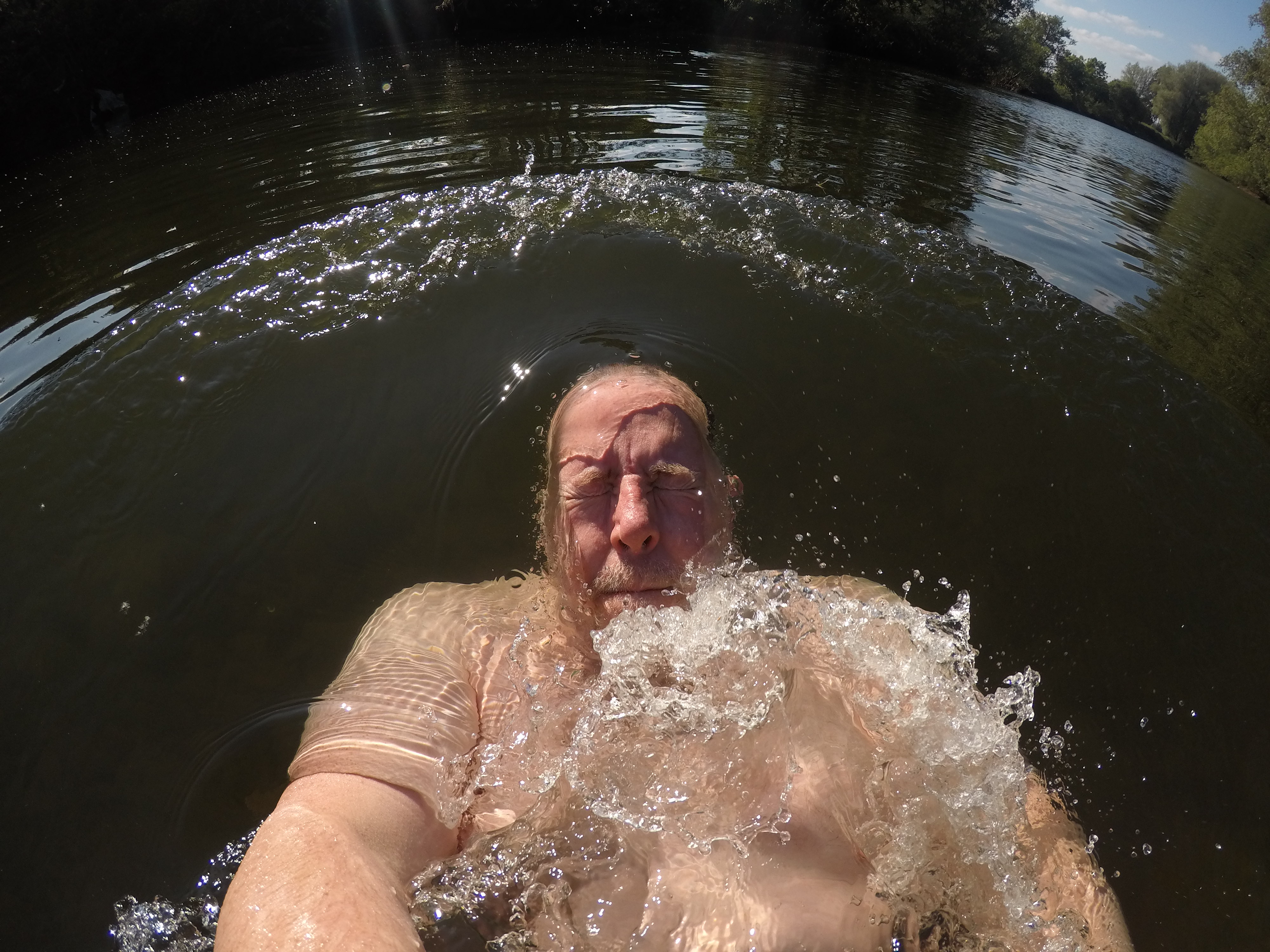
There has been a lot written recently about coldwater therapy and wild swimming. As children, we just called it swimming, from an early age we swam in the River Usk at Newbridge on Usk or as we called it Gypos tump. We would ride bikes that we often made or we would hitchhike from the coldra to the truck stop. Can you imagine most children these days riding a bike about 10 miles swim and play in the river all day then ride back, sadly only in a virtual online environment for many? I won’t go into the hitchhiking as I would not do it myself these days let alone let a child do it.
You may think that swimming in cold water is one of the last things you’d dream of doing, but there are significant health benefits attached to it.
Benefits
Believe it or not, there are some great benefits to performing cold water swimming! Here is a brief summary:
1. It boosts your immune system
The effects of cold water on the immune system have been studied widely. Coldwater helps to boost the white blood cell count because the body is forced to react to changing conditions. Over time, your body becomes better at activating its defences.
2. It gives you a natural high
Coldwater swimming activates endorphins. This chemical is what the brain produces to make us feel good during activities. Coldwater swimming is also a form of exercise, and exercise has been proven to treat depression. Coldwater swimming brings us close to the pain barrier. Endorphins are released when we’re in pain, to help us cope with it.
3. It improves your circulation
Coldwater swimming flushes your veins, arteries, and capillaries. It forces blood to the surface and helps to warm our extremities. Repeated exposure adapts us to the cold.
4. It increases your libido
Coldwater was traditionally seen to repress sexual urges. The fact is that it increases libido! A dip in some cold water boosts oestrogen and testosterone production, adding an edge to fertility and libido.
The benefits of increased libido include more confidence, higher self-esteem, and enhanced mood.
5. It burns calories
The heart has to pump faster in cold water and the body must work harder to keep everything warm while swimming. Overall, far more calories are burned during cold water swimming than swimming in warmer conditions. The idea that drinking cold water increases the number of calories you burn may be a myth, but it is a fact that cold water decreases your body temperature so much that the body must act.
6. It reduces stress
Coldwater swimming places stress on the body physically and mentally. Many studies have identified the link between cold water and stress reduction. Coldwater swimmers become calmer and more relaxed.
7. It is a great way of socialising and making new friends
There is a great sense of community and camaraderie amongst cold water swimmers. There is nothing that brings people together like facing a challenge and sharing the experience as a group.
Ongoing studies into the effects of coldwater therapy and menopause. The difficulty lies in that it is difficult to prove that it is specifically the cold water that is having the positive effect – as the aspects of socialising and doing exercise will both improve general health and wellbeing. What’s not to like?
A short video of why I do it.
Safety
You have to respect nature at any time of the year but even more so as the year progresses and we get into the winter months. Overall, the average sea temperature in the British Isles ranges from 6-10 °C in the winter to 15-20 °C in the summer depending on region and yearly variation. In the UK, inland waters can be as low as zero in winter to as high as the mid-20s in peak summer. The following link to Outdoor Swimmer has a detailed post regarding water safety.
We’re awash with anecdotal evidence that outdoor swimming helps promote good mental health.
Cold water adaptation
In September 2018, the British Medical Journal published a case report about the theories around cold water adaptation as a treatment for depression. Co-authored by Dr Mark Harper, a cold-water swimmer who was behind the BBC documentary, the report looks at the physical responses to swimming in cold water.
The theory is around our stress response and inflammation. Immersing yourself in cold water puts your body into fight or flight mode. Starting with the cold-water shock response, dipping into cold water puts your body under stress. As you repeat this experience, you diminish this stress response. And having a better rein on your stress response means being able to better cope with life’s many minor irritations that add up to chronic stress.
Stress Response
“Our bodies don’t differentiate between types of stress,” says Mark. “Every day low-level stresses make things worse, but the significant physical stress of getting into cold water attenuates our stress response as we adapt to it.”
This diminished stress response is about activating the parasympathetic nervous system. Known as the rest and digest system, the parasympathetic nervous system is responsible for slowing your heart rate and increasing intestinal and gland activity.
A key part of this system is the vagus nerve, which connects your brain to organs including your heart and lungs. It’s the tone of this vagus nerve that relates to mental health; if you have a high vagal tone, your parasympathetic nervous system is working and that means that your body can relax faster after stress. One way in which you can stimulate the vagus nerve and increase vagal tone is through cold water adaption. And this has been shown to help a range of mental health and nervous conditions from depression and anxiety to chronic fatigue, tinnitus and Alzheimer’s.
We also have an inflammatory response to threats, including stress and infections. “Inflammation and depression are linked,” says Mark. “Anti-inflammatory drugs like ibuprofen have an effect on depression. But all drugs have side effects. And we know that cold water adaptation reduces levels of inflammation.”
While some therapists suggest cold showers or immersing your face in cold water, it’s becoming clear that these techniques aren’t a patch on outdoor swimming. “Coldwater swimming is a holistic therapy,” says Mark. “Exercise, being in nature, community – the cold water is an additional effect.”
There is nothing new about journaling, there records of the stoic philosophers keeping journals from Epictetus to Marcus Aurelius. Through history people such as 1. Leonardo da Vinci · 2. Frida Kahlo · 3. Marie Curie · 4. Anne Frank · 5. Mark Twain (Samuel Clemens) · 6. Charles Darwin 7. Albert Einstein have all kept a journal.
Who is journaling for
So who is journaling for? it’s for anyone who can write! It is a form of self-expression that can lift and empower people to understand they’re complex feelings and find humor with it. In the past I have created journals for different things as many of you know or may not I published a gratitude journal and I still keep one, combining the two things together is a great way to start a journal, take five minutes in the evening and write down three things that you give gratitude for that day, it can be as simple or complex as you like, from the simple things such as having clean water, a roof over your head to anything that you are grateful for that day.
Each morning I journal as well, I write down how I want to feel that day, one thing I can do to make that happen, one person who I need to show up for that day, that can be your children, spouse, a friend or work colleague to your boss. I note down that I have done my meditation, drank my water.
The Benefits
How Can We Use Writing to Increase Mental Health?
Whether you’re keeping a journal or writing as a meditation, it’s the same thing. What’s important is you’re having a relationship with your mind.
Natalie Goldberg
You might be wondering how writing in a journal can have a significant impact on your mental health. After all, it’s just putting some words on a page—how much can that really do for you?
It turns out that this simple practice can do a lot, especially for those struggling with mental illness or striving towards more positive mental health.
Journaling requires the application of the analytical, rational left side of the brain; while your left hemisphere is occupied, your right hemisphere (the creative, touchy-feely side) is given the freedom to wander and play (Grothaus, 2015)! Allowing your creativity to flourish and expand can be cathartic and make a big difference in your daily well-being.
Overall, journaling/expressive writing has been found to:
Boost your mood/affect;
Enhance your sense of well-being;
Reduce symptoms of depression before an important event (like an exam);
Reduce intrusion and avoidance symptoms post-trauma;
Improve your working memory (Baikie & Wilhelm, 2005).
In particular, journaling can be especially helpful for those with PTSD or a history of trauma.
Guides on Journaling
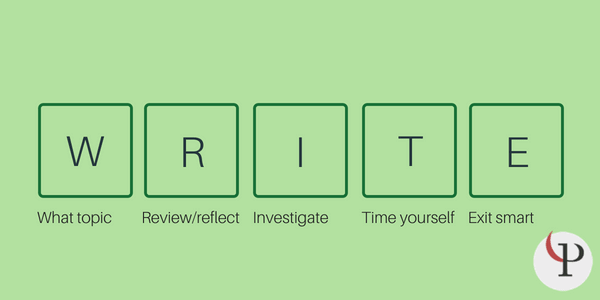
A good set of guidelines on effective journaling can be found on the Center for Journal Therapy website. When you journal, remember the simple acronym: WRITE!
W – What do you want to write about? Think about what is going on in your life, your current thoughts and feelings, what you’re striving towards or trying to avoid right now. Give it a name and put it all on paper.
R – Review or reflect on it. Take a few moments to be still, calm your breath, and focus. A little mindfulness or meditation could help in this step. Try to start sentences with “I” statements like “I feel…”, “I want…”, and, “I think…” Also, try to keep them in the present tense, with sentence stems like “Today…”, “Right now…”, or “In this moment…”.
I – Investigate your thoughts and feelings through your writing. Just keep going! If you feel you have run out of things to write or your mind starts to wander, take a moment to re-focus (another opportunity for mindfulness meditation!), read over what you have just written, and continue on.
T – Time yourself to ensure that you write for at least 5 minutes (or whatever your current goal is). Write down your start time and the projected end time based on your goal at the top of your page. Set a timer or alarm to go off when the time period you have set is up.
E – Exit strategically and with introspection. Read what you have written and take a moment to reflect on it. Sum up your takeaway in one or two sentences, starting with statements like “As I read this, I notice…”, “I’m aware of…”, or “I feel…” If you have any action items or steps you would like to take next, write them down now (Adams, n.d.).
For me, writing is a way of thinking. I write in a journal a lot. I’m a very impatient person, so writing and meditation allow me to slow down and watch my mind; they are containers that keep me in place, hold me still.
Ruth Ozeki
Why is it so beneficial for anxiety?
There’s simply no better way to learn about your thought processes than to write them down.
Barbara Markway,
She notes that to address our problematic thought patterns, we first have to actually know what they are! Journaling is instrumental in helping us identify our negative automatic self-talk and get to the root of our anxiety.
Writing in a journal can positively impact your anxiety through:
Calming and clearing your mind;
Releasing pent-up feelings and everyday stress;
Letting go of negative thoughts;
Exploring your experiences with anxiety;
Writing about your struggles and your successes;
Enhancing your self-awareness and teaching you about your triggers;
Tracking your progress as you undergo treatment (Star, 2018).
Through mechanisms like those listed above, journaling has been shown to:
Reduce physical symptoms, health problems, and anxiety in women (LaClaire, 2008);
Help students manage their stress and anxiety and improve their engagement and enhance meaning found in the classroom (Flinchbaugh, Moore, Chang, & May, 2012).
It is yours
Your journal is for you and you alone, and keeping this in mind can make you feel impossibly free to pour your authentic self onto the page. Give a try! All you have to lose is a few minutes of your time, and you already know all you could gain.
It has been a while since I wrote on here and as are coming out of covid all be it to a very new “normal”. I thought I would write a bit about how I have been the last few months since last writing here. Many of us have had a pretty shit year in one way or another, from job loses, to isolation working from home to the other end and working through. I have no issues writing about mental health and my fights and battles with it.
Through all this last lockdown I have been working, in the first one I was working form home so as much as I do like my own company I had no social interaction other than my daughter on weekends. This time I have been in an office and this has brought its own issues and more than a few anxiety issues. During the first lockdown we had surprisingly good weather for the time of year so I was getting out for walks, swimming in the Usk. I firmly believe that being in nature has a positive impact on mental health. This time we have been in winter and as is becoming the norm not a particularly cold winter but rather wet. We have had more frosts in April than through winter. The strangeness of the Great British weather.
Hobbies
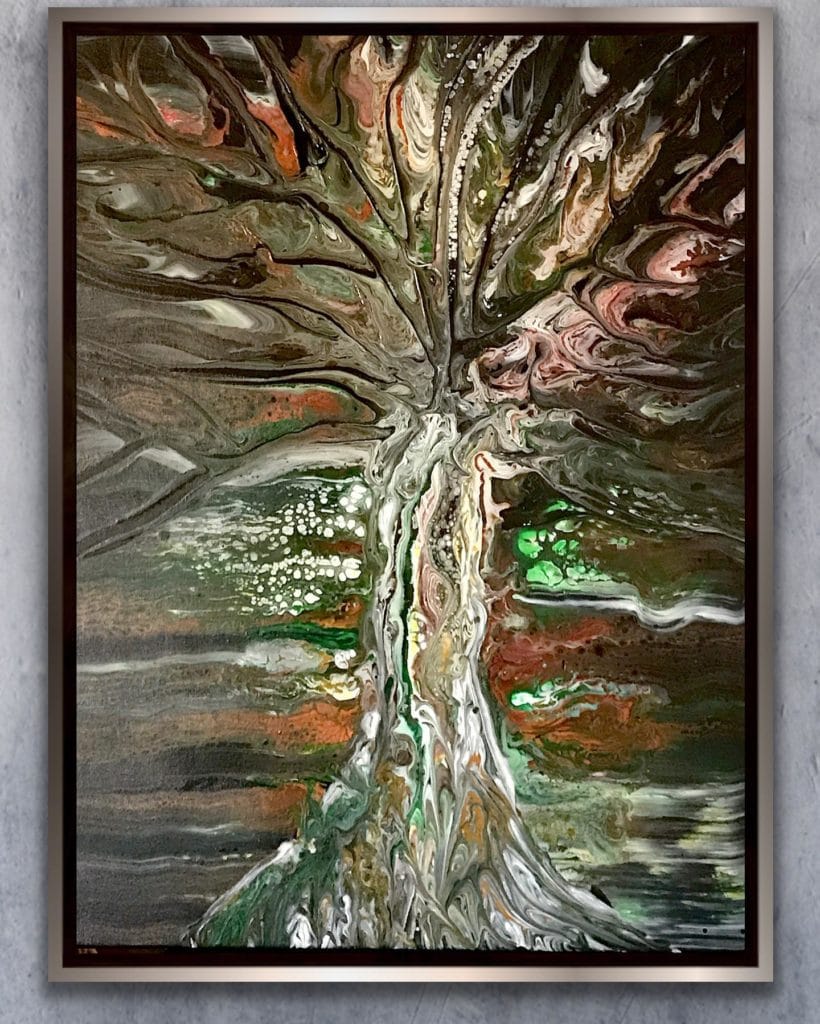
I have taken up a new hobby as we are coming out of covid, and all though people say that my photography, cooking and writing is artistic I have never thought of my self as artistic. I have started painting and in some of the pieces I have done they have been very dark which at times has portrayed my mood. Other pieces have been very bright and upbeat. You can see some of my art at ArtbyIan.
The art and mannequins that I have been creating are taking over my home though I have sold a few to friends, and as you can see above I have created a website to highlight my art work.
Conversations
During the last few months I have had quite a few conversations with friends regarding mental health and it is good that more people are willing to talk and open up. Sadly there is still a stigma surrounding men’s mental health and it only gets talked about during world mental health day or week. I know from personal experience the difference it can make from bottling up your feelings and emotions and to actually talking about them. Yes it can be hard to talk to those close to you I fully understand that. It can also be hard to open up to a stranger. As we are coming out of covid I strongly believe that mental health issues have and will be a massive increase on resources from the NHS, mental health charities be them MIND or forces charities.
I have continued to post on social media my struggles and my victories. Writing and sharing them has been a method of getting things out of my head. Friends have talked of their struggles in the last year and how they have overcome them. Sadly I have at times resorted back to self medication and drank way to much, eaten junk and neglected my self care. My meditation and mindfulness has at times lapsed, my exercise has been non existent. So the drink, diet and lack of self care has taken its toll and the scales recently said one at a time you fat bastard, but eh its covid weight so doesn’t matter is not a good excuse and does not wash lol.
Moving On
So where do we go from here as we are coming out of covid. Personally I need to make some lifestyle changes. Drinking has to be cut down even though the pubs are now open again, I need to get back to my cooking making meals from scratch and avoiding the junk. My mindfulness and mediation needs to be mad a regular practice as it definitely helps my mental health. I will continue to talk to those that have been there for me through all of my struggles, it’s good to talk and yes sometimes I do shut myself down and respond in single words and short sentences. I can promise each of you that I have no intentions of doing anything daft, yes I still have those days and thoughts but I manage them now. I truly give gratitude to each of you for being there.
Mental health we all have it the same as we have physical health, if you brake a bone you seek professional advice, if you feel your minds broken then seek professional advice regarding that.
Don’t bottle up your feelings and emotions, let them out and talk. Please do not ever suffer in silence, I have on times not taken my own advice but I am and always will be here for anyone that wishes to talk, I don’t judge I would be a bit of a hypocrite to do so.
Used to monitor number of Google Analytics server requests when using Google Tag Manager
1 minute
_gid
ID used to identify users for 24 hours after last activity
24 hours
_ga_
ID used to identify users
2 years
_gali
Used by Google Analytics to determine which links on a page are being clicked
30 seconds
_ga
ID used to identify users
2 years
__utmx
Used to determine whether a user is included in an A / B or Multivariate test.
18 months
__utmv
Contains custom information set by the web developer via the _setCustomVar method in Google Analytics. This cookie is updated every time new data is sent to the Google Analytics server.
2 years after last activity
__utmz
Contains information about the traffic source or campaign that directed user to the website. The cookie is set when the GA.js javascript is loaded and updated when data is sent to the Google Anaytics server
6 months after last activity
__utmc
Used only with old Urchin versions of Google Analytics and not with GA.js. Was used to distinguish between new sessions and visits at the end of a session.
End of session (browser)
__utmb
Used to distinguish new sessions and visits. This cookie is set when the GA.js javascript library is loaded and there is no existing __utmb cookie. The cookie is updated every time data is sent to the Google Analytics server.
30 minutes after last activity
__utmt
Used to monitor number of Google Analytics server requests
10 minutes
__utma
ID used to identify users and sessions
2 years after last activity
_gac_
Contains information related to marketing campaigns of the user. These are shared with Google AdWords / Google Ads when the Google Ads and Google Analytics accounts are linked together.