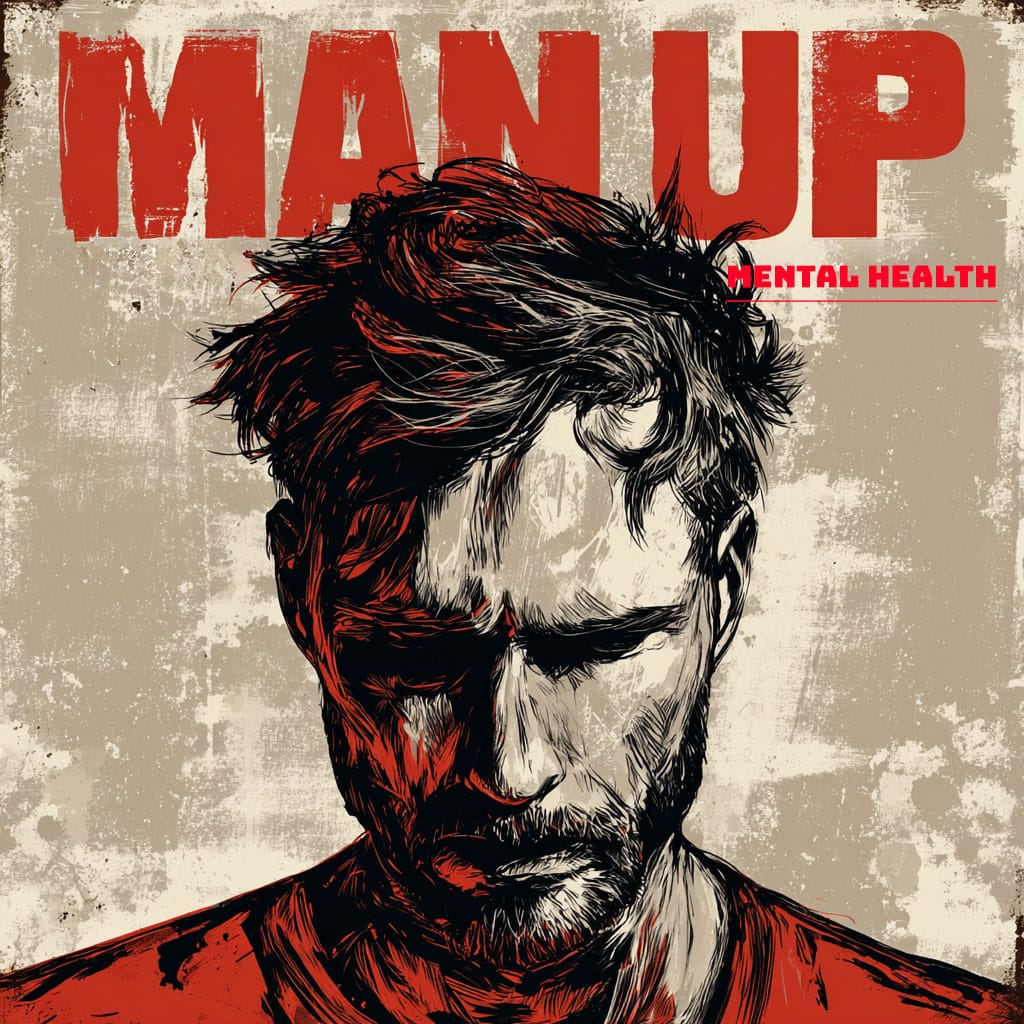
Man Up? Bullshit. The Brutal Truth About Man Up Culture Mental Health
Right, let’s get straight to it. “Man up.” Two simple words, right? Two words that have probably fucked up more blokes than any bloody war I ever saw. I’m Ian Callaghan, and for 57 years, I heard that shit, lived by that shit, and nearly died because of that shit. I served over 12 years in the British Army, and believe me, I know what real ‘manning up’ looks like. It ain’t about shutting your gob and pretending you’re fine when you’re crumbling inside. That’s not strength, that’s a bloody recipe for disaster. This whole man up culture mental health crisis we’re facing? It’s a direct consequence of decades, centuries even, of being told to suppress, to hide, to deny anything that remotely resembles a chink in the armour.
Eight months ago, I quit drinking after 45 brutal years. That journey, that absolute rewire of my mind and body, taught me more about genuine resilience and mental fortitude than any drill sergeant ever could. And it exposed the lie at the heart of the ‘man up’ culture. This isn’t some soft-touch, touchy-feely bollocks. This is about survival. This is about waking up in your mid-thirties, forties, or fifties, looking at your life, and realising the old rules aren’t just unhelpful; they’re actively killing us. It’s time we talked about man up culture mental health with some fucking honesty.
The Lie We Were Fed: “Man Up” and Shut Your Gob
I grew up in an era where emotions were for women, or for blokes who clearly hadn’t been to enough football matches. You scraped your knee, but you didn’t cry. You got picked on, you either fought or you took it. You felt down, so you went to the pub. Simple. Or so we thought.
When I joined the Army, that mindset was hammered home. And for certain situations, it’s vital. When rounds are flying and lives are on the line, you don’t stop for a group hug and a therapy session. You focus, you act, you suppress the fear to get the job done. That’s discipline. That’s training. And it saves lives. I wouldn’t trade that experience for anything; it forged a discipline in me that I rely on every single day. It taught me how to push past perceived limits, how to operate under immense pressure, and how to be utterly reliable.
But here’s the kicker: the skills that make you a formidable soldier, a stoic provider, a rock for your family, can also become your worst enemy when turned inwards without an outlet. The ‘man up’ mantra, when applied to your inner world, teaches you to compartmentalise, to bury, to ignore. Any hint of vulnerability, of doubt, of fear, was weakness. And weakness? That was the ultimate failure for a man.
So, we learned to put on a show. The brave face, the stiff upper lip, the casual shrug. Inside? A bloody maelstrom. A quiet desperation. That illusion of strength became a cage. It wasn’t about being strong; it was about appearing strong. And the more you pretended, the deeper the real you got buried. That’s the insidious poison of the man-up culture when it comes to mental health.
My Own Descent into the Darkness: Booze, Shame, and the Silence
For 45 years, I drank. Not just a casual pint, but seriously, consistently, almost ritually. Why? Because it was the socially acceptable, culturally endorsed way for a ‘man’ to deal with… well, everything. Stress? Drink. Celebration? Drink. Boredom? Drink. Grief? Drink. The underlying anxieties, the quiet despair, the constant hum of dissatisfaction? Drown it. The ‘man up’ philosophy meant I never, ever considered talking about any of that shit. That would have been a weakness. An admission of failure.
I’d seen blokes in the Army, even in civilian life, who talked about their feelings. They were often quietly, sometimes not so quietly, judged. Labelled ‘soft’, ‘a bit of a complainer’, or worse. So I bottled it. And the bottle I chose was full of booze.
The mental toll was immense, though I probably wouldn’t have admitted it at the time. The hangovers became a daily penance. The anxiety, a constant companion. The self-loathing, a whisper that grew louder with every passing year. I was isolated, even when surrounded by people. My relationships suffered. My potential, well, that was buried under a mountain of empty promises and regret. I was performing the role of ‘man’, but inside, I was a crumbling mess.
When I finally decided to quit 8 months ago, it wasn’t some gentle awakening. It was a fucking war. A brutal, grinding battle against decades of conditioning, against a mind and body that had been rewired to crave the poison. Every fibre of my being screamed for that familiar comfort, that numbing oblivion. But I fought. And that fight, that absolute dismantling and rebuilding of my identity, taught me more about real strength than all the ‘man up’ advice in the world. It showed me the profound, devastating impact that man up culture mental health issues have on men’s.
It taught me that the biggest battle isn’t against an enemy, or even a bottle; it’s against the lies you’ve told yourself, the stories you’ve inherited about what it means to be a man. It taught me that vulnerability isn’t weakness; it’s the raw, honest foundation upon which true strength is built. You can read more about that specific journey here: The Sobering Clarity: How Quitting Alcohol at 57 Unlocked My True Potential.
The Battlefield of the Mind: Why We’re Losing the War on Men’s Mental Health
Look around you. We’re living through a quiet crisis. Men are struggling, often in silence. Suicide rates among men are disproportionately high. Substance abuse is rampant. Depression, anxiety, chronic stress – it’s all there, bubbling under the surface of the ‘fine, thanks’ facade.
Why? Because society, reinforced by this ‘man up’ bullshit, tells us a man must be:
The Provider: Always strong, always earning, never failing.
The Protector: Fearless, capable, unflappable.
The Stoic: Unemotional, rational, never showing weakness.
The Independent: Never needing help, always self-sufficient.
These are huge, suffocating expectations. And when we inevitably fall short, when life punches us in the gut – as it bloody well does – we have no toolkit to deal with it. We’ve been taught to bottle it up, to soldier on, to pretend it’s not happening. And that, my friends, is why we’re losing this invisible war.
The cost isn’t just to us; it’s to our families, our partners, our children. Our physical health suffers. Our relationships become strained or simply vanish. Our careers stagnate. We become shells of the men we could be, all because we bought into the lie that to admit a struggle is to be less of a man. This isn’t just about feeling a bit sad; this is about a profound societal problem stemming from the deep roots of man’s cultural mental health stigmas.
Bullshit Stoicism vs. Real Resilience: Learning to Fight Differently
Now, don’t get me wrong. I’m not advocating for a world where everyone wallows in their feelings or constantly airs their grievances. There’s a fine line between processing emotions and becoming a whiny victim. And there is value in stoicism – the true stoicism, that is.
True stoicism isn’t about suppressing emotion; it’s about controlling your reaction to emotion. It’s about recognising what’s within your control and what isn’t. It’s about maintaining equanimity in the face of adversity. It’s not about pretending you don’t feel fear, anger, or sadness. It’s about acknowledging those feelings and then choosing how you respond, rather than being enslaved by them.
For years, I mistook emotional suppression for stoicism. I thought I was being a man by not feeling. The reality? I was just postponing the inevitable breakdown, building a pressure cooker inside my own head. My journey, especially in sobriety, has been about learning the difference. It’s about understanding that admitting you’re struggling, seeking help, or simply talking about what’s going on, isn’t weakness. It’s the ultimate act of courage. It’s vulnerability, and vulnerability is a superpower.
When you’re truly vulnerable, you’re open to real connection. You’re open to real solutions. You’re not hiding. You’re showing up, scars and all. That’s real strength. That’s real resilience. It’s the ability to feel the punch, acknowledge the pain, and then get back up, knowing you don’t have to do it alone. This is critical for addressing the man-up culture mental health crisis.
Rewiring the Mind and Body: Your Midlife Call to Arms
So, if the old ways are bollocks, what’s the answer? It’s not complicated, but it’s not easy either. It requires discipline, honesty, and a willingness to actually do the work. This is your midlife call to arms, not a request. Here’s how you start to dismantle the ‘man up’ lie and build real, lasting resilience:
Step 1: Speak the Unspeakable
This is the hardest bit. But you’ve got to find a way to articulate what’s going on in your head and your heart. It’s not whining; it’s processing. It might be a trusted partner, a close mate, or a family member. Or it might be a professional coach, a therapist, or a support group. The point is, get it out of your head. Give it air. Don’t let it fester in the dark corners. Find your tribe. Talk openly, honestly, and without judgment. This is why I built the Midlife Reset community on Skool – a place for blokes like us to cut the crap and get real.
Step 2: Fuel Your Fucking Machine Right
Your mental health is inextricably linked to your physical health. You can’t expect a Ferrari engine to run on cheap petrol and then wonder why it’s sputtering. My nutritional philosophy is simple, brutal, and effective: ancestral, paleo, nose-to-tail. Eat real food. Meat, organs, eggs, healthy fats, a shitload of vegetables and some fruit. Ditch the processed crap, the sugar, and for God’s sake, ditch the soy (unless it’s fermented and in tiny quantities). Soy, especially, can mess with your hormones – and if you think that doesn’t impact your mood, your energy, and your overall mental state, you’re deluded. Never eat tofu. Proper nutrition isn’t just for your body; it’s fundamental for your brain chemistry, your mood, and your energy. You want to fight this man in a cultural mental health battle? Start with what you put in your gob. Seriously, check out Unlocking Your Ancestral Edge: Why the Modern Diet Is Making You Weak and How to Fight Back.
Step 3: Move Your Arse
Sitting around lamenting your fate isn’t going to change a damn thing. Your body was built to move. And I’m not talking about some half-arsed gym routine you do for a month. I’m talking about consistent, disciplined movement. Lift heavy things, run, walk, and get outside. The military taught me that physical exertion isn’t just about strength; it’s about mental fortitude. It clears your head, burns off stress, and floods your body with feel-good chemicals. It’s not about motivation; it’s about discipline. Get up, get out, get moving. Every single day. Even when you don’t feel like it. Especially then. You want to beat the mental health demons? Make your body a weapon against them. This isn’t fluffy self-help; this is hard science and hard-won experience. Read more on why Discipline Eats Motivation for Breakfast.
Step 4: Master Your Mind (It’s Not Woo-Woo)
I know what some of you are thinking: meditation, hypnotherapy – that’s all a bit soft, a bit airy-fairy. Let me tell you, when you’re 8 months sober after 45 years of drinking, and your mind is trying to play every trick in the book, you learn to use every tool at your disposal. This isn’t about sitting cross-legged, chanting ‘om’. It’s about practical, actionable techniques to take control of your internal world.
Breathwork: Simple, powerful. Learning to control your breath gives you immediate access to your nervous system. Panic attack? Slow your breath. Overwhelmed? Slow your breath. It’s a fundamental military technique, stripped of the spiritual jargon.
Meditation: Not about clearing your mind, but observing it. Training your focus. Building mental resilience like a muscle. Start with 5 minutes a day, just paying attention to your breath.
Hypnotherapy/NLP: These aren’t magic. They’re tools for rewiring your subconscious, for breaking old patterns and installing new, empowering beliefs. I’m a qualified coach in this stuff, and I use it because it bloody works. It helped me dismantle the decades of ‘man up’ programming that kept me trapped.
Don’t knock it ’til you’ve tried it properly. These tools are about taking back control of your mind, the ultimate battleground in the man-up culture mental health fight.
Step 5: Ditch the Poison
For me, it was alcohol. For you, it might be something else: excessive social media, endless porn, gambling, chronic complaining, or a toxic relationship. Identify the things that are genuinely poisoning your life, numbing you, keeping you stuck in that cycle of quiet desperation. And then, with discipline and courage, cut them out. It will be hard. It will be brutal. But the clarity, the energy, the sheer capacity for life that emerges on the other side? It’s worth every single moment of struggle. My 8 months of sobriety are living proof of that. The freedom from the chains of a habit you once thought defined you is immense.
It’s Not a Crisis, It’s a Choice: Your Opportunity to Reset
We hear the term ‘midlife crisis’ bandied about. Bullshit. It’s not a crisis; it’s a bloody call to arms. It’s your biology, your spirit, your very soul screaming at you to wake up. To stop living by outdated rules. To stop pretending everything’s fine when it’s not. This isn’t a problem to be endured; it’s an opportunity to rebuild, stronger, wiser, and more authentically you than ever before. This is your chance to really engage with why Your Midlife Isn’t a Crisis – It’s a Call to Arms.
The ‘man up’ culture, as we’ve known it, has failed us. It’s left generations of men isolated, emotionally stunted, and often, tragically, broken. But you don’t have to be another statistic. You have the power to choose a different path. A path of brutal honesty, real strength, and genuine connection. A path where you learn to navigate the complexities of modern life without losing your bloody mind.
Stop ‘manning up’ in the old way. Start fighting smart. Start building the life you deserve, the man you were meant to be. It’s not about whining; it’s about winning. And it starts now.
How to Build Healthy Habits: Your Midlife Reset Guide. Right, listen up. If you’re reading this, chances are you’re feeling it. That nagging sense that something’s gotta give. That’s the way you’ve been doing things, the habits you’ve built (or let build themselves around you), just aren’t cutting it anymore. Maybe you’re in your thirties, maybe your forties, like me, you’re knocking on sixty’s door and finally saying, “Enough is enough.”
This isn’t about hitting some arbitrary age. This is about the “midlife reset”—that moment, whenever it comes, when you realise you need a fundamental, no-bullshit change. For me, it was eight months ago. After 45 years of drinking, I finally said, “Right, you miserable bastard, this stops now.” And it did. I completely rewired my mind and body, and let me tell you, if I can do that, you can damn well learn how to build healthy habits that stick.
Forget the fluffy self-help crap. I’m a veteran. I tell it straight. This is about practical, actionable steps to get your ass in gear and build a life you actually want to live, not just endure.
The Truth About Building New Habits: It’s Not About Willpower, It’s About Strategy
You’ve probably heard that it takes 21 days to form a habit, right? Absolute bollocks. That myth dates back to a plastic surgeon in the 1960s who observed his patients took about 21 days to adjust to a new appearance. Modern science tells us it’s far more nuanced. A 2009 study found habit formation can take anywhere from 18 to 254 days, with the average being around 66 days. Some even suggest it can take up to six months for an exercise routine to become automatic. So, if you’ve tried and failed after three weeks, it’s not you, it’s the bad information. You need to understand the game.
Habits are essentially neurological patterns, a “habit loop” of a cue, a routine, and a reward. Your brain loves efficiency, so it tries to make repeated actions automatic, shifting control from the conscious prefrontal cortex to the subconscious basal ganglia. The good news? Your brain is plastic, meaning it can change. You can absolutely break bad habits and form new, healthier ones.
Why Now? The Power of a Midlife Transformation and Long-Term Wellness
You might think, “I’m too old for this shit.” Wrong. Midlife is actually a prime time to make these changes. Studies show that maintaining healthy habits in midlife – like a good diet, regular exercise, healthy weight, not smoking, and moderate alcohol intake – can significantly increase your years lived free of chronic diseases like diabetes, cardiovascular disease, and cancer. Men who adopt eight healthy habits by age 40 could live an average of 24 years longer than those with none. Twenty-four years, mate. Think about that.
It’s about seizing control, not waiting for a crisis to force your hand. That’s your midlife reset: taking ownership, no matter your age, and designing the second half of your life to be better than the first. For me, quitting the drink wasn’t just about stopping a bad habit; it was about reclaiming my future. It was about realising I deserved better, and so do you.
My Battle-Tested Blueprint: How to Build Healthy Habits That Stick Like Glue
Building new habits isn’t just about wishing for them. It requires a strategy, discipline, and a bit of grit. Here’s what I’ve learned, both in the forces and in my own life, about making changes that actually last.
1. Start Small, You Muppet, Start Tiny
This is probably the most crucial piece of advice. Don’t try to go from zero to hero overnight. That’s a recipe for burnout and failure. You’ll get excited, you’ll go hard, and then you’ll crash and feel like a failure. Instead, make your new habit so ridiculously easy you can’t say no.
Instead of: “I’m going to run 5k every morning.”
Try: “I’m going to put on my running shoes and walk to the end of the road.” (Even if you then turn around and come back.)
The goal isn’t the big achievement yet; it’s consistency. It’s about building the neural pathway, getting that small win, and proving to yourself you can do it. Once that tiny habit is ingrained, you can gradually increase it.
Your existing routines are powerful. Use them. Identify a habit you already do automatically every day, and “stack” your new habit immediately before or after it. This creates a strong cue for your new behaviour.
Existing Habit: Drinking your morning coffee.
New Stacked Habit: “After I pour my coffee, I will meditate for two minutes.”
The more specific you are, the better. “When X happens, I will do Y.” This removes the need for willpower and decision-making, which, trust me, is a finite resource.
3. Design Your Environment for Success (And Failure)
Your surroundings have a massive impact on your habits. Make good habits easy and bad habits hard.
Want to eat healthier? Fill your fridge with healthy food and get rid of the junk. Put fruit on the counter, hide the biscuits.
Want to read more? Leave a book on your bedside table, not your phone.
Want to exercise? Lay out your gym clothes the night before.
It sounds simple, but it’s incredibly effective. You’re manipulating your environment so you don’t have to rely on willpower to make the right choice when you’re tired or stressed.
4. The Power of Accountability: Don’t Go It Alone
This is where I lean heavily on my military experience. In the forces, you’re always accountable. To your mates, to your commanding officer, to the mission. That external commitment is a bloody powerful motivator.
Find an accountability partner: A friend, a family member, or a coach (like me). Someone you report to. Just knowing someone will ask about your progress dramatically increases your chances of success.
Join a community: Being part of a group with shared goals provides support, encouragement, and a place to celebrate wins and work through setbacks. If you’re serious about your midlife reset, you should seriously consider joining our Midlife Reset community on Skool. It’s where men who are truly ready for change come together to make it happen.
Accountability provides motivation, consequences, and support. It helps you stay focused and gives you a boost during setbacks.
5. Track Your Progress & Celebrate the Small Wins
What gets measured gets managed. Tracking your habits gives you a visual representation of your progress, which is incredibly motivating. It also helps you identify patterns and make adjustments.
Use a habit tracker app, a simple journal, or even just a calendar with an ‘X’ for every day you complete your habit.
Reward yourself: Not with something that undermines your habit (like a full box of biscuits if you’re trying to eat healthy), but with something genuinely positive. A new book, a massage, some personal time. Celebrate the milestones, no matter how small. This positive reinforcement strengthens the habit loop in your brain.
6. Embrace the Fuck-Ups: Progress, Not Perfection
You will miss a day. You will screw up. That’s not a failure; it’s part of the process. The all-or-nothing mentality is a killer. Don’t let one missed day turn into two, or three, or a complete abandonment of your goal.
The “Don’t Break the Chain” rule: If you miss one day, make sure you don’t miss two. Get back on it immediately.
Practice self-compassion: Don’t beat yourself up. Learn from it, adjust, and move forward. Every expert will tell you that setbacks are inevitable.
This isn’t about being perfect; it’s about being consistent over the long haul. Remember, it takes time – often months – for habits to truly stick.
Common Obstacles to Habit Formation & How to Punch Them in the Face
Changing ingrained patterns is hard. There will be resistance. From yourself, from your environment, sometimes even from people around you. Here’s how to tackle some common challenges:
“I Don’t Have Enough Time!”
Bullshit. You have the same 24 hours as everyone else. It’s about prioritisation. If you’re starting small (see point 1), you’re talking minutes, not hours. Can you spare 5 minutes to stretch? 2 minutes to meditate? Find those tiny pockets of time and protect them like a dragon guarding its gold. Habit stacking helps immensely here, too.
“I Keep Losing Motivation!”
Motivation is fleeting. It’s a feeling, and feelings come and go. Don’t rely on it. This is why strategy and environment design are so crucial. Make the habit easy, make it visible, and link it to something you already do. Reframe your mindset from “I have to” to “I get to.” Focus on who you’re becoming, not just what you’re doing.
“It’s Too Hard / I Don’t Enjoy It!”
If it’s too hard, you’ve started too big. Cut it in half, then half again. If you genuinely don’t enjoy it, find an alternative. There are a hundred ways to be active, or eat healthy, or learn something new. Pick something that resonates with you, something you can find some enjoyment in, even if it’s just the feeling of accomplishment. Pair it with something you *do* enjoy, like a podcast during a walk.
“People Around Me Aren’t Supportive.”
This is a tough one, but it happens. Sometimes your old habits are part of your identity within a social group. When you change, it can challenge others. Communicate your “why.” Explain the benefits you’re seeking. Lead by example. If necessary, seek out new communities that align with your goals. That’s exactly why I’ve built the community I have. You can see what I’ve been sharing on TikTok, but for a deeper connection and support, the Skool group is where the real work gets done.
Your Call to Action: Start Your Midlife Reset Today and Build Healthy Habits
Listen, you’ve got one shot at this life. Are you going to drift through it, letting old patterns dictate your future, or are you going to grab it by the scruff of the neck and make it what you want? The choice is yours, and it starts with learning how to build healthy habits.
Don’t overthink it. Pick ONE small habit. Make it ridiculously easy. Stack it onto an existing routine. Tell someone about it. And then, just do the bloody work. Day in, day out. You’ll stumble, you’ll swear, but you’ll keep going. Because the person you’re becoming on the other side of these habits is worth fighting for.
If you’re ready to stop making excuses and start building the life you deserve, if you’re ready for your own midlife reset, then let’s get to it. The journey of a thousand miles begins with a single, consistent step. Now, go take it.
For anyone committed to addiction recovery, the phrase “sober means sober” is not just a slogan; it’s a fundamental truth. Yet, a pervasive deception within the beverage industry and lax regulatory frameworks are actively undermining this vital principle. This isn’t a minor oversight; it’s a critical public health issue impacting countless individuals who are striving for lasting sobriety. We’re here to expose the truth about trace alcohol in non-alcoholic drinks and demand uncompromising standards for true alcohol-free living.
The ‘Non-Alcoholic’ Deception: A Calculated Betrayal of Trust
Let’s be unequivocally clear: when someone in recovery picks up a product labelled ‘non-alcoholic,’ they expect zero alcohol. No exceptions. No compromises. Yet, what they often get is a calculated deception. In many jurisdictions, products legally labelled as ‘non-alcoholic’ may contain up to 0.5% Alcohol by Volume (ABV). This isn’t an accidental oversight; it’s a deliberate choice. This isn’t a global standard either; countries like Finland and Iceland permit even higher percentages, up to 1.2% or even 2.25% ABV, under ‘alcohol-free’ designations.
This isn’t a mere technicality; it’s a dangerous loophole exploited for pure profit. The industry is fully aware that consumers associate ‘non-alcoholic beer’ or ‘non-alcoholic wine’ with 0.0% ABV. The trace alcohol often remains because removing it completely to achieve a true 0.0% requires more rigorous, and therefore more costly, purification processes. Leaving that minute amount in can also sometimes contribute to a more ‘authentic’ taste profile, a trade-off the industry is clearly willing to make at the expense of genuine sobriety. This choice unequivocally prioritises financial gain over public health, creating a misleading and perilous environment for vulnerable individuals. Legislators, by allowing these ambiguous definitions to persist, become complicit in a system that jeopardises recovery. The lack of a unified, global standard for ‘alcohol-free’ further exacerbates this confusion, meaning a ‘safe’ product in one country could be a relapse trigger in another.
Hidden Dangers: The Pervasive Presence of Alcohol in Everyday Life
Beyond beverages explicitly marketed as “non-alcoholic,” our daily lives are surprisingly saturated with hidden alcohol, making absolute sobriety a constant, demanding battle. Many common items contain naturally occurring or added trace amounts, often unbeknownst to the consumer.
Consider these everyday examples:
Fermented Foods: White wine vinegar can contain up to 2.64 grams of alcohol per litre. Soy sauce can surprisingly reach about 2% ABV. Even “healthy” kombucha typically sits around 0.5% ABV.
Fruit Juices: Innocent-sounding apple, orange, and grape juices can naturally ferment, containing up to 0.86 grams of alcohol per litre.
Baked Goods & Ripe Produce: Burger rolls can contain up to 1.28% ABV, rye bread up to 0.18% ABV, and a very ripe banana can have 0.4% ABV.
Cooking: The myth that all alcohol “burns off” during cooking is false. Depending on the method, duration, and heat, anywhere from 5% to a staggering 85% of the original alcohol can remain in dishes like stews or desserts.
Medicines & Extracts: Herbal tinctures often contain a minimum of 25% ethanol as a solvent and preservative. Many cough syrups, mouthwashes, and even vanilla essence also contain alcohol.
Household Products: Hand sanitisers and certain cleaning products also contain alcohol, posing an inhalation or absorption risk, particularly for those with extreme sensitivities.
This pervasive presence demands relentless vigilance, meticulous label reading, and constant questioning of ingredients. It’s a mental burden that most people never comprehend, and it’s a burden that should not exist for those navigating the fragile path of recovery.
The Science of Sabotage: Why 0.5% ABV Is Not “Close Enough”
For individuals in recovery, even a seemingly minute amount of alcohol is not benign. It represents a direct assault on a brain desperately striving to heal and recalibrate. Scientific evidence unequivocally demonstrates that these trace amounts are a significant risk factor for relapse.
Triggering Cravings: The Brain’s Conditioned Response
Addiction fundamentally rewires the brain’s reward system, particularly themesolimbic dopamine pathway. Alcohol floods this system with dopamine, creating an artificial, powerful high. Over time, the brain adapts by reducing its natural dopamine production and receptor sensitivity, leading to intense cravings and withdrawal symptoms when alcohol is removed.
Here’s the critical point: the sensory experience of a 0.5% ABV beverage – its taste, smell, appearance, and the ritual of consuming it – can act as a powerful conditioned stimulus. This sensory input can bypass the minimal pharmacological effect of the trace alcohol and directly trigger the deeply ingrained neurobiological craving pathways established during active addiction. Studies show that even the smell of beer can reactivate neural circuits associated with reward and consumption, dragging up old memories and cravings. This ‘placebo effect’ from non-alcoholic beverages is not harmless; it primes the pump, making the desire for actual alcohol not just appealing, but seemingly necessary, thereby derailing recovery. The industry understands these psychological triggers, yet continues to market products that exploit this vulnerability, knowingly putting recovery at risk.
Chronic alcohol exposure causes significant neuroadaptations – structural and functional changes – in key neural circuits, such as the prefrontal-striatal-limbic (PSL) circuit, which governs emotion, reward, and decision-making. These changes persist long after drinking stops, leaving the brain in a vulnerable state.
Brain recovery is a prolonged and delicate process, often taking up to two years for significant healing and neuroplasticity (the brain’s ability to reorganise and form new connections) to occur. Introducing any alcohol, however small, risks reactivating these maladaptive pathways that the brain is trying to overcome. It can reignite neuroinflammation, disrupt the delicate balance of neurotransmitters, and hinder the growth of new, healthy neural connections. Beyond the brain, trace alcohol can interfere with liver recovery, disrupt blood sugar regulation, and negatively impact sleep patterns – all crucial elements for a body and brain striving to regain equilibrium. Every cell is attempting to recalibrate, and even a whisper of alcohol can send this process into chaos.
The Psychological Cost: Undermining Hard-Earned Recovery Momentum
Beyond the biological impact, trace alcohol poses profound psychological and behavioural risks, capable of undoing weeks, months, or even years of painstaking recovery momentum. This is the essence of the “slippery slope” phenomenon.
The “Slippery Slope” Phenomenon
A “slippery slope” in recovery refers to any seemingly minor action or situation that can lead to a full relapse. For individuals with a history of alcohol use disorder, consuming a beverage with trace alcohol, or even perceiving a lapse, can initiate a dangerous cascade. The danger lies in the potential for these seemingly insignificant actions to escalate, leading to a return to regular substance abuse.
Guilt, Shame, and Eroding Self-Efficacy
A perceived breach of sobriety, even if accidental, can trigger an intense wave of negative emotions: failure, guilt, and shame. These feelings directly attack an individual’s self-esteem and their belief in their ability to maintain sobriety (their self-efficacy). This emotional distress is profoundly demoralising, leading to self-blame and eroding the resolve and motivation for continued recovery. The individual may internalise societal stigma, reinforcing a harmful self-image and creating a barrier to seeking further support.
Undermining Momentum
Recovery momentum is meticulously built through consistent positive actions, adherence to a recovery program, and the gradual development of a new, positive self-perception. Each sober day, each craving resisted, each small victory contributes to a new foundation of self-worth. A perceived breach, however, can shatter this delicate edifice. It can plunge an individual back into hopelessness, reinforcing old, destructive thought patterns. The emotional distress, rather than the minimal alcohol content, can lead to self-sabotage, social withdrawal, and a complete return to substance use, effectively “wiping out momentum completely.” It’s not just a setback; it’s a psychological bomb capable of obliterating years of progress.
The Unfiltered Truth: Demanding Better Standards for Public Health
For individuals battling addiction, the message is unequivocal: “Sober means sober.” Not “almost.” Not “close enough.” And certainly not “legally dodgy” definitions designed to inflate corporate profits. This isn’t merely about personal choice; it’s about systemic failure and corporate greed that actively endangers public health.
It’s time the industry ceased exploiting loopholes and genuinely prioritised the well-being of consumers. It’s time legislators demonstrated courage and enacted clear, unambiguous regulations that define “alcohol-free” as 0.0% ABV, with no exceptions. We demand honest, transparent labelling that genuinely protects those fighting for their lives, rather than deceptive marketing that pushes them towards relapse. The path to sobriety is arduous enough without these unnecessary, industry-created obstacles. We demand transparency, integrity, and a genuine commitment to supporting lasting recovery, not just maximising profits. It’s time to put people’s health first. No more excuses. No more half-measures. We demand 0.0% ABV, unequivocally. Anything less is a betrayal of trust and a direct threat to recovery. The line is drawn: sober means sober. Period.
Empowering Your Recovery: Practical Steps for Uncompromised Sobriety
Maintaining absolute sobriety in a world filled with hidden alcohol demands proactive strategies and unwavering commitment. This isn’t just about avoiding temptation; it’s about reclaiming control.
Here’s how to empower your journey and fortify your path to uncompromised sobriety:
Become a Label Detective: Scrutinise every ingredient list on food, beverages, and even non-food items like mouthwash or hand sanitiser. Look for “alcohol,” “ethanol,” “wine vinegar,” or any fermented ingredients.
Question Everything: When dining out, always ask about ingredients and preparation methods, especially for sauces, marinades, or desserts. Don’t assume; verify.
Embrace True 0.0% Alternatives: Seek out products explicitly labelled as 0.0% ABV, and verify this with the manufacturer if unsure. Many brands are now offering truly alcohol-free options.
Cook Smart: Be aware that cooking does not eliminate all alcohol. Opt for recipes that don’t call for alcohol, or research effective alcohol reduction methods if absolutely necessary.
Review Medications: Discuss all over-the-counter and prescription medications with your doctor or pharmacist to ensure they are alcohol-free and do not contain ingredients that could trigger cravings.
Build a Robust Support System: Surround yourself with individuals who understand and support your commitment to absolute sobriety. This might include support groups, trusted friends, family, or a therapist.
Develop Strong Coping Mechanisms: Learn healthy ways to manage stress, cravings, and difficult emotions. This could include mindfulness, exercise, hobbies, or therapy (e.g., CBT).
Change “Playmates and Playgrounds”: Avoid people, places, and situations associated with past substance use. Create new routines and activities that support your sober lifestyle.
Frequently Asked Questions (FAQ)
Q1: What is the difference between “non-alcoholic” and “alcohol-free” beverages?
A: The definitions vary significantly by region. Generally, “non-alcoholic” can mean up to 0.5% ABV in many places (e.g., the UK, US for some products), while “alcohol-free” typically implies 0.0% ABV (e.g., US, Japan’s self-regulation). However, some countries have higher thresholds for “alcohol-free” (e.g., Finland, Iceland). Always check specific regional regulations and product labels carefully.
Q2: Why is 0.5% ABV a risk for someone in recovery if it’s such a small amount?
A: Even 0.5% ABV poses a significant risk due to its ability to trigger conditioned cravings through sensory cues (taste, smell, ritual) and disrupt the brain’s delicate healing process. While it may not cause intoxication, it can reactivate neural pathways associated with addiction, leading to intense psychological cravings and undermining recovery momentum.
Q3: Can alcohol truly be hidden in everyday foods?
A: Yes. Many common foods contain naturally occurring or added trace amounts of alcohol, including ripe fruits (like bananas), fruit juices, fermented foods (like kombucha and soy sauce), vinegars, and even some baked goods (like burger rolls). Additionally, alcohol used in cooking may not fully evaporate.
Q4: What is the “slippery slope” in recovery?
A: The “slippery slope” refers to how seemingly minor actions or perceived lapses, such as consuming a beverage with trace alcohol, can lead to a full relapse. It triggers intense feelings of guilt and shame, erodes self-efficacy, and can psychologically undermine all the progress made in recovery, making a return to substance use more likely.
Q5: What can I do to advocate for clearer “alcohol-free” standards?
A: You can support organisations advocating for stricter labelling laws, contact your local legislators to express your concerns, raise awareness on social media, and choose to purchase only truly 0.0% ABV products to signal consumer demand for clear, uncompromising standards.
TLDR: Sober Means Zero | Trace alcohol in non-alcoholic drinks
For individuals in addiction recovery, “sober means sober” – absolutely no alcohol. Products labelled “non-alcoholic” (up to 0.5% ABV) and hidden alcohol in everyday foods/medicines are dangerous. Even trace amounts can:
Trigger intense cravings by reactivating the brain’s reward pathways.
Harm brain chemistry, disrupting the delicate healing process.
Undermine psychological momentum, leading to guilt, shame, and increased relapse risk.
We demand 0.0% ABV standards and transparent labelling to protect those striving for lasting sobriety. Be vigilant, support true alcohol-free options, and advocate for change.
Used to monitor number of Google Analytics server requests when using Google Tag Manager
1 minute
_gid
ID used to identify users for 24 hours after last activity
24 hours
_ga_
ID used to identify users
2 years
_gali
Used by Google Analytics to determine which links on a page are being clicked
30 seconds
_ga
ID used to identify users
2 years
__utmx
Used to determine whether a user is included in an A / B or Multivariate test.
18 months
__utmv
Contains custom information set by the web developer via the _setCustomVar method in Google Analytics. This cookie is updated every time new data is sent to the Google Analytics server.
2 years after last activity
__utmz
Contains information about the traffic source or campaign that directed user to the website. The cookie is set when the GA.js javascript is loaded and updated when data is sent to the Google Anaytics server
6 months after last activity
__utmc
Used only with old Urchin versions of Google Analytics and not with GA.js. Was used to distinguish between new sessions and visits at the end of a session.
End of session (browser)
__utmb
Used to distinguish new sessions and visits. This cookie is set when the GA.js javascript library is loaded and there is no existing __utmb cookie. The cookie is updated every time data is sent to the Google Analytics server.
30 minutes after last activity
__utmt
Used to monitor number of Google Analytics server requests
10 minutes
__utma
ID used to identify users and sessions
2 years after last activity
_gac_
Contains information related to marketing campaigns of the user. These are shared with Google AdWords / Google Ads when the Google Ads and Google Analytics accounts are linked together.