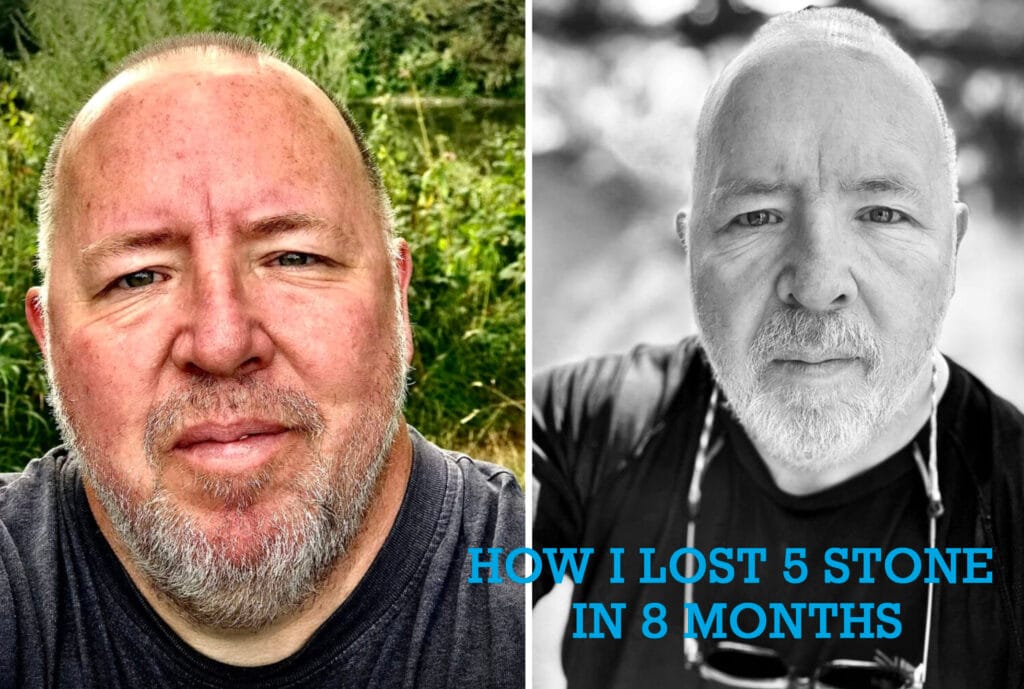
My Midlife Weight Loss Transformation: 5 Stone Gone in 8 Months
Right, let's get one thing straight. This isn't some fluffy guide to 'gentle' weight loss, or some 'body positive' bollocks that lets you off the hook. This is the brutal truth of how I, a 57-year-old bloke, lost a staggering five stone in eight bloody months. My midlife weight loss transformation wasn't pretty, but it was real, and it worked. You want results? You gotta put in the work, period.
For decades, I let myself go. The booze was a massive part of it, a crutch for 45 years. But even when I kicked that habit to the kerb eight months ago – a story for another time, believe me – the weight didn't just magically fall off. I'd replaced one vice with another: comfort eating, the sneaky sugars, the processed crap I convinced myself was 'food'. I was a mess, carrying an extra five stone that dragged me down, stole my energy, and made me feel like an old man before my time. Enough was enough.
This journey isn't just about counting calories; it's about rewiring your brain, reclaiming your body, and understanding that you are capable of far more than you think. It's about getting back to basics, getting real with yourself, and making non-negotiable changes. If you're ready to hear it straight, without the sugar-coating, then buckle up. This is how it went down.
Why Did I Let Myself Get This Fat? The Brutal Truth About Comfort
Why do we let ourselves pile on the weight? It's simple, really. Comfort. Ease. The path of least resistance. For me, it was a slow creep. Military life teaches you discipline, but civvy street, with its endless temptations and the quiet desperation of a life that wasn't quite hitting the mark, can erode that pretty quickly. The booze was a massive part of my comfort blanket, numbing the edges, silencing the nagging voice that knew I could be doing more, being better. When I quit drinking, I suddenly had a gaping hole, a void where that daily ritual used to be.
And what did I do? I filled it with food. The wrong bloody food. Crisps, biscuits, 'healthy' ready meals full of hidden sugars and industrial sludge. I was swapping one addiction for another, just less obviously destructive in the short term. The brutal truth is, I was using food to cope, to distract, to avoid the real work of looking at why I was so bloody unhappy in the first place. I wasn't just 'eating my feelings'; I was burying them under layers of fat and self-deception. It took a hard look in the mirror, literally, to see the pathetic state I'd allowed myself to get into. That gut wasn't just belly fat; it was years of excuses, regret, and unaddressed shit. And it had to go.
The 'Eat' Pillar: Ditching the Industrial Sludge and Getting Real
This is where the rubber meets the road, mate. Your diet. Forget everything the 'experts' and the bloody government food pyramids have told you. Most of it's a load of bollocks designed by corporations selling you processed crap. To shed five stone, I didn't 'moderately reduce' my intake. I scorched the earth with my diet. No compromises, no cheat days, no 'everything in moderation' until I'd hit my target. This is the 'Eat' pillar in its purest, most uncompromising form.
Step 1: Aggressively Eliminate the Toxins (Sugar & Seed Oils)
This isn't negotiable. If you want to lose serious weight and reclaim your health, you absolutely must cut out sugar in all its forms and the industrial seed oils. I mean all of it. Sugar hides everywhere: bread, sauces, 'low-fat' yoghurts, even seemingly innocent things. Read labels like your life depends on it, because, frankly, it does. Anything with corn syrup, dextrose, maltodextrin, fructose, or sucrose – it's out. Anything with canola oil, sunflower oil, soybean oil, corn oil – out. These are inflammatory poisons, not food. They mess with your hormones, drive hunger, and make your body store fat. I went cold turkey. It was hell for the first week; the cravings were brutal, but I pushed through.
Step 2: Embrace Real, Nutrient-Dense Food
Once you've cleared out the rubbish, you fill your plate with actual food. And I mean actual food. This is the ancestral way. High-quality, grass-fed/pasture-raised animal products are the cornerstone. Think fatty cuts of meat – beef, lamb, pork. Get the proper stuff, not that bland, feedlot rubbish. Eggs, proper butter, ghee, tallow – these are your friends. Don't fear fat; it's what keeps you satiated, fuels your brain, and provides essential vitamins. My plate became a simple equation: quality protein, lots of healthy fats, and non-starchy vegetables (greens, broccoli, cauliflower, asparagus).
I focused on nose-to-tail eating where possible. Liver, heart, kidneys – they're packed with nutrients that modern diets are desperately lacking. If offal makes you gag, fine, but don't shy away from the fattier cuts of muscle meat. Eating this way, my energy stabilised, my brain fog lifted, and the incessant hunger pangs vanished. I ate when I was genuinely hungry, not when the clock said it was 'mealtime' or when a craving hit. This isn't a diet; it's how humans are meant to eat.
Step 3: Fasting – Giving Your Gut a Break
Intermittent fasting became a powerful tool in my arsenal. Once my body was fat-adapted from the diet changes, skipping breakfast and often pushing my first meal to midday or even later became easy. Why? Because my body was burning its own fat for fuel, not constantly demanding sugar. Fasting isn't starvation; it's giving your digestive system a rest, allowing your body to heal, and tapping into stored fat for energy. It simplifies eating, reduces decision fatigue, and accelerates fat loss. Start with 12 hours, then push to 16, then maybe 18. Listen to your body, but don't be a wuss. It gets easier.
The 'Move' Pillar: Beyond the Gym – Why Movement is Non-Negotiable
When you're carrying five extra stone, the thought of hitting the gym can feel like climbing Everest. So, I started simple. You don't need fancy equipment or a personal trainer, at least not at first. The 'Move' pillar is about consistent, non-negotiable movement. It's about getting your body working the way it was designed to. What's the secret? Just bloody do it.
I started walking. Every single day. Rain or shine, I got out there. An hour a day, sometimes more. Not a gentle stroll, but a brisk pace that got my heart rate up and sweat on my brow. As the weight started to come off, I introduced some bodyweight exercises: press-ups, squats, and lunges. Nothing complicated, just pushing my body, feeling the burn. Then came the rucksack. Load it up with a few kilos and go for a hike. Build strength, build resilience. It's functional fitness, not just looking good for the 'gram.
The point is, you have to move. Every single day. Our ancestors weren't sitting on their arses for 12 hours a day, staring at screens. They were hunting, gathering, building, and moving. Reconnect with that primal need. It boosts your metabolism, improves your mood, and solidifies that mental discipline you're building. The more you move, the more energy you have, and the more you want to move. It's a virtuous cycle, and you have to kickstart it.
The 'Mind' Pillar: Rewiring Your Brain for Success, Not Self-Sabotage
This is arguably the most important piece of the puzzle. Losing five stone isn't just a physical battle; it's a mental war. For 45 years, I was wired for comfort, for instant gratification, for avoiding discomfort. Quitting booze taught me more about mental resilience than anything else, and I applied those same brutal lessons to my midlife weight loss transformation. The 'Mind' pillar is about taking control of your internal narrative.
Confront Your Excuses
We all have them. 'I'm too busy.' 'I'm too old.' 'It's too hard.' 'Just one biscuit won't hurt.' These are lies, mate. They're the voice of your comfort zone, the part of your brain that wants to keep you safe and small. You have to learn to recognise that voice and tell it to shut the f* up. In the army, there's no room for excuses. You do the job, or you fail. Apply that same ruthless standard to your health.
Visualise and Affirm
Sounds a bit woo-woo, I know, but it works. Every morning, I'd visualise myself at my target weight. I'd feel the lightness, the energy, the confidence. I'd affirm my commitment: "I am strong. I make healthy choices. I am shedding this weight." Your brain responds to what you feed it. Feed it crap, you get crap results. Feed it positive, disciplined commands, and it starts to believe it, starts to find ways to make it happen.
Build Discipline, Brick by Bloody Brick
Discipline isn't motivation; it's consistency when motivation has packed its bags and gone on holiday. It's doing the hard thing even when you don't feel like it. It's saying no to that sugar-laden treat when your brain screams 'yes'. Every time you make the right choice, you build a brick in the wall of your discipline. Over time, that wall becomes unshakeable. It starts small: one healthy meal, one walk. Then another. And another. Soon, it's just who you are.
While 'Eat', 'Move', and 'Mind' are the heavy hitters, don't underestimate the supporting cast. My other pillars of 'Sleep' and 'Cold Fucking Water' played their part too, albeit often in a more subtle way during this weight loss sprint.
Good sleep is non-negotiable for hormone regulation. Skimp on sleep, and your body cranks up cortisol (stress hormone) and ghrelin (hunger hormone), making fat loss an uphill battle. I prioritised 7-8 hours of quality sleep, switching off screens, and making the bedroom a sanctuary.
Cold water exposure – whether it's a cold shower or a proper dip – is a shock to the system, but it's a powerful tool for resilience. It teaches you to confront discomfort, to breathe through it, to calm your nervous system. That mental fortitude spills over into every other area of your life, including sticking to your diet and exercise. It's not directly about burning fat, but it builds the mental toughness you need to stay on track.
Ultimately, this entire midlife reset, from quitting the booze to shedding the weight, was driven by a deep-seated desire for purpose. I didn't want to shuffle off this mortal coil having lived a half-arsed life. I wanted to be strong, clear, and capable for whatever was next. Find your 'why'. What's your purpose in doing this? Tap into that, and it becomes an unstoppable force.
My Brutal Reality: The Journey Wasn't Linear, But It Was Worth It
Don't for a second think this was some Hollywood montage where the fat just melted away effortlessly. It was brutal. There were days I wanted to throw in the towel, days the cravings were so intense I felt like I was battling a demon. There were plateaus where the scales wouldn't budge, despite my best efforts. I wanted to rage, to give up. But I didn't.
I learned to embrace the discomfort. To see it as a sign that I was changing, growing. Each time I pushed through a craving, each time I dragged myself out for a walk in the pissing rain, I strengthened my resolve. I focused on how my clothes were fitting, on the extra energy I had, and on the clear head I now woke up with. The scale was just one metric. How I felt, how I moved, how I thought – those were the real wins.
Losing five stone in eight months was one of the hardest things I've ever done, second only to ditching 45 years of drinking. But it was absolutely, unequivocally worth it. I'm lighter, stronger, sharper, and more alive than I've been in decades. This midlife weight loss transformation wasn't a quick fix; it was a fundamental shift in how I live, eat, and think. And if an old soldier like me can do it, so can you. Now, stop reading and get to work. Vision. The rest builds from there.
Ready to Begin Your Own Reset?
If you’re ready to rebuild from the ground up, start with my book Midlife Reset – Quit the Bullshit, Rewire Your Mind and Reclaim Your Life. It’s not fluff or theory, it’s the exact process I used to lose nearly five stone and find freedom from the bottle.
Alright, listen up. If you're here, it's likely you're feeling the creeping rot of modern comfort, aren't you? That soft, insidious ease that promises peace but delivers stagnation. You're probably looking for a reset, a way to claw back some of the grit and vitality that's been chipped away by years of sitting on your arse, eating shite, and generally avoiding anything that feels a bit, well, hard. Good. Because what I'm about to tell you isn't pretty, but it's effective. It's about facing the raw, unfiltered truth of yourself, and it starts with a simple, brutal tool: the cold protocol for resilience.
I've spent over twelve years in the British Army, where discomfort was a daily bread, not a special event. I've also spent 45 years battling the booze, a war I finally won 8 months ago, and let me tell you, that was the ultimate lesson in rewiring your brain and body. What I learned from both these battles is this: true resilience isn't built in warmth and ease; it's forged in acute discomfort. That’s where the cold comes in. It’s a shock to the system—a mandatory daily negotiation with your own mind where the stakes are simple: surrender to comfort, or take command. The consistent application of the cold protocol for resilience is a non-negotiable step to building a powerful midlife reset.
Modern life has engineered out every single challenge that made us strong. We live in climate-controlled boxes, insulated from thermal stress, and rarely encounter genuine physical discomfort. Your brain interprets this endless comfort as safety, which leads to stagnation and weakness. When a real-world stressor hits—a difficult decision, a financial worry, a setback at work—your system is completely unprepared. Your fight-or-flight response goes haywire because it’s never learned to process acute stress intelligently.
The cold is the antidote. It is a controlled emergency. When you step into that freezing water—be it a cold shower, a tub, or the sea—your system screams, "Danger!" But you, the commander, override the panic. You command your breath. You command your mind. You prove to yourself, in that moment of agony, that you are the master of your own physiological response. That deliberate, non-negotiable victory transfers to every other area of your life. If you can handle 60 seconds of icy torture, you can handle a difficult boardroom negotiation or a painful memory. This is the foundation of mental toughness—built on the cold protocol for resilience.
The Habit Loop Interruption
Think about your deepest habits—the self-sabotage loops that pull you back to the bottle, the bad food, or the procrastination. These loops thrive on comfort and predictability. The cold forces an acute neuro-interruption. By intentionally introducing a major physiological shock every day, you train your brain to accept chaos and override its own programming. This is the same neurological mechanism you need to interrupt a 45-year drinking habit: acknowledging the discomfort, choosing a new command, and executing the action. The daily cold exposure primes the mind for high-stakes behavioural change.
REWIRING THE NERVOUS SYSTEM & FIRING UP METABOLISM
The benefits of the cold protocol for resilience aren't just mental; they're hard-science biological warfare against your broken system.
1. The Nervous System Reset and Vagal Tone
When exposed to cold, your body is forced into a sharp sympathetic (stress) state, followed immediately by a powerful parasympathetic (rest and digest) rebound as you warm up. This daily training teaches your Vagus nerve—the superhighway between your brain and your vital organs—how to regulate stress faster, a key indicator of vagal tone. Instead of spiralling into chronic anxiety, your system learns to return to baseline more quickly. This is essential for executives whose systems are often running on a chronic high alert. The cold is a powerful, acute reset button for your nervous system, improving your capacity to handle stress long after you've dried off.
2. Metabolic Fire & Hormonal Command
Cold exposure forces your body to generate heat, primarily by activating Brown Adipose Tissue (BAT). Unlike white fat (which stores energy), BAT burns energy to create heat, ramping up your metabolism. Consistent exposure to the cold protocol for resilience acts as a metabolic amplifier, forcing your body to become more efficient at burning fuel. This is crucial for midlife performance, as it combats metabolic stagnation.
Beyond fat burning, cold triggers a massive, clean release of norepinephrine and dopamine—powerful neurotransmitters. The norepinephrine improves focus, attention, and energy, providing a clean hit of clarity that puts any coffee or energy drink to shame. Dopamine gives you a powerful, sustained mood boost that lasts hours. You are not chasing a buzz; you are commanding your brain chemistry, the ultimate act of self-sovereignty.
The 250% Dopamine Surge: Let's get specific. Scientific literature has proven that cold water immersion can increase dopamine levels by up to 250%. Crucially, this is a sustained, gradual release, unlike the chaotic, brief spike from substances like alcohol or sugar. By achieving this natural, clean elevation, you elevate your baseline mood and focus, making you less susceptible to the low, depressive troughs that trigger old, self-sabotaging habits. This is not a hack; it's a physiological re-engineering.
3. The Anti-Inflammatory Assault
Systemic inflammation is the silent killer of midlife performance, responsible for joint pain, brain fog, and energy crashes. Cold exposure is one of the fastest ways to force a system-wide reduction in inflammation. By constricting blood vessels, the cold reduces the migration of inflammatory agents to injured or stressed areas. This means faster physical recovery, less joint pain, and critically, a clearer head. You are literally turning your body's immune response into a high-speed healing machine.
4. Minimal Input, Maximum Output: The 11-Minute Rule
The time investment required for this pillar is minimal compared to the payoff. Recent scientific research suggests that even just 11 minutes of deliberate cold water exposure per week—accumulated across multiple sessions—is enough to yield significant metabolic and mental benefits. This proves that this is a system of discipline and consistency, not endurance. You don't need hours; you need 60 seconds a day. This removes the "I don't have time" excuse completely. The barrier to entry is low; the performance payoff is immense.
THE IMPLEMENTATION: DISCIPLINE OVER DRAMA
This is not a casual hobby. This is a command. Your cold protocol for resilience must be non-negotiable.
Start Simple, Stay Consistent: You don't need a custom-built ice bath to start. The last 60 seconds of your daily shower, done every morning, is sufficient. The key is consistency, not duration. You must show up every damn day.
Command the Breath: When the cold hits, your natural reaction is to gasp and panic. You must override this. Force yourself into Box Breathing (4 seconds inhale, 4 hold, 4 exhale, 4 hold). Your mind cannot panic if you are commanding your breath. This is active meditation under duress.
Measure the Mind: The goal isn't endurance; it's control. The victory is won when you command the initial panic. The mental transference of this controlled suffering is the true reward—if you can handle 60 seconds of ice, you can handle any external chaos.
I started this journey with cold showers, then moved to cold tubs, and now, regular immersion in the sea or rivers. It is a brutal but effective mentor that will strip away your softness and reveal the hardened, resilient core that's been dormant within you. It's a cornerstone of the 'Cold Fucking Water' pillar, and it is crucial to creating the powerful midlife reset you crave.
Conclusion: Embrace the Chill, Forge Your Future
There you have it. No sugarcoating, no elaborate theories. Just a direct path to forging a more resilient you through the disciplined application of the cold protocol for resilience. We've covered how comfort kills performance, how cold rewires your nervous system for speed, boosts your metabolism, and gives you a clean hit of natural dopamine that triples your baseline focus.
This isn't just about shivering for a few minutes; it's about deliberately choosing discomfort to build a stronger, more capable self. It's about training your nervous system, optimising your metabolism, and, most importantly, proving to yourself, every single day, that you are tougher than you think. It's a fundamental pillar of any serious midlife reset.
So, ditch the excuses. Stop waiting for the perfect moment. The cold is waiting. It’s a brutal, honest teacher, and it will show you exactly what you're made of. Step into the discomfort, control your breath, and forge the resilience that will serve you for the rest of your life. Get in there and get it done. You'll thank me for it.
Alright, listen up. If you're here, you're likely sick of the usual self-help fluff, the soft-pedalled advice that gets you nowhere. You're probably standing at a crossroads in your mid-thirties, forties, or fifties, staring at a life that, despite ticking all the boxes, feels... off. Your mind is a chaotic mess, a broken record of limiting beliefs and excuses. You're ready to Rewire Your Midlife Mind and Body, but the solution starts in one place: The Command Centre.
This isn't about quick fixes or fads. This is about taking back command of your own operating system – your mental faculty – and installing some elite-level programming. It’s the same brutal, uncompromising strategy I used to claw my way out of a 45-year battle with the booze and rebuild myself, piece by painful piece. For over 12 years in the British Army, I learned that the weapon fails before the mind does. Your mental fortitude dictates everything. We are going to dismantle the old, faulty wiring and forge an unbreakable mindset.
THE COMMAND CENTRE: DISMANTLING THE MENTAL SABOTEURS
The real battlefield is the six inches between your ears. Your mind dictates your actions, your reactions, your entire experience of reality. But for too many of us, it’s running on corrupted software. You self-sabotage not because you lack motivation, but because deep down, hidden beneath conscious thought, are limiting beliefs—faulty mental models running the show. They’re the hidden engine behind every external goal you fail to reach, and they dictate your reality. The goal here is command over your internal dialogue and automatic responses, achieving a level of mental fortitude that cannot be breached by stress or external pressure.
The challenge is that these mental saboteurs feel like your truth: "I'm not good enough," "Change is too hard." They are deeply ingrained neural pathways reinforced over decades. My background in NLP (Neuro-Linguistic Programming) provides the language of change—how to identify and dismantle these faulty programs with surgical precision.
We don't ignore the belief; we deconstruct it by analysing the exact sensory coding of the failure—the sight, sound, and feeling of the negative thought. Is the voice loud and close, or a muffled whisper? By aggressively shrinking and blurring these negative internal representations, we physically disrupt the neural pathway’s emotional connection. This is surgically cutting the emotional fuel line to the limiting belief. NLP's strength lies in its speed and its mechanical approach; it treats the belief as a faulty file on a hard drive that needs deleting and replacing. This involves submodality work—changing the characteristics of the mental picture or sound to strip it of its emotional power. For example, making the memory of failure tiny, black-and-white, and placing it far off to your left side renders it insignificant and distant. This is how you start to Rewire Your Midlife Mind and Body, making the old limitations feel distant and irrelevant. You force the conscious mind to see the flaw in the emotional logic. The focus isn't on arguing with the belief; it's on destroying its neurological architecture.
Hypnosis: Installing New Code in the Subconscious
Once the old beliefs are dismantled, you need to install new, empowering programming. Techniques like Clinical Hypnosis are powerful tools here. Forget the stage show bollocks; hypnosis is about accessing the subconscious mind—the part that runs 95% of your life on autopilot—in a state of focused relaxation. This allows us to bypass the conscious filter (the sentry who argues against change) and plant new, empowering suggestions directly into the core operating system.
This process utilises deep, guided visualisation, anchoring new states of confidence and resilience, integrating the feeling of success before you've even achieved it. This is crucial because the subconscious resists change based on willpower alone; it requires deep consent to rewrite the code. Hypnosis creates new, stronger neural pathways that support the conscious commitment to Rewire Your Midlife Mind and Body. This is not sedation; it is hyper-focus on positive instruction. We flood the system with positive, powerful affirmations framed as present-tense facts ("I am focused," "I am disciplined," "I choose clarity") during the trance state, embedding them as the new, unshakable truths of your existence. This deep, focused installation overrides decades of negative mental programming, transforming intention into automated reality.
FORGING THE WARRIOR MINDSET: DISCIPLINE OVER IMPULSE
Your ability to maintain discipline is directly correlated to your ability to manage your internal state. This is where your personal practice comes in—the daily, non-negotiable mental drills that fortify your command centre.
Meditation and Mindfulness: The Daily Discipline of Presence
Meditation and Mindfulness are not about clearing your mind; they are about commanding your focus. Meditation is the daily mental field drill. It trains your mind to observe chaotic thoughts and emotions without reacting to them, allowing you to choose your response rather than being driven by impulse. If you can sit for ten minutes in stillness while your mind screams at you to grab a distraction, you have won the day's psychological battle.
Mindfulness-Based CBT (MB-CBT): This is the ultimate practical application. It integrates the rigorous self-inquiry of CBT with the non-judgmental observation of mindfulness. This allows you to catch the distorted, negative thinking patterns as they happen and apply conscious correction. Instead of fighting the lie, you simply observe it, acknowledge it, and let it pass. This passive but disciplined action starves the old neural pathways of energy. It's the mental hygiene that maintains the programming installed through NLP and Hypnosis, ensuring the new code doesn't degrade under daily stress.
Visualisation and Quantum Jumps: Designing the Future Self
You cannot move toward a target you haven't clearly defined. Visualisation is the mandatory operational briefing for your subconscious. You must vividly, daily, and consistently see the version of yourself who is already sober, successful, and healthy. This goes beyond mere dreaming; it requires you to engage all five senses. What does success feel like? What does clarity smell like? This sensory richness convinces your brain that the desired future is a present reality.
Quantum Jumps: This is the high-level application of visualisation. It’s about mentally connecting with that future, successful self—the one who has already overcome your struggles—and borrowing his mindset, decisions, and feeling of victory today. You ask that future self: What decision would you make right now regarding this deadline, this difficult client, or this craving? Then you execute that decision immediately. This cuts through present indecision and aligns your current actions with your ultimate, unstoppable destiny, treating failure as an impossibility because your future self already won.
Breathwork: The Instant Command Switch
Your breath is the single most powerful tool you have to instantly override your nervous system. You don't need a drug or a distraction; you need control over your breath. This is pure, immediate physiological command.
Box Breathing (Military Standard): Used to induce immediate calm and focus under stress. The equal inhale-hold-exhale-hold ratio (e.g., 4 seconds each) forces the Vagus nerve to signal safety to the brain, rapidly down-regulating the sympathetic (fight-or-flight) nervous system. This is your instant tool to kill panic or anxiety on contact.
Wim Hof/Holotropic Techniques: Used to generate high energy, mental clarity, and profound physiological change. These powerful breath techniques force oxygenation and rapidly shift the body's pH, resetting the system when fatigue or anxiety threatens command. The controlled hyperventilation proves to your body that you are the commander, not the passenger.Your breath is your trigger to shut down the chaos or spark the fire.
The Battle I Fought: My Mind, My Booze, My Freedom
When I finally decided to quit drinking, the real battle was in my head. For 45 years, drink was my escape, my identity. My brain built entire superhighways of thought that led to the bottle. I had to confront the powerful lies: "I'm not fun without a drink." I used NLP to dismantle the language and Hypnosis to anchor the feeling of freedom and clarity. Every morning, the disciplined repetition of Meditation and Breathwork reinforced the new code, giving me the tools to withstand the inevitable cravings. The hard-won freedom is the ultimate proof that you can Rewire Your Midlife Mind and Body from the ground up. The victory wasn't just physical abstinence; it was the total psychological sovereignty achieved through disciplined mental warfare. I learned that true freedom is not the absence of external chains; it is the absolute command over your internal landscape.
Conclusion: Take Command of Your Reset
There comes a point where you stop talking about it and just do it. This isn't a blog post; this is your operational blueprint. You must overhaul your command centre with ruthless efficiency. The tools are laid out: from the surgical precision of NLP to the daily discipline of Breathwork. Ready to commit to the systematic change? If you’re tired of failing yourself, stop making excuses. It’s time to apply for The Architect Protocol and unleash the powerful, resilient bastard you were always meant to be.
Used to monitor number of Google Analytics server requests when using Google Tag Manager
1 minute
_gid
ID used to identify users for 24 hours after last activity
24 hours
_ga_
ID used to identify users
2 years
_gali
Used by Google Analytics to determine which links on a page are being clicked
30 seconds
_ga
ID used to identify users
2 years
__utmx
Used to determine whether a user is included in an A / B or Multivariate test.
18 months
__utmv
Contains custom information set by the web developer via the _setCustomVar method in Google Analytics. This cookie is updated every time new data is sent to the Google Analytics server.
2 years after last activity
__utmz
Contains information about the traffic source or campaign that directed user to the website. The cookie is set when the GA.js javascript is loaded and updated when data is sent to the Google Anaytics server
6 months after last activity
__utmc
Used only with old Urchin versions of Google Analytics and not with GA.js. Was used to distinguish between new sessions and visits at the end of a session.
End of session (browser)
__utmb
Used to distinguish new sessions and visits. This cookie is set when the GA.js javascript library is loaded and there is no existing __utmb cookie. The cookie is updated every time data is sent to the Google Analytics server.
30 minutes after last activity
__utmt
Used to monitor number of Google Analytics server requests
10 minutes
__utma
ID used to identify users and sessions
2 years after last activity
_gac_
Contains information related to marketing campaigns of the user. These are shared with Google AdWords / Google Ads when the Google Ads and Google Analytics accounts are linked together.