DWP Assessment Mental Health. Right, let’s get one thing straight from the off: I don’t do fluffy bollocks. I don’t hand out platitudes and sunshine when the world’s pissing on you. I’m 57, an ex-squaddie, and I’ve seen enough shit in my life – on the battlefield and in the bottle – to know when a system is rigged, when it’s actively trying to break you. And let me tell you, what I went through with the DWP, and what I hear from countless others, isn’t just a bit of red tape. It’s a calculated, soul-crushing exercise in gaslighting that puts lives at risk. This isn’t just about money; it’s about dignity, humanity, and the sheer audacity of an institution telling you your pain isn’t real.
I’m referring to the PIP assessment, specifically the DWP’s mental health assessment. It’s designed, it seems, to trip you up, to exhaust you, to make you doubt your own goddamn sanity. They ask you invasive questions, push you to your limits, then write down a version of events that’s so far removed from reality, it’s a fucking insult. I know this because it happened to me. And if it can happen to a person like me, someone who has spent years learning to be resilient and control their own mind, then God help the vulnerable souls who don’t have those tools.
We’re going to talk about the brutal reality of the DWP, the cold, hard facts of the damage they inflict. We’re going to pull back the curtain on the tactics they use, and more importantly, we’re going to talk about how you fight back. Because that’s what this is: a fight. And if you’re stuck in this bureaucratic hell, feeling like you’re losing your mind, I want you to know you’re not alone, and you’re not imagining it. This isn’t just a system; it’s a battle for your right to be believed, and for your mental health. So, buckle up. This is going to be raw.
The DWP’s Vicious Game: My Own Brush with Bureaucracy’s Brutality
I’ve faced down more than my fair share of challenges. Twelve years in the British Army teach you a thing or two about pressure, about keeping your shit together when everything around you is going to hell. And quitting booze after 45 years of drinking? That was a war fought on the inside, rewiring my entire goddamn brain and body, one agonising day at a time. So, when I went into my DWP assessment, I thought, “Right, I’ve got this. I’m prepared.” What a naive bastard I was. No amount of military training or sober resilience prepares you for an attack on your very sense of reality.
They sit you down, usually over the phone these days, which somehow makes it worse – a disembodied voice chipping away at your experiences. They ask the questions, seemingly polite, but loaded, designed to catch you out. They push, they prod, they dig into the most vulnerable parts of your life. For me, they started in on my mental health, the dark corners I’d spent years fighting my way out of, the suicide ideations that had plagued me during my worst drinking days and even in the early brutal months of sobriety. And I broke. I fucking broke down. Right there on the phone, a grown man, an ex-soldier, choking back tears, reliving the darkest moments of his life, talking about wanting to end it all. It was raw, it was ugly, and it was the truth.
I thought, “Surely, they’ll understand. Surely, they’ll see the impact, the ongoing battle.” Weeks later, the rejection letter arrived. And there it was, in black and white, a phrase that will forever stick in my craw: “calm and stable, no signs of anxiety.” Calm and stable? No signs of anxiety? I’d just laid bare my deepest wounds, my suicidal thoughts, my utter despair, and they’d twisted it into some clinical, emotionless lie. That, my friends, is gaslighting. It’s not just a mistake; it’s an active denial of your reality, designed to make you doubt yourself, to make you feel like you’re crazy. It’s dangerous. It makes you feel utterly powerless, and for someone struggling with their mental health, that’s a treacherous place to be. This DWP assessment mental health experience was one of the most dehumanising things I’ve ever been through, and I’ve seen some shit.
The Numbers Don’t Lie: A Bloodstain on the System
My story isn’t unique, not by a long shot. It’s just one drop in an ocean of suffering caused by this broken, brutal system. And the numbers, the cold, hard facts, paint a picture so damning, it should make every single person involved in the DWP hang their head in shame. This isn’t speculation; this is research they’ve chosen to ignore, bodies they’ve left in their wake. We’re talking about actual human lives, destroyed by bureaucracy, by a callous disregard for suffering.
Listen to this, because it’s important: 600 suicides linked to DWP assessments in just three years. Six hundred human beings, driven to the ultimate despair, unable to cope with the relentless pressure, the gaslighting, the constant battle for basic support. That’s not a mistake; that’s a goddamn massacre by paperwork. And it’s not just the assessments. We’re talking about 69 deaths tied directly to benefit mismanagement. Think about that. People are dying because of delays, incorrect decisions, or the sheer stress of navigating a system that seems hell-bent on denying them what they need to survive.
These aren’t just statistics; these are mothers, fathers, sons, daughters, friends. People who were already struggling, already vulnerable, pushed over the edge by the very institution that was supposed to provide a safety net. And it gets worse: 61% of claimants are suicidal because of the process. Read that again. Over half of the people going through this system are pushed to the brink of wanting to end their lives. And a horrifying 13% actually attempted suicide. This is not a system working for its citizens; it’s a system actively harming them, creating a public health crisis disguised as administrative efficiency.
Then there are the appeals: 455,000 appeals in just five years. This massive number tells you everything you need to know about the initial decisions. It means nearly half a million times, the DWP got it wrong. Half a million times, people had to fight tooth and nail, endure more stress, more uncertainty, just to get what they were entitled to in the first place. This isn’t just inefficient; it’s a systemic failure, a badge of dishonour for a country that prides itself on compassion. The DWP assessment of mental health impact is not anecdotal; it’s a documented catastrophe.
Why They Do It: The Cold Logic of Cruelty
So, why? Why does a system designed to support the vulnerable turn into such a brutal, dehumanising gauntlet? It’s not about individual assessors being evil, though some of them certainly lack empathy. It’s a systemic problem, driven by a cold, hard logic that puts cost-cutting and ideological dogma above human lives. It’s about a fundamental shift in how we view those in need: from citizens deserving support to potential fraudsters to be weeded out.
First, there’s the cost-cutting agenda. Every denial, every rejected claim, every person who gives up fighting, saves the government money. It’s a purely economic decision, dressed up as a rigorous assessment process. They’ve crunched the numbers, and they’ve decided that it’s cheaper to fight claims, to make the process so arduous that many simply give up, rather than providing the necessary support. Your mental health, your physical pain, your ability to live a decent life? That’s just a line item on a spreadsheet, an expense they’d rather avoid.
Then there’s the dehumanisation of the claimant. You’re not a person with a complex life, with unique struggles and a history of trauma. You’re a tick-box exercise. Can you cook for yourself? Can you dress yourself? Can you walk X metres? They reduce your entire existence to a series of functional tasks, stripping away the context, the emotional burden, the invisible struggles that are often the most debilitating. This makes it easier for them to deny. If they don’t see you as a full human, it’s easier to dismiss your distress, your legitimate needs.
And finally, the culture of disbelief. There’s an inherent assumption of guilt that you’re trying to scam the system. This permeates every level of the DWP. Your word isn’t enough. Your doctor’s word isn’t always enough. You’re forced to prove, over and over again, that you’re genuinely suffering, that you’re worthy of help. This adversarial approach, this constant suspicion, is what fuels the gaslighting. When they write “calm and stable” after you’ve had a breakdown, it’s not just a mistake; it’s a deliberate act of invalidation designed to wear you down and make you question your own reality. It’s this toxic environment that creates such a devastating DWP assessment mental health crisis across the country.
Fighting Back: Your Inner Commando Against the Machine
Alright, so the system’s a bastard. We’ve established that. But sitting around feeling sorry for yourself, letting them grind you down, isn’t going to achieve a damn thing. This is where you dig deep, where you channel that inner commando spirit. You might be struggling, you might be at your lowest, but there’s still fight in you. You have to find it, because this is a battle you can’t afford to lose. It’s not just about benefits; it’s about reclaiming your power, your dignity, and your mental health.
1. Document Everything, Twice: This is non-negotiable. Every phone call, every letter, every interaction. Date it, time it, note who you spoke to, and what was said. Get copies of everything. If you send something, send it recorded delivery. If they promise something, ask for it in writing. Assume they will lose it, deny it, or misinterpret it. Your paper trail is your armour. Don’t rely on their records; they’re not on your side.
2. Get Support, Professional and Personal: You don’t have to do this alone. Seek out advice from welfare rights organisations, Citizens Advice, or local support groups. They know the system, the loopholes, and the appeal process. Bring someone with you to assessments or have them on speakerphone if it’s remote. An extra set of ears and a witness can be invaluable. Don’t be too proud to ask for help; that’s what those organisations are there for.
3. Know Your Rights and the Criteria: Understand exactly what they’re assessing you on. Read the PIP descriptors. Don’t let them generalise your condition. Be specific about how your disability or mental health issue affects you daily, every single day, not just your good days. Explain how long things take, the pain involved, the exhaustion, and the need for prompting or supervision. Don’t let them gloss over the details.
4. Appeal, Appeal, Appeal: Most initial DWP decisions, especially for PIP rejection, are wrong. The statistics prove it. Don’t accept a denial. Go for the Mandatory Reconsideration, and if that fails, go to the tribunal. The success rates at tribunal are significantly higher because an independent panel hears your case. It’s brutal, it’s exhausting, but it’s often where justice is finally served. This is where your meticulous documentation pays off.
5. Prepare for the Gaslighting: Go into any assessment expecting them to try and twist your words. This isn’t about being paranoid; it’s about being prepared. Stick to your facts, explain your truth calmly but firmly. If they misrepresent you in the letter, challenge it immediately. Your personal DWP assessment mental health struggles are valid, and you have to fight for that validation.
Reclaiming Your Power: Beyond the Bureaucracy
Look, fighting the DWP is a draining, soul-destroying business. It takes a toll on your mental health, your relationships, everything. But it’s crucial to remember that your worth, your reality, is not defined by their shitty assessment or their goddamn rejection letter. The fight against the bureaucracy is one thing, but the fight for your own well-being is another, and arguably, the more important one. You cannot let them win on both fronts.
1. Prioritise Your Mental and Physical Health: This sounds obvious, but when you’re stressed, it’s the first thing to go. Get back to basics. Are you eating properly? And by properly, I mean real food – meat, organs, eggs, healthy fats, a bit of fruit. None of that processed, sugary crap that screws with your brain chemistry. Cut out the soy, especially if you’re a woman; that stuff’s a hormonal disaster. Ancestral, paleo, nose-to-tail. It’s not a magic cure, but a well-nourished body and brain are far better equipped to handle stress. Are you moving your body? Even just a walk. Are you getting enough sleep? These are your foundations.
2. Build Your Support Network: Is there a local community group, a church group, or even just a few trusted mates you can vent to? Isolation is a killer, especially when you’re fighting battles like this. Share your story, let people help. Don’t bottle it up. This is a time to lean on others, to find strength in numbers. Your network can be your shield against the relentless negativity.
3. Reclaim Your Narrative: They tried to tell me I was “calm and stable” when I was breaking down. They tried to invalidate my experience. You cannot let them define your story. Journal, talk to a therapist, tell your friends – whatever you need to do to reinforce your own truth. What you went through, what you’re experiencing, is real. Don’t let some faceless bureaucrat convince you otherwise. Your inner voice is more important than their paperwork. Use meditation, hypnotherapy, and NLP tools if you’ve got them, to keep your head straight amidst the chaos. Your DWP assessment mental health journey is your own, and you must protect it.
4. Find Your Purpose (Even a Small One): When you’re in the thick of it, it’s easy to lose sight of anything beyond the next form or the next phone call. But finding a small purpose, something that gives you a reason to get up in the morning, is vital. It could be a hobby, volunteering, or helping a friend. Something that reminds you that you are more than your struggles, more than a DWP claimant. That you still have value, still have a contribution to make.
So, there you have it. The DWP system is a brutal, gaslighting machine, designed to wear you down and deny you what you need. My own experience, breaking down and being told I was calm, shattered something inside me, but it also ignited a fire. I’m not going to be quiet about this, and neither should you. Fight for your rights, fight for your dignity, and most importantly, fight for your mental health. You’re worth it, and you’re not alone. We’re in this together. Keep fighting, you magnificent bastards.
🤔 FAQ
Q: Why does the DWP deny so many genuine claims? A: Because the system is built on cost-cutting and disbelief. Every rejection saves them money and makes you fight harder for what you’re owed.
Q: What should I do if my claim is rejected? A: Appeal it. Most rejections are overturned at the tribunal. Document everything, get advice, and don’t give up.
Q: How do I cope mentally while fighting the system? A: Build your own toolkit. Sobriety, breathwork, meditation, cold water — or whatever works for you. Protect your health first; the fight comes second.
Q: Am I alone in this? A: No. Hundreds of thousands of people are going through the same nightmare. There are support agencies and communities ready to help.
🏥 Agencies and Support Services
If you’re struggling, reach out. Don’t do this alone.
Samaritans – 116 123 (free, 24/7, confidential)
Mind – 0300 123 3393 (mental health support and info)
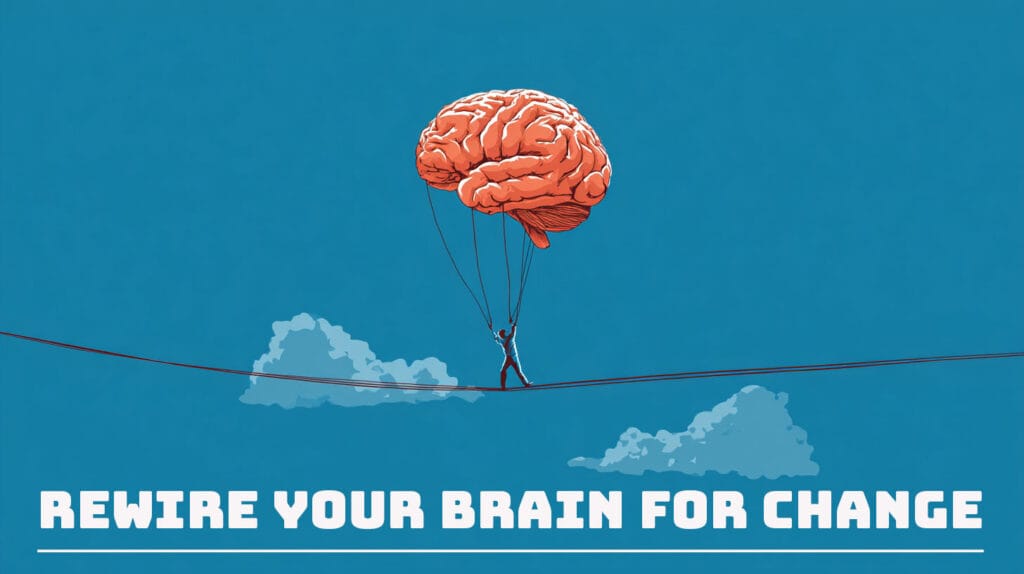
Rewiring Your Brain for Change: My Unfiltered Guide to a New Life
Right, listen up. You stumbled here because you’re probably fed up. Fed up with the same old shit, the same old routine, the same old inner voice telling you you’re stuck. Maybe you’re in your mid-thirties, forties, or fifties, staring at your reflection and wondering, “Is this it?” You’ve tried the fluffy self-help, the gurus with their crystal bowls and gentle whispers, and frankly, it probably just pissed you off more. Good. Because what I’m about to lay out for you isn’t pretty, it isn’t gentle, and it ain’t got a single crystal bowl in sight. This is about the brutal, hard-won truth of rewiring your brain for change.
Eight months ago, I quit drinking after 45 bloody years. Think about that for a second. Forty-five years of booze being my crutch, my escape, my identity. Walking away from that wasn’t some gentle shift; it was a fucking war. A war waged in my own head, against decades of ingrained patterns and beliefs.
The battlefield? My brain. The weapons? Not some magic pill, but ancient, no-nonsense techniques: meditation, visualisation, and breathwork. I’m talking about understanding how these tools actually hack your brain’s operating system, changing the very frequency of your thoughts. This isn’t spiritual mumbo jumbo; it’s practical, applied neuroscience, stripped bare and handed to you like a drill sergeant’s instruction. If you’re ready to stop making excuses and start building a new you, keep reading. If you’re still looking for a soft landing, piss off now. This ain’t for the faint-hearted.
The Brutal Truth About Your Brain: Why You’re Stuck (and How to Get Out)
Let’s get one thing straight: your brain is a magnificent, complicated piece of kit, but it’s also a creature of habit. It loves efficiency, and that means it’s constantly looking for shortcuts, for established pathways. Think of your brain like a well-worn path in a dense forest. Every time you think a certain thought, feel a certain emotion, or act in a certain way, you’re treading that path, making it deeper, wider, more comfortable. These are your neural pathways, and for most of your adult life, you’ve been carving them without even realising it.
The Habit Loop from Hell
My 45 years of drinking? That was a superhighway in my brain. “Stress? Drink.” “Bored? Drink.” “Celebration? Drink.” Every single time, that pathway got reinforced, making it harder and harder to choose a different route. The same applies to feeling stuck in a dead-end job, tolerating a toxic relationship, or simply believing you’re “not good enough.” You’ve inadvertently built a comprehensive network of neural pathways that lead you right back to the familiar, even if the familiar is misery. It’s not a moral failing; it’s a neurological reality. Your brain is just doing its job, trying to keep you safe and conserve energy by sticking to what it knows. But what it knows might be killing you slowly.
Your brain’s primary job is survival, and to that end, it perceives anything new or uncertain as a potential threat. Stepping outside your comfort zone, challenging those ingrained beliefs, trying something drastically different – that triggers a primal alarm system. This is why change feels so bloody hard. Your amygdala, the brain’s fear centre, lights up like a Christmas tree, screaming, “Danger! Retreat to the known!”
Even if the “known” is a cage of your own making, at least it’s a familiar cage. Most people mistake this internal resistance for a sign that they’re on the wrong path. Bollocks. It’s usually a sign you’re on the right one, a path to rewiring your brain for change, because you’re challenging its deeply entrenched programming.
It’s Not Your Fault (But It’s Your Responsibility)
Look, I’m not here to coddle you. You might have been programmed by your upbringing, by society, by past traumas. That’s not your fault. But staying stuck, that’s on you. The good news? Those neural pathways aren’t permanent. Your brain has something called neuroplasticity – the ability to reorganise itself, to form new connections, to literally rewire itself. It’s like having a shovel in that forest; you can choose to stop treading the old path and start digging a brand new one. It’s hard work, it’s messy, and you’ll probably want to quit a thousand times. But it’s possible. And that’s where these tools come in.
When I first heard about meditation, I pictured some bloke in saffron robes humming on a mountain top. Not for me, I thought. I was a soldier, a drinker, a doer. Sitting still and “clearing my mind” sounded like torture. The thought alone would make my brain race even faster. My initial attempts were a disaster – 30 seconds of internal screaming, wondering if I’d left the gas on, then giving up. Sound familiar? Good, because that’s where most people start, and it’s perfectly normal. But when I was desperate to quit the booze, I was willing to try anything. And meditation, stripped of its spiritual fluff, became one of my most potent weapons for rewiring your brain for change.
My Early Struggles (and Yours)
“I can’t clear my mind.” “I’m not spiritual enough.” “My brain just won’t shut up.” These are the usual complaints, and believe me, I’ve said them all. During those first brutal weeks of sobriety, my mind was a fucking warzone. Cravings hit like artillery fire, anxiety gnawed at my guts, and every memory of past mistakes swirled like a toxic fog. Sitting still was agony.
But my coach, a no-nonsense bloke himself, told me, “You’re not trying to stop thinking, Ian. You’re just observing it. Like watching traffic. You don’t jump in front of every car.” That clicked. It wasn’t about achieving some blissful state; it was about creating a tiny bit of space between the thought and my reaction to it. That space, even a millisecond of it, was my freedom.
The Science (Without the Jargon)
So, what actually happens when you meditate? You’re essentially downshifting your brainwave state. Normally, we’re buzzing in Beta – wide awake, active, sometimes stressed. Meditation helps you dip into Alpha – a state of relaxed awareness, where you’re calm but alert. Go deeper, and you hit Theta – a state of deep relaxation, creativity, and receptivity. This is where the magic happens, where you can actually start to reprogram those old neural pathways. It calms your nervous system, reduces cortisol (the stress hormone), and strengthens your prefrontal cortex, the part of your brain responsible for executive function, decision-making, and impulse control. For an alcoholic like me, strengthening impulse control was literally life or death.
Practical, No-Nonsense Meditation
Forget the lotus position and the chanting if it’s not for you. Just sit, or lie down. Close your eyes. Focus on your breath. Don’t judge your thoughts; just notice them and gently bring your attention back to your breath. That’s it. Start with five minutes. Build up to ten. My go-to is a simple body scan: lie down, close your eyes, and systematically bring your awareness to each part of your body, from your toes to your head, noticing any sensations without judgment. It grounds you, brings you into the present, and shifts you out of that frantic Beta state. It’s a daily clean-up for your mind, and it’s non-negotiable for rewiring your brain for change.
You breathe thousands of times a day without thinking about it. It’s so automatic, we completely ignore its incredible power. But your breath isn’t just about oxygen; it’s a direct, immediate, and free access point to your nervous system. As a soldier, breath control was part of our training. In high-stress situations, a controlled breath could be the difference between a clear decision and a panicked mistake. Little did I know, decades later, that same principle would save my arse in a different kind of war – the war against my own addiction. Breathwork is your remote control for your internal state, your secret weapon for rewiring your brain for change.
The Power You’re Ignoring
Think about it: when you’re stressed, your breath is shallow, fast, ragged. When you’re relaxed, it’s slow, deep, rhythmic. Your emotions directly influence your breath, but crucially, your breath also directly influences your emotions. It’s a two-way street. By consciously controlling your breath, you can send signals to your brain that tell it, “Hey, everything’s cool, stand down.” This isn’t some hocus pocus; it’s basic physiology. You can literally shift your internal chemistry – your hormones, your heart rate, your brain activity – just by changing how you breathe. It’s the most powerful, overlooked tool you possess.
Shifting Brainwaves with Breath
Remember those brainwave states? Your breath is the express train between them. Rapid, shallow breathing keeps you firmly in Beta, feeding your anxiety. Slow, deep, diaphragmatic breathing ushers you into Alpha and even Theta. This is because your breath directly impacts the vagus nerve, a major nerve that runs from your brainstem to your abdomen, influencing your heart rate, digestion, and mood. Stimulating the vagus nerve through slow, deliberate breathing activates your parasympathetic nervous system – your “rest and digest” mode – overriding the “fight or flight” response. When those cravings hit during early sobriety, a few rounds of focused breathwork could literally pull me back from the brink, calming the internal storm and allowing me to choose differently.
Simple Breath Drills for Life
Don’t overcomplicate it. Here are two simple, effective techniques you can use anywhere, anytime:
Box Breathing: Inhale for 4 counts, hold for 4, exhale for 4, hold for 4. Repeat 5-10 times. This is what special forces use to stay calm under pressure. It instantly calms your nervous system and brings you into a state of focused awareness. I used this when I felt overwhelmed by cravings or self-doubt.
4-7-8 Breathing: Inhale quietly through your nose for 4 counts, hold your breath for 7 counts, exhale completely through your mouth, making a “whoosh” sound, for 8 counts. Repeat 3-4 cycles. This is incredibly powerful for inducing relaxation and even sleep. Use it when anxiety spikes, before a difficult conversation, or when you can’t switch off at night. It’s a game-changer for rewiring your brain for change and managing stress.
Visualisation & Quantum Leaps: Seeing the Future, Crafting Your Reality
If you think visualisation is some hippy nonsense where you manifest a Ferrari by just thinking about it, you’re missing the point. It’s not magic. It’s focused attention, directed intent, and a powerful way to hack your brain’s operating system. Your brain doesn’t actually know the difference between something vividly imagined and something experienced in reality. When you visualise, you’re not just daydreaming; you’re creating new neural pathways, priming your brain for action, and literally training yourself for success. This is a crucial component of rewiring your brain for change.
It Ain’t Woo-Woo, It’s Wiring
Think of it like this: an athlete doesn’t just train their body; they visualise the race, the perfect dive, the winning shot. They replay it mentally, feeling every muscle, hearing the crowd. This isn’t just to boost confidence; it’s to create the neurological blueprints for success. When the real moment comes, their brain has already run a rehearsal. For me, coming out of the military and then later quitting drinking, I had to visualise my future self. The sober Ian. The successful coach. The healthy man. I saw him, felt what it felt like to be him, and made that image so real it became my internal compass.
My Own Visualisation Wins (and Failures)
When I decided to become a coach, despite having no formal background in it at the time, I spent hours visualising myself with clients, helping them, seeing their breakthroughs. I visualised my marketing materials, my website, and even the feeling of confidence as I spoke. Was it easy? Hell no. Did I have failures? Absolutely. But every time I doubted myself, I went back to that internal image.
When I quit drinking, I didn’t just visualise not drinking; I visualised waking up clear-headed, the taste of coffee instead of stale booze, the energy for a morning run. I felt the pride, the self-respect. It’s not enough to just see a picture; you have to feel the emotion of that future reality. That’s what imprints it deep into your subconscious.
“Quantum Jumping” – The Reality
Now, about this “quantum jumping” bollocks. It sounds like something out of a science fiction novel, and honestly, some of the explanations out there make it sound like you’re literally hopping between parallel universes. That’s not what I mean. My definition of a “quantum jump” is a rapid, significant shift in your life circumstances that seems almost miraculous to an outsider, but is actually the result of a series of conscious, deliberate internal shifts. You’re not jumping dimensions; you’re jumping timelines within your own life by fundamentally changing your internal state – your beliefs, your actions, your vibrational frequency if you want to get a bit woo-woo, but grounded in a new, solid internal framework. It’s about collapsing old possibilities and opening up new ones through focused intent and consistent action. You don’t get there by wishing; you get there by building the internal framework first.
How to Do It: Create Your Future Self
Define Your Future Self: Who do you want to be? What do they look like, feel like, act like? Be specific. Don’t just say “rich”; say “financially free, living in a house by the sea, working on projects I love, with zero stress about money.” Define your new reality for rewiring your brain for change.
Immerse Yourself: Find a quiet space. Close your eyes. Spend 10-15 minutes daily feeling into that future. Engage all your senses: What do you see? What do you hear? What do you smell? Most importantly, what do you feel? The joy, the peace, the confidence. Make it real.
Take Aligned Action: This is crucial. Visualisation isn’t passive. It’s about getting clear on your destination so you know which steps to take. Each day, ask yourself, “What would my future self do right now?” Then do that bloody thing.
Harnessing Brainwave States for Deep Transformation
We’ve touched on brainwave states, but let’s get a bit more granular because understanding them is key to intentionally rewiring your brain for change. Your brain is constantly producing electrical activity, and this activity can be measured in waves. Different states of consciousness correspond to different dominant brainwave frequencies. Learning to consciously shift these frequencies is where the real power lies in transformation.
Beta: The Daily Grind: This is your default awake state. Beta waves are associated with active, alert, focused thinking, problem-solving, and decision-making. However, prolonged high Beta can lead to stress, anxiety, and overthinking. This isn’t the state for deep personal change; it’s the state where you reinforce old patterns.
Alpha: The Calm Before the Storm (or During It): As you relax, your brain shifts into Alpha waves. This is a state of relaxed awareness, inner calm, and enhanced learning ability. You’re still awake and aware, but less analytical, more receptive. It’s the bridge between conscious and subconscious, a fantastic state for creative thinking, light visualisation, and absorbing new information. Many forms of gentle breathwork will help you get here quickly.
Theta: The Sweet Spot of Change: This is the holy grail for deep transformation. Theta waves occur during deep meditation and light sleep. In Theta, your conscious mind quietens down, and you gain access to your subconscious mind – the vast reservoir of your beliefs, habits, and memories. This is where true reprogramming happens. It’s like having direct access to the hard drive of your brain. In Theta, your brain is highly suggestible, making it the perfect time for visualisation, positive affirmations, and implanting new beliefs. This is where you actually lay down those new neural pathways for rewiring your brain for change.
Delta: The Deep Repair Shop: Delta waves are the slowest brainwaves and are dominant during deep, restorative sleep. This is your body and mind’s repair shop, crucial for physical healing, immune function, and memory consolidation. While not a state you’d consciously aim for, ensuring you get enough quality sleep is fundamental to supporting all your other efforts.
Gamma: Peak Performance & Insight: Gamma waves are the fastest brainwaves, associated with peak performance, intense focus, bursts of insight, and heightened perception. While not a “relaxation” state, some advanced meditators can access Gamma, experiencing profound spiritual insights or moments of interconnectedness.
Conclusion: Your Midlife Reset Starts Now. No Excuses.
So there you have it. No magic pills, no gurus promising instant enlightenment. Just a brutal, honest look at how your brain works and how you can actually take control of it. We’ve talked about the relentless grip of old habits, the power of meditation to create space, breathwork as your instant internal reset button, and visualisation as your blueprint for a new reality. And crucially, we’ve explored how understanding and intentionally shifting your brainwave states is the secret sauce to making all of it stick.
My journey, from 45 years of drinking to 8 months of sobriety and a life I actually want to live, wasn’t handed to me. I had to fight for it. I had to rip apart decades of conditioning, staring my demons in the face, and then methodically, consistently, rewiring my brain for change using these exact tools. It was messy, it was uncomfortable, and at times, I thought I’d lose my mind. But every single bit of effort was worth it.
Your midlife reset isn’t going to happen by wishing or hoping. It happens when you decide you’ve had enough of the old story, enough of the old you. It happens when you commit to the uncomfortable work of digging new neural pathways. So, stop whining, stop procrastinating, and stop waiting for someone else to save you. Pick one thing from this post – five minutes of breathwork, ten minutes of meditation, a focused visualisation of your future self – and commit to it for the next bloody week. Don’t let another day slip by. Your new life is waiting, but you have to build it.
Ian is a former soldier, a retired IT Consultant with a 25-year career, and now a no-nonsense life coach. After a 45-year battle with alcohol, he applied the same discipline and pragmatic approach he learned in the military to his personal life, successfully rewiring his brain for change. He’s not here to coddle you; he’s here to provide the tough, honest truths and practical tools you need to get out of your own way and start living the life you’ve always wanted. He lives in the UK with his family and continues his own journey of growth and self-mastery.
Two days, zero bullshit. A full reset for people who are done with numbing and ready to do the work. We’ll dive into meditation, breathwork, visualisation, quantum jumps, cold water, movement, and simple food that actually fuels you. No booze, no fluff, just practical tools you can take home and use the next day. If that sounds like you, drop your email below and I’ll send the first release details.
🔥 First Dibs on the Sober Beyond Limits Retreat 🔥
No fluff. No spam. Just real talk.
Drop your email below and you’ll be the first to get full details when it goes live.
This ain’t a detox or a rehab. It’s 100% alcohol-free. If you want to drink, this ain’t for you.
Alright, let’s cut the bollocks. You’re probably sitting there, mid-thirties, forties, maybe even pushing fifty, feeling a bit lost, a bit shit, wondering where the hell the time went and why you’re not where you thought you’d be. You’re bombarded with self-help gurus telling you to “lean into your feelings” or “honour your emotions.” Well, I’m here to tell you something that’s going to hit you like a cold, hard slap to the face: emotions are opinions. Yeah, I said it. Your feelings? They’re just your brain’s take on the situation, not the gospel truth. And understanding that – truly understanding it – is the fucking key to unlocking your midlife reset.
I’m Ian, 57 years old, and I’ve seen some shit. Over a decade in the British Army hammered this lesson into me, and then 45 years of boozing, which I finally kicked 8 months ago, showed me just how easy it is to let those emotional “opinions” run your entire fucking life into the ground. This isn’t some fluffy theory; this is hard-won wisdom from the trenches of actual living. If you’re sick of feeling like a passenger in your own life, stuck reacting to every emotional gust, then listen up. This truth will set you free, but it ain’t gonna be comfortable.
The Battlefield of the Mind: What the Army Taught Me About Emotional Control
When you’re in the military, especially in certain roles, you quickly learn that your emotions can get you, or your mates, killed. There’s no room for self-indulgent wobbles when rounds are flying, or you’re navigating a minefield, or you’re watching a friend go down. You learn to compartmentalise, to shut down the noise, and to focus on the task at hand. Your fear, your anger, your grief – those are luxuries you can’t afford in the moment. They are, quite literally, opinions your brain is generating about a very real, very dangerous situation. If you act solely on those opinions, you’re fucked.
Now, that’s an emotion: fear. And my brain was giving me a strong opinion about it. If I’d given in to that opinion, bolted, panicked, or frozen up, it wouldn’t have just been my arse on the line. It would have jeopardised the entire patrol. So, what do you do? You acknowledge it. “Right, Ian, you’re scared. That’s a valid opinion from your lizard brain.” But then you push it down, you compartmentalise, and you focus on the facts: my rifle is loaded, my section commander is giving orders, I know my arcs of fire. My action has to be based on reality and training, not on the visceral, gut-wrenching opinion of fear.
That wasn’t about being a robot; it was about being effective. It was about choosing how I responded, rather than simply reacting. The Army taught me that those intense feelings are just signals, data points. You don’t have to blindly follow them. You can observe them, assess them, and then make a conscious decision about what to do next. It’s the ultimate training in understanding that emotions are opinions, and you get to choose whether those opinions dictate your actions or if you use them as information.
My 45-Year Battle with the Bottle: The Ultimate Emotional Escape (and The Lie I Told Myself)
Fast forward many years, out of the Army, and I found a different battlefield: the inside of my own head, fuelled by a different kind of ammunition – alcohol. For 45 fucking years, I drank. It started casually, as it often does, a way to unwind, to socialise. But for decades, it became my go-to response for every emotional opinion my brain threw at me.
Feeling stressed after a crap day at work? Opinion: I need a drink to relax.
Feeling lonely? Opinion: A few pints will make me feel connected, or at least numb the ache.
Feeling happy? Opinion: Let’s celebrate with a bottle (or three).
Feeling anxious about something? Opinion: Alcohol will quiet those nagging thoughts.
Do you see the pattern? Each emotion, each passing feeling, was interpreted as a command, an instruction to pick up a glass. My brain, the devious bastard, had formed a deeply ingrained opinion that alcohol was the solution to every emotional state. It was a lie, a comfortable, insidious lie that slowly but surely eroded my health, my relationships, and my self-respect.
The real brutal truth was, I wasn’t dealing with my emotions; I was suppressing them. I was trying to silence the opinions rather than questioning their validity. When the anxiety bubbled up, instead of asking, “Why am I feeling this? What’s the real issue here? Is this ‘anxiety’ opinion serving me?”, I’d reach for the bottle. I was outsourcing my emotional management to a liquid crutch, and it was fucking destroying me.
Eight months ago, I finally hit rock bottom with the booze. It wasn’t one dramatic event, but a slow, grinding realisation that I was a slave to these emotional opinions and the alcohol they demanded. Quitting was the hardest thing I’ve ever done – harder than any military exercise, any deployment. It was a brutal, physical, and mental rewiring. Every fibre of my being screamed for that chemical comfort. My brain, used to its old opinions, would tell me, “You’re miserable. Just one. It’ll make you feel better.” It was a constant war.
But this time, I fought differently. I started observing those opinions. “Ah, there’s the ‘miserable’ opinion. Interesting. Is it true? Or is it just a familiar pathway my brain wants to follow?” I used the discipline the Army taught me, but applied it to my internal landscape. I learned to sit with the discomfort, to let the emotional waves wash over me without drowning in them. I learned that an emotion, no matter how powerful, is a fleeting thing if you don’t feed it with your reaction. It’s a suggestion, not a command. Emotions are opinions, and I finally realised I didn’t have to agree with them, especially the ones that were ruining my life.
Ancient Wisdom, Modern Battleground: Why the Old Boys Knew Your Bollocks Better Than You Do
This idea that emotions are opinions isn’t new. We’re not reinventing the wheel here. The ancient philosophers, the Stoics like Chrysippus and Epictetus, and even the Epicureans and Aristotle, were grappling with this same shit thousands of years ago. They understood the human condition, the struggle between our immediate urges and our rational minds, far better than most of the fluffy Instagram gurus peddling positive vibes today.
Chrysippus and the Stoics: These blokes were the OG no-nonsense crew. They didn’t say, “Don’t feel anything.” That’s a common misconception. What they said was, your initial gut reaction – that ‘impression’ – isn’t necessarily reality. It’s your judgment about that impression that causes distress. If you judge something as ‘bad’ or ‘terrible’ or ‘catastrophic’, then you’re going to feel fear, anger, despair. But if you see it as ‘challenging’ or ‘an opportunity to test yourself’ or simply ‘an external event outside my control’, then your emotional response shifts entirely. Your emotional response isn’t the truth; it’s a value judgment you’re slapping on reality. It’s an opinion. They understood that you can choose to agree with that opinion, or you can choose to challenge it.
The Epicureans: Often misunderstood as just pleasure-seekers, Epicurus actually taught about finding ataraxia – a state of freedom from disturbance. This wasn’t about wild indulgence, but about achieving tranquillity through rational thought, reducing desires, and overcoming fear (especially of death). He knew that chasing every fleeting pleasure or avoiding every discomfort blindly would lead to a shitty, unfulfilled life. Instead, he advocated for a considered, balanced approach to life’s experiences. Again, the emotional ‘opinion’ that this pleasure is essential, or this pain must be avoided at all costs, was to be scrutinised.
Aristotle and the Golden Mean: Aristotle taught us about virtue lying in the ‘golden mean’ – the balance between two extremes. Cowardice and rashness are both vices; courage is the virtue in the middle. Being emotionless isn’t wise, but neither is being a slave to every whim. It’s about feeling the right emotion, at the right time, for the right reason, and to the right degree. That requires conscious choice, not just letting your primitive brain run the show. It means understanding that your anger, for example, is an opinion. Is it a justified opinion at this moment? Is it proportionate? Or is it just a knee-jerk reaction that’s going to make things worse?
These ancient bastards understood that humans are driven by a constant internal dialogue, a stream of thoughts and feelings. But they also knew that we have the capacity for reason, for higher-order thinking. We don’t have to be slaves to our biology. Your gut feeling, your initial emotional surge, is a data point. It’s information. It’s an opinion. But it’s not a command. You have the power to decide if you’re going to act on that opinion or if you’re going to forge a different path. That’s the real power of recognising that emotions are opinions.
The Midlife Reset: How to Change Your Fucking Opinion and Reclaim Your Life
So, you’re here, midlife, perhaps a bit battered, a bit disillusioned. You’re probably tired of the same old patterns, the same old emotional merry-go-round. Now you know the truth: emotions are opinions. So, how do you start changing those opinions and truly reset your life?
It’s not some magic pill. It’s hard, deliberate work. Just like kicking a 45-year drinking habit, or surviving a dangerous patrol. But it’s absolutely doable.
1. Identify the Opinion, Not Just the Emotion
When you feel something – anger, frustration, anxiety, sadness – don’t just label the emotion. Dig a little deeper. What’s the story your brain is telling you about that emotion? What’s the opinion it’s forming?
Instead of: “I’m so angry!”
Try: “I’m feeling anger, and the opinion my brain is offering is that this situation is unfair and disrespectful, and I should lash out.”
See the difference? You’re dissecting the opinion, not just being consumed by the feeling.
2. Create the Pause: Your Gap of Power
Between the stimulus (what happens) and your response (how you react emotionally and physically), there’s a tiny, crucial gap. That’s your power zone. It’s where you decide if you agree with your brain’s opinion or not.
Practice: When that surge of emotion hits, literally pause. Take a deep breath. Count to five. Just that small act creates a microsecond of space where you can intervene. This is where you can apply that military discipline. Don’t react. Observe.
3. Question the Opinion: Is It Serving You?
Once you’ve identified the opinion and created the pause, challenge it. Ask yourself:
Is this opinion actually true? Is it the only truth?
Is this opinion helping me achieve my goals, or is it holding me back?
What’s another, more constructive opinion I could form about this situation?
What would someone I respect, someone who embodies the person I want to be, think or feel in this situation?
This isn’t about denying your feelings; it’s about not being a slave to them. It’s about choosing your perspective. You have the choice to reframe. Perhaps that feeling of ‘failure’ isn’t an opinion that you are a failure, but an opinion that ‘this particular attempt didn’t work, and there’s a lesson here.’
Your actions should stem from your values and your long-term goals, not just the fleeting emotional opinions of the moment. If your goal is health, but your emotional opinion is “I feel like shit, so I deserve a massive takeaway and a bottle of wine,” you know which one to choose.
This is where the real work of self-discipline comes in. This is where you get to build new neural pathways, new habits, and a new, stronger version of yourself. This is where my knowledge of NLP and hypnotherapy comes in handy, but you don’t need fancy jargon. You just need the grit to consistently choose the harder, more beneficial path over the easy, comfortable one dictated by a transient feeling.
And let’s be clear: you can’t build a robust, emotionally resilient mind if your body is a fucking mess. Your nutrition is foundational. Stick to ancestral, whole foods. Nose-to-tail. Cut the processed crap. Absolutely no soy (except properly fermented stuff like tempeh or natto in moderation, and never tofu – especially not for women, it’s a hormonal disaster). Optimise your sleep. Move your body. These aren’t optional extras; they’re the bedrock upon which you build your new, strong self.
The Final Word
Stop letting your emotions run your fucking life. They’re just opinions, whispered by your brain based on past experiences and current interpretations. You have the power, the discipline, and the sheer human will to challenge those opinions, to choose your response, and to forge a life that’s truly yours. This midlife reset isn’t about finding yourself; it’s about building yourself, brick by bloody brick. Start by taking control of your opinions. The rest will follow.
Used to monitor number of Google Analytics server requests when using Google Tag Manager
1 minute
_gid
ID used to identify users for 24 hours after last activity
24 hours
_ga_
ID used to identify users
2 years
_gali
Used by Google Analytics to determine which links on a page are being clicked
30 seconds
_ga
ID used to identify users
2 years
__utmx
Used to determine whether a user is included in an A / B or Multivariate test.
18 months
__utmv
Contains custom information set by the web developer via the _setCustomVar method in Google Analytics. This cookie is updated every time new data is sent to the Google Analytics server.
2 years after last activity
__utmz
Contains information about the traffic source or campaign that directed user to the website. The cookie is set when the GA.js javascript is loaded and updated when data is sent to the Google Anaytics server
6 months after last activity
__utmc
Used only with old Urchin versions of Google Analytics and not with GA.js. Was used to distinguish between new sessions and visits at the end of a session.
End of session (browser)
__utmb
Used to distinguish new sessions and visits. This cookie is set when the GA.js javascript library is loaded and there is no existing __utmb cookie. The cookie is updated every time data is sent to the Google Analytics server.
30 minutes after last activity
__utmt
Used to monitor number of Google Analytics server requests
10 minutes
__utma
ID used to identify users and sessions
2 years after last activity
_gac_
Contains information related to marketing campaigns of the user. These are shared with Google AdWords / Google Ads when the Google Ads and Google Analytics accounts are linked together.