My path to sobriety wasn’t paved with the traditional 12 steps. While I respect the program’s success for many, it didn’t resonate with my personal beliefs. As a Reiki Master and someone deeply connected to my spirituality, I sought a different approach—one that honoured my inner wisdom and connection to something greater than myself. This journey has been about self-discovery, healing, and finding peace within.
For years, I felt trapped in a cycle of drinking and self-destruction. I knew I wanted to stop, but the idea of surrendering to a system that didn’t align with my beliefs felt impossible. I needed something that empowered me, not something that made me feel powerless. That’s when I discovered the power of holistic sobriety—an approach that integrates spirituality, energy healing, and mindfulness.
My journey wasn’t immediate. I faced setbacks, moments of doubt, and times when I questioned if I was strong enough to do this alone. I remember one particularly difficult night when I sat in my room, overwhelmed by cravings and self-doubt, convinced that I would never be able to break free from my old habits. But instead of reaching for a drink, I turned to meditation and journaling, writing down every emotion I was experiencing. At that moment, I realised that I had the power to face my feelings head-on rather than running from them. It was a small but significant turning point on my path to sobriety.
Through exploring different healing modalities, journaling my progress, and deepening my spiritual practices, I started to see shifts in my mindset. I learned to replace old habits with ones that truly nourished my soul.
Sobriety has allowed me to step into my true self, to embrace life in a way that feels aligned with who I am. It has given me clarity, strength, and the ability to live with intention.
Embracing Spirituality in Recovery
Spirituality played a crucial role in my sobriety journey. Unlike traditional recovery methods, which often focus on external accountability, I turned inward. I sought answers through meditation, nature, and deep self-reflection. Sobriety, for me, became a spiritual awakening rather than just a commitment to abstinence.
Instead of seeing alcohol as the enemy, I started asking deeper questions: Why was I drinking? What was I trying to escape? What parts of me needed healing? This level of self-inquiry helped me understand that alcohol was merely a symptom of a greater imbalance. My real work was in healing my emotions, reconnecting with my purpose, and learning to sit with discomfort rather than numbing it.
Spirituality in recovery doesn’t have to mean religion. While religion often follows specific doctrines and beliefs, spirituality is more about personal connection and self-discovery. It can mean finding peace through nature, embracing mindfulness, or simply connecting with a deeper sense of purpose beyond addiction. It’s about rediscovering joy, gratitude, and purpose.
One of the greatest gifts of spirituality in sobriety is the ability to surrender—not in the sense of giving up, but in letting go of control, trusting the process, and knowing that healing is a journey, not a destination.
One of the most transformative aspects of my sobriety journey has been Reiki and meditation. These practices have provided me with a deep sense of peace, clarity, and emotional resilience. Here’s how they helped:
Reiki for Addiction Recovery
Reiki, an ancient Japanese energy healing practice, played a pivotal role in my healing. Addiction isn’t just a physical dependency—it’s an emotional, energetic, and spiritual disconnection. Reiki helped me release suppressed emotions, balance my energy, and compassionately reconnect with my body.
Some of the benefits I experienced through Reiki included:
A profound sense of calm and emotional stability
Relief from anxiety and stress
A deeper connection to my intuition and inner wisdom
The ability to process emotions without turning to alcohol
By working with Reiki energy, I could heal wounds I didn’t even realise I was carrying. One of the most profound moments in my healing journey was when I confronted deep-seated guilt from past relationships. Through Reiki, I was able to release the emotional burden I had carried for years, forgiving both myself and others. This energy shift allowed me to move forward with a sense of peace and clarity I had never experienced before. It became a powerful tool for emotional release and self-discovery.
Meditation helped me break free from the autopilot habits of addiction. It allowed me to become more present, observe my thoughts without judgment, and develop a greater awareness of my triggers.
Some simple meditation practices that helped me include:
Loving-Kindness Meditation – Practising self-compassion and forgiveness for my past mistakes.
Body Scan Meditation – Releasing tension and reconnecting with my body.
Meditation isn’t about silencing your thoughts; it’s about creating space between you and your impulses. It’s about learning to sit with discomfort rather than numbing it.
Additionally, incorporating guided visualisations, affirmations, and energy work within meditation helped reinforce my commitment to a sober and mindful life.
Building a Sober Community: You Are Not Alone
Sobriety can feel isolating, especially when you’re not following a mainstream path. I remember attending a social event early in my journey and feeling completely out of place without a drink in my hand. The conversations seemed distant, and I struggled with the fear of being judged. It wasn’t until I connected with others on a similar path that I realised I wasn’t alone. Finding a community that embraced alternative sobriety approaches gave me the support and reassurance I needed to continue growing on my journey.
That’s why finding a supportive community is so important. I created Sober Beyond Limits as a space for people who want to explore sobriety on their terms—without judgment, pressure, or outdated dogma.
Sobriety My Way: A Final Thought
Sobriety isn’t about deprivation; it’s about freedom. For me, that freedom has meant waking up with clarity and energy instead of regret and fatigue. It has meant reclaiming my time to nurture my passions, strengthen relationships, and build a future that aligns with my true self. Sobriety has given me the space to rediscover who I am beyond alcohol, and that has been the most liberating experience of all.
If you’re ready to explore sobriety in a way that aligns with your beliefs and values, I encourage you to step forward with curiosity and an open heart. You are not alone, and you don’t have to do this alone.
For more insights on mindful living, mental health, and personal growth, visit www.iancallaghan.co.uk. Let’s walk this path together—on our terms, in our way.
How to Quit Drinking in the UK: A Real-World Guide to Stopping Alcohol Without Losing Yourself
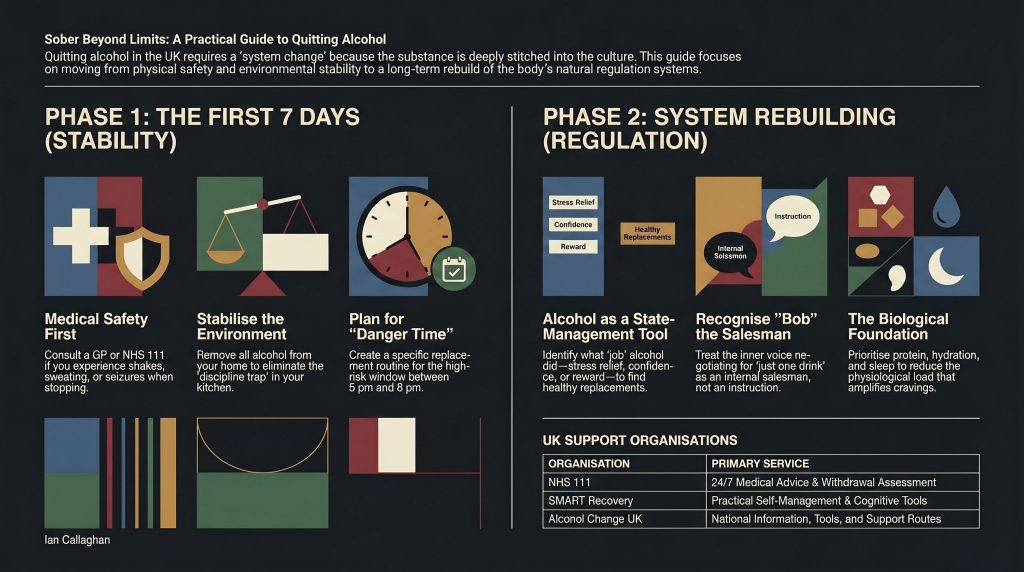
Quitting drinking in the UK is not just a lifestyle choice. For a lot of people, it is a full system change. Alcohol is stitched into the culture so deeply that many people do not even notice it until they try to step away from it. It is in the pub after work, the bottle of wine at home, the birthday toast, the wedding reception, the football, the airport pint, the Christmas cupboard, the barbecue, the stress response, the reward at the end of a hard week and the socially approved excuse to stop feeling for a while.
That is why much standard advice does not land. It is not always wrong, but it is often too thin. Telling someone to keep a drink diary, avoid triggers, try mocktails and be kind to themselves may be useful at a basic level, but it does not explain why the pull is so strong. It does not explain why a person can be genuinely sick of drinking in the morning and still find themselves negotiating with the same bottle by early evening.
I drank for 45 years. I did not stop because I became a perfect version of myself. I did not stop through rehab or AA. That is not a criticism of either, because different people need different doors. I stopped when I finally understood what alcohol had become in my life. It was not just a bad habit. It was a state-management tool. It was a way of changing how I felt, softening the edges, switching off, avoiding discomfort, and getting temporary relief from a system under load.
That distinction matters. If alcohol has become part of how you cope, relax, socialise, sleep, reward yourself, manage stress or avoid sitting with your own thoughts, then quitting is not just about removing a substance. It is about understanding the function that the substance has been performing and building a different way to meet that need.
This guide is for people in the UK who want to quit drinking, reduce their alcohol intake, understand their relationship with alcohol, or finally stop repeating the same cycle of promising themselves they are done and then finding themselves back in the same pattern. It is written from lived experience, coaching experience and a practical understanding of behaviour change. It is not medical advice.
If you drink heavily every day, feel physically unwell when you do not drink, experience shakes, sweating, seizures, hallucinations, confusion, severe anxiety, or you are worried about withdrawal, speak to your GP, NHS 111, or a qualified alcohol support service before stopping suddenly. Alcohol withdrawal can be dangerous and may need medical support.
Quick answer: How do you quit drinking in the UK?
To quit drinking in the UK, first check whether it is medically safe for you to stop, especially if you drink heavily or daily. Then remove alcohol from your home, tell at least one trusted person, plan your highest-risk times, stabilise food and sleep, reduce avoidable stress, create a replacement evening routine, and learn how to observe cravings without acting on them. Support can come from your GP, NHS alcohol services, local alcohol support organisations, therapy, coaching, AA, SMART Recovery, sober communities, books, or a non-traditional framework such as Sober Beyond Limits.
The important part is not choosing the most socially acceptable route. The important part is choosing the route that actually helps you stop drinking, understand your behaviour and rebuild a life that no longer needs alcohol as its main regulator.
Check whether it is safe to stop drinking suddenly
Alcohol withdrawal has to be taken seriously. There is a difference between someone who has a strong drinking habit and someone whose body has become physically dependent on alcohol. Both deserve support, but physical dependence needs proper medical care.
If you have been drinking heavily for a long time, stopping overnight can be risky. Some people feel anxious, sweaty, shaky, nauseous and exhausted for a few days. Others can become seriously unwell. Severe alcohol withdrawal can involve seizures, hallucinations, confusion and a medical emergency.
Speak to your GP, NHS 111, or a local alcohol service before stopping suddenly if you experience shaking when you do not drink, sweating, nausea, vomiting, panic, severe anxiety, hallucinations, seizures, confusion, rapid heartbeat, extreme insomnia, or if you feel unable to function without alcohol.
This is not about weakness. It is biology. Your nervous system, sleep cycle, blood sugar regulation, stress response and brain chemistry may have adapted around alcohol. Pulling it away too quickly can create a real physical reaction. There is no honour in making this harder or riskier than it needs to be. The aim is to get free, not to prove a point.
Why quitting drinking is harder than most people admit
A lot of people are told they drink because they lack willpower. That is a lazy explanation. It may sound simple, but it misses the mechanism.
Alcohol works just enough at the beginning to become dangerous later. It can reduce tension quickly. It can change mood quickly. It can make boredom feel less empty, anxiety feel less sharp and social situations feel less awkward. For many people, alcohol becomes the quickest available way to alter their internal state.
The problem is that it never gives that relief for free. Alcohol borrows calm from tomorrow, sleep from tonight, confidence from your future self and energy from the days that follow. It can create the illusion of relief while quietly increasing the load on the very system you were trying to soothe.
That is why “just stop drinking” is not enough for many people. If alcohol has become your main way of regulating stress, boredom, loneliness, anger, grief, shame or pressure, then removing it without building another way to regulate yourself leaves a gap. That gap is where cravings, restlessness, irritability, self-pity, anxiety and negotiation come in.
In my own work, I call the negotiating voice Bob. Bob is not a demon or a separate personality. It is the internal salesman for the old pattern. It is the voice that tells you that one will not hurt, that you have earned it, that you can start Monday again, that you are boring without it, that everyone else drinks, and that you have already messed up, so you may as well carry on.
That voice can sound reasonable because it uses your own language. It knows your pressure points. It knows when you are tired, hungry, lonely, angry, bored or emotionally overloaded. Its job is not to protect your future. Its job is to protect the pattern.
This is why arguing with cravings often fails. You end up giving the salesman more airtime. The work is to notice the moment before the craving becomes a decision. I call that moment The Gate. It is the small gap between the signal and the story. A craving appears, a feeling appears, a thought appears, then the mind starts building a case around it. If you notice that early enough, you get a choice.
That choice may not feel dramatic. It may be as ordinary as standing up, eating proper food, going for a walk, leaving the room, calling someone, taking a shower, or simply refusing to sit there while the old pattern writes another excuse. But ordinary choices repeated often are how the system changes.
Alcohol is often a state-management tool.
The question is not only how do I stop drinking? A better question is, “What was alcohol doing for me?”
For one person, alcohol is stress relief. For another, it is confidence. For another, it is a reward. For another, it is an emotional anaesthetic. For another, it is how they mark the end of the working day. For another, it is part of an identity they have carried for years. Many people use it for several of those jobs at once.
This matters because when you remove alcohol, you remove a tool the system has relied on. If the function is not understood, the system will try to pull the tool back. That is why some people can stop for a few days, weeks or months, and suddenly feel as if something important is missing. It is not always the taste, the pub or the drink itself. Sometimes it is the state change they were using alcohol to create.
Early sobriety can feel flat for this reason. Evenings can feel too quiet. Weekends can feel exposed. Social events can feel awkward. You might feel bored, irritable or oddly grief-stricken. That does not mean sobriety is wrong. It means the brain and body are recalibrating without the chemical shortcut they were used to relying on.
This is where people often panic. They expect freedom to feel amazing immediately, then feel disappointed when it feels ordinary, raw or uncomfortable. But a nervous system trained to expect chemical relief needs time to relearn natural regulation. Peace can feel underwhelming when the system has been conditioned to chase intensity.
The first week alcohol-free
The first week is not about fixing your entire life. It is about making the next right decision easier. People often overload themselves at the exact moment they need simplicity. They stop drinking, start a perfect diet, try to smash the gym, overhaul their sleep, meditate like a monk, redesign their identity and expect themselves to hold it all together by Thursday. That is too much.
Early sobriety needs stability. Your body is adjusting. Your mood may move around. Your sleep may be unsettled. Your blood sugar may be messy. Your old evening routine may start shouting for attention. The aim is not perfection. The aim is to reduce unnecessary load.
Start by removing alcohol from the house. This is not about weakness. It is about the environment. If the old pattern usually starts in the kitchen, fridge, garage, shed, wine rack or corner shop, do not make yourself walk past the trap every evening and call it discipline.
Plan your danger time before it arrives. For many people, the hardest window is late afternoon into evening. That is when work ends, stress drops, hunger hits, blood sugar dips, and the old reward loop wakes up. If your usual drinking time is between 5 pm and 8 pm, you need a plan before that window opens.
Eat proper food. Early cravings are often made worse by under-eating, poor protein intake, blood sugar crashes, dehydration and exhaustion. This is not the time to run your recovery on cereal bars, low-fat yoghurt and punishment. Protein, minerals, salt, hydration and real meals matter because a body under load will shout louder for quick relief.
Move, but do not batter yourself. A walk can change state. Gentle strength work can help. Cold water helps some people. Breathwork can help. But exercise should not become another form of punishment. The aim is regulation, not self-attack.
Protect sleep, even if it is messy at first. Alcohol can knock you unconscious, but that is not the same as proper sleep. When you stop drinking, your sleep may improve quickly, or you may feel unsettled for a while. Keep evenings simple. Reduce scrolling, dim the lights, eat properly, avoid late caffeine and give the body a consistent signal that the day is ending.
Lower social pressure in the early stage. You do not have to attend every pub night, work event, barbecue or “just one drink” situation to prove anything. Early sobriety is not the time to test yourself in the hardest environment available. Build stability first, then decide what still belongs in your life.
What to do when cravings hit
A craving is not an instruction. It is a signal. That distinction changes the whole response.
Most people treat cravings as if they have to win a debate inside their head. They start arguing with the urge, listing reasons not to drink, bargaining, resisting, tensing up and giving the whole thing more attention. The better move is often physical rather than intellectual.
Change state. Something about the room: eat something proper. Drink water. Go outside. Walk. Shower. Slow your breathing. Message someone. Put your phone down. Move away from the shop, kitchen, pub, app, message thread or routine that usually leads to the drink.
The aim is not to produce a perfect spiritual response. The aim is to interrupt the loop before it becomes behaviour. Cravings rise, peak and pass. They feel permanent when you are inside them, but they are not permanent. The body sends a signal, the mind adds a story, and the old pattern tries to turn that story into action.
The skill is learning to spot the process early enough to step out of it. That is awareness plus action. You notice something, then you change something before the old operating system finishes its sales pitch.
Why boredom can feel so uncomfortable after quitting
Boredom catches a lot of people off guard. They expect cravings and social pressure, but they do not always expect the flatness.
Alcohol made ordinary life feel artificially marked. Friday night had a chemical signal. Cooking dinner had a drink attached. Watching television had a drink attached. Sitting in the garden had a drink attached. Holidays had a drink attached. Stress had a drink attached. Celebration had a drink attached.
When you remove alcohol, some of those moments can feel bare for a while. That does not mean sober life is boring. It means the reward system has been trained to expect alcohol as the event.
Without it, the brain has to relearn slower pleasures. Clear mornings. Better sleep. Food that tastes better. Conversations you remember. Walking without dragging a hangover around. Money not disappearing into cans, wine, spirits, pub rounds and takeaways. The quiet pride of keeping a promise to yourself.
At first, that might feel too subtle. Stay with it. The nervous system needs time to stop looking for fireworks and start trusting peace.
Do you need AA, rehab, therapy or coaching?
Some people do. Some people do not.
AA has helped many people. Rehab has helped many people. Therapy, medication, NHS services, community recovery, SMART Recovery, coaching, books, online groups and private support have all helped people too. There is no single doorway that everyone has to walk through.
The question is not whether a method is approved by everyone else. The question is whether it helps you stop drinking, understand yourself, reduce harm, rebuild your life and stay honest when the old pattern starts talking.
Some people connect with AA because the structure, meetings and shared experience help them. Others do not connect with the language, the identity model, the group format or the idea of powerlessness. That does not make them arrogant. It means they may need a different route.
Some people need rehab because their situation is medically, psychologically or socially unsafe without intensive support. Others do not need residential treatment, but they still need structure. Some people need therapy because trauma, anxiety, depression, grief or emotional overload are part of the drinking pattern. Some people need coaching because they need practical tools, accountability, reframing and a different way to understand the behaviour loop.
Some people need to sort out food, sleep, movement, and daily structure because their system is so overloaded that cravings are being amplified by exhaustion, stress, and blood sugar chaos.
Use what works. Drop the tribal nonsense. This is your life, not a competition over whose recovery method is purest.
UK support options for quitting drinking
If you are in the UK and need help, there are several routes you can explore.
Your GP can help assess your risk, discuss withdrawal, refer you to local alcohol services, and support related mental health concerns. NHS 111 can advise if you are unsure what level of help you need. Local drug and alcohol services vary by area, but many offer assessments, community support, counselling, recovery groups and medically supported detox pathways where needed.
Alcohol Change UK provides information and campaigns around alcohol harm. Drinkaware offers education, tools and guidance around drinking behaviour. We Are With You provides confidential support for alcohol, drugs and mental health. Turning Point offers support across substance use and mental health in many parts of the UK. SMART Recovery offers a practical self-management approach. AA offers 12-step meetings across the country.
External support is not a failure. It is using the tools available. At the same time, do not outsource the whole process. Support can help, medical advice can protect you, and community can steady you, but the pattern still has to change in the ordinary moments of your life.
Rebuilding the system: food, sleep, movement and mind
Stopping drinking removes the alcohol. It does not automatically build the life underneath. That is where the real work sits.
For me, the foundation is food, sleep, movement and mind. This is not wellness decoration. It is systems work.
Food matters because early sobriety can be rough on blood sugar, cravings, mood and energy. If you are underfed, over-caffeinated, living on ultra-processed food and bouncing between sugar crashes, you are making the alcohol loop louder than it needs to be.
Sleep matters because poor sleep weakens emotional regulation. Alcohol damages sleep quality, even when it seems to help you pass out. When sleep starts improving, everything else has a better chance of improving with it.
Movement matters because the body changes state through action. You do not always think your way out of an urge. Sometimes you walk, stretch, lift, breathe, get outside or change your physical environment before the mind catches up.
Mind matters because the old operating system will keep offering the old solution until you understand the pattern. That might involve journaling, meditation, visualisation, coaching, therapy, breathwork, community, reading, or simply learning to observe your own thoughts without obeying every one of them.
If alcohol were being used to regulate the system, the system needs new regulation.
What to say when people ask why you are not drinking
UK drinking culture can make sobriety feel more awkward than it needs to be. People ask questions. People project. People make jokes. Some get defensive because your choice not to drink makes them think about their own drinking.
You do not owe everyone a confession. You can keep it simple.
“I’m not drinking.”
“I feel better without it.”
“I’m driving.”
“I’m off it for a while.”
“I’ve done my time.”
“I’m not drinking tonight.”
The less you over-explain, the less room there is for debate. Early on, choose your environments carefully. There is no prize for standing in a pub for four hours watching people get louder and duller while you white-knuckle your way through soda water. You may decide later that pubs still have a place in your life. You may decide they do not. Both are allowed.
Sobriety does not have to become a performance. You are not required to convince everyone. You are required to protect the change you are building.
What to do if you slip
A slip does not have to become a collapse. It is information.
That does not mean you excuse it, ignore it or pretend it does not matter. It means you study it instead of turning it into another shame spiral.
Ask what happened. What time was it? Where were you? Had you eaten properly? How had you slept? What emotion was underneath it? Who were you with? What story did Bob use? What was the first moment when you could have changed state? What did you ignore earlier in the day? What needs to change so the same situation doesn’t happen again?
That is not self-hatred. That is diagnostics.
Shame says, “I am.” SomethingDiagnostics says, “Something in the system failed.” Let’s find it.” One keeps you stuck. The other gives you a way forward.
How to stop making alcohol part of your identity
Many people do not just drink. They become the drinker: the wine mum, the beer bloke, the party one, the funny drunk, the stress drinker, the weekend warrior, the person who “only drinks socially” but somehow socialises every time alcohol is available.
When you stop, that identity can wobble. You might feel exposed. You might wonder who you are without it. You might feel grief for the old version of yourself, even if that version was hurting you.
That does not mean you made the wrong decision. It means the old character is losing its grip.
You are allowed to outgrow the version of you that needed alcohol to feel normal. You are allowed to become someone calmer, clearer, healthier, more present and more in control of your state. Not perfect. Not superior. Not boring. Just free.
Quick start checklist for quitting drinking in the UK
Use this as a practical starting point, not a perfect-life fantasy.
• Check whether you need medical advice before stopping suddenly.
• Remove alcohol from your home.
• Tell one trusted person what you are doing.
• Plan your danger time, especially late afternoon and evening.
• Eat proper food and avoid running on blood sugar crashes.
• Build a replacement routine for your usual drinking window.
• Avoid high-risk drinking environments early on.
• Learn to spot Bob’s sales pitch before you obey it.
• Use movement, food, water, breath, cold water or connection to change state.
• Track your first 7, 14 and 30 days.
• Get proper support if you need it.
• Treat slips as diagnostics, not proof that you are broken.
Frequently asked questions about quitting drinking in the UK
Can I quit drinking without AA in the UK?
Yes. AA helps some people, and if it works for you, use it. But it is not the only route. People also quit through GP support, therapy, SMART Recovery, coaching, sober communities, books, nervous system work, nutrition, exercise, identity change and practical daily structure. The right route is the one that helps you stop drinking and rebuild your life.
Is it safe to stop drinking suddenly?
Not always. If you drink heavily every day or experience withdrawal symptoms when you do not drink, stopping suddenly can be dangerous. Speak to your GP, NHS 111, or a local alcohol service before quitting. Shakes, seizures, hallucinations, confusion, severe sweating, rapid heartbeat or extreme anxiety need proper medical advice.
What is the hardest part of quitting alcohol?
For many people, the hardest part is not the drink itself. It is losing the old method they used to cope, relax, socialise, avoid feelings and switch off. That is why quitting drinking is not only about removing alcohol. You have to build a different way of regulating your life.
How long does it take to feel better after quitting drinking?
Some changes can happen within days or weeks, including better sleep, clearer mornings, improved digestion, steadier mood and more energy. Other changes take longer. Some people feel flat or emotionally unsettled at first because their brains and nervous systems are recalibrating. That does not mean sobriety is failing. It often means the system is learning to operate without alcohol doing the switching.
What should I do when I get a craving?
Do not sit there debating it for an hour. Change state. Move your body, eat properly, drink water, get outside, breathe more slowly, shower, message someone, or leave the environment. A craving is a signal, not a command. The skill is spotting the gap before the craving becomes a decision.
Can I still go to the pub if I quit drinking?
Eventually, maybe. Early on, be honest about whether the pub is a safe environment for you. UK drinking culture is powerful, and pretending it does not matter is naive. Build sober confidence first. Later, you can decide whether pubs still belong in your life or whether they were mostly just places where alcohol happened.
What can I drink instead of alcohol?
You can drink alcohol-free beer, sparkling water, kombucha, tea, coffee, soda water with lime, or anything else that does not pull you back into the old loop. But the bigger question is not what goes in the glass. The bigger question is what alcohol was doing for you. If alcohol is changing your state, you need tools that change your state without costing you tomorrow.
Why do I crave sugar after quitting alcohol?
Sugar cravings are common after quitting alcohol. Alcohol affects reward pathways and can disrupt appetite, blood sugar and routine. When you stop drinking, the body may seek a quick reward from sweet foods. Stabilise meals, eat enough protein, hydrate properly and do not try to run early sobriety on starvation and discipline.
Do I need to call myself an alcoholic?
That is your choice. Some people find the label useful. Others do not. I am more interested in whether alcohol is costing you health, clarity, money, relationships, self-respect or peace. You do not need to win a label debate before you are allowed to change your life.
What helped you quit drinking after 45 years?
Understanding the machine. I stopped seeing alcohol as a character flaw and started seeing it as a state-management tool that had become destructive. Once I understood the loop, the voice, the triggers, the nervous system load and the identity piece, I could work with the system instead of attacking myself with shame.
Final word
Quitting drinking in the UK can feel strange because alcohol is stitched into so much of ordinary life. It is at weddings, funerals, birthdays, football, work events, restaurants, airports, Christmas, holidays, family gatherings and Friday nights on the sofa.
But normal does not mean harmless. Common does not mean healthy. Socially accepted does not mean it is serving you.
If alcohol is costing you more than it gives, you are allowed to stop. You are allowed to question it. You are allowed to change your relationship with it without waiting for everything to fall apart first.
You can use medical help, community, therapy, coaching, AA, SMART Recovery, books, sober groups, food, sleep, movement, meditation, cold water, journaling or any combination that genuinely helps. There is no trophy for doing it the hardest way. There is only the life you get back.
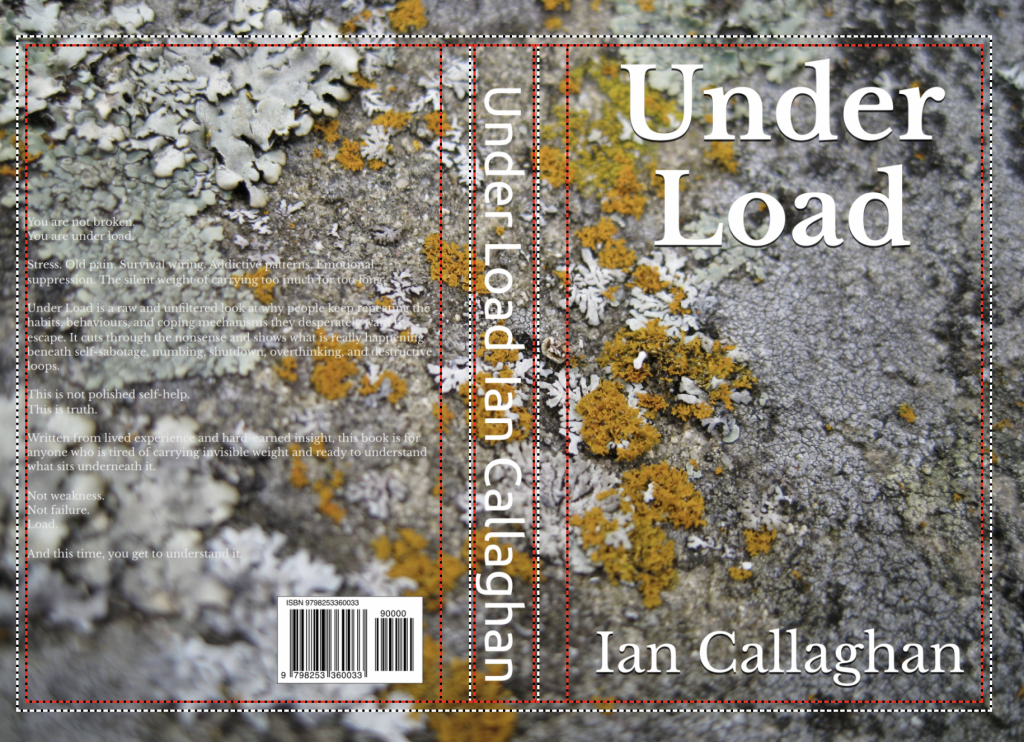
I quit after 45 years of drinking by changing the system, not by hating myself harder. That is what I teach through Sober Beyond Limits, Under Load, The Emotional Observation Method and my wider Midlife Reset work.
If you want the deeper framework, start with Under Load or explore the Sober Beyond Limits resources on this site.
I am not a medical professional. I am Ian Callaghan, an author, coach, NLP Master Practitioner, Reiki Master and creator of the Emotional Observation Method. This page is based on lived experience, coaching experience and general alcohol-free support principles.
If you are physically dependent on alcohol, drinking heavily every day, pregnant, taking medication, experiencing severe mental health symptoms, or worried about withdrawal, speak to your GP, NHS 111, or a qualified alcohol support service before stopping suddenly. Alcohol withdrawal can be dangerous and may require medical support.
Boosting Your DOSE Chemicals for Recovery and Wellness. In our fast-moving world, maintaining balance and well-being can feel overwhelming, but the key to a healthier, happier life may already be within you. Meet the DOSE chemicals—Dopamine, which drives motivation and focus; Oxytocin, fostering trust and connection; Serotonin, stabilizing mood and appetite; and Endorphins, the body’s natural painkillers. These are the natural mood-boosting powerhouses of your body. These four chemicals are critical to managing stress, enhancing mental clarity, supporting physical recovery, and fostering overall wellness.
This guide explores the science behind Boosting Your DOSE Chemicals, their functions, and evidence-based methods to naturally boost them. Meditation is a key practice that can positively influence all four chemicals, offering a versatile tool for holistic health (discover more about meditation here). By combining these strategies with a holistic approach, you can unlock their potential to transform both your mental and physical health.
Dopamine: The Motivator
What is Dopamine?
Dopamine, often called the “reward chemical,” is a neurotransmitter responsible for motivation, focus, and the sense of accomplishment. It’s released when you achieve a goal, experience pleasure, or anticipate a reward. It also plays a critical role in regulating mood, memory, and learning.
Benefits of Optimal Dopamine Levels:
Improved Motivation and Productivity: Encourages goal-oriented behaviour and task completion.
Enhanced Mood and Energy: Reduces fatigue and promotes feelings of satisfaction.
Sharper Cognitive Function: Supports memory retention and mental focus.
How to Naturally Boost Dopamine:
Set and Celebrate Small Goals: Breaking big tasks into smaller milestones triggers dopamine release with each success.
Exercise Regularly: Activities like strength training and High-Intensity Interval Training (HIIT) significantly increase dopamine levels (How exercise increases dopamine production).
Tyrosine-Rich Foods: Incorporate almonds, avocados, bananas, and salmon into your meals to fuel dopamine production.
Practice Gratitude Journaling: Reflecting on positive experiences fosters a rewarding mental state.
Avoid Dopamine Depletion: Limit activities like excessive social media use, which overstimulate and deplete dopamine reserves.
Real-Life Example:
Sarah, a marketing professional, struggled with focus and motivation. By setting daily micro-goals and starting mornings with yoga, she felt accomplished and energized. Similarly, Alex, a college student juggling studies and a part-time job, found that incorporating quick workout sessions and small, achievable tasks helped him maintain focus and energy throughout his day. Together, their experiences highlight the versatility of dopamine-boosting strategies for different lifestyles. Similarly, Alex, a college student balancing studies and a part-time job, improved his energy by integrating exercise and achievable goals into his routine.
Oxytocin: The Bonding Chemical
What is Oxytocin?
Known as the “love hormone,” oxytocin fosters trust, empathy, and connection. For example, a warm hug or a heartfelt conversation with a close friend can create an immediate sense of comfort and closeness, showcasing oxytocin’s role in strengthening everyday social bonds. It also plays a crucial role in childbirth and breastfeeding, helping strengthen the bond between mother and child. Released during social bonding, physical touch, and acts of kindness, it’s a natural antidote to stress and isolation.
Benefits of Optimal Oxytocin Levels:
Stronger Relationships: Deepens emotional connections and fosters trust.
Physical Health Benefits: Supports heart health and reduces inflammation.
How to Naturally Boost Oxytocin:
Prioritize Meaningful Social Connections: Spend quality time with friends and family.
Physical Touch and Connection: Hugs, cuddling, or even petting a dog can trigger oxytocin release (Ways to naturally boost oxytocin).
Acts of Kindness: Volunteer, give compliments, or perform random acts of generosity.
Share Meals: Dining with loved ones strengthens bonds.
Meditation on Compassion: Loving-kindness meditation can foster trust and empathy, while simultaneously supporting serotonin and dopamine regulation (learn effective meditation strategies).
Real-Life Example:
Mark, transitioning to a new career, volunteered at a shelter. The shared purpose and sense of community reduced his stress and increased his confidence.
Serotonin: The Mood Stabilizer
What is Serotonin?
Serotonin stabilizes mood, regulates appetite, and supports sleep. Additionally, about 90% of the body’s serotonin is produced in the gut, where it plays a critical role in promoting healthy digestion and supporting the gut-brain connection, which can impact overall mental health. Low serotonin levels are linked to anxiety and depression, making it vital for emotional and physical health.
Benefits of Optimal Serotonin Levels:
Mood Regulation: Keeps feelings of anxiety and irritability in check.
Better Sleep Quality: Supports a healthy sleep-wake cycle.
Gut Health: A significant portion of serotonin is produced in the gut, promoting digestion.
Practice Gratitude: Journaling moments of gratitude enhances serotonin release.
Mindful Breathing: Incorporate diaphragmatic breathing to calm your nervous system. When paired with meditation, this can amplify serotonin production and enhance oxytocin release (explore meditation techniques).
Real-Life Example:
Emma, managing the seasonal affective disorder, began daily park walks. Sunlight and fresh air improved her mood and energy over time.
Endorphins: The Natural Painkillers
What are Endorphins?
Endorphins are chemicals released during exercise, laughter, and other pleasurable activities. They act as painkillers, reduce stress, and create feelings of euphoria.
Laugh Often: Watch comedies or spend time with humorous friends.
Aromatherapy: Scents like lavender and vanilla stimulate endorphin release.
Dark Chocolate: The flavonoids in dark chocolate promote endorphins.
Try Acupuncture or Massage: These practices can boost endorphin production.
Real-Life Example:
Recovering from a back injury, John began swimming. The endorphin rush not only eased his pain but motivated him to maintain this routine.
The Power of a Holistic Approach for Boosting Your DOSE Chemicals
Combining DOSE-boosting practices amplifies their effects. For example, try starting your day with a simple routine: begin with five minutes of gratitude journaling (dopamine), step outside for a short walk in the morning sun (serotonin), share a hug with a loved one or pet your dog (oxytocin), and finish with a quick stretching session or some light cardio to release endorphins. These small, intentional steps can help set a positive tone for the day.
A walk in the sun (serotonin) with a loved one (oxytocin) followed by a rewarding snack (dopamine) creates synergy.
Pairing laughter (endorphins) with gratitude journaling (dopamine) can elevate mood and clarity.
Try integrating a daily routine: Start with gratitude journaling (dopamine), enjoy a brisk sunlit walk (serotonin), share a hug or conversation (oxytocin), and spend 5-10 minutes meditating to round out the practice with all four DOSE chemicals (get meditation tips here).
Conclusion
Boosting your DOSE chemicals naturally is a sustainable path to long-term mental and physical well-being. Regular engagement with these strategies builds resilience, strengthens neural pathways, and fosters lasting happiness. Start with one or two habits and build a personalized routine over time.
GUIDED MEDITATION AND VISUALISATION FOR Boosting Your DOSE Chemicals (Dopamine, Oxytocin, Serotonin, Endorphins)
Introduction
Let’s dive into a powerful guided meditation designed to activate your body’s natural “happiness chemicals”: Dopamine, Oxytocin, Serotonin, and Endorphins (your DOSE). This practice is all about creating a state of calm joy, deep connection, and vibrant energy. Find a comfortable position—whether sitting or lying down—and get ready to unlock the pharmacy within you.
Part 1: Setting the Stage
Take a deep breath in through your nose, hold it for a moment, and exhale slowly through your mouth. Repeat this three times, letting each exhale feel like a wave of tension leaving your body. Feel yourself sink into your seat or bed. The world around you fades, and your focus turns inward.
Imagine yourself in a place where you feel completely at ease. It could be a lush forest, a golden beach, or even a cosy room filled with soft light. Let every detail come to life in your mind—the sounds, the smells, the textures. This is your sanctuary, a safe and uplifting space where you can fully relax.
Part 2: Dopamine (Motivation and Reward)
Picture yourself standing at the base of a beautiful mountain. As you look up, you feel a sense of excitement—this climb represents your goals, your dreams, and the journey towards them.
As you take your first step, imagine a spark of light within your chest. That spark grows warmer with every step you take. It’s the fire of your motivation and your reward centre waking up.
Visualise yourself reaching milestones as you climb—small victories, personal accomplishments, moments of pride. Each time you hit a milestone, that light in your chest glows brighter, flooding your body with a sense of achievement and purpose.
Pause here and let the feeling sink in. Say to yourself: “Every step I take is worth celebrating. I am capable, and every effort I make moves me closer to my best self.”
Part 3: Oxytocin (Love and Connection)
Now, shift your focus. Imagine standing in a circle with people you deeply care about. These could be friends, family, or even a beloved pet. Feel their warmth and love radiating towards you like a soft, golden light.
Visualise yourself reaching out and holding hands or sharing a comforting embrace. In this moment, you feel deeply connected, understood, and supported. Let that golden light of connection expand, filling your entire body with warmth and peace.
Take a deep breath and say to yourself: “I am loved, and I am capable of giving love. I am never alone, and my connections are a source of strength.”
Part 4: Serotonin (Gratitude and Peace)
Imagine now that you’re sitting on a hill, watching a beautiful sunrise or sunset. The sky is painted with vibrant colours, and the air feels calm and cool against your skin.
As you watch the scene unfold, bring to mind three things you’re grateful for. Let each thought flow naturally, and with each one, feel a deep sense of contentment washing over you.
You realise that even in moments of challenge, there’s beauty in your life. You’re part of something greater, and that thought brings you peace.
Repeat to yourself: “I am grateful for this moment. I am exactly where I need to be, and I embrace the peace that comes with gratitude.”
Part 5: Endorphins (Energy and Joy)
Now, picture yourself doing something that makes you feel free and joyful. Maybe you’re running through a field of flowers, laughing with abandon, or dancing to your favourite song. The movement fills your body with a tingling energy, like a burst of pure happiness.
Feel the release of any lingering tension, replaced by a sense of lightness. Imagine a cool breeze brushing past your skin, refreshing and energising you.
As you move, you can’t help but smile. Say to yourself: “I embrace the joy in life. My body and mind are alive with energy and freedom.”
Closing the Practice
Bring yourself back to the present moment, still holding onto the feelings you’ve cultivated—motivation, love, gratitude, and joy.
Take one last deep breath, in through your nose and out through your mouth. Wiggle your fingers and toes, and when you’re ready, open your eyes.
You are ready to carry this vibrant energy into your day. Your DOSE chemicals are awake and working for you, helping you live with purpose, connection, peace, and happiness.
How did that feel? Let me know if you’d like this refined further or turned into a printable version. 😊 Start with one or two habits and build a personalized routine over time.
Ready to share your experience? Leave your comments below to connect with others on this wellness journey.
Boosting Your DOSE Chemicals FAQ
How do DOSE chemicals work together?
DOSE chemicals interact to enhance well-being. For instance, exercise outdoors can increase dopamine, serotonin, and endorphins simultaneously.
Can supplements help?
Certain supplements, like omega-3s, magnesium, and probiotics, support DOSE chemical production. Consult a healthcare provider before starting any regimen.
How can mindfulness and meditation help?
Mindfulness and meditation techniques, such as gratitude journaling, diaphragmatic breathing, and loving-kindness meditation, can simultaneously stimulate dopamine, serotonin, and oxytocin while reducing stress and promoting endorphin release (explore comprehensive meditation insights). Mindfulness techniques, such as meditation, gratitude journaling, and breathing exercises, stimulate dopamine and oxytocin while reducing stress.
What’s the timeline for benefits in Boosting Your DOSE Chemicals?
Effects vary. Exercise often delivers immediate endorphin boosts, while consistent journaling or meditation can take weeks to yield noticeable changes.
Are there risks to overstimulating DOSE chemicals?
Overindulging in dopamine-rewarding behaviours, like excessive social media, can deplete reserves. Balanced practices are essential for sustainability.
Used to monitor number of Google Analytics server requests when using Google Tag Manager
1 minute
_gid
ID used to identify users for 24 hours after last activity
24 hours
_ga_
ID used to identify users
2 years
_gali
Used by Google Analytics to determine which links on a page are being clicked
30 seconds
_ga
ID used to identify users
2 years
__utmx
Used to determine whether a user is included in an A / B or Multivariate test.
18 months
__utmv
Contains custom information set by the web developer via the _setCustomVar method in Google Analytics. This cookie is updated every time new data is sent to the Google Analytics server.
2 years after last activity
__utmz
Contains information about the traffic source or campaign that directed user to the website. The cookie is set when the GA.js javascript is loaded and updated when data is sent to the Google Anaytics server
6 months after last activity
__utmc
Used only with old Urchin versions of Google Analytics and not with GA.js. Was used to distinguish between new sessions and visits at the end of a session.
End of session (browser)
__utmb
Used to distinguish new sessions and visits. This cookie is set when the GA.js javascript library is loaded and there is no existing __utmb cookie. The cookie is updated every time data is sent to the Google Analytics server.
30 minutes after last activity
__utmt
Used to monitor number of Google Analytics server requests
10 minutes
__utma
ID used to identify users and sessions
2 years after last activity
_gac_
Contains information related to marketing campaigns of the user. These are shared with Google AdWords / Google Ads when the Google Ads and Google Analytics accounts are linked together.