Disclaimer: This article shares personal experience and insights from a certified NLP Master Practitioner and Personal Development Coach. It is for informational purposes only and is not intended as medical advice. Always consult with a qualified healthcare professional before making any decisions about your health or medication.
The Legal Drug Epidemic They Don’t Want You Talking About
How Ian Callaghan Rewired His Mind After 40 Years of Prescriptions, Pain, and Poison
The biggest drug cartel in the world? It’s not who you think. We’re talking about the silent, pervasive legal drug dependency epidemic that’s affecting millions.
Forget the shadowy gangs and jungle labs. The biggest drug cartel in the world operates in plain sight, much closer to home. It’s legal. It’s meticulously structured. It’s polished, pervasive, and obscenely profitable. And it wears a white coat, often adorned with a friendly smile. This is the insidious face of prescription drug dependency.
This system operates from the pristine counters of high street pharmacies, behind the reassuring desks of your local GP, and deep within the digital systems of your NHS practice. It lives inside brightly branded packaging, behind glossy TV adverts showing happy, vibrant people reclaiming their lives, free from discomfort. It masquerades as genuine medicine. It disguises itself as compassionate care, a helping hand in times of need. But make no mistake, this system, by its very design, isn’t set up for your long-term healing from medication reliance. It’s engineered to keep you hooked, to integrate you into a cycle of perpetual consumption.
Big Pharma has mastered the game with chilling efficiency. Their strategy is simple, yet devastatingly effective: Create the perceived need, then sell the temporary relief. I didn’t understand the intricate mechanics of this at the time, but looking back, with the clarity of hindsight and experience, I can see exactly how I was caught in their self-perpetuating cycle for decades. Their objective isn’t to eradicate your suffering, but to provide just enough comfort to keep you functional, to keep you coming back, never enough to truly set you free from the underlying issues. They don’t sell cures. They sell dependency, a subtle but powerful form of control.
They’ve expertly weaponised the very fabric of modern life against us. We are relentlessly overstimulated by constant digital noise, chronically sleep-deprived from endless demands, emotionally exhausted by the pace of existence, disconnected from the grounding force of nature, bombarded by screens that hijack our attention, comfort-eating our anxieties, and crisis-scrolling through a world on edge. And the prevailing response from this system? Rarely is it root-cause support, genuine holistic healing, or a deep dive into lifestyle changes. Instead, it’s just another prescription. Another tablet. Another layer of numbness, dulling the senses and masking the deeper cries of the body and mind.
The logic is brutally simple, driven by profit. If you get truly better, you stop paying. If you start asking inconvenient questions about alternatives or the long-term effects of legal drug dependency, you become a disruption. If you step outside their carefully constructed loop, you directly threaten their colossal profit model. So the loop must continue, quietly, efficiently, and always under the comforting, yet deceptive, illusion of care.
The Four Horsemen of Legal Dependency: Opioids, Benzos, NSAIDs, Antidepressants
Let me walk you through it, not from a detached textbook, but from the visceral reality of my own life. This is the true story of my battle with legal drug dependency.
I’m Ian Callaghan. I’ve spent over four decades caught in this system, a lifetime navigating its insidious currents. What I’m about to share isn’t abstract theory — it’s raw, lived experience forged over 40 years of navigating the pharmaceutical maze and its consequences. I’m a certified NLP Master Practitioner, a Personal Development Coach, and hold formal diplomas in Meditation, CBT-based Mindfulness, and Hypnosis. My journey through chronic pain, alcohol addiction, and profound recovery from medication reliance has given me a unique and unfiltered perspective, backed by years of dedicated practice in visualisation and nearly 50 years of consistent cold water exposure – yes, I’m old enough to remember when cold showers were just called showers!
When I served in the Army, the running joke, if you could call it that, was that Brufen (ibuprofen) could cure anything. Headache? Brufen. Muscle tear? Brufen. Smashed back from a gruelling 10-mile tab with a heavy pack? “Take some Brufen and get on with it, soldier.” It was handed out like sweets, a supposed cure for every ache and strain. Pain wasn’t truly treated or understood; it was simply suppressed. We were conditioned to push through, to ignore the body’s signals, not to pause, reflect, or seek genuine healing from dependency on pharmaceuticals. There was no question, just compliance.
My debilitating back pain, for instance, was never properly diagnosed. Not once in all those years. It was simply masked for decades, the symptoms dulled, without ever addressing the underlying structural or physiological issue. And in the years that followed, the prescriptions piled up, a growing monument to my unaddressed suffering. I was given everything under the sun: codeine, then tramadol, then morphine — each more powerful than the last, each promising relief that never truly arrived. The pain never actually left, but I got remarkably better at feeling nothing at all, a dangerous form of adaptation to prescription drug dependency.
To dull the mind alongside the increasingly numb body, benzodiazepines, or benzos, joined the mix. Diazepam, temazepam, lorazepam — drugs designed for short-term, acute anxiety, yet dished out without sufficient warning about their highly addictive nature or the brutal withdrawal. Numbness became my normal state of being, a constant companion. I wasn’t truly living; I was merely existing, sedated, a ghost in my own life.
Then came the inevitable consequence: the crushing depression. The soul-destroying lows. The emotional blackouts, where joy and sorrow alike simply ceased to exist. I was handed sertraline, another branded promise, another quiet failure in my journey. Instead of helping me process or heal, it hollowed me out, creating an emotional void. I didn’t feel better. I didn’t feel at all. I functioned like a zombie, a mere shadow of myself. I couldn’t think, my mind clouded, and I couldn’t genuinely connect with anyone, including the man staring back at me in the mirror.
Eventually, a flicker of defiance ignited, and I took back control. I meticulously, carefully stopped the sertraline and replaced it with 5-HTP, a precursor to serotonin. This wasn’t about swapping one pill for another, but a conscious choice to build my natural dopamine and serotonin pathways, not to rely on synthetic crutches that merely papered over the cracks. I leaned deeply into practices I’ve honed over 12 years: cold water therapy, breathwork, mindful movement, focused meditation, and deep visualisation – leveraging my understanding of NLP and hypnosis to fundamentally shift my internal landscape and nervous system. I began the arduous, yet profoundly rewarding, process of rewiring my mind and body from the inside out, moving beyond legal drug dependency.
I still use codeine occasionally, but now it’s on my terms. I use it rarely, responsibly, and as a specific tool for acute situations, not as a trap I fall into daily. That’s the monumental difference. I’m no longer caught in their loop, no longer a passive recipient of their solutions. I know how to manage my nervous system now, how to navigate the complex terrain of pain, grief, and raw emotion without resorting to sedation or external chemical crutches.
And this is the profound truth that no one in the conventional system tells you. You can reclaim that power. You can take back ownership of your well-being, even from the grips of legal drug dependency.
The True Cost of Legal Drugs: Beyond the Prescription Pad and into Your Life
These drugs, in isolation, aren’t inherently evil. They have a time and a place in acute medical scenarios, offering vital relief and even saving lives. But they’re not neutral either, especially when prescribed long-term or without addressing root causes. The real danger lies not in the compounds themselves, but in the pervasive way they are marketed, prescribed, and normalised within our society, often as the first and only solution to legal drug dependency. They’re sold as comprehensive solutions when all they do is suppress symptoms, quiet discomfort, and keep people from asking deeper questions.
Consider the specifics: Painkillers that don’t kill pain, but merely interrupt inflammation pathways, allowing the underlying issue to fester. Antidepressants that flatten emotion rather than helping individuals process and resolve trauma, leaving them emotionally blunted. Sleeping pills like zopiclone erase consciousness but rob you of the vital, restorative deep rest your brain and body desperately need. Anxiety medications that, when withdrawn, often create a far worse rebound panic and anxiety than the original condition. This isn’t true healing. This is management through sedation, a prolonged state of chemical suppression that fuels medication reliance.
And let’s be brutally clear: dependence is not limited to illicit drugs found on the street. The most socially acceptable substances are often the most dangerous, precisely because we never question them, never scrutinise their long-term impact. We only have to look at how society not only normalises but actively celebrates alcohol, the number one drug in terms of societal harm, advertised relentlessly and defended fiercely despite the widespread destruction it causes to individuals, families, and communities.
It’s easy to spot a crack house, a clear symbol of illicit drug danger. It’s infinitely harder to spot the insidious, cumulative damage done by daily prescriptions handed out in a clean, clinical setting, often with a doctor’s blessing. Especially when those pills are presented as your only lifeline, your only hope for functioning in a demanding world, perpetuating legal drug dependency.
How I Rewired My Life After 40 Years of Dependency and Addiction
If you’re stuck in a seemingly endless cycle of pills, excessive booze, mind-numbing screen time, emotional numbness, and constantly wondering if this diminished existence is just how life has to be, hear this truth: it’s not. You are not broken. You are not weak. You are not failing. You are simply caught in a system that wasn’t designed for your ultimate freedom from pharmaceutical dependency.
I’ve walked through it all, every dark corner. Trauma, burnout, crippling alcohol addiction, chronic, debilitating pain, and the entire pharmacy aisle of prescribed medications. I’ve seen rock bottom from every conceivable angle, felt its cold, hard embrace. And I rebuilt. Not overnight, but with intention and unwavering commitment. I remember one crisp morning after a freezing river dip, sitting shivering on the bank, tears streaming down my face. Not from pain, but from the profound, overwhelming sensation of finally feeling truly alive again, connected to my body and the world. This wasn’t achieved with more medication. It wasn’t through labels and diagnoses that confined me. I rebuilt with radical truth, with fierce, radical ownership of my healing journey, and with practices that systematically brought my shattered nervous system back to life.
I quit drinking after 40 years, a feat many thought impossible. I took absolute control of my healing process, understanding that true recovery comes from within. I created the Sober Beyond Limits method to share precisely what worked for me – a holistic framework focusing on deep nervous system regulation, profound mindset shifts, and powerful natural practices that empower self-leadership. It’s not because I claim to have all the answers for everyone, but because I’ve asked the hard questions, done the arduous work, and emerged on the other side. And I’m still standing, stronger and more alive than ever, free from legal drug dependency.
You can break free. You can rewire your mind, reshape your habits, and recalibrate your nervous system. You can live a life vibrant and full, without the constant need for numbness, endless distraction, or chemical sedation.
Ready to Start Your Journey to Freedom?
If this hits home and you’re ready for change, let’s talk. This is not about selling you another fleeting product or a deceptive magic pill. This is about showing you what’s truly possible when you courageously take your healing and your future into your own capable hands, breaking free from legal drug dependency.
Contact me directly via WhatsApp to chat – no pressure, just a conversation.
Book a free discovery call to explore how my methods can support your unique journey.
Follow me on TikTok @ian_callaghan and Instagram for daily tools, raw truths, and real-life recovery content that cuts through the noise.
Visit www.iancallaghan.co.uk to begin your journey and explore the resources available (don’t forget to explore the bio page for more on my personal story and the principles behind my methods).
This article is a vital part of my mission: to tell the unvarnished truth about legal drug dependency and to share exactly how you can rewire your mind and body through natural recovery and powerful self-leadership. If you’re truly done being sedated, if you’re ready to reclaim your life, I’m here to help you wake up.
Last updated: 30 April 2026 | Originally published: 8 May 2025 | Reiki Healing Explained
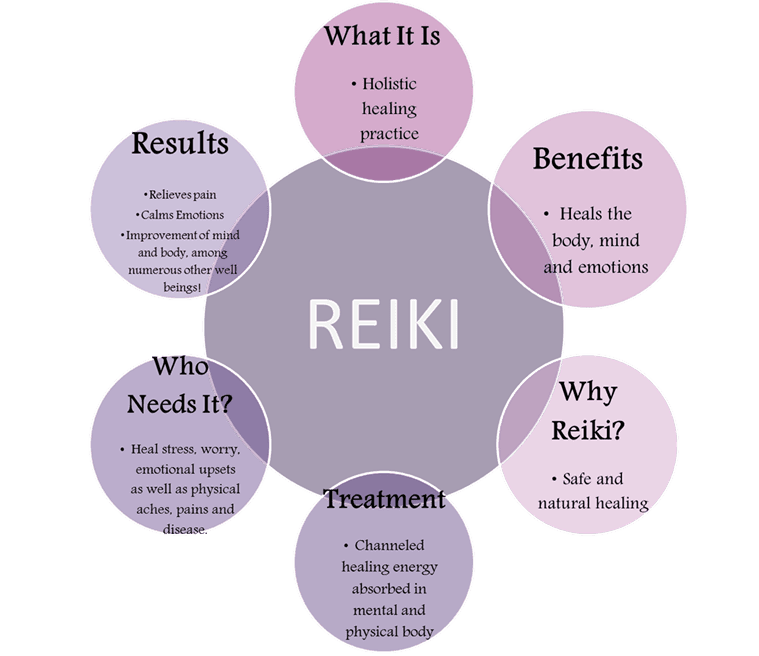
Reiki healing explained. Reiki is a Japanese energy healing practice. A trained practitioner places their hands lightly on or just above the body to help the nervous system drop out of stress mode and into rest, repair, and recovery. It is not religious. It does not require belief. It is increasingly used in hospitals, hospices, and recovery settings as a complement to medical care.
That is the short answer. Now here is the longer one, written by someone who uses it daily, teaches it as a Reiki Master, and has watched it do real work in real lives, including my own.
This is Reiki healing explained in plain English—no woo. No mysticism. No spiritual sales pitch. Just what it actually is, how it actually works, what to expect from a session, what the science says, and who it is for.
What Is Reiki Healing?
Reiki is an energy healing practice that originated in Japan in the early 1900s and was developed by a Japanese Buddhist named Mikao Usui. The word itself is two parts. Rei, meaning universal. K, I, meaning life force energy. The same energy that other cultures have been naming for thousands of years. Chi in Chinese medicine. Prana in yoga. Mana in Polynesian tradition. Ruach in Hebrew. Pneuma in Greek.
Different names. Same concept. The animating energy that runs through every living thing.
In a Reiki session, a trained practitioner places their hands gently on or just above the body. They work through a sequence of positions, channelling energy into areas that are blocked, depleted, or holding tension. There is no message. No manipulation. No pressure. Just hands, intention, and presence.
You stay fully clothed. You lie down, usually on a treatment table. The session typically lasts 45 to 60 minutes. The room is quiet. Sometimes there is soft music. Often, there is silence.
That is the entire mechanical description of what happens.
What people experience during and after, however, is where the conversation gets more interesting.
Is Reiki Real? What The Evidence Actually Says
This is the question most people are really asking. They are not asking what Reiki is. They are asking whether it works.
The honest answer is: the science is not as conclusive as proponents claim, and not as dismissive as sceptics insist. Here is what the evidence actually shows.
Heart rate variability improves. Studies measuring HRV before and after Reiki sessions show consistent improvements in autonomic nervous system function. HRV is a hard biological marker, not a feeling.
Cortisol drops. Salivary cortisol, the body’s primary stress hormone, measurably decreases after sessions. This has been replicated across multiple studies.
Anxiety and pain ratings decrease. A study published in the Journal of Evidence-Based Complementary and Alternative Medicine found significant reductions in self-reported anxiety and pain in patients after knee surgery who received Reiki alongside standard care.
Hospitals are taking it seriously. Johns Hopkins, the Cleveland Clinic, and the Mayo Clinic all offer Reiki as part of their integrative care programmes. Hospices use it. Cancer wards use it. PTSD treatment programmes use it. These are not institutions known for endorsing nonsense.
What is not yet proven: the precise mechanism. Sceptics argue that any benefit comes from the relaxation response, the placebo effect, or simply having a calm human pay attention to you for an hour. Proponents argue that something measurable is being transferred. The truth is probably more interesting than either camp wants to admit. Something is happening. The biology shifts—the exact why is still being mapped.
What you can say with confidence is this. Reiki reliably shifts the nervous system out of fight-or-flight and into the parasympathetic state, where the body can actually heal. Whether that happens through energy transfer, relaxation response, or both, the outcome is the same—lower stress. Better sleep. Calmer mind. Reduced pain perception.
That is not a small thing. That is the foundation of every healing process in the body.
How Reiki Healing Actually Works (In Plain Language)
Most people live in a chronically activated nervous system. Phones, deadlines, alcohol, caffeine, traffic, news, broken sleep, processed food, unresolved stress. The body is stuck in a low-grade fight-or-flight state most of the time. Heart rate up. Cortisol elevated. Digestion compromised. Sleep disrupted. Mood unstable.
That state is not designed to be permanent. The body needs the opposite state to repair itself. The parasympathetic state. Rest. Digest. Repair. Recover.
The setting itself matters. Quiet room. Dim light. Lying down. No phone. No demands. That alone starts to lower arousal.
Hands-on or hands-off contact triggers a response. The somatic experience of being gently touched or of having a calm presence near the body signals safety to the brain. Safety is the gateway to repair.
Breath slows. Without being told to, your breathing pattern naturally lengthens during a session. Slower breath shifts the autonomic nervous system out of sympathetic dominance.
Cortisol drops. Heart rate steadies. These are measurable, and they happen reliably.
The mind quiets. Not through effort. Through permission. The constant background chatter slows because nothing in the environment demands attention.
Whether you frame the additional element as energy transfer, focused intention, healing presence, or simply a particularly effective form of guided rest, the biology shifts in the same direction. Toward repair.
What To Expect In A Reiki Session
A typical session runs 45 to 60 minutes. Here is what actually happens.
Beforeyou arrive, take off your shoes and lie down on a treatment table. You stay fully clothed. The practitioner asks if there is anything specific you want to work on: pain, stress, sleep, recovery, or emotional weight. You can also say nothing and receive.
During. The practitioner moves their hands through a sequence of positions, either lightly resting them on the body or holding them just above. They work through the head, shoulders, chest, abdomen, hips, legs, feet, and sometimes the back. They are not pressing or massaging. They are channelling and holding presence.
What you might experience:
Heat or warmth at the hands’ position, sometimes intense.
Tingling, buzzing, or a sense of light pulsing in different parts of the body.
Colours, flashes, or imagery behind the eyes.
Emotional release. Tears, laughter, sighs, sometimes for no specific reason.
Memories surfacing, sometimes ones you had not thought about in years.
Falling into a sleep-like state that is not quite sleep.
Feeling like time has compressed or stretched.
You do not need to do anything. You do not need to think about anything. You do not need to believe anything. The less you try to control or analyse, the more deeply it works.
After, most people feel deeply calm. Some feel emotionally clearer. Some feel ready to sleep for ten hours. Others feel quietly energised. You will be offered water and a few minutes to come back to the room before you stand up. Effects often continue to unfold over the following 24 to 48 hours.
What Reiki Healing Is Used For
Reiki is not a treatment for any specific medical condition and should never replace medical care. What it does is support the body and mind through processes that benefit from a calm nervous system, which is most of them.
Reiki is commonly used to support:
Chronic stress and burnout. Particularly for people in high-pressure roles or recovering from sustained pressure.
Sleep difficulties: insomnia, broken sleep, racing thoughts at night.
Anxiety and emotional overwhelm,especially when other approaches have plateaued.
Pain management. Used in hospitals alongside conventional treatment for chronic pain, post-surgical recovery, and end-of-life care.
Cancer treatment side effects. Many oncology departments offer Reiki to support patients through chemotherapy, easing nausea and fatigue.
Trauma and PTSD recovery. As a complement to therapy, particularly somatic and trauma-informed approaches.
Sobriety and addiction recovery. Where the nervous system has been chemically suppressed for years, Reiki offers a way back to natural regulation. More on that below.
Grief. Particularly for people who struggle to access emotion through talk-based approaches.
Perimenopause and menopause. Hormonal upheaval responds well to nervous system regulation.
Reiki Healing for Recovery: Why It Works When Other Things Have Not
This is where my own work tends to focus. I came to Reiki after 45 years of drinking. By the time I quit, my nervous system was in chaos. Decades of alcohol had hardwired my body to rely on chemical sedation. The silence of sobriety was deafening. The emotions felt too big. The cravings, mental and physical, were relentless.
I had already started using cold water immersion and breathwork to reset my system. They helped. But Reiki brought something different. A kind of grounding that did not require effort. A surrender that felt like strength rather than collapse.
It taught me that healing does not always come with noise or drama. Sometimes it comes in stillness. The body knows what to do. It just needs the right conditions to do it.
If you are sober curious, newly alcohol-free, or deeper into recovery, Reiki can be one of the most useful tools you have not tried yet. Not because it solves anything on its own. Because it gives your nervous system the pause it forgot how to take.
Can Reiki Be Done At A Distance?
Yes. Distance reiki, sometimes called remote healing, is one of the more counterintuitive aspects of the practice. Energy is not constrained by physical proximity. The mechanism is the same as in-person Reiki, just without the geographic constraint.
How a distance session works:
You schedule a time and set a shared intention.
You relax in your own space, lying down somewhere quiet, free from interruption.
The practitioner works from their location, using Reiki symbols and a visualisation to bridge the gap.
Afterwards, you talk through what came up, just like an in-person session.
Clients across multiple time zones report the same outcomes as in-person sessions—reduced anxiety. Emotional clarity. Physical ease. Deeper sleep that night.
If you live overseas, travel frequently, have mobility issues, or feel safer in your own space, distance reiki removes the barrier without compromising the work.
How To Try Reiki For Yourself
If you are curious, here is how to start without overthinking it.
Find a qualified practitioner. Look for proper certification (Reiki Master level), trauma-informed practice, and a style that resonates with you. A genuine practitioner will explain the process clearly and answer your questions without trying to sell you on belief.
Book one session. Do not commit to a course of treatment before you have tried it once. Notice how your body responds. One session will tell you whether it is for you.
Reflect afterwards. Keep a brief note of what you felt during and the 24 to 48 hours after. Sleep quality. Mood. Energy. Any unexpected emotional movement.
Layer it in. Reiki works well alongside other regulatory tools. Breathwork. Cold water. Walking in nature. Talk therapy. Meditation. It is not a replacement. It is a multiplier.
Or learn to practise on yourself. Reiki Level 1 training teaches you to channel Reiki for your own daily use. This is genuinely useful for anyone managing chronic stress, recovering from substances, or navigating long-term illness. As a Reiki Master, I teach this directly to people who want a daily practice they can use anywhere.
Who Reiki Is Not For
Worth being honest about this. Reiki is not for everyone, and is not appropriate for everything.
It is not a substitute for medical treatment. If you have a diagnosed condition, Reiki sits alongside your medical care, not instead of it.
It is not a substitute for mental health support. If you are in crisis, you need a clinician, a doctor, or a crisis line. Reiki can support recovery from trauma, but it is not the front-line response to acute mental health emergencies.
It is not for people who want a quick fix. Reiki works gradually and often subtly. If you want immediate, dramatic, observable results, you will be disappointed. The shifts are real,l but they accumulate.
It is not for people who refuse to engage. You do not need to believe in Reiki for it to work, but you do need to be willing to lie still and let the process happen. Active resistance interferes with the work.
Reiki Healing: Common Questions Answered
Is Reiki religious?
No. It originated in Japan within a broadly Buddhist cultural context, but Reiki itself is not a religion and does not require any spiritual or religious belief. People of every faith and no faith use it. It is a practice, not a doctrine.
Can Reiki hurt you?
No. There are no known harmful side effects from a properly conducted session. Some people experience emotional release that feels intense in the moment. That is the body processing, not the Reiki causing harm.
How many sessions do you need?
That depends entirely on what you are working on. One session is enough to know whether Reiki is for you. For ongoing nervous system support or recovery work, many people benefit from regular sessions, monthly or fortnightly. Acute issues may benefit from a short series of weekly sessions.
Does Reiki work on animals?
Yes. Many practitioners work with animals, particularly horses and dogs. Animals tend to respond strongly because they have no scepticism filtering the experience.
How is Reiki different from massage?
Massage works on muscles, fascia, and circulation through physical pressure. Reiki works on the nervous system and energy through gentle contact or proximity. They are complementary, not competing.
How is Reiki different from meditation?
Meditation is something you do. Reiki is something you receive. Both shift the nervous system into a calmer state, but Reiki requires no skill or practice on your part. You lie down.
Will I feel anything during a session?
Most people feel something: heat, tingling, deep relaxation, or emotional shift. A small minority feel almost nothing during the session itself but report sleeping better, feeling calmer, or noticing changes over the following days. Both responses are normal.
Book A Reiki Session
I work with clients across the UK and internationally, in person from Goytre, Monmouthshire, and via distance sessions worldwide. Sessions are 60 minutes. We work on what you bring, or create the conditions for your nervous system to reset.
If you are not sure whether Reiki is right for you, the honest answer is to try one session and find out. The body knows. Listen to what it tells you afterwards.
If You Came Here From The Sobriety Angle
If Reiki is one piece of a wider rebuild you are doing, Under Load is the framework that ties it all together, why behaviour keeps repeating, why the nervous system defaults to old loops. How to take back the controls.
Mindset Coaching for Sobriety – A No-Fluff Approach to Lasting Recovery
Right, let’s cut the nonsense. Mindset Coaching for Sobriety isn’t just about putting the bottle down—that’s the easy part. The real challenge is what happens after: rewiring your brain, shifting your identity, and learning to live with yourself without reaching for alcohol.
Most people try to brute-force their way through sobriety with sheer willpower. But the truth? That approach rarely sticks. Studies show that 40-60% of people relapse within the first year because they haven’t addressed the deeper issue—their subconscious identity still sees them as “the drinker.” This is where Mindset Coaching for Sobriety comes in, using meditation, visualization, and even quantum jumping to facilitate real, lasting change.
The Psychology of Sobriety – How Mindset Shapes Recovery
Alcohol addiction rewires your neurotransmitters, creating a dependency that traps you in a loop of cravings, guilt, and self-destruction. Even after detox, the mental and emotional habits remain, making relapse more likely.
Mindset Coaching for Sobriety addresses this by shifting your internal identity, reprogramming thought patterns, and helping you step into a new version of yourself. Meditation calms the storm, visualization rewires the brain, and quantum jumping accelerates transformation.
Mindfulness Meditation for Recovery When you first get sober, your mind is a chaotic mess—racing thoughts, regrets, and cravings fighting for attention. Mindfulness meditation teaches you to sit with these feelings without reacting. Studies show it increases grey matter in the prefrontal cortex, improving impulse control and making it easier to resist cravings.
Breathwork and Nervous System Regulation Techniques like 4-7-8 breathing activate the parasympathetic nervous system, reducing stress and helping control withdrawal symptoms.
The Science of Mental Rehearsal Your brain doesn’t distinguish between real experiences and vividly imagined ones. Visualization helps reinforce a sober identity at the subconscious level, strengthening neural pathways that support recovery.
Effective Visualization for Sobriety:
Create a Vivid Mental Picture – See yourself thriving in sobriety. What do you wear? How do you feel? What’s your daily routine?
Emotional Anchoring – Attach strong, positive emotions like joy and self-respect to your visualizations.
Daily Repetition – Consistent practice rewires your brain faster than sporadic effort.
Quantum Jumping – Transforming Identity for Permanent Change
Quantum jumping, while controversial, operates on the principle that consciousness shapes reality. Some see it as a metaphor for deep mindset shifts, while others interpret it as a literal transformation across possible life paths. Either way, it can be a powerful tool for breaking free from limiting beliefs.
How to Use Quantum Jumping in Mindset Coaching for Sobriety:
Deep Relaxation – Use meditation to enter a suggestible state.
The Portal Technique – Visualize stepping through a doorway into a new reality where you’re already sober.
Embody the Future Self – Feel the emotions and experiences of sobriety as if they are already true.
Integrating Mindset Coaching for Sobriety into Daily Life
This isn’t about choosing one tool over another. The best results come from stacking these techniques together:
Meditation stabilizes the nervous system, making it easier to resist cravings.
Visualization solidifies the new identity, reinforcing motivation and purpose.
Quantum jumping reframes recovery as an identity shift, rather than just a behavioral change.
The most powerful transformations happen when sobriety stops being a fight and starts being a natural extension of who you are—when it’s no longer about resisting temptation, but about embracing a lifestyle that aligns with clarity, purpose, and self-respect.
Overcoming Skepticism – Science-Backed Mindset Coaching for Sobriety
Many dismiss techniques like quantum jumping and visualization as pseudoscience. But the reality? Traditional recovery programs fail people every day. White-knuckling works for some, but for many, it’s not enough. Mindset Coaching for Sobriety bridges the gap, shifting sobriety from a constant battle to a natural way of life.
By leveraging meditation, visualization, and identity shifts through quantum jumping, Mindset Coaching for Sobriety creates a path to lasting recovery. It reinforces neuroplasticity, emotional regulation, and identity transformation—key elements backed by modern psychology and neuroscience.
If you’re ready to rewire your mind and claim the sober life you deserve, it’s time to take action. Join my group, Sober Beyond Limits, where I share guided exercises and mots. Let’s get to work.
Used to monitor number of Google Analytics server requests when using Google Tag Manager
1 minute
_gid
ID used to identify users for 24 hours after last activity
24 hours
_ga_
ID used to identify users
2 years
_gali
Used by Google Analytics to determine which links on a page are being clicked
30 seconds
_ga
ID used to identify users
2 years
__utmx
Used to determine whether a user is included in an A / B or Multivariate test.
18 months
__utmv
Contains custom information set by the web developer via the _setCustomVar method in Google Analytics. This cookie is updated every time new data is sent to the Google Analytics server.
2 years after last activity
__utmz
Contains information about the traffic source or campaign that directed user to the website. The cookie is set when the GA.js javascript is loaded and updated when data is sent to the Google Anaytics server
6 months after last activity
__utmc
Used only with old Urchin versions of Google Analytics and not with GA.js. Was used to distinguish between new sessions and visits at the end of a session.
End of session (browser)
__utmb
Used to distinguish new sessions and visits. This cookie is set when the GA.js javascript library is loaded and there is no existing __utmb cookie. The cookie is updated every time data is sent to the Google Analytics server.
30 minutes after last activity
__utmt
Used to monitor number of Google Analytics server requests
10 minutes
__utma
ID used to identify users and sessions
2 years after last activity
_gac_
Contains information related to marketing campaigns of the user. These are shared with Google AdWords / Google Ads when the Google Ads and Google Analytics accounts are linked together.