Quick answer
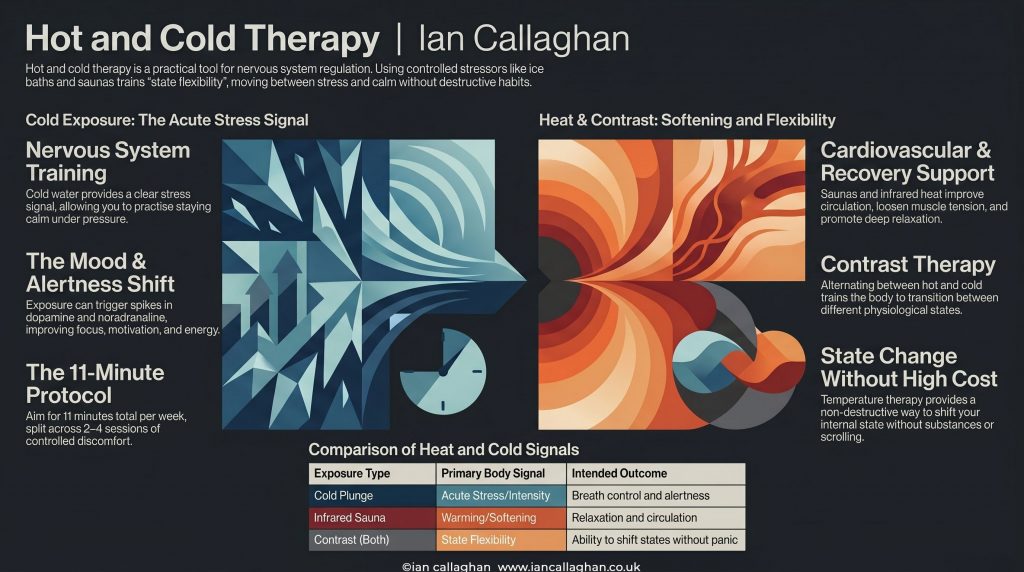
Hot and cold therapy involves using cold or heat exposure, or both together, to create controlled stress and recovery signals in the body. Cold water can increase alertness, mood, stress tolerance, dopamine, and noradrenaline levels, while also training the body to stay calm under pressure. Sauna and infrared heat can support relaxation, circulation, muscle recovery, cardiovascular conditioning and stress reduction. Contrast therapy uses both cold and heat, alternating between them to train state flexibility.
It is not magic. No, it is not a cure-all. It is not safe for everyone. Used sensibly, though, it can be a powerful tool for recovery, anxiety management, mood, midlife health and nervous system regulation.
A Sunday morning reminder that the body needs signals, not slogans
On Sunday morning, I spent over an hour at Polarity Wellbeing in Cwmbran doing cold, hot, cold. First into the cold tubs at around 6-7°C, then into the infrared sauna, then back into the cold water to finish. As we were leaving, a yoga class was starting outside in the early morning sun, which was a fairly decent reminder that none of this stuff is new in principle. Breath, water, heat, movement, light and a body that is actually being used instead of ignored.
Polarity Wellbeing is a family-run wellbeing space in Cwmbran, built around yoga, fitness and recovery. They offer cold plunge, Fire and Ice sessions, infrared sauna, pressotherapy, fitness and classes, and the place has the feel of a local business doing the work properly, rather than another shiny wellness setup built for people who want a selfie more than a reset.
I am linking to them in this piece because I went there, used the space, liked the setup, and it fits exactly into the Midlife Reset conversation I keep having. This is local, practical and useful. No floating crystal bollocks. No “this one ice bath changed my life forever” nonsense. Just a good recovery space where you can get cold, get hot, breathe, come back to yourself and then get on with your day.
You can find them here: Polarity Wellbeing.
Before we go further, let me be clear. I have been using cold water long before it became a content niche. Cold water has been one of my go-to tools for years, from the simple version of cold water on the face to help calm an anxiety spike, right through to full cold-water dips, sea swims, plunge tubs and contrast therapy. I am not interested in turning it into a religion. I am interested in what works, what does not, what the evidence suggests, what the internet has exaggerated, and how to use it without being a reckless idiot.
Cold water is not magic. It is a strong signal.
The first thing people need to understand is that cold water does not gently ask your body for attention. It kicks the door in.
The moment cold water hits, especially proper cold water rather than a slightly chilly shower you are pretending is heroic, the body reacts. The breath grabs, the chest tightens, the skin fires information back to the brain, blood vessels constrict, stress hormones rise, and the nervous system immediately has to decide what this means.
This is why cold water interests me.
Not because it makes you hard. The internet has done enough damage with that little fantasy. Cold water does not make you a Viking, an alpha, a monk, a warrior, or whatever else people are selling this week. It gives the body a clear stress signal and gives you a chance to practise not immediately obeying panic.
That is The Gate in real time.
There is the body signal, then there is the old reaction. Panic, tension, escape, swearing, ego, performance, or the immediate urge to get out. The work does not pretend that the signal is not happening. The work is noticing it, breathing through it and allowing the Operator to stay in the room before Bob starts screaming that this is stupid and we need to leave immediately.
This is why cold water can help with anxiety for some people. It gives the body a controlled version of intensity. It teaches you that a strong internal signal does not have to become an automatic reaction. That is not a motivational quote. That is nervous system training.
Cold water to the face and the anxiety circuit
You do not need a plunge tub to start using cold water.
One of the simplest tools is cold water to the face. For some people, especially during an anxiety spike or a panic surge, cold water on the face can help interrupt the state. It is not a cure for anxiety, and it is not a substitute for proper support if anxiety is severe, but it can be a practical lever.
Cold stimulation around the face can tap into the diving reflex, which is the body’s built-in response to cold water on the face. The system can slow, the breath can become more controllable, and the person gets a physical interruption to the escalating panic loop, in real-life terms, that can look like leaning over a sink, splashing cold water on the face, holding a cold cloth against the cheeks and forehead, or using a bowl of cold water carefully and sensibly.
The point is not drama. The point is state change.
If your system is escalating, and Bob is starting to build a case that you are not safe, cold water can give the body a different message. It can bring attention back to sensation, breath and the present moment. That matters because anxiety often lives in the gap between body signal and catastrophic story. The cold gives you a handle before the story becomes the whole room.
The 11 minutes a week idea
You will often hear about the 11-minute-a-week protocol in cold exposure circles. The basic idea is not 11 minutes in a single brutal session, but around 11 minutes total per week, usually split across two to four sessions of one to five minutes each. The water should be uncomfortably cold but safe enough to stay in for a brief while.
That is a useful starting point because it stops people from thinking that more extreme automatically means better. It does not. More is not always better. Better is better.
For most people, especially beginners, the goal is not to stay in until they are shaking like a pensioner’s washing machine. The goal is to build tolerance, learn breath control, practise The Gate, then get out with the body still respecting you.
If you are new, start smaller than your ego wants you to. Thirty seconds to a minute done properly is better than five minutes of silent panic and a heroic caption afterwards. You can build over time. You do not need to become the sort of person who tells everyone the temperature of their bath as if it were a military qualification.
Dopamine, mood and the “I feel amazing” effect
Cold exposure can create a powerful mood shift. People often come out feeling awake, clear, alert, energised and slightly surprised that they are not dead. There are physiological reasons for that.
Cold exposure can increase noradrenaline and adrenaline levels, which are involved in alertness, attention, and the stress response. Some studies have also shown increases in dopamine after cold exposure, which is one reason people talk about mood, motivation and focus after a plunge.
This is where the internet gets carried away.
Yes, the dopamine effect is interesting. No, that does not mean cold water is a magic antidepressant, a replacement for therapy, a replacement for medication, or a way to biohack your way out of a life you are refusing to look at honestly.
Used properly, cold water can be a useful mood lever. It can give you a clean state change without alcohol, sugar, scrolling, porn, rage, shopping or whatever else your machine has been using to shift state quickly. That is valuable, especially in recovery. But it has to sit inside the wider system.
If you get out of the cold plunge feeling incredible, then go home, eat ultra-processed rubbish, sleep five hours, drink every night and scroll until midnight, the cold water is not the problem. Your life architecture is.
Stress, cortisol and nervous system regulation
Cold water is a stressor. Sauna is a stressor. Exercise is a stressor. Fasting is a stressor. The body does not see “good stress” and “bad stress” as cute little Instagram categories. It sees load, context, dose, recovery and whether the system has capacity.
Acute cold exposure can raise stress hormones in the short term. That is part of the point. You are giving the body a controlled stress signal. Over time, with repeated sensible exposure, some people may become better at handling that signal, both physically and mentally.
This is why I use the phrase controlled discomfort.
You are not trying to smash yourself. You are training the system to experience intensity without immediately going into panic, escape or collapse. That is useful for anxiety, cravings, anger, emotional eating, alcohol urges and the general “fuck it” response that keeps dragging people back into old patterns.
But dose matters.
If someone is already overloaded, underslept, underfed, anxious, in withdrawal, medically unstable, hungover or emotionally fried, throwing them into extreme cold because the internet said it builds resilience is not wisdom. It may be too much signal on a system that is already screaming.
This is where the Midlife Reset lens matters. Load reduction comes before capacity building. You do not build resilience by abusing a system that is already at its limit. You build it by applying the right stress, at the right dose, with enough recovery for the body to adapt.
Inflammation, recovery and the body under load
Cold water is often promoted for inflammation and recovery. There is some truth here, but it needs adult handling.
Cold water immersion can reduce perceived soreness after intense exercise and may affect inflammatory markers over time, depending on timing, dose and context. Athletes use cold immersion because it can help them feel recovered, especially when performance matters again quickly.
But here is the bit fitness influencers often leave out. If your goal is muscle growth or training adaptation, jumping into cold water immediately after strength training may blunt some of the adaptive response you actually trained for. If your goal is rapid recovery so you can perform again, that is a different conversation.
For the average midlife person using cold water for mood, stress and recovery, this means you do not need to overthink it, but you do need to respect timing. If you are lifting weights to build strength and muscle, do not automatically throw yourself into freezing water straight afterwards because someone online said recovery is good. Recovery from what, and at what cost?
Again, the grown-up answer is context.
Inflammation is also not just one thing. You do not “kill inflammation” as if it were a villain in a Marvel film. Inflammation is part of healing, immune response and adaptation. Chronic unmanaged inflammation is the issue. Cold water may be one lever, but alcohol removal, proper food, better sleep, stress reduction, walking, strength work and gut repair are also part of the same machinery.
Brown fat, metabolism and the cold exposure hype
Cold exposure can activate brown adipose tissue, often called brown fat. Brown fat is metabolically active and helps generate heat. This is one reason cold exposure is discussed in relation to metabolism, insulin sensitivity and energy expenditure.
That does not mean cold plunging is a fat loss shortcut.
Let’s kill that fantasy now.
If you are eating like a skip, drinking heavily, sleeping badly and doing three minutes in cold water while telling yourself you are activating brown fat, you are not outsmarting biology. You are just adding a cold hobby to a chaotic system.
Cold exposure may support metabolic health as one lever, especially when paired with good food, movement, sleep and alcohol reduction. Still, the actual calorie burn from cold exposure is not a magic fat-loss engine. The value lies more in adaptation, metabolic flexibility, stress tolerance, mood, and the way it supports better behaviour afterwards.
That is still useful.
Just do not turn brown fat into the new detox tea.
Immune system claims and the internet problem
Cold water and sauna are both linked to immune function. Some research suggests that repeated exposure to cold or heat may influence immune markers, inflammation, circulation, and immune cell activity. That is interesting, and it may be part of the reason people who use these tools regularly report feeling more resilient.
But the internet loves turning “may influence immune function” into “boosts your immune system” as if your immune system is a phone battery and cold water is a charging cable.
That is not how this works.
An immune system that is constantly boosted would be a disaster. You want a well-regulated immune system, not one running around like a nightclub bouncer on cheap speed. The better phrase is “immune regulation” or “immune support,” and even then, we need to keep our feet on the ground.
Cold and heat can be part of a health routine. They do not cancel out poor sleep, alcohol, bad food, chronic stress, smoking, nutrient deficiency, or never moving your body. If you want immune resilience, stop looking for one heroic thing and start looking at the whole system.
Libido, hormones and the cold-water rumour mill
Cold exposure and sauna are often talked about in relation to libido, testosterone and sexual health. This is one of those areas where the internet gets very excited very quickly, usually by men who have turned every part of life into a hormone optimisation spreadsheet.
Here is the sensible version.
Cold water can improve mood, confidence, alertness and body awareness for some people. Sauna can improve relaxation, circulation and stress reduction. Better sleep, less alcohol, better food, improved metabolic health, lower stress and improved confidence can all support libido. If hot and cold work help someone regulate stress and feel better in their body, libido may improve as part of the wider picture.
But that is not the same as saying cold plunges are a magic libido booster.
If your libido is low because you are exhausted, inflamed, drinking too much, sleeping badly, stressed out of your skull, anxious, resentful, metabolically unhealthy or emotionally disconnected, then cold water alone is not the fix. It might be one useful lever, but the deeper work is still the full system.
Food, sleep, movement, mind, stress, alcohol, connection, hormones, recovery and self-respect all belong in the grown-up conversation.
Sauna and infrared heat: what the heat side does
Cold gets most of the drama because it is loud, shocking and easy to film. Heat is quieter, but it matters.
Sauna bathing exposes the body to heat stress. Heart rate rises, blood vessels dilate, sweating increases, circulation changes, and the body has to work to regulate temperature. Repeated sauna use has been associated with cardiovascular benefits, improved blood pressure markers, relaxation, improved sleep quality, pain relief for some people and stress reduction. A traditional sauna usually heats the air around you, often using hot stones, resulting in high ambient temperatures. Infrared sauna works differently. It uses infrared light to warm the body more directly, usually at lower room temperatures than a traditional sauna. That can make an infrared sauna feel more tolerable for people who do not enjoy the intense oven-like environment of a traditional sauna.
Neither is automatically better.
Traditional sauna has stronger long-term research behind it, especially around cardiovascular outcomes, because Finnish sauna bathing has been studied for years. Infrared sauna has promising evidence in areas such as relaxation, cardiovascular function, pain, and recovery, but the research base is generally smaller and less mature.
In practical human terms, an infrared sauna can feel gentler, deeper and more accessible. On Sunday at Polarity, the infrared sauna felt like the softening part of the session. Cold gave the system intensity. Heat gave it permission to drop the armour. Then returning to cold gave the final clear signal.
That is why contrast therapy is interesting.
Contrast therapy: cold, hot, cold and state flexibility
Contrast therapy is the use of alternating cold and heat. There are different ways to do it, but my Sunday session was a cold plunge, an infrared sauna, then another cold plunge.
That sequence matters because it trains state flexibility.
Cold gives the body controlled stress. Heat gives the body warmth, circulation, sweating and softening. Returning to cold gives the body another clear signal and a chance to meet intensity again from a different place.
For me, cold-hot-cold works because it aligns with the broader Midlife Reset framework. The goal is not to become a person who never feels stress. That is fantasy. The goal is to become someone who can move between states without collapsing into the old pattern whenever the body gets loud.
Addictive and Compulsive Behaviours
Most addictive and compulsive behaviours are state-change strategies. Alcohol changes state. Sugar changes state. Cocaine changes state. Nicotine changes state. Porn changes state. Gambling changes state. Scrolling changes state. Rage changes state. Shopping changes state. Work can even change state if you use it to avoid yourself.
The issue is not that the body wants a state change. The body often needs a state change. The issue is the use of high-cost tools that continue to damage the machine.
Contrast therapy gives the body a non-destructive state-change tool. It is not the only one. Walking does it. Breath does it. Proper food does it. Sleep does it. Nature does it. Honest conversation does it. But hot and cold can be a very direct way of teaching the body that state can change without alcohol, sugar, chaos or avoidance.
That matters in recovery.
The good: where hot and cold can genuinely help
The best case for hot and cold therapy is not that it fixes everything. It does not. The best case is that it provides a set of physical levers that can support mood, stress regulation, recovery, circulation, sleep, pain management, metabolic health, body awareness and confidence when used sensibly.
Cold water can help some people feel more alert, more present and more capable. It can train breath control under pressure, create a clean state change, improve mood, and provide a controlled stressor that teaches the system not to immediately obey panic.
Heat can help some people relax, sweat, loosen muscle tension, improve perceived recovery, support circulation and come down from the constant internal clench that so many midlife bodies mistake for normal.
Together, hot and cold can help people experience something very important: the body can shift state. If you have spent years feeling anxious, flat, craving, inflamed, stuck, numb, wired or exhausted, that is not a small thing.
The good is real, but only if you use the tool properly.
The bad: where people get hurt, overdo it or turn it into another problem
Cold and heat are stressors. That means they carry risk.
Cold water can be dangerous for people with heart conditions, uncontrolled blood pressure, certain medical issues, fainting risk, cold urticaria, pregnancy considerations, medication interactions or poor temperature regulation. Open water adds additional risk due to currents, tides, depth, shock, weather, isolation, and difficulty getting out safely.
Sauna and heat exposure can also be risky for people with certain cardiovascular conditions, low blood pressure, dehydration risk, pregnancy, medication issues, fainting history or poor heat tolerance. Alternating hot and cold can increase cardiovascular demand because the body shifts between vasodilation and vasoconstriction.
This is why “listen to your body” is not enough if you do not know what your body is telling you.
Start gradually. Do not go alone into open water. Never mix alcohol with sauna or cold exposure. Do not plunge, hungover, to punish yourself. Do not stay in because the ego is louder than common sense. Never copy the most extreme person online and pretend that it is healthy.
Respect the tool. Mother Nature does not care about your content plan.
The internet bollocks: what needs throwing in the bin
The internet has done what it always does. It found something useful, inflated it, branded it, monetised it, stripped out the nuance and sold it back to people as identity.
Cold water is not a personality. Sauna is not a moral upgrade. Contrast therapy is not a cure. Infrared heat is not magic. Brown fat is not a fat loss cheat code. Dopamine is not a spiritual awakening. Detox claims are usually oversold. Immune “boosting” language is often lazy. Staying in longer is not always better. Colder is not always better. Harder is not always better.
If you are using cold water to punish yourself, that is not recovery. If you are using sauna to compensate for a lifestyle that is still battering you, that is not a reset. When you are posting about nervous system regulation while living on caffeine, alcohol, five hours’ sleep and emotional avoidance, the tub is not the problem. The honesty is.
The useful version of “hot” and “cold” is boringly adult. Choose the right dose, use it consistently, recover properly, and fit it into a wider system that includes food, sleep, movement, mind, emotional load, community and honest self-observation.
That does not sell as well as “ice bath changed my life.”
But it is true.
How to start without being an idiot
If you are new to cold water, start with cold water to the face, or use a short, colder finish to the shower if that is safe for you. Learn what the breath does. You learn what panic feels like. Learn how quickly Bob starts talking. Do not chase time. Chase control.
If you are trying a cold plunge for the first time, make it short, supervised if possible, and safe. Know how you are getting out before you get in. Have warm clothes ready. Do not go alone. Never force head immersion. Do not compete with anyone. Thirty seconds done well is better than three minutes of ego and panic.
If you are trying a sauna, hydrate properly, start with a shorter session than you think you need, and gradually get used to the heat. If you feel dizzy, unwell, faint, confused or wrong, get out. That is not a weakness. That is listening.
If you are doing contrast therapy, keep the first session simple. Cold and heat can be powerful, but they do not need to be extreme. The aim is not to batter the body. The aim is to teach the system to move between states without falling apart.
Who should be careful or avoid it?
You should get medical advice before cold water, sauna or contrast therapy if you have heart disease, uncontrolled high blood pressure, fainting episodes, serious circulation problems, pregnancy, epilepsy, certain neurological conditions, cold urticaria, recent surgery, acute illness, medication that affects blood pressure or temperature regulation, or any condition that makes you unsure.
If you are physically dependent on alcohol or in withdrawal, do not use cold plunge or sauna as a brave-face detox tool. Alcohol withdrawal can be medically dangerous. Get proper medical help.
If you have an eating disorder history, body dysmorphia, compulsive exercise patterns, trauma around body control, or a tendency to turn every health tool into punishment, be careful. These tools can help, but they can also become another way to fight yourself.
The aim is regulation, not punishment.
Where Polarity Wellbeing fits into this
My Sunday session at Polarity Wellbeing worked because the environment was calm, local and practical. Cold tubs, infrared sauna, recovery space, yoga starting outside in the morning sun, and a setup that made the whole thing feel useful rather than performative.
That matters because the environment shapes behaviour.
A good venue makes the tool easier to use properly. You are not messing about in unsafe open water, trying to work out where to change, or standing in a car park wondering why you thought this was a good idea. You can book the session, use the equipment, follow the process, get the signal and leave with the body feeling like it has been given a proper reset.
For local people in South Wales, Polarity Wellbeing is worth a look if you want a structured place to try cold plunge, infrared sauna, Fire and Ice, yoga, fitness or recovery work without the nonsense.
Again, this is not me saying one venue or one session fixes your life. It does not. But it can be a very useful lever inside a bigger reset.
How does this fit inside Midlife Reset
This is the part I care about most.
Hot and cold therapy is not separate from recovery, sobriety, food, sleep, movement, anxiety, stress, cravings or emotional load. It belongs inside the same machinery.
Food affects inflammation, blood sugar, gut health, mood and cravings. Sleep affects cortisol, hunger, emotional regulation and The Gate. Movement changes stress chemistry and body confidence. Cold water trains your response to intensity. Heat helps the body soften and recover. Emotional Observation helps you notice the signal before Bob turns it into a story. Community stops you from retreating alone.
That is the full system.
A cold plunge will not fix a life that is still being battered by alcohol, processed food, sleep deprivation, doomscrolling, resentment and denial. A sauna will not detox years of self-abandonment in forty-five minutes. But used properly, hot and cold can become part of the rebuild.
They are levers. A lever is not magic. A lever works when you pull it consistently, at the right time, in the right direction, as part of the right system.
That is the work.
FAQ
What is hot and cold therapy?
Hot and cold therapy is the use of heat, cold, or both to create controlled physiological stress and recovery signals. This can include cold plunges, cold showers, ice baths, sauna, infrared sauna and contrast therapy.
What is contrast therapy?
Contrast therapy involves alternating between cold and heat, such as a cold plunge followed by a sauna, then another cold plunge. The aim is to train the body to move between different states: cold stress, heat relaxation, circulation changes, breath control and recovery.
Is cold water good for anxiety?
Cold water can help some people interrupt an anxiety spike by providing a strong physical signal and helping bring attention back to the breath and sensations. It is not a cure for anxiety, and it is not a replacement for medical or psychological support, but it can be a useful practical tool.
Does cold water increase dopamine?
Cold exposure can increase dopamine, noradrenaline, and adrenaline levels, which may contribute to improved mood, alertness, focus, and energy. The size and duration of the effect vary depending on temperature, duration, individual response and adaptation.
Is the 11-minute-a-week cold exposure protocol real?
The 11 minutes per week idea is a commonly cited protocol based on research on deliberate cold exposure and practical recommendations. It usually means around 11 minutes total across the week, split into several short sessions, not one long heroic plunge.
Does cold water burn fat?
Cold water can activate brown fat and increase metabolic activity, but it is not a magic fat-loss tool. It may support metabolic health as part of a wider system, but food, sleep, movement, alcohol reduction and overall energy balance still matter.
Is an infrared sauna better than a traditional sauna?
Not automatically. Traditional saunas heat the air around you, usually at higher temperatures, and have stronger long-term research supporting them. Infrared sauna heats the body more directly at lower room temperatures and may feel more tolerable, especially for beginners or people who dislike intense heat.
Can sauna reduce stress?
Sauna can support relaxation, circulation and stress reduction for many people. It creates heat stress in the body, but many users experience a sense of calm, improved sleep, and muscle relaxation afterwards. It still needs to be used sensibly, especially if you have medical concerns.
Is sweating in a sauna detoxing me?
Sweating is real, but most sauna detox claims are oversold. Your liver, kidneys, gut, lungs and lymphatic system do the heavy lifting when it comes to detoxification. Sauna may support sweating, circulation and relaxation, but it does not cancel out alcohol, poor food or bad sleep.
Who should avoid a cold plunge or sauna?
People with heart conditions, uncontrolled blood pressure, fainting risk, pregnancy, cold urticaria, serious circulation issues, medication concerns, alcohol withdrawal, acute illness or any uncertain medical condition should get proper advice before using cold plunge, sauna or contrast therapy.
Final thought
Hot and cold therapy is useful when you understand what it is.
It is a signal.
Cold gives the body intensity and gives you a chance to practise staying present while the system wants to panic. Heat gives the body warmth, softening, circulation and recovery. Contrast therapy teaches state flexibility. Used properly, these tools can support mood, stress regulation, recovery, anxiety management, confidence, metabolic health and the wider Midlife Reset process.
Used badly, they become another performance, another punishment, another internet identity, or another thing people use to avoid the boring truth that their food, sleep, booze, movement and emotional load still need attention.
I love cold water. I rate the infrared sauna. Yes, I enjoyed the cold-hot-cold session at Polarity Wellbeing, and I will use it again because it fits my system. But I am not pretending the tub is magic. It is not.
The useful part is the return to the Operator. The body sends the signal, Bob starts talking, The Gate appears, and in that moment you breathe, observe and choose instead of letting the old reaction run the room.
That is the work.
Pick up the wrench.
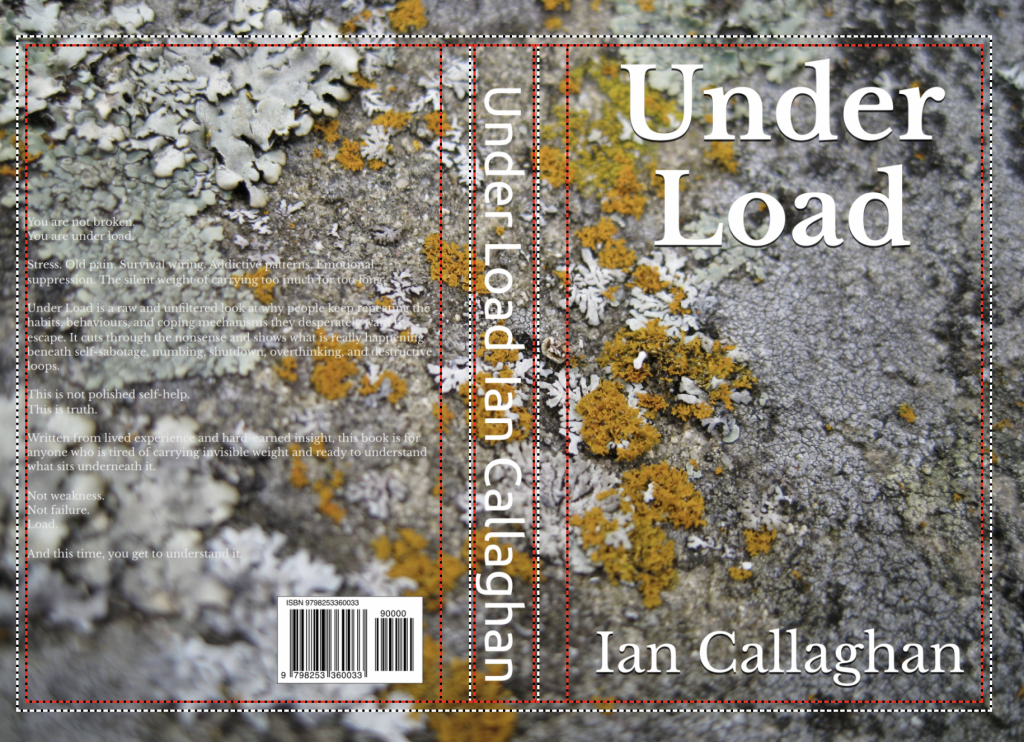
Under Load by Ian Callaghan | The Mechanical Guide to Addiction Recovery
You already know what you’re doing. You’ve known for years.