By Ian Callaghan | Nutritional Strategist | Author of Fix Your Metabolism & The 30-Day Reset | Gut Brain Neurodegeneration
“The day I understood that neurodegeneration begins in the gut — not the brain — was the day everything changed. Not just what I ate. How I thought about ageing, about disease, about the decades I had ahead of me.”
What Nobody Is Telling You About Brain Disease and Gut Brain Neurodegeneration
Gut Brain Neurodegeneration. Here is a question your GP has almost certainly never asked you.
How’s your gut?
Not because they don’t care. But because in five-plus years of medical training, the average UK GP receives less than one week of total education on nutrition and gut health. One week. It covers the system that produces 90% of your serotonin, 50% of your dopamine, and houses more neurons than your entire spinal cord.
That blind spot is costing people their minds. Literally.
Because the science — published in leading neuroscience journals, studied at Stanford, and presented at the highest levels of academic research in 2025 — is telling us something that changes everything we thought we knew about brain disease.
Parkinson’s doesn’t start in the brain. It starts in your gut.
Alzheimer’s isn’t a memory disease. It’s a metabolic one.
Neurodegeneration isn’t inevitably bad luck. It’s a downstream consequence of a gut environment that’s been quietly failing for decades.
This is the definitive guide to understanding the gut-brain highway, how it works, and how it breaks. And what you can do, starting today, to protect your neurological future.
The Architecture of the Gut-Brain Axis: What You Were Never Taught
Your gut and your brain are in constant conversation. Not metaphorically. Physically. Through a sophisticated bidirectional communication network called the Gut-Brain Axis (GBA).
This network operates through three primary channels:
Neural — Direct physical connection via the vagus nerve, the longest nerve in your autonomic nervous system
Humoral — Chemical signals sent through the bloodstream, including hormones and metabolites
Immune — The systemic movement of inflammatory cytokines and immune cells
The gut contains its own nervous system — the Enteric Nervous System (ENS) — embedded within the lining of the gastrointestinal tract. It has more than 500 million neurons. It operates with remarkable autonomy. Scientists call it the Second Brain.
And here is the architectural detail that most people miss entirely.
The vagus nerve — the physical highway connecting your gut to your brainstem — is composed of 80% afferent (sensory) fibres. That means the overwhelming majority of traffic along this nerve flows upward. Bottom-up. From your gut to your brain.
Your brain is not commanding your gut. Your gut is reporting to your brain. Constantly. Every hour of every day. Based on what you feed it.
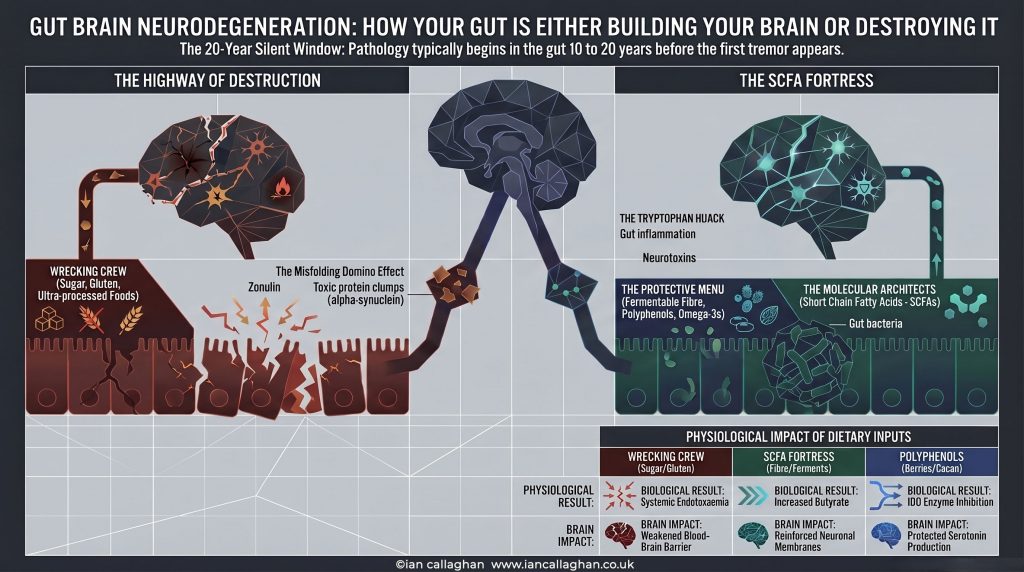
When the report is good — a diverse microbiome, a strong gut lining, and healthy SCFA production — your brain receives signals of safety, repair, and neurological protection.
When the report is bad — dysbiosis, leaky gut, bacterial endotoxins — your brain receives alarm signals that trigger inflammation, accelerate protein misfolding, and set the conditions for the slow-motion catastrophe we call neurodegeneration.
The 20-Year Silent Window: When Disease Begins Long Before Symptoms Appear
This is the part that should stop you in your tracks.
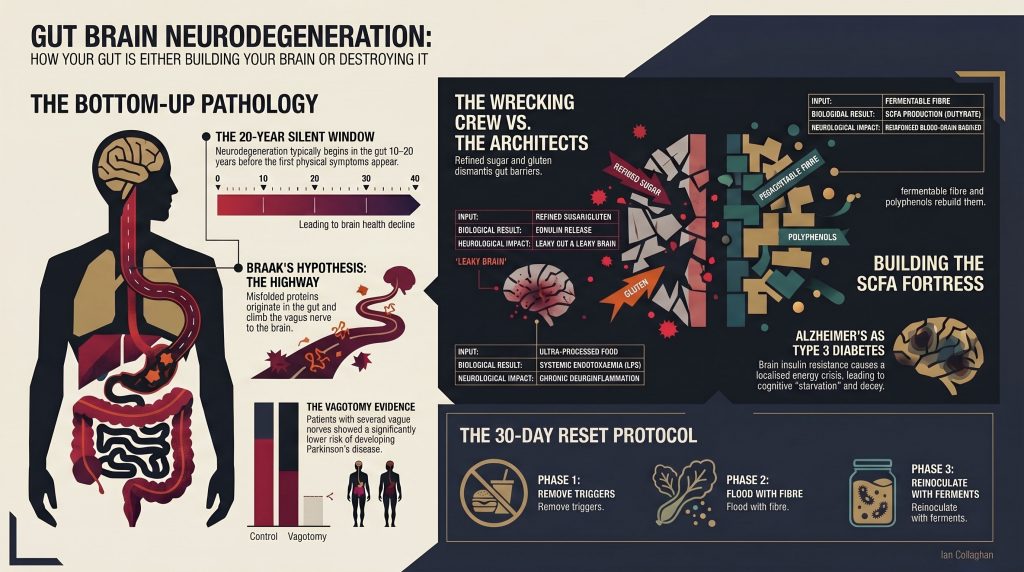
By the time a Parkinson’s patient experiences their first tremor — the shaking hand, the shuffling gait, the rigidity that changes a life overnight — the pathological process that caused it has typically been running for 10 to 20 years.
Two decades. Silent. Invisible. Building in the gut wall before the first symptom ever reaches the brain.
This is what Braak’s Hypothesis tells us. And the evidence behind it is compelling enough to have fundamentally shifted how the world’s leading neuroscientists think about disease prevention.
The implication is enormous.
If the disease starts in the gut, and the disease starts 10 to 20 years before diagnosis, then the intervention window — the period during which you can actually change the trajectory — isn’t at diagnosis. It’s right now. Decades before any neurologist ever entered the picture.
What you eat today is either building the conditions for future neurological health or quietly laying the groundwork for disease. Not as a metaphor. As a biological mechanism.
Braak’s Hypothesis: The Science That Changes Everything
In 2003, German neuroanatomist Heiko Braak proposed something that the medical establishment largely ignored for years. He suggested that Parkinson’s disease doesn’t originate in the substantia nigra — the brain region whose dopamine-producing neurons are destroyed in the disease — but in the gut’s enteric nervous system.
The mechanism he proposed goes like this.
Step 1 — The Trigger in the Gut
Environmental triggers — pesticides, bacterial toxins called lipopolysaccharides (LPS), heavy metals — breach a compromised gut lining and enter the enteric nervous system. Here, they cause a protein called alpha-synuclein to misfold. In its healthy state, alpha-synuclein is soluble and harmless. Under inflammatory stress, it changes shape. It becomes sticky. It aggregates into toxic clumps.
Step 2 — The Prion-Like Spread
These misfolded protein clumps don’t stay put. They behave almost like prions — corrupting healthy proteins around them in a domino effect. Cell by cell, the misfolding spreads through the enteric nervous system.
Step 3 — The Highway
Then the clamps find the vagus nerve. And they climb. Via a process of retrograde transport, misfolded alpha-synuclein seeds travel upward along the vagal fibres — from the gut, through the brainstem, into the midbrain, and eventually to the cortex.
The first port of call is the dorsal motor nucleus of the brainstem. This correlates precisely with the earliest non-motor symptoms of Parkinson’s — sleep disturbances, depression, constipation, loss of smell — symptoms that often appear years before the tremor.
Eventually, the seeds reach the substantia nigra. Dopamine-producing neurons die. The motor symptoms begin.
By the time you see the tremor, you’re looking at the end of a very long story that started in the gut.
The Vagotomy Evidence: The Accidental Human Trial
Here is where the science becomes genuinely jaw-dropping.
In the mid-20th century, a common treatment for stomach ulcers was a procedure called a truncal vagotomy — surgically severing the vagus nerve to reduce stomach acid production. It was performed on hundreds of thousands of patients across multiple countries over several decades.
Epidemiological data later revealed something nobody was looking for.
Patients who had undergone a full truncal vagotomy showed a significantly reduced risk of developing Parkinson’s disease later in life.
Cut the highway between the gut and the brain. Parkinson’s risk drops.
This wasn’t a small study. This was large-scale population data. And what it tells us is that the vagus nerve isn’t just a communication channel between gut and brain. In a diseased gut environment, it becomes the anatomical bridge that allows pathology to travel from one to the other.
The medical establishment had accidentally run a massive human trial. And the result pointed directly at the gut as the origin of the disease.
This evidence is now considered among the strongest support for Braak’s Hypothesis. And it has profound implications for how we think about prevention.
Alzheimer’s: The Type 3 Diabetes Nobody Told You About
Parkinson’s isn’t the only neurodegenerative condition being reframed through the lens of metabolic and gut health.
Alzheimer’s disease — which affects over 900,000 people in the UK and is projected to rise to 1.6 million by 2040 — is increasingly understood through a framework called Type 3 Diabetes.
This isn’t fringe science. It’s the emerging consensus of nutritional neuroscience. And it changes everything about how we think about cognitive decline.
Here’s the mechanism.
Brain Insulin Resistance
Insulin isn’t just for managing blood sugar. In the brain, insulin is required to activate glucose transporters — specifically GLUT4 — in memory-critical regions like the hippocampus. When those regions become insulin resistant, they enter a state of localised energy crisis. ATP production drops. Mitochondria fail. Synaptic connections degrade.
The brain is starving. Not of calories. Of the ability to use the energy that’s already there.
The Sugar Rust — AGEs
Chronic hyperglycaemia produces a compound called methylglyoxal, the precursor to Advanced Glycation End-products (AGEs). These compounds cross-link with brain proteins, rendering them dysfunctional and triggering a destructive cycle of chronic neuroinflammation mediated by the brain’s immune cells — microglia.
Think of it as rust. Forming slowly. Inside your brain. Over years of elevated blood sugar.
The Overwhelmed Cleanup Crew
The Insulin-Degrading Enzyme (IDE) has two jobs. It clears excess insulin. And it clears amyloid-beta — the protein associated with Alzheimer’s plaques.
In a state of chronic hyperinsulinaemia, IDE is monopolised by excess insulin. It can’t do both jobs. Amyloid-beta accumulates freely.
The brain’s cleanup crew has been overwhelmed. Not by genetics. By metabolic dysfunction driven by decades of the wrong dietary inputs.
The Methionine-Acetylcholine Connection
There’s another mechanism connecting gut health to Alzheimer’s that rarely gets discussed. Your gut microbiome modulates the metabolism of methionine, an essential amino acid. Methionine is a precursor to SAM (S-adenosylmethionine), which is required for the synthesis of choline. And choline is the precursor for acetylcholine — the neurotransmitter most associated with memory and cognitive function.
Reduced acetylcholine is a primary hallmark of Alzheimer’s disease.
Gut dysbiosis disrupts this entire pathway. It doesn’t just affect your mood or your digestion. It starves your brain of the raw materials it needs for memory.
The Molecular Architecture of Brain Protection: The SCFA Fortress
So what stands between your gut and neurodegeneration?
Short-Chain Fatty Acids. SCFAs.
Specifically, the trinity of butyrate, propionate, and acetate — metabolites produced by your gut bacteria when they ferment dietary fibre. These aren’t just digestive byproducts. They are your brain’s primary architects of defence.
Here’s what they actually do.
Sealing the Gut Lining
SCFAs upregulate tight junction proteins — specifically occludin — in the gut epithelium. These proteins act as molecular bouncers, sealing the gaps between intestinal cells and preventing bacterial endotoxins from leaking into the bloodstream.
No leak. No LPS. No systemic endotoxaemia. No compromised blood-brain barrier.
Reinforcing the Blood-Brain Barrier
SCFAs don’t stop at the gut wall. They enter the systemic circulation and travel to the blood-brain barrier, where they bind to G protein-coupled receptors (GPR41/GPR43) on endothelial cells, signalling them to maintain structural integrity. They upregulate occludin here, too — specifically in the frontal cortex and hippocampus.
The fortress has two walls. SCFAs build and maintain both.
Activating the Master Antioxidant Defence
Propionate specifically activates the Nrf2 pathway — the body’s master antioxidant defence system. This armours the blood-brain barrier against oxidative erosion and reduces the expression of inflammatory receptors (CD14) that would otherwise trigger neuroinflammatory cascades.
Quenching Neuroinflammation
Once in the central nervous system, SCFAs block master inflammatory pathways — specifically NF-κB and MAPK. This calms microglial activation. In animal models, it has been shown to halt the degeneration of dopaminergic neurons and preserve motor function.
The SCFA fortress is not a nice-to-have. It is the primary molecular mechanism standing between your gut environment and your neurological future.
When SCFA production collapses — as it does on a modern Western diet low in fermentable fibre — both walls come down simultaneously.
The Tryptophan Hijack: When Your Gut Turns Against Your Brain
There’s another mechanism connecting gut inflammation to neurological damage that almost nobody is talking about.
Your gut microbiome controls the fate of tryptophan — the essential amino acid required for serotonin synthesis.
Under healthy conditions, dietary tryptophan is converted to serotonin (90-95% of which is produced in the gut) or 5-HTP, which crosses the blood-brain barrier for central nervous system serotonin production.
This is your mood, your sleep, your emotional resilience. All starting in your gut.
But when the gut is inflamed, a catastrophic diversion occurs.
Pro-inflammatory cytokines — TNF-α, IL-6, IFN-γ — activate an enzyme called IDO (indoleamine 2,3-dioxygenase). This enzyme hijacks tryptophan away from the serotonin pathway and diverts it into the kynurenine pathway instead.
The end products of this diversion are neurotoxic.
Quinolinic Acid (QUIN) — an excitotoxin that overstimulates NMDA receptors, triggering a calcium influx that destroys neuronal membranes
Your inflamed gut isn’t just failing to produce serotonin. It’s actively producing brain-damaging toxins from the same raw material that should have become your primary mood neurotransmitter.
This is the tryptophan hijack. And it runs silently in millions of people with chronic gut inflammation — most of whom have been told their depression, anxiety, or brain fog is a mental health issue, not a gut issue.
The Leaky Gut Pipeline: How Dysbiosis Becomes Neurodegeneration
Everything described above depends on one critical vulnerability: intestinal permeability—the leaky gut.
In a healthy gut, the epithelial lining is a masterwork of biological engineering. A single layer of cells secured by tight junction proteins — occludin and claudin — that act as molecular bouncers. Nutrients in. Pathogens out.
When the microbiome shifts into dysbiosis — an imbalance caused by processed foods, refined sugar, antibiotics, alcohol, and chronic stress — several things happen simultaneously.
Beneficial bacteria that produce mucins (the protective mucus layer) decline. The gut lining becomes more permeable. Gram-negative bacteria produce lipopolysaccharides (LPS) — bacterial endotoxins that can now breach the gut wall and enter the bloodstream.
This is systemic endotoxaemia. And it creates a vicious cycle.
LPS in the bloodstream triggers systemic inflammation. That inflammation weakens the blood-brain barrier. LPS enters the brain and activates microglia via the TLR4/MyD88/NF-κB pathway, thereby driving a self-sustaining cycle of neuroinflammation. The NLRP3 inflammasome — a multi-protein complex that initiates inflammatory cell death — is activated. Dopaminergic neurons die.
The leaky gut pipeline doesn’t just connect your gut to your brain. It is the mechanism by which a damaged microbiome becomes a damaged nervous system over time.
The gut is the source. The vagus nerve is the highway. The brain is the destination.
The Wrecking Crew vs The Fortress: What You’re Feeding Every Day
Your daily dietary choices are either to build the SCFA fortress or to send in the wrecking crew.
Here’s what each side looks like.
🔴 The Wrecking Crew
Refined Sugar and Processed Carbohydrates Drive hyperglycaemia and hyperinsulinaemia. Monopolise IDE. Allow amyloid-beta to accumulate—fuel pro-inflammatory bacterial species. Collapse SCFA production.
Gluten triggers the release of zonulin — a protein that physically disassembles the tight junction proteins of the gut lining. Leaky gut by design. This is the mechanism. It is not a wellness industry myth.
Ultra-Processed Food Strips the diet of fermentable fibre — the substrate your gut bacteria need to produce SCFAs. Without fibre, the architects have no materials. The fortress crumbles.
Alcohol directly damages the gut lining, disrupts the microbiome, drives LPS translocation, and compromises the blood-brain barrier. The gut-brain connection in alcohol recovery is a subject I’ve written about extensively — because it’s personal, and because the science is unambiguous.
Fermentable Fibre Vegetables, legumes, oats, resistant starch. This is the raw material for butyrate-producing bacteria — Faecalibacterium prausnitzii, Roseburia intestinalis. No fibre, no SCFAs. No SCFAs, no fortress.
Polyphenols: berries, dark chocolate, green tea, olive oil, herbs and spices. Polyphenols enhance SCFA production AND inhibit the IDO enzyme — shutting down the tryptophan hijack before it starts. They are simultaneously prebiotic fuel and neurological protection.
Omega-3 Fatty Acids: Oily fish, flaxseed, walnuts. Suppress intestinal inflammation, support SCFA-producing bacteria, and protect the serotonin pathway by keeping IDO dormant.
Fermented Foods: Sauerkraut, kimchi, kefir, live yoghurt. Increase microbiome diversity — your neurological insurance policy. Specific strains like Lactobacillus rhamnosus (JB-1 and HN001) and Bifidobacterium longum have been shown to directly activate the vagus nerve and alter GABA receptor expression in the brain.
Nutrient-Dense Proteins Provide choline (for acetylcholine and the methionine pathway) and tryptophan (for serotonin, when the IDO enzyme is kept dormant by the rest of the protocol).
Top-Down Toning: The Conscious Override
Diet — the bottom-up approach — is the foundation. But the gut-brain axis is bidirectional. And there are top-down practices that directly activate the parasympathetic nervous system and improve vagal tone, creating a feedback loop that protects both gut and brain simultaneously.
Cold Water Exposure Physically triggers the vagal dive reflex — an immediate systemic shift to parasympathetic dominance. Lower heart rate. Reduced cortisol. Calmer microglia. I use this daily. The science behind it is not optional reading for anyone serious about neurological longevity.
Breathwork Acts as a manual override for the autonomic nervous system. Controlled breathing through extended exhalation directly activates vagal efferent fibres — signalling safety to the enteric nervous system, improving insulin sensitivity, and reducing the inflammatory load that drives the tryptophan hijack.
Meditation operates at a systems level to calm microglial activation. Daily meditation practice reduces the neuroinflammatory baseline that, left unchecked, would progressively damage synaptic integrity.
HRV Tracking Heart Rate Variability — specifically the RMSSD metric (Root Mean Square of Successive Differences) — gives you a direct, objective measurement of vagal tone and parasympathetic activity. It is concrete proof that your interventions are working. Track it daily. Watch it improve. Your gut-brain highway is getting stronger in real time.
FAQ: The Questions I Know You’re Already Asking
Can diet actually prevent Parkinson’s disease?
There is no randomised controlled trial proving that specific dietary interventions prevent Parkinson’s in humans. What we have is a rapidly growing body of mechanistic evidence showing that gut health directly determines the biological conditions that precede neurodegeneration — often by 10 to 20 years. The mechanism is established. The intervention window is real. The vagotomy data are real. What you choose to do with that information is your call.
My GP has never mentioned any of this. Is it fringe?
It is being studied at Stanford, King’s College London, and the Mayo Clinic. It is published in Nature Neuroscience, Gut, and the Journal of Parkinson’s Disease. It is the subject of the MAMS EJS ACT-PD trials — the most sophisticated multi-arm clinical trials in neuroscience in 2025. It is not fringe. Your GP’s curriculum hasn’t caught up. That gap is what I’m here to close.
Is it too late if I’m already in my 40s or 50s?
The gut lining regenerates completely every few days. Microbiome composition shifts measurably within weeks of dietary change. The brain has extraordinary neuroplasticity. It is never too late to start. But the earlier you start, the longer the protective period you’re creating. The 20-year silent window cuts both ways — which means the next 20 years of what you eat matter more than most people will ever be told.
What about genetics?
Genetics loads the gun. Lifestyle pulls the trigger. For the vast majority of neurodegenerative disease risk, the gut environment determines whether a genetic predisposition becomes a clinical reality. The NLRP3 inflammasome, the TLR4 pathway, the IDO enzyme — these are not genetic inevitabilities. They are biological switches that your daily choices either activate or suppress
What’s the most important thing I can do right now?
Remove the wrecking crew first—Gluten, refined sugar, ultra-processed food. The gut lining cannot begin to heal while zonulin is continuously disassembling it. Week one of the 30-Day Reset is always about clearing the field before building the fortress.
The 30-Day Reset: Building Your Neurological Fortress
The protocol is simple. The discipline is the hard part.
📅 Week 1 — Remove the Wrecking Crew gluten and refined sugar. Ultra-processed food is out. Alcohol out. Watch what happens to your gut, your sleep, your mental clarity, and your brain fog within seven days. You’ll have your first data point.
📅 Week 2 — Flood with Fibre and Polyphenols. Every meal contains plants. Colour, variety, volume. Aim for 30 different plant species across the week — research shows this level of diversity dramatically shifts microbiome composition toward SCFA-producing species. Your gut bacteria are rebuilding the fortress.
📅 Week 3 — Reinoculate with Ferments Daily sauerkraut, kimchi, or kefir. This is where microbiome diversity begins to compound. Introduce the vagal-stimulating strains. Watch your RMSSD score start to climb.
📅 Week 4 — Repair and Audit: How’s the gut? The mood? The brain fog? The energy? The clarity? You have four weeks of biological data. You don’t need me or anyone else to tell you it’s working. Your body will be telling you loud and clear.
What’s Coming Next: The Bottom-Up Thesis
I’m going to be straight with you.
Everything in this article represents the tip of a very deep research process I’m currently embedded in.
The gut-brain-neurodegeneration connection — the bottom-up thesis that your gut is either building your brain or destroying it — is the subject of a book I’m developing. It goes deeper than anything currently on the market. Into the molecular origami of protein misfolding. Into the NLRP3 inflammasome and the toxic cascade. Into the 2025 clinical landscape of disease-modifying therapies. What Braak’s Hypothesis means not just for Parkinson’s but for the full spectrum of neurodegenerative conditions.
The research is ongoing. The book is coming.
If you want to be the first to know when it lands — and to get access to the research, protocols, and thinking as it develops — make sure you’re on the list.
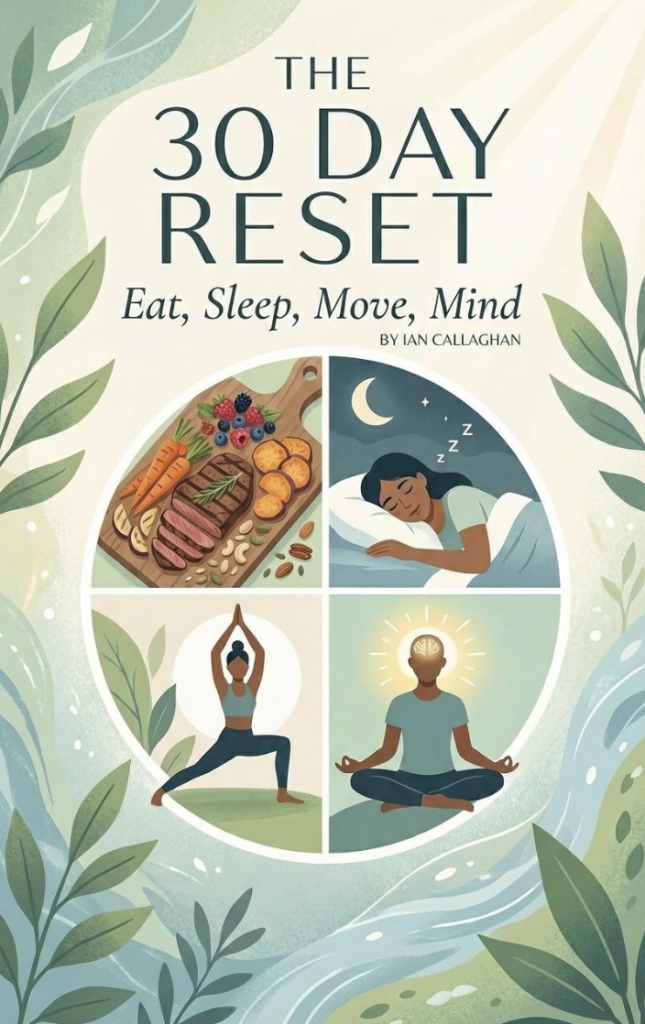
The 30 Day Reset is not a diet. It is a complete biological overhaul for anyone who is wired, tired, and done with feeling like shite. The 30-Day Reset is a 160+ page military-grade systems reboot for the over-35s. Four pillars. Eat, sleep, move, mind. One month to strip out the industrial poison, reset your dopamine pathways, silence Bob, and rebuild the machine that’s been running on the wrong fuel for decades. Not a diet. Not a programme. A complete…
Your GP has had less than a week of training on gut and nutritional health. The system they were trained in has a blind spot the size of a motorway.
But you’ve just read the science. The vagotomy data. The Braak Hypothesis. The SCFA fortress. The tryptophan hijack. The Type 3 Diabetes framework. The 20-year silent window.
You now know more about the gut-brain connection and its role in neurodegeneration than most people will ever be told by anyone in a clinical setting.
The question is never what you know. It’s what you do with it.
Your gut is either building your brain or dismantling it. Every single day. Based on what you eat.
That’s not a scare tactic. That’s the machine. And now you know how it works.
👇 Drop a comment below. Has this changed how you think about gut health and brain disease? Has anyone in your family been affected by Parkinson’s or Alzheimer’s? I want to hear from you.
Ian Callaghan is a nutritional strategist, mindset coach, and author based in the UK. His work sits at the intersection of metabolic health, gut biology, and neurological longevity. He is the author of Fix Your Metabolism and The 30-Day Reset, and is currently deep in research for a groundbreaking new book on the bottom-up thesis of neurodegeneration.
HRV Doesn’t Lie: Two Mornings, Two Completely Different Results | HRV lifestyle choices
HRV lifestyle choices. I’m 58 years old. I’ve been swimming in the River Usk for 50 years, year-round, no wetsuit. I eat one meal a day, real food, animal fats, nothing from a packet. I meditate, I breathe, I’ve spent decades paying attention to how my body works.
I thought I had a reasonable handle on how lifestyle choices were affecting my physiology.
Then I strapped on a Polar H9 chest strap, opened Kubios HRV, and got the receipts.
What came back across two consecutive mornings stopped me in my tracks. Not because it was surprising. Because it was exactly what I already knew, written in numbers I couldn’t argue with.
Monday Morning. The Data.
Sunday had been a good day out. Charity rugby match in the afternoon, fresh air, good company. Came home, ate a part-baked baguette, beef dripping chips, and a couple of Guinness 0s. Not a wild night by anyone’s standard. No alcohol. Home at a reasonable time. In bed at a decent hour.
Monday morning, I strapped on the H9, sat still for two minutes, and let Kubios do its job.
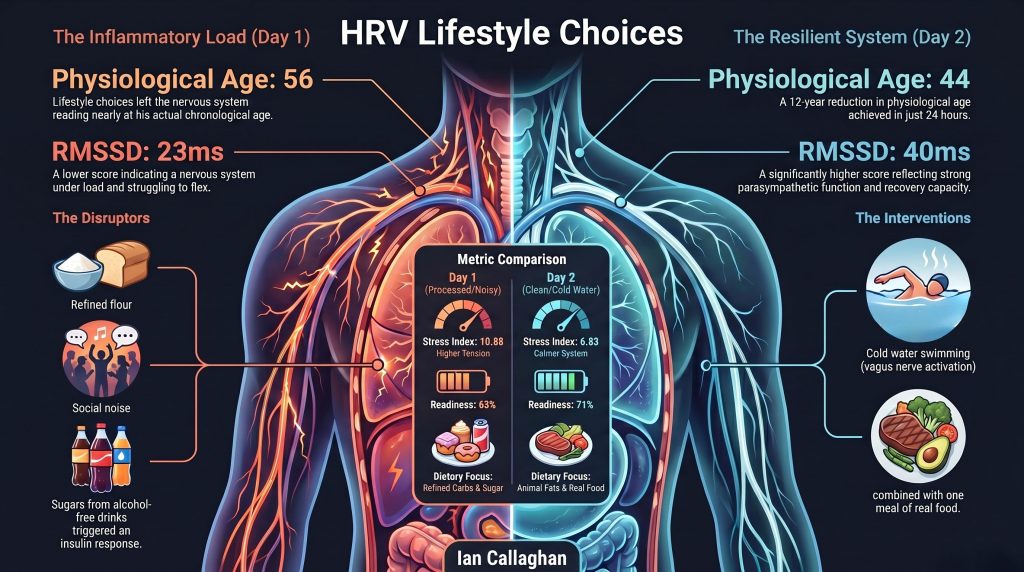
I’m 58. My nervous system was reading two years younger than my actual age. On paper,r that sounds fine. In context, xt tells a different story because the next morning’s numbers are about to make Monday look like a car crash.
I already knew before I looked at the app. I felt bleurgh as I walked out of bed. Flat. Not ill, not hungover, just not right. That feeling you dismiss as getting older. It isn’t getting older. It’s data.
What Monday Actually Was
No river. A rugby crowd, noise, social stimulation, and the nervous system working all afternoon. A part-baked baguette, refined white flour, fast glucose spike, and insulin response. Beef dripping chips are the least offensive part of that plate by a distance. Two Guinness 0s, alcohol-free but not metabolically free, malt and residual sugars still trigger an insulin response at the end of a fast.
None of it is catastrophic in isolation. All of it stacked. And my nervous system was carrying the bill Monday morning.
Tuesday Morning. The Data.
Monday, I ate one meal. Ribeye steak cooked in butter. Large open mushrooms roasted in garlic butter. Spinach wilted down with Philadelphia garlic and herb melted through it. No bread, nothing processed, nothing from a packet. Food that had one ingredient or came from an animal.
At 5 p.m., I walked into the River Usk. Cold, moving water, chest deep. No wetsuit. Same river I’ve been getting into since I was eight.
Came home. Ate. Slept.
Tuesday morning, same chest strap, same app, same two minutes sitting still.
I’m 58. My nervous system read 14 years younger than my actual age. The stress index nearly halved. The readiness score climbed. Every single marker moved in the right direction.
And again, I knew before I looked. I woke up feeling more rested. Not dramatically different. Just right. The way you’re supposed to feel.
What Tuesday Actually Was
One meal. Real food. Cold water in a Welsh river at 5 in the afternoon—eight hours of sleep.
That’s it. That’s the entire intervention. No supplements, no ice bath kit, no biohacking protocol that costs £300 a month. A chest strap that cost £42, an app, a river that’s been running through Monmouthshire since before anyone was counting.
The 12 Year Swing
Physiological age 56 on Monday. Physiological age 44 on Tuesday. Same man. Same chest strap. Same app. 24 hours apart.
Kubios calculates physiological age based on your autonomic nervous system function compared to population norms for your age group. It’s not a vanity metric. It’s a measure of how well your nervous system is actually working relative to what it should be doing at your age.
One day of junk food, no cold water, and a crowd put me at 56. One day of clean food, one meal, and the Usk put me at 44.
The variables aren’t complicated. The results aren’t subtle.
What HRV Actually Measures | HRV lifestyle choices
Heart rate variability is the variation in the time between heartbeats. It sounds counterintuitive, but you want that variation. A nervous system that can flex between beats is resilient. One that can’t is under load.
RMSSD is the most commonly tracked HRV metric for day-to-day recovery. Higher is generally better. Mine went from 23ms to 40ms overnight.
The stress index measures the regularity of your heart rhythm. Lower means your nervous system is calmer. Mine dropped from 10.88 to 6.83.
None of this is complicated science. Your body keeps score. HRV is just the scoreboard.
Why the River Works
Cold water immersion activates the vagus nerve, the long wandering nerve that runs from your brainstem through your heart, lungs and gut and governs your parasympathetic nervous system. That’s your rest-and-recover system. Your brake pedal.
Getting into cold moving water triggers an initial sympathetic spike, the cold shock response, and then, as your nervous system adapts, a significant parasympathetic rebound. When done consistently, it trains the vagus nerve. Your brake pedal gets stronger.
I’ve been doing this for 50 years without knowing the terminology for it. The H9 and Kubios just gave me the language to describe what the Usk has always done.
Why the Food Works in HRV Lifestyle Choices
Everything you eat is either inflammatory or anti-inflammatory. Everything you eat either spikes your blood sugar or doesn’t. Everything you eat either supports or disrupts your gut microbiome.
Your gut and your vagus nerve are in constant conversation. The gut-brain axis is a two-way signal highway, and what you put in one end shows up at the other by morning. A baguette and two Guinness 0s at 9 pm are not neutral. Your nervous system is still processing it at 7 am.
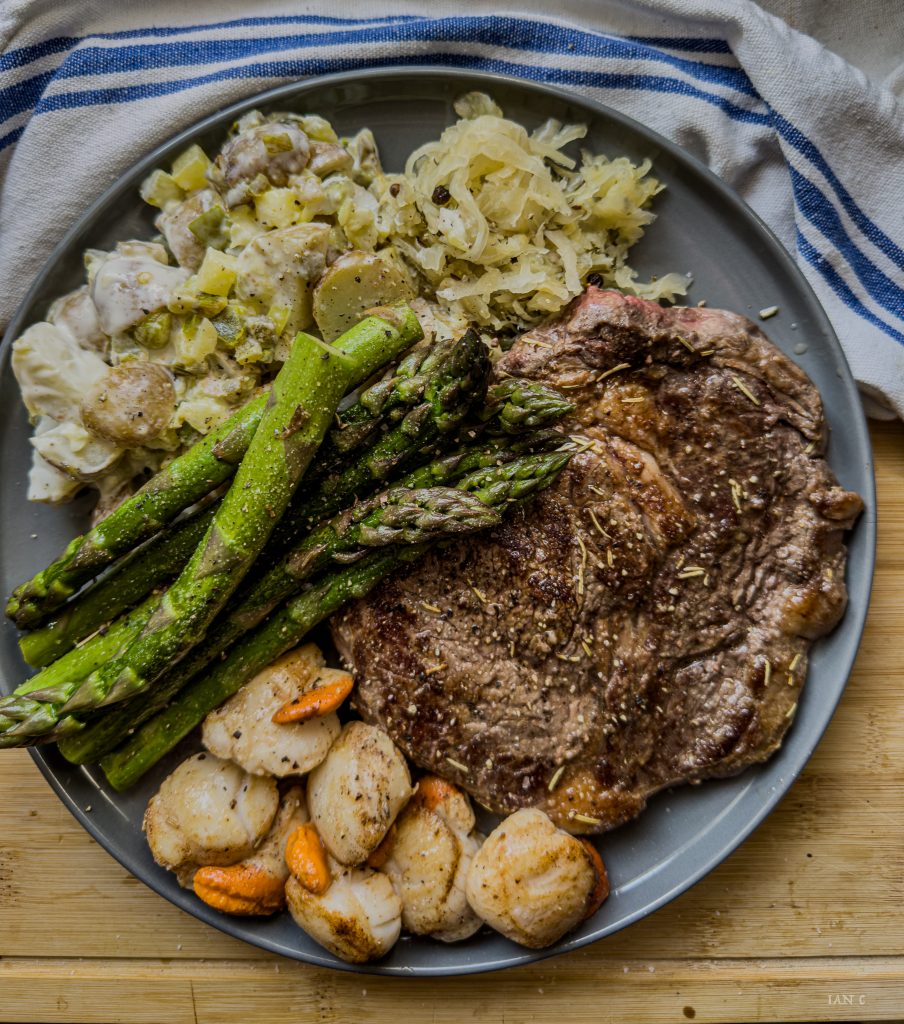
One real meal a day gives your gut time actually to do its job. Animal protein and fat don’t spike insulin. Monday, I ate one meal. Ribeye steak and pan-seared scallops. Asparagus. Sauerkraut. And a jersey royal potato salad that most people would walk past without a second thought, but is doing more work on that plate than anything else on it.
The Jersey Royals had been cooked and cooled in avocado oil mayonnaise with cold, brined jalapenos through it. Cooking and cooling potatoes converts a significant portion of the starch into resistant starch. That resistant starch bypasses your small intestine entirely and goes straight to your large intestine, where your gut bacteria ferment it as food. You didn’t eat a potato salad. You ate a prebiotic delivery system dressed in avocado oil mayo with a jalapeño kick.
Add the sauerkraut alongside it, and that one plate contained two fermented foods, resistant starch directly feeding the microbiome, asparagus, which is itself a prebiotic, and clean animal protein from two sources. Not a seed oil in sight. No processed ingredients anywhere on the plate.
Your gut bacteria had an extraordinary night. Your vagus nerve is noticed by morning. which supports sleep quality and vagal tone overnight.
The plate I ate Monday night was designed by industrial food science to be convenient. The plate I ate Tuesday night was designed by 50 years of paying attention to what my body actually does with food.
The data knows the difference.
This Isn’t Biohacking
Biohacking implies you’re trying to trick your biology into performing better than it should. I’m not doing that. I’m removing the things that stop it from working properly and letting it do what it was always going to do.
Cold water. Real food. One meal. Sleep.
A £42 chest strap to prove what your body already knew.
If you woke up this morning feeling bleurgh and you’re blaming your age, check what you did yesterday. The answer is usually in there.
FAQ for HRV Lifestyle Choices
Does what you eat the night before affect your HRV the next morning?
Yes, significantly. Blood sugar spikes from refined carbohydrates trigger an insulin response that disrupts overnight recovery. Alcohol, including low-alcohol options like Guinness 0, adds further metabolic load. Your nervous system is still processing all of it while you sleep, and the HRV reading the next morning reflects that directly.
Does cold water swimming improve HRV?
Consistent cold-water immersion trains vagal tone by repeatedly activating the parasympathetic nervous system via the vagus nerve. Over time, this strengthens your autonomic nervous system’s ability to recover. A single session can shift the same morning’s metrics. Decades of it build a fundamentally more resilient nervous system.
What is the physiological age in Kubios HRV?
Kubios calculates physiological age by comparing your autonomic nervous system function against population norms for your chronological age group. A lower physiological age than your actual age indicates your nervous system is functioning better than average for your age. It is not a vanity metric. It reflects real autonomic health.
What is a good RMSSD score for a man over 55?
Population averages for men over 55 typically sit in the 20-35ms range for resting RMSSD. Higher scores indicate better parasympathetic function and recovery capacity. Scores above 40ms in this age group reflect genuinely strong autonomic health. Individual baselines matter more than absolute numbers; track your own trend over time rather than comparing to others.
Can HRV change significantly in 24 hours?
Yes. HRV is acutely sensitive to lifestyle inputs. Food choices, alcohol, sleep quality, cold water exposure, and social and environmental stress all show up in the next morning’s readings. A 12-year swing in physiological age over two consecutive days is not unusual when lifestyle inputs differ significantly. Your nervous system responds immediately. The data reflects that by morning.
The 30 Day Reset is not a diet. It is a complete biological overhaul for anyone who is wired, tired, and done with feeling like shite. The 30-Day Reset is a 160+ page military-grade systems reboot for the over-35s. Four pillars. Eat, sleep, move, mind. One month to strip out the industrial poison, reset your dopamine pathways, silence Bob, and rebuild the machine that’s been running on the wrong fuel for decades. Not a diet. Not a programme. A complete…
Heart Rate Variability: The One Number That Tells You Everything About Why You Feel the Way You Do in Midlife
By Ian Callaghan | iancallaghan.co.uk |Heart Rate Variability Midlife
Heart rate variability midlife. You wake up tired. Not the kind of tired that a good night’s sleep fixes. The kind that sits behind your eyes and follows you into the afternoon. Your focus is soft. Your mood is lower than it should be. You’re doing everything vaguely right. You’re not drinking that much, you’re not eating terribly, you’re getting to bed at a reasonable hour, and yet something in the machinery feels off.
You’ve probably blamed it on stress. On age. On the relentlessness of midlife.
Most people do.
But there is a number your body is generating every single morning that tells a different story. A number that most people have never heard of, that their GP has almost certainly never mentioned, and that quietly predicts cardiovascular health, cognitive function, metabolic resilience, emotional regulation, and how fast you are ageing at a biological level.
That number is your Heart Rate Variability. And once you understand what it is, what it measures, and what is suppressing it in your specific life, you cannot unknow it.
This is not a biohacker post. This is not for elite athletes or tech bros with six wearables. This is for the woman in her late forties who is tired of being told she needs to manage her stress better. This is for anyone in midlife who suspects that the way they feel is not inevitable but has not yet found a clear enough explanation of the mechanism to do anything about it.
Here is that explanation.
What Is Heart Rate Variability and Why Does It Matter?
Heart Rate Variability, or HRV, is the variation in time between consecutive heartbeats, measured in milliseconds.
A heart beating at 60 beats per minute does not beat with mechanical precision, beating once every 1,000 milliseconds. The gaps between beats vary. Sometimes 980ms. Sometimes 1,040ms. Sometimes 1,010ms. This variation is not a malfunction. It is a feature. And that variation is the signal.
More variability between heartbeats means your autonomic nervous system is flexible, adaptive, and responsive. It means the parasympathetic branch. Your rest, digest, recover, and repair system. It is functioning well. It means your body can shift between states efficiently. High HRV is broadly associated with resilience across physiological, psychological, and metabolic domains.
Less variability means your nervous system is under strain. The gaps between beats become more uniform, more rigid. Your body is locked in a state of low-grade alert, running on its stress architecture rather than its recovery architecture. Low HRV is independently associated with elevated cardiovascular risk, insulin resistance, faster cognitive decline, anxiety, depression, and burnout.
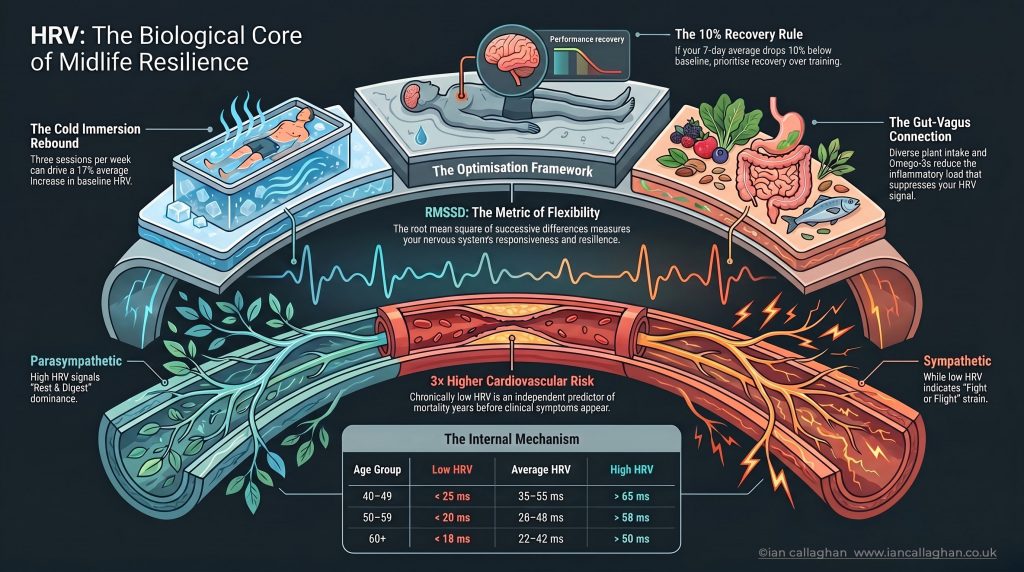
The key measurement is called RMSSD (root mean square of successive differences). This is what your wearable reports when it displays an HRV number. It reflects parasympathetic nervous system activity. The higher it is, the more your body is in recovery mode. The lower it is, the more it is in damage limitation mode.
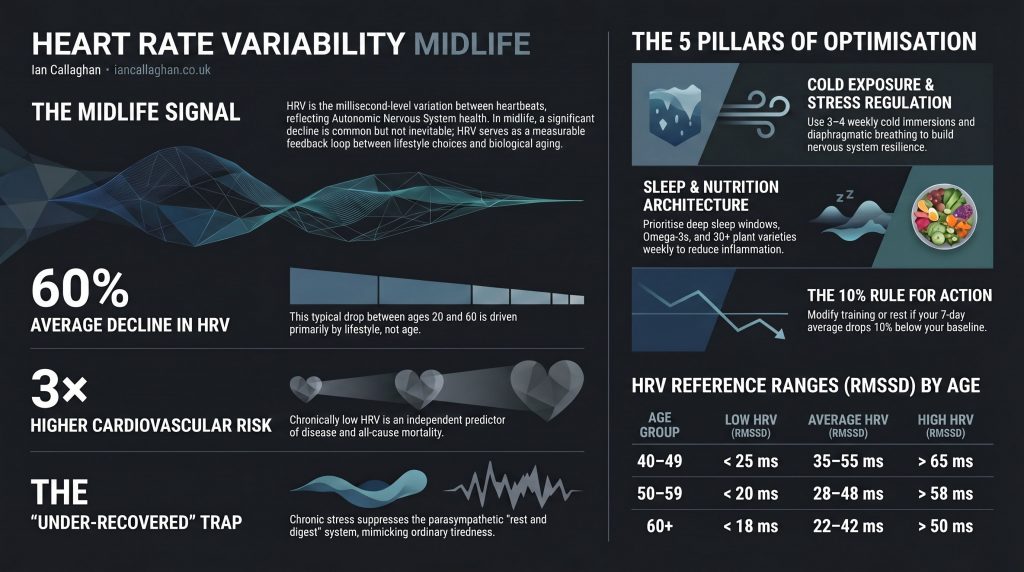
This is why HRV matters specifically in midlife. The average HRV declines by roughly 60% between the ages of 20 and 60. But this is the part the fitness industry consistently fails to communicate clearly: that decline is not inevitable. It is driven overwhelmingly by lifestyle inputs. Aerobically fit 50-year-olds routinely show HRV values that match sedentary 30-year-olds. The gap is in inputs, not age.
The choices being made right now in your 40s and 50s are not just affecting how you feel this week. The choices being made now are setting the trajectory of your autonomic nervous system for the next three decades.
The Autonomic Nervous System: Understanding the Engine
To understand HRV, you need to understand the system it is measuring: your autonomic nervous system. This is the part of your nervous system that runs without your conscious input. It controls heart rate, digestion, immune function, respiratory rate, and the hormone cascade that governs how your body responds to both threat and safety.
It has two primary branches.
The sympathetic nervous system is your fight-or-flight system. It is activated by stress, threat, exertion, or perceived danger. It releases adrenaline and cortisol. It speeds the heart rate, narrows the variability between beats, and prepares the body for action. It is essential and life-saving in acute situations. It is destructive when it runs chronically.
The parasympathetic nervous system is your rest-and-digest system. It is activated during calm, during sleep, and during genuine recovery. It is mediated primarily by the vagus nerve. The longest cranial nerve in the body runs from the brainstem through the heart, lungs, and gut. When parasympathetic tone is high, heart rate slows, beat-to-beat variability increases, digestion functions well, inflammation decreases, and the body performs the repair work it needs.
HRV is, in functional terms, a proxy for parasympathetic nervous system health. A high HRV reading tells you that your vagus nerve is doing its job. A low HRV reading tells you something is suppressing it.
Most people in midlife are living with chronically suppressed parasympathetic activity and have no framework for understanding why they feel the way they feel. They are not burned out in the dramatic clinical sense. They are chronically under-recovered. And the difference between those two diagnoses matters enormously for how you intervene.
What HRV Is Actually Telling You: The Clinical Picture
Low HRV is not just a fitness metric. The research connecting HRV to broader health outcomes is substantial, consistent, and largely ignored outside specialist clinical settings.
Cardiovascular health. HRV is an independent predictor of cardiovascular disease and all-cause mortality. Chronically low HRV appears in the data years before clinical symptoms of cardiovascular disease emerge. People with consistently low HRV face roughly triple the cardiovascular event risk of age-matched peers with healthy HRV.
Metabolic function. HRV is strongly correlated with insulin resistance, metabolic syndrome, and elevated inflammatory markers, including C-reactive protein and interleukin-6. If you are struggling with unexplained weight gain, persistent belly fat that does not respond to diet changes, or energy crashes after meals, your HRV data may be part of the picture your GP is not seeing.
Cognitive function. Higher HRV is associated with better working memory and executive function. Low HRV predicts faster cognitive decline with age. The connection is not incidental. The vagus nerve, which drives parasympathetic tone, also innervates the prefrontal cortex, which governs focus, decision-making, and emotional regulation.
Mental health. Low vagal tone is a documented feature of clinical anxiety, depression, and burnout. The vagus nerve directly feeds into mood regulation circuits. This is not a metaphor about stress management. It is physiology. Your emotional landscape is partly a readout of your autonomic nervous system state.
Physical recovery. Post-exercise HRV suppression lasting more than 48 hours signals overreaching. The body is breaking down rather than adapting. If you are training and not recovering, your HRV will show it before your subjective experience does.
Sleep quality. HRV rises through the night, peaking before natural waking during deep slow-wave sleep. Any disruption, a late meal, alcohol, noise, or temperature. Each one blunts this rise. Your morning HRV reading is effectively a report card on how well your body recovered overnight. When it is consistently low, something in the overnight environment or the preceding day’s inputs is working against you.
The Midlife Trap: Why Your Nervous System Is Under Silent Siege
Here is what happens specifically in midlife that most health content fails to address clearly.
Chronic psychological stress. The kind that accumulates over years of responsibility, invisible labour, career pressure, relationship complexity, and the relentless demands of midlife. All of it keeps cortisol elevated well beyond its normal morning peak. In a healthy cortisol pattern, levels spike at waking and decline steadily through the day. In a chronic stress pattern, cortisol remains elevated throughout the day and fails to drop adequately at night.
This chronically elevated cortisol directly and measurably suppresses parasympathetic activity. It narrows HRV. Over months and years, this creates what looks, from the outside, like ordinary tiredness, and what feels, from the inside, like a slow loss of the version of yourself you used to be.
For women moving through perimenopause and menopause, this picture is compounded by hormonal changes that independently affect HRV. Oestrogen has a protective effect on autonomic function. As oestrogen declines, the nervous system becomes more vulnerable to sympathetic dominance. This is one of the mechanisms behind the sleep disruption, anxiety, brain fog, and emotional volatility that many women in their late 40s and 50s experience, and it is under-discussed in clinical settings and almost absent from mainstream wellness content.
The connection between perimenopause and HRV is a blue ocean of understanding that most healthcare systems have yet to reach. Women are told their symptoms are hormonal, which is partly true, but the nervous system story, and crucially, what you can do about it. That part is rarely part of the conversation.
The good news, and it is really good news, is that HRV responds rapidly and measurably to specific lifestyle inputs. The decline is addressable. The research is consistent. And several of the most powerful interventions cost nothing.
What Is Destroying Your HRV: The Suppressors
Before looking at what raises HRV, it is worth being clear about what tanks it. This section will be uncomfortable for some people. It is meant to be informative, not moralistic.
Alcohol
Alcohol is the most potent dietary suppressor of HRV that has been studied. A single drink the evening before measurably reduces morning HRV by 10-15%. Two drinks produce a 20-25% reduction. The data here is remarkably consistent across multiple studies and wearable datasets.
The mechanism is straightforward. Alcohol disrupts the parasympathetic rebound that should occur during deep sleep. It fragments sleep architecture, suppresses slow-wave sleep, increases overnight cortisol, and elevates resting heart rate. All of this narrows beat-to-beat variability and shows up clearly in your morning reading.
This is not a moral position on alcohol. It is a measurement. Your wearable does not have opinions. It just reports what happened to your autonomic nervous system overnight.
The HRV data on alcohol removal are equally consistent. Removing alcohol produces an average 14% improvement in HRV over four to six weeks. For a woman in her late 40s already navigating perimenopause-related HRV decline and sleep disruption, that is not a small number. That is a meaningful shift in nervous system function that will show in how she thinks, feels, recovers, and ages.
Ultra-Processed Food
Ultra-processed foods disrupt the gut microbiome and increase intestinal permeability. What is commonly called “leaky gut” elevates circulating lipopolysaccharide, a bacterial endotoxin. This LPS triggers systemic inflammation. That inflammation suppresses vagal tone. Suppressed vagal tone lowers HRV.
The gut-vagus connection is underappreciated even within functional health communities. 80% of vagal fibres are afferent. They travel from gut to brain, not the reverse. Your gut is not passively receiving instructions from your nervous system. It is actively sending signals upward continuously, and the quality of those signals is determined by what you feed your microbiome.
A diet high in ultra-processed food sends inflammatory signals up the vagus nerve to the brain, suppressing parasympathetic activity and reducing HRV. A diet rich in diverse whole foods, fermented foods, and anti-inflammatory fats sends the opposite signal.
High-Glycaemic Eating Patterns
Large blood sugar spikes trigger the release of adrenaline and cortisol as the body scrambles to manage glucose levels. This pattern repeats multiple times throughout the day, sustaining sympathetic nervous system dominance and chronically suppressing HRV. It is not dramatic. It does not feel like stress. It just keeps the nervous system running slightly too hot, day after day, year after year.
Poor Sleep and Circadian Disruption
One poor night reduces next-day HRV by 8-12%. Two consecutive poor nights can suppress HRV for three to four days, even with normal sleep afterwards. Irregular sleep and wake times, blue light exposure after 9 pm, late-night eating, and chronic circadian disruption all compound this effect. The overnight HRV curve relies on consistency. Disrupt the conditions,s and you disrupt the recovery.
What Raises HRV: The Protocol That Works
The research here is consistent, and the interventions are accessible. You do not need a £400 supplement stack or a clinic appointment.
Cold Water Immersion
Cold water immersion is the fastest-acting HRV intervention available and the most underutilised outside elite sport. The mechanism works in three phases.
In the first 60 seconds, sympathetic shock occurs. Heart rate spikes, breathing shortens, and cortisol briefly rises. This is the stimulus, and this is the point. That acute stress is what drives the adaptation.
Between 60 and 180 seconds, if you control your breathing and do not fight the cold, the body shifts decisively toward parasympathetic dominance. Norepinephrine surges by up to 300%. Vagal tone increases sharply. This parasympathetic rebound is the mechanism behind HRV gains from cold exposure.
Over days and weeks of repeated exposure, chronic cold immersion recalibrates the autonomic set point. Resting parasympathetic tone increases. Basal heart rate decreases. HRV rises measurably.
The research shows an average RMSSD improvement of 17% after four weeks of cold water immersion, three times per week, at 10 to 15 degrees Celsius for three to five minutes. Resting morning cortisol also drops by approximately 14% after six weeks of regular cold exposure, and lower baseline cortisol directly enables higher baseline HRV.
I swim in the River Usk year-round. In October, the water temperature drops to 10-12 degrees Celsius. I have been doing this for over 50 years. Long before it had a name. I understand it now, through the HRV data, in a way I could not have articulated before. The mechanism explains the experience. Every session is a deliberate recalibration of the autonomic nervous system.
The entry point is not a cold river. It is ending your shower with 30 seconds of cold water. That is week one. The body adapts faster than most people expect.
Anti-Inflammatory Nutrition
Omega-3 fatty acids, from oily fish, specifically EPA and DHA, directly increase cardiac parasympathetic modulation. This is one of the most replicated nutrition-HRV findings in the literature. Two to three portions of oily fish per week is the evidence-based recommendation.
Diversity of plant foods is the single most powerful microbiome intervention available. Thirty different plant varieties per week, including vegetables, fruits, legumes, whole grains, nuts, seeds, and herbs. That diversity drives microbiome diversity, reduces inflammatory signalling, and measurably improves vagal tone over four to six weeks.
Fermented foods (kefir, kimchi, sauerkraut, live yoghurt) deliver live cultures that modulate microbiome composition and reduce the inflammatory markers most directly associated with low HRV.
Magnesium is rate-limiting for parasympathetic neurotransmission. Up to 60% of adults are deficient. Dark leafy greens, pumpkin seeds, and black beans are the food-first approach before considering supplementation.
Sleep Architecture
HRV recovery does not happen during the day. It happens at night, in deep slow-wave sleep, via the parasympathetic nervous system. Protecting the conditions for deep sleep is not optional if you are serious about moving your HRV.
A fixed wake time anchors the circadian rhythm more powerfully than any other single sleep intervention. A room temperature of around 17 degrees Celsius is optimal for deep sleep. No screens for 60 minutes before bed protects melatonin production. No alcohol within three hours of sleep protects sleep architecture. An evening walk helps lower cortisol before the body needs to shift into parasympathetic dominance overnight.
Stress Regulation and Vagal Tone
Breathwork, specifically slow diaphragmatic breathing at around six breaths per minute, directly stimulates the vagus nerve and produces measurable acute increases in HRV. Zone 2 cardiovascular exercise, morning light exposure within 30 minutes of waking, and meditation all build parasympathetic capacity, which cold exposure then amplifies.
These are not lifestyle suggestions. They are inputs to a system that produces measurable outputs. Your wearable will show you the data if you track consistently.
How to Read Your HRV Numbers
The reference ranges for RMSSD by age give useful context, but your personal trend over 14 or more days matters far more than any population benchmark.
For those aged 40 to 49, the average RMSSD ranges from 35 to 55 milliseconds. Below 25 is clinically low. Above 65 is strong. For the 50-59 age group, the average is 28-48 milliseconds. Below 20 is low. Above 58 is strong. For those over 60, the average is 22-42 milliseconds.
The 10% rule is your practical daily guide. If your 7-day HRV average drops 10% or more below your 30-day personal baseline, your body is signalling stress, illness, or overtraining. This is your cue to reduce load and prioritise recovery, not push harder.
Never act on a single data point. Act on trends. Consistency of measurement matters more than the absolute number. Measure at the same time each morning, before coffee, in the same posture.
How to Measure HRV
Consumer wearables (Oura Ring, WHOOP, Apple Watch) provide automated overnight measurement. Convenient and consistent. Sufficient for lifestyle feedback and trend tracking. Accuracy varies by device and skin tone.
For greater precision, a Polar H10 chest strap, used with the free HRV4Training app, provides gold-standard accuracy for a one-minute morning measurement. This is the approach used in most of the research. It removes the confounds of sleep movement that can affect optical sensors.
The protocol is simple: at the same time each morning, before coffee, lying or sitting in a consistent posture. One minute. Every day. Your data becomes meaningful over 14 days and increasingly useful over 30.
Your 30-Day Starting Point
Week one: establish your baseline. Get a wearable or download HRV4Training. Measure every morning. Log your sleep, your alcohol intake, your stress levels, and your food. Do not change anything yet. Just observe. The data at the end of week one will tell you more than any article can.
Week two: add your first interventions. End every shower with 30 seconds of cold water. Set a fixed wake time and stick to it regardless of when you went to bed. Add 10 minutes of outdoor morning light within 30 minutes of waking. If you drink alcohol, remove it for the week and track the HRV response. The data you generate in week two is one of the most instructive things you can do for your own health literacy.
Week three: move to cold bath or open water immersion three to four times per week. Actively track plant variety in your food. Add an omega-3 source daily. Add one fermented food daily. Watch your 7-day average.
Week four: compare your 7-day average to week one. Identify which interventions had the greatest impact on your number. That is your personalised protocol. Not mine. Yours.
The Honest Position on All of This
I am a coach and a chef. I have spent 40 years paying attention to food. I have been going into the River Usk for over 50 years. Long before it had a name. Long before it had a hashtag. Long before anyone called it cold water therapy or gave it a protocol. I have spent 15 years working with people in midlife, men and women both, navigating exactly the territory this post describes.
I am not a clinician. The research I have referenced throughout this post is real and accessible. I am not asking you to take my word for anything. I am asking you to take your own data seriously.
What I can say with complete confidence is this. The way most people in midlife feel is not inevitable. It is not just getting older. It is an input problem. Specific, addressable, and measurable. HRV is the tool that closes the feedback loop between what you are doing and how it affects your body.
The number your heart generates every morning is trying to tell you something. Most people never learn to listen to it.
That is the part that frustrates me most. Not because the information is inaccessible. It is not. But because nobody translated it for the people who need it most, in a language that they understand.
That is what this post is for.
Frequently Asked Questions About Heart Rate Variability
What is a good HRV score for a woman in her 40s or 50s?
There is no single good number because HRV is highly individual. As a general reference, women aged 40 to 49 typically have an RMSSD between 35 and 55 milliseconds on average. For 50 to 59, the average range is 28 to 48 milliseconds. What matters far more than hitting a population benchmark is your personal trend. A consistent upward trend in your own baseline over 14 to 30 days is the signal to pay attention to, not whether you match someone else’s number.
Does alcohol really affect HRV that much?
Yes, and the data is among the most consistent in this field. A single drink the evening before measurably suppresses morning HRV by 10-15%. Two drinks push that to 20-25%. The mechanism is straightforward: alcohol disrupts the parasympathetic rebound that occurs during deep sleep, fragments sleep architecture, and elevates overnight cortisol. Your wearable will show this the morning after a drink, even if you feel fine. It does not have opinions. It just reports what happened.
Can you improve HRV after 50?
Yes. This is one of the most important things the research shows clearly. The decline in HRV between your 20s and 60s is driven primarily by lifestyle inputs, not by age itself. Aerobically fit 50-year-olds routinely show HRV values that match sedentary 30-year-olds. Alcohol removal alone produces an average 14% HRV improvement over four to six weeks. Cold water immersion three times per week yields an average improvement of 17% over four weeks. The decline is not a sentence. It is a feedback loop you can change.
Does perimenopause affect HRV?
Yes, significantly and in ways that are rarely discussed in clinical settings. Oestrogen has a protective effect on the autonomic nervous system function. As oestrogen declines during perimenopause, the nervous system becomes more vulnerable to sympathetic dominance. This is part of the physiological mechanism behind the sleep disruption, anxiety, brain fog, and mood volatility that many women in their late 40s and 50s experience. It also means that lifestyle interventions that raise HRV, specifically cold exposure, anti-inflammatory nutrition, alcohol removal, and sleep consistency, are particularly valuable during this transition.
What is the best device to track HRV?
For everyday trend tracking, the Oura Ring, WHOOP, and Apple Watch all provide usable HRV data. None is clinical-grade, but all are sufficiently consistent for lifestyle feedback. For greater precision, the Polar H10 chest strap, used with the free HRV4Training app, provides gold-standard accuracy and is the basis for most peer-reviewed research. Whichever device you choose, consistency matters more than the device itself. Measure at the same time every morning, in the same posture, before coffee.
How quickly can you improve your HRV?
Faster than most people expect. Removing alcohol for a week will show measurable improvement in your 7-day average within days for most people. A single cold water immersion session produces an acute HRV boost in the hours following exposure. Sustained improvement in your 30-day baseline takes four to six weeks of consistent intervention. The interventions are not slow. Most people never start them because nobody explained the mechanism clearly enough to make it worth the effort.
Is low HRV dangerous?
Chronically low HRV is an independent predictor of cardiovascular disease, appearing in the data years before clinical symptoms emerge. It is also strongly correlated with insulin resistance, faster cognitive decline, clinical anxiety, and burnout. This does not mean a single low reading is cause for alarm. One poor night of sleep will drop your HRV. What matters is persistent, chronic suppression over weeks and months. If your 7-day average has been sitting 10% or more below your 30-day baseline for an extended period, that is a signal worth taking seriously and worth discussing with your GP.
What is the vagus nerve, and why does it matter for HRV?
The vagus nerve is the longest cranial nerve in the body, running from the brainstem through the heart, lungs, and gut. It is the primary mediator of parasympathetic nervous system activity, the branch of the autonomic nervous system responsible for rest, digestion, recovery, and repair. When vagal tone is high, HRV is high. When something suppresses vagal tone, including alcohol, ultra-processed food, chronic stress, and poor sleep, HRV drops. Practices that directly stimulate the vagus nerve, including cold water immersion, slow diaphragmatic breathing, and certain forms of meditation, raise HRV measurably. The vagus nerve is the hardware. HRV is the readout.
About Ian Callaghan
Ian Callaghan is a British Army veteran, qualified chef, NLP Master Practitioner, Reiki Master, and multi-disciplinary coach based in Monmouthshire, Wales. He has been swimming in the River Usk year-round for over 50 years, long before cold water immersion had a name or a hashtag. He works with midlife adults on the Total Systems Reset framework: food, sleep, movement, and mind, not as lifestyle aspirations but as engineering problems with measurable solutions.
The 30 Day Reset is not a diet. It is a complete biological overhaul for anyone who is wired, tired, and done with feeling like shite. The 30-Day Reset is a 160+ page military-grade systems reboot for the over-35s. Four pillars. Eat, sleep, move, mind. One month to strip out the industrial poison, reset your dopamine pathways, silence Bob, and rebuild the machine that’s been running on the wrong fuel for decades. Not a diet. Not a programme. A complete…
Used to monitor number of Google Analytics server requests when using Google Tag Manager
1 minute
_gid
ID used to identify users for 24 hours after last activity
24 hours
_ga_
ID used to identify users
2 years
_gali
Used by Google Analytics to determine which links on a page are being clicked
30 seconds
_ga
ID used to identify users
2 years
__utmx
Used to determine whether a user is included in an A / B or Multivariate test.
18 months
__utmv
Contains custom information set by the web developer via the _setCustomVar method in Google Analytics. This cookie is updated every time new data is sent to the Google Analytics server.
2 years after last activity
__utmz
Contains information about the traffic source or campaign that directed user to the website. The cookie is set when the GA.js javascript is loaded and updated when data is sent to the Google Anaytics server
6 months after last activity
__utmc
Used only with old Urchin versions of Google Analytics and not with GA.js. Was used to distinguish between new sessions and visits at the end of a session.
End of session (browser)
__utmb
Used to distinguish new sessions and visits. This cookie is set when the GA.js javascript library is loaded and there is no existing __utmb cookie. The cookie is updated every time data is sent to the Google Analytics server.
30 minutes after last activity
__utmt
Used to monitor number of Google Analytics server requests
10 minutes
__utma
ID used to identify users and sessions
2 years after last activity
_gac_
Contains information related to marketing campaigns of the user. These are shared with Google AdWords / Google Ads when the Google Ads and Google Analytics accounts are linked together.