Real Food Gut Health. I want to show you something.
This morning, Facebook served me my memories—eight years of posts stacked up like evidence at a trial. And what I found stopped me before I went to the river.
Eight years ago, I said real food gut health was not complicated. That ultra-processed food was destroying metabolic health. Type 2 diabetes was reversible through diet. That the gut microbiome mattered and that fermented foods, sauerkraut, kefir, and kimchi, did everything a £21 supplement pouch claimed to do, at a fraction of the cost, better, and with thousands of years of human evidence behind them.
I was 50 years old, still drinking, with a few hundred Facebook followers and no platform to speak of.
Nobody was listening particularly hard.
Now I am 58. I have an RMSSD of 210ms, the HRV of someone half my age. I have reversed my pre-diabetes, lost five stone, and gone 17 months without alcohol. I have 58,000 Facebook followers, built from 400 in under four months. And I am still saying the same things.
Because biology has not changed. What I was saying eight years ago was correct. What the industry spent eight years doing was proving it.
This is the reckoning.
What Real Food Gut Health Actually Means. And What I Said in 2016.
Real food gut health is not a trend. It is not a product category. It is a biological reality that has been operating in human bodies since before recorded history.
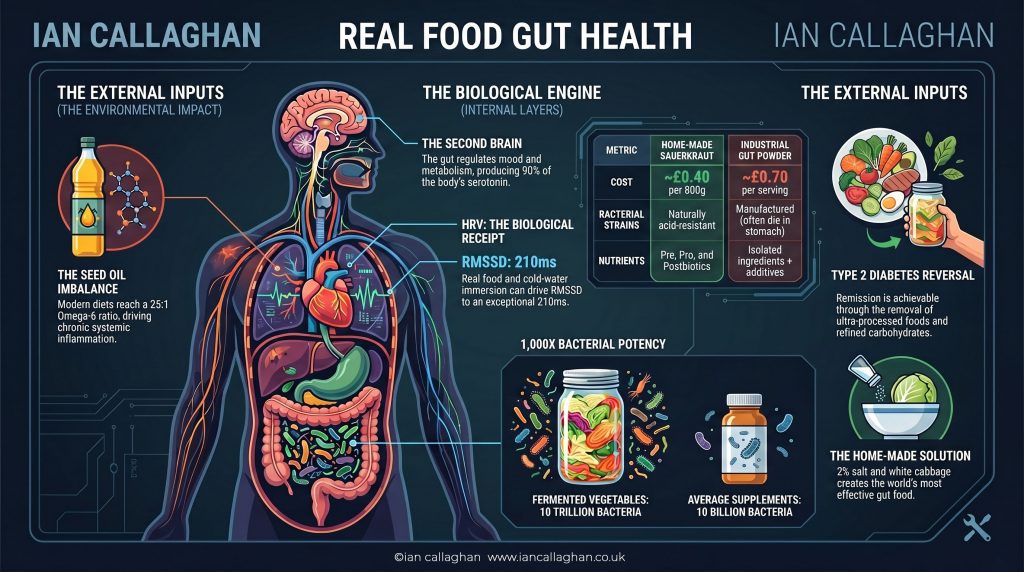
The gut microbiome, the ecosystem of trillions of bacteria, fungi, and other microorganisms living in your digestive tract, regulates your immune function, mood, metabolic rate, inflammatory response, and cognitive performance. It produces approximately 90% of your body’s serotonin. It communicates with your brain via the vagus nerve in both directions. It is, in every meaningful sense, a second brain.
It runs on real food. It is damaged by ultra-processed food. And it can be rebuilt, measurably, through the fermented foods that human beings have eaten for thousands of years.
In 2016, I posted a graphic explaining the difference between prebiotics, the fibre that feeds the bacteria, and probiotics, the live bacteria themselves. I listed the real food sources. Sauerkraut. Kefir. Kimchi. Yogurt. Tempeh. Pickles. On the prebiotic side: onion, garlic, artichoke, asparagus, oats, banana.
I also said, in the same week: no magic pills, teas, coffees, supplements, or calorie-counting systems will do what real food does. Everything brands advertise is designed to make a profit from you. They do not care about your health. That is your priority, your job.
I said vegan junk food was still junk food. That carbohydrates trigger insulin production and fat storage regardless of whether they came from a plant-based sausage roll or a regular one. The human body is perfectly adapted to an omnivorous diet. That soya production for the vegan food industry was destroying rainforest and soil fertility.
I said type 2 diabetes costs the NHS £1.5 million an hour and that it is reversible through the correct diet.
All of this, in one week, eight years ago, to an audience of a few hundred people.
Every word of it has been proven correct by subsequent scientific publications.
What the Ultra-Processed Food Industry Did Between 2016 and 2024.
While I was saying all of that, the ultra-processed food and wellness supplement industries were busy.
Global UPF consumption continued its upward trajectory. By 2023, studies showed ultra-processed food accounted for more than 56% of dietary energy intake in the United Kingdom, higher than in France, Spain, or Brazil and comparable only to the United States and Canada. A landmark study published in the Lancet Regional Health Europe in 2023 tracked 266,666 people across seven European countries and found that higher UPF consumption was associated with significant increases in the combined risk of cancer, cardiovascular disease, and metabolic disease. A separate 2019 BMJ study following 105,000 participants found that every 10% increase in ultra-processed food consumption was associated with a 12% increase in overall cancer risk.
Type 2 diabetes diagnoses in the UK rose from approximately 3.3 million in 2016 to over 4.3 million by 2023, with an estimated 2.4 million more in the pre-diabetic range. The NHS spent, and continues to spend, approximately £1.5 million every hour treating a condition that is largely driven by diet and largely reversible through diet.
The vegan food market exploded exactly as I predicted. Beyond Meat launched in 2016. Impossible Foods expanded globally in 2019. By 2021, every UK supermarket had an entire plant-based range. By 2023, the bubble was deflating, with plant-based food companies posting massive losses as consumers belatedly realised that a vegan sausage roll made from pea protein isolate, methylcellulose, rapeseed oil, and rice starch was not the health revolution it had been marketed as.
The gut health supplement industry grew from approximately $38 billion globally in 2016 to over $75 billion by 2024. Probiotic pouches. Prebiotic capsules. Synbiotic powders with 28 superfood ingredients. Each one is doing what a jar of sauerkraut has done since before the Roman Empire, and each one costs anywhere from 10 to 30 times more per serving than the real food alternative.
And the influencer wellness industry, which barely existed in 2016, became one of the most lucrative content categories on the internet. Twenty-two-year-olds with ring lights and supplement deals telling people with decades of metabolic damage what to eat. Nutritionists who had never properly cooked a meal in their lives are advising on ancestral eating. Personal trainers selling gut health programmes built around the same products I had been calling out for years.
Many of the people currently selling you real food gut health programmes were in school when I wrote those 2016 posts.
The Science That Proved Everything I Said.
The research published between 2016 and 2025 has done nothing but confirm what any chef, any nutritionist worth their credentials, and any person who has actually read the existing literature already knew.
On ultra-processed food and metabolic disease: the NOVA classification system, developed by Brazilian researchers at the University of São Paulo, provided the framework that decades of nutrition research had been missing. It categorised food not by nutrients but by degree of processing, and the epidemiological evidence built on it has been devastating. High UPF intake is consistently associated with reduced micronutrient density, increased energy intake, activation of reward pathways that drive overconsumption, chronic low-grade inflammation, hormonal disturbances, gut microbiome dysbiosis, and elevated risk of every major chronic disease on the list. A 2025 review published in Metabolites at the University of Oklahoma synthesised the accumulated evidence. It concluded that ultra-processed foods influence metabolic health through interconnected behavioural, hormonal, microbial, and biochemical mechanisms that extend well beyond nutrient composition alone.
On the gut microbiome and real-food gut health: a 2018 study published in Cell found that the gut microbiome is highly responsive to dietary changes, both positively and negatively, within days. A 2022 Stanford study published in Cell found that a high-fermented-food diet increased microbiome diversity and significantly reduced inflammatory markers more effectively than a high-fibre diet alone. The diversity of bacterial strains in traditionally fermented foods like sauerkraut, including Lactiplantibacillus plantarum, Leuconostoc mesenteroides, Levilactobacillus brevis, Weissella species, and Pediococcus pentosaceus, outperforms the limited strain count in most commercial supplements, and these strains are naturally acid-resistant because they evolved inside an acidic fermentation environment. A 2024 study published in Nutrients confirmed that short-term sauerkraut supplementation induced favourable changes in the gut microbiota in athletes, with the researchers noting that whole fermented foods had been largely neglected in favour of isolated probiotic research.
On type 2 diabetes reversal: Dr Roy Taylor’s DiRECT trial, published in The Lancet in 2018, demonstrated that nearly half of participants achieved remission of type 2 diabetes through dietary intervention alone, without medication, within one year. The mechanism is the removal of ectopic fat from the liver and pancreas, restoring normal insulin function. The approach that achieves this most effectively removes ultra-processed food, refined carbohydrates, and seed oils, and replaces them with real, whole food. I reversed my own pre-diabetes in 17 months through OMAD, ancestral eating, zero ultra-processed food, and zero seed oils. No medication. No programme. No supplement. Real food.
On omega-6 to omega-3 ratios and seed oils: the ratio in the ancestral human diet was approximately 4:1. In the modern Western diet, driven largely by the widespread use of industrial seed oils, that ratio is estimated to be between 15:1 and 25:1. Excess omega-6, particularly linoleic acid from processed seed oils, promotes inflammatory signalling pathways associated with cardiovascular disease, metabolic syndrome, insulin resistance, and neurological decline. The mechanistic evidence has been building in the research literature for decades. The public health messaging has not caught up, largely because the seed oil industry has significant lobbying power and the evidence challenges decades of dietary guidelines built on the flawed lipid hypothesis.
All of this was knowable in 2016. Most of it was already published. I was saying it. The industry was selling you the opposite.
The Sauerkraut vs Supplement Comparison Nobody Wants You to Do.
This morning, I looked at a UK gut-health product. A powder in a pouch. 25 billion live cultures from 13 strains. 28 superfood ingredients. Six dietary fibres. Five added enzymes. Four vitamins. 170 safety tests. Backed, they claim, by 327 scientific and clinical studies—£ 21 for 30 servings.
Let me do the comparison they do not want you to do.
Two ounces of properly made raw sauerkraut contains more probiotic bacteria than 100 capsules of a standard supplement. Four to six ounces of fermented vegetables contain approximately 10 trillion bacteria versus the 10 billion in the average supplement, an order of magnitude difference of 1,000. The bacterial strains in sauerkraut are naturally acid-resistant because they developed inside an acidic fermentation environment. The manufactured strains in most supplements are not, and many do not survive transit through stomach acid. Sauerkraut contains prebiotics in the form of naturally occurring fibre from the cabbage, probiotics from the fermentation, and postbiotics in the form of short-chain fatty acids and other metabolites produced during fermentation. A supplement contains one of these categories, at best. Sauerkraut provides vitamins C and K2, the latter produced by the bacteria themselves during fermentation and essential for calcium metabolism and cardiovascular function. The powder provides four added vitamins that would not be there without the manufacturing process.
The “327 scientific and clinical studies” cited on the pouch are not studies of the product. They are studies of gut health mechanisms. Of fermented foods. Of probiotic bacteria. Of prebiotic fibre. Of the gut-brain axis. Every single one is actually evidence for eating sauerkraut, kefir, and real fermented food rather than buying a subscription box of flavoured powder.
Cost comparison: a head of white cabbage fermented with 2% of its weight in good salt produces approximately 800 grams of sauerkraut for about 40 pence. The powder costs 70 pence per serving for an inferior result.
This is how the supplement industry works. It borrows the credibility of real science to sell you a processed product that does a fraction of what the real food alternative does. It is not nutrition. It is marketing wearing a lab coat.
My HRV Is the Receipt.
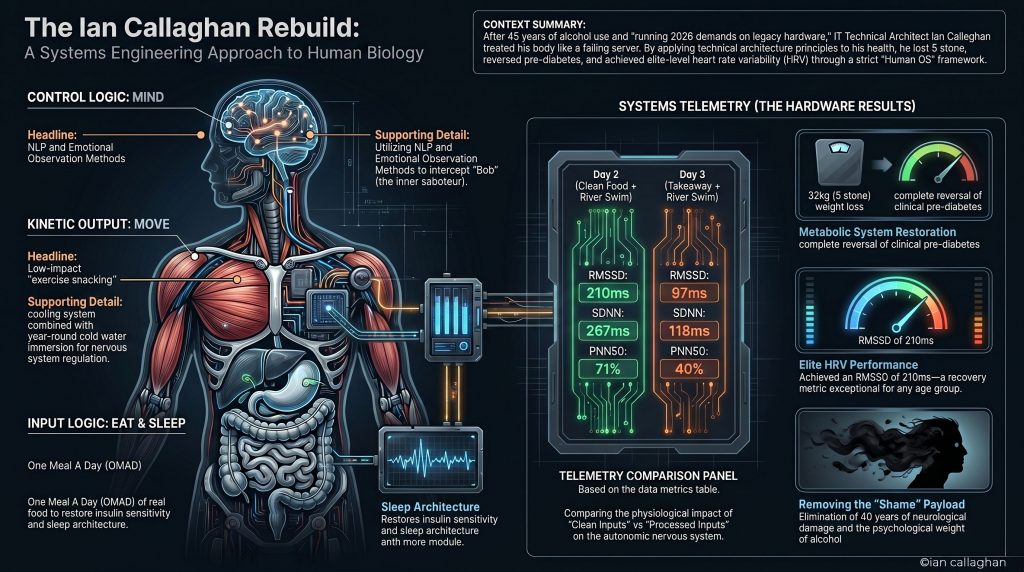
Last week, I ran an accidental controlled experiment. Same man. Same River Usk in Monmouthshire,e where I have been swimming year-round since childhood. Two nights of cold water immersion—clean an ancestral food one night, a takeaway the next. The HRV differential the following morning was significant enough to warrant a 3,000-word case study.
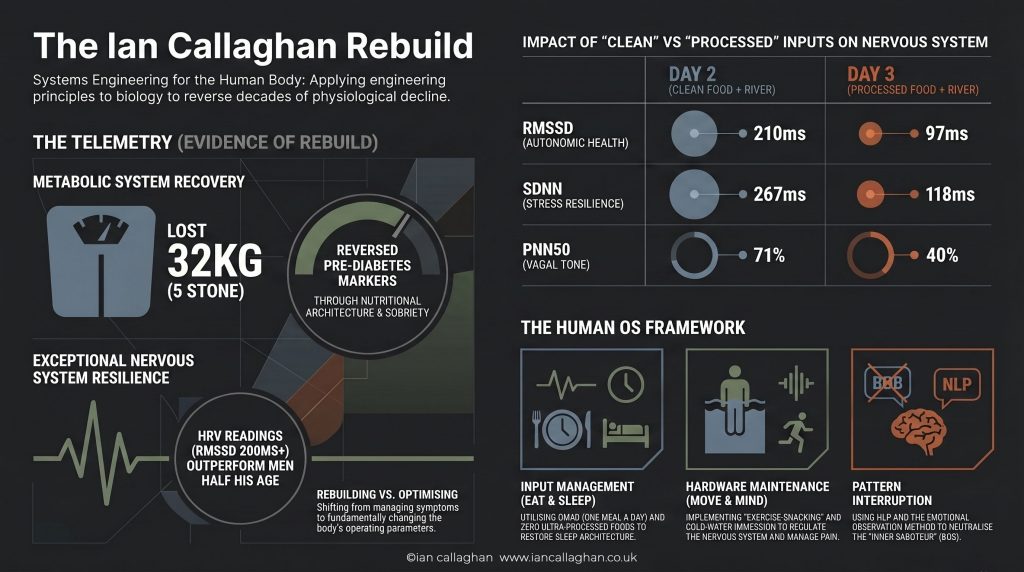
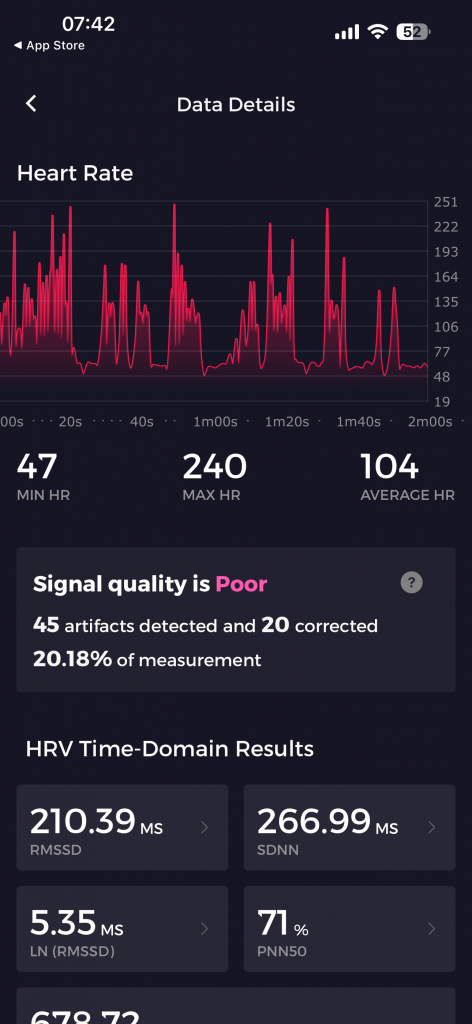
Day two, clean food and river: RMSSD 210ms, SDNN 267ms, PNN50 at 71%. An RMSSD above 100ms is exceptional at any age. Above 200ms at 58 years old, after 45 years of drinking, is the kind of number that makes cardiologists look twice.
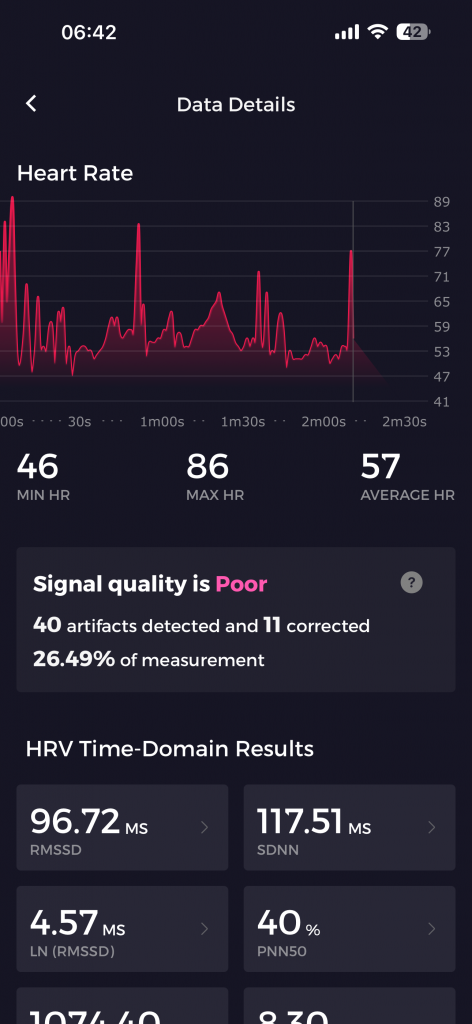
Day three, takeaway and river: RMSSD dropped to 97ms, SDNN fell to 118ms, PNN50 to 40%. Same cold water. Same man. The only variable was food.
The fries in that takeaway were cooked in seed oils. The pitta was made from processed wheat. My autonomic nervous system registered every molecule of it overnight and reported it in the morning data.
I am 58 years old. I have three herniated discs at L3, L4 and L5 from military service in the 1st The Queen’s Dragoon Guards. I have an active court case against the MOD for tinnitus and hearing loss. I am fighting PIP. I drank heavily for 45 years. I should not have an RMSSD of 210ms.
I have it because I eat real food, fermented food included, cooked in animal fat, with zero seed oils and zero ultra-processed ingredients. I fast until one meal a day. I swim in a cold river. I breathe deliberately. I do not drink alcohol. And I have been saying for eight years that this is what works.
Why the Influencers Are Late and Why That Matters for Real Food Gut Health.
When I first posted about the gut microbiome in 2016, most of the people currently selling gut health programmes on Instagram and TikTok were in school or university. They discovered these ideas through the content ecosystem, not through years of reading, cooking, coaching, and living inside a body they had dismantled and rebuilt.
This matters because when knowledge travels through aesthetics rather than understanding it gets flattened. The nuance disappears. The history disappears. The science gets simplified into content that fits a 60-second video, and the commercial pressure to build a platform makes the supplement partnership more attractive than the 40p jar of sauerkraut that performs better.
I am not performing well. I arrived at this through four decades of obsessive reading, professional chef training at 16, NLP Master Practitioner qualifications, Reiki Master attunement, coaching people through systemic change, and living through the consequences of my own bad inputs for long enough to understand what reversing them actually does to the body.
The knowledge I am sharing now is the same knowledge I was sharing in 2016. The only things that have changed are the platform, the audience size, and the biometric data I now have to prove it is working.
Eight Years. One Message. The Same Truth.
2016: Type 2 diabetes costs the NHS £1.5 million an hour. It is reversible through diet—no magic pills, teas, coffees or supplements. Real food gut health is the only answer.
2016: Vegan junk food is still junk food. Carbohydrates trigger insulin production regardless of their source. The human body is optimally adapted to an omnivorous, ancestral diet.
2016: The gut microbiome matters. Sauerkraut, Kefir, Kimchi. Fermented real food. Not powders.
2026: RMSSD 210ms. Pre-diabetes reversed. Five stones lost. 17 months without alcohol. 58 million Facebook views. 58,000 followers built in under four months.
The message has not changed because the biology has not changed. Human beings have the same gut microbiome, the same insulin response, the same requirement for real food cooked in real fat that they have always had. No marketing changes that. No subscription box changes that. No influencer with a discount code changes that.
The metabolic health of the UK population is worse now than it was in 2016. Type 2 diabetes diagnoses are up. Obesity rates are up. The gut health supplement industry has doubled in size. Ultra-processed food makes up more than half of what most people eat.
None of that is a coincidence. It is the predictable outcome of an industry that sells the appearance of health rather than the conditions for it.
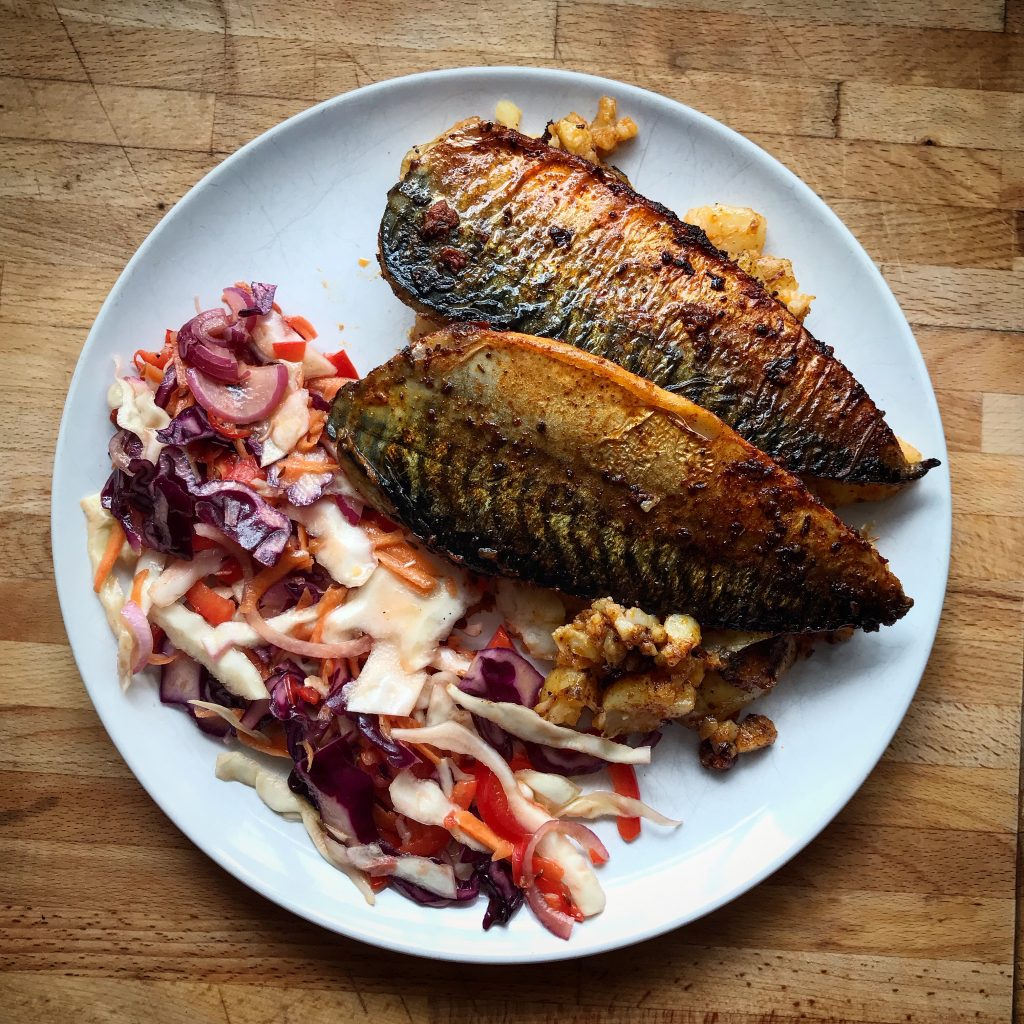
Real food gut health does not come in a pouch with a heart logo on the packaging. It comes from a head of white cabbage, some good salt, and a jar left on your counter for a week. It comes from cooking one proper meal a day from ingredients your great-grandmother would recognise, in fat that came from an animal, seasoned properly, eaten without guilt.
I have been saying this for eight years. I will still be saying it in another eight. Biology does not care how sophisticated the marketing gets.
Pick up the wrench. 🔧
Frequently Asked Questions About Real Food Gut Health
Is real food actually better for gut health than probiotic supplements?
Yes, by a significant margin, and the evidence is not close. Two ounces of properly made raw sauerkraut contains more probiotic bacteria than 100 supplement capsules. Fermented vegetables contain approximately 10 trillion bacteria, compared with the 10 billion in most supplements. The bacterial strains in fermented whole food are naturally acid-resistant, meaning they survive transit through stomach acid far more effectively than manufactured strains. Real fermented food also provides prebiotics, probiotics, and postbiotics simultaneously, in a food matrix that your biology has been processing for thousands of years. Most supplements provide one of these at best.
Can type 2 diabetes really be reversed through diet alone?
Yes. Dr Roy Taylor’s DiRECT trial, published in The Lancet in 201,8 demonstrated remission in nearly half of participants through dietary intervention alone, without medication, within one year. The mechanism involves the removal of ectopic fat from the pancreas and liver, thereby restoring normal insulin secretion and sensitivity. The dietary approach that achieves this most effectively removes ultra-processed food, refined carbohydrates, and industrial seed oils, and replaces them with real, whole food. I reversed my own pre-diabetes markers within 17 months through OMAD and ancestral eating: no medication, no programme, no supplement.
Seed oils, including sunflower, rapeseed, vegetable, soybean, and corn oil, are industrially extracted using high heat and chemical solvents. They are extremely high in the omega-6 fatty acid linoleic acid. The ancestral human omega-6 to omega-3 ratio was approximately 4:1. In the modern Western diet driven by seed oil consumption, it is estimated at 15:1 to 25:1. This imbalance drives chronic inflammatory signalling that underpins virtually every major metabolic and cardiovascular disease. Seed oils also oxidise at high cooking temperatures, producing aldehydes and other compounds associated with cellular damage. Cook in butter, lard, ghee, tallow, or extra virgin olive oil. These are the fats human biology was designed for.
Quarter a head of white cabbage and slice it thinly. Weigh it. Add 2% of its weight in good salt, not table salt, either sea salt or Himalayan pink salt. Massage the cabbage with the salt until it releases its liquid, about 5 to 10 minutes. Pack it tightly into a clean glass jar, pressing it down so the brine rises above the cabbage. The cabbage must be submerged under the brine. Cover loosely and leave at room temperature for 5 to 7 days, pressing down daily if needed. Taste from day 3. Cost: approximately 40 pence for 800 grams of the most effective gut health food on earth. No powder required.
Heart Rate Variability measures the variation in time between consecutive heartbeats and reflects the health of your autonomic nervous system, particularly the balance between your sympathetic and parasympathetic branches. The gut-brain axis, the bidirectional communication highway between your microbiome and your nervous system via the vagus nerve, directly influences HRV. Gut dysbiosis caused by ultra-processed food and seed oils drives chronic inflammation that suppresses vagal tone and lowers HRV. Real food, fermented food, and the removal of inflammatory inputs restore vagal tone and raise HRV. My accidental three-day experiment with the same cold-water exposure and different food inputs showed an RMSSD difference of 210ms versus 97ms, depending solely on what I had eaten the night before. The autonomic nervous system does not lie.
Why is ultra-processed food so harmful to the gut microbiome specifically?
Ultra-processed foods damage the gut microbiome through multiple simultaneous mechanisms. Emulsifiers, commonly added to UPFs to improve texture and shelf life, have been shown in multiple studies to directly disrupt the mucus layer that protects the gut wall, promoting intestinal permeability and low-grade inflammation. Artificial sweeteners alter the composition of gut bacteria in ways associated with glucose intolerance. The absence of fibre in most UPFs starves beneficial bacteria of their food source. The seed oils in most UPFs drive an omega-6 imbalance that promotes the growth of inflammatory bacterial populations. Preservatives disrupt bacterial metabolism. The combined effect is dysbiosis, a state of bacterial imbalance that is associated with metabolic disease, depression, anxiety, immune dysfunction, and systemic inflammation.
For most healthy adults, OMAD supports gut health rather than undermining it. The extended fasting window allows the migrating motor complex, the gut’s housekeeping mechanism, to operate fully between meals, clearing debris and pathogens from the digestive tract. Fasting also activates autophagy, the cellular recycling process that clears damaged cells, including in the gut lining. The key is what you eat in that meal. One meal a day built from real food, fermented vegetables, bone broth, animal protein, good fats, and minimal processed carbohydrates provides everything the gut microbiome needs. One meal a day built from ultra-processed food does not. OMAD is a tool, not a solution by itself. The food inside the window is what determines the outcome.
Ian Callaghan is a British Army veteran, qualified chef, NLP Master Practitioner, Reiki Master and multi-discipline coach based in Goytre, Monmouthshire. He has been writing about real food, gut health, metabolic disease and human biology since 2016. His books and programmes are available exclusively at iancallaghan.co.uk/the-shop/
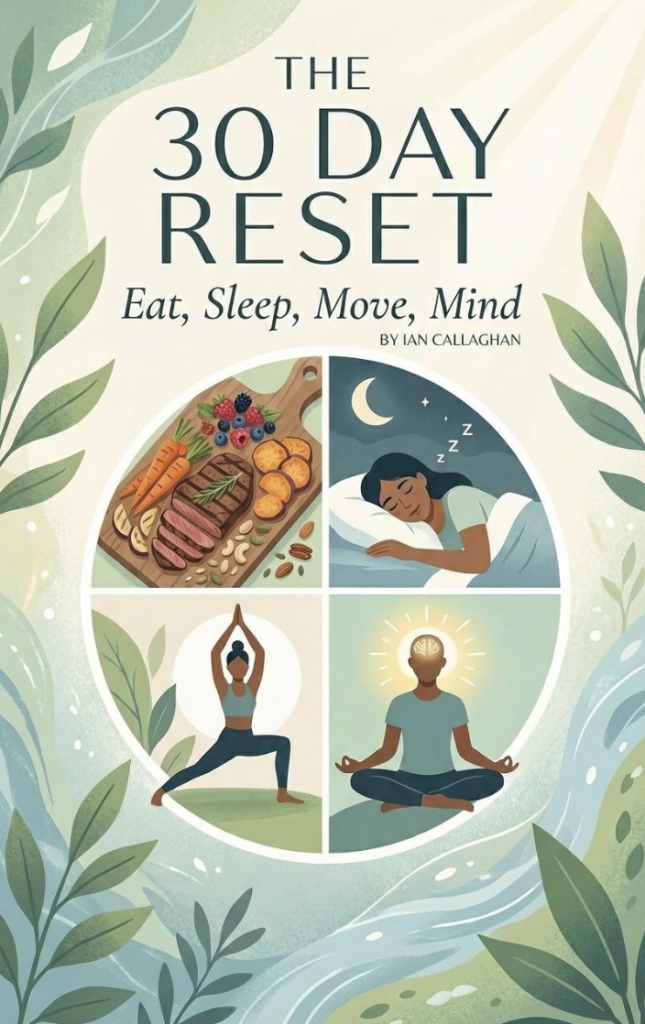
The 30 Day Reset is not a diet. It is a complete biological overhaul for anyone who is wired, tired, and done with feeling like shite. The 30-Day Reset is a 160+ page military-grade systems reboot for the over-35s. Four pillars. Eat, sleep, move, mind. One month to strip out the industrial poison, reset your dopamine pathways, silence Bob, and rebuild the machine that’s been running on the wrong fuel for decades. Not a diet. Not a programme. A complete…
I’m 58, I Quit Drinking After 45 Years, Lost 5 Stone, Reversed Pre-Diabetes, and My HRV Says I’m Built Different. Here’s the Data.
Midlife Rebuild. This isn’t a feel-good story about finding yourself at a yoga retreat. This is a systems rebuild. And I’ve got the receipts.
I spent 25 years as an IT Technical Architect designing complex infrastructure. I know what happens when you run 2026 demands on legacy hardware. Crashes. Failures. System degradation. And for most of my adult life, that’s exactly what I was doing to my own body and drinking for 45 years, eating badly, ignoring the signals, masking the symptoms—the human equivalent of a server held together with gaffer tape and unquestioning optimism.
Seventeen months ago, I shut the whole thing down and rebuilt it from the ground up. No rehab. No 12-step programme. No label. Just a bloke from Monmouthshire who looked at the data and made a decision.
What followed has been the most significant physiological and psychological transformation of my life. And I can prove it.
The Numbers First. Because Numbers Don’t Lie.
Before I tell you how, let me show you what.
Five stone gone. Pre-diabetes reversed. HRV readings that would embarrass men half my age. Chronic inflammation markers are down. Sleep architecture rebuilt from scratch. A nervous system that was running on cortisol and ethanol is now operating on something closer to its original design spec.
And then there’s the experiment I accidentally ran this week.
Three mornings. Same man. Same river. Different variables. The results tell you everything you need to know about what food actually does to your biology overnight.
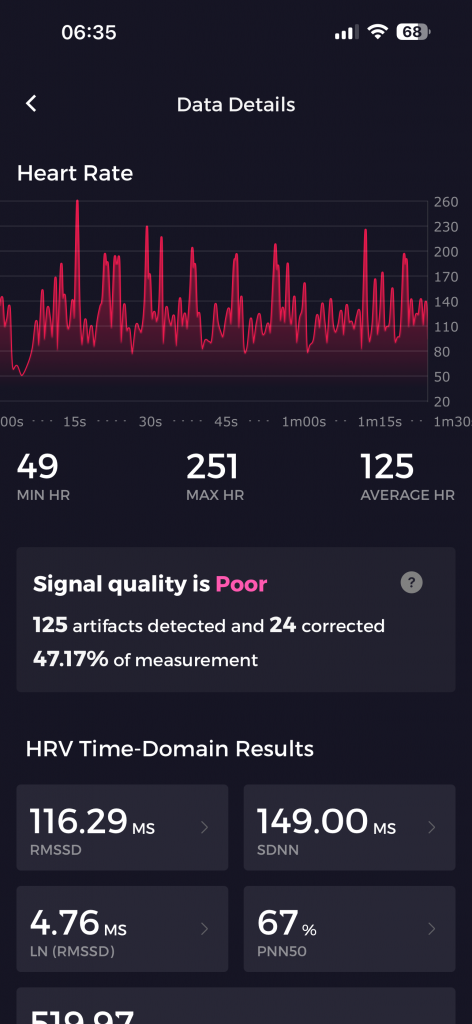
Day one was a noisy reading, poor signal quality on my HRV monitor, which is about 15 years old and struggling. Take it with a pinch of salt.
Day two: the night before, I’d been in the River Usk for around 20 minutes. Clean food all day. Woke up at 7:42 am to an RMSSD of 210ms, SDNN of 267ms, PNN50 at 71%, and an average resting heart rate of 104 during the measurement. For context, an RMSSD above 100ms is exceptional at any age. Above 200ms at 58 years old, after 45 years of drinking, is something a cardiologist would want to look at twice.
Day three: the night before, I’d been in the river again—same cold water exposure. But I’d also eaten a takeaway. Mixed gyro, salad, tzatziki, some pitta and fries. Not a 2 am kebab from a van. By most people’s standards, it was a reasonably decent meal. But by morning, my RMSSD had dropped to 97ms, SDNN to 118ms, and PNN50 down to 40%. Heart rate is sitting at 57.
Same cold water. Different food. The HRV told the story my body couldn’t hide.
The fries were cooked in seed oils. The pitta was made from processed wheat. Even the gyro meat in most takeaways is blended with fillers and stabilisers. None of it was catastrophic. But my autonomic nervous system registered every bit of it and showed up the next morning with the evidence.
That’s not theory. That’s telemetry.
Who the Hell Am I and Why Does Any of This Matter?
Fair question.
I’m Ian Callaghan. 58 years old. British Army veteran, 1st The Queen’s Dragoon Guards, 12 years served. Qualified chef. NLP Master Practitioner. Reiki Master. Technical Architect with CCNA and MCSE certifications. Multi-discipline coach based on the edge of the Brecon Beacons in Monmouthshire, Wales.
I also drank for over 40 years. Heavily. Consistently. In the way that becomes so normal, you stop seeing it as a problem and start calling it personality.
I didn’t go to rehab. I didn’t join AA. I don’t carry a chair count, day, or introduce myself with a label. I’m just a bloke who doesn’t drink. He looked at what alcohol was doing to his hardware and decided enough was enough.
Seventeen months ago, I made that decision. And the rebuild started immediately.
The Four Pillars. Not a Wellness Framework. An Operating System. Midlife Rebuild
Everything I do sits on four pillars. Eat. Sleep. Move. Mind. Not because I read it in a book, but because after decades of dismantling and reassembling my own biology, these are the four systems that either run clean or cause cascading failure everywhere else.
Eat
I eat one meal a day. OMAD. Not because it’s trendy —it isn’t —but because it’s what my body does best—one window. Real food. Animal fats, fermented foods, bone broth, organ meat when I can get it, resistant starch, and seasonal vegetables. Zero seed oils. Zero ultra-processed food. Nothing with more ingredients than my grandmother would recognise.
I’m a trained chef. I know what’s in food. I know what seed oils do at high heat. I know why the vegetable oil lobby has spent 50 years convincing people that butter is the enemy. I know what industrial food production looks like from the inside. And I refuse to put any of it in my body.
The weight loss was almost a side effect. Five stone gone. Pre-diabetes reversed. Not through calorie counting, points systems, or meal replacement shakes, but through eating food that is actually food.
I recently invested in a Wrekin water filter. Not a plastic Brita jug. Because if I’m this deliberate about what I eat, why would I drink tap water full of chlorine, fluoride, and microplastics? The inputs matter. All of them.
Sleep
Alcohol destroys sleep architecture. Not just quantity, quality. It sedates you rather than letting you sleep. You miss the deep restorative stages. You wake at 33 amwith your nervous system in low-grade panic. You call it insomnia. It isn’t. It’s ethanol metabolism.
Within weeks of stopping drinking, the sleep changed completely. I’d forgotten what it felt like to wake up actually rested—not less drunk. Not just functional. Genuinely rested. That alone would have been worth it.
Sleep is where your body does its maintenance. Skip it or corrupt it, and nothing else works properly—your HRV tanks. Your insulin sensitivity degrades. Your cortisol stays elevated. Your decisions get worse. Everything downstream of bad sleep is a mess.
Fix the sleep, and half your problems fix themselves.
Move
I don’t go to the gym. I’m not built for it, literally, three herniated discs at L3, L4 and L5 from my army service means conventional lifting can put me horizontal for days. So I adapted.
And before anyone romanticises the army injury as a badge of honour,r the institution handed out and walked away from, let me be clear. I’m currently fighting an active court case against the MOD for tinnitus and hearing loss caused during service. At the same time,e I’m battling PIP, the government’s disability benefit system, which has its own unique talent for making people feel like they’re lying about the body that was broken in service to the country. Two institutional fights are running simultaneously, on top of chronic pain, on top of rebuilding everything else.
I’m telling you this not for sympathy. I’m telling you this because the people in my audience are not rebuilding from a position of comfort. They’re rebuilding under fire. And if the transformation is possible while navigating all of that, it’s possible for anyone.
Exercise snacking throughout the day. Bird dog. Cat cow. Glute bridges. Planks. Tai chi squat arm swings. Resistance bands. Hand grips. Dead hangs. Assisted pull-ups. Yoga poses worked into the day rather than carved out of it.
I walk every day. The Brecon Beacons are on my doorstep, and I use them. I’m getting back into climbing, carefully, with a back that has its opinions about things.
And then there’s the river.
I’ve been swimming in the River Usk year-round my entire life. Not since Wim Hof made it fashionable. Not since some podcast told me cold water was good for inflammation, since before any of that had a name or a hashtag or a warrior attached to it. The river is 50 metres from where I grew up. It’s been part of my daily practice for as long as I can remember.
Cold water immersion does things to your nervous system that nothing else replicates. Vagal tone. Norepinephrine release. Dopamine baseline reset. Brown adipose tissue activation. The data backs all of it. But I didn’t need the data. I knew it from the inside out before the science caught up.
The HRV readings on the mornings after river swims tell the same story every time.
Mind
I’m an NLP Master Practitioner. I’ve spent decades studying how the mind processes experience, encodes belief, and either propels or sabotages everything you try to do. I use that knowledge daily. On myself first.
Meditation. Visualisation. Breathwork. Reiki. EOM, my own Emotional Observation Method, which is about learning to watch your emotional states rather than be consumed by them. These aren’t wellness add-ons. They’re functional tools for nervous system regulation.
I call my inner saboteur Bob. Bob is the part of your mind that tells you one drink won’t hurt, that you’ve earned it, that everyone else is doing it, that you’ll start Monday again. Bob has a very sophisticated PR operation, and he’s been running it for decades. The work is learning to recognise Bob’s voice and not act on it.
The meditation and breathwork are how I keep Bob in his box.
The Sobriety Part. Let’s Be Honest About This.
I drank for over 40 years. That’s not a background detail. That’s four decades of consistent neurological damage, liver stress, disrupted sleep, elevated cortisol, impaired gut function, suppressed immune response, and a running dialogue of shame that I got very good at drowning out with more alcohol.
I didn’t quit because I hit rock bottom. I quit because I looked at the data, and it was undeniable. Alcohol is a WHO Group 1 carcinogen. Not a grey area. Not “fine in moderation.” A carcinogen. The same category as asbestos and tobacco. The only reason we don’t talk about it that way is that the alcohol industry has spent billions making sure we don’t.
Seventeen months into my Midlife Rebuild, the physical changes have been extraordinary. But the psychological shift has been more significant. I described it once as having 40kg of invisible shame removed. The lies. The guilt. The performance is fine. All of it is gone.
I walk differently now. I make eye contact differently. I speak differently. Not because I found God or joined a movement, but because there’s nothing to hide anymore. Sobriety sharpened everything, including my voice.
The Reach. Because This Is Also a Media Story.
In December 2025, I had 400 Facebook followers.
By May 2026, under four months later, I had 58,000. A group of 10,000 members. 58 million views. An audience that is 82.2% aged 35 to 64. The demographic that every health brand struggles to reach authentically,y because most of their ambassadors are 28 years old and have never had a problem in their life.
On YouTube, in the last 90 days alone: 68,843 views. 2,000 hours of watch time. 1,075 subscribers. A 99.4% like ratio. 62.91% audience retention. A single video, “What Really Happens When You Quit Drinking,” pulled 16,557 views and 350 subscribers on its own.
LADbible picked me up. Ran my story. My quotes. My data. Because it’s a real story with real numbers and a real human behind it.
None of this came from paid ads. No social media agency. No growth hacking tools. Just showing up with the truth every single day and refusing to sanitise it.
Before Facebook, there was TikTok. I’d built 25,000 followers there before a video hit 400,000 views, and the subsequent surge in comments triggered TikTok’s Layer 7 Application Filter, which misclassified normal human engagement velocity as network automation. They banned the account. I appealed twice through their standard process, got nowhere, so I sent their Trust and Safety team a formal technical letter as a CCNA and MCSE certified Technical Architect, diagnosing the exact mechanism that caused the false positive, citing Engagement Velocity spikes, device telemetry correlation, and the specific comment rate-limiting behaviour that their filter misread. I requested a manual audit of the server logs.
Their response was complete silence.
So I moved to Facebook with 400 followers and grew to 58,000 in under four months.
I’m not telling that story to complain about TikTok. I’m telling it because it proves two things. First, I can build audiences from scratch across platforms without a budget, a team, or tools. Second, I’m not someone who wears technology for show. I understand how these systems work at an architectural level. When a brand partners with me on a health tech product, I’m not going to read the marketing copy. I’m going to understand the data, interrogate the methodology, and explain it to an audience that trusts me precisely because I never bullshit them.
That’s a different proposition entirely from a lifestyle influencer with a ring light and a discount code.
Why the Wellness Industry Gets This Age Group Wrong
Every supplement brand, every fitness app, every recovery programme targets the same demographic. Young, aspirational, already relatively healthy, looking to optimise.
The men and women in my audience aren’t optimising. They’re rebuilding, they are deep in Midlife Rebuild.
There’s a significant difference, and most brands completely miss it.
Optimising means taking something that works reasonably well and making it slightly better. Rebuilding means taking a system that has been running on the wrong inputs for decades, that has accumulated damage, inflammation, metabolic dysfunction, and psychological weight, and fundamentally changing its operating parameters.
The people who need Whoop aren’t the CrossFit athletes who already know their HRV. They’re the 52-year-old who hasn’t had a proper night’s sleep in a decade and doesn’t understand why. They’re the 47-year-old who quit drinking three months ago and wants to understand what’s actually happening in their nervous system. They’re the 58-year-old swimming in a Welsh river every morning and tracking his autonomic recovery with a 15-year-old chest strap because nobody has offered him anything better.
That’s my audience. And that audience is enormous, underserved, and desperate for tools that treat them like adults.
The HRV Monitor Situation. And What Comes Next.
My current HRV monitor is approximately 15 years old. The app, Elite HRV, struggles with the signal. As you’ve seen from my three morning readings, the artefact rate is high, and the data is messy.
But even through the noise, the signal is clear. The food experiment proved it. Cold water plus clean eating equals a nervous system operating at a level that surprises people who see the numbers.
I’m actively looking for a new monitor. Something that gives me clean data I can share with my audience in real time. Because the content writes itself, every morning reading is a data point. Every food choice, every river swim, every meditation session shows up in the numbers. That’s not a blog post. That’s a longitudinal case study with 58,000 people watching in real time.
If you’re a health tech brand reading this, that’s your pitch. Not an influencer posting a discount code. A genuine proof of concept, documented in public, by the kind of human your product was actually built for.
What I’ve Published. The Proof of Work.
Seven books. All available exclusively at iancallaghan.co.uk/the-shop/
Under Load. The 30 Day Reset. Emotional Mastery. Fix Your Metabolism. Nobody Taught You This. Beyond 12 Steps. And others.
A coaching practice. A Facebook community of 10,000 members. A subscriber hub. A Skool community. A YouTube channel. A blog with over 350 posts.
All of it was built as a single operator with no team, no agency, no budget. At the same time, fighting the MOD in court. While battling PIP. At the same time, I am managing chronic pain from three herniated discs at L3, L4 and L5. All of it was built on the evidence of my own life.
The Bottom Line
I’m not selling a shortcut. There isn’t one.
What I’m telling you is that at 58, after 45 years of drinking, after decades of running on the wrong inputs, the human body has a remarkable capacity to rebuild when you give it what it actually needs.
The data backs it. The HRV backs it. The five stone backs it. The reversed pre-diabetes backs it. The 58 million views from people who recognise their own story back it.
This isn’t wellness content. This is systems engineering applied to human biology. And the case study is me.
Pick up the wrench. The rebuild starts the moment you decide it does.
Frequently Asked Questions
Can you reverse pre-diabetes by quitting alcohol?
Yes, and the mechanism is straightforward once you understand it. Alcohol drives insulin resistance through multiple pathways — it disrupts liver glucose regulation, elevates cortisol, damages the gut lining, and chronically raises blood sugar. Remove the alcohol, add real food, sort the sleep, and insulin sensitivity often improves significantly within months. My own pre-diabetes markers reversed within the first year alongside OMAD and ancestral eating. It’s not a guarantee for everyone, but it’s far more common than the medical establishment acknowledges.
The evidence points strongly in that direction, and my own data backs it up. Cold water immersion activates the vagus nerve, drives norepinephrine release, and triggers a parasympathetic rebound after the initial cold shock response. Over time, regular cold exposure appears to improve vagal tone, which is the primary driver of HRV. My best readings consistently follow river swims, and the differential between cold water plus clean eating versus cold water plus processed food is stark enough to be visible in the numbers the very next morning.
What is exercise snacking, and does it actually work?
Exercise snacking is the practice of distributing short bouts of movement throughout the day rather than concentrating all activity into one gym session. Bird dogs, glute bridges, dead hangs, resistance band work, tai chi movements, planks — done in two- to five-minute windows across the day. The research suggests it produces comparable and in some cases superior metabolic and cardiovascular outcomes to a single daily session, particularly for people who can’t sustain conventional training due to injury or pain. For me, with three herniated discs at L3, L4 and L5, it isn’t a preference. It’s the only option. And the HRV data suggests it’s working.
How long after quitting alcohol does sleep improve?
Most people notice a change within the first two weeks, though the first few days can actually feel worse as the nervous system recalibrates without alcohol’s sedative effect. The deep restorative sleep stages — slow-wave sleep and REM — begin to return within the first month for most people. By three months, the architecture is usually significantly rebuilt. What took me by surprise was just how profound the difference was. I hadn’t slept properly in decades and had completely normalised the exhaustion. Waking up genuinely rested rather than just functional was one of the most disorienting early experiences of stopping.
OMAD stands for One Meal A Day. It’s an intermittent fasting approach where all daily calories are consumed in a single eating window, typically one to two hours. It’s not a fad for me — it’s how I’ve eaten for years because it aligns with my natural hunger patterns and produces stable energy, mental clarity, and metabolic efficiency. Whether it’s appropriate for anyone else depends on their individual health status, history, and goals. If you’re on medications that require food, diabetic, pregnant, or have a history of disordered eating, it needs careful consideration and medical input. For a 58-year-old man following a whole-food diet, it works exceptionally well.
What does HRV actually measure and why does it matter?
Heart Rate Variability measures the variation in time between consecutive heartbeats. Counterintuitively, more variation is better — it indicates a nervous system that is responsive and adaptable, with good balance between the sympathetic (fight or flight) and parasympathetic (rest and digest) branches. Low HRV is associated with chronic stress, poor recovery, cardiovascular risk, and accelerated ageing. High HRV correlates with resilience, good sleep quality, metabolic health, and longevity. It’s one of the most useful single metrics for understanding how well your system is actually functioning, which is why I track it every morning. The numbers don’t lie, and they don’t care how you feel about them.
What is the midlife rebuild,d and who is it for?
The midlife rebuild is what happens when you stop managing symptoms and start fixing the system. It’s for anyone in their 40s, 50s, or beyond who is running on the wrong inputs—too much alcohol, ultra-processed food, disrupted sleep, a sedentary lifestyle, and a mind full of patterns written decades ago and never updated. It’s not a programme you buy. It’s a decision you make. The tools are simple: real food, proper sleep, daily movement, nervous system regulation, and the willingness to be honest about what isn’t working. Everything else follows from that.
Is it possible to quit drinking without AA or rehab?
Yes. I did it. Millions of people have. AA and rehab serve an important function for many people, particularly those with severe physical dependency who need medically supervised withdrawal. But they are not the only path, and for a significant proportion of people, they are not the right path. What I used was a combination of understanding the neuroscience of addiction, NLP techniques for pattern interruption, cold water therapy for nervous system regulation, nutritional rebuilding, meditation and breathwork, and a refusal to use labels that build identity around the problem rather than the solution. None of that required a programme, a sponsor, or a chip. It required honesty, structure, and a decision not to go back.
Ian Callaghan is a British Army veteran, qualified chef, NLP Master Practitioner, and multi-disciplinary coach based in Goytre, Monmouthshire. He has been featured by LADbible and built a Facebook audience of 58,000 followers and 58 million views in under four months. His books are available exclusively at iancallaghan.co.uk/the-shop/
Gen X Nervous System Rebuild: The Unfiltered Blueprint for Radical Midlife Autonomy
Nervous System Rebuild. For the high-performing Gen X machine, the “standard” recovery narrative is a catastrophic mismatch. You’ve spent forty years under relentless load—masking the pressure of leadership, the volatility of global markets, the complexities of family life, and the heavy, silent role of the “strong one.” You’ve navigated recessions, technological revolutions, and personal crises, all while maintaining a functional facade fueled by pints, bravado, and a social calendar built on chemical sedation.
But now, the dashboard is lit up like a Christmas tree. The 3:00 AM internal negotiations have become a nightly ritual. You aren’t “broken,” but you are significantly under load. You are running a 1987 emotional operating system in a 2026 world, and the hardware is finally screaming for a hard reset.
Traditional recovery models tell you that you are “powerless.” They ask you to “surrender” your agency to a higher power in a drafty church hall. As a former soldier who spent 45 years in the trenches of heavy drinking, masking pain and “getting the job done,” that narrative never sat right with me. I didn’t find the way out through labels or groupthink; I found it by treating my body and my mind as a high-stakes engineering project. I didn’t need a meeting; I needed a total Gen X nervous system rebuild.
In the last 90 days, my content has reached over 33 million people. That isn’t because I’m selling a “wellness brochure” with soft-focus morning yoga. It’s because the message of radical self-respect, biological infrastructure, and the Beyond 12 Steps framework is the gritty, unfiltered truth that the “Red Ocean” of the recovery industry is too scared to talk about.
This is the definitive, 6,000-word deep-dive guide to reclaiming your autonomy and rebuilding your machine from the cellular level up.
The 40-Year Mask: The Psychological Weight of the “Strong One”
Before we talk about the solution, we have to acknowledge the specific weight our generation carries. Gen X was the “latchkey” generation. We were raised to be self-sufficient, to ignore discomfort, and to “keep a stiff upper lip” long before “resilience” was a buzzword in corporate HR. We grew up in an era when emotional expression was seen as a sign of weakness, and “getting on with it” was the only accepted response to adversity.
While these traits made us successful in our careers and resilient in crisis, they also taught us a dangerous, long-term skill: The Art of the Mask.
For 40 years, you’ve worn the mask of the successful professional, the dependable parent, and the guy who “has it all together.” But underneath that mask, your nervous system has been taking the hit. You’ve used alcohol not just for “fun,” but as a tactical tool to suppress the internal alarm system. You used it to transition from the high-stress work environment to the emotional demands of home. You used it to silence the voice that asks, “Is this all there is?”
When you decide to stop the sedation, you aren’t just giving up a drink; you are removing the only management system you’ve had for your nervous system for four decades. This is why traditional recovery feels like such a shock to the system—it takes away your primary tool but gives you nothing but “surrender” in return. The Gen X Nervous System Rebuild is about giving you a new set of high-performance tools to replace the old, destructive ones. It’s about clearing the cache, updating the firmware, and reinforcing the hardware.
The Bio-Psycho-Social Load of Gen X
We are the “sandwich generation.” We are caring for ageing parents while raising teenagers, all while sitting at the peak of our professional responsibilities. The load isn’t just psychological; it’s biological. Chronic stress leads to a state of Allostatic Load—the wear and tear on the body which accumulates as an individual is exposed to repeated or chronic stress. For Gen X, this load is often ignored until the physical symptoms—insomnia, gut issues, high blood pressure—become impossible to ignore.
The mask isn’t just a social performance; it’s a physiological straightjacket. It keeps your sympathetic nervous system in a low-level “on”state 24 hours a day. You’ve forgotten what actual relaxation feels like because your “resting state” is actually a state of hyper-vigilance. The rebuild starts by admitting that the mask is heavy and that it’s time to take it off.
The Red Ocean of Recovery vs The Biological Blue Ocean
The recovery industry is a “Red Ocean”—a saturated market of sanitised advice, stock photos of sunsets, and “one-size-fits-all” steps. It’s a space where you are defined by your failures and your “defects of character.” It treats you as a patient rather than a high-performance machine that has simply been running on the wrong fuel and the wrong software for too long.
The Gen X Nervous System Rebuild is a Blue Ocean opportunity. It moves the conversation away from abstinence and into Biological Infrastructure. We don’t focus on “not drinking”; we focus on rebuilding a nervous system that no longer requires sedation to handle the load of modern life.
Why the 12-Step Model Often Fails the Gen X High-Performer
For many, the 12-step model is a lifesaver. But for a specific type of Gen X high-performer—the leaders, the veterans, the entrepreneurs—it can actually be a barrier to long-term success.
The Surrender Paradox: High-performers thrive on agency, responsibility, and autonomy. Telling a veteran or an entrepreneur they are “powerless” creates an immediate cognitive dissonance. This dissonance increases the cortisol load—the very stress hormone that triggers the “fight or flight” response. When your brain is told it has no control, it panics. That panic is what drives the urge to sedate.
The Identity Void: Most paths focus on subtracting the habit. But after 40 years, the drink isn’t just a habit; it’s a persona. It’s the “life of the party,” the “hard worker,” the “guy who can hold his liquor.” When you remove it, you enter the Identity Void. Without a structured plan for Identity Reconstruction, you are just a “sober person” waiting for life to become boring. You feel like a diminished version of yourself rather than an upgraded one.
The Neglect of the Machine: You cannot talk your way out of a physiological “fight or flight” loop. If your nervous system is stuck in a chronic stress response—your heart rate variability is low, your cortisol is high, and your sleep is non-existent—no amount of sharing in a circle will fix the biological drive for sedation. You have to reset the hardware physically. You have to go into the dashboard and clear the codes.
Pillar 1: The Neuro-Reset (The Science of the Vagus Override)
The foundation of the rebuild is the Neuro-Reset. Your nervous system is currently “stuck” in a sympathetic overdrive. You are living in a permanent state of high alert, which is why “just relaxing” feels like a chore rather than a relief. This is what I call Systemic Overload.
The HPA Axis and the Cortisol Trap
The Hypothalamic-Pituitary-Adrenal (HPA) axis is your body’s central stress response system. In Gen X high-performers, this system is often “stuck” in the ON position. Chronic stress leads to elevated cortisol levels, which in turn lead to insulin resistance, abdominal fat gain, and muscle mass loss. More importantly, it fries your dopamine receptors.
When your receptors are fried, normal life feels grey. You need a massive chemical hit (like alcohol) just to feel “normal.” The Neuro-Reset is designed to down-regulate the HPA axis and repair the dopamine baseline.
The Physiology of the Hard Reset | Nervous System Rebuild
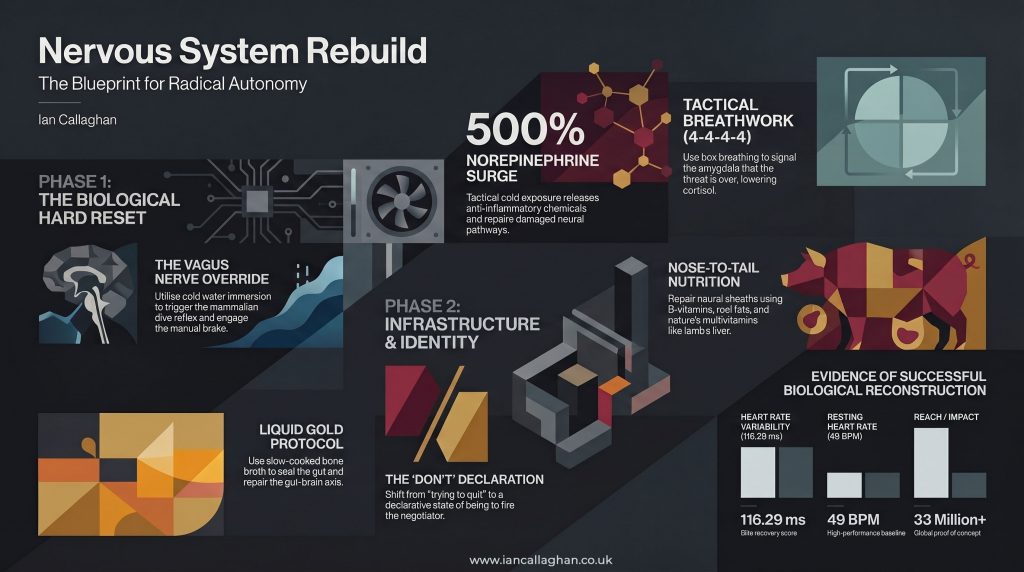
This isn’t about the “lifestyle” dryrobe aesthetic you see on the school run. This is about tactical biological warfare. Cold water immersion is a physiological trigger for the Mammalian Dive Reflex.
The Vagus Nerve & The Vagal Brake: The Vagus nerve is the longest in your body, running from the brainstem to the abdomen. It is the primary channel for the parasympathetic nervous system—the “rest and digest” system. When you enter a freezing river or a cold shower at 4:00 AM, you are forcing your Vagus nerve to engage. It is the manual “brake” for your nervous system. For 45 years, I ran my machine with the accelerator pinned to the floor and no brakes. Cold water immersion taught me how to find the brakes and apply them with precision.
Norepinephrine and Cold Shock Proteins: When you hit the cold, your body releases a massive surge of norepinephrine—up to 500%. This isn’t just a “rush”; norepinephrine acts as a powerful anti-inflammatory for the brain. Simultaneously, your body produces “cold shock proteins” (such as RBM3), which have been shown in animal studies to help repair damaged synapses and protect neural pathways.
The Dopamine Baseline Shift: Research indicates that cold exposure can increase baseline dopamine levels by up to 250% for several hours. Unlike the dopamine spike from alcohol or sugar, which is followed by a crash, this is a sustained elevation. For someone navigating the Sober Flatline—the grey apathy that often hits around month 6—this dopamine baseline shift is the difference between relapse and resilience. It provides the “biological hope” your brain needs to keep going.
For those just starting the rebuild, you don’t need a freezing river. You can start in your shower.
The Warm Start: Do your normal wash. Get the machine ready.
The Turn: Switch the dial to full cold. Don’t negotiate. Don’t think. Just turn.
The Breath: Your body will want to gasp. Override it. Focus on long, slow exhalations. This is you telling your brain: “I am in control of this discomfort.”
The Duration: Stay for 60 seconds, building up to 3 minutes. This is the “infrastructure check.” If you can handle 3 minutes of freezing water, the “Witching Hour” craving for a beer is a minor annoyance by comparison.
Breathwork for Tactical Regulation
In the military, stress management wasn’t a luxury; it was a requirement for survival. We used tactical regulation to keep our minds clear in a chaotic environment.
Box Breathing (4-4-4-4): This is the manual override for your heart rate. Inhale for 4, hold for 4, exhale for 4, hold for 4. It signals to the amygdala—the brain’s fear centre—that the threat is over. It lowers cortisol in real-time.
The Emotional Observation Method: my proprietary framework for the “Witching Hour” (usually 4:00 PM to 6:00 PM). Instead of fighting the urge, you open the Gate. You observe the brain’s “negotiator” with curiosity rather than fear. You see the craving for what it is: a biological tantrum from a system that misses its sedative. You don’t say “I want a drink.” You say, “I am observing a sensation of wanting a drink.” This subtle shift in language creates a massive shift in power. You are no longer the craving; you are the architect of your response.
Pillar 2: The Fuel (Biological Reconstruction and the “Liquid Gold” Protocol)
You cannot rebuild a high-performance engine on green powders, kale smoothies, and the ultra-processed “meat alternatives” sold by the wellness industry. To fix the damage of 40 years of heavy masking, your body requires infrastructure fuel. Alcohol is a neurotoxin that drains your biological “bank account” of essential minerals and vitamins—specifically B-vitamins, magnesium, and zinc. To rebuild, you have to make some massive deposits.
I call traditional, slow-cooked bone broth “Liquid Gold.” It is the baseline for gut-brain recovery.
The Gut-Brain Axis: 90% of your serotonin—the “feel-good” neurotransmitter—is produced in your gut. Alcohol is a solvent; it destroys the delicate gut lining (the villi), leading to systemic inflammation and a “leaky” gut-brain connection. This is why you feel anxious, “brain-fogged,” and depressed after a binge. Your “second brain” is on fire.
Sealing the Leaks: Liquid Gold provides the collagen, proline, and glycine necessary to seal the gut and calm the nervous system. Glycine, in particular, acts as an inhibitory neurotransmitter, helping to quiet the “noise” in your brain. It’s not a “health trend”; it’s a biological repair kit.
The Ritual of Preparation: In the Beyond 12 Steps framework, preparing real food is as important as eating it. The hours of simmering the bones, the smell of the kitchen, the focus on the ingredients—this is a meditative ritual that reinforces your new identity as someone who values their biological temple. It is a commitment to the rebuild.
The “Liquid Gold” Recipe for the Nervous System Rebuild
The Base: Marrow bones, knuckles, and joints (ideally from a local, ethical butcher). This is where the collagen lives.
The Acid: A splash of apple cider vinegar. This is essential to pull the minerals (calcium, magnesium, phosphorus) out of the bone.
The Slow Burn: 24 to 48 hours in a slow cooker. You aren’t just cooking; you are extracting the life force from the ingredients.
The Result: A rich, gelatinous broth. When it’s cold, it should look like jelly. That’s the sign of a successful extraction. You drink it every morning. It’s the first deposit in your biological bank account.
Our generation was raised on real food before the low-fat lie, and the seed-oil industry took over. We grew up on liver and onions, stews, and proper Sunday roasts. For the rebuild, we return to Nose-to-Tail eating.
Lambs Liver: Nature’s multivitamin. Flash-fried at high heat with plenty of butter, it delivers a massive hit of B vitamins (especially B12), iron, and Vitamin A—the exact nutrients your nervous system requires to repair neural sheaths and restore cognitive function.
Real Fats & The Satiety Signal: We don’t fear butter or tallow. We fear the chemical spreads that clog our circuitry. Your brain is 60% fat. When you feed your body high-quality animal fats, you provide the satiety signal your brain needs to stop hunting for quick sugar hits. Alcoholism and sugar addiction are two sides of the same coin; fat is the currency that buys your freedom from both.
Metabolic Fasting: We don’t just eat; we time our meals to allow the body to engage in Autophagy—the process of cellular “self-eating” in which the body clears out damaged components. By giving the digestive system a break, we allow the energy to be redirected toward nervous system repair.
Pillar 3: Mindset Coaching and Visualisation Science
The most dangerous phase of recovery is the Identity Void. Most people fail because they are “trying to quit.” We move the needle by becoming the person who simply doesn’t drink. This requires a radical, linguistic shift in how you view yourself and your history.
Neuroscience demonstrates that the brain struggles to distinguish between a vivid mental image and a physical reality. This is why your palms sweat when you think about a stressful situation. We use this to our advantage.
Mental Rehearsal vs Positive Thinking: Positive thinking is passive and often delusional. Mental rehearsal is active and tactical. In my coaching, we mentally rehearse success. You visualise yourself navigating a high-stakes board meeting or a chaotic family dinner. You see the glass of wine being offered, you hear your response (“No thanks, I’m good”), and you feel the surge of pride as you choose your autonomy over sedation.
Neuroplasticity & The Habit Loop: Every time you visualise a successful outcome, you are performing a “rep” for your brain. You are literally thickening the neural pathways of your new identity. Over time, the old “drinker” pathways wither away from disuse (long-term depression of synapses). This is how you bridge the gap between “quitting” and “being.”
The “Doesn’t” vs. “Don’t” Rule: The Language of Authority
Language is the software of the mind. Most people say, “I’m trying not to drink” or “I can’t drink right now.” These are weak statements of temporary restriction.
The “Don’t” Declaration: I use “don’t.” I don’t drink. It is a declarative state of being. It’s like saying “I don’t smoke” or “I don’t eat glass.” It is a permanent boundary. It shuts down the internal negotiation before the 3 AM negotiator even wakes up. It removes the “option” of failure.
Reclaiming the Present Moment: The Narrative Architect
For a high-performer, the mind is always in the future (anxiety about the next project) or the past (regret about the last bender). The rebuild requires you to own the now. You are the architect of your narrative. You stop telling the story of “the guy who messed up” and start telling the story of “the man who rebuilt himself.” You move from a reactive victim of your cravings to a proactive architect of your destiny.
Pillar 4: Nature-Based Coaching and Grounding for Nervous System Rebuild
The “church hall” or “office chair” models of coaching are claustrophobic. They keep you stuck in the same artificial environment that created the stress in the first place. Real growth requires the scale, the chaos, and the brutal honesty of the natural world.
Nature-Based Mindset Coaching is about reconnecting with the environment to find the grounding that a digital life or a group meeting can’t provide. It is the practice of externalising the Noise.
The Scale Perspective: When you stand in an ancient forest or look out over a misty lake, your “problems” are put into their proper context. You realise that your nervous system is a part of a much larger, more resilient infrastructure. The forest doesn’t have a “Pink Cloud” or a “12th Step.” It just is.
The Reset of the Senses: Modern life is a sensory overload of blue light, notifications, and artificial noise. Nature provides a sensory “re-calibration.” The sound of the wind, the texture of the bark, the temperature of the water—these are the real-world anchors that pull you out of the “Identity Void” and back into your body.
The Vibe of the Wild: I take my clients into the woods or to the river because the environment does half the work. The cold water provides the physical shock, the trees provide the oxygen, and the silence provides the space to actually hear your own thoughts for the first time in 40 years. You cannot rebuild your nervous system while sitting in the same room where you usually drink. You have to move the body to move the mind.
The Data Receipts: Proving the Rebuild with HRV
In a world full of “wellness influencers” selling vibes and “manifestation,” I lead with the receipts. I don’t ask you to believe how I feel; I ask you to look at the hard data of my biological machine. If my framework works, it should show up on the dashboard.
The 33 Million View Social Proof
My reach—33,302,173 views in the last 90 days—is proof that the Gen X demographic is finished with the wellness lie. They don’t want “shiny”; they want “real.” This volume of engagement demonstrates that the Beyond 12 Steps framework is not just a book; it is a category-defining movement. People are hungry for the truth, and it carries a specific weight.
The 116 RMSSD: Biological Authority
I recently took a waking Heart Rate Variability (HRV) reading using a 15-year-old, basic sensor. I didn’t need a high-end wearable or a subscription-based ring to prove the point.
The Result: A waking RMSSD of 116.29 ms.
The Context: For a Gen X man with 45 years of drinking history, 116 ms is an elite recovery score. It indicates a nervous system that is highly resilient, capable of rapid adaptation, and fully recovered from the chronic load of sedation.
The Minimum HR: My resting heart rate hit 49 BPM. This is the result of the Neuro-Reset and the Fuel Pillar. My biological age is trending significantly younger because I’ve stopped the sedation and started the rebuild. I am proof that you can reverse the damage with the right blueprint.
The “Create Before Consume” Morning Routine: Defensive Architecture
To protect your Gen X Nervous System Rebuild, you must establish a defensive perimeter around your morning. If you wake up and immediately check your phone—letting the world’s news, politics, and social comparison into your head—you have already surrendered your nervous system. You are starting the day in a reactive state.
Hydrate (The Infrastructure Flush): Start with a large glass of filtered water. I use a Wrekin Water filter because clean, mineral-rich hydration is the first step in flushing the metabolic waste of the night before.
Move (Active Meditation): I do 100 adaptations of Tai Chi squats and arm swings. This isn’t a “workout”; it’s proprioceptive grounding. It tells your brain exactly where your body is in space. It wakes up the circulatory system without the stress of high-intensity cardio.
Measure (The State of the Union): Check your HRV. Know your biological capacity for the day. If your score is low, you adjust the load. If it’s high, you lean in. You are the pilot of your machine.
Create Before Consume (The Narrative Command): Produce value—write, paint, film, or coach—before you allow the world’s algorithms into your head. You are a creator of your life, not a consumer of the world’s distractions. This one rule will change your life faster than any supplement.
Navigating the “Sober Flatline” (Months 3 to 6)
The biggest lie in the recovery industry is that you will feel “amazing” after 30 days. For most Gen Xers, the real struggle begins at month 3. This is the Sober Flatline.
The initial excitement of quitting has worn off. The “Pink Cloud” has evaporated. You are left with a dopamine system that has forgotten how to function without a chemical catalyst. You feel grey, exhausted, and secretly depressed. You start asking, “Is this it? Is this what being sober feels like?”
How to survive the Flatline:
Don’t Chase the High: Accept the “grey” as a sign of neural healing. Your brain is under construction. It is “down-regulating” your receptors so you can handle normal life again.
Double Down on the Neuro-Reset: This is the time to increase your cold exposure. You need the natural dopamine spike to bridge the gap while your internal receptors repair themselves.
Check the Fuel: Ensure you aren’t substituting booze for sugar. Sugar spikes create insulin crashes that mimic the feelings of anxiety and depression. Stick to the Liquid Gold and the Liver.
The Identity Void (Months 6 to 1 Year)
As you approach the one-year mark, the battle shifts from the physical to the existential. This is the Identity Void. You realise that alcohol was the glue holding your old social and professional life together. You have to decide who you are going to be for the next 40 years.
Pruning the Social Circle (The Fuckit Bucket): You will lose “drinking buddies.” A drinking buddy is not a friend; they are a co-conspirator in sedation. If they call you “boring” for rebuilding your life, they go in the bucket. Real friends support the evolution.
Building the New Pillars: This is where you find your new “X, Y, and Z.” For me, it was photography, river swimming, and building a community. These aren’t “hobbies”; they are the new pillars of your identity. You aren’t “recovering”; you are becoming.
The One-Year Horizon: At 12 months, the rebuild is largely complete. Your HRV is stable, your sleep is deep, and the “3 AM negotiator” has been fired. You are finally living a life you can actually achieve.
Conclusion: Becoming Unfuckwithable
The journey Beyond 12 Steps is not about staying sober; it’s about becoming unfuckwithable. It is about moving from the grey apathy of a sedated existence into a life defined by radical self-respect, biological precision, and purposeful action.
You don’t need another “wellness” product. You don’t need to “surrender” to anything. You need to look at the raw truth of your own machine, pull the levers of the Neuro-Reset, and start building the life you actually want to show up for.
The framework is here. The infrastructure is yours. The rebuild starts now.
Take the Next Step in Your Rebuild
🔗 GET THE BOOK: Grab the 100-page blueprint, Beyond 12 Steps, and start the mental and physical reconstruction today. This is the manual for your machine.
🔗 JOIN THE COMMUNITY: Stop battling in isolation. Join the inner circle at the Sober Beyond Limits Skool Classroom for monthly group coaching, live Q&As, and the Total Systems Reset modules. This is where the work gets done.
Used to monitor number of Google Analytics server requests when using Google Tag Manager
1 minute
_gid
ID used to identify users for 24 hours after last activity
24 hours
_ga_
ID used to identify users
2 years
_gali
Used by Google Analytics to determine which links on a page are being clicked
30 seconds
_ga
ID used to identify users
2 years
__utmx
Used to determine whether a user is included in an A / B or Multivariate test.
18 months
__utmv
Contains custom information set by the web developer via the _setCustomVar method in Google Analytics. This cookie is updated every time new data is sent to the Google Analytics server.
2 years after last activity
__utmz
Contains information about the traffic source or campaign that directed user to the website. The cookie is set when the GA.js javascript is loaded and updated when data is sent to the Google Anaytics server
6 months after last activity
__utmc
Used only with old Urchin versions of Google Analytics and not with GA.js. Was used to distinguish between new sessions and visits at the end of a session.
End of session (browser)
__utmb
Used to distinguish new sessions and visits. This cookie is set when the GA.js javascript library is loaded and there is no existing __utmb cookie. The cookie is updated every time data is sent to the Google Analytics server.
30 minutes after last activity
__utmt
Used to monitor number of Google Analytics server requests
10 minutes
__utma
ID used to identify users and sessions
2 years after last activity
_gac_
Contains information related to marketing campaigns of the user. These are shared with Google AdWords / Google Ads when the Google Ads and Google Analytics accounts are linked together.